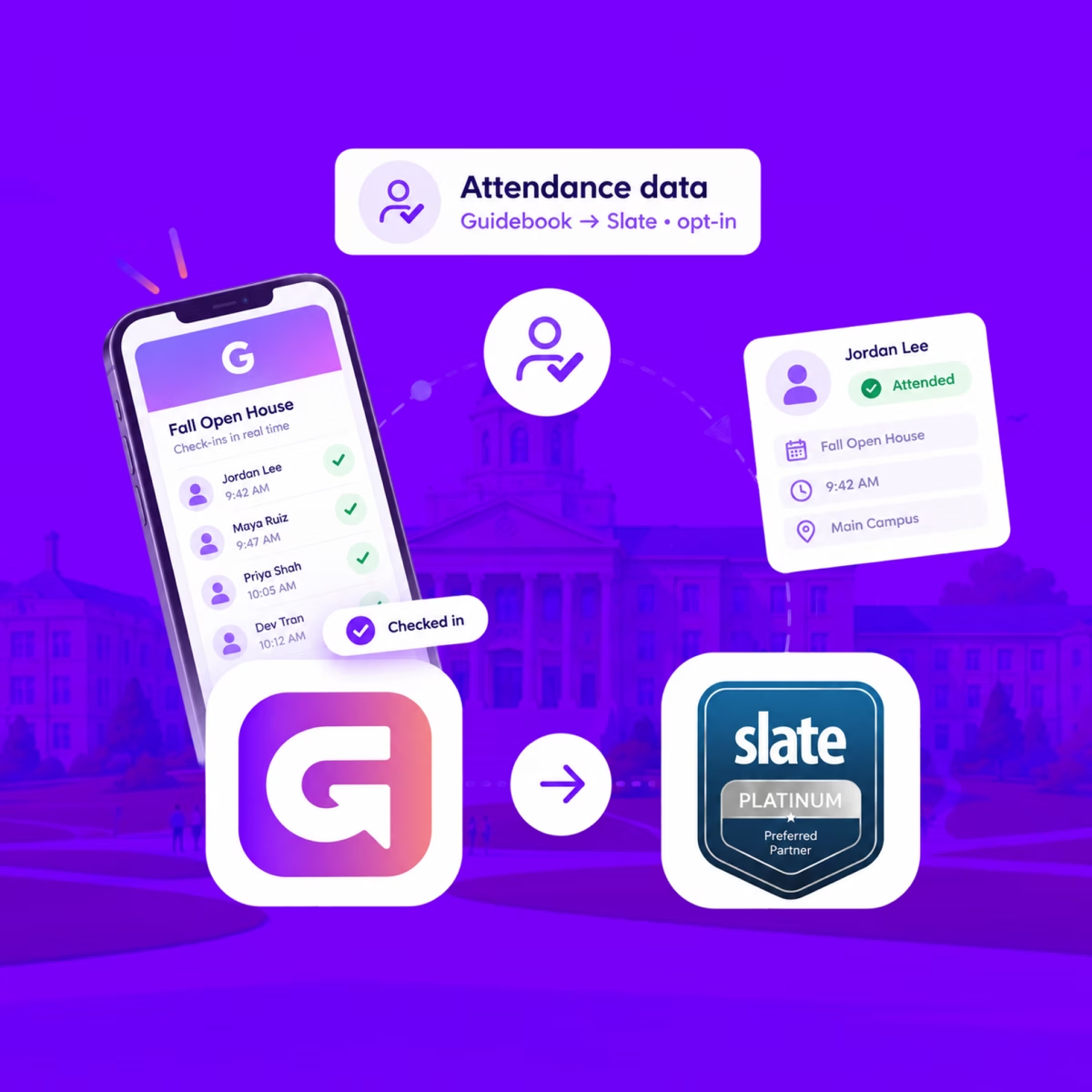
See who actually showed up, in Slate
When someone checks in at your event, Guidebook marks their Slate registration Attended, with the time they arrived.
See who actually showed up, in Slate
When someone checks in at your event, Guidebook marks their Slate registration Attended, with the time they arrived.
Send app engagement back to Slate
For students who opt in, downloads, schedule adds, views, and form responses land on their event registration every hour.
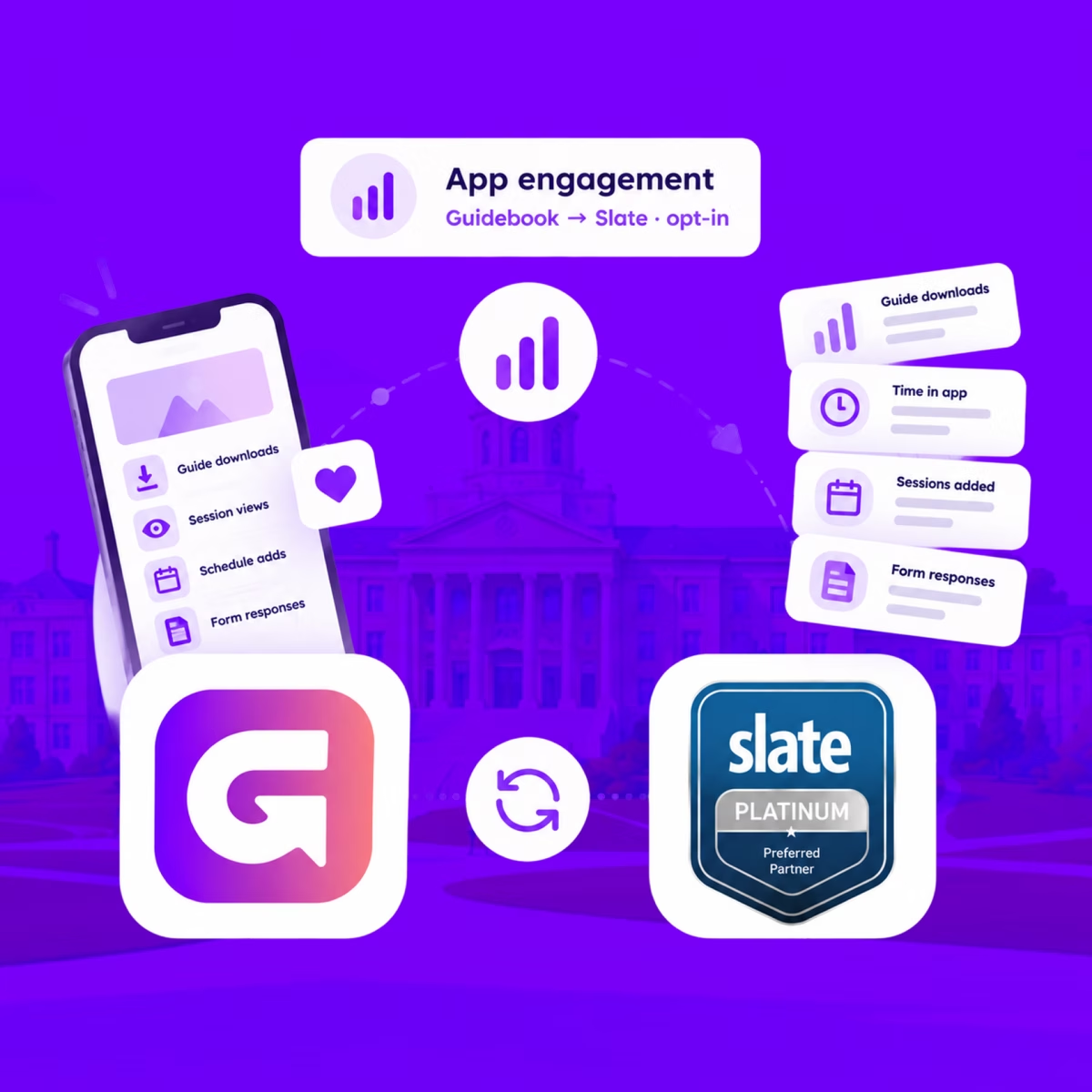
Send app engagement back to Slate
For students who opt in, downloads, schedule adds, views, and form responses land on their event registration every hour.
Build the campus event once in Slate
Link a Slate folder to a guide. Every event becomes a session, and registrants are added automatically.

Build the campus event once in Slate
Link a Slate folder to a guide. Every event becomes a session, and registrants are added automatically.
Slate profiles, in the campus app
Match each student's Slate record to their Guidebook account, so college, major, and orientation details stay current on every sync.
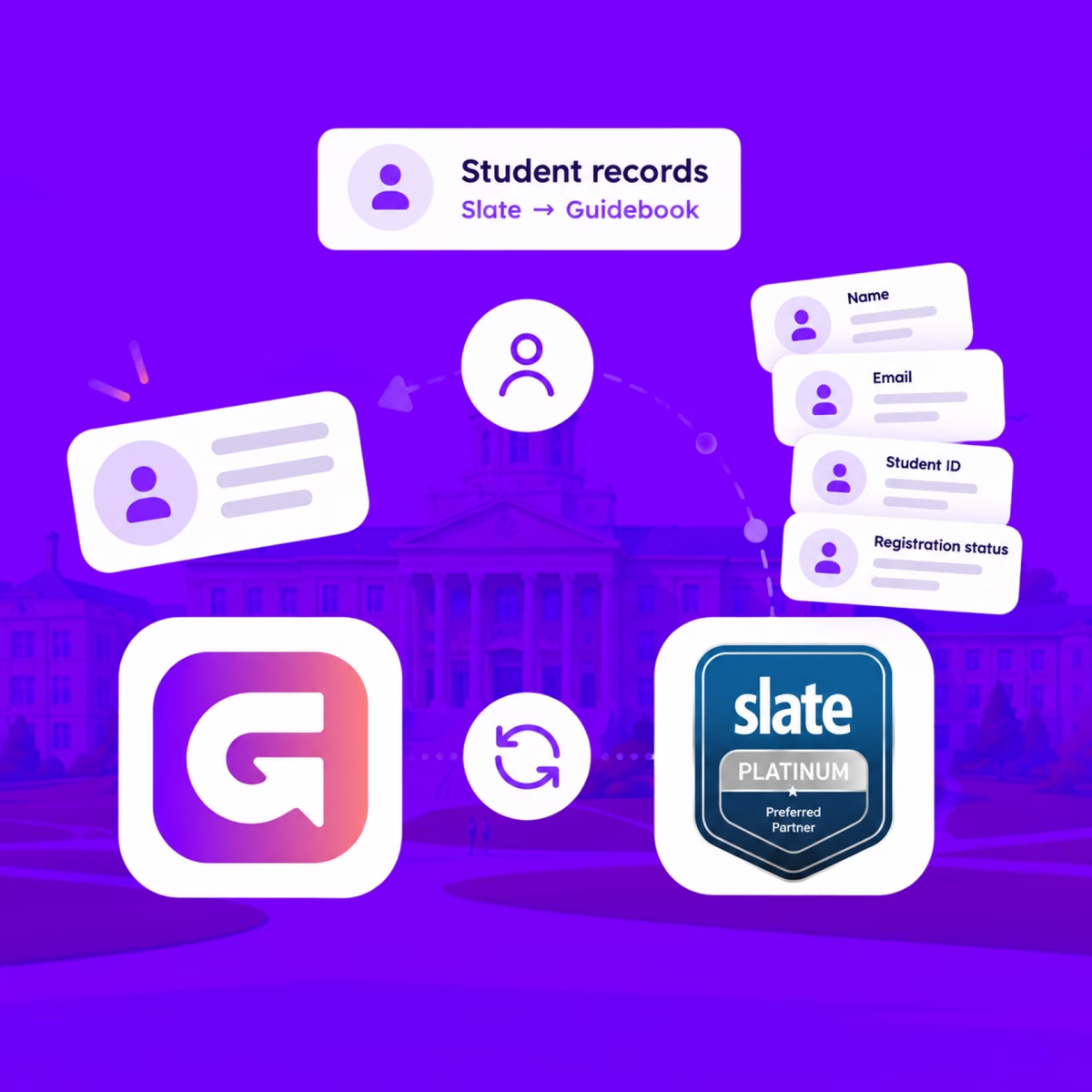
Slate profiles, in the campus app
Match each student's Slate record to their Guidebook account, so college, major, and orientation details stay current on every sync.
Campus apps by department
Admissions, orientation, student life, and more — one campus app that works across departments.

Campus apps by department
Admissions, orientation, student life, and more — one campus app that works across departments.
Build unlimited event apps on one license
One partnership for unlimited campus events — orientation, tours, student life, and everything in between.
Build unlimited event apps on one license
One partnership for unlimited campus events — orientation, tours, student life, and everything in between.
Compare event app platforms
See how Guidebook stacks up against other event app and registration platforms.
Compare event app platforms
See how Guidebook stacks up against other event app and registration platforms.
Event apps for nonprofit and community programs
Give members, volunteers, and donors one branded app for conferences, fundraisers, and year-round community.
Event apps for nonprofit and community programs
Give members, volunteers, and donors one branded app for conferences, fundraisers, and year-round community.
Campus integrations and an open API
Connect Guidebook with the campus systems, APIs, and tools your team already uses.
Campus integrations and an open API
Connect Guidebook with the campus systems, APIs, and tools your team already uses.
Event apps for corporate and enterprise teams
Internal meetings, offsites, and large-scale corporate events — with the branding and control enterprise teams need.
Event apps for corporate and enterprise teams
Internal meetings, offsites, and large-scale corporate events — with the branding and control enterprise teams need.
Create a branded event app with no coding
Put schedules, maps, resources, and updates in every attendee's pocket — built for campus events and programs.
Create a branded event app with no coding
Put schedules, maps, resources, and updates in every attendee's pocket — built for campus events and programs.
Launch a branded, white-label event app
A white-label event app with your branding, your content, and your attendee experience — no coding required.
Launch a branded, white-label event app
A white-label event app with your branding, your content, and your attendee experience — no coding required.
Everything in the Guidebook platform
Explore the features event teams use to engage attendees before, during, and after the event.
Everything in the Guidebook platform
Explore the features event teams use to engage attendees before, during, and after the event.
One app for in-person and virtual attendees
The same schedule, networking, and updates whether people are in the room or joining remotely.
One app for in-person and virtual attendees
The same schedule, networking, and updates whether people are in the room or joining remotely.
Event apps built for associations
Annual meetings, chapter events, and member engagement — without rebuilding a new app every year.
Event apps built for associations
Annual meetings, chapter events, and member engagement — without rebuilding a new app every year.
A branded event website that matches the app
Promote the event, collect interest, and keep branding consistent from the first click to check-in.
A branded event website that matches the app
Promote the event, collect interest, and keep branding consistent from the first click to check-in.
Plan, run, and measure events on one platform
App, registration, badges, and websites in one workflow — so planning isn't a pile of disconnected tools.
Plan, run, and measure events on one platform
App, registration, badges, and websites in one workflow — so planning isn't a pile of disconnected tools.
Keep members engaged between events
One branded app for the conference and everything that happens the other 51 weeks of the year.
Keep members engaged between events
One branded app for the conference and everything that happens the other 51 weeks of the year.
The conference app attendees actually use
Schedules, maps, networking, and live updates for annual meetings, summits, and multi-day conferences.
The conference app attendees actually use
Schedules, maps, networking, and live updates for annual meetings, summits, and multi-day conferences.
Registration that feeds your app and badges
Collect registrations, payments, and attendee data in the same platform as your event app.
Registration that feeds your app and badges
Collect registrations, payments, and attendee data in the same platform as your event app.
Design and print event badges in one place
Custom badges, QR check-in, and on-site printing — without a separate badge vendor.
Design and print event badges in one place
Custom badges, QR check-in, and on-site printing — without a separate badge vendor.
A Smaller School?
Deliver a polished, branded event experience without a large team or a big budget.
A Smaller School?
Deliver a polished, branded event experience without a large team or a big budget.
Running Family Programs?
Give families everything they need, from schedules and maps to real-time updates, all in one place.
Running Family Programs?
Give families everything they need, from schedules and maps to real-time updates, all in one place.
Coordinating Move-In Day?
Share updates, manage events, and keep students informed from move-in through the academic year.

Coordinating Move-In Day?
Share updates, manage events, and keep students informed from move-in through the academic year.
Offering Campus Tours?
Deliver branded, self-guided tour experiences with interactive maps and rich media, available 24/7.
Offering Campus Tours?
Deliver branded, self-guided tour experiences with interactive maps and rich media, available 24/7.
Organising a Career Fair?
Simplify logistics for students, employers, and Career Services staff with one easy-to-use app.
Organising a Career Fair?
Simplify logistics for students, employers, and Career Services staff with one easy-to-use app.
Managing Alumni Events?
Plan reunions, regional events, and fundraising campaigns with an app built for alumni engagement.
Managing Alumni Events?
Plan reunions, regional events, and fundraising campaigns with an app built for alumni engagement.
Boost Student Engagement
One hub for schedules, resources, and events that keeps students connected throughout the academic year.
Boost Student Engagement
One hub for schedules, resources, and events that keeps students connected throughout the academic year.
Planning Orientation?
Help new students feel prepared from day one with schedules, campus resources, and real-time updates in one app.
Planning Orientation?
Help new students feel prepared from day one with schedules, campus resources, and real-time updates in one app.
Running Admissions Events?
Manage open houses, tours, and yield events with a branded app that saves time and engages prospective students.
Running Admissions Events?
Manage open houses, tours, and yield events with a branded app that saves time and engages prospective students.
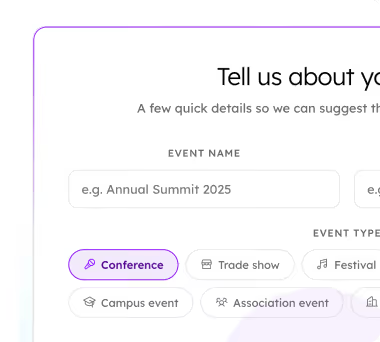
Get a custom Sponsorship Package Template
Stop starting from scratch. Grab free templates that helWe'll build a tailored sponsorship package with suggested pricing, tiers, and benefits..for your specific event.p you build professional sponsorship packages and close deals faster.
Get a custom Sponsorship Package Template
Stop starting from scratch. Grab free templates that helWe'll build a tailored sponsorship package with suggested pricing, tiers, and benefits..for your specific event.p you build professional sponsorship packages and close deals faster.
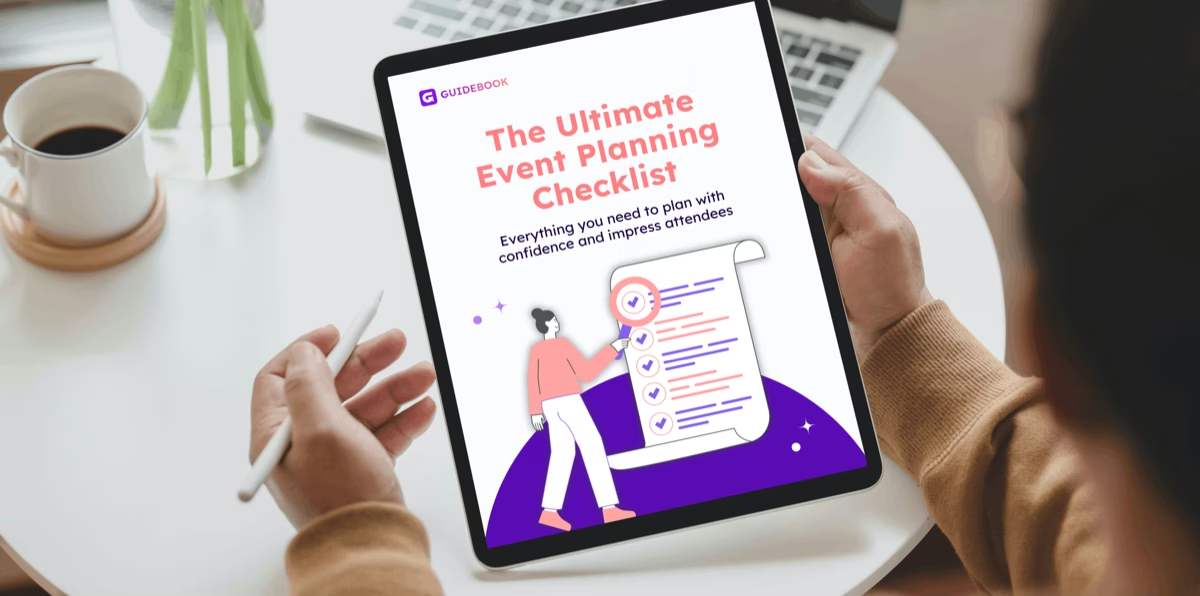
Plan Your Next Event Without Missing a Beat.
From venue selection to post-event wrap-up, this free checklist walks you through every step (so nothing falls through the cracks).
Plan Your Next Event Without Missing a Beat.
From venue selection to post-event wrap-up, this free checklist walks you through every step (so nothing falls through the cracks).
Real Results From Real Events
100,000+ organizations trust Guidebook. See exactly how universities, associations, enterprises, and more put it to work.

Real Results From Real Events
100,000+ organizations trust Guidebook. See exactly how universities, associations, enterprises, and more put it to work.
Flexible pricing for every event size
Find the perfect plan for your needs, from intimate gatherings to large-scale conferences.
Flexible pricing for every event size
Find the perfect plan for your needs, from intimate gatherings to large-scale conferences.
Join our event experts
Watch on-demand webinars and join live sessions with industry leaders sharing best practices for event success.

Join our event experts
Watch on-demand webinars and join live sessions with industry leaders sharing best practices for event success.
Guidebook in Action
Book a personalized walkthrough and discover how we help event teams create better attendee experiences.
Guidebook in Action
Book a personalized walkthrough and discover how we help event teams create better attendee experiences.
Event Planning Glossary: 110+ Terms for Event and Campus Teams




Event Planning Glossary: 110+ Terms for Event and Campus Teams
- More than 110 event terms, grouped by topic so you can jump straight to planning, technology, marketing, virtual events, or campus events.
- Planning terms like run of show, BEO, and event itinerary each serve a different audience, from venue staff to attendees.
- Check-in and attendance tracking turn registrations into real numbers you can report on.
- Campus teams get three dedicated sections covering admissions, orientation, and campus apps.
- Every term links to its full glossary entry for a deeper explanation.
Someone on the planning call asks if the BEO is signed. Someone else wants the run of show by Friday. Then admissions asks how summer melt looked after last year's admitted student day. Events come with their own language, and campus events add a second one on top.
This glossary puts both in one place. It covers more than 110 event planning terms, from everyday logistics to the admissions and orientation vocabulary campus teams use every day. Each definition is short, and each term links to its full entry in the Guidebook event glossary if you want to go deeper.
Use the table of contents to jump to the section you need. Campus teams can skip straight to the three higher ed sections near the end.
Event formats and general terms
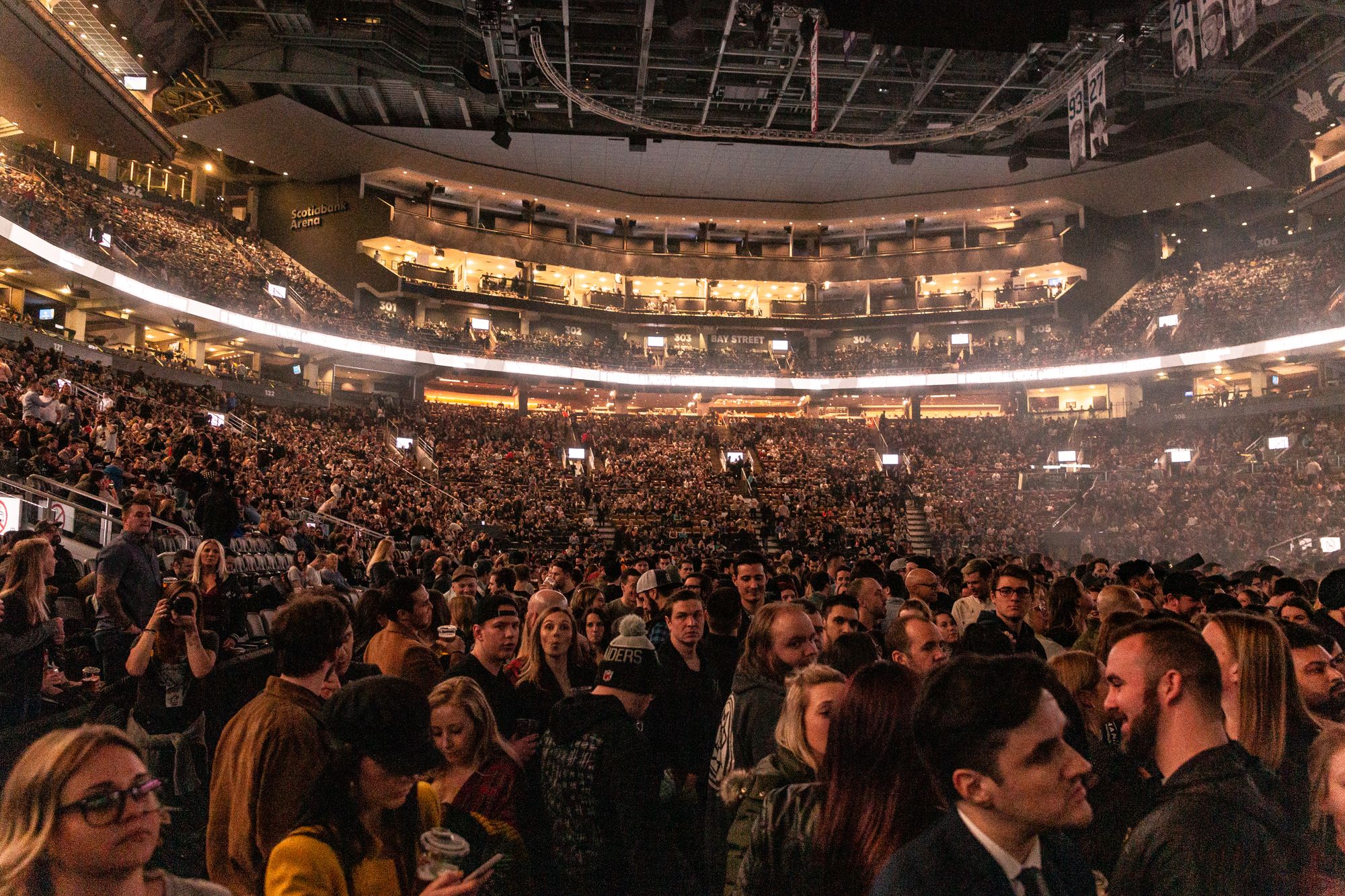
Start here if you're new to events or need the words that come up before anyone books a room.
In-person event
An in-person event brings everyone into the same physical space at the same time. It's the format where hallway conversations, handshakes, and a shared room do a lot of the work. Most planning vocabulary, from run of show to check-in, was built around it.
Micro-event
A micro-event is a small, focused gathering built for a specific group, like a regional meetup, a workshop, or a dinner for a handful of guests. Smaller headcounts make it easier to personalize the experience and harder to hide a weak agenda.
Pop-up event
A pop-up event is a short-lived event that appears in an unexpected place for a limited time, like a brand activation in a storefront or a one-day market. The limited window creates urgency and gives people a reason to show up now.
Gala
A gala is a formal evening event, usually with dinner, a program, and a dress code. Galas often raise money for a cause or honor people, so the night runs on a tight program, careful seating, and a clear ask.
Festival ticketing platform
A festival ticketing platform sells and validates tickets for large public events. It handles pricing tiers, entry scanning, capacity limits, and sometimes cashless payments on site. At festival scale, entry flow decides whether the first hour feels smooth or stuck.
Hospitality industry
The hospitality industry covers the businesses that host people: hotels, restaurants, venues, catering, and travel services. Event planners work alongside it constantly, from booking room blocks to signing a banquet event order with a venue's catering team.
Event trends
Event trends are the shifts in how events get planned, run, and measured, such as hybrid formats, mobile-first attendee experiences, and a bigger focus on proving results. Tracking them helps planners decide what to try and what to skip. Related: virtual event trends.
Event planning and management
The working vocabulary of planning an event, from the first meeting to the post-event report.
Event planning
Event planning is the work of designing an event before it happens: setting goals, picking a date and venue, building the agenda, managing the budget, and lining up vendors. Good planning makes the day itself feel calm, even when it isn't behind the scenes. Related: the event planning guide.
Event planning process
The event planning process is the sequence of steps that takes an event from idea to wrap-up. It usually runs from goals and budget, to venue and vendors, to promotion and registration, to the live event, and finally to follow-up and measurement. Related: how to organize an event.
Event management
Event management covers everything needed to run an event once it's planned: coordinating staff, vendors, schedules, attendees, and problems as they come up. Planning sets the blueprint. Management keeps the building standing on the day.
Event logistics
Event logistics are the practical details that make an event work: transportation, room setup, signage, catering, equipment, deliveries, and timing. Attendees rarely notice logistics when they go right. They always notice when they don't.
Run of show
A run of show is a minute-by-minute script for an event. It lists every segment, who's responsible, when cues happen, and what's on screen or stage. The production team, speakers, and staff all work from the same document so nobody improvises a transition.
Event itinerary
An event itinerary is the attendee-facing schedule: where to be, when, and what's happening there. Where a run of show is for staff, the itinerary is for guests, and it works best when it's easy to find on a phone and updates when plans change.
Banquet event order (BEO)
A banquet event order (BEO) is the document a venue uses to spell out everything for a function: room setup, menu, timing, audiovisual needs, and costs. Planners review and sign it, and the venue staff follow it to the letter, so errors in the BEO become errors on the day.
Event design
Event design is the craft of shaping how an event feels and flows: the layout, the visual identity, the pacing, and the moments people remember. It starts with what you want attendees to feel and works backward to the room, the agenda, and the details.
Event production
Event production is the technical side of bringing an event to life: staging, lighting, sound, video, and live streaming. The production team turns the run of show into what attendees actually see and hear.
Event proposal
An event proposal is a document that pitches an event plan to a client or decision-maker. It covers the concept, goals, format, timeline, budget, and what success looks like, so everyone agrees on scope before money gets spent. Related: an event planner business proposal.
Attendee journey
The attendee journey is every step a person takes with your event, from first hearing about it, to registering, arriving, attending sessions, and following up afterward. Mapping it shows where people get confused, drop off, or need a nudge.
Universal design for events
Universal design for events means planning so the widest range of people can take part without needing special arrangements. That covers physical access, captions, readable materials, quiet spaces, and clear wayfinding. Designing for access up front beats retrofitting it later.
Event coordinator
An event coordinator handles the day-to-day work of getting events done: booking venues, managing vendors, tracking budgets, communicating with attendees, and solving problems on site. The role sits between strategy and execution, and it rewards people who stay organized under pressure. Related: the event coordinator job description and the event coordinator role.
Post-event survey
A post-event survey asks attendees what worked and what didn't, while the experience is still fresh. Short surveys with a mix of ratings and one or two open questions get more responses and more useful answers than long ones.
Event debrief
An event debrief is a meeting after the event where the team reviews what happened, what went well, and what to change next time. Holding it quickly, while details are fresh, is what turns one event's lessons into the next event's plan. Related: an event debrief template.
Event report
An event report summarizes an event's results for leadership or clients: attendance, engagement, feedback, budget against actuals, and progress toward goals. It's how an event earns its next budget.
Event ROI
Event ROI (return on investment) compares what an event delivered with what it cost. Returns can be revenue, leads, enrollments, retention, or engagement, depending on the goal. The hard part isn't the math. It's deciding up front what counts as a return and tracking it.
Event technology
The tools that run an event and the data they produce.
Event technology
Event technology is the software and hardware used to plan, run, and measure events: registration, mobile apps, check-in, badges, live streaming, and analytics. The best stack is the one your team and your attendees will actually use.
Event management software
Event management software brings the moving parts of an event into one place, such as registration, scheduling, attendee communication, check-in, and reporting. It cuts the copying and pasting between spreadsheets that slows teams down.
Event planning software
Event planning software helps teams organize the work before an event: tasks, timelines, budgets, vendors, and schedules. Some tools focus only on planning, while others also cover the live event and attendee experience.
Event registration
Event registration is how attendees sign up, and how you collect the information you need from them, like names, sessions, dietary needs, or payment. A short, mobile-friendly form gets more completions than a long one. Related: event registration platforms.
Event check-in software
Event check-in software confirms attendees as they arrive, usually by scanning a code or searching a name. It speeds up lines and gives you a real count of who actually showed up, not just who registered. Related: designing the check-in experience.
QR code check-in
QR code check-in lets attendees scan in with a code on their phone or badge. It's fast, contactless, and records attendance as it happens, which makes it easy to track who came to the event or to each session.
Event badges
Event badges identify attendees on site, usually with a name, affiliation, and sometimes a QR code for check-in or lead capture. Readable names and clear role markers do more for networking than any design flourish. Related: event badge printing.
Push notifications
Push notifications are alerts an event app sends straight to attendees' phones, like a room change, a reminder, or a schedule update. Used sparingly and at the right moment, they reach people faster than email or signage.
Event personalization
Event personalization tailors the experience to each attendee, such as a personal schedule, relevant session suggestions, or content based on their role or interests. It helps people find what matters to them in a crowded agenda.
Digital wayfinding
Digital wayfinding uses interactive maps and directions, usually in an app, to help people find rooms, booths, and amenities. It replaces the printed map that's out of date the moment a session moves.
Attendance tracking
Attendance tracking records who attended an event or a specific session, usually through check-in scans. It's the data behind accurate reports, continuing education credits, and smarter planning for next year.
Session attendance vs. registration data
Session attendance vs. registration data is the gap between who signed up for a session and who actually walked in. Registration shows intent. Attendance shows behavior. Planning decisions about room sizes and repeat sessions should rest on the second.
Event analytics
Event analytics is the measurement of how an event performed: registrations, attendance, session popularity, app engagement, and feedback. Good analytics answer the questions leadership will ask, before they ask them. Related: event analytics for associations.
Zero-party data
Zero-party data is information people share with you on purpose, like their interests, preferences, or goals in a registration form or survey. Because they chose to share it, it's both reliable and an invitation to personalize.
Eventbrite alternatives
Eventbrite alternatives are other platforms for selling tickets and managing registration. Teams look for them when they need lower fees, deeper branding, an attendee app, or features built for a specific kind of event. Related: sites like Eventbrite.
Event marketing and sponsorship
The terms behind filling seats, funding the event, and proving what it returned.
Event marketing
Event marketing covers two ideas: promoting an event so the right people attend, and using events as a way to market a brand, program, or institution. Either way, it starts with knowing exactly who you want in the room. Related: how to advertise an event, types of event marketing, digital marketing for events, and the event marketing definition.
Event marketing plan
An event marketing plan lays out who you're trying to reach, the channels you'll use, the message, the timeline, the budget, and how you'll measure results. It keeps promotion steady instead of a last-minute scramble.
Experiential marketing
Experiential marketing invites people to interact with a brand through a hands-on experience instead of just seeing an ad. Think product demos, immersive installations, or a memorable activation that people want to share.
Event email marketing
Event email marketing uses email to announce an event, drive registrations, send reminders, and follow up afterward. Clear subject lines, one main call to action, and good timing do most of the work.
Event SEO
Event SEO is the practice of helping an event page show up when people search for it, through clear titles, useful descriptions, event details search engines can read, and links from related pages. Related: Facebook keywords for events and SEO for events.
Event website
An event website is the home base for an event online: the description, agenda, speakers, venue details, and registration. A template gets one live quickly, and a consistent look carries the brand from first click to check-in.
Event press release
An event press release announces an event to media and the public, covering the who, what, when, where, and why in a format journalists can use quickly. A strong headline and a newsworthy angle matter more than length. Related: another event press release example.
Event sponsorship
Event sponsorship is an arrangement where an organization pays or provides goods in exchange for exposure or access at an event. Good sponsorships give the sponsor a real way to meet attendees, not just a logo on a banner.
Sponsorship proposal
A sponsorship proposal pitches a sponsorship opportunity to a specific company. It explains the event, the audience, the benefits on offer, and the price, and it lands best when it's tailored to what that sponsor wants to achieve. Related: how to write a sponsorship letter.
Sponsorship package
A sponsorship package bundles sponsor benefits at a set price, such as logo placement, speaking time, booth space, or app visibility. Packages make it easy for sponsors to compare options and for your team to sell consistently. Related: sponsorship package examples, the sponsor packet, and the sponsorship packet.
Sponsorship tiers
Sponsorship tiers are levels of sponsorship, often named like gold, silver, and bronze, with more benefits at each step up. Clear differences between tiers help sponsors choose and give you room to upsell.
Sponsorship activation
Sponsorship activation is what a sponsor does with its sponsorship to engage attendees, like hosting a session, running a demo, or sponsoring a game in the event app. Visibility gets a logo seen. Activation gets a sponsor remembered.
Sponsor ROI
Sponsor ROI measures what a sponsor got back from its investment, such as leads, meetings, impressions, or engagement. Events that can report these numbers clearly find it much easier to renew sponsors next year.

Virtual and hybrid events
Terms for events people join from anywhere.
Virtual event
A virtual event takes place entirely online, with attendees joining through a streaming or meeting platform. It removes travel and venue limits, but it has to work harder to hold attention, since every attendee is one tab away from email. Related: how to host a virtual event, virtual event examples, and virtual event planning.
Virtual conference
A virtual conference brings the structure of a multi-session conference online: keynotes, breakouts, networking, and sponsor spaces, all on a digital platform. The agenda usually runs shorter than in person, with more breaks. Related: virtual conference formats and virtual summits.
Hybrid event
A hybrid event has an in-person audience and a remote audience at the same time. The planning challenge is making both groups feel like first-class attendees, not making the online crowd watch a camera pointed at a stage. Related: hybrid event examples.
Hybrid conference
A hybrid conference runs its sessions for attendees in the room and online together. It widens reach to people who can't travel, and it needs a plan for remote Q&A, networking, and sponsor exposure. Related: the hybrid conference model.
Hybrid event platform
A hybrid event platform is software that serves in-person and virtual attendees in one place, with streaming, a shared schedule, chat, and networking. One platform keeps both audiences working from the same information. Related: hybrid event tools.
Webinar
A webinar is an online presentation or workshop, usually one or a few speakers with an audience that can ask questions or chat. Webinars are a staple for training, product demos, and lead generation, and recordings keep working long after the live session.
Virtual team events
Virtual team events are online gatherings for coworkers, like celebrations, all-hands, trivia, or quick games. They help distributed teams build connection when they can't share a room. Related: five-minute games for virtual meetings and virtual games for coworkers.
Zoom fatigue
Zoom fatigue is the tiredness that builds up after hours of video calls. Shorter sessions, real breaks, cameras-optional segments, and more interaction help keep virtual attendees engaged.
Meetings, networking, and community
The smaller gatherings that fill the calendar, and the parts of an event where people actually meet each other.
Annual meeting
An annual meeting is a yearly gathering of an organization's members or shareholders, often with required business like elections, reports, or votes. A conference is broader and built around learning and networking, though many organizations run both on the same days.
Meeting minutes
Meeting minutes are the written record of a meeting: who attended, what was discussed, what was decided, and who owns each next step. Clear minutes stop the same conversation from happening twice. Related: what meeting minutes mean.
Q&A session
A Q&A session gives the audience time to ask questions of speakers or panelists. Collecting questions through an app lets more people take part, including those who'd never raise a hand.
Unconference
An unconference is a participant-driven event where attendees set the agenda on the day, often by proposing and voting on topics. It trades polished presentations for open discussion and works best with an engaged, knowledgeable crowd.
Luncheon
A luncheon is a midday meal event, often with a speaker, an award, or a short program. It's a common format for honoring people, connecting a community, or raising money without taking a full evening.
Structured networking
Structured networking uses organized formats, like assigned tables, matchmaking, or timed rounds, to help people meet. Informal networking leaves it to chance. Most events need some of both, and shyer attendees benefit most from the structure.
Speed networking
Speed networking pairs attendees for short, timed conversations before everyone rotates. It guarantees each person meets several new people quickly and takes the awkwardness out of starting a conversation.
Virtual networking event
A virtual networking event helps people connect online, usually through breakout rooms, matchmaking, or small-group video chats. Clear prompts and small groups make the difference between real conversation and silence.
Community engagement events
Community engagement events bring people together around a shared place, cause, or interest, like neighborhood festivals, volunteer days, or open forums. They build relationships and trust that last well beyond the day. Related: how to organize a community event and community event ideas.
Member engagement
Member engagement is how actively members take part in an organization: attending events, joining committees, and using member resources. Events are often where engagement starts, and what happens between events decides whether it lasts.
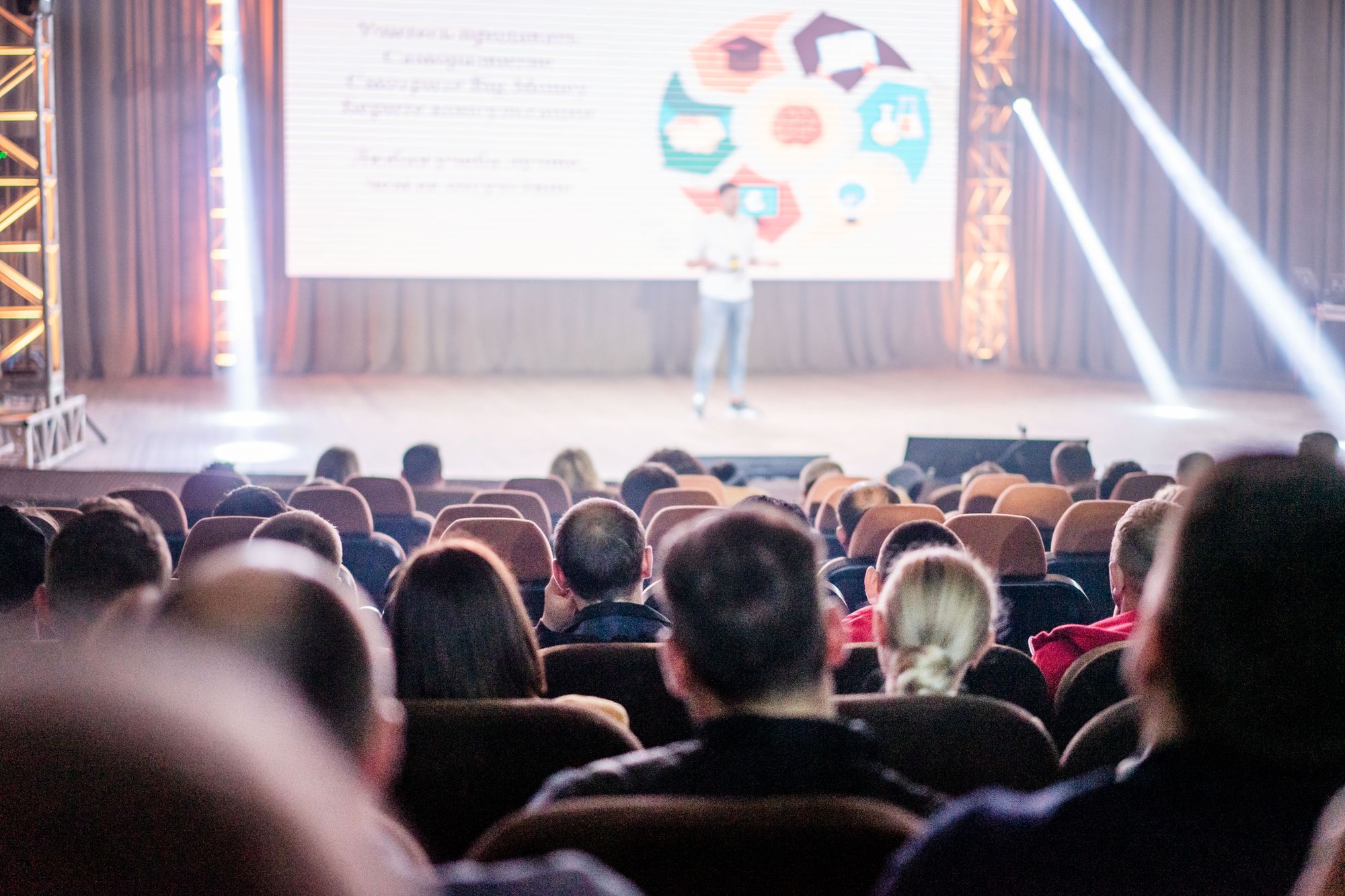
Conferences and associations
Formats and terms for running a conference, symposium, or association meeting.
Conference
A conference is a gathering, often over one or more days, built around presentations, sessions, and networking on a shared topic or industry. Conferences mix learning, connection, and business, and attendees judge them on all three.
Symposium
A symposium is a focused meeting where experts present and discuss research or ideas on a specific subject. It's usually smaller and more academic than a conference, with more time for discussion. Related: symposium vs. conference.
Association conference
An association conference is an event an association runs for its members and its industry. It's often the organization's biggest event of the year, central to member value, education, and revenue.
Association event app
An association event app is a mobile app built for an association's meetings, with schedules, speaker details, maps, and networking. Many associations use it beyond the annual meeting to keep members connected all year.
Conference app vs. member app
Conference app vs. member app comes down to timing. A conference app focuses on one event's schedule and logistics. A member app serves members year-round with resources, community, and multiple events. Some organizations run both in one branded app.
Attendee engagement
Attendee engagement is how actively people take part in an event: joining sessions, asking questions, networking, and using the event app. Engaged attendees learn more, remember more, and are more likely to come back. Related: engagement event ideas.
Gamification
Gamification adds game elements to an event, like points, challenges, scavenger hunts, and leaderboards, to encourage people to explore and participate. It works best when the actions it rewards are the ones you actually want.
CE credit tracking
CE credit tracking records the continuing education credits professionals earn by attending sessions. Accurate session check-in makes credit reporting simpler for attendees and the organizers who certify them.
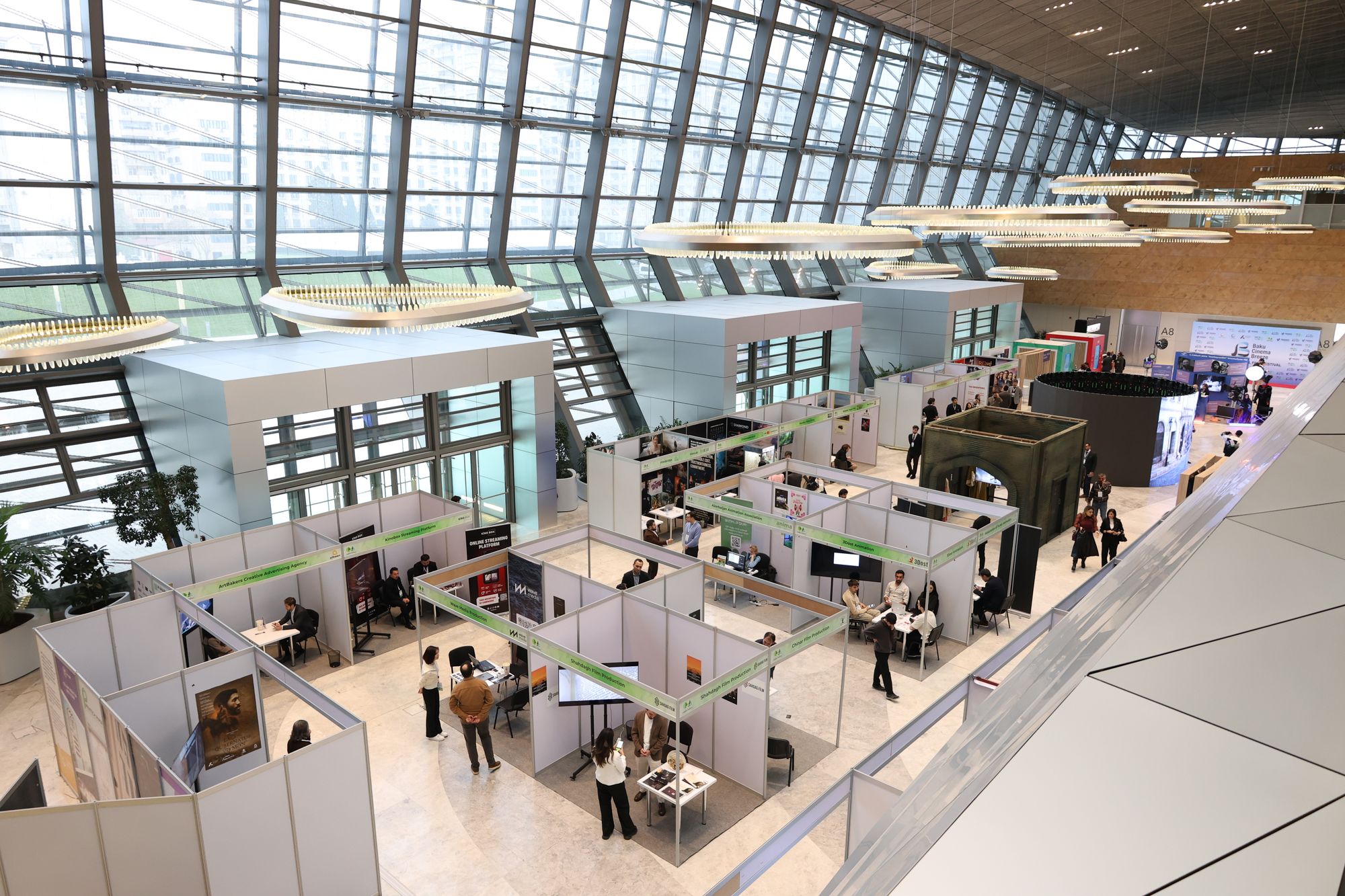
Trade shows and corporate events
Terms for business events and working a booth.
Trade show
A trade show is an event where companies in an industry exhibit products and services to buyers, partners, and press. Exhibitors invest in booths and staff, so they judge the show by the conversations and leads it produces. Related: exhibiting at trade shows.
Trade show booth
A trade show booth is an exhibitor's space on the show floor. The best booths have a clear message visible from the aisle, a reason to stop, and staff ready to start a real conversation. Related: booth display ideas and interactive trade show booths.
Trade show software
Trade show software helps organizers manage exhibitors, floor plans, registration, and attendee navigation, and helps exhibitors capture leads. It ties the show floor's moving parts together.
Lead capture
Lead capture is how exhibitors collect contact details from booth visitors, often by scanning badges with an app. Adding quick notes during the scan makes follow-up faster and far more personal. Related: trade show lead generation.
Corporate event
A corporate event is any event a company runs for employees, clients, or partners, from sales kickoffs and offsites to product launches and holiday parties. Each one needs a clear business goal behind the guest list.
Team-building event
A team-building event is an activity designed to strengthen working relationships, like problem-solving challenges, volunteer days, or shared experiences. The good ones build trust without feeling forced.
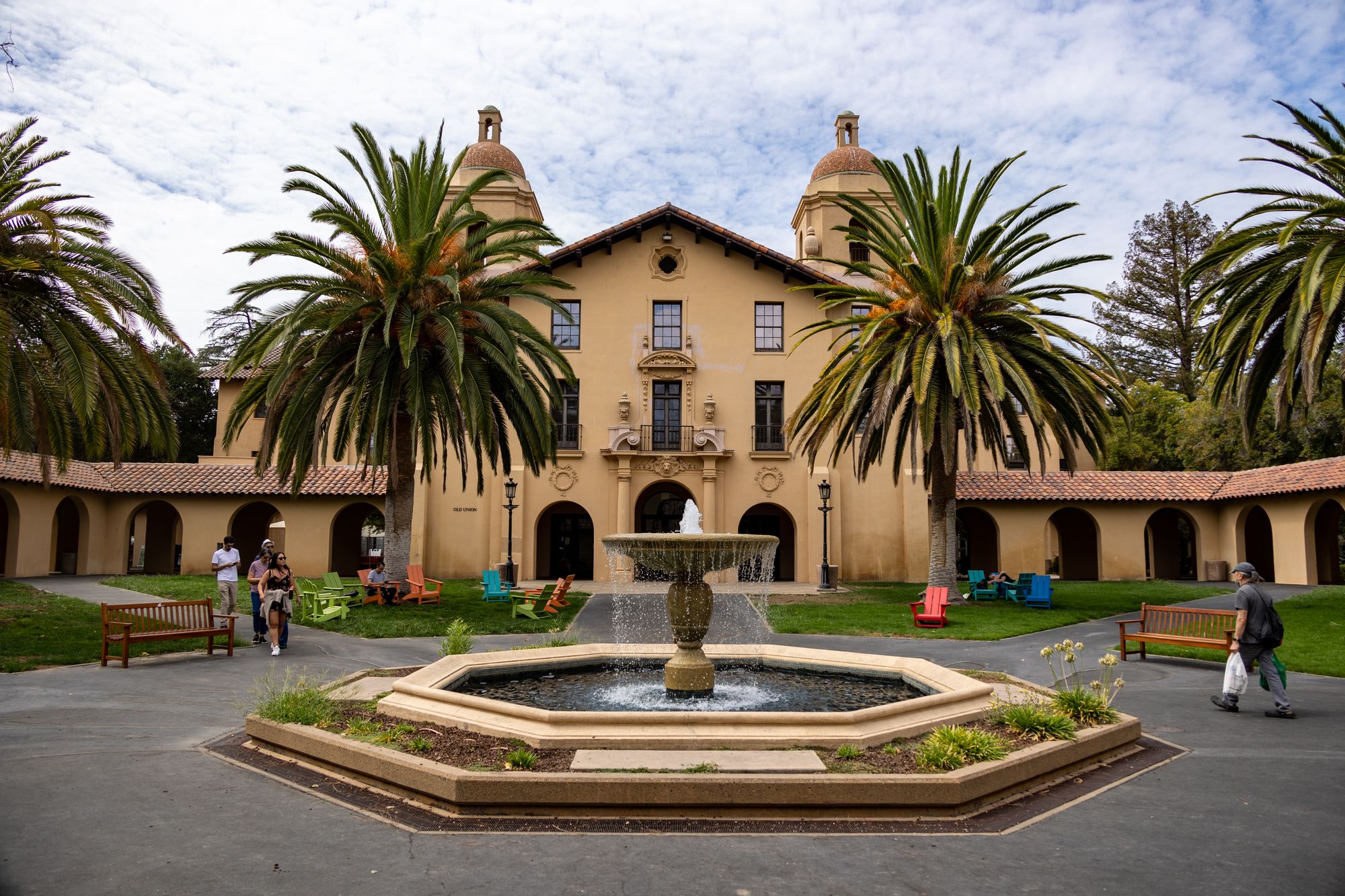
Higher ed: admissions and recruitment
Campus terms for the events that turn interest into deposits.
College open house
A college open house invites prospective students and families to campus to tour, meet faculty and current students, and learn about programs. For admissions teams, it's often the first real deposit conversation, not just a tour.
Virtual open house
A virtual open house brings open house programming online, with live sessions, recorded tours, and chances to talk with admissions and current students. It reaches students who can't travel to campus.
Self-guided campus tour
A self-guided campus tour lets visitors explore campus on their own schedule, usually with a mobile app offering maps, stops, photos, and video. Prospective students can visit any day, not just when a guide is free.
Virtual campus tour
A virtual campus tour shows campus online through photos, video, or interactive maps. It's often a student's first look at a school, and it keeps working long after a visit day ends.
Admitted student day
Admitted student day is a campus event for students who've been accepted, built to help them picture themselves enrolling. It's a yield event, so every session, tour, and conversation points toward the deposit decision.
Admitted student personalization
Admitted student personalization tailors an admitted student event to each student's interests, such as sessions for their intended major, a schedule built for them, or content for families. It helps a big event feel personal. Related: app personalization in higher ed.
Admissions event check-in
Admissions event check-in is how visitors arrive at open houses and admitted student days, ideally by scanning in on a phone. Digital check-in shortens lines and gives admissions teams accurate attendance to follow up on.
Last-minute schedule changes
Last-minute schedule changes are unavoidable on visit days: a room moves, a speaker runs late, a tour reroutes for weather. Updating the schedule in an app and sending a push notification reaches every visitor at once, without reprinting anything.
Yield
Yield is the share of admitted students who choose to enroll. It's one of the numbers admissions teams live by, and yield events like admitted student days exist to move it.
Summer melt
Summer melt happens when students who committed to a college, often with a deposit, don't show up in the fall. Financial surprises, missed paperwork, and feeling disconnected from campus are common causes, and steady summer communication helps prevent it.
Admissions event ROI
Admissions event ROI connects recruitment events to enrollment results, such as how many attendees applied, were admitted, and deposited. Tracking who actually attended is the first step toward answering it.
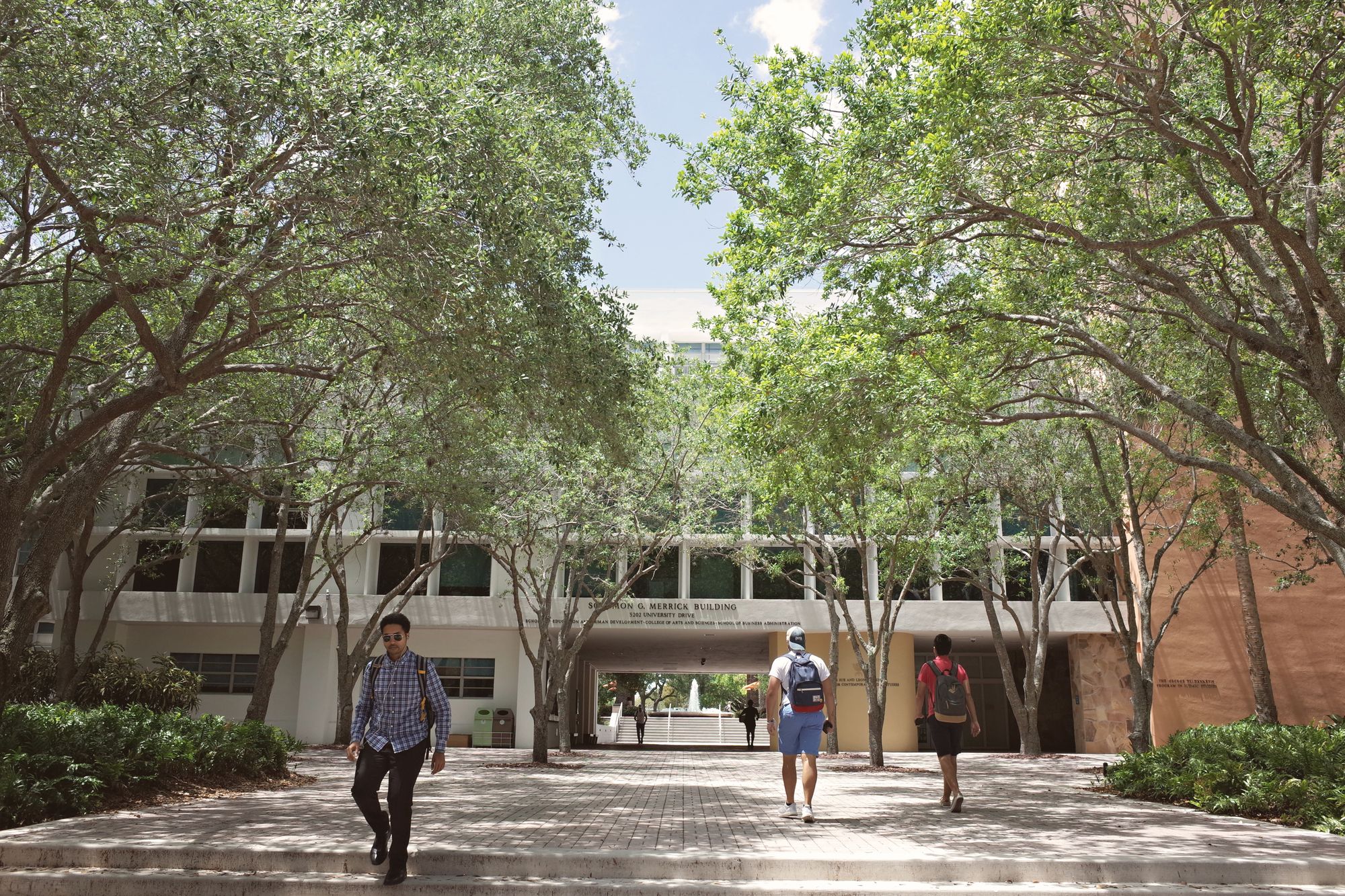
Higher ed: orientation and first-year experience
Campus terms for the events between deposit and the second year.
New student orientation
New student orientation introduces incoming students to campus life, academics, and resources before or as classes begin. It's where belonging starts, and where students learn where to go, who to ask, and that they made the right choice.
Orientation app
An orientation app puts schedules, maps, checklists, and updates in students' pockets during orientation. Useful features include personal schedules, push notifications, campus maps, and sections for families.
First-day student experience
The first-day student experience is the structured welcome that helps nervous newcomers find their way and feel part of campus from their first hours there. Clear check-in, small group connections, and easy navigation keep students from freezing up on day one.
Orientation attendance tracking
Orientation attendance tracking records which students attended which sessions, usually through check-in scans. It replaces paper sign-in sheets and helps teams follow up with students who missed required sessions.
Family communication at orientation
Family communication at orientation keeps parents and families informed during orientation through their own schedule, resources, and updates. When families can find answers themselves, staff field fewer phone calls and families feel included.
Welcome week
Welcome week is the run of events at the start of the academic year that helps new students settle in and make friends. Think move-in, socials, traditions, and activity fairs packed into the days before classes.
Convocation
Convocation is a formal ceremony, often at the start of the year, that officially welcomes new students into the academic community. It usually includes speeches from campus leaders and marks the start of their college journey.
Family weekend
Family weekend invites students' families to campus during the semester for events, tours, games, and time together. It strengthens families' connection to the school and shows them the community their student has joined.
First-year experience (FYE)
The first-year experience (FYE) is the set of programs, courses, and events that support students through their first year. It aims to help students adjust, connect, and succeed, so they come back for year two.
Summer bridge program
A summer bridge program brings incoming students to campus, or online, the summer before their first term for academic preparation and community building. It often serves first-generation students or those who'd benefit from a head start.
Student belonging
Student belonging is a student's sense of being accepted, valued, and connected on campus. It's closely tied to persistence and wellbeing, and campus events are one of the most direct ways to build it.
Retention technology
Retention technology covers the tools colleges use to keep students enrolled, such as early-alert systems, advising platforms, and engagement apps that connect students to events and resources. The common thread is reaching students before they drift away.

Higher ed: campus apps and technology
Terms for the apps that hold campus events together.
Campus engagement app
A campus engagement app gives students one place for events, resources, groups, and campus news. It keeps students connected to campus life beyond the classroom, all year long.
Campus wayfinding app
A campus wayfinding app helps students, families, and visitors find buildings, rooms, parking, and services with interactive maps. It's especially useful on open house days, at orientation, and in the first weeks of term.
University mobile app
A university mobile app gives students, families, and visitors access to campus information on their phones, from event schedules and maps to resources and alerts. Universities use them for admissions events, orientation, student life, and more.
Campus-wide app
A campus-wide app serves several departments, like admissions, orientation, housing, and student life, under one branded app. Students download once, and each team manages its own content and events.
Campus app vs. web portal
Campus app vs. web portal is a choice about where students find information. Portals hold records and services. Apps are built for the moment, with push notifications, maps, and schedules that work well on a phone while students are on the move.
Student onboarding app
A student onboarding app guides new students through the steps between deposit and the first day, like checklists, deadlines, and resources. An event app focuses on specific events. Many campuses use one platform for both.
School event management software
School event management software helps colleges plan and run campus events, from open houses and orientation to commencement, with registration, check-in, schedules, and communication in one system.

Keep the glossary close
Nobody needs all of these terms at once. You need the right one when a vendor, a VP, or a family member uses it and expects you to keep up. Bookmark this page, and when a term needs more than a paragraph, follow its link to the full entry.
If you run campus events, the terms in the higher ed sections are where events turn into deposits, attendance, and belonging. See how campus teams bring them together in one app for admissions and enrollment events and new student programs.
Frequently asked questions
[faq]
Q: What's the difference between event planning and event management?
A: Event planning happens before the event: setting goals, choosing the venue, building the agenda, and booking vendors. Event management covers running it, coordinating staff, vendors, attendees, and problems as they come up. Most event roles do both, but the planning sets the blueprint and the management keeps everything on track on the day.
Q: What's the difference between a run of show and an event itinerary?
A: A run of show is for the team. It's a minute-by-minute script of every segment, cue, and owner. An itinerary is for attendees. It tells them where to be and when. Both describe the same event, but they answer different questions for different people, so most events need both.
Q: What's the difference between yield and summer melt?
A: Yield is about how many admitted students choose to enroll, which admissions teams work on through events like admitted student days. Summer melt happens later, when students who already committed don't show up in the fall. Strong yield can still be undone by melt, so many campuses track and work on both.
Q: What's the difference between a hybrid event and a virtual event?
A: A virtual event happens entirely online. A hybrid event has an in-person audience and an online audience at the same time. Hybrid events reach more people but need extra planning so remote attendees can ask questions, network, and feel included, not just watch a stream of the room.
Q: What's the difference between a conference and a symposium?
A: A conference is usually larger and broader, mixing presentations, breakout sessions, networking, and exhibitors around an industry or topic. A symposium is typically smaller and more focused, with experts presenting and discussing research on one subject, and more time set aside for discussion.
Q: Which event terms matter most for campus admissions teams?
A: Start with yield, summer melt, admitted student day, college open house, and admissions event ROI. Together they describe how recruitment events turn interest into deposits and enrolled students. Attendance tracking and check-in matter too, because accurate attendance is what lets you connect an event to its results.
[/faq]

Get the Mobile App Playbook
A short guide to running the whole student journey in one app. No fluff, just what works.
for higher ed
Campus
Playbook
A practical guide to building a connected campus experience.
Free playbook
The Mobile App Playbook for Universities
Students decide if they belong long before they set foot on campus. This playbook shows how to win them over from the first visit through graduation.
- Grow enrollment and boost recruitment
- Increase belonging and retention
- Run every event from one branded app
By submitting, you agree to our Privacy Policy.
You're in.