
Campus apps by department
Admissions, orientation, student life, and more — one campus app that works across departments.

Campus apps by department
Admissions, orientation, student life, and more — one campus app that works across departments.
Build unlimited event apps on one license
One partnership for unlimited campus events — orientation, tours, student life, and everything in between.
Build unlimited event apps on one license
One partnership for unlimited campus events — orientation, tours, student life, and everything in between.
Compare event app platforms
See how Guidebook stacks up against other event app and registration platforms.
Compare event app platforms
See how Guidebook stacks up against other event app and registration platforms.
Event apps for nonprofit and community programs
Give members, volunteers, and donors one branded app for conferences, fundraisers, and year-round community.
Event apps for nonprofit and community programs
Give members, volunteers, and donors one branded app for conferences, fundraisers, and year-round community.
Campus integrations and an open API
Connect Guidebook with the campus systems, APIs, and tools your team already uses.
Campus integrations and an open API
Connect Guidebook with the campus systems, APIs, and tools your team already uses.
Event apps for corporate and enterprise teams
Internal meetings, offsites, and large-scale corporate events — with the branding and control enterprise teams need.
Event apps for corporate and enterprise teams
Internal meetings, offsites, and large-scale corporate events — with the branding and control enterprise teams need.
Create a branded event app with no coding
Put schedules, maps, resources, and updates in every attendee's pocket — built for campus events and programs.
Create a branded event app with no coding
Put schedules, maps, resources, and updates in every attendee's pocket — built for campus events and programs.
Launch a branded, white-label event app
A white-label event app with your branding, your content, and your attendee experience — no coding required.
Launch a branded, white-label event app
A white-label event app with your branding, your content, and your attendee experience — no coding required.
Everything in the Guidebook platform
Explore the features event teams use to engage attendees before, during, and after the event.
Everything in the Guidebook platform
Explore the features event teams use to engage attendees before, during, and after the event.
One app for in-person and virtual attendees
The same schedule, networking, and updates whether people are in the room or joining remotely.
One app for in-person and virtual attendees
The same schedule, networking, and updates whether people are in the room or joining remotely.
Event apps built for associations
Annual meetings, chapter events, and member engagement — without rebuilding a new app every year.
Event apps built for associations
Annual meetings, chapter events, and member engagement — without rebuilding a new app every year.
A branded event website that matches the app
Promote the event, collect interest, and keep branding consistent from the first click to check-in.
A branded event website that matches the app
Promote the event, collect interest, and keep branding consistent from the first click to check-in.
Plan, run, and measure events on one platform
App, registration, badges, and websites in one workflow — so planning isn't a pile of disconnected tools.
Plan, run, and measure events on one platform
App, registration, badges, and websites in one workflow — so planning isn't a pile of disconnected tools.
Keep members engaged between events
One branded app for the conference and everything that happens the other 51 weeks of the year.
Keep members engaged between events
One branded app for the conference and everything that happens the other 51 weeks of the year.
The conference app attendees actually use
Schedules, maps, networking, and live updates for annual meetings, summits, and multi-day conferences.
The conference app attendees actually use
Schedules, maps, networking, and live updates for annual meetings, summits, and multi-day conferences.
Registration that feeds your app and badges
Collect registrations, payments, and attendee data in the same platform as your event app.
Registration that feeds your app and badges
Collect registrations, payments, and attendee data in the same platform as your event app.
Design and print event badges in one place
Custom badges, QR check-in, and on-site printing — without a separate badge vendor.
Design and print event badges in one place
Custom badges, QR check-in, and on-site printing — without a separate badge vendor.
A Smaller School?
Deliver a polished, branded event experience without a large team or a big budget.
A Smaller School?
Deliver a polished, branded event experience without a large team or a big budget.
Running Family Programs?
Give families everything they need, from schedules and maps to real-time updates, all in one place.
Running Family Programs?
Give families everything they need, from schedules and maps to real-time updates, all in one place.
Coordinating Move-In Day?
Share updates, manage events, and keep students informed from move-in through the academic year.

Coordinating Move-In Day?
Share updates, manage events, and keep students informed from move-in through the academic year.
Offering Campus Tours?
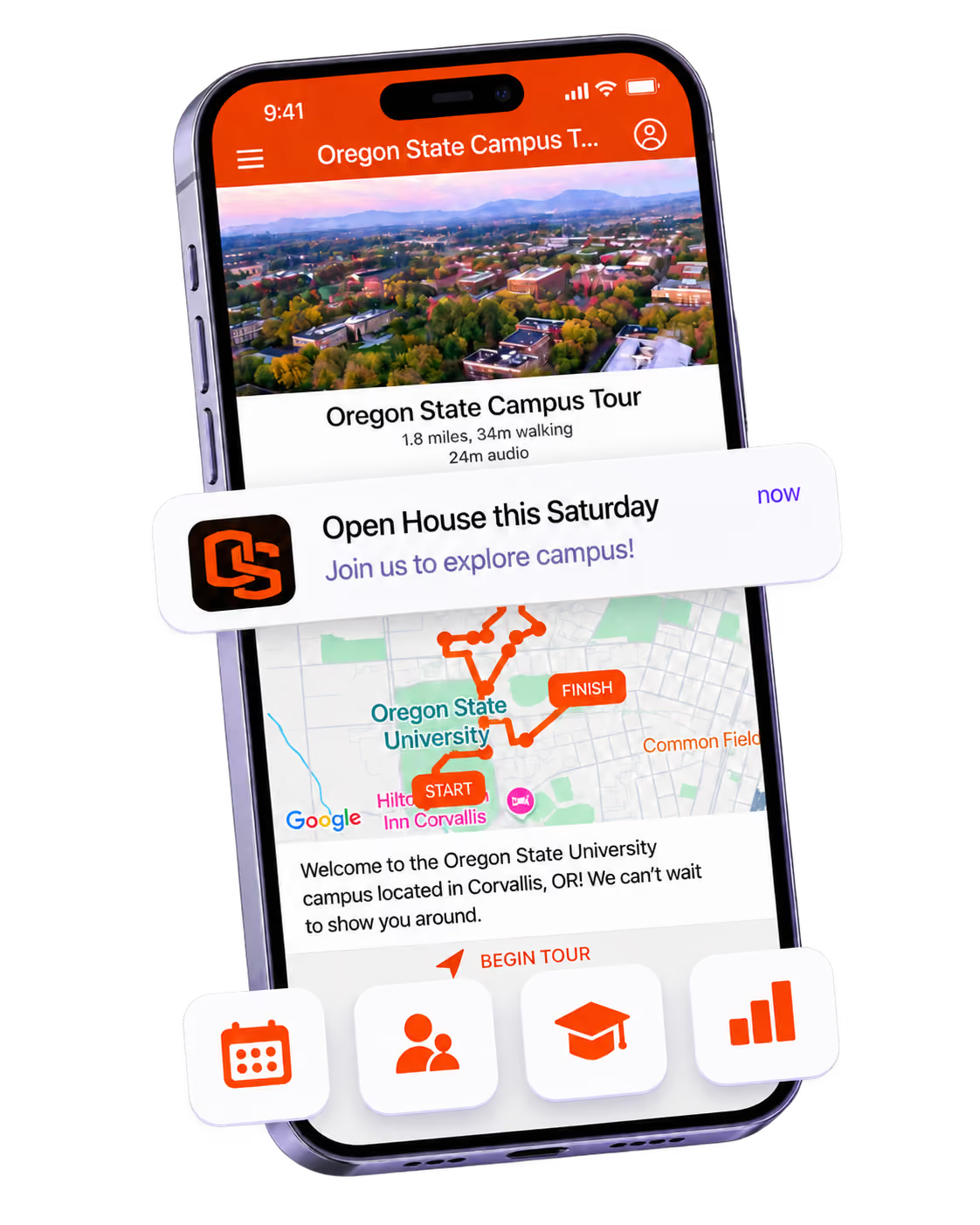
Deliver branded, self-guided tour experiences with interactive maps and rich media, available 24/7.

Offering Campus Tours?
Deliver branded, self-guided tour experiences with interactive maps and rich media, available 24/7.
Organising a Career Fair?
Simplify logistics for students, employers, and Career Services staff with one easy-to-use app.
Organising a Career Fair?
Simplify logistics for students, employers, and Career Services staff with one easy-to-use app.
Managing Alumni Events?
Plan reunions, regional events, and fundraising campaigns with an app built for alumni engagement.
Managing Alumni Events?
Plan reunions, regional events, and fundraising campaigns with an app built for alumni engagement.
Boost Student Engagement
One hub for schedules, resources, and events that keeps students connected throughout the academic year.
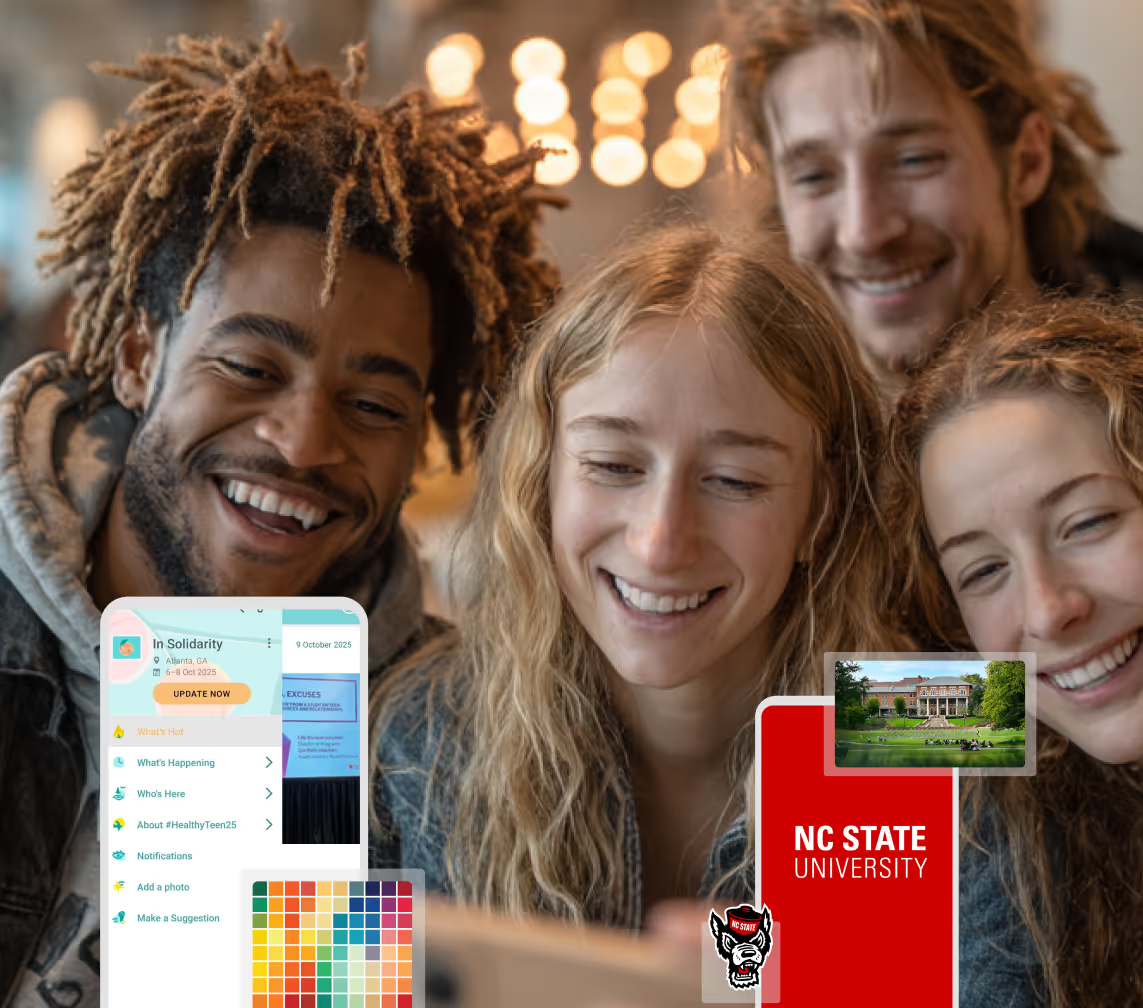
Boost Student Engagement
One hub for schedules, resources, and events that keeps students connected throughout the academic year.
Planning Orientation?
Help new students feel prepared from day one with schedules, campus resources, and real-time updates in one app.
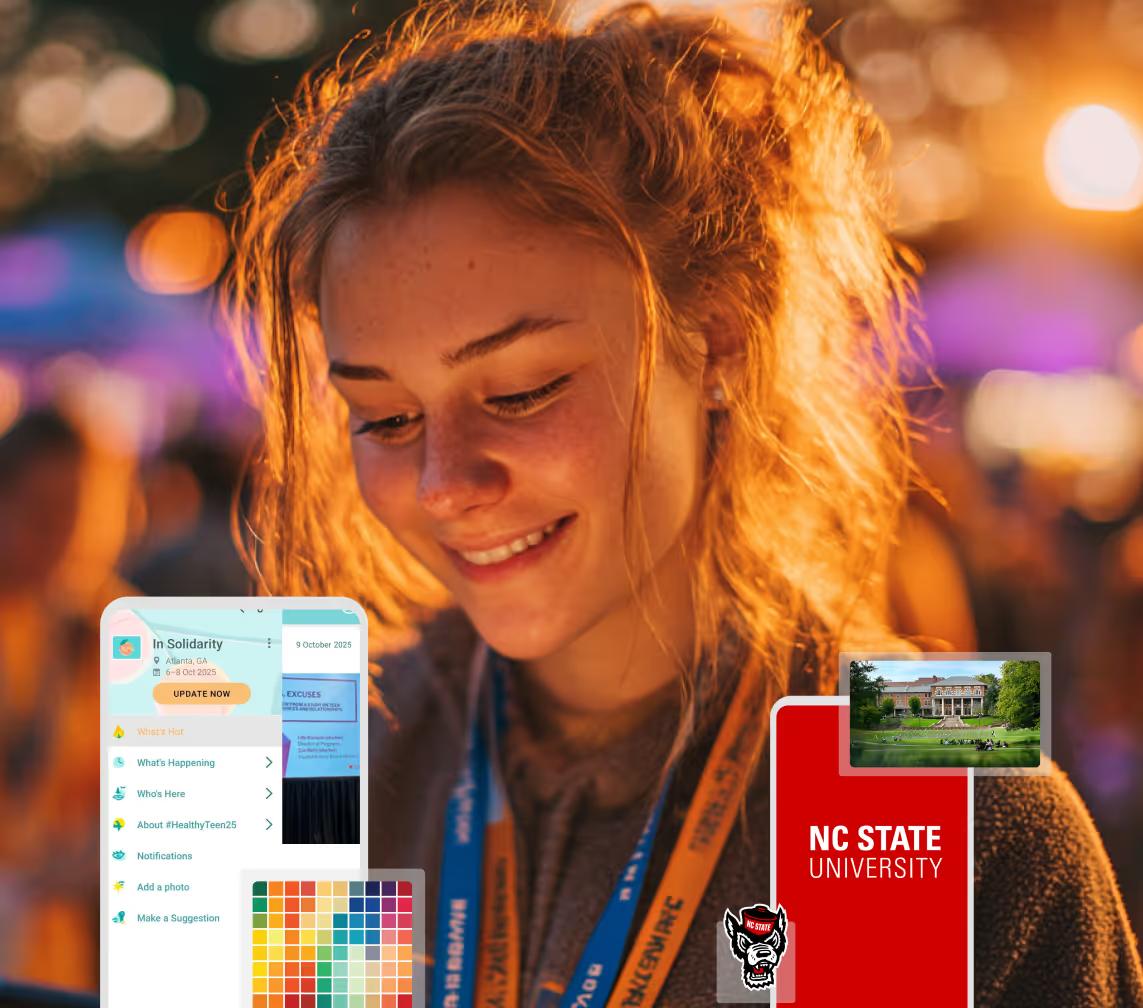
Planning Orientation?
Help new students feel prepared from day one with schedules, campus resources, and real-time updates in one app.
Running Admissions Events?
Manage open houses, tours, and yield events with a branded app that saves time and engages prospective students.

Running Admissions Events?
Manage open houses, tours, and yield events with a branded app that saves time and engages prospective students.
Get a custom Sponsorship Package Template
Stop starting from scratch. Grab free templates that helWe'll build a tailored sponsorship package with suggested pricing, tiers, and benefits..for your specific event.p you build professional sponsorship packages and close deals faster.
Get a custom Sponsorship Package Template
Stop starting from scratch. Grab free templates that helWe'll build a tailored sponsorship package with suggested pricing, tiers, and benefits..for your specific event.p you build professional sponsorship packages and close deals faster.
Plan Your Next Event Without Missing a Beat.
From venue selection to post-event wrap-up, this free checklist walks you through every step (so nothing falls through the cracks).
.avif)
Plan Your Next Event Without Missing a Beat.
From venue selection to post-event wrap-up, this free checklist walks you through every step (so nothing falls through the cracks).
Real Results From Real Events
100,000+ organizations trust Guidebook. See exactly how universities, associations, enterprises, and more put it to work.

Real Results From Real Events
100,000+ organizations trust Guidebook. See exactly how universities, associations, enterprises, and more put it to work.
Flexible pricing for every event size
Find the perfect plan for your needs, from intimate gatherings to large-scale conferences.

Flexible pricing for every event size
Find the perfect plan for your needs, from intimate gatherings to large-scale conferences.
Join our event experts
Watch on-demand webinars and join live sessions with industry leaders sharing best practices for event success.
.avif)
Join our event experts
Watch on-demand webinars and join live sessions with industry leaders sharing best practices for event success.
Guidebook in Action
Book a personalized walkthrough and discover how we help event teams create better attendee experiences.
Guidebook in Action
Book a personalized walkthrough and discover how we help event teams create better attendee experiences.

What are Event Coordinator Duties?
Event coordinators manage logistics, vendors, and schedules to ensure successful events. Discover key duties, planning tips, and essential skills for coordinators.

Event Coordinator Duties are the essential tasks and responsibilities that keep events running smoothly from initial concept through final cleanup. These duties span logistics, vendor management, communication, and on-site execution. When handled well, they transform chaotic moving parts into seamless attendee experiences.
Here's the thing: event coordinators are the glue holding everything together. They're not the big-picture strategists or the creative visionaries. They're the detail-obsessed doers who make sure the caterer shows up on time and the AV equipment actually works. Without them, even the best-planned events fall apart.
Key Characteristics of Event Coordinator Duties
- Detail-Oriented Execution: Every task requires precision. Missing one detail—like confirming a vendor's arrival time—can cascade into bigger problems.
- Multi-Tasking by Nature: Coordinators juggle dozens of tasks simultaneously. They're answering emails while updating spreadsheets and taking vendor calls.
- Communication-Heavy: Most duties involve talking to people. Vendors, venues, speakers, attendees, and internal teams all need clear, timely updates.
- Timeline-Driven: Every duty connects to a deadline. Missing one throws off the entire event planning process.
- Problem-Solving Focus: Things go wrong at every event. Coordinator duties include anticipating issues and fixing them fast.
- Budget Accountability: Tracking expenses and staying within budget is a core responsibility. Every purchase needs documentation.
- Adaptability Required: Duties shift constantly based on event needs. Flexibility isn't optional—it's essential.
Event Coordinator Duties vs. Related Roles
Event coordinator duties often get confused with other event roles. Here's how they differ:
Event Planner
- Scope: Big-picture strategy and creative vision
- Focus: Concept development and client relationships
- Timeline: Months before the event
- Channels: Client meetings and vendor negotiations
- Goal: Define what the event should achieve
Event Coordinator
- Scope: Day-to-day logistics and task management
- Focus: Execution and operational details
- Timeline: Weeks before through event day
- Channels: Vendor coordination and team communication
- Goal: Make sure everything happens as planned
Event Producer
- Scope: Technical and production elements
- Focus: AV, staging, and technical execution
- Timeline: Setup through live event
- Channels: Production crews and technical vendors
- Goal: Deliver flawless technical performance
Think of it this way: planners dream it up, coordinators make it happen, and producers bring it to life on stage. For a deeper dive into role distinctions, check out our guide on event coordinator role descriptions.
Core Event Coordinator Duties Breakdown
Event coordinator duties fall into distinct categories. Each requires specific skills and attention.
Pre-Event Planning Tasks
The weeks before an event are the busiest. Coordinators handle venue walkthroughs, vendor confirmations, and timeline creation.
Key pre-event duties include:
- Creating detailed event timelines and run-of-show documents
- Confirming all vendor contracts and delivery schedules
- Coordinating with the venue on setup requirements
- Managing event registration logistics
- Preparing attendee materials and name badges
Vendor and Supplier Management
Vendors make or break events. Coordinators serve as the main point of contact for caterers, decorators, AV teams, and rental companies.
This means constant communication. You're confirming delivery times, reviewing setup requirements, and troubleshooting last-minute changes. Strong vendor relationships lead to smoother events and better pricing on future bookings.
Budget Tracking and Documentation
Every dollar needs tracking. Coordinators maintain spreadsheets, process invoices, and flag budget concerns before they become problems.
Good budget management includes:
- Tracking all expenses against approved budgets
- Processing vendor payments on time
- Documenting receipts for reconciliation
- Identifying cost-saving opportunities
- Reporting budget status to stakeholders
On-Site Event Execution
Event day is showtime. Coordinators arrive early, stay late, and handle everything in between.
On-site duties include directing setup crews, managing check-in, solving problems in real-time, and keeping the schedule on track. You're the person everyone looks to when something goes wrong. Using event check-in software can streamline registration and reduce stress.
Post-Event Wrap-Up
The event doesn't end when guests leave. Coordinators oversee breakdown, collect feedback, and document lessons learned.
Post-event tasks include vendor payment processing, attendee survey distribution, and creating an event debrief. This documentation helps improve future events and demonstrates event ROI.
Essential Skills for Event Coordinator Duties
Not everyone can handle event coordinator duties. The role demands a specific skill set.
Master Time Management
Coordinators juggle competing priorities constantly. You might have 50 tasks due this week and 10 due today. Knowing what to tackle first separates good coordinators from great ones.
Use project management tools to track deadlines. Build buffer time into schedules. And always know your non-negotiables—the tasks that absolutely cannot slip.
Develop Strong Communication
Clear communication prevents disasters. Coordinators talk to vendors, venues, speakers, sponsors, and internal teams daily.
This means:
- Writing clear, concise emails
- Confirming details in writing (always!)
- Knowing when to call instead of email
- Keeping stakeholders updated proactively
- Listening actively to understand needs
Build Problem-Solving Muscles
Something will go wrong. The caterer cancels. The speaker's flight gets delayed. The venue loses power. Great coordinators stay calm and find solutions fast.
Build a backup plan for everything critical. Know your vendors' emergency contacts. And always have a "Plan B" mindset.
Embrace Technology Tools
Modern event coordination requires tech fluency. From event planning software to communication platforms, coordinators use dozens of tools daily.
Platforms like Guidebook's event management platform help coordinators manage schedules, communicate with attendees, and track engagement—all from one dashboard.
Why Event Coordinator Duties Matter
For Event Success:
- Seamless Attendee Experience: Well-executed duties create smooth, enjoyable events that attendees remember positively.
- Vendor Reliability: Strong coordinator relationships ensure vendors deliver their best work consistently.
- Timeline Adherence: Proper duty management keeps events running on schedule without awkward gaps or rushed transitions.
- Crisis Prevention: Proactive coordinators catch problems before they impact attendees.
- Quality Control: Attention to detail ensures every element meets expectations.
For Business Objectives:
- Budget Protection: Careful tracking prevents overspending and identifies savings opportunities.
- Brand Reputation: Professional execution reflects well on your organization.
- Stakeholder Confidence: Reliable coordination builds trust with sponsors, speakers, and leadership.
- Data Collection: Proper documentation supports future planning and ROI measurement.
- Scalability: Strong processes allow teams to handle larger, more complex events over time.
Guidebook's platform helps coordinators manage these duties efficiently. From registration management to real-time attendee communication, the right tools make coordinator duties more manageable.
Event Coordinator Duties Best Practices
- Create Detailed Checklists: Document every task, no matter how small. Checklists prevent things from falling through the cracks and help train new team members.
- Confirm Everything in Writing: Verbal agreements get forgotten. Send confirmation emails after every call and keep records of all vendor commitments.
- Build Vendor Relationships: Treat vendors as partners, not just suppliers. Good relationships lead to better service, flexibility, and pricing.
- Use Technology Strategically: Adopt tools that simplify your work. Check-in software, project management apps, and communication platforms save hours.
- Communicate Proactively: Don't wait for people to ask for updates. Send regular status reports to stakeholders and flag issues early.
- Plan for Problems: Create contingency plans for critical elements. Know what you'll do if a vendor cancels or weather disrupts outdoor plans.
- Document Everything: Keep records of decisions, expenses, and lessons learned. This documentation proves invaluable for future events.
- Arrive Early, Stay Late: Event days require extra time. Build buffer into your schedule for unexpected issues.
- Delegate Effectively: You can't do everything yourself. Train team members and trust them with appropriate responsibilities.
- Debrief After Every Event: Capture what worked and what didn't while memories are fresh. Use an event debrief template to structure the conversation.
Common Event Coordinator Duties Mistakes
Skipping Written Confirmations: Relying on verbal agreements leads to misunderstandings. That vendor who "promised" a 2 PM delivery might remember it as 4 PM. Always confirm details in writing and keep records.
Underestimating Setup Time: Events always take longer to set up than expected. Coordinators who don't build buffer time end up rushing through final preparations or starting late.
Ignoring Small Details: The little things matter. Forgetting to order extension cords or confirm parking arrangements creates unnecessary stress on event day.
Poor Vendor Communication: Assuming vendors know what you need leads to disappointment. Provide detailed specifications, confirm requirements multiple times, and do final check-ins before the event.
Not Having Backup Plans: Hope isn't a strategy. Coordinators who don't plan for problems scramble when things go wrong—and things always go wrong.
Trying to Do Everything Alone: Refusing to delegate leads to burnout and mistakes. Build a team, train them well, and trust them to handle responsibilities.
Neglecting Post-Event Tasks: The event isn't over when guests leave. Skipping debriefs and documentation means repeating mistakes and missing improvement opportunities.
Final Thoughts
Event coordinator duties form the backbone of successful events. Without skilled coordinators handling logistics, communication, and execution, even brilliant event concepts fall flat. These duties might not be glamorous, but they're absolutely essential.
The event industry continues evolving with new technologies and attendee expectations. Coordinators who embrace tools like digital marketing platforms and virtual event solutions stay ahead of the curve. Staying current with event trends helps coordinators deliver modern, engaging experiences.
Great event coordination is part art, part science. It requires attention to detail, strong relationships, and the ability to stay calm under pressure. The best coordinators make complex events look effortless—even when they're juggling a hundred moving pieces behind the scenes.
Ready to streamline your event coordinator duties? Explore event planning resources and see how Guidebook's platform can help you manage events more efficiently. From customizable templates to powerful check-in tools, the right technology transforms how you work. Because when coordinators have better tools, everyone has better events.
The power of your brand in your app, from first visit to alumni.
Build trust
Attendees download your app, not ours. Your name, colors, and crest in the stores.
.avif)
One place for the whole event
Schedules, maps, registration, and updates in one branded hub - not five tools.
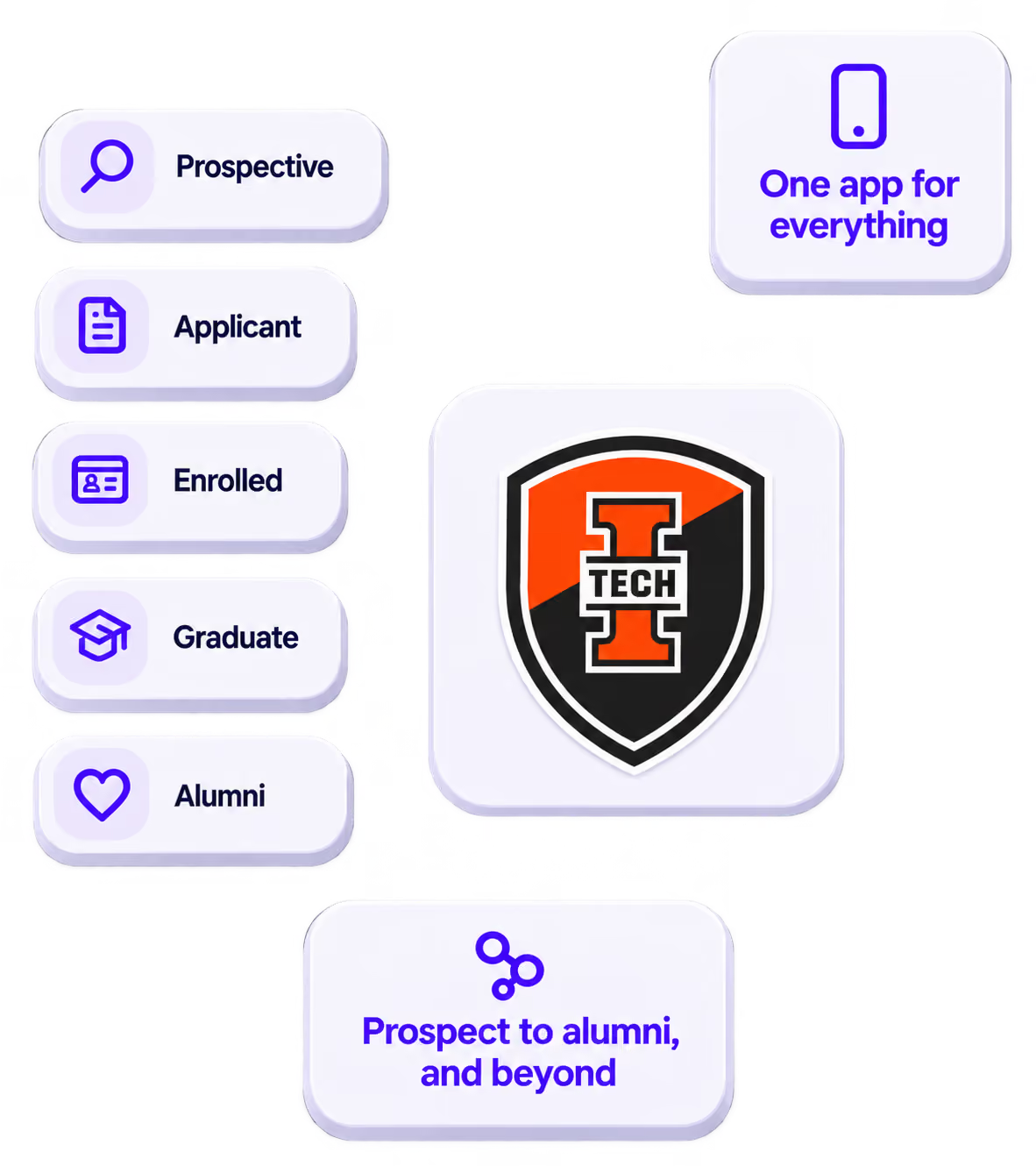
Stand out
A branded app is what people keep on their phone after the printed program is in the recycling.

Get the Mobile App Playbook
A short guide to running the whole student journey in one app. No fluff, just what works.
for higher ed
Campus
Playbook
A practical guide to building a connected campus experience.
Free playbook
The Mobile App Playbook for Universities
Students decide if they belong long before they set foot on campus. This playbook shows how to win them over from the first visit through graduation.
- Grow enrollment and boost recruitment
- Increase belonging and retention
- Run every event from one branded app
By submitting, you agree to our Privacy Policy.
You're in.
.png)