
Campus apps by department
Admissions, orientation, student life, and more — one campus app that works across departments.

Campus apps by department
Admissions, orientation, student life, and more — one campus app that works across departments.
Build unlimited event apps on one license
One partnership for unlimited campus events — orientation, tours, student life, and everything in between.
Build unlimited event apps on one license
One partnership for unlimited campus events — orientation, tours, student life, and everything in between.
Compare event app platforms
See how Guidebook stacks up against other event app and registration platforms.
Compare event app platforms
See how Guidebook stacks up against other event app and registration platforms.
Event apps for nonprofit and community programs
Give members, volunteers, and donors one branded app for conferences, fundraisers, and year-round community.
Event apps for nonprofit and community programs
Give members, volunteers, and donors one branded app for conferences, fundraisers, and year-round community.
Campus integrations and an open API
Connect Guidebook with the campus systems, APIs, and tools your team already uses.
Campus integrations and an open API
Connect Guidebook with the campus systems, APIs, and tools your team already uses.
Event apps for corporate and enterprise teams
Internal meetings, offsites, and large-scale corporate events — with the branding and control enterprise teams need.
Event apps for corporate and enterprise teams
Internal meetings, offsites, and large-scale corporate events — with the branding and control enterprise teams need.
Create a branded event app with no coding
Put schedules, maps, resources, and updates in every attendee's pocket — built for campus events and programs.
Create a branded event app with no coding
Put schedules, maps, resources, and updates in every attendee's pocket — built for campus events and programs.
Launch a branded, white-label event app
A white-label event app with your branding, your content, and your attendee experience — no coding required.
Launch a branded, white-label event app
A white-label event app with your branding, your content, and your attendee experience — no coding required.
Everything in the Guidebook platform
Explore the features event teams use to engage attendees before, during, and after the event.
Everything in the Guidebook platform
Explore the features event teams use to engage attendees before, during, and after the event.
One app for in-person and virtual attendees
The same schedule, networking, and updates whether people are in the room or joining remotely.
One app for in-person and virtual attendees
The same schedule, networking, and updates whether people are in the room or joining remotely.
Event apps built for associations
Annual meetings, chapter events, and member engagement — without rebuilding a new app every year.
Event apps built for associations
Annual meetings, chapter events, and member engagement — without rebuilding a new app every year.
A branded event website that matches the app
Promote the event, collect interest, and keep branding consistent from the first click to check-in.
A branded event website that matches the app
Promote the event, collect interest, and keep branding consistent from the first click to check-in.
Plan, run, and measure events on one platform
App, registration, badges, and websites in one workflow — so planning isn't a pile of disconnected tools.
Plan, run, and measure events on one platform
App, registration, badges, and websites in one workflow — so planning isn't a pile of disconnected tools.
Keep members engaged between events
One branded app for the conference and everything that happens the other 51 weeks of the year.
Keep members engaged between events
One branded app for the conference and everything that happens the other 51 weeks of the year.
The conference app attendees actually use
Schedules, maps, networking, and live updates for annual meetings, summits, and multi-day conferences.
The conference app attendees actually use
Schedules, maps, networking, and live updates for annual meetings, summits, and multi-day conferences.
Registration that feeds your app and badges
Collect registrations, payments, and attendee data in the same platform as your event app.
Registration that feeds your app and badges
Collect registrations, payments, and attendee data in the same platform as your event app.
Design and print event badges in one place
Custom badges, QR check-in, and on-site printing — without a separate badge vendor.
Design and print event badges in one place
Custom badges, QR check-in, and on-site printing — without a separate badge vendor.
A Smaller School?
Deliver a polished, branded event experience without a large team or a big budget.
A Smaller School?
Deliver a polished, branded event experience without a large team or a big budget.
Running Family Programs?
Give families everything they need, from schedules and maps to real-time updates, all in one place.
Running Family Programs?
Give families everything they need, from schedules and maps to real-time updates, all in one place.
Coordinating Move-In Day?
Share updates, manage events, and keep students informed from move-in through the academic year.

Coordinating Move-In Day?
Share updates, manage events, and keep students informed from move-in through the academic year.
Offering Campus Tours?
Deliver branded, self-guided tour experiences with interactive maps and rich media, available 24/7.

Offering Campus Tours?
Deliver branded, self-guided tour experiences with interactive maps and rich media, available 24/7.
Organising a Career Fair?
Simplify logistics for students, employers, and Career Services staff with one easy-to-use app.
Organising a Career Fair?
Simplify logistics for students, employers, and Career Services staff with one easy-to-use app.
Managing Alumni Events?
Plan reunions, regional events, and fundraising campaigns with an app built for alumni engagement.
Managing Alumni Events?
Plan reunions, regional events, and fundraising campaigns with an app built for alumni engagement.
Boost Student Engagement
One hub for schedules, resources, and events that keeps students connected throughout the academic year.
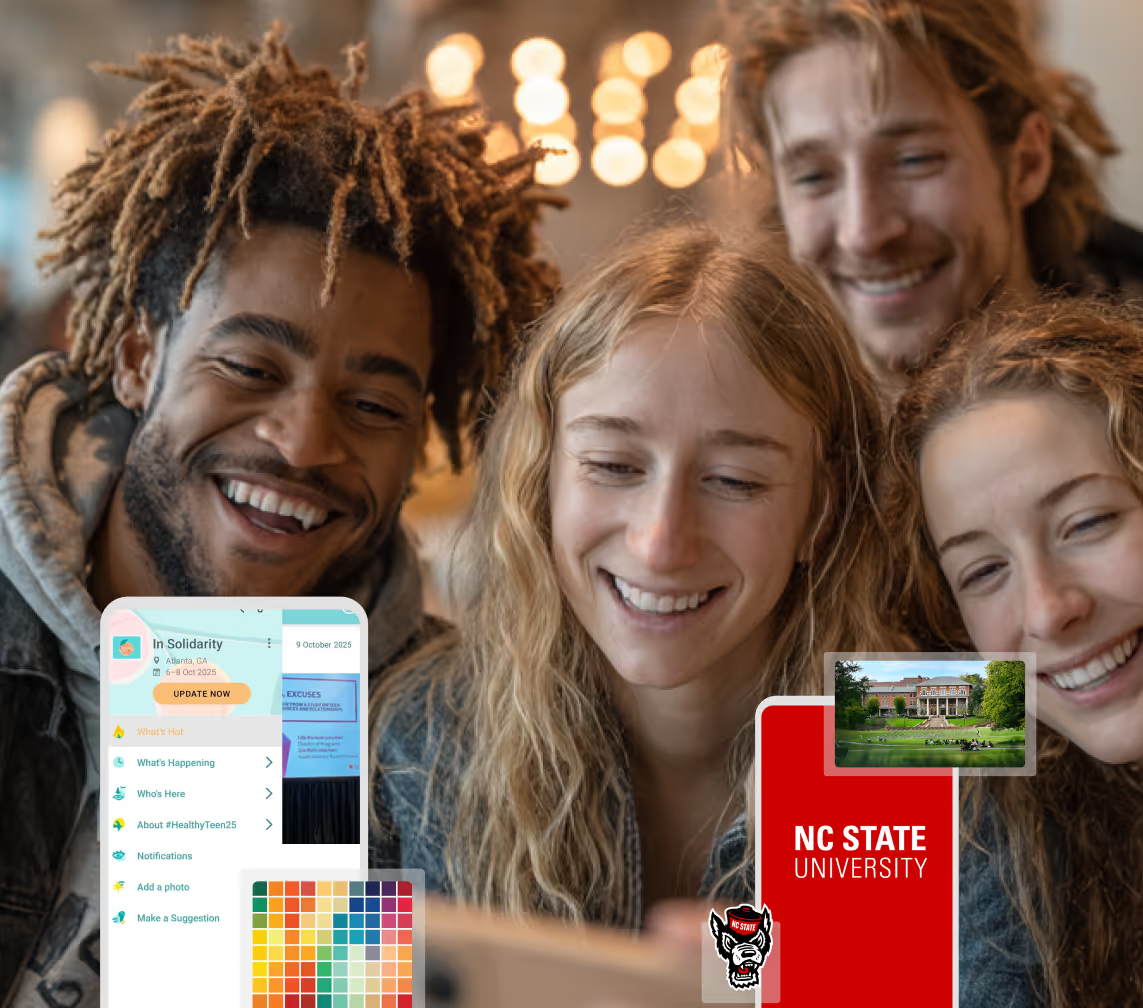
Boost Student Engagement
One hub for schedules, resources, and events that keeps students connected throughout the academic year.
Planning Orientation?
Help new students feel prepared from day one with schedules, campus resources, and real-time updates in one app.
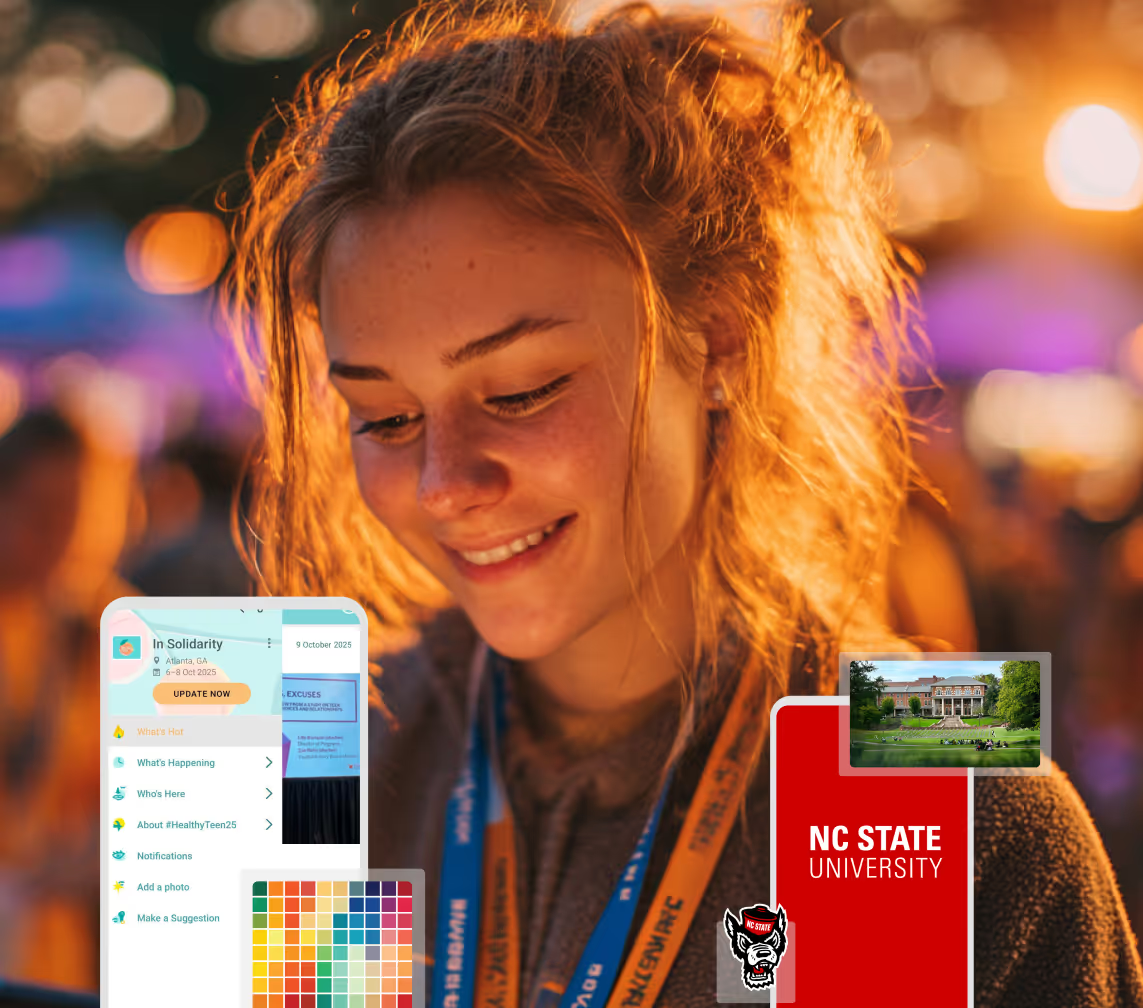
Planning Orientation?
Help new students feel prepared from day one with schedules, campus resources, and real-time updates in one app.
Running Admissions Events?
Manage open houses, tours, and yield events with a branded app that saves time and engages prospective students.

Running Admissions Events?
Manage open houses, tours, and yield events with a branded app that saves time and engages prospective students.
Get a custom Sponsorship Package Template
Stop starting from scratch. Grab free templates that helWe'll build a tailored sponsorship package with suggested pricing, tiers, and benefits..for your specific event.p you build professional sponsorship packages and close deals faster.
Get a custom Sponsorship Package Template
Stop starting from scratch. Grab free templates that helWe'll build a tailored sponsorship package with suggested pricing, tiers, and benefits..for your specific event.p you build professional sponsorship packages and close deals faster.
Plan Your Next Event Without Missing a Beat.
From venue selection to post-event wrap-up, this free checklist walks you through every step (so nothing falls through the cracks).
.avif)
Plan Your Next Event Without Missing a Beat.
From venue selection to post-event wrap-up, this free checklist walks you through every step (so nothing falls through the cracks).
Real Results From Real Events
100,000+ organizations trust Guidebook. See exactly how universities, associations, enterprises, and more put it to work.

Real Results From Real Events
100,000+ organizations trust Guidebook. See exactly how universities, associations, enterprises, and more put it to work.
Flexible pricing for every event size
Find the perfect plan for your needs, from intimate gatherings to large-scale conferences.

Flexible pricing for every event size
Find the perfect plan for your needs, from intimate gatherings to large-scale conferences.
Join our event experts
Watch on-demand webinars and join live sessions with industry leaders sharing best practices for event success.
.avif)
Join our event experts
Watch on-demand webinars and join live sessions with industry leaders sharing best practices for event success.
Guidebook in Action
Book a personalized walkthrough and discover how we help event teams create better attendee experiences.
Guidebook in Action
Book a personalized walkthrough and discover how we help event teams create better attendee experiences.

What is Event Registration?
What is Event Registration? Strategies & Best Practices | Guidebook

Event registration is the process of collecting attendee information and securing commitments before your event takes place. It covers everything from simple sign-up forms to complex ticketing systems with multiple session options. Done right, registration sets the tone for your entire attendee experience.
Here’s the thing: for admissions and orientation professionals, event registration is the first formal touchpoint between your institution and an admitted student or family. An Open House registration form that feels clunky, confusing, or impersonal sends an institutional signal before anyone steps on campus. Conversely, a clean, mobile-friendly registration process that asks the right questions — intended major, dietary restrictions, accessibility needs, parent/guardian information — and sends a warm, informative confirmation email tells admitted students: this institution is organized, and they care about getting the details right. That impression starts forming long before the check-in line. A smooth registration builds excitement and sets accurate expectations for what attendees will experience.
Key Characteristics of Event Registration
- Information Collection: Gathers attendee details including name, contact information, dietary needs, accessibility requirements, and event preferences.
- Commitment Mechanism: Creates a formal record of attendance intent, reducing no-shows through the psychological effect of registration.
- Payment Processing: Handles ticket sales, deposits, and refunds for paid events through secure transaction systems.
- Communication Hub: Triggers automated confirmations, reminders, and pre-event information to registered attendees.
- Data Source: Generates attendee lists, demographic information, and interest data that shapes event planning decisions.
- Access Control: Creates the attendee records that check-in systems use to verify and admit guests on event day.
- Capacity Management: Prevents overbooking by tracking registrations against available spots in real time.
Event Registration vs. Related Terms
Event Registration
- Scope: Pre-event sign-up process
- Focus: Securing attendee commitment and collecting information
- Timeline: Weeks or months before the event
- Output: Attendee list and contact database
- Goal: Build attendance and enable event planning
Event Check-In
- Scope: Day-of arrival verification
- Focus: Confirming attendee identity and distributing materials
- Timeline: Event day only
- Output: Attendance records and badge distribution
- Goal: Smooth arrival experience and accurate attendance tracking
Ticketing
- Scope: Paid admission process
- Focus: Revenue collection and access control
- Timeline: Begins when sales open, ends at event completion
- Output: Tickets and transaction records
- Goal: Generate revenue while managing capacity
Registration connects to your event planning process at every stage. The data collected shapes everything from event design to post-event follow-up strategy.
Essential Event Registration Components
Build Your Registration Form
Your form is the foundation of everything. Keep it focused — collect only what you genuinely need. Long forms drive abandonment. For campus events, include fields for major interest, year, and accessibility needs so your team can personalize the experience.
Mobile optimization is non-negotiable. Many attendees, especially students, register from phones. Forms that require pinch-zooming and horizontal scrolling signal institutional carelessness. Optimize for thumb-friendly inputs.
Group related questions logically. Use conditional logic to show fields only when relevant. A clean, intelligent form tells attendees that your event will be equally well-organized.
Set Up Payment Processing
For paid events, integrate secure payment processing directly into your registration flow. Forcing attendees to a separate payment site adds friction and drives drop-off.
Build in options for different payment methods: credit cards, institutional billing, or scholarship waivers. Consider your audience. For student-facing events, remove barriers to registration whenever possible — cost should not prevent a prospective student from attending your Open House.
Design Confirmation Workflows
Your confirmation email is the first impression you make after a registration. Don’t waste it. Include event details, a calendar invite, directions or parking info, what to bring, and a point of contact for questions.
For yield events, use the confirmation email as a second enrollment touchpoint. A warm message from the admissions dean, a note from a current student ambassador, or a quick “we’re excited to see you” video creates connection before the event happens.
Add reminder sequences — one week out, one day out, and morning-of. Each touchpoint reduces no-shows and builds anticipation.
Create Attendee Categories
Different attendees need different experiences. Students vs. parents. First-year vs. transfer. In-state vs. out-of-state. Build your registration system to track these categories and use them to customize the experience.
Role-based categories let you create targeted communications, assign appropriate tracks or sessions, and generate the demographic breakdowns your team needs for planning and reporting.
Enable Session Selection
For multi-track events like Orientation or multi-session Open Houses, let attendees indicate their preferences during registration. This data helps you size rooms, allocate staff, and personalize the agenda you share before the event.
It also gives you early behavioral data. Which academic department sessions are oversubscribed? Which Q&A topics are most requested? That intelligence shapes how you staff and structure the day.
The Event Registration Process
Pre-Launch Preparation
Before opening registration, complete your event fundamentals. Confirm venue capacity and dates. Define your attendee categories and what information each needs to provide. Build and test your registration form thoroughly. Create your confirmation and reminder email sequences. Set up your payment processing if needed. Test the end-to-end flow yourself before sending a single invitation.
Launch and Promotion Phase
Open registration with a clear promotional push. For admissions events, target your communication to the admitted student pool through your enrollment CRM. For campus events, use your student communication platforms and campus calendar systems.
Your promotional strategy should emphasize the value of attending, not just logistics. What will they learn? Who will they meet? Why does attending matter for their decision? Motivate registration — don’t just announce it.
Active Registration Management
Monitor registration numbers against your capacity and goals. If numbers are low, intensify promotion or remove friction from the form. If you’re oversubscribed, manage waitlists thoughtfully — a well-handled waitlist can actually increase yield by creating urgency.
Watch for registration patterns. Are certain sessions filling up? Are particular student segments underrepresented? Act on the data in real time rather than waiting until after the event to learn what happened.
Pre-Event Data Preparation
Export and review your registration list before the event. Identify attendees with accessibility needs and ensure accommodations are ready. Brief your team on high-priority guests (top prospective students, major donors, VIP alumni). Prepare check-in tools — whether digital or printed — in advance. The 30 minutes before doors open is not the time to discover your check-in system isn’t loaded.
Why Event Registration Matters
For Event Success:
- Attendance Prediction: Registration numbers let you right-size staffing, catering, materials, and space before the day arrives.
- Experience Personalization: Registration data enables customized agendas, targeted communications, and tailored attendee journeys.
- No-Show Reduction: Registered attendees show up at significantly higher rates than those who expressed informal interest. The act of registering creates commitment.
- Post-Event Follow-Up: Your registration list becomes your follow-up list. Every attendee contact captured is a future communication opportunity.
For Enrollment and Campus Outcomes:
- Yield Signal and Commitment: Admitted students who register for your Open House or Admitted Student Day have made a micro-commitment to your institution. That registration act increases the probability of a deposit. Track who registers, who actually attends, and who converts — that data is a predictive model for your yield funnel.
- Melt Prevention Data: Registration data from post-deposit events — major-specific previews, orientation registration, housing sign-ups — tells you which deposited students are engaging and which are at melt risk. Low engagement in post-deposit registration is a leading indicator of summer melt. Act on it early.
- Equity and Access Intelligence: Registration questions about transportation barriers, first-generation status, and accessibility needs let your team proactively remove the friction that prevents high-need students from attending. The admitted student who can’t easily get to campus for an Open House is often the one who most needs to experience it to feel they belong.
- Institutional Quality Signal: A registration process that’s clean, mobile-first, and sends timely, useful confirmation emails reflects on your institution. Parents especially notice. The registration experience is an institutional first impression for the family, not just the student.
Guidebook helps admissions and orientation teams build registration experiences that feel as professional as the institutions behind them. From Open House sign-ups to orientation pre-registration, the platform handles form building, confirmation workflows, and day-of check-in in one place. See how higher education teams use Guidebook for admissions events.
Event Registration Best Practices
- Keep Forms Short: Collect only what you’ll actually use. Every additional field reduces completion rates. If you won’t act on the data, don’t ask for it.
- Mobile-First Design: Test your registration on a phone before you launch. If it’s frustrating on mobile, you’re losing registrations.
- Automate Your Reminders: Set up an email sequence that confirms registration immediately, reminds registrants a week out, and sends a day-before nudge. Each email reduces your no-show rate.
- Make Accessibility Easy to Request: Include a simple field for accessibility needs in every form. Review those requests before the event and act on them.
- Use Waitlists Strategically: A waitlist creates urgency and captures interest from students who couldn’t register in time. Manage it proactively as capacity opens.
- Test End-to-End Before Launch: Register yourself as a test attendee and go through the entire flow. Check that confirmation emails send correctly, links work, and payment processes cleanly.
- Segment Your Promotion: Target your outreach to the right audience. Admitted students should receive different registration invitations than general prospective students.
- Capture Referral Source: Add a simple “How did you hear about this event?” field. That data tells you which promotion channels are driving registration.
Common Event Registration Mistakes
Asking for Too Much Information: Every additional field reduces completion rates. Collect only what you’ll actually use. If you won’t act on the data, don’t ask for it.
Ignoring Mobile Users: Many students register from phones. A desktop-only registration experience signals that your institution doesn’t understand your audience.
Forgetting Confirmation Emails: Not sending an immediate, helpful confirmation is a missed opportunity to reinforce institutional warmth and provide practical event information.
Neglecting Accessibility: Not asking about accessibility needs upfront creates stressful last-minute situations for both attendees and staff. Build the question into every form.
Opening Registration Too Late: Admitted students make decisions on tight timelines. Open registration for yield events as early as possible to capture interest before competitors do.
Ignoring the Data: Registration data tells you who’s coming, which segments are underrepresented, and where engagement is low. Ignoring it until after the event wastes the most actionable intelligence you have.
Event Registration for Higher Education
In higher education, event registration isn’t just logistics infrastructure — it’s enrollment infrastructure. The data collected at registration informs yield strategy, melt prevention, accessibility planning, and institutional learning. Getting it right matters for admissions outcomes, not just operational convenience.
Admissions and Yield Event Registration
Open House, Preview Day, and Admitted Student Day registration should be designed with yield intent, not just headcount management. Ask the right questions: intended major, preferred campus tour type, financial aid questions, family contact information. Use confirmation emails to reinforce institutional warmth before the event. Use registration data to identify which admits haven’t engaged and target them for direct outreach. Registration isn’t the end of the process — it’s the beginning of a deposit conversation. Learn how Guidebook supports admissions event registration.
Orientation Pre-Registration
Orientation registration is one of the most complex registration challenges in higher education. You’re managing track selection (residential vs. commuter, transfer vs. first-year, parent vs. student), session sign-ups, dining registration, and often roommate preference collection — simultaneously, for incoming classes of hundreds to thousands. The registration system that handles this well reduces anxiety for students and workload for staff. The one that doesn’t creates the confusion that sets the wrong tone for the first-year experience. See how Guidebook powers new student orientation registration.
Career Fair and Alumni Event Registration
Career fair registration connects students to employers before they arrive on the floor. Alumni event registration lets development teams manage RSVPs, dietary restrictions, and donor recognition preferences. In both cases, the registration process is a data-collection opportunity that makes the event itself more effective and more personalized. Career fair registration tools for higher ed. Alumni event registration with Guidebook.
Final Thoughts
Event registration is far more than an administrative task. It’s your first chance to impress attendees and your best tool for gathering the data that makes events successful. Get it right, and everything else flows smoother.
The best registration experiences feel effortless. Attendees complete them in minutes, receive instant confirmation, and arrive at your event feeling informed and excited. That’s the standard to aim for.
As events grow more complex, registration technology keeps pace. Today’s platforms handle everything from simple sign-ups to multi-day programs with dozens of session tracks. The key is choosing tools that match your event’s complexity without overwhelming your team or your attendees.
For higher education teams, event registration is where enrollment strategy meets operational execution. The data you collect, the experience you deliver, and the signals you track through registration inform yield decisions and retention outcomes throughout the year. Book a demo to see how Guidebook handles admissions event registration, orientation pre-registration, and alumni event RSVPs — all from a single platform designed for the scale and complexity of higher education.
The power of your brand in your app, from first visit to alumni.
Build trust
Your brand, front and center in your own app, downloaded directly from the app stores.
.avif)
Deliver continuity
One app for everything a student needs. From being a prospective student through to graduation and beyond.
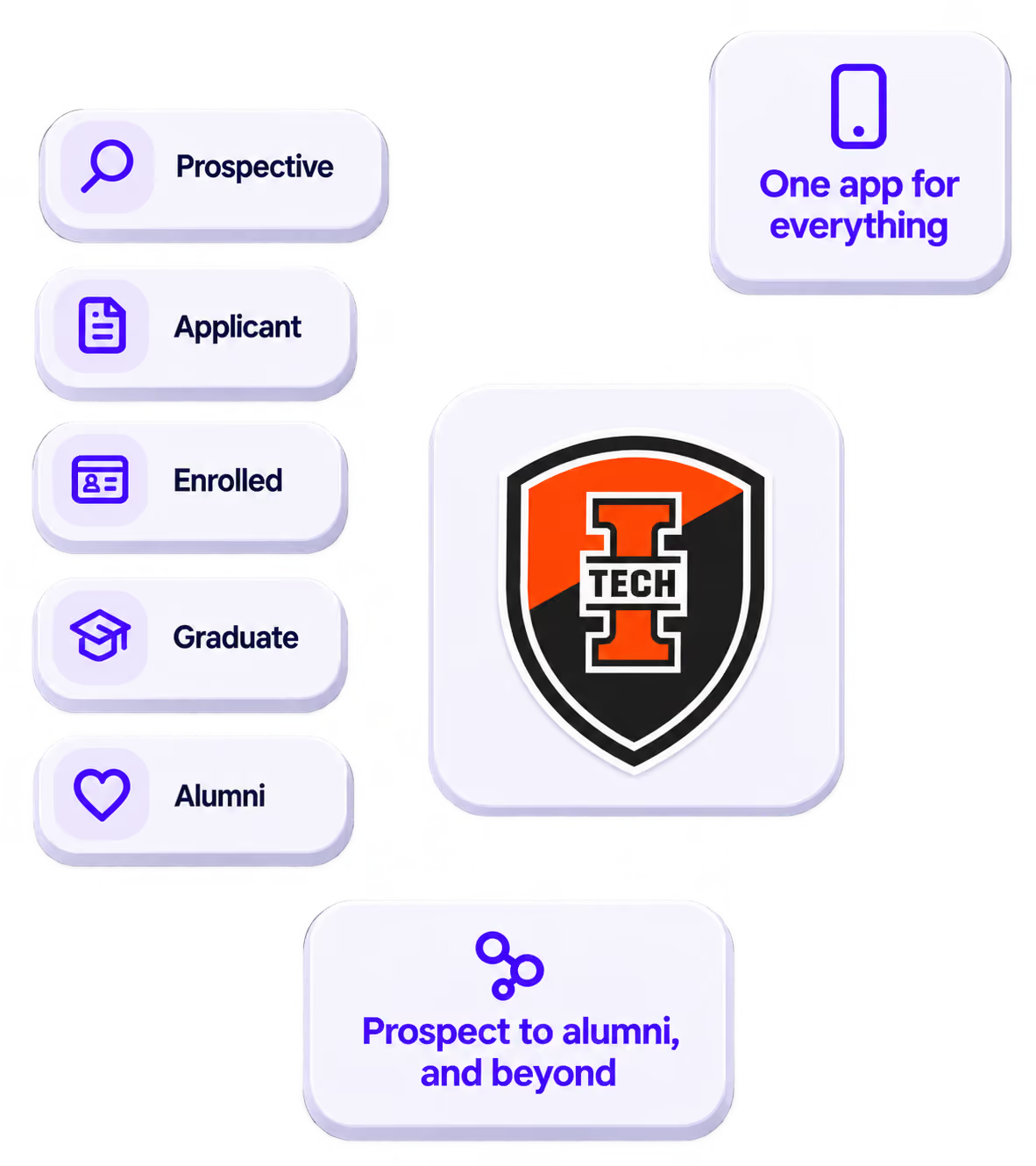
Stand out
Your own app helps you to stand out from the competition, stay top of mind, and be remembered.

Get the Mobile App Playbook
A short guide to running the whole student journey in one app. No fluff, just what works.
for higher ed
Campus
Playbook
A practical guide to building a connected campus experience.
Free playbook
The Mobile App Playbook for Universities
Students decide if they belong long before they set foot on campus. This playbook shows how to win them over from the first visit through graduation.
- Grow enrollment and boost recruitment
- Increase belonging and retention
- Run every event from one branded app
By submitting, you agree to our Privacy Policy.
You're in.
.png)