
Campus apps by department
Admissions, orientation, student life, and more — one campus app that works across departments.

Campus apps by department
Admissions, orientation, student life, and more — one campus app that works across departments.
Build unlimited event apps on one license
One partnership for unlimited campus events — orientation, tours, student life, and everything in between.
Build unlimited event apps on one license
One partnership for unlimited campus events — orientation, tours, student life, and everything in between.
Compare event app platforms
See how Guidebook stacks up against other event app and registration platforms.
Compare event app platforms
See how Guidebook stacks up against other event app and registration platforms.
Event apps for nonprofit and community programs
Give members, volunteers, and donors one branded app for conferences, fundraisers, and year-round community.
Event apps for nonprofit and community programs
Give members, volunteers, and donors one branded app for conferences, fundraisers, and year-round community.
Campus integrations and an open API
Connect Guidebook with the campus systems, APIs, and tools your team already uses.
Campus integrations and an open API
Connect Guidebook with the campus systems, APIs, and tools your team already uses.
Event apps for corporate and enterprise teams
Internal meetings, offsites, and large-scale corporate events — with the branding and control enterprise teams need.
Event apps for corporate and enterprise teams
Internal meetings, offsites, and large-scale corporate events — with the branding and control enterprise teams need.
Create a branded event app with no coding
Put schedules, maps, resources, and updates in every attendee's pocket — built for campus events and programs.
Create a branded event app with no coding
Put schedules, maps, resources, and updates in every attendee's pocket — built for campus events and programs.
Launch a branded, white-label event app
A white-label event app with your branding, your content, and your attendee experience — no coding required.
Launch a branded, white-label event app
A white-label event app with your branding, your content, and your attendee experience — no coding required.
Everything in the Guidebook platform
Explore the features event teams use to engage attendees before, during, and after the event.
Everything in the Guidebook platform
Explore the features event teams use to engage attendees before, during, and after the event.
One app for in-person and virtual attendees
The same schedule, networking, and updates whether people are in the room or joining remotely.
One app for in-person and virtual attendees
The same schedule, networking, and updates whether people are in the room or joining remotely.
Event apps built for associations
Annual meetings, chapter events, and member engagement — without rebuilding a new app every year.
Event apps built for associations
Annual meetings, chapter events, and member engagement — without rebuilding a new app every year.
A branded event website that matches the app
Promote the event, collect interest, and keep branding consistent from the first click to check-in.
A branded event website that matches the app
Promote the event, collect interest, and keep branding consistent from the first click to check-in.
Plan, run, and measure events on one platform
App, registration, badges, and websites in one workflow — so planning isn't a pile of disconnected tools.
Plan, run, and measure events on one platform
App, registration, badges, and websites in one workflow — so planning isn't a pile of disconnected tools.
Keep members engaged between events
One branded app for the conference and everything that happens the other 51 weeks of the year.
Keep members engaged between events
One branded app for the conference and everything that happens the other 51 weeks of the year.
The conference app attendees actually use
Schedules, maps, networking, and live updates for annual meetings, summits, and multi-day conferences.
The conference app attendees actually use
Schedules, maps, networking, and live updates for annual meetings, summits, and multi-day conferences.
Registration that feeds your app and badges
Collect registrations, payments, and attendee data in the same platform as your event app.
Registration that feeds your app and badges
Collect registrations, payments, and attendee data in the same platform as your event app.
Design and print event badges in one place
Custom badges, QR check-in, and on-site printing — without a separate badge vendor.
Design and print event badges in one place
Custom badges, QR check-in, and on-site printing — without a separate badge vendor.
A Smaller School?
Deliver a polished, branded event experience without a large team or a big budget.
A Smaller School?
Deliver a polished, branded event experience without a large team or a big budget.
Running Family Programs?
Give families everything they need, from schedules and maps to real-time updates, all in one place.
Running Family Programs?
Give families everything they need, from schedules and maps to real-time updates, all in one place.
Coordinating Move-In Day?
Share updates, manage events, and keep students informed from move-in through the academic year.

Coordinating Move-In Day?
Share updates, manage events, and keep students informed from move-in through the academic year.
Offering Campus Tours?
Deliver branded, self-guided tour experiences with interactive maps and rich media, available 24/7.

Offering Campus Tours?
Deliver branded, self-guided tour experiences with interactive maps and rich media, available 24/7.
Organising a Career Fair?
Simplify logistics for students, employers, and Career Services staff with one easy-to-use app.
Organising a Career Fair?
Simplify logistics for students, employers, and Career Services staff with one easy-to-use app.
Managing Alumni Events?
Plan reunions, regional events, and fundraising campaigns with an app built for alumni engagement.
Managing Alumni Events?
Plan reunions, regional events, and fundraising campaigns with an app built for alumni engagement.
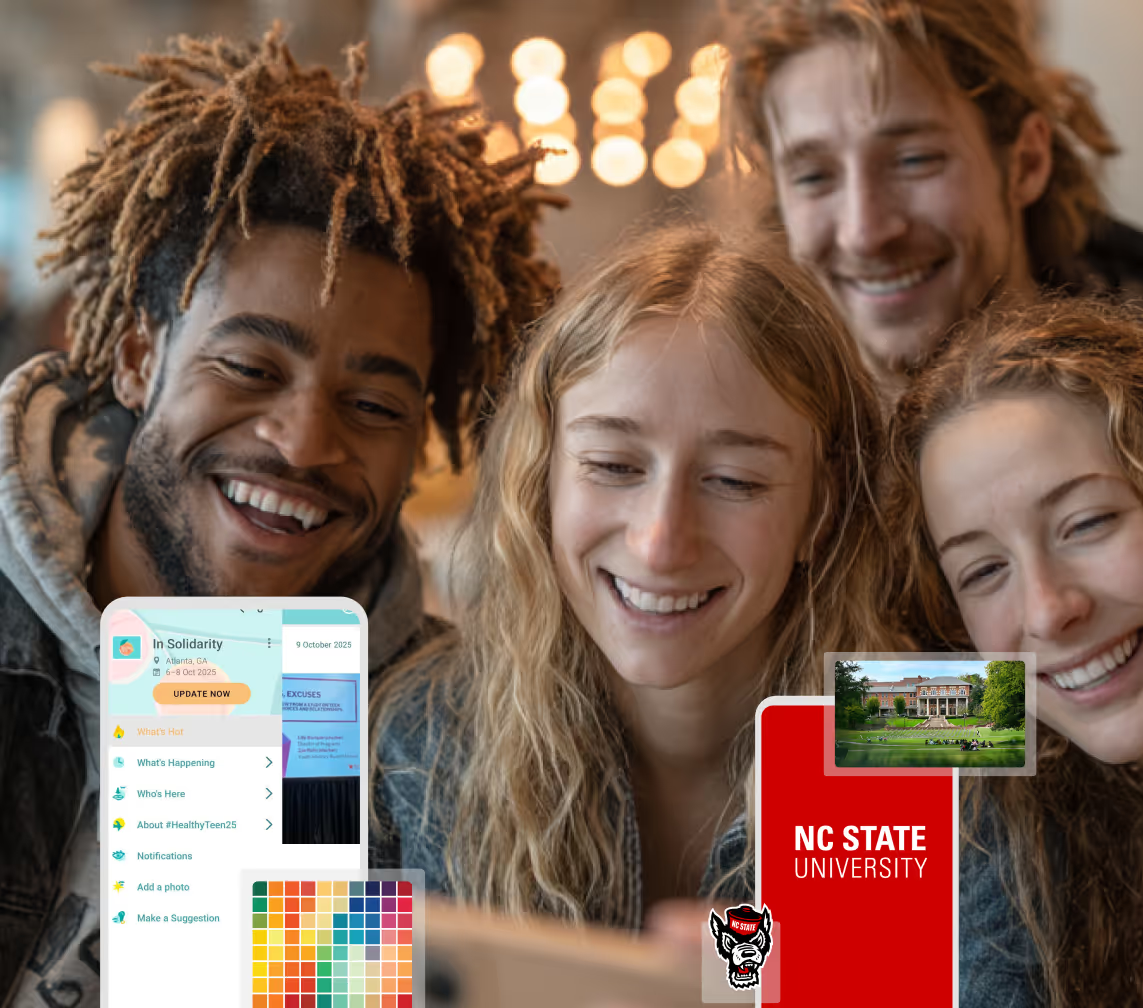
Boost Student Engagement
One hub for schedules, resources, and events that keeps students connected throughout the academic year.
Boost Student Engagement
One hub for schedules, resources, and events that keeps students connected throughout the academic year.
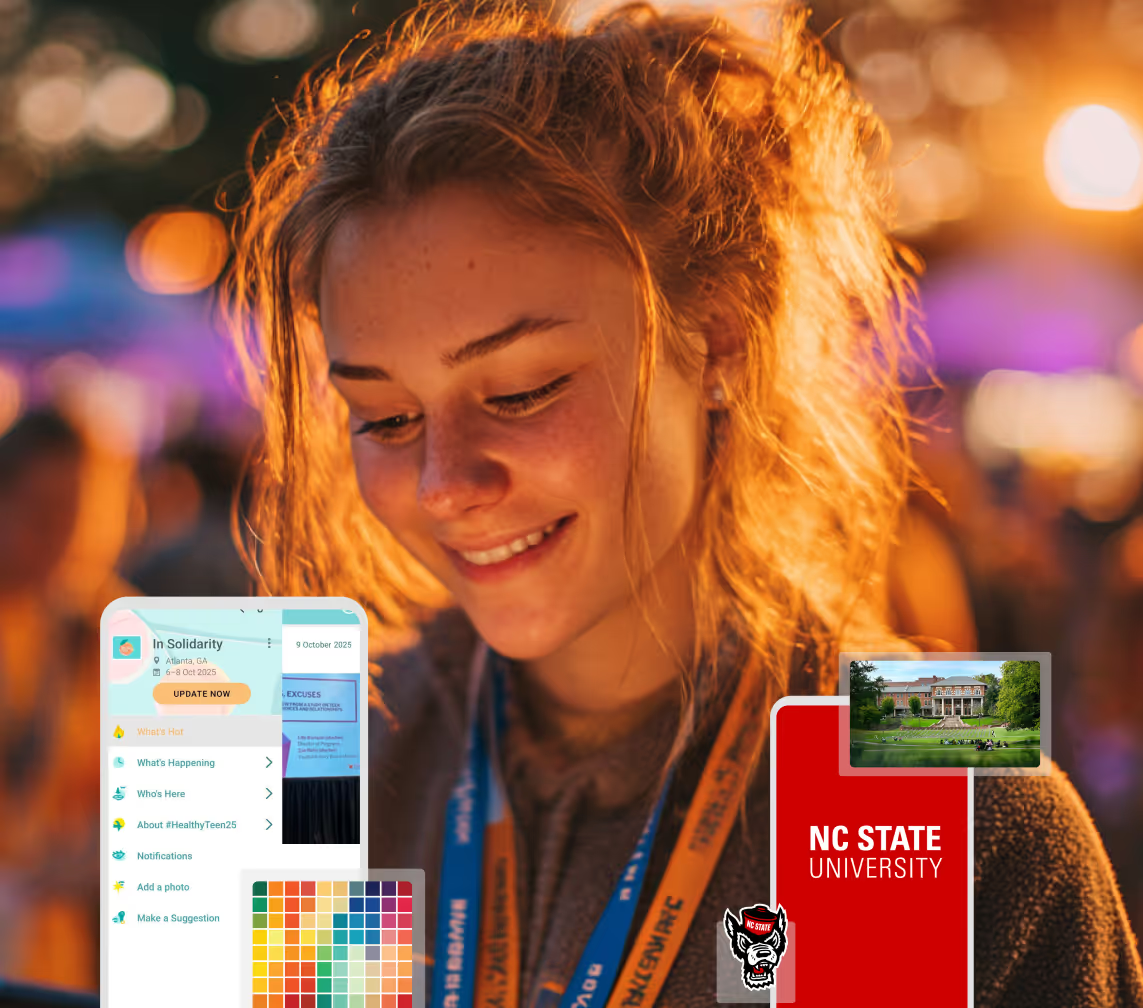
Planning Orientation?
Help new students feel prepared from day one with schedules, campus resources, and real-time updates in one app.
Planning Orientation?
Help new students feel prepared from day one with schedules, campus resources, and real-time updates in one app.
Running Admissions Events?
Manage open houses, tours, and yield events with a branded app that saves time and engages prospective students.

Running Admissions Events?
Manage open houses, tours, and yield events with a branded app that saves time and engages prospective students.
Get a custom Sponsorship Package Template
Stop starting from scratch. Grab free templates that helWe'll build a tailored sponsorship package with suggested pricing, tiers, and benefits..for your specific event.p you build professional sponsorship packages and close deals faster.
Get a custom Sponsorship Package Template
Stop starting from scratch. Grab free templates that helWe'll build a tailored sponsorship package with suggested pricing, tiers, and benefits..for your specific event.p you build professional sponsorship packages and close deals faster.
Plan Your Next Event Without Missing a Beat.
From venue selection to post-event wrap-up, this free checklist walks you through every step (so nothing falls through the cracks).
.avif)
Plan Your Next Event Without Missing a Beat.
From venue selection to post-event wrap-up, this free checklist walks you through every step (so nothing falls through the cracks).
Real Results From Real Events
100,000+ organizations trust Guidebook. See exactly how universities, associations, enterprises, and more put it to work.

Real Results From Real Events
100,000+ organizations trust Guidebook. See exactly how universities, associations, enterprises, and more put it to work.
Flexible pricing for every event size
Find the perfect plan for your needs, from intimate gatherings to large-scale conferences.

Flexible pricing for every event size
Find the perfect plan for your needs, from intimate gatherings to large-scale conferences.
Join our event experts
Watch on-demand webinars and join live sessions with industry leaders sharing best practices for event success.
.avif)
Join our event experts
Watch on-demand webinars and join live sessions with industry leaders sharing best practices for event success.
Guidebook in Action
Book a personalized walkthrough and discover how we help event teams create better attendee experiences.
Guidebook in Action
Book a personalized walkthrough and discover how we help event teams create better attendee experiences.

What is Event ROI?
What is Event ROI? Strategies & Best Practices | Guidebook

Event ROI is the measurement that proves whether your event delivered real business value by comparing what you gained against what you spent. It goes beyond counting attendees to track revenue, leads, brand awareness, and long-term relationships. Without it, you're flying blind.
Here's the thing: Event ROI isn't just about money in versus money out. It captures both tangible returns (like ticket sales and sponsorship revenue) and intangible wins (like brand perception and attendee satisfaction). Smart planners track both. The formula is simple: (Event Gains - Event Costs) / Event Costs × 100. But getting accurate numbers? That takes strategy.
Key Characteristics of Event ROI
- Quantifiable Metrics: Event ROI relies on hard numbers—revenue generated, leads captured, costs incurred. Vague feelings don't count here.
- Time-Bound Analysis: ROI calculations need clear start and end dates. Some returns show up immediately. Others take months to materialize.
- Multi-Dimensional Scope: True ROI includes financial returns, brand impact, relationship building, and knowledge sharing. One metric rarely tells the whole story.
- Baseline Comparison: You need pre-event benchmarks to measure against. Without a starting point, you can't prove improvement.
- Attribution Complexity: Connecting specific outcomes to your event requires tracking systems. Did that sale come from your conference or your email campaign?
- Stakeholder Variability: Different people care about different returns. Sponsors want exposure. Sales teams want leads. Executives want revenue.
Event ROI vs. Related Metrics
Event ROI
- Scope: Overall value generated compared to total investment
- Focus: Financial and strategic returns
- Timeline: Short-term and long-term outcomes
- Channels: All event touchpoints and follow-up activities
- Goal: Prove business impact and justify future budgets
Event KPIs
- Scope: Individual performance indicators
- Focus: Specific metrics like attendance or engagement
- Timeline: Usually measured during or immediately after events
- Channels: Specific activities or touchpoints
- Goal: Track progress toward objectives
- Scope: Data collection and pattern identification
- Focus: Behavioral insights and trends
- Timeline: Real-time and historical analysis
- Channels: Digital platforms, apps, and registration systems
- Goal: Inform decisions and optimize experiences
Essential Event ROI Components
Define Clear Financial Metrics
Start with the numbers that matter most to your organization. These typically include ticket revenue, sponsorship income, and merchandise sales.
Don't forget indirect revenue. A conference might generate $50,000 in ticket sales but $500,000 in closed deals over the next quarter. Track both.
Calculate True Event Costs
Most planners undercount expenses. Include these often-missed items:
- Staff time (planning, execution, follow-up)
- Technology platforms and event check-in software
- Marketing and digital marketing spend
- Opportunity costs (what else could that budget have done?)
- Post-event analysis and reporting time
Track Lead Generation Value
Assign dollar values to leads based on your sales data. If 10% of event leads convert and your average deal is $10,000, each qualified lead is worth $1,000.
Use event registration data to segment leads by quality. Not all contacts have equal value.
Measure Brand Impact
Brand ROI is trickier but still measurable. Track social mentions, media coverage, and sentiment changes. Survey attendees about brand perception before and after.
Assess Relationship Value
Some returns can't be calculated immediately. A partnership formed at your event might generate millions over five years. Document these connections for long-term tracking.
The Event ROI Measurement Process
Set Objectives Before Planning Begins
You can't measure success without defining it first. Work with stakeholders to establish specific, numbered goals. "Increase brand awareness" isn't measurable. "Generate 500 qualified leads" is.
Align objectives with broader business goals. Your event planning process should support company strategy.
Build Tracking Systems Early
Measurement starts before your event opens. Set up:
- Registration tracking with source attribution
- Lead capture forms with qualification questions
- Session attendance monitoring
- Engagement tracking through your event management platform
- Post-event survey distribution
Collect Data During the Event
Real-time data helps you adjust on the fly. Monitor session popularity, booth traffic, and app engagement. Low attendance at a keynote? Send push notifications.
Guidebook's platform captures engagement data automatically. You'll know which sessions resonated and which fell flat.
Analyze Results Within Two Weeks
Strike while memories are fresh. Send surveys within 48 hours. Pull reports within a week. Complete your ROI analysis within two weeks.
Waiting too long means lost data and faded recall. Your event debrief should happen quickly.
Report Findings to Stakeholders
Different audiences need different reports. Executives want the bottom line. Marketing wants lead quality. Sponsors want exposure metrics. Customize your presentations.
Why Event ROI Matters
For Event Success:
- Budget Justification: Hard numbers make it easier to secure funding for future events. CFOs love data.
- Performance Benchmarking: Compare this year's results to last year's. Track improvement over time.
- Resource Optimization: Identify what worked and what didn't. Cut waste. Double down on winners.
- Team Accountability: Clear metrics help teams understand expectations and celebrate wins.
- Continuous Improvement: Each event teaches you something. ROI data shows exactly what to change.
For Business Objectives:
- Revenue Growth: Events that prove ROI get bigger budgets. Bigger budgets mean bigger impact.
- Sales Pipeline Development: Qualified leads from events often convert faster than cold outreach.
- Customer Retention: Events strengthen relationships. Strong relationships reduce churn.
- Competitive Advantage: Companies that measure and optimize outperform those that guess.
- Strategic Decision-Making: Data-driven insights guide where to invest next.
Guidebook's event management platform makes ROI tracking simple. From registration to post-event surveys, you'll capture the data you need to prove value.
Event ROI Best Practices
- Start with the End in Mind: Define success metrics before you book a venue. Every planning decision should support measurable outcomes.
- Use Technology to Automate Tracking: Manual data collection is slow and error-prone. Platforms like Guidebook capture engagement automatically.
- Assign Dollar Values to Non-Financial Outcomes: A media mention might be worth $5,000 in equivalent ad spend. A new partnership could be worth millions. Estimate conservatively.
- Survey Attendees Immediately: Response rates drop 50% after 48 hours. Send surveys before people leave the venue if possible.
- Track Long-Term Outcomes: Some ROI takes months to materialize. Set calendar reminders to check lead conversion at 30, 60, and 90 days.
- Compare Against Industry Benchmarks: A 3:1 ROI might be excellent for a brand awareness event but weak for a sales conference. Context matters.
- Include Qualitative Feedback: Numbers tell part of the story. Testimonials and case studies add color and credibility.
- Document Your Methodology: Consistent measurement lets you compare events fairly. Write down how you calculate each metric.
- Share Results Transparently: Even disappointing results teach valuable lessons. Hiding failures prevents learning.
- Iterate Based on Findings: ROI data is useless if you don't act on it. Build improvement plans into your event management process.
Common Event ROI Mistakes
Measuring Too Late: Waiting until after the event to think about ROI means missing critical data. Build measurement into planning from day one. Retrofitting tracking systems never works as well.
Focusing Only on Attendance: Headcount is vanity. Engagement is sanity. Revenue is reality. A small event with high-quality attendees often outperforms a packed room of tire-kickers.
Ignoring Soft Metrics: Brand perception, relationship strength, and knowledge transfer matter. They're harder to measure but often more valuable than immediate revenue.
Underestimating Costs: Staff time is expensive. So is opportunity cost. Include everything when calculating your investment. Inflated ROI numbers fool no one.
Setting Vague Objectives: "Make the event successful" isn't a goal. "Generate 200 qualified leads with 25% conversion within 90 days" is. Specificity enables measurement.
Forgetting Attribution: That big deal might have started at your event or through a Google search. Without tracking, you'll never know. Use unique codes and dedicated landing pages.
Skipping the Debrief: Data without discussion is wasted effort. Schedule post-event reviews with all stakeholders. Turn insights into action items.
Final Thoughts
Event ROI separates professional planners from hopeful amateurs. In a world where every budget dollar faces scrutiny, proving value isn't optional. It's survival.
Here's the good news: measuring ROI doesn't have to be complicated. Start with clear objectives. Use the right tools. Track consistently. Learn from every event. The data will guide you toward better results.
Ready to prove your event's value? Guidebook's event management platform captures engagement data, streamlines registration, and makes post-event analysis simple. Book a demo to see how leading organizations track and improve their event ROI. Check out our case studies for real examples of events that delivered measurable results.
Because the best events don't just feel successful—they prove it.
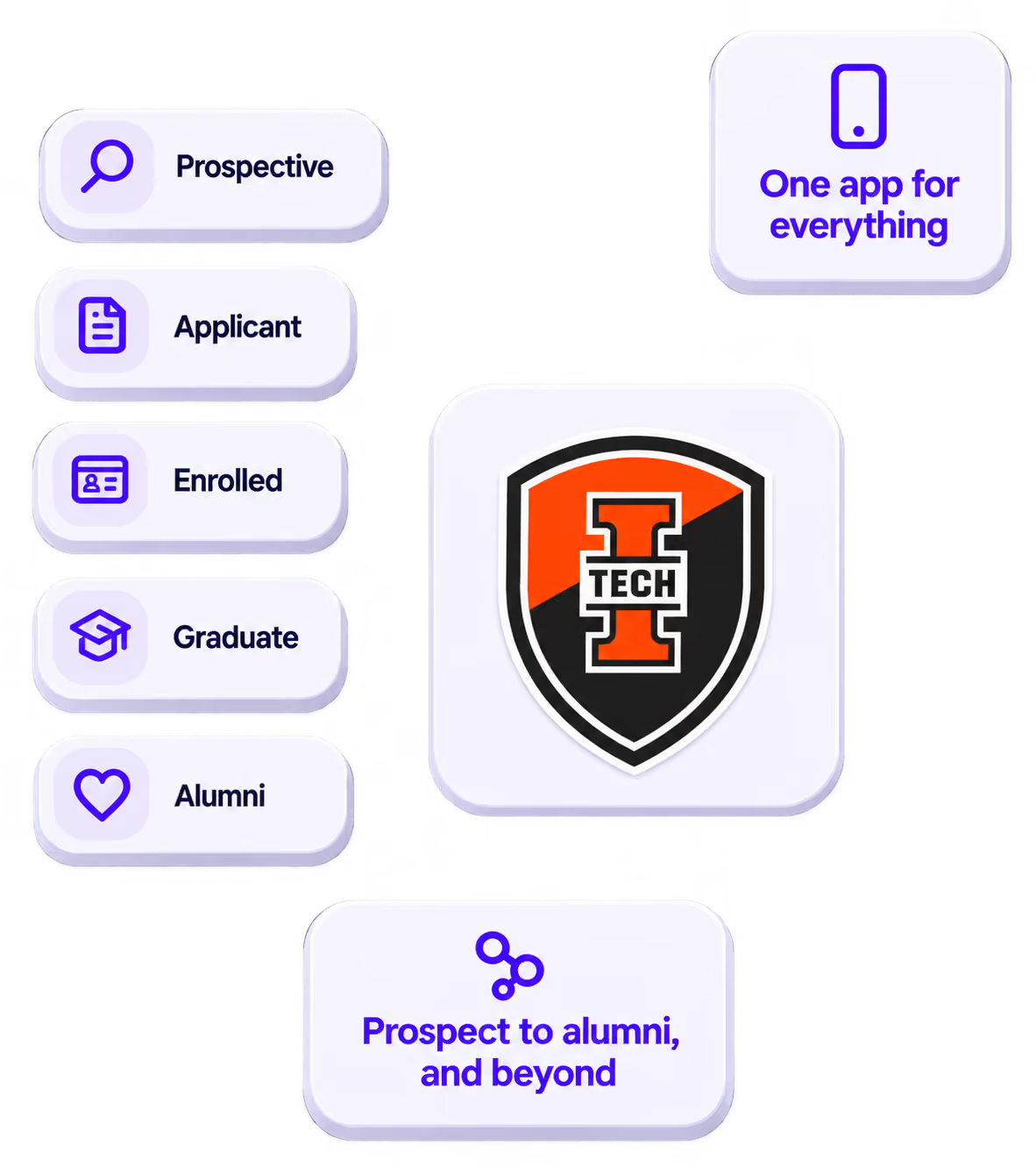
The power of your brand in your app, from first visit to alumni.
Build trust
Your brand, front and center in your own app, downloaded directly from the app stores.
.avif)
Deliver continuity
One app for everything a student needs. From being a prospective student through to graduation and beyond.
Stand out
Your own app helps you to stand out from the competition, stay top of mind, and be remembered.
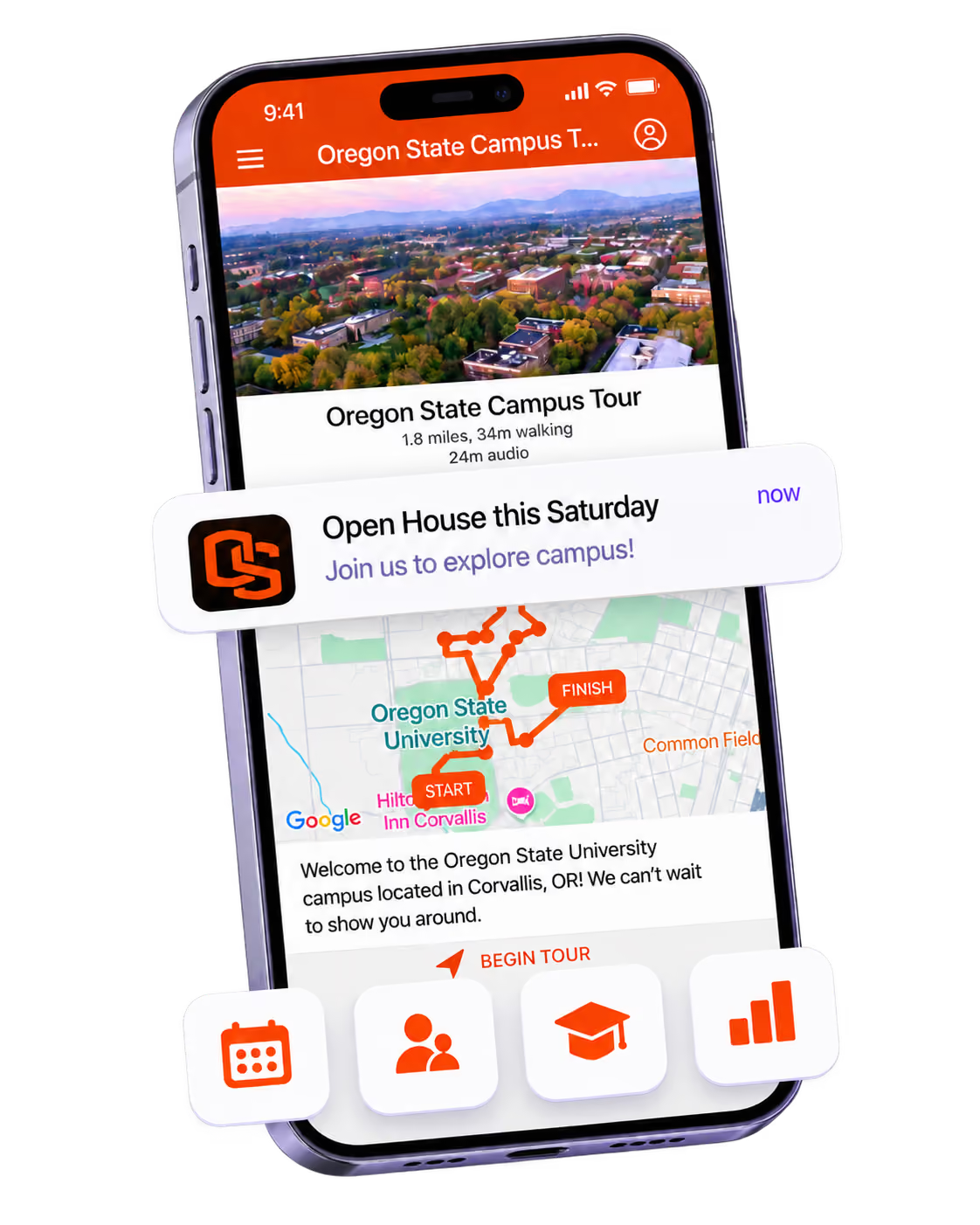

Get the Mobile App Playbook
A short guide to running the whole student journey in one app. No fluff, just what works.
for higher ed
Campus
Playbook
A practical guide to building a connected campus experience.
Free playbook
The Mobile App Playbook for Universities
Students decide if they belong long before they set foot on campus. This playbook shows how to win them over from the first visit through graduation.
- Grow enrollment and boost recruitment
- Increase belonging and retention
- Run every event from one branded app
By submitting, you agree to our Privacy Policy.
You're in.
.png)