
Campus apps by department
Admissions, orientation, student life, and more — one campus app that works across departments.

Campus apps by department
Admissions, orientation, student life, and more — one campus app that works across departments.
Build unlimited event apps on one license
One partnership for unlimited campus events — orientation, tours, student life, and everything in between.
Build unlimited event apps on one license
One partnership for unlimited campus events — orientation, tours, student life, and everything in between.
Compare event app platforms
See how Guidebook stacks up against other event app and registration platforms.
Compare event app platforms
See how Guidebook stacks up against other event app and registration platforms.
Event apps for nonprofit and community programs
Give members, volunteers, and donors one branded app for conferences, fundraisers, and year-round community.
Event apps for nonprofit and community programs
Give members, volunteers, and donors one branded app for conferences, fundraisers, and year-round community.
Campus integrations and an open API
Connect Guidebook with the campus systems, APIs, and tools your team already uses.
Campus integrations and an open API
Connect Guidebook with the campus systems, APIs, and tools your team already uses.
Event apps for corporate and enterprise teams
Internal meetings, offsites, and large-scale corporate events — with the branding and control enterprise teams need.
Event apps for corporate and enterprise teams
Internal meetings, offsites, and large-scale corporate events — with the branding and control enterprise teams need.
Create a branded event app with no coding
Put schedules, maps, resources, and updates in every attendee's pocket — built for campus events and programs.
Create a branded event app with no coding
Put schedules, maps, resources, and updates in every attendee's pocket — built for campus events and programs.
Launch a branded, white-label event app
A white-label event app with your branding, your content, and your attendee experience — no coding required.
Launch a branded, white-label event app
A white-label event app with your branding, your content, and your attendee experience — no coding required.
Everything in the Guidebook platform
Explore the features event teams use to engage attendees before, during, and after the event.
Everything in the Guidebook platform
Explore the features event teams use to engage attendees before, during, and after the event.
One app for in-person and virtual attendees
The same schedule, networking, and updates whether people are in the room or joining remotely.
One app for in-person and virtual attendees
The same schedule, networking, and updates whether people are in the room or joining remotely.
Event apps built for associations
Annual meetings, chapter events, and member engagement — without rebuilding a new app every year.
Event apps built for associations
Annual meetings, chapter events, and member engagement — without rebuilding a new app every year.
A branded event website that matches the app
Promote the event, collect interest, and keep branding consistent from the first click to check-in.
A branded event website that matches the app
Promote the event, collect interest, and keep branding consistent from the first click to check-in.
Plan, run, and measure events on one platform
App, registration, badges, and websites in one workflow — so planning isn't a pile of disconnected tools.
Plan, run, and measure events on one platform
App, registration, badges, and websites in one workflow — so planning isn't a pile of disconnected tools.
Keep members engaged between events
One branded app for the conference and everything that happens the other 51 weeks of the year.
Keep members engaged between events
One branded app for the conference and everything that happens the other 51 weeks of the year.
The conference app attendees actually use
Schedules, maps, networking, and live updates for annual meetings, summits, and multi-day conferences.
The conference app attendees actually use
Schedules, maps, networking, and live updates for annual meetings, summits, and multi-day conferences.
Registration that feeds your app and badges
Collect registrations, payments, and attendee data in the same platform as your event app.
Registration that feeds your app and badges
Collect registrations, payments, and attendee data in the same platform as your event app.
Design and print event badges in one place
Custom badges, QR check-in, and on-site printing — without a separate badge vendor.
Design and print event badges in one place
Custom badges, QR check-in, and on-site printing — without a separate badge vendor.
A Smaller School?
Deliver a polished, branded event experience without a large team or a big budget.
A Smaller School?
Deliver a polished, branded event experience without a large team or a big budget.
Running Family Programs?
Give families everything they need, from schedules and maps to real-time updates, all in one place.
Running Family Programs?
Give families everything they need, from schedules and maps to real-time updates, all in one place.
Coordinating Move-In Day?
Share updates, manage events, and keep students informed from move-in through the academic year.

Coordinating Move-In Day?
Share updates, manage events, and keep students informed from move-in through the academic year.
Offering Campus Tours?
Deliver branded, self-guided tour experiences with interactive maps and rich media, available 24/7.

Offering Campus Tours?
Deliver branded, self-guided tour experiences with interactive maps and rich media, available 24/7.
Organising a Career Fair?
Simplify logistics for students, employers, and Career Services staff with one easy-to-use app.
Organising a Career Fair?
Simplify logistics for students, employers, and Career Services staff with one easy-to-use app.
Managing Alumni Events?
Plan reunions, regional events, and fundraising campaigns with an app built for alumni engagement.
Managing Alumni Events?
Plan reunions, regional events, and fundraising campaigns with an app built for alumni engagement.
Boost Student Engagement
One hub for schedules, resources, and events that keeps students connected throughout the academic year.
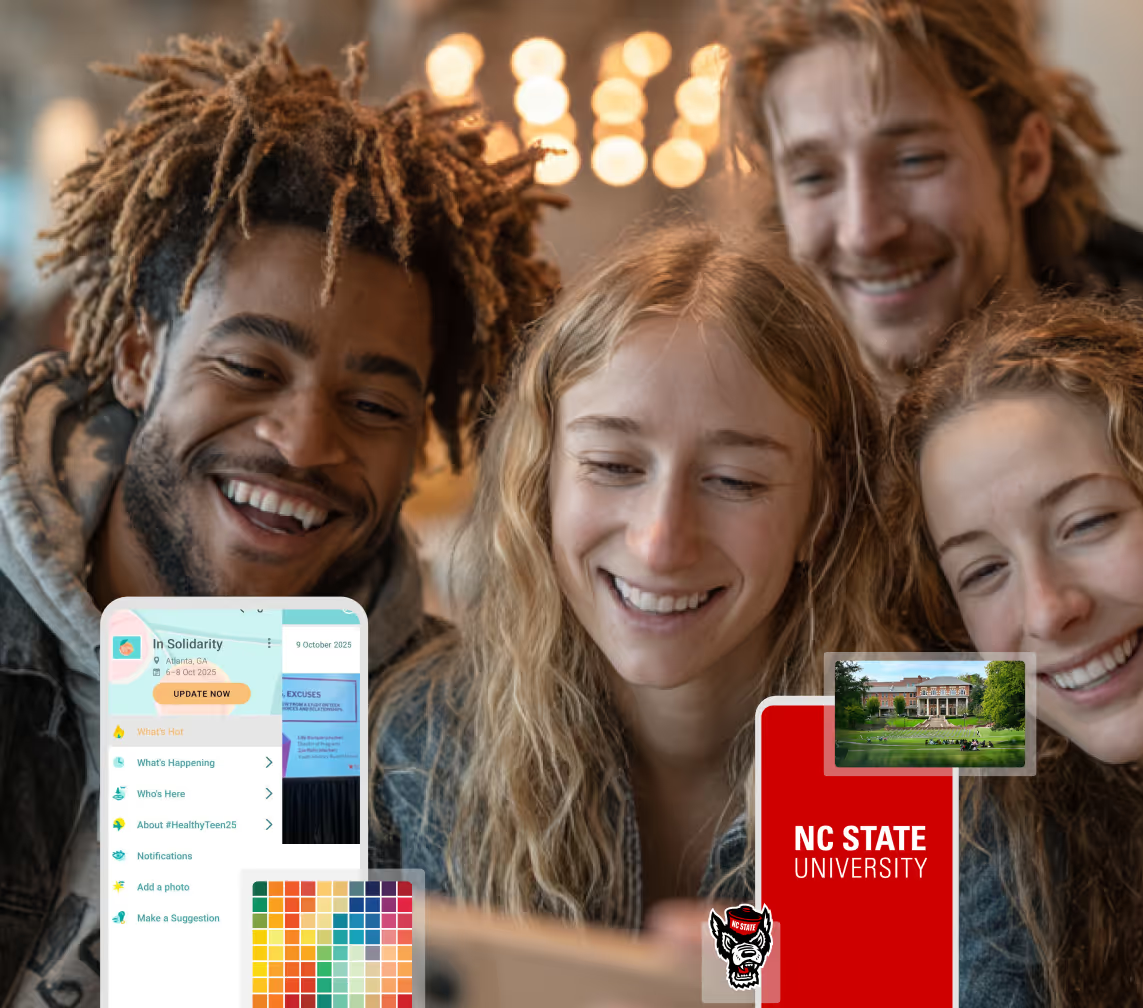
Boost Student Engagement
One hub for schedules, resources, and events that keeps students connected throughout the academic year.
Planning Orientation?
Help new students feel prepared from day one with schedules, campus resources, and real-time updates in one app.
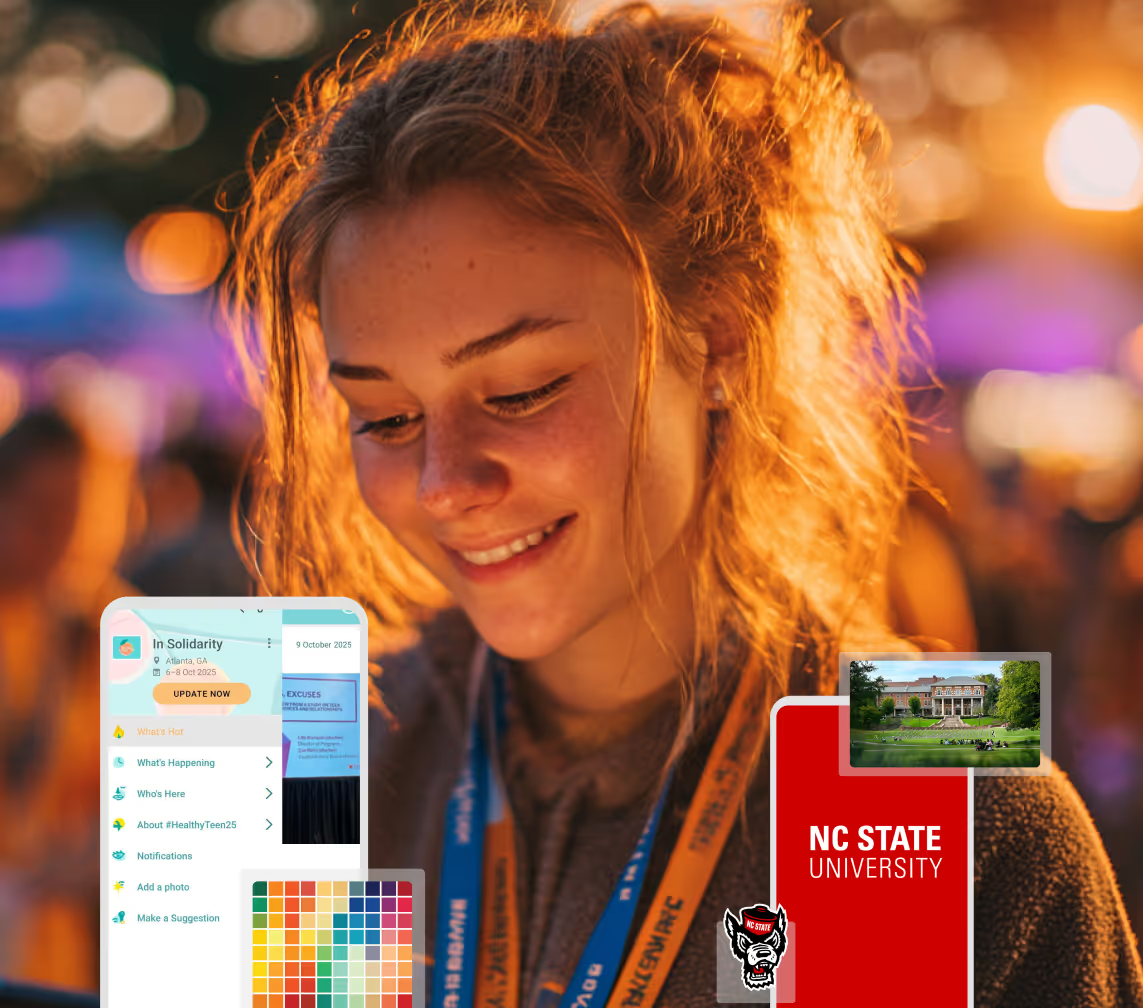
Planning Orientation?
Help new students feel prepared from day one with schedules, campus resources, and real-time updates in one app.
Running Admissions Events?
Manage open houses, tours, and yield events with a branded app that saves time and engages prospective students.

Running Admissions Events?
Manage open houses, tours, and yield events with a branded app that saves time and engages prospective students.
Get a custom Sponsorship Package Template
Stop starting from scratch. Grab free templates that helWe'll build a tailored sponsorship package with suggested pricing, tiers, and benefits..for your specific event.p you build professional sponsorship packages and close deals faster.
Get a custom Sponsorship Package Template
Stop starting from scratch. Grab free templates that helWe'll build a tailored sponsorship package with suggested pricing, tiers, and benefits..for your specific event.p you build professional sponsorship packages and close deals faster.
Plan Your Next Event Without Missing a Beat.
From venue selection to post-event wrap-up, this free checklist walks you through every step (so nothing falls through the cracks).
.avif)
Plan Your Next Event Without Missing a Beat.
From venue selection to post-event wrap-up, this free checklist walks you through every step (so nothing falls through the cracks).
Real Results From Real Events
100,000+ organizations trust Guidebook. See exactly how universities, associations, enterprises, and more put it to work.

Real Results From Real Events
100,000+ organizations trust Guidebook. See exactly how universities, associations, enterprises, and more put it to work.
Flexible pricing for every event size
Find the perfect plan for your needs, from intimate gatherings to large-scale conferences.

Flexible pricing for every event size
Find the perfect plan for your needs, from intimate gatherings to large-scale conferences.
Join our event experts
Watch on-demand webinars and join live sessions with industry leaders sharing best practices for event success.
.avif)
Join our event experts
Watch on-demand webinars and join live sessions with industry leaders sharing best practices for event success.
Guidebook in Action
Book a personalized walkthrough and discover how we help event teams create better attendee experiences.
Guidebook in Action
Book a personalized walkthrough and discover how we help event teams create better attendee experiences.

What are Event Management Tips?
Discover essential event management tips to plan and execute successful events. Learn best practices, organization strategies, and expert advice for seamless event experiences.

Event management tips are the practical strategies and proven techniques that help planners execute flawless events while staying sane and on budget. These tips cover everything from initial planning through post-event analysis. Master them, and you'll transform chaotic events into memorable experiences.
Here's the thing: anyone can throw an event together. But running one that actually achieves your goals? That takes know-how. The best event managers don't just wing it. They follow tested approaches that save time, reduce stress, and deliver results. Whether you're planning your first conference or your fiftieth, these tips will level up your game.
Key Characteristics of Event Management Tips
- Actionable and Specific: Good tips give you clear steps to follow, not vague advice. They tell you exactly what to do and when to do it.
- Scalable Across Event Types: The best strategies work for small meetings and large conferences alike. You adapt them to fit your event's size and scope.
- Time-Tested and Proven: These aren't random ideas. They come from experienced planners who've learned what works through trial and error.
- Budget-Conscious: Smart tips help you maximize impact without blowing your budget. They focus on efficiency and ROI.
- Technology-Enabled: Modern event management tips often involve digital tools. From event check-in software to mobile apps, tech makes execution smoother.
- Attendee-Focused: Every tip should ultimately improve the attendee experience. Happy attendees mean successful events.
- Measurable in Impact: Good tips lead to outcomes you can track. They help you prove event ROI to stakeholders.
Event Management Tips vs. Related Concepts
Event Planning Process
- Scope: The complete framework for organizing an event from concept to completion
- Focus: Sequential steps and milestones that guide overall event development
- Timeline: Spans months or years, covering the entire event lifecycle
- Channels: Involves all departments and stakeholders in coordinated planning
- Goal: Create a structured roadmap for successful event execution
Event Production
- Scope: Technical and logistical execution of event elements
- Focus: Audio-visual, staging, lighting, and physical setup requirements
- Timeline: Concentrated around event dates, especially load-in and live days
- Channels: Works with vendors, technicians, and production crews
- Goal: Deliver flawless technical execution that supports event goals
Event Marketing
- Scope: Promotional activities that drive awareness and event registration
- Focus: Audience targeting, messaging, and campaign optimization
- Timeline: Begins months before the event and continues through follow-up
- Channels: Uses email, social media, paid ads, and content marketing
- Goal: Maximize attendance and engagement through strategic promotion
Event management tips connect all these areas. They're the practical wisdom that makes event planning, production, and marketing work together smoothly. Think of tips as the shortcuts that experienced planners share to help you avoid common pitfalls.
Essential Categories of Event Management Tips
Pre-Event Planning Tips
Start with crystal-clear goals. What does success look like? Write it down. Share it with your team. Every decision should ladder up to these objectives.
Build your timeline backwards from the event date. This reveals hidden deadlines you might miss. Most planners underestimate how long tasks take by 30-50%.
- Book venues 6-12 months ahead for large events
- Confirm speakers at least 3 months before
- Lock in catering menus 4-6 weeks out
- Finalize attendee communications 2 weeks prior
Budget Management Tips
Always build in a 10-15% contingency fund. Surprises happen. Having a buffer prevents panic when they do.
Track every expense in real-time. Waiting until after the event to reconcile costs leads to budget overruns. Use spreadsheets or event management software to stay current.
- Get three quotes for every major vendor
- Negotiate payment terms, not just prices
- Review contracts for hidden fees
- Document all changes in writing
Team Coordination Tips
Assign clear ownership for every task. When everyone owns something, no one owns it. Use a RACI matrix to clarify roles.
Hold brief daily standups during crunch time. These 15-minute check-ins catch problems early. They also keep everyone aligned on priorities.
Technology Integration Tips
Choose tools that talk to each other. Disconnected systems create data silos and extra work. Look for platforms with built-in integrations.
Mobile apps have become essential for modern events. They replace printed programs, enable real-time updates, and boost engagement. Guidebook's app builder makes this easy, even for first-time planners.
The Event Management Timeline
6-12 Months Out: Foundation Phase
This is when you make the big decisions. Venue, date, and budget get locked in now. Changing these later costs time and money.
- Define event goals and success metrics
- Secure venue and sign contracts
- Build preliminary budget
- Identify key stakeholders and sponsors
- Start speaker outreach
3-6 Months Out: Development Phase
Now you're building the event experience. Content, marketing, and logistics come together during this phase.
- Finalize speaker lineup and session topics
- Launch event marketing campaigns
- Open registration
- Confirm vendor contracts
- Create event app content
1-3 Months Out: Execution Phase
Details matter most now. Small oversights become big problems if you don't catch them early.
- Send attendee communications
- Finalize run-of-show documents
- Conduct venue walkthroughs
- Train staff and volunteers
- Test all technology
Event Week: Showtime
Stay calm. Trust your preparation. Focus on problem-solving, not perfection.
Brief your team daily. Walk the venue before doors open. Keep your phone charged and your emergency contacts handy.
Why Event Management Tips Matter
For Event Success:
- Reduced Stress: Following proven tips prevents last-minute scrambles. You'll sleep better knowing you've covered your bases.
- Better Attendee Experience: Well-managed events feel seamless to attendees. They notice when things run smoothly.
- Fewer Mistakes: Learning from others' errors saves you from making your own. Tips are shortcuts to expertise.
- Improved Team Performance: Clear processes help everyone work better together. Less confusion means more productivity.
- Higher Quality Outcomes: Attention to detail elevates every aspect of your event. Small improvements add up to big impact.
For Business Objectives:
- Stronger ROI: Efficient management stretches your budget further. You get more impact per dollar spent.
- Better Stakeholder Satisfaction: Executives and sponsors notice well-run events. This builds trust for future initiatives.
- Increased Attendance: Word spreads about great events. Good management today means easier marketing tomorrow.
- Valuable Data Collection: Organized events capture better attendee insights. This data drives smarter decisions.
- Scalable Processes: Documented tips become repeatable playbooks. Your team can grow without losing quality.
Guidebook's event management platform helps you put these tips into action. From registration to post-event surveys, it streamlines the entire process.
Event Management Tips Best Practices
- Document Everything: Create written processes for recurring tasks. Future you will thank present you when planning next year's event.
- Communicate Early and Often: Attendees, speakers, and vendors all appreciate updates. Silence breeds anxiety and confusion.
- Build Relationships with Vendors: Treat vendors as partners, not just suppliers. Strong relationships lead to better service and flexibility.
- Create Backup Plans: What if your keynote cancels? What if it rains on your outdoor event? Have Plan B ready for critical elements.
- Use Checklists Religiously: Even experienced planners forget things under pressure. Checklists catch what your brain misses.
- Gather Feedback Systematically: Use an event debrief template to capture lessons learned. This turns every event into a learning opportunity.
- Invest in the Right Technology: The right tools save hours of manual work. Schedule a demo to see how Guidebook can help.
- Prioritize Attendee Communication: Send confirmation emails, reminder messages, and day-of updates. Over-communication beats confusion every time.
- Train Your Team Thoroughly: Staff who understand the big picture make better decisions. Don't just assign tasks—explain the why.
- Stay Flexible: Plans change. The best event managers adapt quickly without losing their cool.
Common Event Management Tips Mistakes
Skipping the Post-Event Debrief: Many planners move straight to the next project without reflecting. This wastes valuable learning opportunities. Schedule your debrief before the event even happens.
Underestimating Setup Time: Events always take longer to set up than expected. Build in buffer time for technical issues and last-minute changes. Rushing setup leads to visible mistakes.
Ignoring Attendee Feedback: Surveys that sit unread help no one. Commit to reviewing feedback within two weeks of your event. Act on at least three suggestions for your next event.
Over-Relying on Email: Email gets lost in crowded inboxes. Use multiple channels including mobile apps, social media, and text messages. Meet attendees where they already are.
Failing to Test Technology: Assuming tech will work is a recipe for disaster. Test every system before the event. Have backup plans for critical technology failures.
Micromanaging Your Team: Hovering over staff creates stress and slows everyone down. Hire good people, train them well, then trust them to execute. Save your energy for real problems.
Neglecting Self-Care: Burned-out planners make poor decisions. Take breaks, stay hydrated, and get sleep when possible. Your event needs you at your best.
Final Thoughts
Event management tips aren't just nice-to-know information. They're the difference between events that struggle and events that shine. Every tip you apply makes your next event a little bit better.
The event industry keeps evolving. New trends emerge constantly, from virtual events to AI-powered personalization. But the fundamentals stay the same. Plan thoroughly, communicate clearly, and always put attendees first.
Here's what separates good event managers from great ones: they never stop learning. They read articles like this one. They attend industry conferences. They ask colleagues for advice. They treat every event as a chance to improve.
Ready to put these tips into practice? Guidebook offers event planning resources, customizable templates, and a powerful branded app platform to help you succeed. Check out our case studies to see how other planners have transformed their events. Your next great event starts with the right tools and the right knowledge.
Now go make something amazing happen.
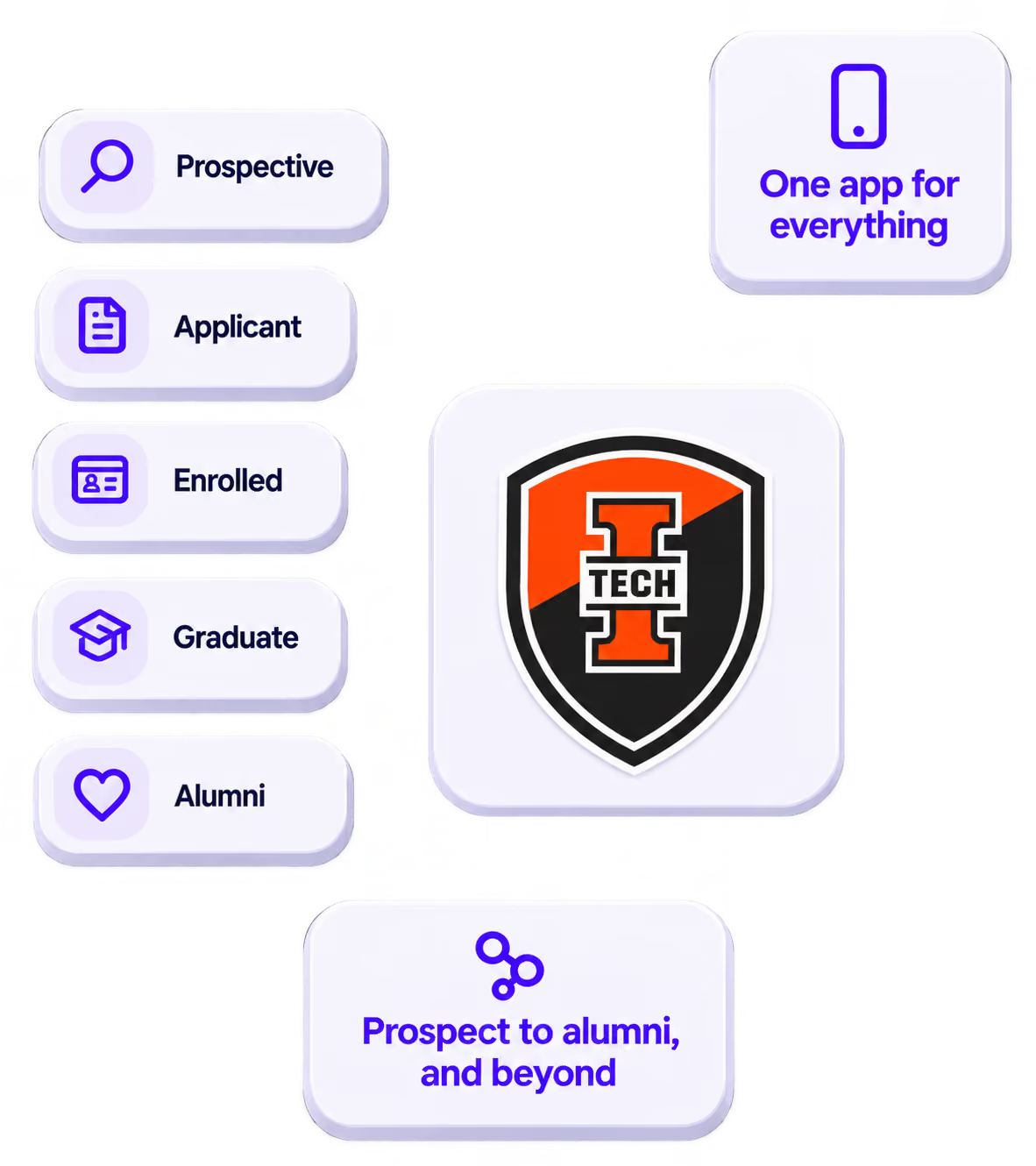
The power of your brand in your app, from first visit to alumni.
Build trust
Your brand, front and center in your own app, downloaded directly from the app stores.
.avif)
Deliver continuity
One app for everything a student needs. From being a prospective student through to graduation and beyond.
Stand out
Your own app helps you to stand out from the competition, stay top of mind, and be remembered.
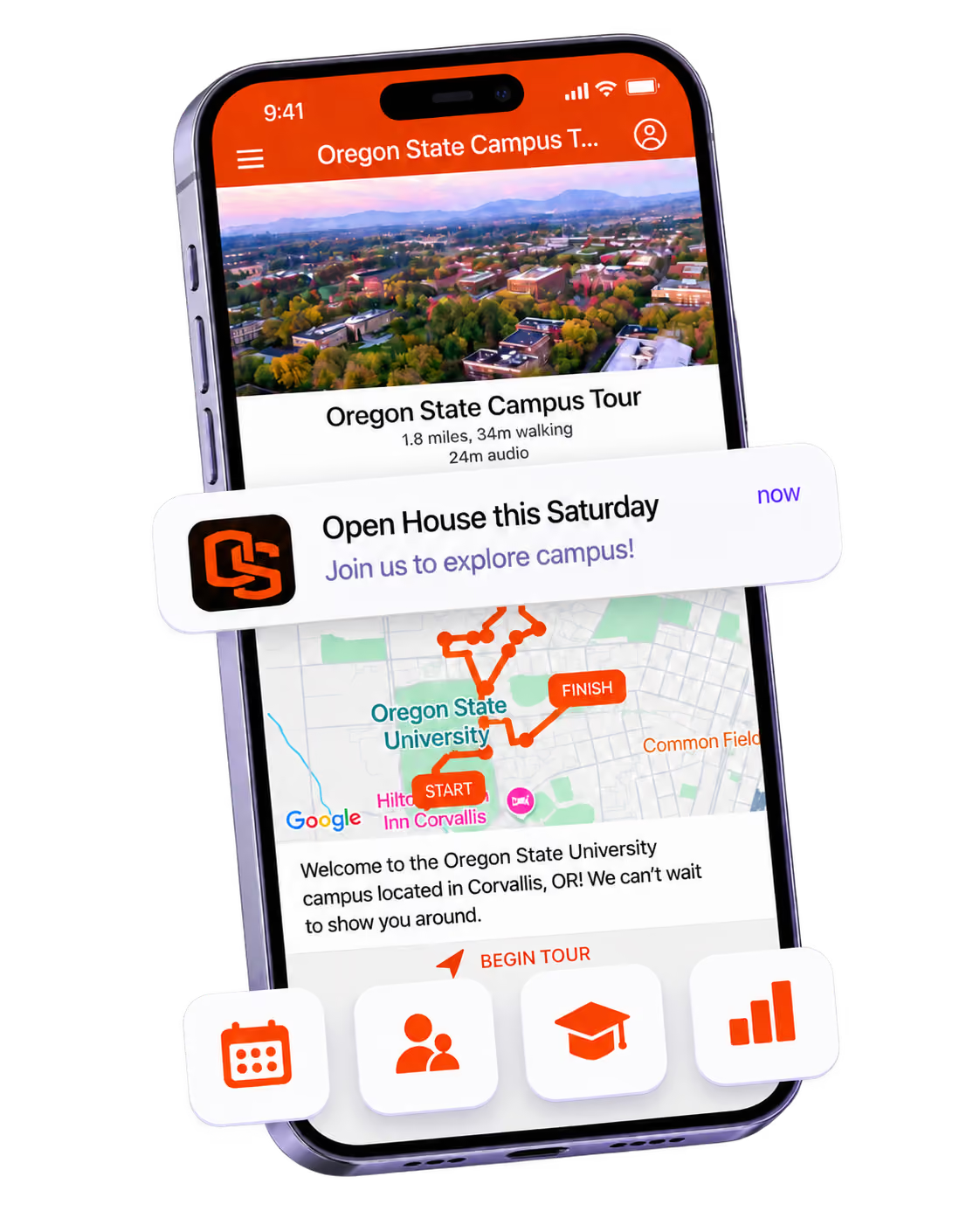

Get the Mobile App Playbook
A short guide to running the whole student journey in one app. No fluff, just what works.
for higher ed
Campus
Playbook
A practical guide to building a connected campus experience.
Free playbook
The Mobile App Playbook for Universities
Students decide if they belong long before they set foot on campus. This playbook shows how to win them over from the first visit through graduation.
- Grow enrollment and boost recruitment
- Increase belonging and retention
- Run every event from one branded app
By submitting, you agree to our Privacy Policy.
You're in.
.png)