
Campus apps by department
Admissions, orientation, student life, and more — one campus app that works across departments.

Campus apps by department
Admissions, orientation, student life, and more — one campus app that works across departments.
Build unlimited event apps on one license
One partnership for unlimited campus events — orientation, tours, student life, and everything in between.
Build unlimited event apps on one license
One partnership for unlimited campus events — orientation, tours, student life, and everything in between.
Compare event app platforms
See how Guidebook stacks up against other event app and registration platforms.
Compare event app platforms
See how Guidebook stacks up against other event app and registration platforms.
Event apps for nonprofit and community programs
Give members, volunteers, and donors one branded app for conferences, fundraisers, and year-round community.
Event apps for nonprofit and community programs
Give members, volunteers, and donors one branded app for conferences, fundraisers, and year-round community.
Campus integrations and an open API
Connect Guidebook with the campus systems, APIs, and tools your team already uses.
Campus integrations and an open API
Connect Guidebook with the campus systems, APIs, and tools your team already uses.
Event apps for corporate and enterprise teams
Internal meetings, offsites, and large-scale corporate events — with the branding and control enterprise teams need.
Event apps for corporate and enterprise teams
Internal meetings, offsites, and large-scale corporate events — with the branding and control enterprise teams need.
Create a branded event app with no coding
Put schedules, maps, resources, and updates in every attendee's pocket — built for campus events and programs.
Create a branded event app with no coding
Put schedules, maps, resources, and updates in every attendee's pocket — built for campus events and programs.
Launch a branded, white-label event app
A white-label event app with your branding, your content, and your attendee experience — no coding required.
Launch a branded, white-label event app
A white-label event app with your branding, your content, and your attendee experience — no coding required.
Everything in the Guidebook platform
Explore the features event teams use to engage attendees before, during, and after the event.
Everything in the Guidebook platform
Explore the features event teams use to engage attendees before, during, and after the event.
One app for in-person and virtual attendees
The same schedule, networking, and updates whether people are in the room or joining remotely.
One app for in-person and virtual attendees
The same schedule, networking, and updates whether people are in the room or joining remotely.
Event apps built for associations
Annual meetings, chapter events, and member engagement — without rebuilding a new app every year.
Event apps built for associations
Annual meetings, chapter events, and member engagement — without rebuilding a new app every year.
A branded event website that matches the app
Promote the event, collect interest, and keep branding consistent from the first click to check-in.
A branded event website that matches the app
Promote the event, collect interest, and keep branding consistent from the first click to check-in.
Plan, run, and measure events on one platform
App, registration, badges, and websites in one workflow — so planning isn't a pile of disconnected tools.
Plan, run, and measure events on one platform
App, registration, badges, and websites in one workflow — so planning isn't a pile of disconnected tools.
Keep members engaged between events
One branded app for the conference and everything that happens the other 51 weeks of the year.
Keep members engaged between events
One branded app for the conference and everything that happens the other 51 weeks of the year.
The conference app attendees actually use
Schedules, maps, networking, and live updates for annual meetings, summits, and multi-day conferences.
The conference app attendees actually use
Schedules, maps, networking, and live updates for annual meetings, summits, and multi-day conferences.
Registration that feeds your app and badges
Collect registrations, payments, and attendee data in the same platform as your event app.
Registration that feeds your app and badges
Collect registrations, payments, and attendee data in the same platform as your event app.
Design and print event badges in one place
Custom badges, QR check-in, and on-site printing — without a separate badge vendor.
Design and print event badges in one place
Custom badges, QR check-in, and on-site printing — without a separate badge vendor.
A Smaller School?
Deliver a polished, branded event experience without a large team or a big budget.
A Smaller School?
Deliver a polished, branded event experience without a large team or a big budget.
Running Family Programs?
Give families everything they need, from schedules and maps to real-time updates, all in one place.
Running Family Programs?
Give families everything they need, from schedules and maps to real-time updates, all in one place.
Coordinating Move-In Day?
Share updates, manage events, and keep students informed from move-in through the academic year.

Coordinating Move-In Day?
Share updates, manage events, and keep students informed from move-in through the academic year.
Offering Campus Tours?
Deliver branded, self-guided tour experiences with interactive maps and rich media, available 24/7.

Offering Campus Tours?
Deliver branded, self-guided tour experiences with interactive maps and rich media, available 24/7.
Organising a Career Fair?
Simplify logistics for students, employers, and Career Services staff with one easy-to-use app.
Organising a Career Fair?
Simplify logistics for students, employers, and Career Services staff with one easy-to-use app.
Managing Alumni Events?
Plan reunions, regional events, and fundraising campaigns with an app built for alumni engagement.
Managing Alumni Events?
Plan reunions, regional events, and fundraising campaigns with an app built for alumni engagement.
Boost Student Engagement
One hub for schedules, resources, and events that keeps students connected throughout the academic year.
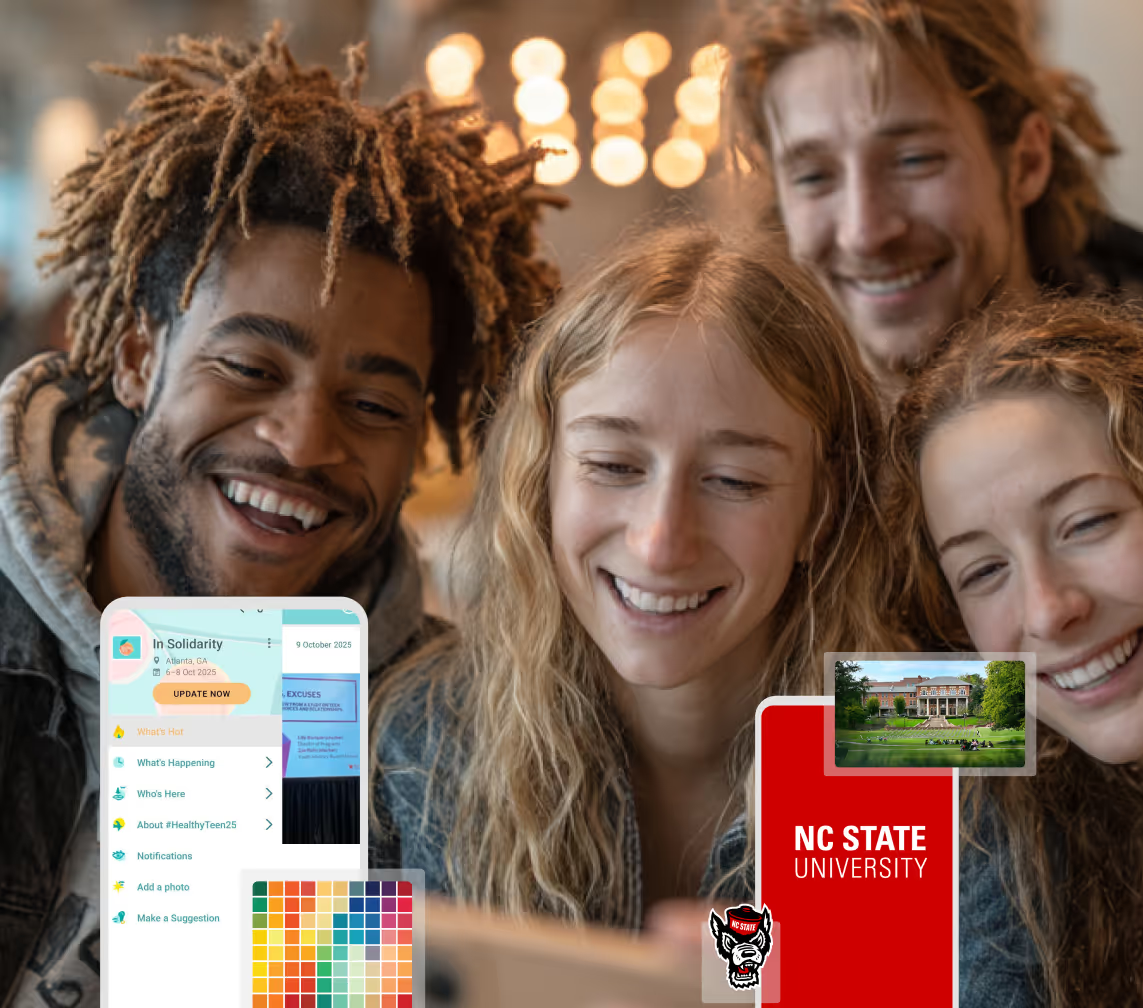
Boost Student Engagement
One hub for schedules, resources, and events that keeps students connected throughout the academic year.
Planning Orientation?
Help new students feel prepared from day one with schedules, campus resources, and real-time updates in one app.
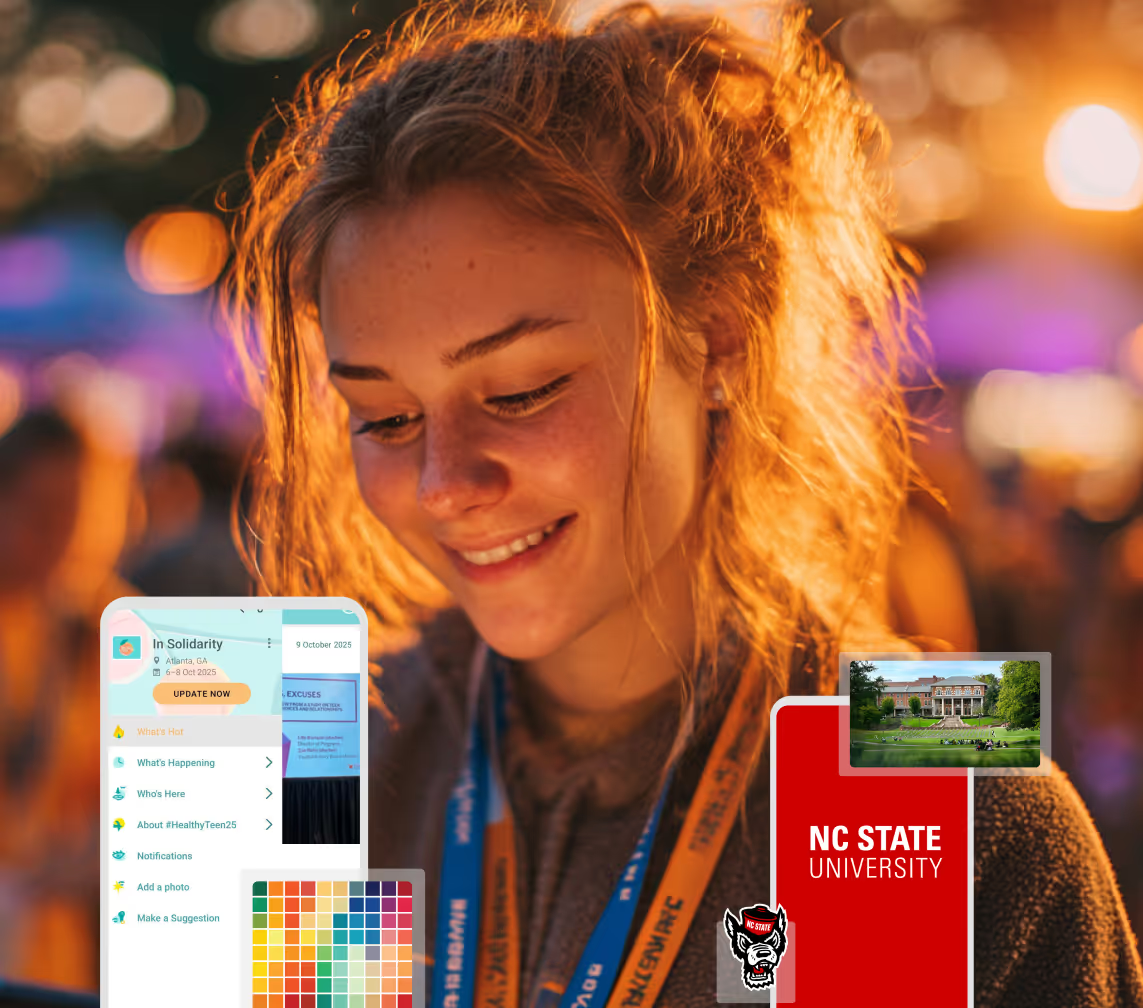
Planning Orientation?
Help new students feel prepared from day one with schedules, campus resources, and real-time updates in one app.
Running Admissions Events?
Manage open houses, tours, and yield events with a branded app that saves time and engages prospective students.

Running Admissions Events?
Manage open houses, tours, and yield events with a branded app that saves time and engages prospective students.
Get a custom Sponsorship Package Template
Stop starting from scratch. Grab free templates that helWe'll build a tailored sponsorship package with suggested pricing, tiers, and benefits..for your specific event.p you build professional sponsorship packages and close deals faster.
Get a custom Sponsorship Package Template
Stop starting from scratch. Grab free templates that helWe'll build a tailored sponsorship package with suggested pricing, tiers, and benefits..for your specific event.p you build professional sponsorship packages and close deals faster.
Plan Your Next Event Without Missing a Beat.
From venue selection to post-event wrap-up, this free checklist walks you through every step (so nothing falls through the cracks).
.avif)
Plan Your Next Event Without Missing a Beat.
From venue selection to post-event wrap-up, this free checklist walks you through every step (so nothing falls through the cracks).
Real Results From Real Events
100,000+ organizations trust Guidebook. See exactly how universities, associations, enterprises, and more put it to work.

Real Results From Real Events
100,000+ organizations trust Guidebook. See exactly how universities, associations, enterprises, and more put it to work.
Flexible pricing for every event size
Find the perfect plan for your needs, from intimate gatherings to large-scale conferences.

Flexible pricing for every event size
Find the perfect plan for your needs, from intimate gatherings to large-scale conferences.
Join our event experts
Watch on-demand webinars and join live sessions with industry leaders sharing best practices for event success.
.avif)
Join our event experts
Watch on-demand webinars and join live sessions with industry leaders sharing best practices for event success.
Guidebook in Action
Book a personalized walkthrough and discover how we help event teams create better attendee experiences.
Guidebook in Action
Book a personalized walkthrough and discover how we help event teams create better attendee experiences.
What is Event Planning?
What is Event Planning? Strategies & Best Practices | Guidebook
Event Planning is the strategic process of designing, organizing, and executing gatherings that bring people together and achieve specific goals. For higher education teams, those goals are concrete: yield admitted students, reduce summer melt, build the belonging that retains them, and give alumni reasons to stay connected. Open Houses, Admitted Student Days, Orientation, Welcome Week, Preview Days, career fairs, and alumni reunions — these are the events that decide enrollment outcomes. And they don’t plan themselves.
Here’s the thing: for admissions and orientation professionals, event planning isn’t a secondary skill — it’s the job. Every Open House is a yield event. Every Admitted Student Day is a deposit conversation. Every orientation session is a retention investment. The logistics matter enormously, because when logistics fail, students notice. But what separates good event planning from great event planning is what happens on top of the logistics: the moments of connection, recognition, and belonging that make an admitted student picture themselves here in September.
Key Characteristics of Event Planning
- Goal-Oriented Focus: Every decision ties back to specific objectives, whether that’s yielding admitted students, building campus community, or reconnecting alumni with your institution’s mission.
- Timeline-Driven Execution: Event planning operates on strict deadlines. Miss one, and the whole project can unravel.
- Budget Management: Successful planners stretch every dollar while maintaining quality. It’s a constant balancing act.
- Team Coordination: You’re juggling vendors, speakers, admitted students, families, and faculty simultaneously. Clear communication is everything — especially when things don’t go to plan.
- Risk Mitigation: Great planners anticipate problems before they happen. They always have a Plan B (and C).
- Experience Design: Modern event planning goes beyond logistics to craft emotional journeys for attendees.
- Data-Driven Decisions: Today’s planners use event ROI metrics to measure success and improve future events.
Event Planning vs. Related Terms
Event Management
- Scope: Broader term covering the entire event lifecycle, including post-event analysis
- Focus: Operational execution and real-time problem-solving
- Timeline: Emphasizes day-of coordination and live event oversight
- Channels: Uses event management platforms for comprehensive control
- Goal: Flawless execution of planned elements
Event Production
- Scope: Technical and creative elements that bring events to life
- Focus: Audio-visual, staging, lighting, and technical requirements
- Timeline: Concentrated on setup, live production, and teardown
- Channels: Works with specialized production teams and equipment
- Goal: Creating immersive sensory experiences
Event Coordination
- Scope: Day-of logistics and vendor management
- Focus: Ensuring all pieces come together smoothly
- Timeline: Primarily active during event execution
- Channels: Direct communication with all parties involved
- Goal: Seamless attendee experience through behind-the-scenes work
Think of it this way: event planning is the blueprint, event management is the construction project, event production is the special effects, and event coordination is the on-site director making sure everything runs on schedule.
The Event Planning Process
Define Your Event Goals
Start with the “why.” What do you want attendees to feel, learn, or do? Clear goals shape every decision that follows.
For higher education teams, be specific: “Increase deposit rate among admitted students who attend Open House by 8 percentage points.” That’s a planning goal. “Host a good event” is not.
Set Your Budget Early
Money drives decisions. Know your total budget before you fall in love with expensive venues or production elements.
Break it down by category:
- Venue and catering (typically 40-50%)
- Technology and production (15-20%)
- Marketing and promotion (10-15%)
- Staffing and speakers (10-15%)
- Contingency fund (10% minimum)
Build Your Timeline
Work backward from your event date. Large conferences need 12-18 months of planning. Smaller gatherings might need just 8-12 weeks.
The event planning process includes key milestones like venue booking, speaker confirmation, registration launch, and marketing pushes. Miss these deadlines, and you’re playing catch-up.
Choose the Right Venue
Your venue sets the tone. For admissions events, your own campus is the venue — and every aspect of it sends a signal to admitted students. The route from parking to your event, the quality of the signage, the cleanliness of the restrooms. All of it communicates institutional care.
Assemble Your Team
No one plans great events alone. Build a team with clear roles and responsibilities. Use event planning resources to stay organized and prevent tasks from falling through the cracks.
Essential Event Planning Components
Registration and Check-In
First impressions matter. A smooth registration process sets the tone for your entire event.
Modern planners use event check-in software to eliminate long lines. For Admitted Student Day and orientation check-in, speed and warmth matter equally. Attendees should feel welcomed before they’ve spoken to anyone.
Marketing and Promotion
The best event means nothing if no one shows up. For admissions events, that means reaching admitted students on the platforms and channels they actually use.
Effective event digital marketing includes:
- Email campaigns with clear, compelling CTAs
- Social media promotion targeting admitted student communities
- Parent and family communication (don’t underestimate this)
- Event SEO to capture organic search traffic from prospective families researching your institution
Technology Integration
Today’s admitted students and families expect digital experiences. A custom-branded mobile app for your Open House or Admitted Student Day signals professionalism and care — before the event even starts.
Platforms like Guidebook help admissions and orientation teams create branded apps that keep admitted students and families informed and engaged throughout the event.
Content and Programming
Your agenda is your product. Mix formats to maintain energy: keynote from the president, breakout sessions by major, panel of current students, campus tour, faculty Q&A. For orientation, that programming is a retention investment — every well-designed session is a belonging moment.
Types of Events You Can Plan
Admissions and Yield Events
Open Houses, Preview Days, Admitted Student Days, and campus visit programs are the highest-stakes event planning challenges in higher education. Every detail — from parking instructions to faculty Q&A panels to the quality of the campus map app — affects whether an admitted student deposits. Learn how Guidebook helps admissions teams run yield events.
Orientation and New Student Programs
Orientation is the most consequential event a university plans. It’s not one event — it’s dozens of them compressed into a week. Students who leave orientation feeling informed, connected, and excited persist at higher rates. Students who leave confused and overwhelmed are your summer melt risk. See how Guidebook powers new student orientation.
Career Fairs and Alumni Events
Career fairs connect current students to their professional futures. Alumni events reconnect graduates to their institutional identity — and, when done right, to their giving motivation. Both require the same event planning discipline: clear goals, strategic programming, tight logistics, and the right technology to keep everyone informed. Career fair tools and alumni event planning built for higher ed.
Virtual and Hybrid Events
Virtual events expanded possibilities for reaching global audiences. Virtual event planning requires different skills than in-person events, but the fundamentals remain the same.
Why Event Planning Matters
For Event Success:
- Attendee Satisfaction: Well-planned events create positive experiences that attendees remember and share.
- Smooth Execution: Proper planning prevents the chaos that ruins otherwise good events.
- Resource Optimization: Planning helps you do more with your budget and team.
- Risk Reduction: Anticipating problems means you’re ready when they happen.
- Measurable Results: Clear planning enables accurate success measurement.
For Enrollment and Institutional Outcomes:
- Yield and Deposit Decisions: A well-planned Open House or Admitted Student Day is the most direct influence on a prospective student’s deposit decision outside of financial aid. Logistics that feel seamless, moments that feel genuine — these things move students from “considering” to “committed.”
- Reducing Summer Melt: Regular touchpoints and engagement events between deposit and move-in day are proven to reduce melt. Deposited students who feel connected to the institution before they arrive show up in August. Good event planning creates those touchpoints.
- Student Retention and Belonging: Orientation, Welcome Week, and early engagement events are retention investments. Students who feel they belong at your institution in the first six weeks are dramatically more likely to return for sophomore year.
- Alumni Giving and Engagement: Alumni who attended well-run events during their student years — who presented at research symposiums, won awards at recognition luncheons, marched in well-organized commencements — are more connected to the institutional identity. Connected alumni give. They also refer students.
- Staff Capacity and Morale: Admissions and orientation teams that plan well, use good technology, and have repeatable systems run more events with less burnout. Staff retention matters — experienced admissions professionals are hard to replace mid-cycle.
Guidebook gives admissions and orientation teams the purpose-built technology to run these events at a high level — without burning out the team. Custom-branded mobile apps, real-time schedule updates, push notifications, and clean digital check-in replace the paper chaos that makes events feel amateur. See how higher education teams use Guidebook across the full enrollment and student success calendar.
Event Planning Best Practices
- Start Earlier Than You Think: Give yourself buffer time. Unexpected delays happen on every event.
- Document Everything: Create detailed run-of-show documents. Your future self will thank you.
- Communicate Constantly: Over-communication beats confusion. Keep all team members in the loop.
- Build Vendor Relationships: Treat vendors as partners. Good relationships lead to better service and pricing.
- Create Contingency Plans: What happens if your keynote cancels? If it rains on your outdoor event? Plan for it.
- Test Your Technology: Run through every tech element before the event. Test again on-site.
- Gather Feedback Systematically: Use post-event surveys and debrief templates to capture learnings.
- Track Your Metrics: Define success metrics upfront and measure them consistently — yield rates, attendance percentages, post-event survey scores.
- Invest in Your Team: Training and development pay dividends in execution quality.
- Stay Current: The events industry evolves constantly. Keep learning through industry resources and professional development opportunities.
Common Event Planning Mistakes
Underestimating Time Requirements: New planners consistently underestimate how long tasks take. Build in 20-30% more time than you think you need. Rushed planning leads to costly mistakes.
Ignoring the Attendee Experience: Getting caught up in logistics while forgetting why people attend. For admissions teams, every decision should pass this test: “Does this make an admitted student more likely to see themselves here?”
Skipping the Backup Plan: Assuming everything will go perfectly is a recipe for disaster. Weather changes, speakers cancel, technology fails. Have alternatives ready.
Poor Budget Tracking: Losing track of spending until it’s too late. Use spreadsheets or software to monitor expenses in real-time. Small overages add up fast.
Weak Promotion Strategy: Building a great event but failing to advertise it effectively. Start marketing early and use multiple channels to reach your audience.
Neglecting Post-Event Follow-Up: The event ends, but the work doesn’t. Follow up with admitted students, families, and alumni within 48 hours while the experience is fresh.
Trying to Do Everything Yourself: Event planning is a team sport. Delegate tasks and trust your team. Burnout helps no one — and it leaves your institution vulnerable in the next enrollment cycle.
Event Planning for Higher Education
Event planning in higher education is unlike event planning anywhere else. The goals aren’t leads and revenue — they’re yield rates and retention numbers and belonging. The attendees aren’t clients or customers — they’re admitted students, families, and the enrolled students you’re trying to keep. And the stakes of getting it wrong aren’t a bad review on Eventbrite. They’re a student who chose another school, or a student who melted before move-in day, or a sophomore who didn’t feel connected enough to return.
Planning the Enrollment Funnel Events
The Open House, the Preview Day, the Admitted Student Day — these events form the spine of your yield strategy. Plan them with enrollment outcomes in mind, not just logistics. Every session, every meal arrangement, every faculty speaker is a touchpoint that either confirms or undercuts the story you’re telling admitted students about life at your institution. The difference between a 30% yield rate and a 40% yield rate is often in the details of how these events feel. Learn how Guidebook supports admissions event planning.
Planning Orientation and Welcome Week
Orientation is a multi-day, multi-team event planning challenge with a retention outcome attached. You’re managing parents and incoming students simultaneously. You’re running sessions, meals, move-in logistics, and social programming in parallel. And you’re doing it for a population experiencing one of the most emotionally significant transitions of their lives. The events that feel effortless to students — because someone planned them meticulously — are the ones that build the belonging that keeps students enrolled. See how Guidebook powers new student orientation programs.
Planning Alumni and Donor Events
Alumni events are retention events for your most important long-term relationships. The reunion weekend that’s logistically clean, the homecoming that has a clear program and great communication, the scholarship luncheon where everyone knows where to be and when — these events reconnect graduates to the institution’s identity. That connection is what drives annual giving, major gifts, and the word-of-mouth that fills your next admitted class. Learn how Guidebook supports alumni event planning.
Final Thoughts
Event planning is equal parts art and science. It demands creativity to design memorable experiences and discipline to execute complex logistics. The best planners master both.
The events industry continues to evolve rapidly. Virtual and hybrid formats have expanded what’s possible. Technology has raised attendee expectations. But the core mission remains unchanged: bringing people together in meaningful ways that create lasting change.
For admissions and orientation professionals, event planning isn’t a side function — it’s the job. The events you plan determine yield rates, retention numbers, and the belonging that turns admitted students into enrolled ones and enrolled students into alumni donors. Guidebook helps higher education teams plan and run these events with custom-branded mobile apps, real-time communications, and the organized, professional execution that reflects well on your institution at every touchpoint. Book a demo to see how Guidebook supports the full higher education event calendar — from Open Houses to orientation to alumni reunions. Your next great event creates the next great student outcome. Start there.
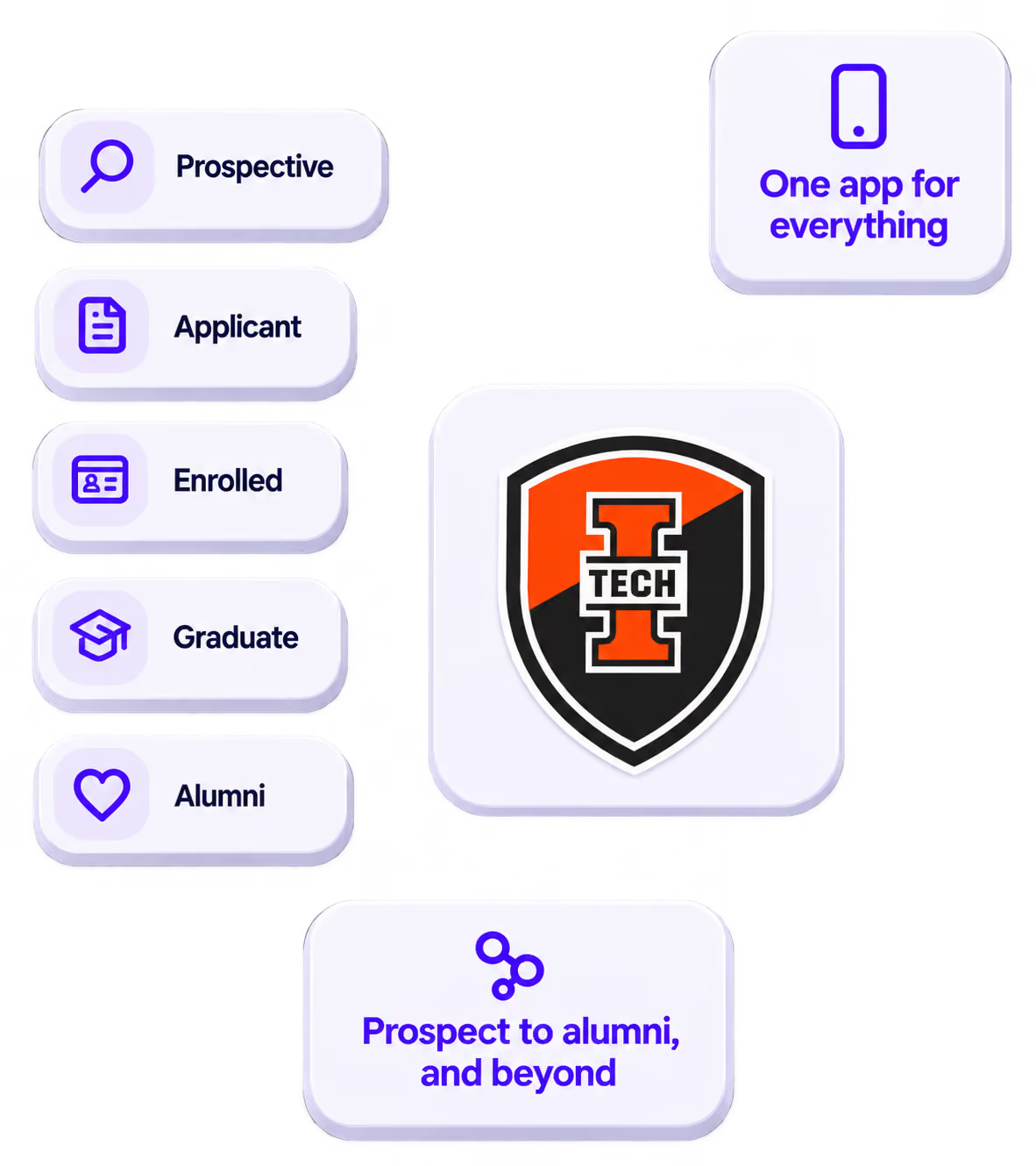
The power of your brand in your app, from first visit to alumni.
Build trust
Attendees download your app, not ours. Your name, colors, and crest in the stores.
.avif)
One place for the whole event
Schedules, maps, registration, and updates in one branded hub - not five tools.
Stand out
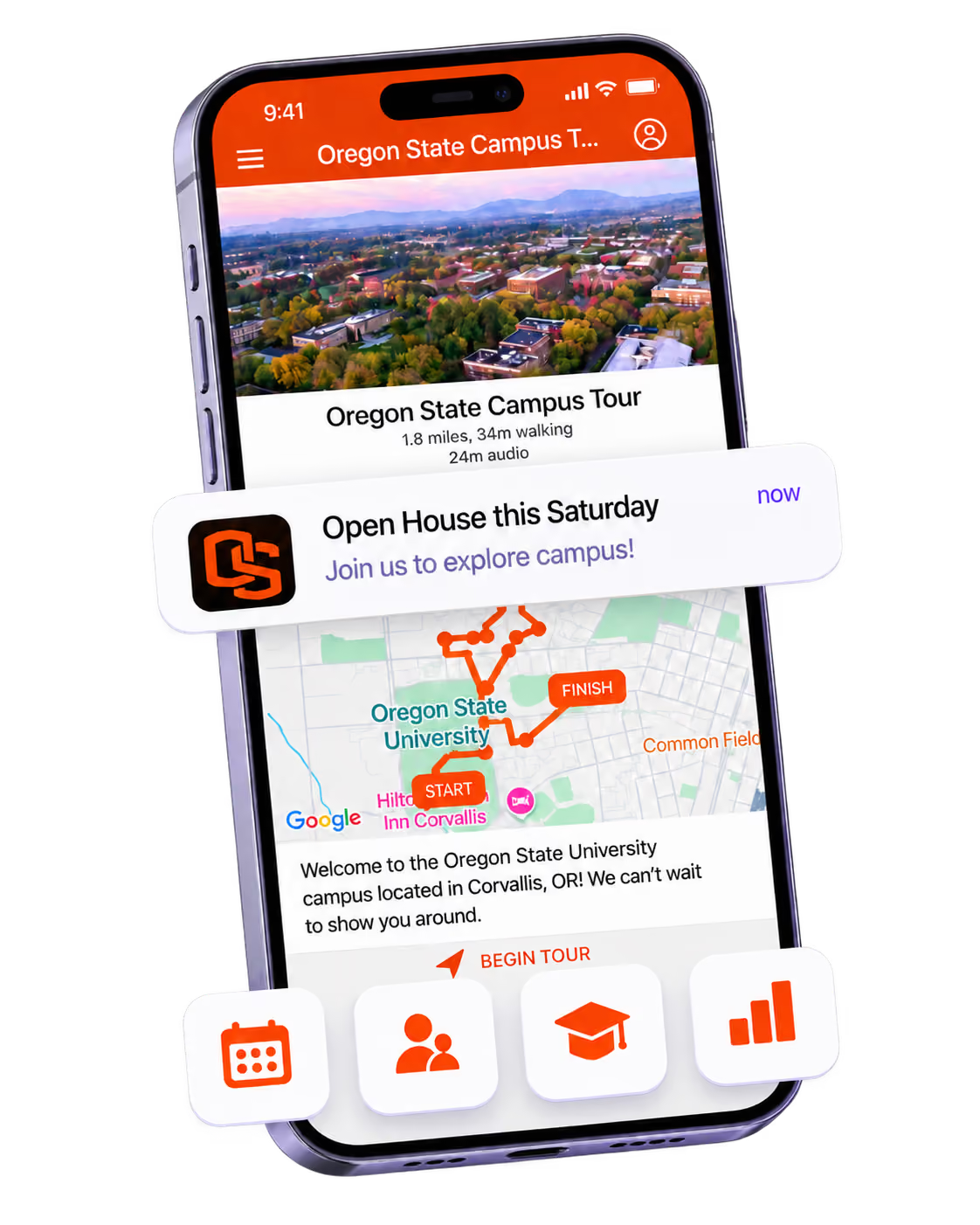
A branded app is what people keep on their phone after the printed program is in the recycling.

Get the Mobile App Playbook
A short guide to running the whole student journey in one app. No fluff, just what works.
for higher ed
Campus
Playbook
A practical guide to building a connected campus experience.
Free playbook
The Mobile App Playbook for Universities
Students decide if they belong long before they set foot on campus. This playbook shows how to win them over from the first visit through graduation.
- Grow enrollment and boost recruitment
- Increase belonging and retention
- Run every event from one branded app
By submitting, you agree to our Privacy Policy.
You're in.
.png)