
Campus apps by department
Admissions, orientation, student life, and more — one campus app that works across departments.

Campus apps by department
Admissions, orientation, student life, and more — one campus app that works across departments.
Build unlimited event apps on one license
One partnership for unlimited campus events — orientation, tours, student life, and everything in between.
Build unlimited event apps on one license
One partnership for unlimited campus events — orientation, tours, student life, and everything in between.
Compare event app platforms
See how Guidebook stacks up against other event app and registration platforms.
Compare event app platforms
See how Guidebook stacks up against other event app and registration platforms.
Event apps for nonprofit and community programs
Give members, volunteers, and donors one branded app for conferences, fundraisers, and year-round community.
Event apps for nonprofit and community programs
Give members, volunteers, and donors one branded app for conferences, fundraisers, and year-round community.
Campus integrations and an open API
Connect Guidebook with the campus systems, APIs, and tools your team already uses.
Campus integrations and an open API
Connect Guidebook with the campus systems, APIs, and tools your team already uses.
Event apps for corporate and enterprise teams
Internal meetings, offsites, and large-scale corporate events — with the branding and control enterprise teams need.
Event apps for corporate and enterprise teams
Internal meetings, offsites, and large-scale corporate events — with the branding and control enterprise teams need.
Create a branded event app with no coding
Put schedules, maps, resources, and updates in every attendee's pocket — built for campus events and programs.
Create a branded event app with no coding
Put schedules, maps, resources, and updates in every attendee's pocket — built for campus events and programs.
Launch a branded, white-label event app
A white-label event app with your branding, your content, and your attendee experience — no coding required.
Launch a branded, white-label event app
A white-label event app with your branding, your content, and your attendee experience — no coding required.
Everything in the Guidebook platform
Explore the features event teams use to engage attendees before, during, and after the event.
Everything in the Guidebook platform
Explore the features event teams use to engage attendees before, during, and after the event.
One app for in-person and virtual attendees
The same schedule, networking, and updates whether people are in the room or joining remotely.
One app for in-person and virtual attendees
The same schedule, networking, and updates whether people are in the room or joining remotely.
Event apps built for associations
Annual meetings, chapter events, and member engagement — without rebuilding a new app every year.
Event apps built for associations
Annual meetings, chapter events, and member engagement — without rebuilding a new app every year.
A branded event website that matches the app
Promote the event, collect interest, and keep branding consistent from the first click to check-in.
A branded event website that matches the app
Promote the event, collect interest, and keep branding consistent from the first click to check-in.
Plan, run, and measure events on one platform
App, registration, badges, and websites in one workflow — so planning isn't a pile of disconnected tools.
Plan, run, and measure events on one platform
App, registration, badges, and websites in one workflow — so planning isn't a pile of disconnected tools.
Keep members engaged between events
One branded app for the conference and everything that happens the other 51 weeks of the year.
Keep members engaged between events
One branded app for the conference and everything that happens the other 51 weeks of the year.
The conference app attendees actually use
Schedules, maps, networking, and live updates for annual meetings, summits, and multi-day conferences.
The conference app attendees actually use
Schedules, maps, networking, and live updates for annual meetings, summits, and multi-day conferences.
Registration that feeds your app and badges
Collect registrations, payments, and attendee data in the same platform as your event app.
Registration that feeds your app and badges
Collect registrations, payments, and attendee data in the same platform as your event app.
Design and print event badges in one place
Custom badges, QR check-in, and on-site printing — without a separate badge vendor.
Design and print event badges in one place
Custom badges, QR check-in, and on-site printing — without a separate badge vendor.
A Smaller School?
Deliver a polished, branded event experience without a large team or a big budget.
A Smaller School?
Deliver a polished, branded event experience without a large team or a big budget.
Running Family Programs?
Give families everything they need, from schedules and maps to real-time updates, all in one place.
Running Family Programs?
Give families everything they need, from schedules and maps to real-time updates, all in one place.
Coordinating Move-In Day?
Share updates, manage events, and keep students informed from move-in through the academic year.

Coordinating Move-In Day?
Share updates, manage events, and keep students informed from move-in through the academic year.
Offering Campus Tours?
Deliver branded, self-guided tour experiences with interactive maps and rich media, available 24/7.

Offering Campus Tours?
Deliver branded, self-guided tour experiences with interactive maps and rich media, available 24/7.
Organising a Career Fair?
Simplify logistics for students, employers, and Career Services staff with one easy-to-use app.
Organising a Career Fair?
Simplify logistics for students, employers, and Career Services staff with one easy-to-use app.
Managing Alumni Events?
Plan reunions, regional events, and fundraising campaigns with an app built for alumni engagement.
Managing Alumni Events?
Plan reunions, regional events, and fundraising campaigns with an app built for alumni engagement.
Boost Student Engagement
One hub for schedules, resources, and events that keeps students connected throughout the academic year.
Boost Student Engagement
One hub for schedules, resources, and events that keeps students connected throughout the academic year.
Planning Orientation?
Help new students feel prepared from day one with schedules, campus resources, and real-time updates in one app.
Planning Orientation?
Help new students feel prepared from day one with schedules, campus resources, and real-time updates in one app.
Running Admissions Events?
Manage open houses, tours, and yield events with a branded app that saves time and engages prospective students.

Running Admissions Events?
Manage open houses, tours, and yield events with a branded app that saves time and engages prospective students.
Get a custom Sponsorship Package Template
Stop starting from scratch. Grab free templates that helWe'll build a tailored sponsorship package with suggested pricing, tiers, and benefits..for your specific event.p you build professional sponsorship packages and close deals faster.
Get a custom Sponsorship Package Template
Stop starting from scratch. Grab free templates that helWe'll build a tailored sponsorship package with suggested pricing, tiers, and benefits..for your specific event.p you build professional sponsorship packages and close deals faster.
Plan Your Next Event Without Missing a Beat.
From venue selection to post-event wrap-up, this free checklist walks you through every step (so nothing falls through the cracks).
.avif)
Plan Your Next Event Without Missing a Beat.
From venue selection to post-event wrap-up, this free checklist walks you through every step (so nothing falls through the cracks).
Real Results From Real Events
100,000+ organizations trust Guidebook. See exactly how universities, associations, enterprises, and more put it to work.

Real Results From Real Events
100,000+ organizations trust Guidebook. See exactly how universities, associations, enterprises, and more put it to work.
Flexible pricing for every event size
Find the perfect plan for your needs, from intimate gatherings to large-scale conferences.
Flexible pricing for every event size
Find the perfect plan for your needs, from intimate gatherings to large-scale conferences.
Join our event experts
Watch on-demand webinars and join live sessions with industry leaders sharing best practices for event success.
.avif)
Join our event experts
Watch on-demand webinars and join live sessions with industry leaders sharing best practices for event success.
Guidebook in Action
Book a personalized walkthrough and discover how we help event teams create better attendee experiences.
Guidebook in Action
Book a personalized walkthrough and discover how we help event teams create better attendee experiences.

What is Event SEO?
Event SEO boosts your event’s online visibility through targeted search optimization. Learn key strategies, on-page tips, and tools to increase registrations and reach.

Event SEO is the strategic practice of optimizing your event's online presence so potential attendees can actually find you when they search. It covers everything from your event website to registration pages to promotional content. Done right, event SEO turns Google into your most reliable marketing channel.
Here's the thing: most event planners pour money into paid ads while ignoring free organic traffic. That's like paying for water when there's a fountain right next to you. Event SEO helps you capture people who are actively searching for events like yours. These aren't cold leads—they're warm prospects ready to register.
Key Characteristics of Event SEO
- Time-Sensitive Optimization: Unlike regular SEO, event SEO works on a deadline. You need rankings before your event date, not six months later.
- Location-Based Focus: Most event searches include geographic terms. "Marketing conference Chicago" beats "marketing conference" every time.
- Intent-Driven Keywords: Event searchers use specific phrases like "register," "tickets," or "schedule." These signal buying intent.
- Multi-Page Strategy: Strong event SEO optimizes multiple pages—main event page, speaker bios, session descriptions, and venue information.
- Schema Markup Dependency: Event schema helps search engines understand your event details and display rich snippets in results.
- Mobile-First Priority: Over 60% of event searches happen on phones. Mobile optimization isn't optional.
- Seasonal Patterns: Event searches spike at predictable times. Smart planners align content with these patterns.
Event SEO vs. Related Marketing Approaches
Event Digital Marketing
- Scope: Covers all online promotional activities including paid ads, social media, and email
- Focus: Broad audience reach through multiple channels
- Timeline: Ongoing campaigns with flexible timing
- Channels: Paid search, social platforms, display networks, email lists
- Goal: Maximum exposure and registrations through any digital means
Event Marketing
- Scope: All promotional efforts, both online and offline
- Focus: Building awareness and driving attendance
- Timeline: Campaign-based with defined start and end dates
- Channels: PR, partnerships, advertising, content, direct outreach
- Goal: Fill seats and create buzz around your event
Content Marketing for Events
- Scope: Creating valuable content to attract and engage potential attendees
- Focus: Education and thought leadership
- Timeline: Long-term strategy building authority over time
- Channels: Blog posts, videos, podcasts, downloadable resources
- Goal: Establish credibility and nurture leads toward registration
Event SEO sits at the intersection of these approaches. It uses event digital marketing tactics with a specific focus on organic search visibility. While other event marketing types push your message out, SEO pulls interested people in.
Essential Event SEO Components
Keyword Research for Events
Start by identifying what your target audience actually searches for. Use tools like Google Keyword Planner or Semrush to find relevant terms.
Focus on three keyword types:
- Event-specific: "2026 healthcare innovation summit"
- Topic-based: "healthcare technology conference"
- Location-based: "medical conferences in Boston"
On-Page Optimization Essentials
Every event page needs these elements optimized:
- Title tags with event name, date, and location
- Meta descriptions that compel clicks
- Header tags (H1, H2, H3) with target keywords
- Image alt text describing event visuals
- Internal links to related pages
Your event registration page deserves special attention. It's often your highest-converting page.
Technical SEO Requirements
Technical issues kill event rankings fast. Check these items:
- Page speed under 3 seconds
- Mobile responsiveness across all devices
- Secure HTTPS connection
- Clean URL structure
- Proper redirects for past events
Event Schema Markup
Schema markup tells Google exactly what your event is about. It can trigger rich snippets showing your event date, location, and ticket prices directly in search results.
Include these schema properties:
- Event name and description
- Start and end dates
- Location (physical or virtual)
- Ticket availability and pricing
- Organizer information
The Event SEO Timeline
6+ Months Before Your Event
This is when SEO groundwork happens. Create your event website and start building authority. Publish content around your event's main topics.
Key actions:
- Launch event landing page
- Begin keyword-targeted blog posts
- Set up Google Search Console tracking
3-6 Months Out
Ramp up content production. Add speaker pages, session descriptions, and venue information. Each page is a new ranking opportunity.
Your event planning process should include SEO checkpoints at this stage.
1-3 Months Before
Focus on link building and promotion. Reach out to industry publications. Get speakers to link to their session pages from their own sites.
Final Month Push
Optimize for last-minute searchers. Update content with urgency messaging. Make sure all technical elements are working perfectly.
Why Event SEO Matters
For Event Success:
- Increased Discoverability: People searching for events like yours will actually find you instead of competitors.
- Higher Quality Attendees: Organic traffic brings people actively seeking your event type—not random clicks.
- Reduced Marketing Costs: Organic rankings don't cost per click. Once you rank, traffic flows free.
- Extended Reach: SEO captures audiences you might miss through traditional event advertising channels.
- Credibility Boost: Top search rankings signal authority and trustworthiness to potential attendees.
For Business Objectives:
- Measurable ROI: Track exactly how many registrations come from organic search with proper event ROI measurement.
- Compound Returns: SEO efforts for one event build domain authority that helps future events rank faster.
- Brand Visibility: Ranking for industry terms positions your organization as a thought leader.
- Data Insights: Search data reveals what your audience cares about—valuable intel for event planning.
- Competitive Advantage: Most event planners ignore SEO. Those who don't gain significant market share.
Platforms like Guidebook's event management platform help you create SEO-friendly event experiences. From mobile apps to web guides, every touchpoint can support your search visibility goals.
Event SEO Best Practices
- Create Dedicated Event Pages: Don't bury event details in blog posts. Give each event its own optimized landing page with a clear URL structure.
- Optimize for Local Search: Claim your Google Business Profile. Include your event in local directories. Use location keywords throughout your content.
- Build Speaker and Session Pages: Each speaker bio and session description is a ranking opportunity. Optimize them with relevant keywords.
- Implement Event Schema Immediately: Don't wait until the last minute. Add structured data as soon as your event page goes live.
- Create Supporting Content: Blog posts about your event topics build authority. They also capture long-tail searches related to your event themes.
- Earn Quality Backlinks: Partner with sponsors, speakers, and industry publications to get links pointing to your event pages.
- Optimize Images and Videos: Use descriptive file names and alt text. Create video content with keyword-rich titles and descriptions.
- Monitor and Adjust: Track rankings weekly. If pages aren't performing, update content and build more links.
- Plan for Post-Event SEO: Don't delete event pages after the event. Redirect them to next year's event or create recap content.
- Prioritize Mobile Experience: Test your event pages on multiple devices. Slow mobile pages tank your rankings.
Common Event SEO Mistakes
Starting Too Late: SEO takes time to work. Starting optimization one month before your event won't move the needle. Begin at least six months out for competitive keywords.
Ignoring Search Intent: Ranking for "conference" means nothing if searchers want something different than what you offer. Match your content to what people actually want when they search.
Duplicate Content Across Events: Copying last year's event page with new dates creates duplicate content issues. Write fresh descriptions for each event.
Neglecting Technical Basics: A beautiful event page that loads in 8 seconds won't rank. Technical SEO isn't glamorous, but it's essential.
Forgetting About Virtual Events: Virtual events and webinars need SEO too. Many planners only optimize in-person event pages.
No Internal Linking Strategy: Your event pages should link to each other and to relevant blog content. Isolated pages struggle to rank.
Deleting Past Event Pages: Those pages have accumulated authority. Redirect them instead of deleting them outright.
Final Thoughts
Event SEO isn't just another marketing tactic—it's a fundamental shift in how you attract attendees. While competitors fight over expensive ad placements, smart event planners build organic visibility that compounds over time.
The events industry is catching on to SEO's power. According to current event trends, digital discoverability now ranks among the top priorities for event professionals. Those who master event SEO today will dominate search results tomorrow.
Think of event SEO as planting seeds. The work you do now—optimizing pages, building links, creating content—grows into a steady stream of qualified attendees. It's not as flashy as a viral social post, but it's far more reliable.
Ready to make your events more discoverable? Book a demo with Guidebook to see how our event management platform supports your SEO goals. From event check-in software to branded mobile apps, we help you create experiences that rank well and convert better. Because the best event is one people can actually find.
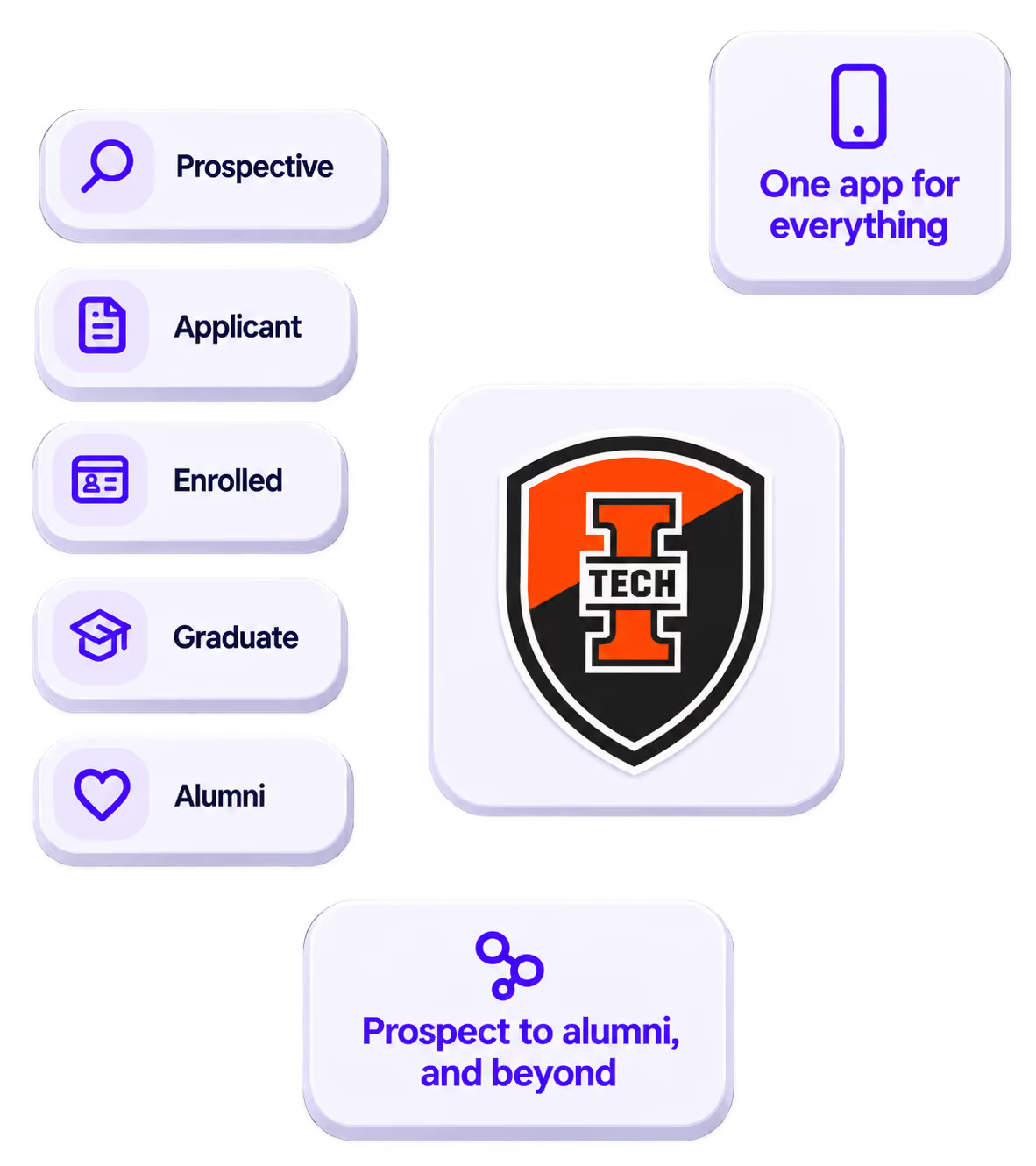
The power of your brand in your app, from first visit to alumni.
Build trust
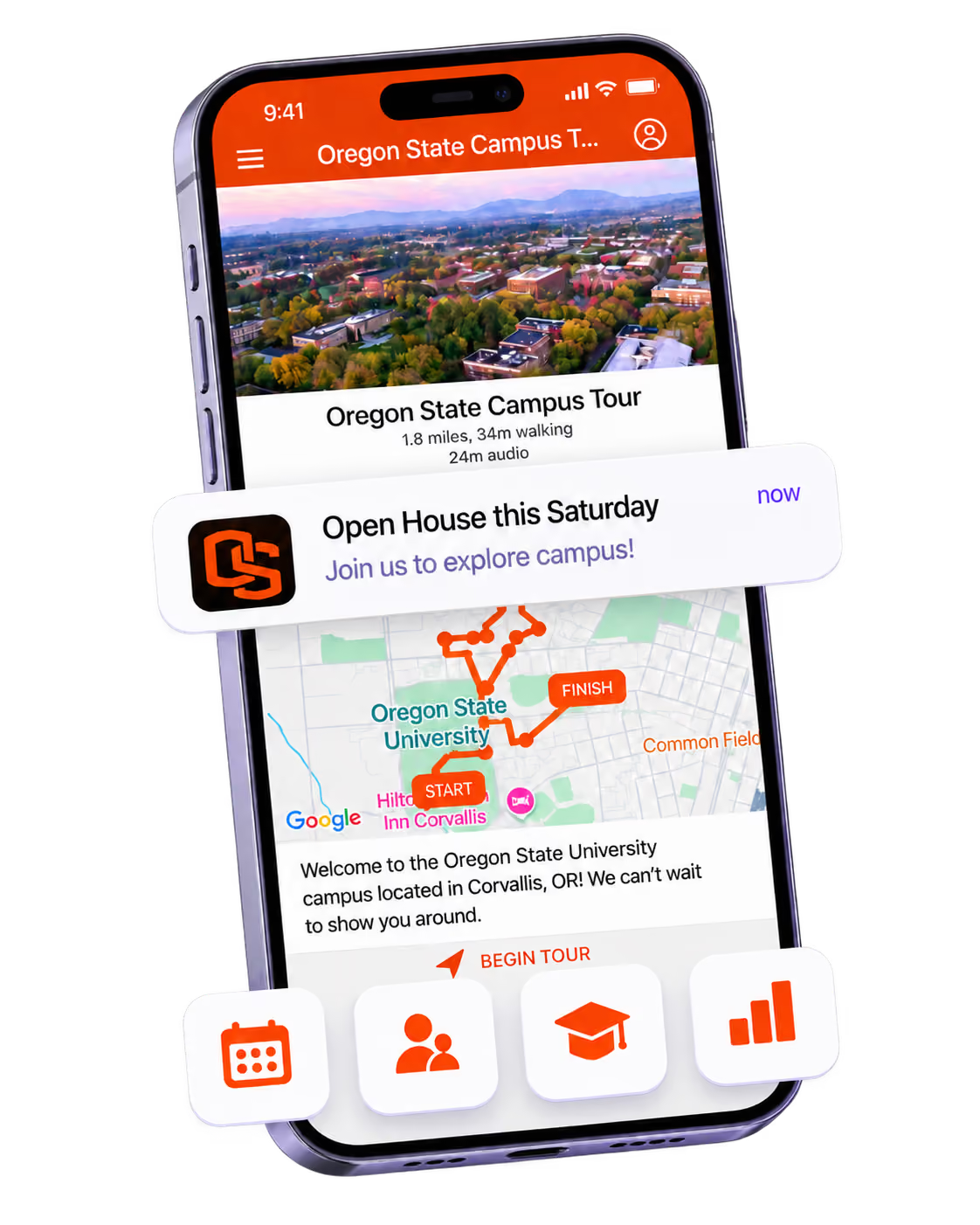
Your brand, front and center in your own app, downloaded directly from the app stores.
.avif)
Deliver continuity
One app for everything a student needs. From being a prospective student through to graduation and beyond.
Stand out
Your own app helps you to stand out from the competition, stay top of mind, and be remembered.

Get the Mobile App Playbook
A short guide to running the whole student journey in one app. No fluff, just what works.
for higher ed
Campus
Playbook
A practical guide to building a connected campus experience.
Free playbook
The Mobile App Playbook for Universities
Students decide if they belong long before they set foot on campus. This playbook shows how to win them over from the first visit through graduation.
- Grow enrollment and boost recruitment
- Increase belonging and retention
- Run every event from one branded app
By submitting, you agree to our Privacy Policy.
You're in.
.png)