
Campus apps by department
Admissions, orientation, student life, and more — one campus app that works across departments.

Campus apps by department
Admissions, orientation, student life, and more — one campus app that works across departments.
Build unlimited event apps on one license
One partnership for unlimited campus events — orientation, tours, student life, and everything in between.
Build unlimited event apps on one license
One partnership for unlimited campus events — orientation, tours, student life, and everything in between.
Compare event app platforms
See how Guidebook stacks up against other event app and registration platforms.
Compare event app platforms
See how Guidebook stacks up against other event app and registration platforms.
Event apps for nonprofit and community programs
Give members, volunteers, and donors one branded app for conferences, fundraisers, and year-round community.
Event apps for nonprofit and community programs
Give members, volunteers, and donors one branded app for conferences, fundraisers, and year-round community.
Campus integrations and an open API
Connect Guidebook with the campus systems, APIs, and tools your team already uses.
Campus integrations and an open API
Connect Guidebook with the campus systems, APIs, and tools your team already uses.
Event apps for corporate and enterprise teams
Internal meetings, offsites, and large-scale corporate events — with the branding and control enterprise teams need.
Event apps for corporate and enterprise teams
Internal meetings, offsites, and large-scale corporate events — with the branding and control enterprise teams need.
Create a branded event app with no coding
Put schedules, maps, resources, and updates in every attendee's pocket — built for campus events and programs.
Create a branded event app with no coding
Put schedules, maps, resources, and updates in every attendee's pocket — built for campus events and programs.
Launch a branded, white-label event app
A white-label event app with your branding, your content, and your attendee experience — no coding required.
Launch a branded, white-label event app
A white-label event app with your branding, your content, and your attendee experience — no coding required.
Everything in the Guidebook platform
Explore the features event teams use to engage attendees before, during, and after the event.
Everything in the Guidebook platform
Explore the features event teams use to engage attendees before, during, and after the event.
One app for in-person and virtual attendees
The same schedule, networking, and updates whether people are in the room or joining remotely.
One app for in-person and virtual attendees
The same schedule, networking, and updates whether people are in the room or joining remotely.
Event apps built for associations
Annual meetings, chapter events, and member engagement — without rebuilding a new app every year.
Event apps built for associations
Annual meetings, chapter events, and member engagement — without rebuilding a new app every year.
A branded event website that matches the app
Promote the event, collect interest, and keep branding consistent from the first click to check-in.
A branded event website that matches the app
Promote the event, collect interest, and keep branding consistent from the first click to check-in.
Plan, run, and measure events on one platform
App, registration, badges, and websites in one workflow — so planning isn't a pile of disconnected tools.
Plan, run, and measure events on one platform
App, registration, badges, and websites in one workflow — so planning isn't a pile of disconnected tools.
Keep members engaged between events
One branded app for the conference and everything that happens the other 51 weeks of the year.
Keep members engaged between events
One branded app for the conference and everything that happens the other 51 weeks of the year.
The conference app attendees actually use
Schedules, maps, networking, and live updates for annual meetings, summits, and multi-day conferences.
The conference app attendees actually use
Schedules, maps, networking, and live updates for annual meetings, summits, and multi-day conferences.
Registration that feeds your app and badges
Collect registrations, payments, and attendee data in the same platform as your event app.
Registration that feeds your app and badges
Collect registrations, payments, and attendee data in the same platform as your event app.
Design and print event badges in one place
Custom badges, QR check-in, and on-site printing — without a separate badge vendor.
Design and print event badges in one place
Custom badges, QR check-in, and on-site printing — without a separate badge vendor.
A Smaller School?
Deliver a polished, branded event experience without a large team or a big budget.
A Smaller School?
Deliver a polished, branded event experience without a large team or a big budget.
Running Family Programs?
Give families everything they need, from schedules and maps to real-time updates, all in one place.
Running Family Programs?
Give families everything they need, from schedules and maps to real-time updates, all in one place.
Coordinating Move-In Day?
Share updates, manage events, and keep students informed from move-in through the academic year.

Coordinating Move-In Day?
Share updates, manage events, and keep students informed from move-in through the academic year.
Offering Campus Tours?
Deliver branded, self-guided tour experiences with interactive maps and rich media, available 24/7.

Offering Campus Tours?
Deliver branded, self-guided tour experiences with interactive maps and rich media, available 24/7.
Organising a Career Fair?
Simplify logistics for students, employers, and Career Services staff with one easy-to-use app.
Organising a Career Fair?
Simplify logistics for students, employers, and Career Services staff with one easy-to-use app.
Managing Alumni Events?
Plan reunions, regional events, and fundraising campaigns with an app built for alumni engagement.
Managing Alumni Events?
Plan reunions, regional events, and fundraising campaigns with an app built for alumni engagement.
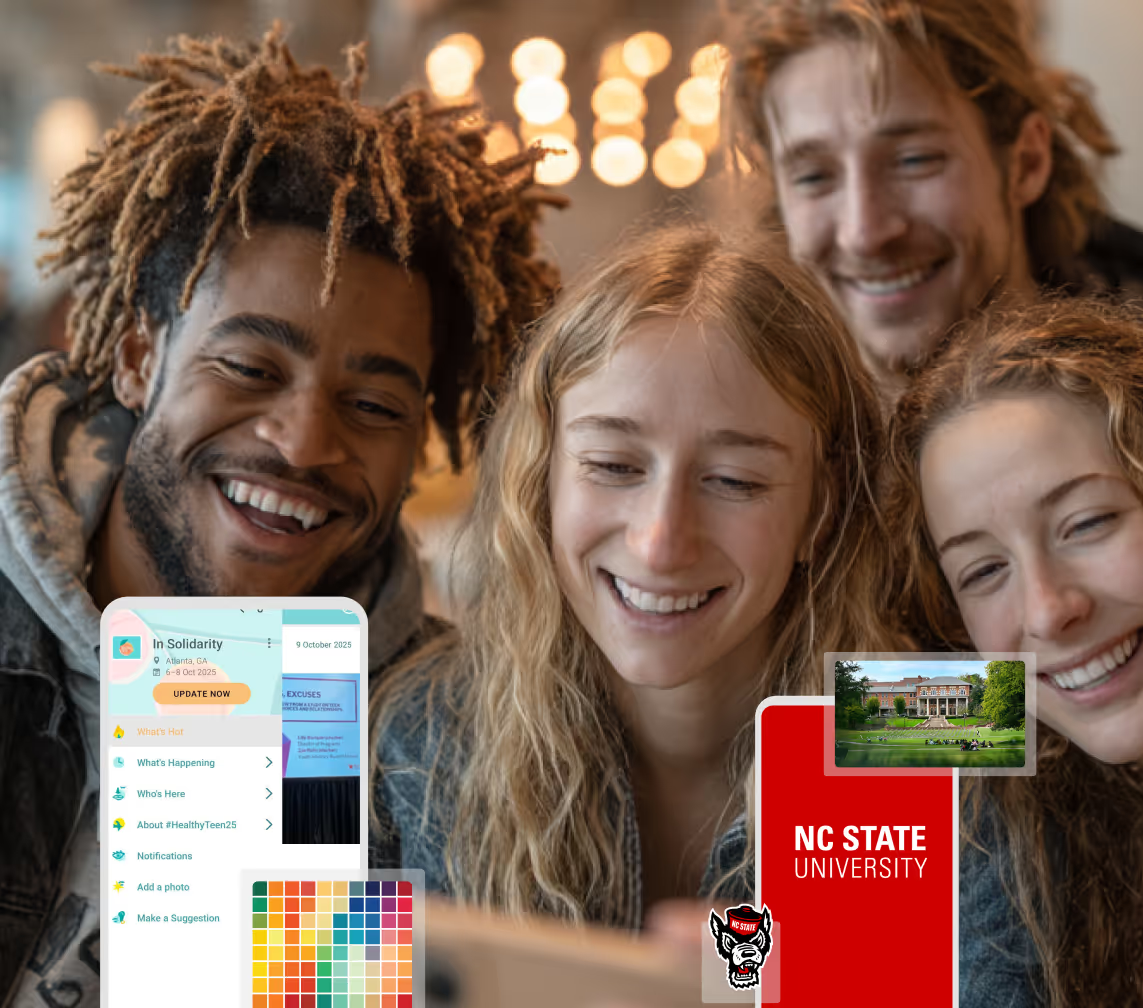
Boost Student Engagement
One hub for schedules, resources, and events that keeps students connected throughout the academic year.
Boost Student Engagement
One hub for schedules, resources, and events that keeps students connected throughout the academic year.
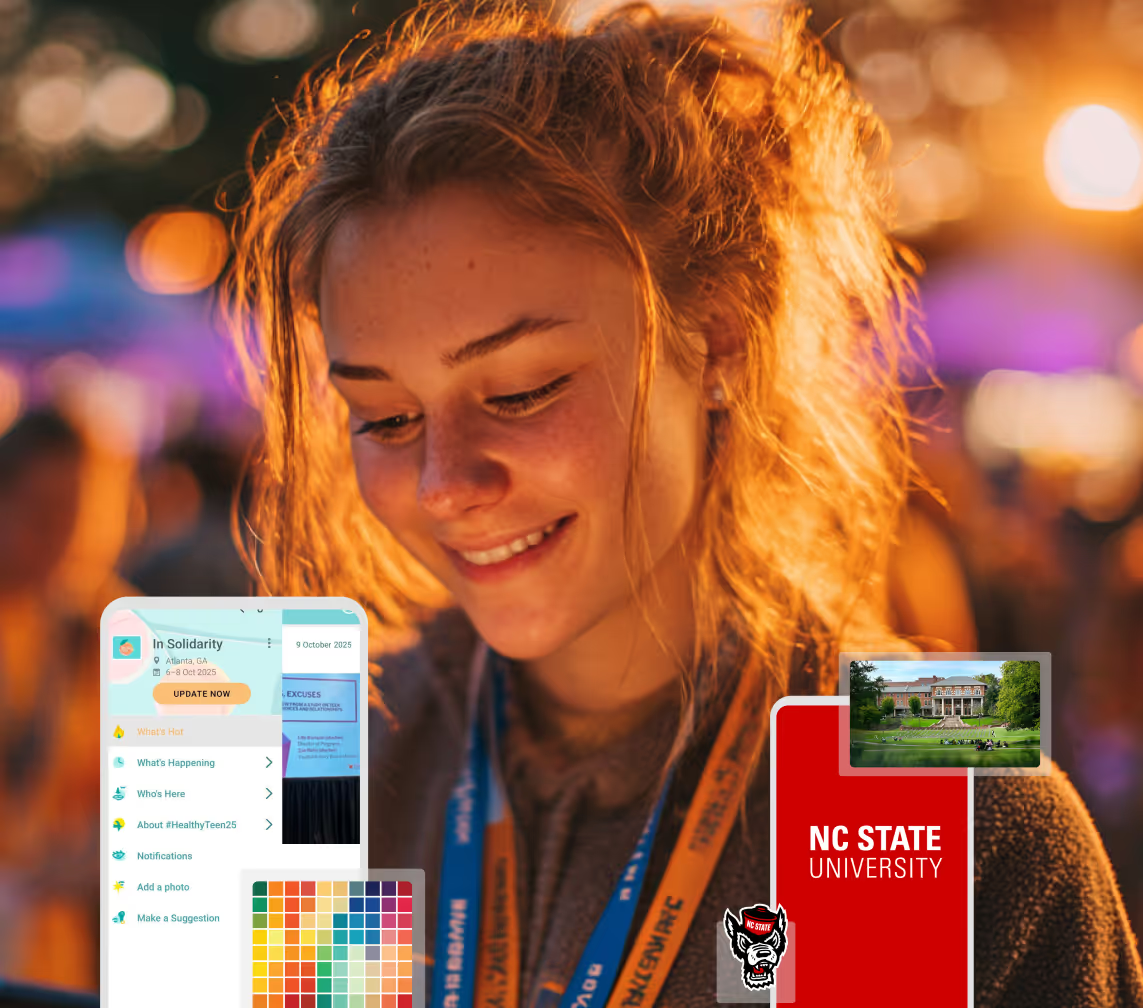
Planning Orientation?
Help new students feel prepared from day one with schedules, campus resources, and real-time updates in one app.
Planning Orientation?
Help new students feel prepared from day one with schedules, campus resources, and real-time updates in one app.
Running Admissions Events?
Manage open houses, tours, and yield events with a branded app that saves time and engages prospective students.

Running Admissions Events?
Manage open houses, tours, and yield events with a branded app that saves time and engages prospective students.
Get a custom Sponsorship Package Template
Stop starting from scratch. Grab free templates that helWe'll build a tailored sponsorship package with suggested pricing, tiers, and benefits..for your specific event.p you build professional sponsorship packages and close deals faster.
Get a custom Sponsorship Package Template
Stop starting from scratch. Grab free templates that helWe'll build a tailored sponsorship package with suggested pricing, tiers, and benefits..for your specific event.p you build professional sponsorship packages and close deals faster.
Plan Your Next Event Without Missing a Beat.
From venue selection to post-event wrap-up, this free checklist walks you through every step (so nothing falls through the cracks).
.avif)
Plan Your Next Event Without Missing a Beat.
From venue selection to post-event wrap-up, this free checklist walks you through every step (so nothing falls through the cracks).
Real Results From Real Events
100,000+ organizations trust Guidebook. See exactly how universities, associations, enterprises, and more put it to work.

Real Results From Real Events
100,000+ organizations trust Guidebook. See exactly how universities, associations, enterprises, and more put it to work.
Flexible pricing for every event size
Find the perfect plan for your needs, from intimate gatherings to large-scale conferences.
Flexible pricing for every event size
Find the perfect plan for your needs, from intimate gatherings to large-scale conferences.
Join our event experts
Watch on-demand webinars and join live sessions with industry leaders sharing best practices for event success.
.avif)
Join our event experts
Watch on-demand webinars and join live sessions with industry leaders sharing best practices for event success.
Guidebook in Action
Book a personalized walkthrough and discover how we help event teams create better attendee experiences.
Guidebook in Action
Book a personalized walkthrough and discover how we help event teams create better attendee experiences.

What are Types of Event Marketing?
Discover the main types of event marketing, from virtual and in-person events to experiential and hybrid formats. Learn key strategies and examples for each type.

Types of event marketing are the distinct promotional strategies and channels event planners use to attract attendees, build buzz, and drive registrations for their events. From digital campaigns to grassroots outreach, each type serves a specific purpose in your overall marketing mix. Choosing the right combination can mean the difference between empty seats and a sold-out venue.
Here's the thing: not all event marketing works the same way. A trade show needs different tactics than a virtual conference. A local fundraiser requires different channels than a global product launch. Understanding each type helps you spend your budget wisely and reach the people who actually want to attend.
Key Characteristics of Types of Event Marketing
- Channel-Specific Focus: Each type targets audiences through distinct platforms, whether that's social media, email, paid ads, or in-person networking.
- Measurable Outcomes: Every marketing type produces trackable metrics like click-through rates, registration numbers, or social shares.
- Audience Alignment: Different types work better for different demographics. Gen Z responds to TikTok; executives prefer LinkedIn.
- Budget Flexibility: Some types cost nothing (organic social), while others require significant investment (paid advertising).
- Timeline Sensitivity: Certain types work best months out (SEO), while others shine in the final push (retargeting ads).
- Integration Potential: The best strategies combine multiple types into cohesive campaigns that reinforce each other.
- Scalability: Some types easily scale from 50 attendees to 5,000, while others work best for intimate gatherings.
Types of Event Marketing vs. Related Terms
Event Marketing Strategy
- Scope: The overarching plan that guides all promotional efforts
- Focus: Big-picture goals and target audience definition
- Timeline: Developed before any tactics are chosen
- Channels: Determines which channels to prioritize
- Goal: Align marketing with business objectives
Event Promotion Tactics
- Scope: Specific actions within each marketing type
- Focus: Day-to-day execution and content creation
- Timeline: Implemented throughout the campaign
- Channels: Individual posts, emails, or ads
- Goal: Generate immediate engagement and conversions
Event Branding
- Scope: Visual and messaging identity for your event
- Focus: Consistency across all touchpoints
- Timeline: Established early, maintained throughout
- Channels: Applied to every marketing type
- Goal: Build recognition and trust
Think of it this way: your strategy sets the direction, types of event marketing are the vehicles you choose, tactics are how you drive them, and branding is the paint job that makes everything recognizable.
Digital Event Marketing Types
Digital channels dominate modern event digital marketing. They offer precise targeting, real-time tracking, and often lower costs than traditional methods.
Email Marketing Campaigns
Email remains the workhorse of event promotion. It delivers an average ROI of $42 for every $1 spent.
Build segmented lists based on past attendance, interests, or engagement level. Send personalized invitations that speak directly to each group's needs. Follow up with reminder sequences as your event approaches.
Social Media Marketing
Each platform serves a different purpose:
- LinkedIn: B2B events, conferences, professional development
- Instagram: Visual events, festivals, lifestyle brands
- Facebook: Community events, local gatherings, older demographics
- TikTok: Youth-focused events, entertainment, viral potential
- Twitter/X: Industry conversations, live event coverage
Learn more about optimizing your social presence with Facebook keywords for events.
Search Engine Optimization
Event SEO helps people find your event when they're actively searching. It takes time to build but delivers free, high-intent traffic.
Target keywords your audience actually uses. Create landing pages that answer their questions. Build backlinks from industry publications and partners.
Paid Digital Advertising
Paid ads accelerate your reach when organic methods aren't enough:
- Google Ads: Capture search intent for event-related queries
- Social Ads: Target specific demographics and interests
- Retargeting: Re-engage people who visited but didn't register
- Display Ads: Build awareness on relevant websites
Check out our guide on how to advertise an event for detailed tactics.
Traditional and Experiential Marketing Types
Digital isn't everything. Traditional methods still pack a punch, especially for local events or specific industries.
Partner and Sponsor Marketing
Your sponsors and partners have audiences you don't. Tap into their reach through co-branded campaigns.
Create sponsorship packages that include promotional commitments. Give partners ready-to-use content they can share. Track which partnerships drive the most registrations.
Influencer and Ambassador Programs
Industry influencers lend credibility and expand your reach. Past attendees make authentic ambassadors.
- Identify voices your target audience trusts
- Offer exclusive access or speaking opportunities
- Provide shareable content and unique discount codes
- Track conversions from each ambassador
Public Relations and Media Outreach
Earned media builds credibility that paid ads can't buy. A feature in the right publication can drive hundreds of registrations.
Write compelling press releases that tell a story. Pitch unique angles to relevant journalists. Offer exclusive interviews with speakers or organizers.
Grassroots and Community Marketing
Sometimes the best marketing happens face-to-face:
- Street teams: Distribute flyers in high-traffic areas
- Community partnerships: Cross-promote with local businesses
- Word of mouth: Incentivize attendees to bring friends
- Local events: Promote at related gatherings
Explore community event ideas for inspiration.
Why Types of Event Marketing Matter
For Event Success
- Maximized Reach: Different types access different audience segments you'd otherwise miss.
- Optimized Spending: Knowing which types work best prevents wasted budget on ineffective channels.
- Consistent Messaging: Multiple types reinforce your event's value proposition across touchpoints.
- Risk Mitigation: Diversifying across types protects you if one channel underperforms.
- Better Timing: Understanding each type's timeline helps you plan campaigns that build momentum.
For Business Objectives
- Higher Event ROI: Strategic type selection drives more registrations per dollar spent.
- Stronger Brand Awareness: Multi-channel presence builds recognition beyond single events.
- Quality Lead Generation: Different types attract different buyer personas and intent levels.
- Data Collection: Each type provides unique insights about your audience's preferences.
- Long-term Growth: Building expertise across types creates sustainable competitive advantage.
Guidebook's event management platform helps you track which marketing types drive the most engaged attendees, so you can double down on what works.
Types of Event Marketing Best Practices
- Start with Your Audience: Research where your target attendees spend time online and offline before choosing marketing types.
- Set Clear Goals for Each Type: Define specific metrics for every channel. Email might focus on registrations; social might target awareness.
- Create a Unified Calendar: Map all marketing types on one timeline. Coordinate messages so they build on each other.
- Test Before You Scale: Run small experiments with new types before committing major budget. A/B test messaging and creative.
- Track Attribution Carefully: Use UTM codes, unique landing pages, and promo codes to know which types drive results.
- Repurpose Content Across Types: Turn one piece of content into multiple formats. A blog post becomes social snippets, email content, and ad copy.
- Balance Paid and Organic: Don't rely entirely on either. Organic builds long-term equity; paid delivers immediate results.
- Leverage Your Event Registration Data: Use past attendee information to inform targeting and messaging for each type.
- Coordinate with Speakers and Sponsors: Provide ready-to-share content. Make it easy for partners to promote through their channels.
- Review and Adjust Weekly: Monitor performance and shift budget toward types that are working. Don't wait until after the event.
Common Types of Event Marketing Mistakes
Using Every Type at Once: Spreading yourself too thin means nothing gets done well. Focus on 3-4 types that match your audience and resources. Master those before expanding.
Ignoring the Customer Journey: Different types work at different stages. Awareness channels (social, PR) shouldn't use the same messaging as conversion channels (email, retargeting). Map your types to the buyer journey.
Starting Too Late: Some types need months to gain traction. SEO and content marketing don't deliver overnight. Plan your timeline based on each type's lead time.
Neglecting Mobile Optimization: Over 60% of event research happens on phones. If your landing pages, emails, and ads aren't mobile-friendly, you're losing registrations.
Forgetting Post-Event Marketing: The event ends, but marketing shouldn't. Use follow-up campaigns to nurture attendees for future events. Share highlights to attract next year's audience.
Skipping the Data Analysis: Many planners never review which types actually worked. Without analysis, you'll repeat the same mistakes and miss opportunities to improve.
Copying Competitors Blindly: What works for a massive conference won't work for a local workshop. Adapt strategies to your specific event size, budget, and audience.
Final Thoughts
Mastering types of event marketing isn't about doing everything. It's about doing the right things for your specific event and audience. The best marketers know their options, test strategically, and double down on what delivers results.
The event industry keeps evolving. New platforms emerge. Algorithms change. Attendee expectations shift. Stay curious about event trends and be willing to experiment with new types as they prove their value.
Remember: great events deserve great marketing. When you match the right types to the right audience at the right time, you don't just fill seats. You build communities of people who can't wait to come back.
Ready to level up your event marketing? Explore Guidebook's templates for promotion ideas, check out our case studies to see what's working for other organizers, or book a demo to see how our platform helps you track marketing performance and engage attendees. Your next sold-out event starts with the right marketing mix.
The power of your brand in your app, from first visit to alumni.
Build trust
Your brand, front and center in your own app, downloaded directly from the app stores.
.avif)
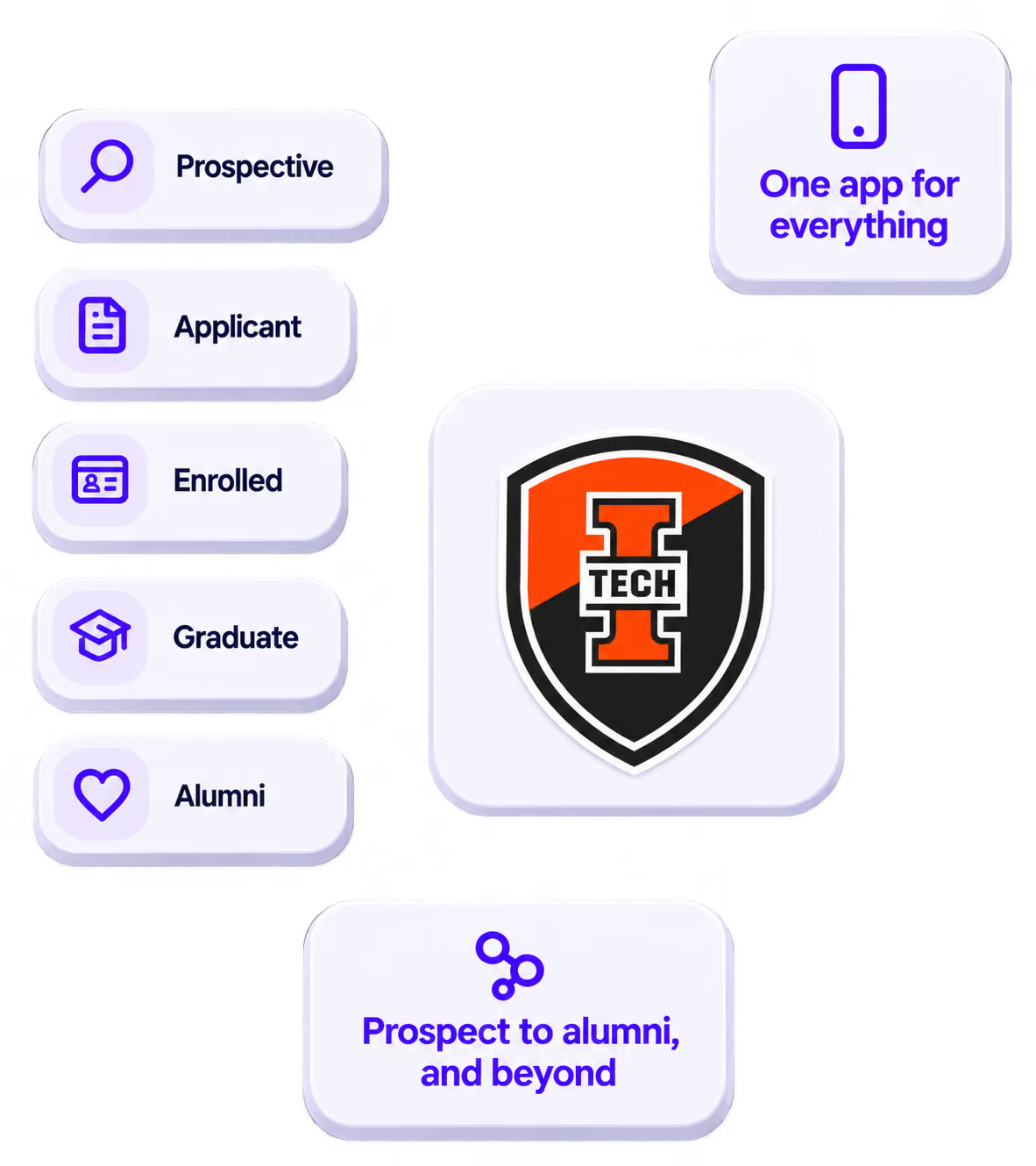
Deliver continuity
One app for everything a student needs. From being a prospective student through to graduation and beyond.
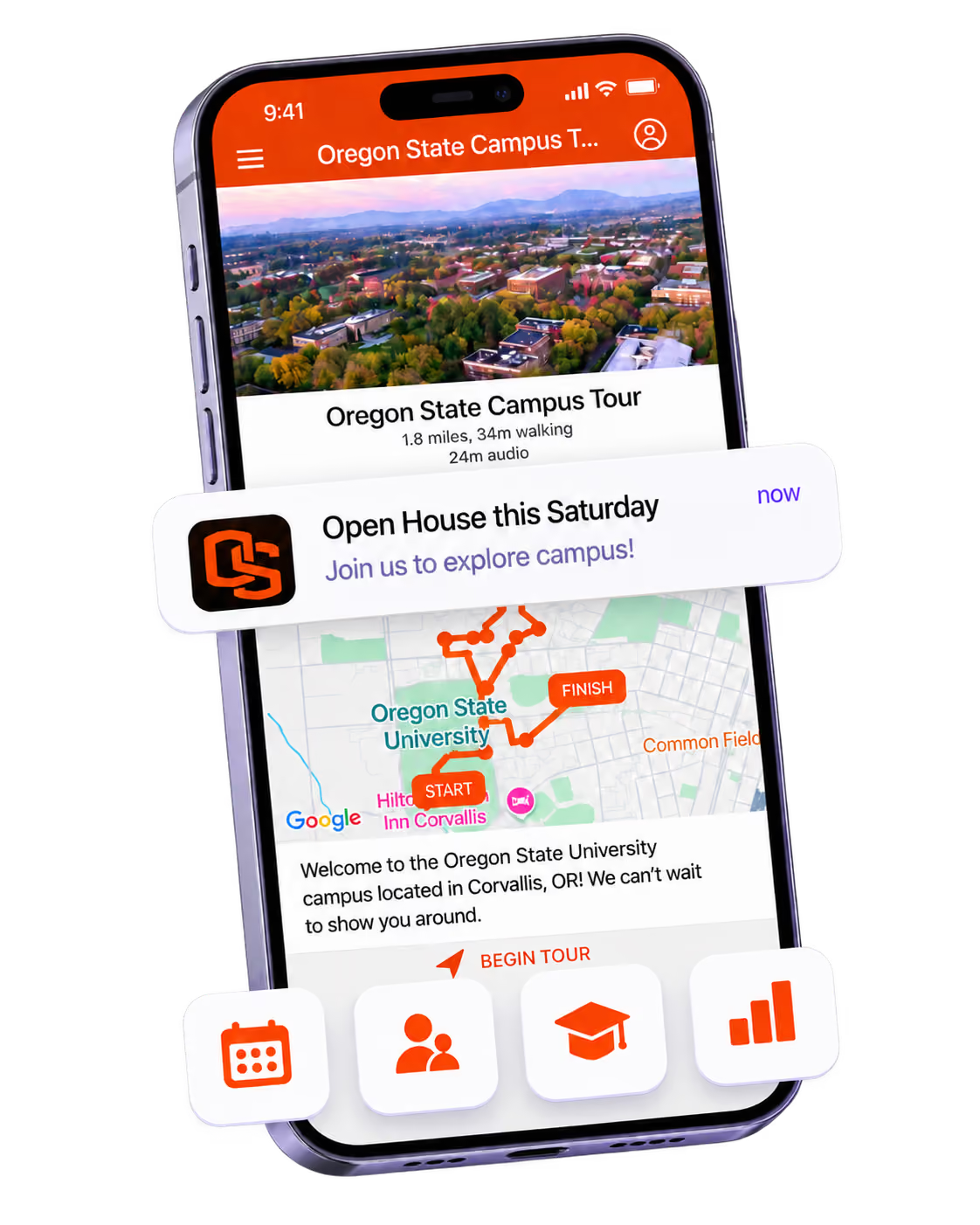
Stand out
Your own app helps you to stand out from the competition, stay top of mind, and be remembered.

Get the Mobile App Playbook
A short guide to running the whole student journey in one app. No fluff, just what works.
for higher ed
Campus
Playbook
A practical guide to building a connected campus experience.
Free playbook
The Mobile App Playbook for Universities
Students decide if they belong long before they set foot on campus. This playbook shows how to win them over from the first visit through graduation.
- Grow enrollment and boost recruitment
- Increase belonging and retention
- Run every event from one branded app
By submitting, you agree to our Privacy Policy.
You're in.
.png)