
Campus apps by department
Admissions, orientation, student life, and more — one campus app that works across departments.

Campus apps by department
Admissions, orientation, student life, and more — one campus app that works across departments.
Build unlimited event apps on one license
One partnership for unlimited campus events — orientation, tours, student life, and everything in between.
Build unlimited event apps on one license
One partnership for unlimited campus events — orientation, tours, student life, and everything in between.
Compare event app platforms
See how Guidebook stacks up against other event app and registration platforms.
Compare event app platforms
See how Guidebook stacks up against other event app and registration platforms.
Event apps for nonprofit and community programs
Give members, volunteers, and donors one branded app for conferences, fundraisers, and year-round community.
Event apps for nonprofit and community programs
Give members, volunteers, and donors one branded app for conferences, fundraisers, and year-round community.
Campus integrations and an open API
Connect Guidebook with the campus systems, APIs, and tools your team already uses.
Campus integrations and an open API
Connect Guidebook with the campus systems, APIs, and tools your team already uses.
Event apps for corporate and enterprise teams
Internal meetings, offsites, and large-scale corporate events — with the branding and control enterprise teams need.
Event apps for corporate and enterprise teams
Internal meetings, offsites, and large-scale corporate events — with the branding and control enterprise teams need.
Create a branded event app with no coding
Put schedules, maps, resources, and updates in every attendee's pocket — built for campus events and programs.
Create a branded event app with no coding
Put schedules, maps, resources, and updates in every attendee's pocket — built for campus events and programs.
Launch a branded, white-label event app
A white-label event app with your branding, your content, and your attendee experience — no coding required.
Launch a branded, white-label event app
A white-label event app with your branding, your content, and your attendee experience — no coding required.
Everything in the Guidebook platform
Explore the features event teams use to engage attendees before, during, and after the event.
Everything in the Guidebook platform
Explore the features event teams use to engage attendees before, during, and after the event.
One app for in-person and virtual attendees
The same schedule, networking, and updates whether people are in the room or joining remotely.
One app for in-person and virtual attendees
The same schedule, networking, and updates whether people are in the room or joining remotely.
Event apps built for associations
Annual meetings, chapter events, and member engagement — without rebuilding a new app every year.
Event apps built for associations
Annual meetings, chapter events, and member engagement — without rebuilding a new app every year.
A branded event website that matches the app
Promote the event, collect interest, and keep branding consistent from the first click to check-in.
A branded event website that matches the app
Promote the event, collect interest, and keep branding consistent from the first click to check-in.
Plan, run, and measure events on one platform
App, registration, badges, and websites in one workflow — so planning isn't a pile of disconnected tools.
Plan, run, and measure events on one platform
App, registration, badges, and websites in one workflow — so planning isn't a pile of disconnected tools.
Keep members engaged between events
One branded app for the conference and everything that happens the other 51 weeks of the year.
Keep members engaged between events
One branded app for the conference and everything that happens the other 51 weeks of the year.
The conference app attendees actually use
Schedules, maps, networking, and live updates for annual meetings, summits, and multi-day conferences.
The conference app attendees actually use
Schedules, maps, networking, and live updates for annual meetings, summits, and multi-day conferences.
Registration that feeds your app and badges
Collect registrations, payments, and attendee data in the same platform as your event app.
Registration that feeds your app and badges
Collect registrations, payments, and attendee data in the same platform as your event app.
Design and print event badges in one place
Custom badges, QR check-in, and on-site printing — without a separate badge vendor.
Design and print event badges in one place
Custom badges, QR check-in, and on-site printing — without a separate badge vendor.
A Smaller School?
Deliver a polished, branded event experience without a large team or a big budget.
A Smaller School?
Deliver a polished, branded event experience without a large team or a big budget.
Running Family Programs?
Give families everything they need, from schedules and maps to real-time updates, all in one place.
Running Family Programs?
Give families everything they need, from schedules and maps to real-time updates, all in one place.
Coordinating Move-In Day?
Share updates, manage events, and keep students informed from move-in through the academic year.

Coordinating Move-In Day?
Share updates, manage events, and keep students informed from move-in through the academic year.
Offering Campus Tours?
Deliver branded, self-guided tour experiences with interactive maps and rich media, available 24/7.

Offering Campus Tours?
Deliver branded, self-guided tour experiences with interactive maps and rich media, available 24/7.
Organising a Career Fair?
Simplify logistics for students, employers, and Career Services staff with one easy-to-use app.
Organising a Career Fair?
Simplify logistics for students, employers, and Career Services staff with one easy-to-use app.
Managing Alumni Events?
Plan reunions, regional events, and fundraising campaigns with an app built for alumni engagement.
Managing Alumni Events?
Plan reunions, regional events, and fundraising campaigns with an app built for alumni engagement.
Boost Student Engagement
One hub for schedules, resources, and events that keeps students connected throughout the academic year.
Boost Student Engagement
One hub for schedules, resources, and events that keeps students connected throughout the academic year.
Planning Orientation?
Help new students feel prepared from day one with schedules, campus resources, and real-time updates in one app.
Planning Orientation?
Help new students feel prepared from day one with schedules, campus resources, and real-time updates in one app.
Running Admissions Events?
Manage open houses, tours, and yield events with a branded app that saves time and engages prospective students.

Running Admissions Events?
Manage open houses, tours, and yield events with a branded app that saves time and engages prospective students.
Get a custom Sponsorship Package Template
Stop starting from scratch. Grab free templates that helWe'll build a tailored sponsorship package with suggested pricing, tiers, and benefits..for your specific event.p you build professional sponsorship packages and close deals faster.
Get a custom Sponsorship Package Template
Stop starting from scratch. Grab free templates that helWe'll build a tailored sponsorship package with suggested pricing, tiers, and benefits..for your specific event.p you build professional sponsorship packages and close deals faster.
Plan Your Next Event Without Missing a Beat.
From venue selection to post-event wrap-up, this free checklist walks you through every step (so nothing falls through the cracks).
.avif)
Plan Your Next Event Without Missing a Beat.
From venue selection to post-event wrap-up, this free checklist walks you through every step (so nothing falls through the cracks).
Real Results From Real Events
100,000+ organizations trust Guidebook. See exactly how universities, associations, enterprises, and more put it to work.

Real Results From Real Events
100,000+ organizations trust Guidebook. See exactly how universities, associations, enterprises, and more put it to work.
Flexible pricing for every event size
Find the perfect plan for your needs, from intimate gatherings to large-scale conferences.
Flexible pricing for every event size
Find the perfect plan for your needs, from intimate gatherings to large-scale conferences.
Join our event experts
Watch on-demand webinars and join live sessions with industry leaders sharing best practices for event success.
.avif)
Join our event experts
Watch on-demand webinars and join live sessions with industry leaders sharing best practices for event success.
Guidebook in Action
Book a personalized walkthrough and discover how we help event teams create better attendee experiences.
Guidebook in Action
Book a personalized walkthrough and discover how we help event teams create better attendee experiences.
What are Facebook Keywords for Events?
Discover how Facebook keywords for events boost visibility and attendance. Learn keyword strategies, optimization tips, and best practices for event promotion.

Facebook Keywords for Events is the strategic selection of search terms and phrases that help your event appear in Facebook searches, reach your target audience, and drive registrations. These keywords work across event titles, descriptions, and promotional posts. Master them, and you'll turn Facebook's 3 billion users into potential attendees.
Here's the thing: Facebook's algorithm doesn't read minds. It reads keywords. When someone searches "networking events near me" or "tech conference 2026," Facebook scans event listings for matching terms. No keywords? No visibility. The right keywords connect your event with people actively looking for experiences like yours.
Key Characteristics of Facebook Keywords for Events
- Search Intent Alignment: Effective keywords match what potential attendees actually type into Facebook's search bar. Think like your audience, not like a marketer.
- Location Specificity: Geographic terms like city names, neighborhoods, or "near me" phrases help local events surface in relevant searches.
- Event Type Clarity: Words like "workshop," "conference," "festival," or "networking" tell Facebook exactly what kind of event you're hosting.
- Audience Targeting: Industry-specific terms attract the right crowd. "Healthcare professionals" or "startup founders" filter out irrelevant traffic.
- Temporal Relevance: Date-related keywords like "2026," "spring," or "weekend" help time-sensitive searches find your event.
- Action-Oriented Language: Words like "register," "join," "attend," or "RSVP" signal that your listing is an active event, not just content.
Facebook Keywords for Events vs. Related Terms
Event SEO
- Scope: Covers all search engines and platforms, including Google, Bing, and event directories
- Focus: Broad optimization for organic search visibility across the web
- Timeline: Long-term strategy that builds authority over months
- Channels: Website, blog, event listing sites, and social platforms
- Goal: Maximize discoverability wherever people search for events
Event Digital Marketing
- Scope: Encompasses all online promotional activities, paid and organic
- Focus: Driving registrations through multiple digital touchpoints
- Timeline: Campaign-based, typically 4-12 weeks before an event
- Channels: Email, social media, paid ads, content marketing, and influencer outreach
- Goal: Fill seats and build buzz through coordinated digital efforts
Event Hashtags
- Scope: Social media categorization and community building
- Focus: Creating shareable, trackable conversation threads
- Timeline: Active before, during, and after events
- Channels: Instagram, Twitter/X, LinkedIn, and Facebook posts
- Goal: Encourage user-generated content and measure social engagement
Facebook keywords work alongside these strategies. They're your foundation for organic Facebook discovery. Event SEO extends this approach across the web. Digital marketing amplifies your reach through paid channels. Together, they create a complete promotional ecosystem.
Essential Facebook Keyword Categories for Events
Primary Event Descriptors
These are your bread-and-butter keywords. They describe exactly what your event is.
- Event format: conference, workshop, seminar, webinar, summit, expo
- Event purpose: networking, training, celebration, fundraiser, launch
- Event scale: annual, flagship, exclusive, community, regional
Place these terms in your event title and first paragraph of your description. Facebook weighs early text more heavily.
Industry and Niche Terms
Generic keywords attract generic audiences. Niche terms attract buyers.
A "marketing conference" competes with thousands of events. A "B2B SaaS marketing summit" targets exactly who you want. Research what your ideal attendees search for. Use their language, not yours.
Location-Based Keywords
Local events live or die by geographic keywords. Include:
- City and state names
- Neighborhood or district references
- Venue names (especially well-known ones)
- Regional identifiers like "Bay Area" or "Midwest"
For virtual events, use terms like "online," "virtual," "remote," or "worldwide access."
Audience-Specific Keywords
Who should attend? Say it clearly.
Terms like "for entrepreneurs," "women in tech," or "healthcare executives" filter your audience. This isn't exclusionary—it's efficient. The right people find you faster. Check out women in business conferences for examples of audience-targeted events.
Benefit-Driven Keywords
What will attendees gain? Keywords should answer this question.
- Learning outcomes: "learn," "master," "certification," "skills"
- Networking value: "connect," "meet," "community," "peers"
- Career benefits: "career growth," "job opportunities," "professional development"
How Facebook's Event Search Algorithm Works
Title Weight and Placement
Your event title carries the most keyword weight. Facebook treats it like a headline.
Front-load your most important keywords. "2026 Digital Marketing Summit | Chicago" beats "Join Us for an Amazing Event About Marketing." Be specific. Be searchable.
Description Optimization
Facebook scans your entire description, but the first 150 characters matter most. That's what shows in previews.
Pack your opening with keywords naturally. Then expand with details. Repeat key terms 2-3 times throughout—but don't stuff. Facebook penalizes obvious keyword cramming.
Category and Tag Selection
Facebook's event categories act as built-in keywords. Choose wisely.
- Select the most specific category available
- Add relevant tags when prompted
- Use Facebook's suggested keywords as inspiration
These backend selections influence who sees your event in recommendations, not just searches.
Engagement Signals
Keywords get you found. Engagement keeps you visible.
Events with more "Interested" and "Going" responses rank higher. Comments and shares boost visibility too. Strong keywords attract initial clicks. Great event content converts those clicks into engagement signals that compound your reach.
Why Facebook Keywords for Events Matters
For Event Success:
- Increased Discoverability: The right keywords put your event in front of people actively searching for experiences like yours.
- Higher Quality Registrations: Specific keywords attract attendees who actually want what you're offering, reducing no-shows.
- Reduced Advertising Costs: Strong organic visibility means less reliance on paid promotion to fill seats.
- Better Audience Targeting: Keywords naturally filter your audience, saving time on unqualified inquiries.
- Competitive Advantage: Most event planners ignore keyword strategy. You won't.
For Business Objectives:
- Improved Event ROI: More registrations from free organic traffic directly impacts your bottom line.
- Brand Visibility: Appearing in relevant searches builds awareness even among non-attendees.
- Data Collection: More registrations mean more contacts for future marketing efforts.
- Community Building: Keywords help you attract and grow a loyal audience over multiple events.
- Scalable Growth: A keyword strategy that works once works repeatedly for future events.
Platforms like Guidebook's event management platform help you maximize the attendees your keywords attract. Once people register, you need tools to deliver an exceptional experience that turns first-timers into repeat attendees.
Facebook Keywords for Events Best Practices
- Research Before You Write: Search Facebook for similar events. Note what keywords successful competitors use. Borrow what works.
- Use Facebook's Autocomplete: Start typing in Facebook's search bar. The suggestions reveal what people actually search for. Use these exact phrases.
- Front-Load Your Title: Put your most important keyword in the first three words of your event title. Don't bury it after clever wordplay.
- Write for Humans First: Keywords matter, but readability matters more. Awkward keyword stuffing hurts more than it helps.
- Include Location Early: For in-person events, mention your city in the title or first sentence. Local searches dominate Facebook events.
- Update Keywords Based on Performance: Check which searches drive traffic. Double down on winners. Replace underperformers.
- Align Keywords Across Channels: Use the same core keywords on your event advertising, website, and email campaigns for consistency.
- Test Different Variations: "Workshop" vs. "masterclass" vs. "training" may perform differently. Test and learn.
- Monitor Competitor Events: Set alerts for competing events. Study their keyword choices and results.
- Refresh Keywords for Recurring Events: Last year's keywords may be stale. Update annually with fresh research.
Common Facebook Keywords for Events Mistakes
Keyword Stuffing: Cramming every possible keyword into your description makes it unreadable. Facebook's algorithm recognizes this tactic and may penalize your visibility. Write naturally with strategic keyword placement instead.
Ignoring Search Intent: Using keywords you think sound good instead of what people actually search for wastes effort. "Synergistic networking opportunity" sounds fancy but nobody searches for it. Use plain language.
Forgetting Mobile Users: Most Facebook searches happen on phones. Long, complex keywords get truncated. Keep your most important terms short and visible in mobile previews.
Neglecting the Description: Many planners optimize titles but leave descriptions keyword-free. Facebook scans everything. Use your full description real estate strategically.
Using Only Broad Terms: "Event" and "conference" are too generic. You'll drown in competition. Combine broad terms with specific modifiers for better results.
Skipping Location Keywords: Even virtual events need location context. "Virtual" is a location keyword. "Worldwide" is a location keyword. Don't leave this field blank.
Set-and-Forget Mentality: Keywords aren't a one-time task. Search trends change. Your audience evolves. Review and refresh keywords for every event.
Final Thoughts
Facebook keywords for events aren't glamorous. They won't win you any creativity awards. But they work. Every search query is someone raising their hand, saying "I want this." Keywords help you answer that call.
The event industry grows more competitive every year. Event trends shift constantly. Attendee expectations rise. Standing out requires more than a great event—it requires being found in the first place. Keywords are your visibility foundation.
Think of keyword optimization as a gift to your future attendees. They're out there right now, searching for exactly what you offer. The right keywords build the bridge between their search and your event. That's not marketing trickery. That's service.
Ready to turn keyword-driven registrations into unforgettable experiences? Event planning goes far beyond promotion. Explore event management tips to level up your execution. Check out event planning resources for comprehensive guides. And when you're ready to wow your attendees with a branded mobile app, book a demo with Guidebook to see what's possible.
Your next sold-out event starts with a single search. Make sure they find you.
The power of your brand in your app, from first visit to alumni.
Build trust
Your brand, front and center in your own app, downloaded directly from the app stores.
.avif)
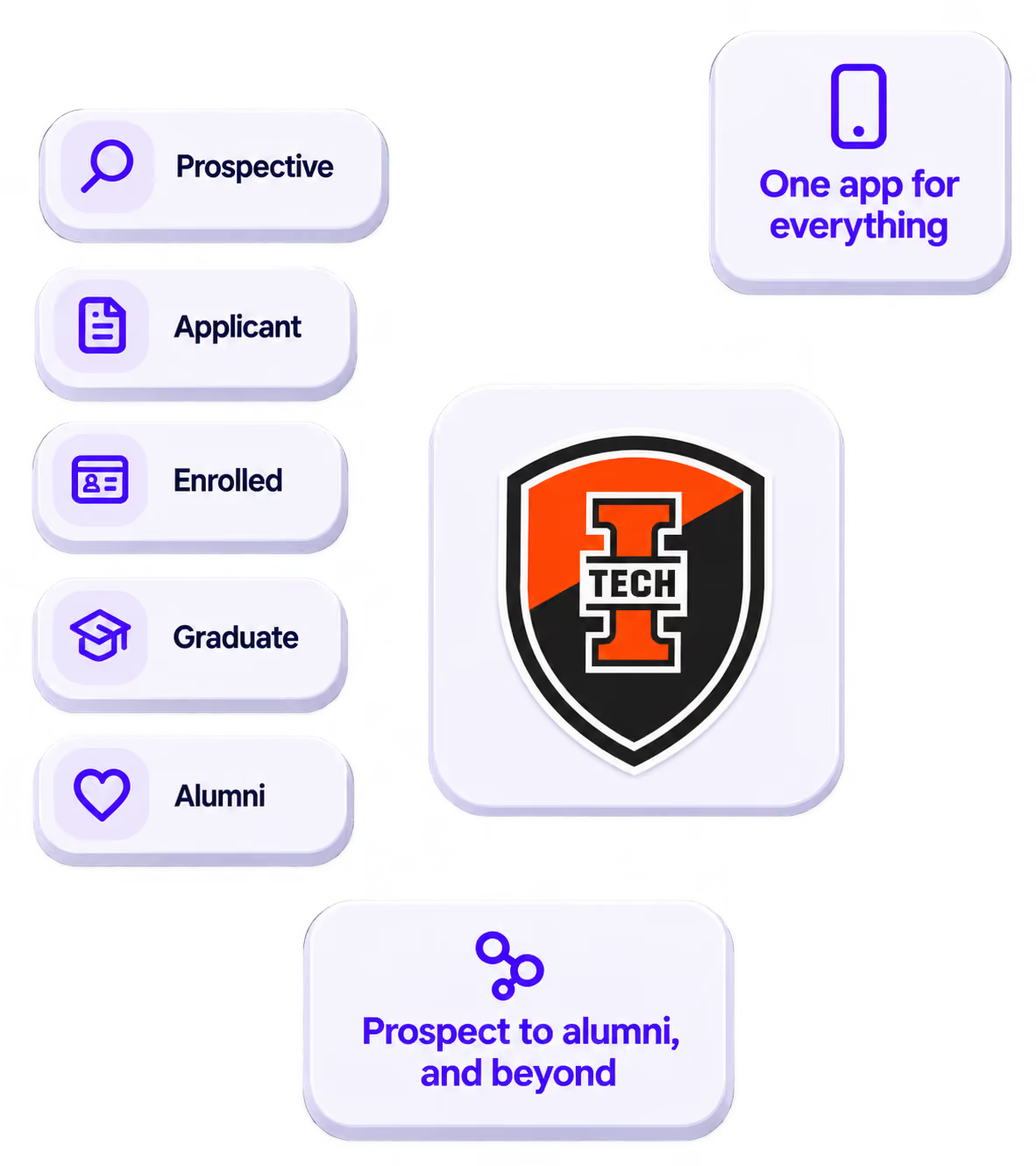
Deliver continuity
One app for everything a student needs. From being a prospective student through to graduation and beyond.
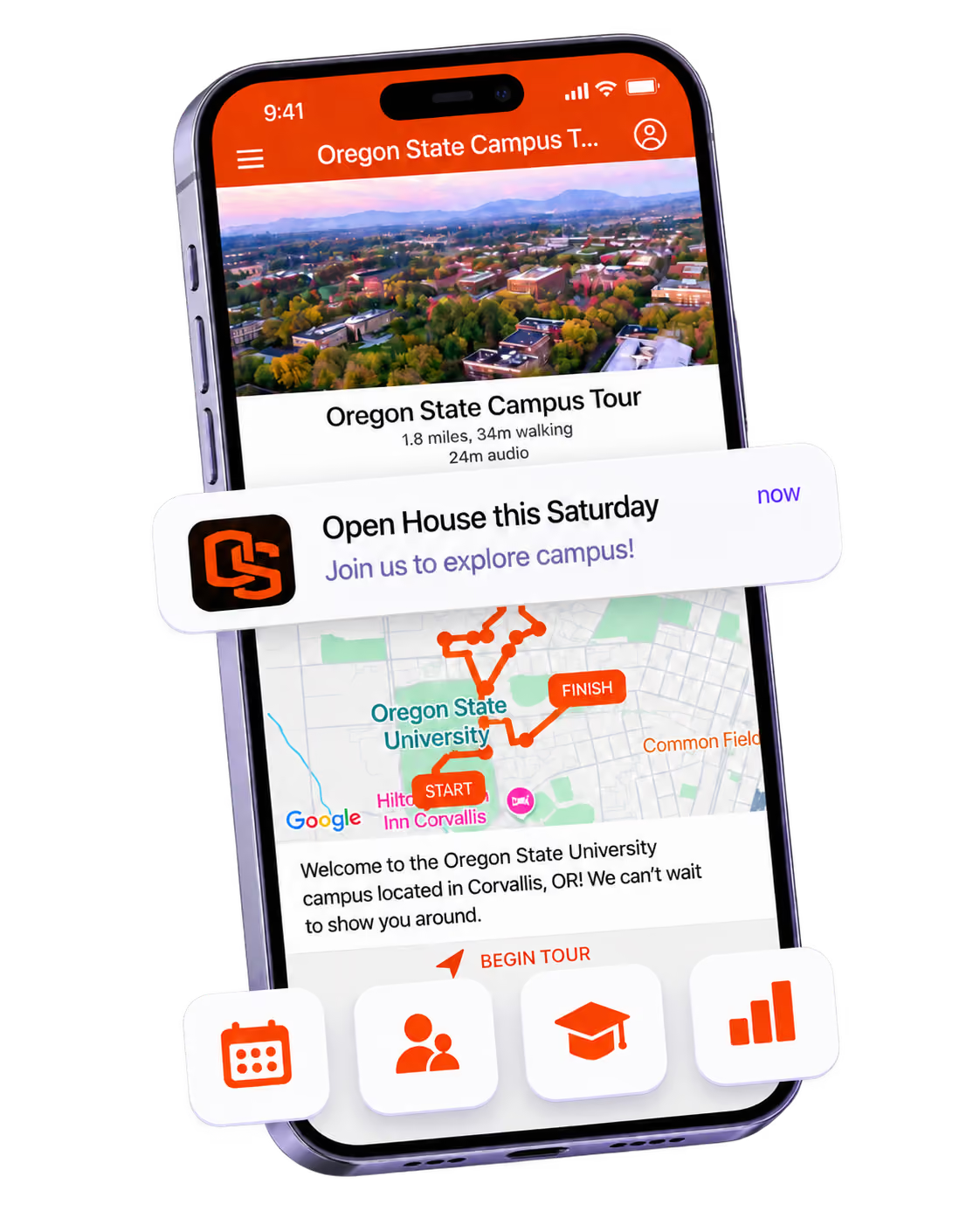
Stand out
Your own app helps you to stand out from the competition, stay top of mind, and be remembered.

Get the Mobile App Playbook
A short guide to running the whole student journey in one app. No fluff, just what works.
for higher ed
Campus
Playbook
A practical guide to building a connected campus experience.
Free playbook
The Mobile App Playbook for Universities
Students decide if they belong long before they set foot on campus. This playbook shows how to win them over from the first visit through graduation.
- Grow enrollment and boost recruitment
- Increase belonging and retention
- Run every event from one branded app
By submitting, you agree to our Privacy Policy.
You're in.
.png)