
Campus apps by department
Admissions, orientation, student life, and more — one campus app that works across departments.

Campus apps by department
Admissions, orientation, student life, and more — one campus app that works across departments.
Build unlimited event apps on one license
One partnership for unlimited campus events — orientation, tours, student life, and everything in between.
Build unlimited event apps on one license
One partnership for unlimited campus events — orientation, tours, student life, and everything in between.
Compare event app platforms
See how Guidebook stacks up against other event app and registration platforms.
Compare event app platforms
See how Guidebook stacks up against other event app and registration platforms.
Event apps for nonprofit and community programs
Give members, volunteers, and donors one branded app for conferences, fundraisers, and year-round community.
Event apps for nonprofit and community programs
Give members, volunteers, and donors one branded app for conferences, fundraisers, and year-round community.
Campus integrations and an open API
Connect Guidebook with the campus systems, APIs, and tools your team already uses.
Campus integrations and an open API
Connect Guidebook with the campus systems, APIs, and tools your team already uses.
Event apps for corporate and enterprise teams
Internal meetings, offsites, and large-scale corporate events — with the branding and control enterprise teams need.
Event apps for corporate and enterprise teams
Internal meetings, offsites, and large-scale corporate events — with the branding and control enterprise teams need.
Create a branded event app with no coding
Put schedules, maps, resources, and updates in every attendee's pocket — built for campus events and programs.
Create a branded event app with no coding
Put schedules, maps, resources, and updates in every attendee's pocket — built for campus events and programs.
Launch a branded, white-label event app
A white-label event app with your branding, your content, and your attendee experience — no coding required.
Launch a branded, white-label event app
A white-label event app with your branding, your content, and your attendee experience — no coding required.
Everything in the Guidebook platform
Explore the features event teams use to engage attendees before, during, and after the event.
Everything in the Guidebook platform
Explore the features event teams use to engage attendees before, during, and after the event.
One app for in-person and virtual attendees
The same schedule, networking, and updates whether people are in the room or joining remotely.
One app for in-person and virtual attendees
The same schedule, networking, and updates whether people are in the room or joining remotely.
Event apps built for associations
Annual meetings, chapter events, and member engagement — without rebuilding a new app every year.
Event apps built for associations
Annual meetings, chapter events, and member engagement — without rebuilding a new app every year.
A branded event website that matches the app
Promote the event, collect interest, and keep branding consistent from the first click to check-in.
A branded event website that matches the app
Promote the event, collect interest, and keep branding consistent from the first click to check-in.
Plan, run, and measure events on one platform
App, registration, badges, and websites in one workflow — so planning isn't a pile of disconnected tools.
Plan, run, and measure events on one platform
App, registration, badges, and websites in one workflow — so planning isn't a pile of disconnected tools.
Keep members engaged between events
One branded app for the conference and everything that happens the other 51 weeks of the year.
Keep members engaged between events
One branded app for the conference and everything that happens the other 51 weeks of the year.
The conference app attendees actually use
Schedules, maps, networking, and live updates for annual meetings, summits, and multi-day conferences.
The conference app attendees actually use
Schedules, maps, networking, and live updates for annual meetings, summits, and multi-day conferences.
Registration that feeds your app and badges
Collect registrations, payments, and attendee data in the same platform as your event app.
Registration that feeds your app and badges
Collect registrations, payments, and attendee data in the same platform as your event app.
Design and print event badges in one place
Custom badges, QR check-in, and on-site printing — without a separate badge vendor.
Design and print event badges in one place
Custom badges, QR check-in, and on-site printing — without a separate badge vendor.
A Smaller School?
Deliver a polished, branded event experience without a large team or a big budget.
A Smaller School?
Deliver a polished, branded event experience without a large team or a big budget.
Running Family Programs?
Give families everything they need, from schedules and maps to real-time updates, all in one place.
Running Family Programs?
Give families everything they need, from schedules and maps to real-time updates, all in one place.
Coordinating Move-In Day?
Share updates, manage events, and keep students informed from move-in through the academic year.

Coordinating Move-In Day?
Share updates, manage events, and keep students informed from move-in through the academic year.
Offering Campus Tours?
Deliver branded, self-guided tour experiences with interactive maps and rich media, available 24/7.

Offering Campus Tours?
Deliver branded, self-guided tour experiences with interactive maps and rich media, available 24/7.
Organising a Career Fair?
Simplify logistics for students, employers, and Career Services staff with one easy-to-use app.
Organising a Career Fair?
Simplify logistics for students, employers, and Career Services staff with one easy-to-use app.
Managing Alumni Events?
Plan reunions, regional events, and fundraising campaigns with an app built for alumni engagement.
Managing Alumni Events?
Plan reunions, regional events, and fundraising campaigns with an app built for alumni engagement.
Boost Student Engagement
One hub for schedules, resources, and events that keeps students connected throughout the academic year.
Boost Student Engagement
One hub for schedules, resources, and events that keeps students connected throughout the academic year.
Planning Orientation?
Help new students feel prepared from day one with schedules, campus resources, and real-time updates in one app.
Planning Orientation?
Help new students feel prepared from day one with schedules, campus resources, and real-time updates in one app.
Running Admissions Events?
Manage open houses, tours, and yield events with a branded app that saves time and engages prospective students.

Running Admissions Events?
Manage open houses, tours, and yield events with a branded app that saves time and engages prospective students.
Get a custom Sponsorship Package Template
Stop starting from scratch. Grab free templates that helWe'll build a tailored sponsorship package with suggested pricing, tiers, and benefits..for your specific event.p you build professional sponsorship packages and close deals faster.
Get a custom Sponsorship Package Template
Stop starting from scratch. Grab free templates that helWe'll build a tailored sponsorship package with suggested pricing, tiers, and benefits..for your specific event.p you build professional sponsorship packages and close deals faster.
Plan Your Next Event Without Missing a Beat.
From venue selection to post-event wrap-up, this free checklist walks you through every step (so nothing falls through the cracks).
.avif)
Plan Your Next Event Without Missing a Beat.
From venue selection to post-event wrap-up, this free checklist walks you through every step (so nothing falls through the cracks).
Real Results From Real Events
100,000+ organizations trust Guidebook. See exactly how universities, associations, enterprises, and more put it to work.

Real Results From Real Events
100,000+ organizations trust Guidebook. See exactly how universities, associations, enterprises, and more put it to work.
Flexible pricing for every event size
Find the perfect plan for your needs, from intimate gatherings to large-scale conferences.

Flexible pricing for every event size
Find the perfect plan for your needs, from intimate gatherings to large-scale conferences.
Join our event experts
Watch on-demand webinars and join live sessions with industry leaders sharing best practices for event success.
.avif)
Join our event experts
Watch on-demand webinars and join live sessions with industry leaders sharing best practices for event success.
Guidebook in Action
Book a personalized walkthrough and discover how we help event teams create better attendee experiences.
Guidebook in Action
Book a personalized walkthrough and discover how we help event teams create better attendee experiences.

What is an Event Coordinator Role Description?
Discover the key responsibilities of an event coordinator. Learn about essential skills, daily tasks, and tips for crafting an effective event coordinator role description.

An Event Coordinator Role Description is the detailed outline of responsibilities, skills, and qualifications that define what an event coordinator does on a daily basis to bring successful events to life. This document serves as both a hiring blueprint and a career roadmap. It shapes expectations for employers and candidates alike.
Here's the thing: an event coordinator role description isn't just HR paperwork. It's the foundation for building a high-performing events team. A clear, well-crafted description attracts the right talent. It also helps current coordinators understand exactly how to excel in their position.
Key Characteristics of Event Coordinator Role Description
- Comprehensive Scope: Covers everything from vendor management to day-of logistics. Nothing gets left to guesswork.
- Measurable Outcomes: Includes specific KPIs like budget adherence, attendee satisfaction scores, and timeline compliance.
- Skill Requirements: Lists both hard skills (software proficiency, budget management) and soft skills (communication, problem-solving).
- Reporting Structure: Clarifies who the coordinator reports to and which team members they'll supervise.
- Growth Pathway: Shows how the role connects to career advancement within the organization.
- Industry Context: Reflects the specific event types the coordinator will handle, whether corporate, nonprofit, or hybrid.
- Flexibility Indicators: Notes travel requirements, weekend work expectations, and remote work options.
Event Coordinator vs. Related Roles
Event Coordinator
- Scope: Handles logistics and execution details for individual events
- Focus: Day-to-day tasks, vendor communication, and timeline management
- Timeline: Works within established deadlines set by managers
- Channels: Direct contact with vendors, venues, and internal teams
- Goal: Flawless event execution within budget and timeline
Event Manager
- Scope: Oversees multiple events and coordinates teams
- Focus: Strategy, budget allocation, and team leadership
- Timeline: Sets deadlines and manages long-term event calendars
- Channels: Stakeholder relationships, executive communication
- Goal: Portfolio success and team development
Event Planner
- Scope: Designs event concepts and experiences from scratch
- Focus: Creative vision, theme development, and attendee experience
- Timeline: Involved from initial concept through post-event analysis
- Channels: Client relationships, creative vendors, design teams
- Goal: Memorable, on-brand event experiences
Understanding these distinctions matters when crafting your event coordinator description. Each role requires different skills and experience levels. Getting this right helps you hire the perfect fit.
Essential Components of an Event Coordinator Role Description
Core Responsibilities Section
This is the heart of your role description. List 8-12 specific duties the coordinator will handle daily. Be concrete, not vague.
Strong examples include:
- Coordinate with 10+ vendors per event
- Manage event budgets ranging from $5,000 to $50,000
- Create and maintain detailed event timelines
- Handle event registration setup and attendee communication
Required Qualifications
Split this into must-haves and nice-to-haves. Be realistic about what you actually need versus what would be a bonus.
Must-haves typically include:
- 2-3 years of event coordination experience
- Proficiency with event management software
- Strong written and verbal communication skills
- Ability to manage multiple projects simultaneously
Technical Skills Requirements
Today's event coordinators need tech fluency. Specify which platforms and tools they'll use. This might include event check-in software, registration platforms, or project management tools.
Consider whether experience with virtual event planning matters for your organization. Hybrid and virtual events aren't going anywhere.
Soft Skills That Matter
Don't overlook interpersonal abilities. Event coordinators interact with dozens of people daily. They need:
- Calm under pressure
- Creative problem-solving
- Attention to detail
- Flexibility and adaptability
The Event Coordinator Hiring Process
Write a Compelling Job Posting
Your role description becomes your job posting's foundation. But add personality. Show candidates why they'd love working with your team.
Include your company culture, growth opportunities, and unique perks. The best coordinators have options. Give them reasons to choose you.
Screen for the Right Experience
Look beyond years of experience. Ask about specific event types they've handled. A coordinator who's run 50-person workshops may struggle with 500-person conferences.
Review their understanding of the event planning process. Do they think strategically or just tactically?
Test Problem-Solving Skills
Give candidates a scenario. "Your keynote speaker cancels two hours before the event. What do you do?" Their answer reveals how they think under pressure.
The best coordinators stay calm and solution-focused. They don't panic or blame others.
Check References Thoroughly
Ask previous employers about reliability, communication style, and how candidates handled challenges. Event coordination is high-stakes work. You need someone dependable.
Why Event Coordinator Role Description Matters
For Event Success:
- Clear Accountability: Everyone knows who handles what. No tasks fall through the cracks.
- Efficient Onboarding: New hires understand expectations from day one. They ramp up faster.
- Quality Execution: Defined responsibilities lead to consistent, professional events.
- Better Vendor Relationships: Coordinators who know their role communicate more effectively with partners.
- Reduced Stress: Clear boundaries prevent burnout and role confusion during crunch time.
For Business Objectives:
- Improved Event ROI: Skilled coordinators maximize every budget dollar.
- Stronger Brand Reputation: Professional events reflect well on your organization.
- Higher Attendee Satisfaction: Well-coordinated events create better experiences.
- Team Retention: Clear role definitions reduce frustration and turnover.
- Scalable Growth: Documented roles make it easier to expand your events team.
Platforms like Guidebook's event management platform help coordinators excel in their roles. The right tools make even complex events manageable.
Event Coordinator Role Description Best Practices
- Start with Outcomes, Not Tasks: Define what success looks like before listing daily duties. This keeps the role focused on impact.
- Be Specific About Event Types: A coordinator for team building events needs different skills than one handling trade shows.
- Include Salary Range: Transparency attracts better candidates. It also saves everyone time.
- Update Annually: Event technology and event trends evolve quickly. Keep your descriptions current.
- Get Input from Current Coordinators: They know what the job actually involves. Their insights make descriptions more accurate.
- Highlight Growth Opportunities: Show how this role leads to event manager or director positions.
- Specify Tools and Technology: List the software coordinators will use daily. This filters for tech-savvy candidates.
- Include Physical Requirements: Events often require lifting, standing for hours, and travel. Be upfront about demands.
- Define Success Metrics: How will you measure performance? Include specific KPIs in the description.
- Show Your Culture: Let your company personality shine through. The right candidates will connect with your vibe.
Common Event Coordinator Role Description Mistakes
Being Too Vague: "Handles event logistics" tells candidates nothing useful. Specify which logistics: vendor coordination, venue setup, catering management, or all three. Vague descriptions attract unqualified applicants.
Listing Unrealistic Requirements: Asking for 10 years of experience for an entry-level salary won't work. You'll either get no applicants or attract desperate candidates. Match requirements to compensation.
Ignoring Soft Skills: Technical abilities matter, but so does temperament. Event coordination is stressful. Candidates need emotional intelligence and resilience. Include these in your requirements.
Forgetting About Technology: Modern coordinators use event digital marketing tools, registration platforms, and mobile apps. If you don't mention tech requirements, you might hire someone who struggles with basic software.
Skipping the Company Overview: Candidates want to know who they're working for. Include your mission, event types, and team culture. This helps both parties assess fit.
Making It Too Long: A 2,000-word job description overwhelms candidates. Keep it focused on essentials. Save the details for interviews.
Not Differentiating from Similar Roles: If your coordinator description sounds identical to your planner description, candidates won't know which to apply for. Clarify the distinctions.
Final Thoughts
A well-crafted event coordinator role description does more than fill a position. It sets the foundation for event success. When coordinators understand their responsibilities, they perform better. When candidates know what to expect, you hire better fits.
The events industry continues evolving rapidly. Virtual events, hybrid formats, and new technologies change what coordinators need to know. Your role descriptions should evolve too. Review them annually to stay current with event management tips and industry standards.
Think of your role description as a living document. It guides hiring, shapes performance reviews, and helps coordinators grow. Invest time in getting it right. The payoff shows in every event your team executes.
Ready to support your event coordinators with better tools? Explore event planning resources that make their jobs easier. Check out Guidebook's templates for streamlined event management. Or book a demo to see how the right platform transforms event coordination from chaotic to seamless.
Great events start with great people in clearly defined roles. Your event coordinator role description is where that journey begins.
The power of your brand in your app, from first visit to alumni.
Build trust
Your brand, front and center in your own app, downloaded directly from the app stores.
.avif)
Deliver continuity
One app for everything a student needs. From being a prospective student through to graduation and beyond.
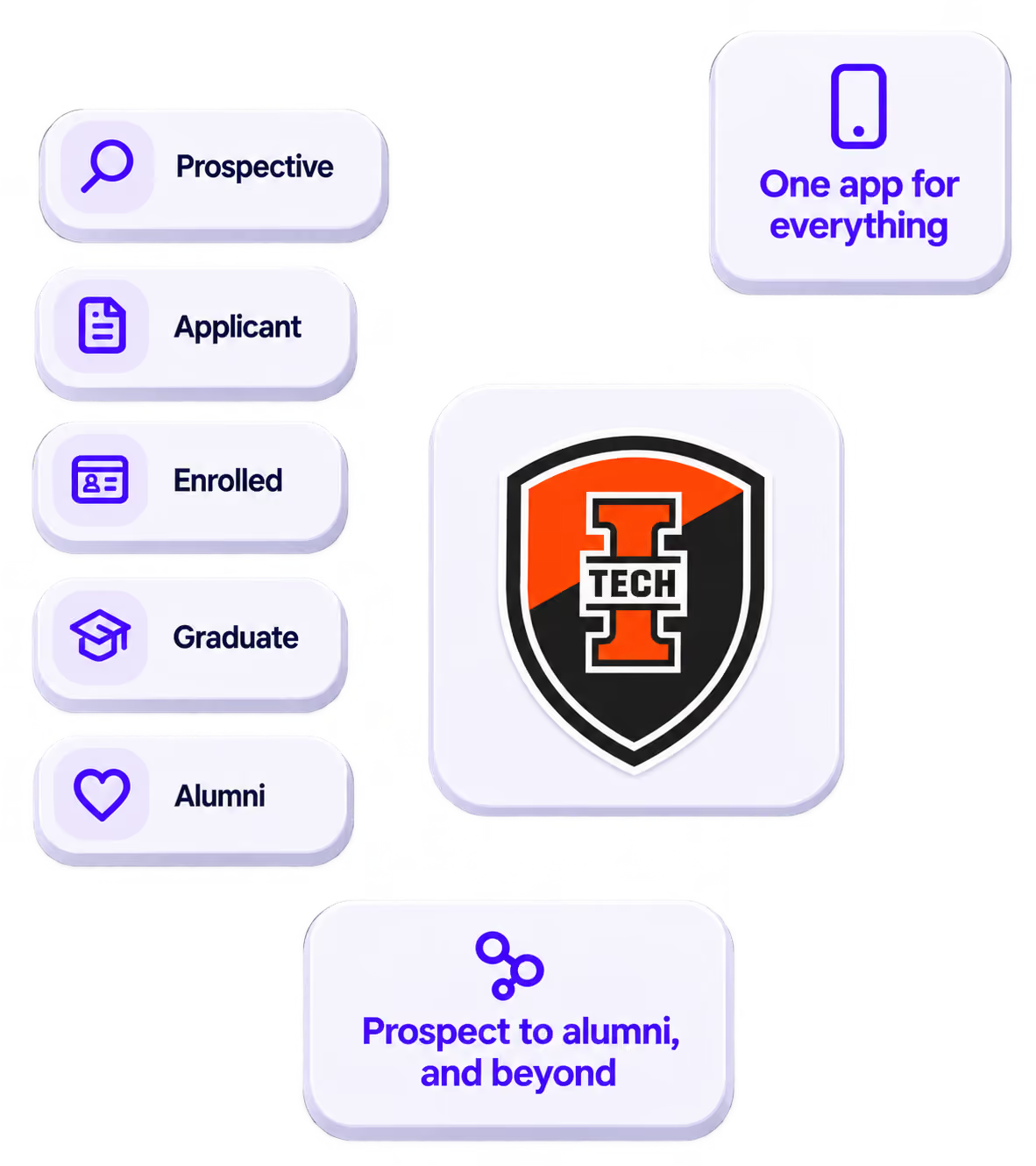
Stand out
Your own app helps you to stand out from the competition, stay top of mind, and be remembered.
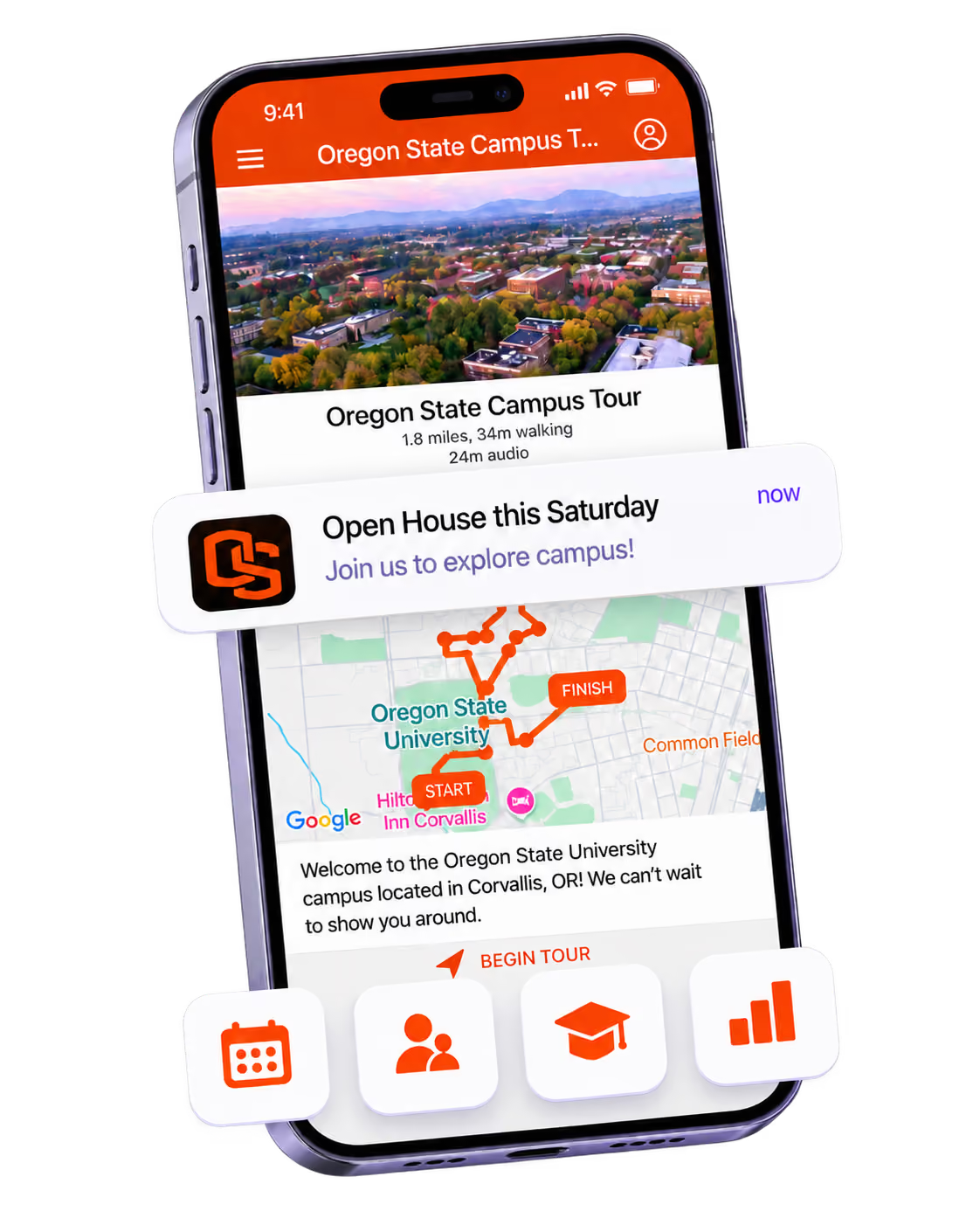

Get the Mobile App Playbook
A short guide to running the whole student journey in one app. No fluff, just what works.
for higher ed
Campus
Playbook
A practical guide to building a connected campus experience.
Free playbook
The Mobile App Playbook for Universities
Students decide if they belong long before they set foot on campus. This playbook shows how to win them over from the first visit through graduation.
- Grow enrollment and boost recruitment
- Increase belonging and retention
- Run every event from one branded app
By submitting, you agree to our Privacy Policy.
You're in.
.png)