Campus apps by department
Admissions, orientation, student life, and more — one campus app that works across departments.

Campus apps by department
Admissions, orientation, student life, and more — one campus app that works across departments.
Build unlimited event apps on one license
One partnership for unlimited campus events — orientation, tours, student life, and everything in between.
Build unlimited event apps on one license
One partnership for unlimited campus events — orientation, tours, student life, and everything in between.
Compare event app platforms
See how Guidebook stacks up against other event app and registration platforms.
Compare event app platforms
See how Guidebook stacks up against other event app and registration platforms.
Event apps for nonprofit and community programs
Give members, volunteers, and donors one branded app for conferences, fundraisers, and year-round community.
Event apps for nonprofit and community programs
Give members, volunteers, and donors one branded app for conferences, fundraisers, and year-round community.
Campus integrations and an open API
Connect Guidebook with the campus systems, APIs, and tools your team already uses.
Campus integrations and an open API
Connect Guidebook with the campus systems, APIs, and tools your team already uses.
Event apps for corporate and enterprise teams
Internal meetings, offsites, and large-scale corporate events — with the branding and control enterprise teams need.
Event apps for corporate and enterprise teams
Internal meetings, offsites, and large-scale corporate events — with the branding and control enterprise teams need.
Create a branded event app with no coding
Put schedules, maps, resources, and updates in every attendee's pocket — built for campus events and programs.
Create a branded event app with no coding
Put schedules, maps, resources, and updates in every attendee's pocket — built for campus events and programs.
Launch a branded, white-label event app
A white-label event app with your branding, your content, and your attendee experience — no coding required.
Launch a branded, white-label event app
A white-label event app with your branding, your content, and your attendee experience — no coding required.
Everything in the Guidebook platform
Explore the features event teams use to engage attendees before, during, and after the event.
Everything in the Guidebook platform
Explore the features event teams use to engage attendees before, during, and after the event.
One app for in-person and virtual attendees
The same schedule, networking, and updates whether people are in the room or joining remotely.
One app for in-person and virtual attendees
The same schedule, networking, and updates whether people are in the room or joining remotely.
Event apps built for associations
Annual meetings, chapter events, and member engagement — without rebuilding a new app every year.
Event apps built for associations
Annual meetings, chapter events, and member engagement — without rebuilding a new app every year.
A branded event website that matches the app
Promote the event, collect interest, and keep branding consistent from the first click to check-in.
A branded event website that matches the app
Promote the event, collect interest, and keep branding consistent from the first click to check-in.
Plan, run, and measure events on one platform
App, registration, badges, and websites in one workflow — so planning isn't a pile of disconnected tools.
Plan, run, and measure events on one platform
App, registration, badges, and websites in one workflow — so planning isn't a pile of disconnected tools.
Keep members engaged between events
One branded app for the conference and everything that happens the other 51 weeks of the year.
Keep members engaged between events
One branded app for the conference and everything that happens the other 51 weeks of the year.
The conference app attendees actually use
Schedules, maps, networking, and live updates for annual meetings, summits, and multi-day conferences.
The conference app attendees actually use
Schedules, maps, networking, and live updates for annual meetings, summits, and multi-day conferences.
Registration that feeds your app and badges
Collect registrations, payments, and attendee data in the same platform as your event app.
Registration that feeds your app and badges
Collect registrations, payments, and attendee data in the same platform as your event app.
Design and print event badges in one place
Custom badges, QR check-in, and on-site printing — without a separate badge vendor.
Design and print event badges in one place
Custom badges, QR check-in, and on-site printing — without a separate badge vendor.
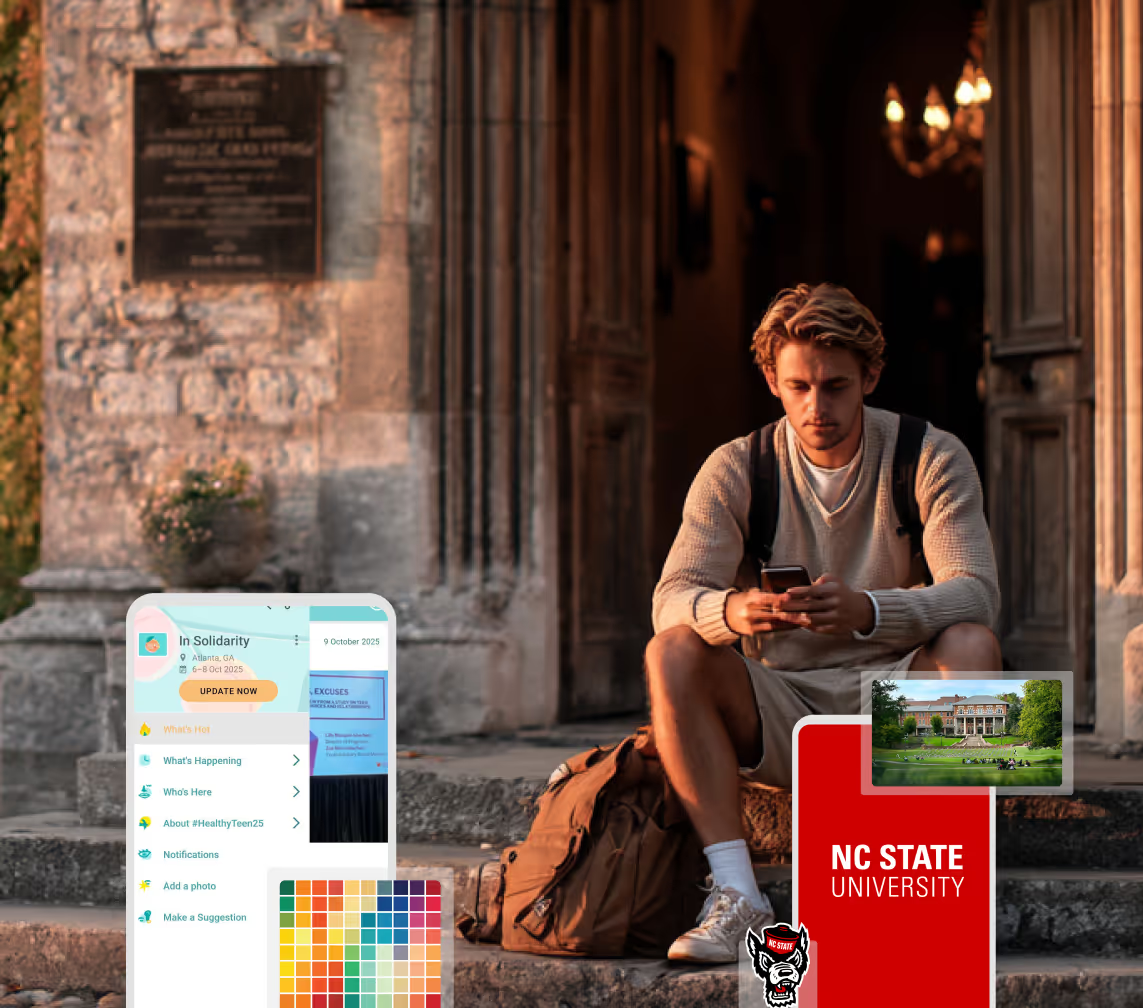
A Smaller School?
Deliver a polished, branded event experience without a large team or a big budget.
A Smaller School?
Deliver a polished, branded event experience without a large team or a big budget.
Running Family Programs?
Give families everything they need, from schedules and maps to real-time updates, all in one place.
Running Family Programs?
Give families everything they need, from schedules and maps to real-time updates, all in one place.
Coordinating Move-In Day?
Share updates, manage events, and keep students informed from move-in through the academic year.

Coordinating Move-In Day?
Share updates, manage events, and keep students informed from move-in through the academic year.
Offering Campus Tours?
Deliver branded, self-guided tour experiences with interactive maps and rich media, available 24/7.

Offering Campus Tours?
Deliver branded, self-guided tour experiences with interactive maps and rich media, available 24/7.
Organising a Career Fair?
Simplify logistics for students, employers, and Career Services staff with one easy-to-use app.
Organising a Career Fair?
Simplify logistics for students, employers, and Career Services staff with one easy-to-use app.
Managing Alumni Events?
Plan reunions, regional events, and fundraising campaigns with an app built for alumni engagement.
Managing Alumni Events?
Plan reunions, regional events, and fundraising campaigns with an app built for alumni engagement.
Boost Student Engagement
One hub for schedules, resources, and events that keeps students connected throughout the academic year.
Boost Student Engagement
One hub for schedules, resources, and events that keeps students connected throughout the academic year.
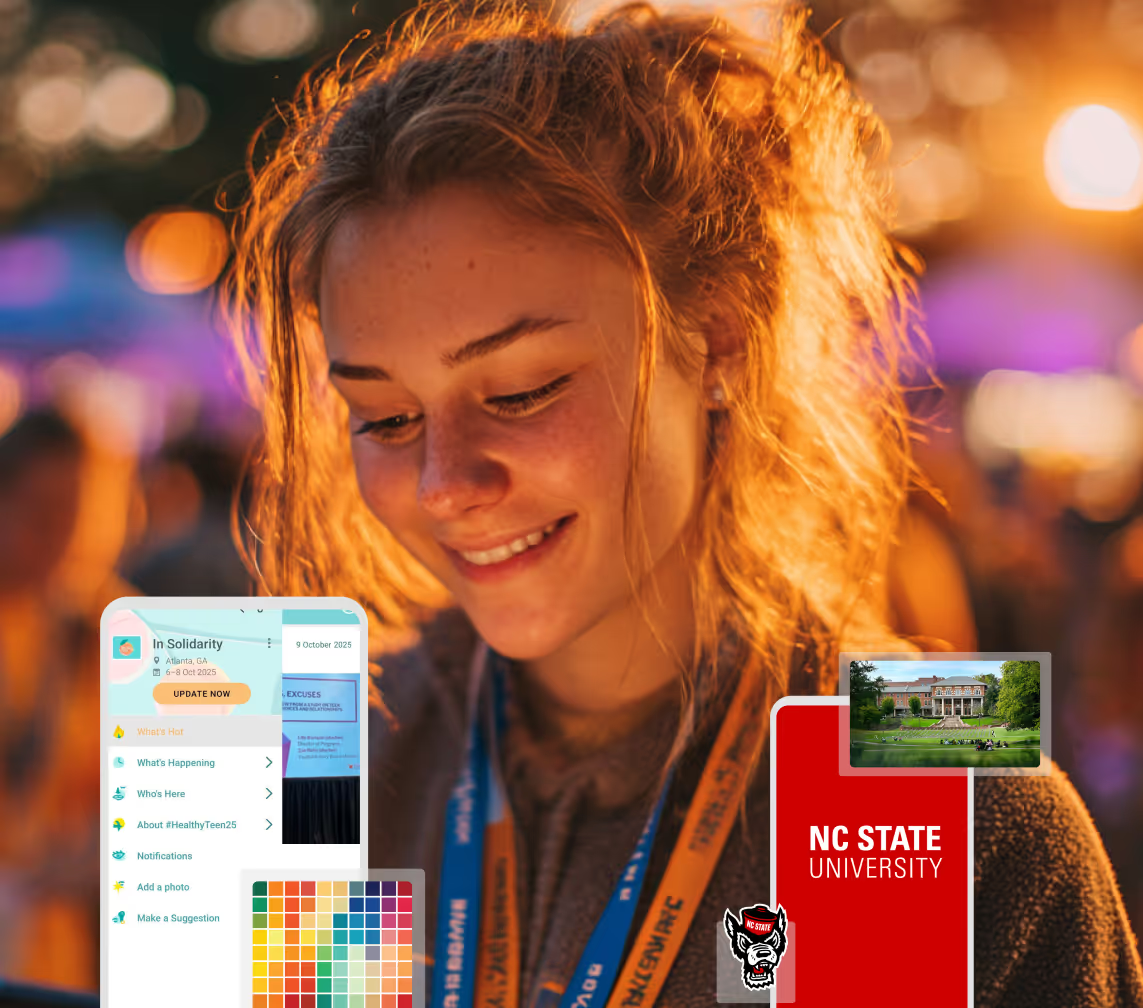
Planning Orientation?
Help new students feel prepared from day one with schedules, campus resources, and real-time updates in one app.
Planning Orientation?
Help new students feel prepared from day one with schedules, campus resources, and real-time updates in one app.
Running Admissions Events?
Manage open houses, tours, and yield events with a branded app that saves time and engages prospective students.

Running Admissions Events?
Manage open houses, tours, and yield events with a branded app that saves time and engages prospective students.
Get a custom Sponsorship Package Template
Stop starting from scratch. Grab free templates that helWe'll build a tailored sponsorship package with suggested pricing, tiers, and benefits..for your specific event.p you build professional sponsorship packages and close deals faster.
Get a custom Sponsorship Package Template
Stop starting from scratch. Grab free templates that helWe'll build a tailored sponsorship package with suggested pricing, tiers, and benefits..for your specific event.p you build professional sponsorship packages and close deals faster.
Plan Your Next Event Without Missing a Beat.
From venue selection to post-event wrap-up, this free checklist walks you through every step (so nothing falls through the cracks).
.avif)
Plan Your Next Event Without Missing a Beat.
From venue selection to post-event wrap-up, this free checklist walks you through every step (so nothing falls through the cracks).
Real Results From Real Events
100,000+ organizations trust Guidebook. See exactly how universities, associations, enterprises, and more put it to work.

Real Results From Real Events
100,000+ organizations trust Guidebook. See exactly how universities, associations, enterprises, and more put it to work.
Flexible pricing for every event size
Find the perfect plan for your needs, from intimate gatherings to large-scale conferences.
Flexible pricing for every event size
Find the perfect plan for your needs, from intimate gatherings to large-scale conferences.
Join our event experts
Watch on-demand webinars and join live sessions with industry leaders sharing best practices for event success.
.avif)
Join our event experts
Watch on-demand webinars and join live sessions with industry leaders sharing best practices for event success.
Guidebook in Action
Book a personalized walkthrough and discover how we help event teams create better attendee experiences.
Guidebook in Action
Book a personalized walkthrough and discover how we help event teams create better attendee experiences.
The Complete Event Marketing Timeline and Promotion Guide
.avif)




The Complete Event Marketing Timeline and Promotion Guide
You've booked the venue, confirmed your speakers, and started building out your agenda. Now comes the question that keeps many event planners up at night: How do I actually get people to show up?
Promoting an event isn't just about sending a few emails and posting on social media. It's about reaching the right people at the right moments with the right message (and doing it consistently over weeks or even months).
Without a clear plan, it's easy to start too late, miss key deadlines, or overwhelm your audience with a last-minute flood of communications.
That's where an event marketing timeline comes in.
It gives you a structured roadmap for every promotional activity before, during, and after your event. Instead of scrambling to figure out what to do next, you'll know exactly when to launch campaigns, ramp up urgency, and keep the momentum going.
In this guide, we'll walk through everything you need to build a promotion timeline that actually works, from the strategic planning phase months in advance to the post-event follow-up that turns attendees into advocates. Whether you're organizing a large annual conference or a smaller workshop, you'll find a framework you can adapt to your specific needs.
Let's dive in.
What Is an Event Marketing Timeline?
An event marketing timeline is a structured schedule that maps out all your promotional activities before, during, and after your event. Think of it as your roadmap for when to launch campaigns, send communications, and ramp up promotion as your event date approaches.
Rather than approaching promotion as a series of disconnected tasks, a timeline helps you see the full picture. You'll know exactly what needs to happen and when, so nothing falls through the cracks.
A well-built event marketing timeline typically includes three core components:
Promotional phases break your timeline into distinct stages, each with its own goals and intensity level. These usually include:
- Pre-launch and strategic planning
- Active promotion and outreach
- Final countdown and urgency messaging
- Event day engagement
- Post-event follow-up
Marketing channels identify where you'll reach your audience at each phase. Common channels include:
- Email campaigns
- Social media (organic and paid)
- Your event website or landing page
- Paid digital advertising
- Partner and sponsor outreach
Key milestones anchor your timeline around specific dates that drive action. These might include:
- Registration opening
- Early bird deadline
- Speaker or agenda announcements
- Last-chance reminders
- Event day itself
When these three elements work together, you have a clear system for building momentum over time. Your audience hears from you consistently, your team knows what's coming next, and your promotional efforts build on each other rather than competing for attention.
The result? More registrations, less stress, and an audience that arrives excited and informed.
Why You Need an Event Promotion Timeline
Promoting an event without a plan is like trying to navigate a new city without a map. You might eventually get where you're going, but you'll waste time, miss important turns, and probably end up frustrated.
Here's what tends to happen when event promotion is unstructured:
- Missed deadlines, as important announcements go out late (or not at all).
- Inconsistent messaging, as your audience gets confused about what the event is really about.
- Last-minute scrambling, as your team rushes to create content days before the event.
- Low attendance, as people simply don't hear about your event in time to make plans.
A well-defined promotion timeline changes all of that. Here's what it makes possible:
Maximizes Attendance
Timing matters more than most planners realize. Send your invitations too early, and people forget. Send them too late, and calendars are already full.
A timeline ensures you reach your audience at the right moments when they're most likely to pay attention and take action. You'll build awareness early, create urgency later, and maintain visibility throughout.
Prevents Last-Minute Scrambling
When everyone on your team knows what's happening and when, there's no confusion about who's responsible for what. Tasks get assigned in advance, deadlines are clear, and you have time to create quality content rather than rushing something out the door.
This kind of clarity is especially important when multiple people are involved in promotion—marketing, communications, speakers, sponsors, and leadership all need to be on the same page.
Aligns Stakeholders
Speaking of stakeholders, a shared timeline keeps everyone coordinated. Your sponsors know when to amplify your messaging. Your speakers know when their sessions will be announced. Your internal team knows when to push registration reminders.
Without this alignment, you risk duplicating efforts, sending mixed messages, or missing opportunities for cross-promotion.
Improves ROI
When you plan your promotion in advance, you can allocate budget strategically. You'll know which channels deserve more investment based on performance data from previous events—and you'll have time to adjust if something isn't working.
A timeline also helps you avoid expensive last-minute decisions, like rushing to place ads or paying for expedited design work because you ran out of time.
The bottom line? A promotion timeline isn't just a nice-to-have. It's the foundation for a successful event.
Best Time to Start Event Promotion
One of the most common questions event planners ask is: When should I actually start promoting?
The honest answer is that it depends. Your ideal lead time varies based on the size of your event, your audience, and whether registration is free or paid. But there are some general guidelines that work across most event types.
Here's a quick reference to help you plan:
Why Larger Events Need More Time
Big conferences and annual gatherings require longer promotion cycles for a few reasons. Attendees often need to request time off, arrange travel, and secure budget approval. Speakers and sponsors need time to prepare. And you'll want multiple promotional phases to build awareness, drive early registrations, and create urgency as the date approaches.
Starting 6–12 months out gives you room to announce the event, open early bird registration, and build momentum without rushing.
Mid-Size Events: The Sweet Spot
For corporate events, association meetings, or regional gatherings, 3–6 months is usually enough time. You'll have space for a solid pre-launch phase, consistent outreach, and a final push in the weeks before the event.
This timeline works well when your audience is already somewhat familiar with your organization or event series. They don't need as much lead time to make a decision.
Smaller Events Can Move Faster
Internal events, workshops, and smaller gatherings can often be promoted effectively in 6–8 weeks. Your audience is more defined, the logistics are simpler, and the commitment level is lower.
That said, even with a shorter timeline, you'll want to structure your promotion into phases. Starting with a clear announcement and building toward urgency in the final weeks makes a difference, even for a lunch-and-learn.
What If You're Already Behind?
If you're reading this with less than six weeks until your event, don't panic. You can still run an effective campaign by condensing your phases, focusing on high-impact channels like email and paid social, and leading with urgency from day one.
The key is to be intentional about where you spend your time. Skip elaborate content campaigns and prioritize direct outreach to your most likely attendees.
How to Build Your Event Marketing Timeline
Now let's get into the heart of it: building your timeline phase by phase.
The framework below is designed to be adaptable. If you're planning a large conference, you'll use all six phases over many months. If you're working with a shorter lead time, you can condense the early phases and focus on what matters most.
Think of this as a template you can customize, not a set of rigid rules you have to stick to.
6 to 12 Months Before Your Event
This is your strategic planning phase. You're not launching public promotion yet, but you're laying the groundwork that will make everything else easier.
Define your event goals, target audience, and key messaging. Before you promote anything, get clear on what success looks like. Are you trying to hit a specific registration number? Generate leads? Build community? Your goals will shape your event marketing plan and channel strategy.
Secure your venue, speakers, and sponsors. These are the building blocks of your event—and they're also your promotional assets. Confirmed speakers and sponsors can help amplify your reach once you go public.
Launch your event website or landing page. Your website is your single source of truth. Even if you don't have all the details finalized, get something live that captures interest and allows people to sign up for updates.
Open early bird registration. Early bird pricing creates urgency and rewards your most committed attendees. It also gives you early data on interest levels, which helps you adjust your strategy if needed.
This phase is all about preparation. The more solid your foundation, the smoother your promotion will be.
3 to 6 Months Before Your Event
Now your promotion officially begins. You're moving from planning to action, getting your event in front of people and starting to build momentum.
Launch email campaigns to past attendees and prospect lists. Email is often your highest-ROI channel for event promotion. Start with your warmest audiences: people who've attended before or already know your organization.
Announce confirmed speakers and publish your agenda. This is where you start giving people concrete reasons to attend. Speaker announcements and session previews generate excitement and make the event feel real.
Begin consistent social media promotion and content marketing. Choose the platforms where your audience is most active. Post regularly, use your event hashtag, and share a mix of content—speaker spotlights, behind-the-scenes glimpses, and attendee testimonials from past events.
Initiate paid advertising campaigns to extend reach. If your budget allows, paid ads can help you reach beyond your existing audience. Start with awareness-focused campaigns and plan to shift toward conversion messaging as the event gets closer.
This phase sets the tone, so stay consistent and visible; you're building the foundation for registrations to come.
1 to 3 Months Before Your Event
Welcome to the active promotion phase. The intensity of your marketing efforts increases as you work to convert interest into registrations.
Ramp up content marketing with speaker interviews, teaser videos, and blog posts. This is when your content calendar should be in full swing. Give your audience multiple reasons to engage—and multiple touchpoints to encounter your event.
Activate sponsor and partner cross-promotion. Your sponsors and partners have their own audiences. Make it easy for them to help by providing ready-made assets, social media copy, and email templates they can use.
Launch targeted paid digital ads on platforms like LinkedIn or Meta. As you get closer to the event, shift your ad strategy toward conversion. Retargeting campaigns work well here—reaching people who visited your registration page but didn't complete the process.
Monitor registration trends and adjust messaging as needed. Pay attention to what's working. If registrations are lagging, try new messaging angles or increase urgency. If a particular channel is outperforming, consider shifting more budget there.
This phase is about momentum. Keep the energy high and the message clear.
2 to 4 Weeks Before Your Event
This is the urgency and details phase. You're creating FOMO (fear of missing out) while also preparing attendees for what's ahead.
Highlight deadline-driven campaigns like early bird closing or limited seats. Scarcity and deadlines drive action. Make sure your audience knows when prices go up or when registration closes.
Send detailed practical information (venue directions, parking info, agenda). As the event approaches, your registered attendees need logistical details. Don't make them search for this information; deliver it directly.
Finalize and promote last speaker announcements and session previews. If you've been holding back any announcements, now's the time. Last-minute reveals can re-energize your promotion.
Use countdown messaging across all channels. Countdowns create urgency and keep your event top of mind. Use them in emails, social posts, and on your website.
This phase is about conversion and preparation. Make it easy for people to say yes, and make sure those who've already registered feel confident and informed.
Event Day Marketing
Your promotion doesn't stop when the event starts. In fact, event day is one of your best opportunities to extend your reach and capture content for future use.
Provide real-time updates via push notifications and social media. Keep attendees informed about schedule changes, session reminders, and important announcements. An event app like Guidebook centralizes communication so attendees stay informed without checking multiple sources.
Encourage attendees to share their experience with a branded hashtag. User-generated content is powerful. Make it easy for people to share by creating a memorable hashtag and displaying it prominently throughout the venue.
Capture photos, quotes, and content for post-event use. Assign someone to document the day. These assets will fuel your post-event marketing and help you promote next year's event.
Event day is your chance to deliver on everything you've promised. Keep attendees engaged, informed, and excited to share their experience.
Post-Event Follow-Up
The timeline doesn't end when the event does. Effective post-event follow-up is crucial for maintaining relationships and setting up future success.
Send thank-you emails within 24–48 hours. Gratitude goes a long way. Thank attendees, speakers, sponsors, and partners while the event is still fresh in their minds.
Distribute attendee feedback surveys. Ask what worked, what didn't, and what people want to see next time. This data is invaluable for improving future events.
Share recorded sessions, highlight reels, and event photos. Keep the conversation going by sharing content from the event. This extends the value for attendees and creates FOMO for those who didn't make it.
Follow up with leads captured during the event. If your event had a business development component, reconnect now while interest is high. Share next steps or related content to keep the relationship warm.
Analyze performance data to improve your next event. Review registrations, attendance rates, email metrics, and survey scores. Use an event debrief template to capture what worked and what to change for next time.
A strong finish turns a good event into a lasting connection. Use this phase to build toward your next success.
Event Marketing Channels and Promotion Tactics
Now that you understand the phases of your timeline, let's talk about the channels you'll use to reach your audience. Each channel serves different purposes at different points in your promotion cycle.
The key is matching the right channel to the right moment and making sure they all work together to tell a cohesive story.
Email Marketing Campaigns
Event email marketing is often your highest-ROI channel for event promotion. It's direct, personal, and gives you control over timing and messaging.
Your email strategy should cover several types of communications:
- Invitation sequences for prospects and past attendees
- Confirmation and welcome emails for new registrants
- Reminder cadences as the event approaches
- Logistical emails with practical details
- Post-event follow-ups with thank-yous and content
Segmentation makes your emails more effective. Past attendees, prospects, and registered guests all need different messages. Someone who attended last year might respond to "Here's what's new this year," while a first-time prospect needs more context about what the event is and why it matters.
For seamless communication, ensure your registration tools sync with your email platform. This prevents manual data entry errors and ensures the right people get the right messages automatically.
Event Website and Landing Pages
Your event website is your single source of truth. It's where people go to learn about your event, understand the value, and ultimately register.
A strong event website includes:
- All essential event details: date, location, format, pricing
- A clear registration portal: easy to find and easy to complete
- Speaker bios and session descriptions: give people reasons to attend
- An FAQ section: answer common questions before people have to ask
- Clear calls to action: make the next step obvious
Mobile optimization is critical. A significant portion of your audience will first encounter your event on their phone. If your site isn't easy to navigate on mobile, you'll lose registrations.
Your website should evolve as the event approaches. Update it with new speaker announcements, session details, and logistical information. Keep it current so attendees always have access to the latest details.
Social Media Promotion
Social media helps you build community around your event and reach audiences beyond your email list. It's also where much of your organic amplification will happen.
Your social media strategy should include:
- Organic posting cadence: consistent posts leading up to the event
- Paid social ads: targeted campaigns to extend reach
- Speaker and sponsor amplification: leverage their audiences
- A unique event hashtag: makes it easy to find and share content
A mix of content types keeps things interesting. Consider:
- Countdown posts as the event approaches
- Behind-the-scenes glimpses of preparation
- Speaker spotlights and session previews
- Attendee testimonials from past events
- Interactive content like polls or Q&As
Focus on the platforms where your audience is most active. For professional events, LinkedIn often performs well. For consumer-facing events, Instagram or Facebook might be more effective. Don't try to be everywhere; instead, be strategic about where you invest your time.
Paid Advertising
Paid ads are most effective at two points in your timeline: the initial awareness phase and the final push for registrations.
Early in your promotion, use paid ads to reach new audiences who might not be on your email list. Focus on awareness—introducing your event and driving traffic to your website.
As the event gets closer, shift toward conversion-focused ads. Retargeting is particularly effective here, allowing you to reach people who visited your registration page but didn't complete the process.
Platform selection matters. Choose based on where your target audience spends time:
- LinkedIn works well for professional and B2B events
- Meta (Facebook/Instagram) offers broad reach and detailed targeting
- Google Ads can capture people actively searching for events like yours
Monitor performance and adjust throughout your campaign. If something isn't working, try new creative or messaging rather than continuing to spend on underperforming ads.
Sponsor and Partner Promotion
Your sponsors and partners have their own audiences, and a vested interest in your event's success. So, leverage this for extended reach.
The key is making it easy for them to help. Provide a promotional toolkit that includes:
- Ready-made graphics sized for different platforms
- Sample social media copy they can customize
- Email templates for their own outreach
- Key messages and talking points about the event
The easier you make it, the more likely they are to actually use these materials. Don't assume sponsors will create their own content (most won't unless you give them something to work with).
Coordinate timing with your partners so their promotion aligns with your overall timeline. A sponsor posting about your event during your final countdown phase amplifies your urgency messaging and extends your reach at a critical moment.
Event Marketing Plan Example
Understanding the theory is one thing; seeing it in practice is another. Here are two common formats for visualizing your event marketing timeline.
Gantt Chart Format
A Gantt chart displays tasks along a horizontal timeline, making it easy to see overlapping campaigns and dependencies. Each promotional activity appears as a bar spanning its start and end dates.
This format is ideal for teams managing complex, multi-channel promotions. You can see at a glance:
- Which campaigns are running simultaneously
- How different activities relate to each other
- Where there might be gaps or overlaps in your promotion
- Which tasks depend on others being completed first
Gantt charts work particularly well for larger events with multiple team members. Everyone can see the full picture and understand how their work fits into the broader timeline.
Project management tools like TeamGantt, Asana, or Monday.com offer Gantt chart functionality. Many event management platforms include similar features as well.
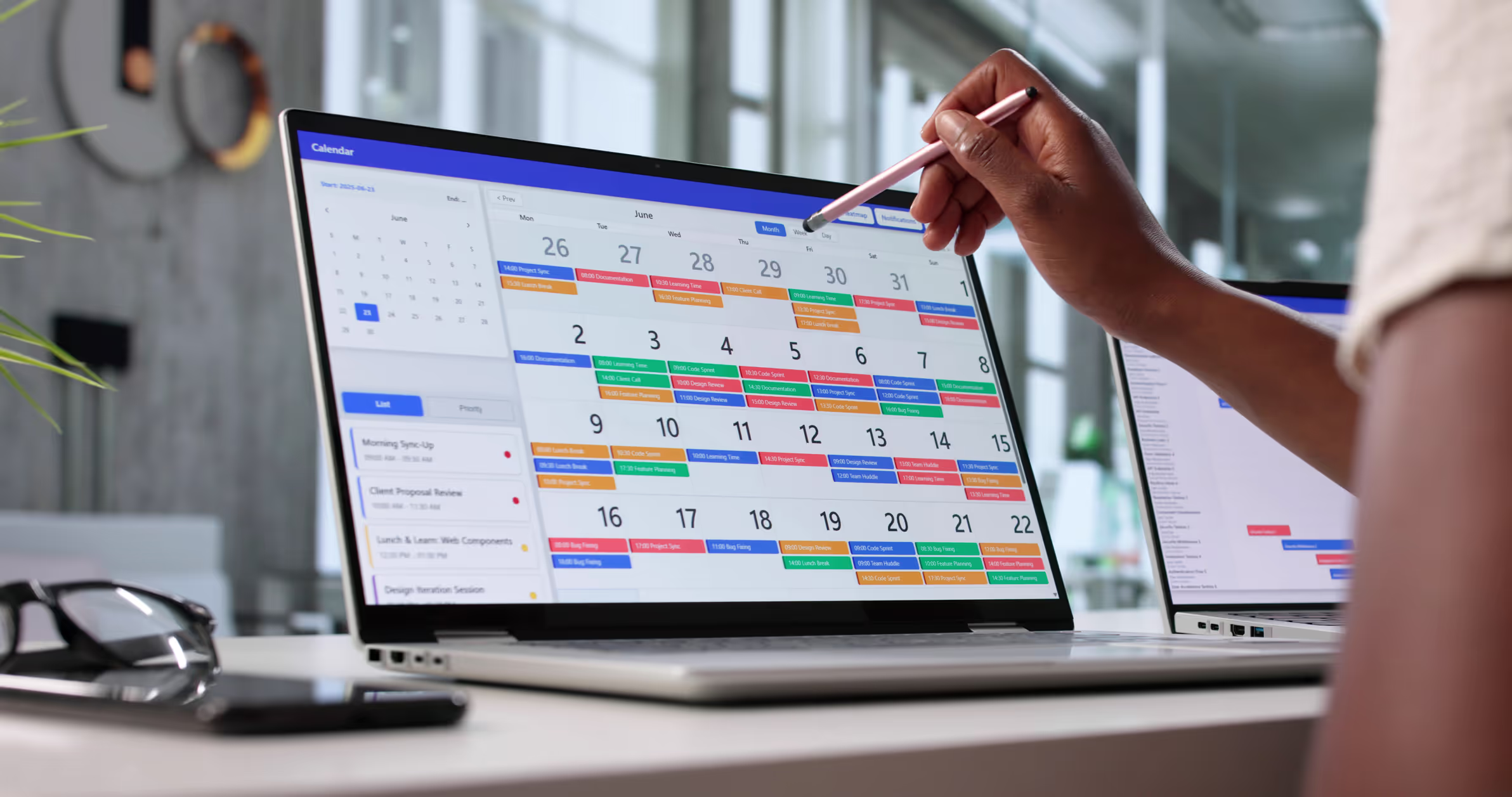
Calendar View Format
A calendar view is a simpler option that plots activities by date. Instead of showing duration bars, you see specific tasks or milestones on the days they're scheduled.
This format works well for:
- Smaller teams or single-track events
- People who prefer a more familiar calendar interface
- Quick reference during weekly planning meetings
You can manage a calendar view in tools like Google Calendar, Outlook, or simple project management software. It's less visual than a Gantt chart but often easier to set up and maintain.
Which format should you choose?
For most event planners, the answer is whichever one you'll actually use. A simple calendar you update regularly is more valuable than a complex Gantt chart that sits untouched.
If you're managing a large conference with multiple promotional tracks, a Gantt chart gives you better visibility into dependencies and overlaps. If you're planning a smaller event or working solo, a calendar view might be all you need.
Tips for Keeping Your Event Marketing Timeline on Track
Having a timeline is one thing. Actually executing it is another. Here's practical advice for keeping your plan on track when real life gets in the way.
Assign Clear Owners
Every task needs an owner. Not a team, not a department. Just one specific human who's accountable for getting it done.
This doesn't mean they do all the work themselves. But they're the person who makes sure it happens, escalates blockers, and reports on progress.
When ownership is unclear, tasks fall through the cracks. When it's clear, people step up.
Build in Buffer Time
Assume approvals and content creation take longer than expected. Because they will.
If you need a blog post published on Monday, don't schedule the draft to be finished on Friday. Build in time for review, revisions, and the inevitable delay when someone's out sick or a stakeholder wants changes.
A good rule of thumb: add 20-30% more time than you think you need for any task involving multiple people or approval chains.
Set Weekly Check-Ins
Review progress regularly and adjust based on what you're seeing. A weekly 15-minute check-in can prevent small issues from becoming big problems.
Use these meetings to:
- Review what was completed last week
- Identify what's coming up next week
- Discuss any blockers or concerns
- Adjust the timeline if needed based on registration trends
These check-ins also create accountability. When people know they'll be reporting on progress, they're more likely to stay on track.
Centralize Your Assets
Keep copy, images, links, and brand guidelines in one shared location. When assets are scattered across email threads, personal drives, and Slack messages, people waste time searching (or worse, use outdated materials).
A shared folder (Google Drive, Dropbox, or your project management tool) with clear organization makes everything easier. Include:
- Approved logos and graphics
- Social media copy and hashtags
- Email templates
- Key dates and deadlines
- Registration links and tracking codes
Use Integrated Tools
Platforms that connect registration, email, and your event app reduce manual work and errors. When your systems talk to each other, you spend less time on data entry and more time on strategy.
Guidebook's event management platform keeps registration, communication, and attendee engagement connected so nothing falls through the cracks.
When someone registers, they can automatically receive confirmation emails, get added to your event app, and start receiving push notifications, without you manually moving data between systems.
The fewer manual steps are in your process, the fewer opportunities for things to go wrong.
Make Every Touchpoint Count
A well-executed event marketing timeline isn't just about filling seats; it's about setting the tone for the entire attendee experience.
Think about it from your attendees' perspective. When they hear about your event early, receive clear and consistent information, and feel genuinely excited before they arrive, they're more likely to be engaged during the event itself. They show up ready to participate, not confused about where to go or what to expect.
On the other hand, when promotion is scattered or last-minute, attendees arrive uncertain. They might not have reviewed the agenda, they're not sure what sessions to prioritize, and they haven't connected with other attendees in advance. The event experience suffers before it even begins.
Your marketing timeline is really the first chapter of your attendee experience. Every email, social post, and website update is a chance to build anticipation and demonstrate that your event is worth their time.
Start building your timeline today. Map out your phases, assign owners, and create a realistic schedule that gives you time to execute well. Your future self, and your attendees, will thank you.
Ready to simplify your event promotion and attendee experience?
Schedule a demo to see how Guidebook can help you create seamless communication from the first announcement through post-event follow-up.
FAQs About Event Marketing Timelines
[faq]
Q: What is the 3 3 3 rule in marketing?
A: The 3-3-3 rule suggests that marketing messages should be seen three times across three different channels over three weeks to create enough familiarity and trust for someone to take action.
This principle is particularly relevant for event promotion. A potential attendee who sees your event mentioned once might not remember it. But when they encounter it in an email, then on LinkedIn, followed by a colleague's social post (all within a few weeks), the event starts to feel familiar and worth considering.
The rule reinforces why multi-channel promotion matters. Relying on a single channel means you're missing opportunities to build the repetition that drives action.
Q: What are the 5 C's of event marketing?
A: The 5 C's of event marketing typically refer to Concept, Content, Community, Channels, and Conversion. This framework ensures your strategy covers all key areas from ideation through driving registrations.
- Concept: Your event's core idea, theme, and value proposition
- Content: The messaging, materials, and information you create
- Community: The audience you're building and engaging
- Channels: Where and how you reach that audience
- Conversion: Turning interest into registrations and attendance
When building your timeline, make sure each phase addresses these elements appropriately. Early phases focus more on concept and content development, while later phases emphasize channels and conversion.
Q: How do I adjust my event marketing timeline if I have less than 6 weeks?
A: If you have less than six weeks, you'll need to condense your promotional phases and make strategic trade-offs.
Focus on high-impact channels like email and paid social media. These give you the most direct path to your audience without requiring extensive content development.
Skip elaborate content campaigns. You don't have time for a multi-part blog series or an extensive video production. Focus on clear, direct messaging that communicates value quickly.
Prioritize urgency-driven messaging from the very beginning. With a short timeline, you can't afford a slow build. Lead with deadlines, limited availability, and clear calls to action.
Leverage your warmest audiences first. Past attendees, existing email subscribers, and engaged social followers are most likely to act quickly. Reach them before trying to expand to cold audiences.
Q: How does an event app support event marketing efforts?
A: An event app extends your marketing timeline into the event itself. While your pre-event promotion builds anticipation, the app continues that communication once attendees arrive.
Push notifications deliver real-time updates about schedule changes, session reminders, and important announcements. This keeps attendees informed and engaged without requiring them to check multiple sources.
Engagement features like polls, Q&A, and networking tools turn passive attendees into active participants. This engagement creates content and social proof that can fuel your post-event marketing.
The app also helps you capture data that informs future promotion. Session attendance, feature usage, and feedback all provide insights into what resonated with your audience.
Q: How do I measure event marketing success?
A: Measuring event ROI requires tracking metrics across your entire timeline, not just final attendance numbers.
Registration metrics tell you how your promotion is performing:
- Registration conversion rate (visitors to registrants)
- Registrations by source/channel
- Early bird vs. regular pricing uptake
Email metrics reveal engagement with your messaging:
- Open rates and click-through rates
- Unsubscribe rates
- Conversion rates from specific campaigns
Social media metrics show reach and engagement:
- Impressions and reach
- Engagement rate (likes, comments, shares)
- Hashtag usage and mentions
Attendance metrics measure the ultimate outcome:
- Final attendance rate (registrants who actually attend)
- No-show rate
- On-site engagement levels
Post-event metrics capture lasting impact:
- Survey response rates and scores
- Net Promoter Score (NPS)
- Intent to attend future events
Compare these metrics to your original goals and to previous events. This data helps you understand what worked, what didn't, and what to improve for your next event.
[/faq]

Get the Mobile App Playbook
A short guide to running the whole student journey in one app. No fluff, just what works.
for higher ed
Campus
Playbook
A practical guide to building a connected campus experience.
Free playbook
The Mobile App Playbook for Universities
Students decide if they belong long before they set foot on campus. This playbook shows how to win them over from the first visit through graduation.
- Grow enrollment and boost recruitment
- Increase belonging and retention
- Run every event from one branded app
By submitting, you agree to our Privacy Policy.
You're in.
.png)