
Campus apps by department
Admissions, orientation, student life, and more — one campus app that works across departments.

Campus apps by department
Admissions, orientation, student life, and more — one campus app that works across departments.
Build unlimited event apps on one license
One partnership for unlimited campus events — orientation, tours, student life, and everything in between.
Build unlimited event apps on one license
One partnership for unlimited campus events — orientation, tours, student life, and everything in between.
Compare event app platforms
See how Guidebook stacks up against other event app and registration platforms.
Compare event app platforms
See how Guidebook stacks up against other event app and registration platforms.
Event apps for nonprofit and community programs
Give members, volunteers, and donors one branded app for conferences, fundraisers, and year-round community.
Event apps for nonprofit and community programs
Give members, volunteers, and donors one branded app for conferences, fundraisers, and year-round community.
Campus integrations and an open API
Connect Guidebook with the campus systems, APIs, and tools your team already uses.
Campus integrations and an open API
Connect Guidebook with the campus systems, APIs, and tools your team already uses.
Event apps for corporate and enterprise teams
Internal meetings, offsites, and large-scale corporate events — with the branding and control enterprise teams need.
Event apps for corporate and enterprise teams
Internal meetings, offsites, and large-scale corporate events — with the branding and control enterprise teams need.
Create a branded event app with no coding
Put schedules, maps, resources, and updates in every attendee's pocket — built for campus events and programs.
Create a branded event app with no coding
Put schedules, maps, resources, and updates in every attendee's pocket — built for campus events and programs.
Launch a branded, white-label event app
A white-label event app with your branding, your content, and your attendee experience — no coding required.
Launch a branded, white-label event app
A white-label event app with your branding, your content, and your attendee experience — no coding required.
Everything in the Guidebook platform
Explore the features event teams use to engage attendees before, during, and after the event.
Everything in the Guidebook platform
Explore the features event teams use to engage attendees before, during, and after the event.
One app for in-person and virtual attendees
The same schedule, networking, and updates whether people are in the room or joining remotely.
One app for in-person and virtual attendees
The same schedule, networking, and updates whether people are in the room or joining remotely.
Event apps built for associations
Annual meetings, chapter events, and member engagement — without rebuilding a new app every year.
Event apps built for associations
Annual meetings, chapter events, and member engagement — without rebuilding a new app every year.
A branded event website that matches the app
Promote the event, collect interest, and keep branding consistent from the first click to check-in.
A branded event website that matches the app
Promote the event, collect interest, and keep branding consistent from the first click to check-in.
Plan, run, and measure events on one platform
App, registration, badges, and websites in one workflow — so planning isn't a pile of disconnected tools.
Plan, run, and measure events on one platform
App, registration, badges, and websites in one workflow — so planning isn't a pile of disconnected tools.
Keep members engaged between events
One branded app for the conference and everything that happens the other 51 weeks of the year.
Keep members engaged between events
One branded app for the conference and everything that happens the other 51 weeks of the year.
The conference app attendees actually use
Schedules, maps, networking, and live updates for annual meetings, summits, and multi-day conferences.
The conference app attendees actually use
Schedules, maps, networking, and live updates for annual meetings, summits, and multi-day conferences.
Registration that feeds your app and badges
Collect registrations, payments, and attendee data in the same platform as your event app.
Registration that feeds your app and badges
Collect registrations, payments, and attendee data in the same platform as your event app.
Design and print event badges in one place
Custom badges, QR check-in, and on-site printing — without a separate badge vendor.
Design and print event badges in one place
Custom badges, QR check-in, and on-site printing — without a separate badge vendor.
A Smaller School?
Deliver a polished, branded event experience without a large team or a big budget.
A Smaller School?
Deliver a polished, branded event experience without a large team or a big budget.
Running Family Programs?
Give families everything they need, from schedules and maps to real-time updates, all in one place.
Running Family Programs?
Give families everything they need, from schedules and maps to real-time updates, all in one place.
Coordinating Move-In Day?
Share updates, manage events, and keep students informed from move-in through the academic year.

Coordinating Move-In Day?
Share updates, manage events, and keep students informed from move-in through the academic year.
Offering Campus Tours?
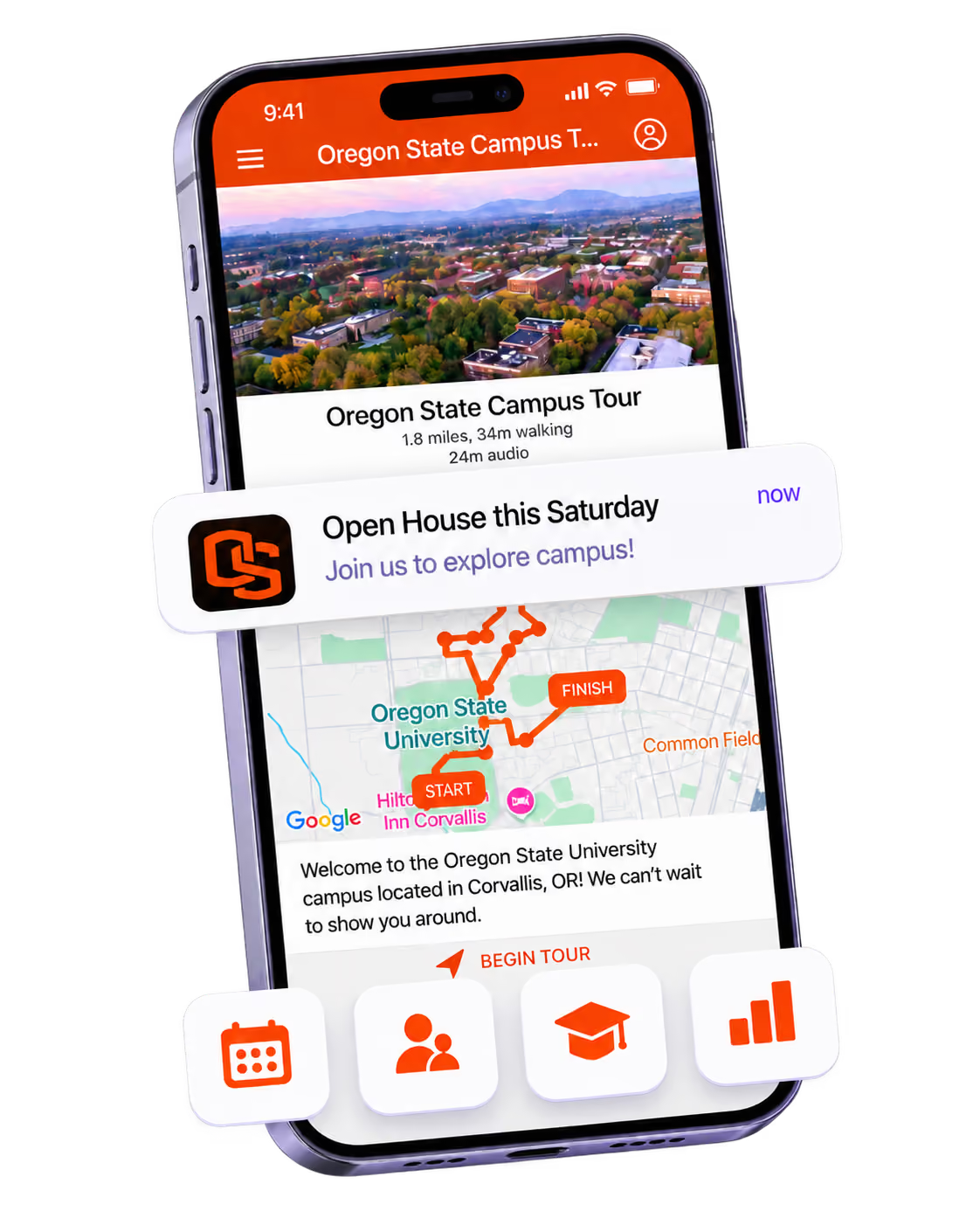
Deliver branded, self-guided tour experiences with interactive maps and rich media, available 24/7.

Offering Campus Tours?
Deliver branded, self-guided tour experiences with interactive maps and rich media, available 24/7.
Organising a Career Fair?
Simplify logistics for students, employers, and Career Services staff with one easy-to-use app.
Organising a Career Fair?
Simplify logistics for students, employers, and Career Services staff with one easy-to-use app.
Managing Alumni Events?
Plan reunions, regional events, and fundraising campaigns with an app built for alumni engagement.
Managing Alumni Events?
Plan reunions, regional events, and fundraising campaigns with an app built for alumni engagement.
Boost Student Engagement
One hub for schedules, resources, and events that keeps students connected throughout the academic year.
Boost Student Engagement
One hub for schedules, resources, and events that keeps students connected throughout the academic year.
Planning Orientation?
Help new students feel prepared from day one with schedules, campus resources, and real-time updates in one app.
Planning Orientation?
Help new students feel prepared from day one with schedules, campus resources, and real-time updates in one app.
Running Admissions Events?
Manage open houses, tours, and yield events with a branded app that saves time and engages prospective students.

Running Admissions Events?
Manage open houses, tours, and yield events with a branded app that saves time and engages prospective students.
Get a custom Sponsorship Package Template
Stop starting from scratch. Grab free templates that helWe'll build a tailored sponsorship package with suggested pricing, tiers, and benefits..for your specific event.p you build professional sponsorship packages and close deals faster.
Get a custom Sponsorship Package Template
Stop starting from scratch. Grab free templates that helWe'll build a tailored sponsorship package with suggested pricing, tiers, and benefits..for your specific event.p you build professional sponsorship packages and close deals faster.
Plan Your Next Event Without Missing a Beat.
From venue selection to post-event wrap-up, this free checklist walks you through every step (so nothing falls through the cracks).
.avif)
Plan Your Next Event Without Missing a Beat.
From venue selection to post-event wrap-up, this free checklist walks you through every step (so nothing falls through the cracks).
Real Results From Real Events
100,000+ organizations trust Guidebook. See exactly how universities, associations, enterprises, and more put it to work.

Real Results From Real Events
100,000+ organizations trust Guidebook. See exactly how universities, associations, enterprises, and more put it to work.
Flexible pricing for every event size
Find the perfect plan for your needs, from intimate gatherings to large-scale conferences.
Flexible pricing for every event size
Find the perfect plan for your needs, from intimate gatherings to large-scale conferences.
Join our event experts
Watch on-demand webinars and join live sessions with industry leaders sharing best practices for event success.
.avif)
Join our event experts
Watch on-demand webinars and join live sessions with industry leaders sharing best practices for event success.
Guidebook in Action
Book a personalized walkthrough and discover how we help event teams create better attendee experiences.
Guidebook in Action
Book a personalized walkthrough and discover how we help event teams create better attendee experiences.
What is Event Email Marketing?
Event email marketing uses targeted email campaigns to promote events, boost registrations, and engage attendees. Discover best practices, campaign examples, and tips for maximizing event ROI.
Event Email Marketing is the strategic use of email campaigns to promote events, drive registrations, and keep attendees engaged before, during, and after your event. It covers everything from save-the-dates to post-event surveys. Done right, it's your most cost-effective tool for filling seats and building lasting relationships.
Here's the thing: event email marketing isn't just about blasting announcements to your list. It's a carefully timed sequence of messages that guides people from "maybe interested" to "registered and excited." Unlike social media posts that disappear in hours, emails land directly in inboxes where they wait for attention.
Key Characteristics of Event Email Marketing
- Permission-Based Communication: Recipients have opted in to receive your messages. This means higher engagement rates and better deliverability than cold outreach.
- Segmentation Capabilities: You can divide your audience by interest, past attendance, location, or behavior. Different groups get different messages.
- Automation-Friendly: Set up email sequences once and let them run. Confirmation emails, reminders, and follow-ups can all happen automatically.
- Measurable Results: Open rates, click rates, and conversions are all trackable. You'll know exactly what's working and what isn't.
- Direct Ownership: Unlike social media followers, your email list belongs to you. No algorithm changes can take it away.
- Cost-Effective Reach: Email marketing delivers an average ROI of $36 for every $1 spent. That's hard to beat.
- Personalization Options: Beyond just using names, you can customize content based on attendee preferences and past behavior.
Event Email Marketing vs. Related Marketing Channels
Event Digital Marketing
- Scope: Encompasses all online promotional activities including paid ads, SEO, and content marketing
- Focus: Broad awareness and multi-channel presence
- Timeline: Ongoing throughout the event lifecycle
- Channels: Websites, search engines, display networks, and social platforms
- Goal: Maximum visibility across the digital landscape
Event Social Media Marketing
- Scope: Promotion through platforms like LinkedIn, Instagram, Facebook, and Twitter
- Focus: Community building and viral sharing
- Timeline: Real-time engagement before and during events
- Channels: Social networks and their advertising platforms
- Goal: Organic reach and social proof through shares and comments
Event Content Marketing
- Scope: Creating valuable content like blog posts, videos, and guides related to your event
- Focus: Establishing authority and attracting organic interest
- Timeline: Long-term strategy that builds over months
- Channels: Blogs, YouTube, podcasts, and downloadable resources
- Goal: Attract attendees through helpful, relevant content
These channels work best together. Email marketing often serves as the conversion engine that turns awareness from other channels into actual registrations. Learn more about the full spectrum in our guide to event digital marketing.
Essential Event Email Marketing Campaign Types
Save-the-Date Announcements
These go out 3-6 months before your event. Keep them short and exciting. Include only the essentials: event name, date, location, and a teaser about what's coming.
The goal isn't registration yet. You want people to block their calendars and start anticipating.
Invitation and Registration Emails
This is your main push for sign-ups. Send these when event registration opens. Include:
- Clear value proposition (why should they attend?)
- Key speakers or sessions
- Early bird pricing if available
- One prominent call-to-action button
Reminder and Countdown Sequences
People get busy. They mean to register but forget. A well-timed reminder sequence can recover 20-30% of potential registrations.
Send reminders at these intervals:
- Two weeks before early bird deadline
- Three days before early bird deadline
- One week before event
- Day before event (for registered attendees)
Confirmation and Logistics Emails
Once someone registers, they need practical information. These emails reduce no-shows and support questions. Cover parking, check-in procedures, and what to bring.
Consider using event check-in software and explain how it works in these messages.
Post-Event Follow-Up Campaigns
The relationship doesn't end when the event does. Follow-up emails should:
- Thank attendees within 24 hours
- Share session recordings or slides
- Request feedback through surveys
- Promote your next event
Building Your Event Email Marketing Strategy
Define Your Audience Segments
Not everyone on your list needs the same message. Create segments based on:
- Past attendees vs. new prospects
- VIPs and speakers vs. general attendees
- Geographic location
- Industry or job role
- Engagement level with previous emails
Segmented campaigns get 14% higher open rates than non-segmented ones.
Map Your Email Timeline
Plan your entire email sequence before sending anything. Work backward from your event date. This prevents last-minute scrambling and ensures consistent messaging.
A typical conference might need 12-15 emails across the full campaign. Smaller events might need just 5-7. The key is spacing them appropriately so you stay top-of-mind without annoying people.
Craft Compelling Subject Lines
Your subject line determines whether emails get opened. Keep them under 50 characters. Use action words and create urgency when appropriate.
Good examples:
- "Early bird ends Friday: Save $150"
- "Your personalized agenda is ready"
- "3 speakers you can't miss at [Event Name]"
Avoid spam triggers like ALL CAPS, excessive punctuation, and words like "free" or "act now."
Optimize for Mobile Readers
Over 60% of emails are opened on mobile devices. Your emails must look great on small screens.
Mobile optimization checklist:
- Single-column layouts
- Large, tappable buttons (at least 44x44 pixels)
- Font size of 14px minimum for body text
- Images that scale properly
- Short paragraphs with plenty of white space
Test and Refine Continuously
A/B testing isn't optional. Test one element at a time:
- Subject lines
- Send times
- Call-to-action button colors and text
- Email length
- Personalization approaches
Track your results and apply learnings to future campaigns. Even small improvements compound over time.
Why Event Email Marketing Matters
For Event Success:
- Higher Registration Rates: Email consistently outperforms other channels for driving event sign-ups, with conversion rates 3x higher than social media.
- Reduced No-Shows: Reminder sequences keep your event top-of-mind and can cut no-show rates by up to 40%.
- Better Attendee Preparation: Pre-event emails help attendees plan their experience, leading to higher satisfaction scores.
- Increased Engagement: Attendees who receive personalized emails are more likely to participate in sessions and networking.
- Stronger Word-of-Mouth: Well-crafted emails are easy to forward, turning your subscribers into promoters.
For Business Objectives:
- Measurable Event ROI: Track exactly how many registrations came from email campaigns and calculate your cost per acquisition.
- Database Growth: Every event builds your email list for future marketing efforts.
- Sponsor Value: Demonstrate reach and engagement metrics to justify sponsorship packages.
- Year-Round Engagement: Keep your audience warm between events with valuable content.
- Competitive Intelligence: Survey responses and engagement data reveal what your audience actually wants.
Platforms like Guidebook's event management platform integrate with email marketing tools to create seamless attendee experiences from first email to final survey.
Event Email Marketing Best Practices
- Start Building Your List Early: Don't wait until you have event details finalized. Create a landing page to capture interest as soon as you announce the date.
- Personalize Beyond First Names: Use past attendance data, session preferences, and engagement history to customize content. Generic emails get generic results.
- Include One Clear Call-to-Action: Every email should have one primary goal. Multiple CTAs confuse readers and reduce conversions.
- Send at Optimal Times: Tuesday through Thursday mornings typically perform best for B2B events. Test what works for your specific audience.
- Keep Your List Clean: Remove bounced addresses and unengaged subscribers regularly. A smaller, engaged list outperforms a large, stale one.
- Use Social Proof: Include testimonials from past attendees, speaker credentials, and attendance numbers to build credibility.
- Create Urgency Authentically: Real deadlines (early bird pricing, limited seats) work. Fake urgency damages trust.
- Integrate with Your Event App: Connect email campaigns to your event app for consistent messaging and easy access to schedules.
- Plan Your Post-Event Sequence: The follow-up is as important as the promotion. Have thank-you emails, surveys, and next-event teasers ready to go.
- Respect Unsubscribes: Make it easy to opt out. A clean unsubscribe process protects your sender reputation and keeps you compliant.
Common Event Email Marketing Mistakes
Sending Too Many Emails: Bombarding subscribers leads to unsubscribes and spam complaints. Quality beats quantity every time. Map out your sequence and stick to it.
Ignoring Mobile Optimization: If your emails look broken on phones, you're losing more than half your audience. Always preview on mobile before sending.
Burying the Registration Link: Don't make people scroll to find how to sign up. Put your main CTA above the fold and repeat it at the end.
Using Generic Subject Lines: "Event Update" tells readers nothing. Be specific about what's inside and why they should care.
Forgetting to Segment: Sending the same message to everyone wastes opportunities. Past attendees need different messaging than first-timers.
Neglecting the Preview Text: The preview text (the snippet that appears after the subject line) is prime real estate. Don't let it default to "View in browser."
Skipping the Welcome Sequence: New subscribers are most engaged right after signing up. A welcome email gets 4x more opens than regular campaigns. Don't miss this window.
Final Thoughts
Event email marketing remains one of the most powerful tools in any event planner's toolkit. While social media algorithms change and ad costs rise, email delivers consistent, measurable results year after year.
The events industry continues to evolve, with new event trends emerging constantly. But email's core strength stays the same: direct, personal communication with people who've raised their hands and said "yes, I'm interested."
Think of email marketing as a conversation, not a broadcast. Each message should provide value, whether that's useful information, exclusive access, or simply excitement about what's coming. When you approach it this way, your emails become something people look forward to rather than delete.
Ready to level up your event communications? Explore event management tips for more strategies, check out our templates for inspiration, or book a demo to see how Guidebook can help you create seamless attendee experiences from first email to final farewell. Your next sold-out event starts with a single send.
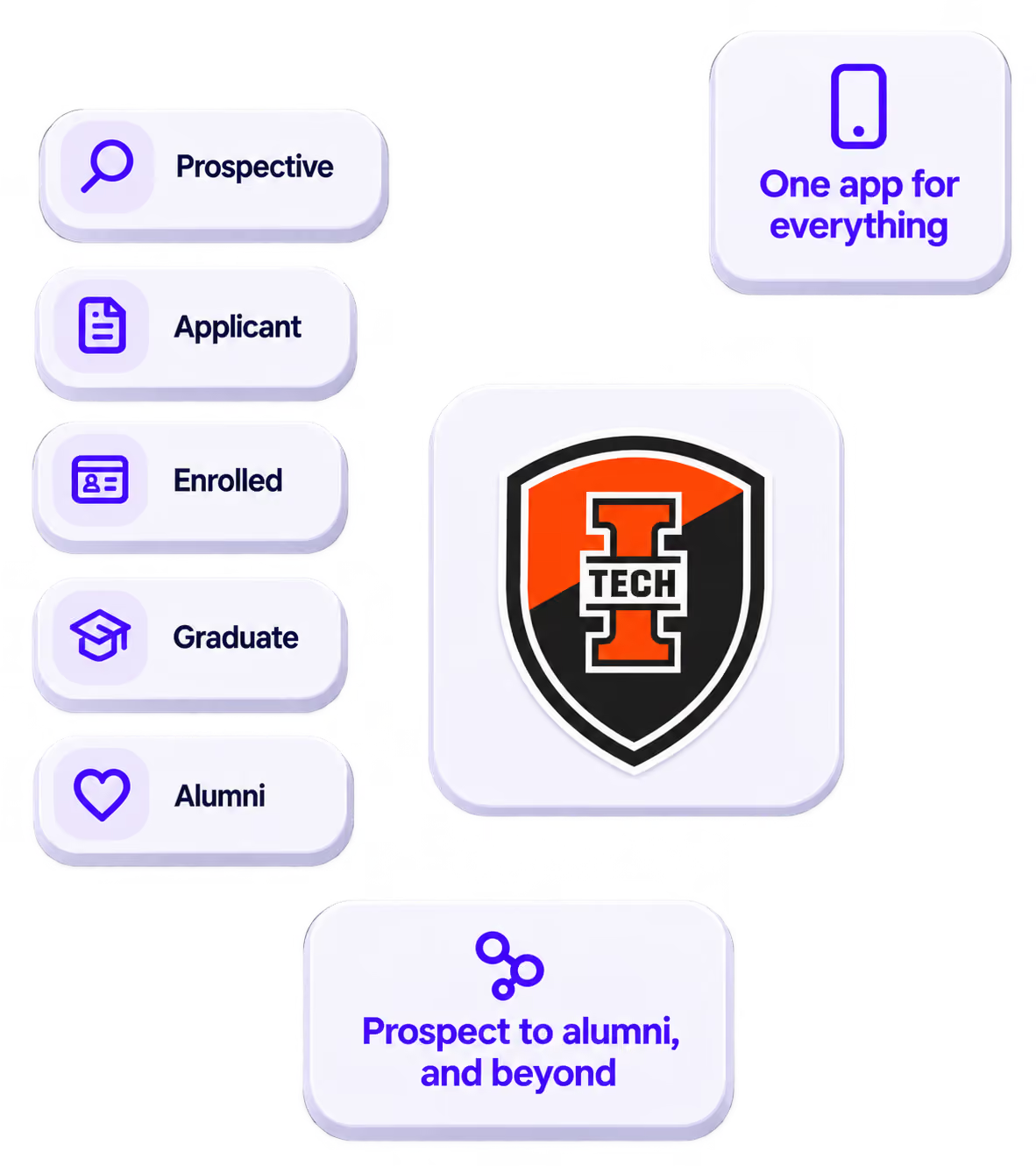
The power of your brand in your app, from first visit to alumni.
Build trust
Attendees download your app, not ours. Your name, colors, and crest in the stores.
.avif)
One place for the whole event
Schedules, maps, registration, and updates in one branded hub - not five tools.
Stand out
A branded app is what people keep on their phone after the printed program is in the recycling.

Get the Mobile App Playbook
A short guide to running the whole student journey in one app. No fluff, just what works.
for higher ed
Campus
Playbook
A practical guide to building a connected campus experience.
Free playbook
The Mobile App Playbook for Universities
Students decide if they belong long before they set foot on campus. This playbook shows how to win them over from the first visit through graduation.
- Grow enrollment and boost recruitment
- Increase belonging and retention
- Run every event from one branded app
By submitting, you agree to our Privacy Policy.
You're in.
.png)