Campus apps by department
Admissions, orientation, student life, and more — one campus app that works across departments.

Campus apps by department
Admissions, orientation, student life, and more — one campus app that works across departments.
Build unlimited event apps on one license
One partnership for unlimited campus events — orientation, tours, student life, and everything in between.
Build unlimited event apps on one license
One partnership for unlimited campus events — orientation, tours, student life, and everything in between.
Compare event app platforms
See how Guidebook stacks up against other event app and registration platforms.
Compare event app platforms
See how Guidebook stacks up against other event app and registration platforms.
Event apps for nonprofit and community programs
Give members, volunteers, and donors one branded app for conferences, fundraisers, and year-round community.
Event apps for nonprofit and community programs
Give members, volunteers, and donors one branded app for conferences, fundraisers, and year-round community.
Campus integrations and an open API
Connect Guidebook with the campus systems, APIs, and tools your team already uses.
Campus integrations and an open API
Connect Guidebook with the campus systems, APIs, and tools your team already uses.
Event apps for corporate and enterprise teams
Internal meetings, offsites, and large-scale corporate events — with the branding and control enterprise teams need.
Event apps for corporate and enterprise teams
Internal meetings, offsites, and large-scale corporate events — with the branding and control enterprise teams need.
Create a branded event app with no coding
Put schedules, maps, resources, and updates in every attendee's pocket — built for campus events and programs.
Create a branded event app with no coding
Put schedules, maps, resources, and updates in every attendee's pocket — built for campus events and programs.
Launch a branded, white-label event app
A white-label event app with your branding, your content, and your attendee experience — no coding required.
Launch a branded, white-label event app
A white-label event app with your branding, your content, and your attendee experience — no coding required.
Everything in the Guidebook platform
Explore the features event teams use to engage attendees before, during, and after the event.
Everything in the Guidebook platform
Explore the features event teams use to engage attendees before, during, and after the event.
One app for in-person and virtual attendees
The same schedule, networking, and updates whether people are in the room or joining remotely.
One app for in-person and virtual attendees
The same schedule, networking, and updates whether people are in the room or joining remotely.
Event apps built for associations
Annual meetings, chapter events, and member engagement — without rebuilding a new app every year.
Event apps built for associations
Annual meetings, chapter events, and member engagement — without rebuilding a new app every year.
A branded event website that matches the app
Promote the event, collect interest, and keep branding consistent from the first click to check-in.
A branded event website that matches the app
Promote the event, collect interest, and keep branding consistent from the first click to check-in.
Plan, run, and measure events on one platform
App, registration, badges, and websites in one workflow — so planning isn't a pile of disconnected tools.
Plan, run, and measure events on one platform
App, registration, badges, and websites in one workflow — so planning isn't a pile of disconnected tools.
Keep members engaged between events
One branded app for the conference and everything that happens the other 51 weeks of the year.
Keep members engaged between events
One branded app for the conference and everything that happens the other 51 weeks of the year.
The conference app attendees actually use
Schedules, maps, networking, and live updates for annual meetings, summits, and multi-day conferences.
The conference app attendees actually use
Schedules, maps, networking, and live updates for annual meetings, summits, and multi-day conferences.
Registration that feeds your app and badges
Collect registrations, payments, and attendee data in the same platform as your event app.
Registration that feeds your app and badges
Collect registrations, payments, and attendee data in the same platform as your event app.
Design and print event badges in one place
Custom badges, QR check-in, and on-site printing — without a separate badge vendor.
Design and print event badges in one place
Custom badges, QR check-in, and on-site printing — without a separate badge vendor.
A Smaller School?
Deliver a polished, branded event experience without a large team or a big budget.
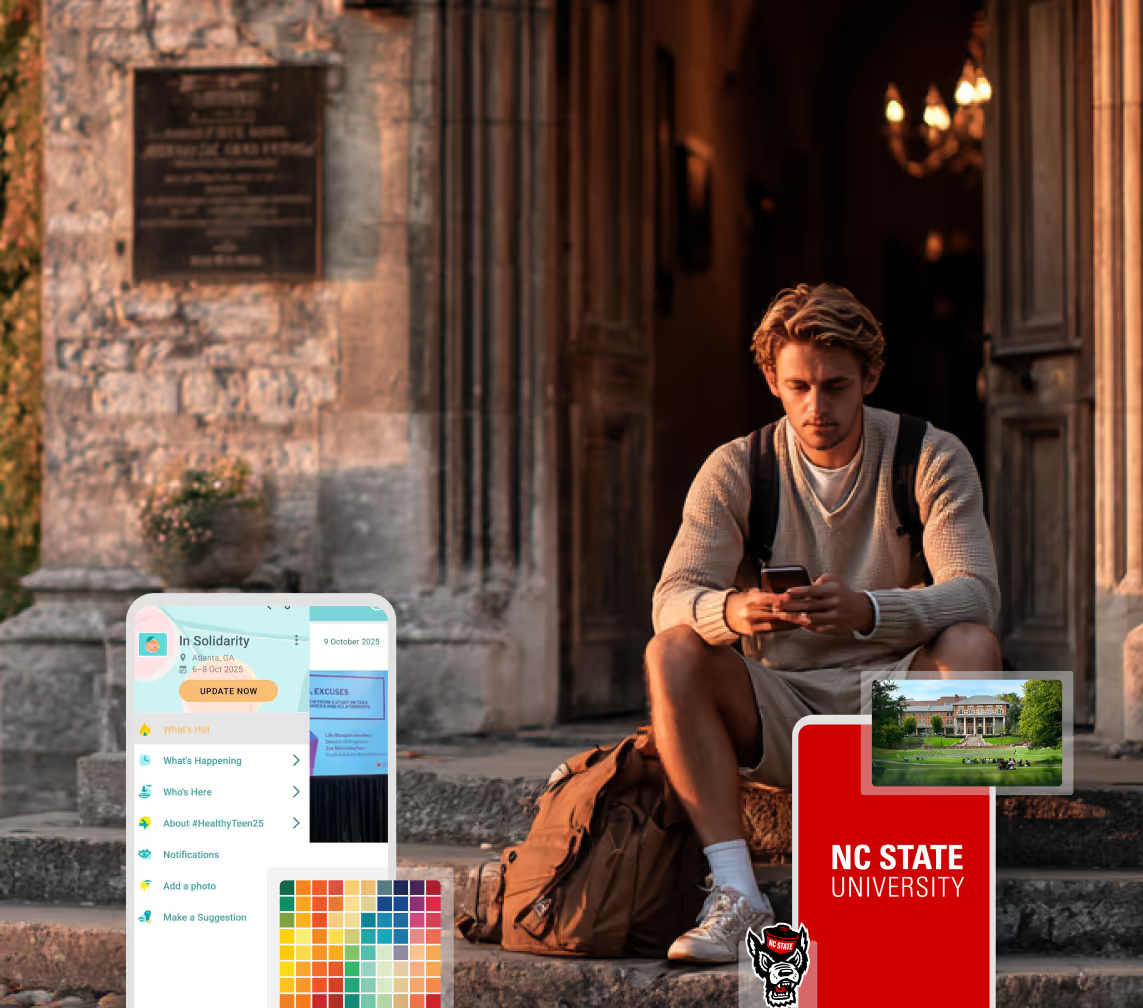
A Smaller School?
Deliver a polished, branded event experience without a large team or a big budget.
Running Family Programs?
Give families everything they need, from schedules and maps to real-time updates, all in one place.
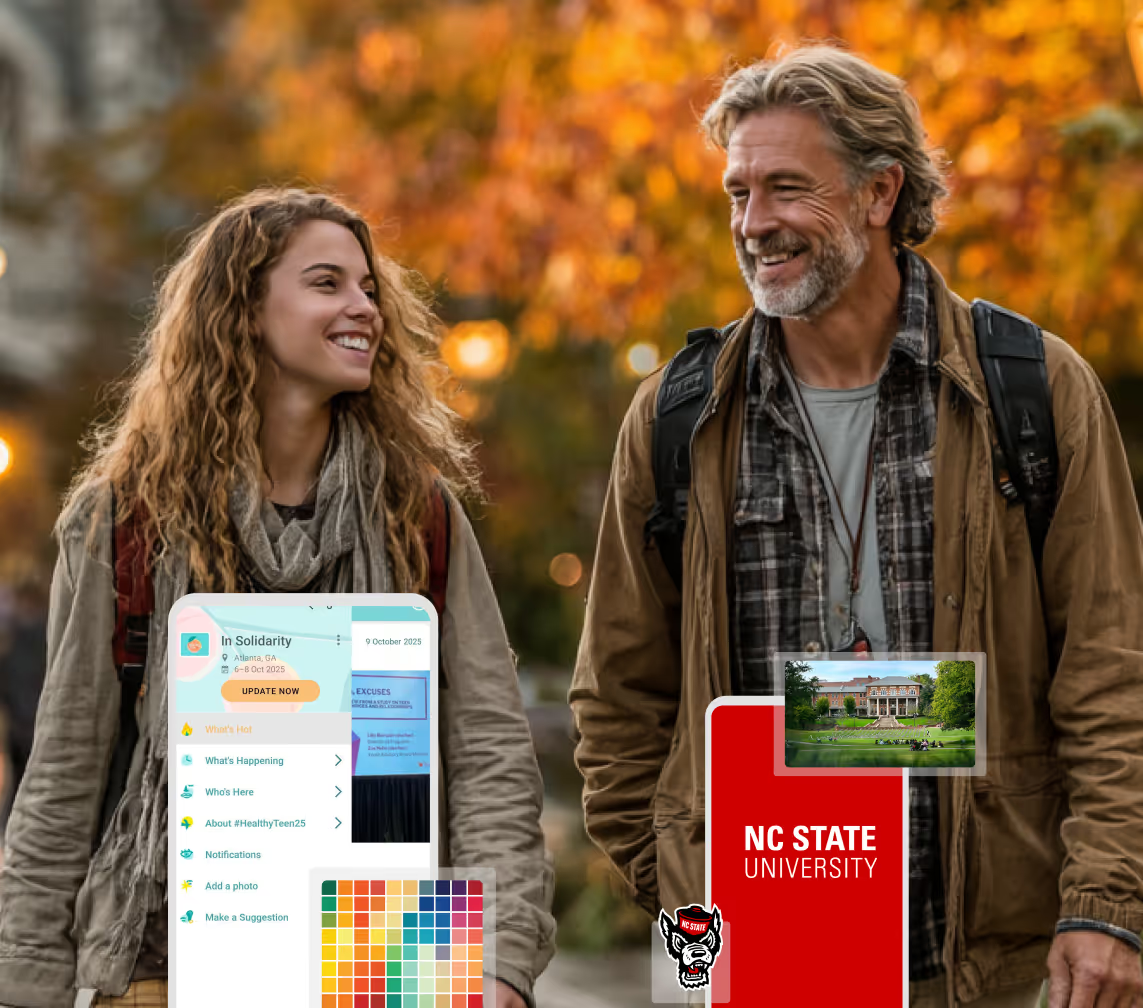
Running Family Programs?
Give families everything they need, from schedules and maps to real-time updates, all in one place.
Coordinating Move-In Day?
Share updates, manage events, and keep students informed from move-in through the academic year.

Coordinating Move-In Day?
Share updates, manage events, and keep students informed from move-in through the academic year.
Offering Campus Tours?
Deliver branded, self-guided tour experiences with interactive maps and rich media, available 24/7.

Offering Campus Tours?
Deliver branded, self-guided tour experiences with interactive maps and rich media, available 24/7.
Organising a Career Fair?
Simplify logistics for students, employers, and Career Services staff with one easy-to-use app.
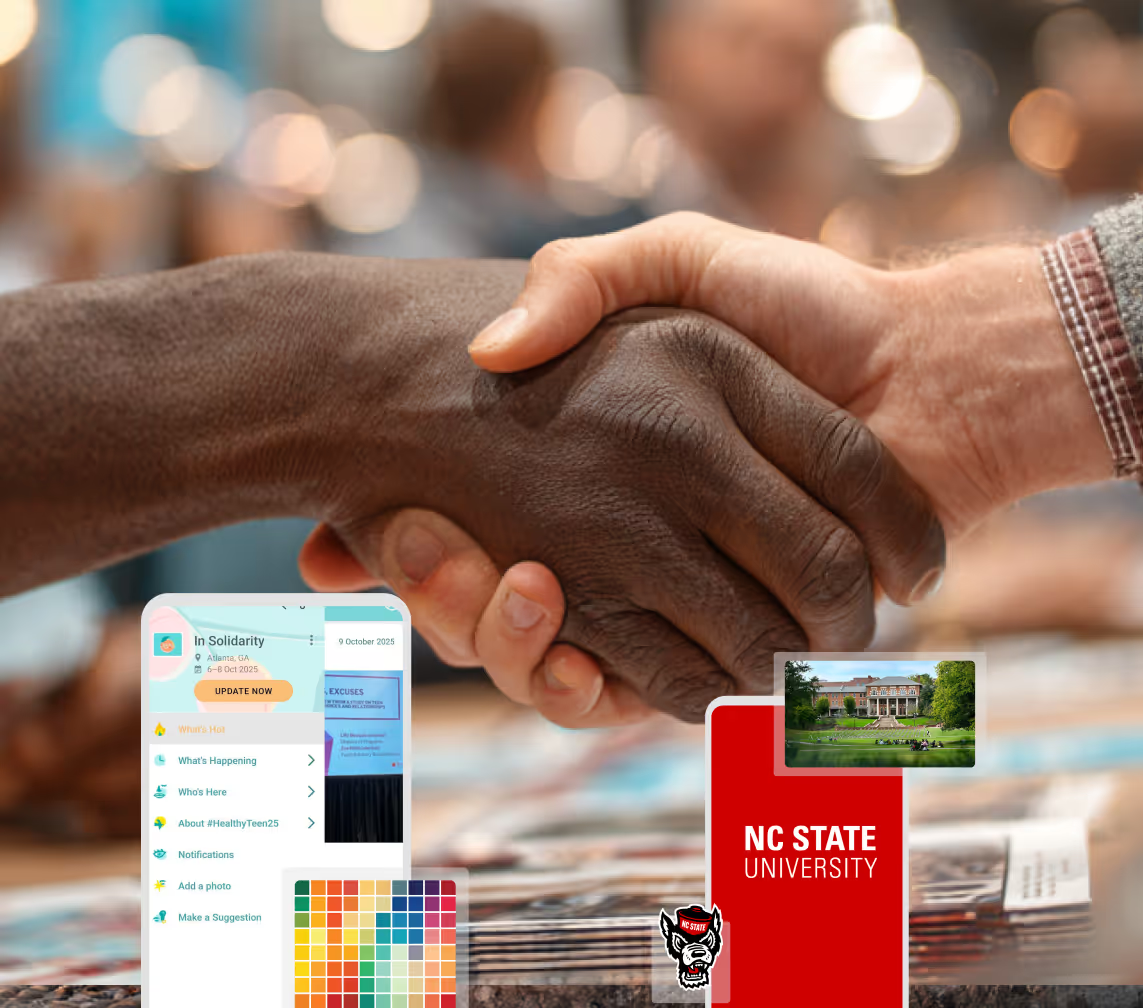
Organising a Career Fair?
Simplify logistics for students, employers, and Career Services staff with one easy-to-use app.
Managing Alumni Events?
Plan reunions, regional events, and fundraising campaigns with an app built for alumni engagement.
Managing Alumni Events?
Plan reunions, regional events, and fundraising campaigns with an app built for alumni engagement.
Boost Student Engagement
One hub for schedules, resources, and events that keeps students connected throughout the academic year.
Boost Student Engagement
One hub for schedules, resources, and events that keeps students connected throughout the academic year.
Planning Orientation?
Help new students feel prepared from day one with schedules, campus resources, and real-time updates in one app.
Planning Orientation?
Help new students feel prepared from day one with schedules, campus resources, and real-time updates in one app.
Running Admissions Events?
Manage open houses, tours, and yield events with a branded app that saves time and engages prospective students.

Running Admissions Events?
Manage open houses, tours, and yield events with a branded app that saves time and engages prospective students.
Get a custom Sponsorship Package Template
Stop starting from scratch. Grab free templates that helWe'll build a tailored sponsorship package with suggested pricing, tiers, and benefits..for your specific event.p you build professional sponsorship packages and close deals faster.
Get a custom Sponsorship Package Template
Stop starting from scratch. Grab free templates that helWe'll build a tailored sponsorship package with suggested pricing, tiers, and benefits..for your specific event.p you build professional sponsorship packages and close deals faster.
Plan Your Next Event Without Missing a Beat.
From venue selection to post-event wrap-up, this free checklist walks you through every step (so nothing falls through the cracks).
.avif)
Plan Your Next Event Without Missing a Beat.
From venue selection to post-event wrap-up, this free checklist walks you through every step (so nothing falls through the cracks).
Real Results From Real Events
100,000+ organizations trust Guidebook. See exactly how universities, associations, enterprises, and more put it to work.

Real Results From Real Events
100,000+ organizations trust Guidebook. See exactly how universities, associations, enterprises, and more put it to work.
Flexible pricing for every event size
Find the perfect plan for your needs, from intimate gatherings to large-scale conferences.

Flexible pricing for every event size
Find the perfect plan for your needs, from intimate gatherings to large-scale conferences.
Join our event experts
Watch on-demand webinars and join live sessions with industry leaders sharing best practices for event success.
.avif)
Join our event experts
Watch on-demand webinars and join live sessions with industry leaders sharing best practices for event success.
Guidebook in Action
Book a personalized walkthrough and discover how we help event teams create better attendee experiences.
Guidebook in Action
Book a personalized walkthrough and discover how we help event teams create better attendee experiences.
7 Best Practices to Create a High-Converting Event Registration Landing Page
.avif)





7 Best Practices to Create a High-Converting Event Registration Landing Page
You’ve spent months planning your event and now it’s time to share it with the world so you can start collecting registrations.
But is your registration page optimized to convert? Does it clearly communicate the value of your event and make it easy for attendees to sign up?
Even “small” missteps like a buried CTA, a clunky form, or confusing ticket options can cause potential attendees to drop off in the middle of registration.
So in this guide, we’ve rounded up 7 essential strategies to help you create an event registration landing page that’s clear, compelling, and built to drive sign-ups. Whether you’re planning a conference, college orientation, or a networking event, these best practices will help you reduce drop-offs and increase attendance.
What is an Event Registration Landing Page?
An event registration landing page is a dedicated web page designed to capture sign-ups for an upcoming event. This is where attendees choose their ticket type, enter their contact information, and complete the registration process.
Because this page is focused on conversion, it needs to be:
- Clear and distraction-free.
- Optimized for mobile.
- Focused on helping users quickly select their ticket and confirm registration.
7 Best Practices for Designing a High-Converting Event Registration Page
1. Keep the form simple
A cluttered or overly complicated form can deter users from completing their registration. Streamline the process by:
- Asking for essential information only (such as name, email, job title, etc.). If you're unsure which fields to include, here’s a guide on what to include in an event registration form. Also, keep in mind that you can use advanced forms with conditional logic, allowing you to show fields based on a user's previous answers.
- Using drop-down menus to simplify data entry.
- Enabling autofill so the user’s browser can automatically populate common fields.
- Displaying error messages in real-time to help users correct mistakes.
A simple, user-friendly form increases the likelihood of conversions and reduces abandonment rates.
2. Highlight key event details
Your online registration page should always remind future attendees about the what, when, where, and why of your event. This helps reassure them that they are, in fact, in the right place. To accomplish this, your page should include:
- A headline describing the expected user action, such as “Register,” “Buy Tickets,” “Reserve Your Spot Today.”
- The event name.
- A short event description (optional).
- The date and time of the event.
- The event location: if virtual, specify the platform and if in-person, include the city and state (optional: venue name and address).
Keeping this information front and center —ideally, placing it above the fold — builds trust and helps visitors commit faster.
3. Clearly showcase ticket tiers
Maybe you're hosting a free event with a paid VIP upgrade. Or, perhaps your event is paid and includes multiple tiers with different levels of access.
Either way, your page should clearly distinguish all available tiers so that users can easily choose the one that matches their needs and budget. Some common ticket options to consider for your event include:
- Early Bird Discounts: Encourage early registrations with special pricing.
- General Admission: Define standard entry options and pricing.
- VIP Passes: Highlight perks like exclusive access or premium seating.
- Group Rates: Offer discounts for teams or group registrations.
4. Include a clear call-to-action (CTA)
Your CTA should be easy to spot when scanning the page and it should be action-oriented. Use clear, persuasive language like:
- “Register Now”
- “Order Now”
- "Reserve Your Spot Today"
To ensure that the button stands out, use a bold color that isn’t used anywhere else on the page.
5. Optimize for mobile devices
With more people managing all aspects of their life via smartphones, mobile optimization is non-negotiable. So, before announcing registration, take the time to ensure that users will have a smooth experience on mobile devices.
Pay particular attention to:
- Responsive Design: The registration page layout should adjust to various screen sizes.
- CTA Accessibility: Buttons and links should be large enough to tap easily without zooming.
- Form Usability: Forms should be easy to fill out, with drop-down menus, autofill features, and minimal typing required.
- Page Speed: Optimize images and scripts to ensure quick loading times.
- Secure Payment Integration: If payment is required, make sure the checkout process is streamlined and secure on mobile.
6. Add urgency to boost registration
Creating a sense of urgency can encourage visitors to register immediately. Use strategies such as:
- Real-Time Registration Numbers: Show how many people have already registered to highlight the event’s popularity.
- Countdown Timers: Display the time remaining for early bird discounts and other special ticket categories. And if you want to capture interest before tickets even go live, consider implementing a pre‑registration strategy.
- Limited Capacity Messaging: Use phrases like "Only 20 spots left!" to create urgency and FOMO (fear of missing out).
When done effectively, urgency is a great tool for boosting conversions because it motivates users to act quickly.
7. Use progress indicators to improve completion rates
If your registration form has multiple steps, a progress indicator can help keep users engaged and prevent drop-offs. You can implement this by simply displaying a step-by-step progress bar (e.g. "Step 1 of 3") to show users where they are in the process. When users know how many steps remain in the registration process, they are less likely to feel frustrated (a feeling that can dampen their enthusiasm before your event begins).
Note: If you're wondering what all of these best practices look like in the real world, check out our roundup of event registration page examples.
FAQs About Event Registration Landing Pages
How do I increase conversions on my event registration page?
Keep your form short, use a CTA that stands out, and remove anything that distracts from the main goal (getting people to register). You can also experiment with urgency (like countdown timers), testimonials from a previous event, and A/B testing page copy or CTA copy.
Should I use a single-page or multi-step registration form?
Single-page forms are fast and often work best for short, free events or RSVP-style sign-ups. But if you’re gathering more detailed attendee info, selling multiple ticket types, or offering add-ons, a multi-step form can prevent overwhelm and reduce form abandonment. Just be sure to include a progress bar so that users know where they are in the process.
How can I make my landing page mobile-friendly?
“Design for thumbs, not mice” is the best UX advice we’ve come across (and it’s never failed us). That means:
- responsive layouts.
- large tappable buttons.
- minimal text input.
- dropdowns and autofill (to speed up.
Also, it’s a good idea to test load speed. Heavy images and complex scripts might look great on desktop but can slow things down on mobile. So triple check the mobile experience and get rid of anything that hinders performance.
What’s the best CTA for an event registration page?
The best CTA is one that’s clear, action-oriented, and impossible to miss. “Register Now,” “Save My Seat,” and “Claim Your Spot” all work well. The key is making the CTA button visually pops on the screen and the copy doesn’t create any ambiguity for the user.
In Summary: Setup Your Page (and Event) for Success
By focusing on a clean layout, clear CTAs, tiered ticket options, mobile optimization, and a touch of urgency, you’ll be well on your way to having a registration page that turns casual visitors into committed attendees.
And of course, great strategy works even better with great tools. Guidebook’s event registration platform makes it easy to build beautiful, high-converting pages without the hassle. You can customize your form, offer multiple ticket types, collect attendee data, and integrate your registration data with your event app, all in one place.
Start building your own branded registration flow for free today.

Get the Mobile App Playbook
A short guide to running the whole student journey in one app. No fluff, just what works.
for higher ed
Campus
Playbook
A practical guide to building a connected campus experience.
Free playbook
The Mobile App Playbook for Universities
Students decide if they belong long before they set foot on campus. This playbook shows how to win them over from the first visit through graduation.
- Grow enrollment and boost recruitment
- Increase belonging and retention
- Run every event from one branded app
By submitting, you agree to our Privacy Policy.
You're in.
.png)