Campus apps by department
Admissions, orientation, student life, and more — one campus app that works across departments.

Campus apps by department
Admissions, orientation, student life, and more — one campus app that works across departments.
Build unlimited event apps on one license
One partnership for unlimited campus events — orientation, tours, student life, and everything in between.
Build unlimited event apps on one license
One partnership for unlimited campus events — orientation, tours, student life, and everything in between.
Compare event app platforms
See how Guidebook stacks up against other event app and registration platforms.
Compare event app platforms
See how Guidebook stacks up against other event app and registration platforms.
Event apps for nonprofit and community programs
Give members, volunteers, and donors one branded app for conferences, fundraisers, and year-round community.
Event apps for nonprofit and community programs
Give members, volunteers, and donors one branded app for conferences, fundraisers, and year-round community.
Campus integrations and an open API
Connect Guidebook with the campus systems, APIs, and tools your team already uses.
Campus integrations and an open API
Connect Guidebook with the campus systems, APIs, and tools your team already uses.
Event apps for corporate and enterprise teams
Internal meetings, offsites, and large-scale corporate events — with the branding and control enterprise teams need.
Event apps for corporate and enterprise teams
Internal meetings, offsites, and large-scale corporate events — with the branding and control enterprise teams need.
Create a branded event app with no coding
Put schedules, maps, resources, and updates in every attendee's pocket — built for campus events and programs.
Create a branded event app with no coding
Put schedules, maps, resources, and updates in every attendee's pocket — built for campus events and programs.
Launch a branded, white-label event app
A white-label event app with your branding, your content, and your attendee experience — no coding required.
Launch a branded, white-label event app
A white-label event app with your branding, your content, and your attendee experience — no coding required.
Everything in the Guidebook platform
Explore the features event teams use to engage attendees before, during, and after the event.
Everything in the Guidebook platform
Explore the features event teams use to engage attendees before, during, and after the event.
One app for in-person and virtual attendees
The same schedule, networking, and updates whether people are in the room or joining remotely.
One app for in-person and virtual attendees
The same schedule, networking, and updates whether people are in the room or joining remotely.
Event apps built for associations
Annual meetings, chapter events, and member engagement — without rebuilding a new app every year.
Event apps built for associations
Annual meetings, chapter events, and member engagement — without rebuilding a new app every year.
A branded event website that matches the app
Promote the event, collect interest, and keep branding consistent from the first click to check-in.
A branded event website that matches the app
Promote the event, collect interest, and keep branding consistent from the first click to check-in.
Plan, run, and measure events on one platform
App, registration, badges, and websites in one workflow — so planning isn't a pile of disconnected tools.
Plan, run, and measure events on one platform
App, registration, badges, and websites in one workflow — so planning isn't a pile of disconnected tools.
Keep members engaged between events
One branded app for the conference and everything that happens the other 51 weeks of the year.
Keep members engaged between events
One branded app for the conference and everything that happens the other 51 weeks of the year.
The conference app attendees actually use
Schedules, maps, networking, and live updates for annual meetings, summits, and multi-day conferences.
The conference app attendees actually use
Schedules, maps, networking, and live updates for annual meetings, summits, and multi-day conferences.
Registration that feeds your app and badges
Collect registrations, payments, and attendee data in the same platform as your event app.
Registration that feeds your app and badges
Collect registrations, payments, and attendee data in the same platform as your event app.
Design and print event badges in one place
Custom badges, QR check-in, and on-site printing — without a separate badge vendor.
Design and print event badges in one place
Custom badges, QR check-in, and on-site printing — without a separate badge vendor.
A Smaller School?
Deliver a polished, branded event experience without a large team or a big budget.
A Smaller School?
Deliver a polished, branded event experience without a large team or a big budget.
Running Family Programs?
Give families everything they need, from schedules and maps to real-time updates, all in one place.
Running Family Programs?
Give families everything they need, from schedules and maps to real-time updates, all in one place.
Coordinating Move-In Day?
Share updates, manage events, and keep students informed from move-in through the academic year.

Coordinating Move-In Day?
Share updates, manage events, and keep students informed from move-in through the academic year.
Offering Campus Tours?
Deliver branded, self-guided tour experiences with interactive maps and rich media, available 24/7.

Offering Campus Tours?
Deliver branded, self-guided tour experiences with interactive maps and rich media, available 24/7.
Organising a Career Fair?
Simplify logistics for students, employers, and Career Services staff with one easy-to-use app.
Organising a Career Fair?
Simplify logistics for students, employers, and Career Services staff with one easy-to-use app.
Managing Alumni Events?
Plan reunions, regional events, and fundraising campaigns with an app built for alumni engagement.
Managing Alumni Events?
Plan reunions, regional events, and fundraising campaigns with an app built for alumni engagement.
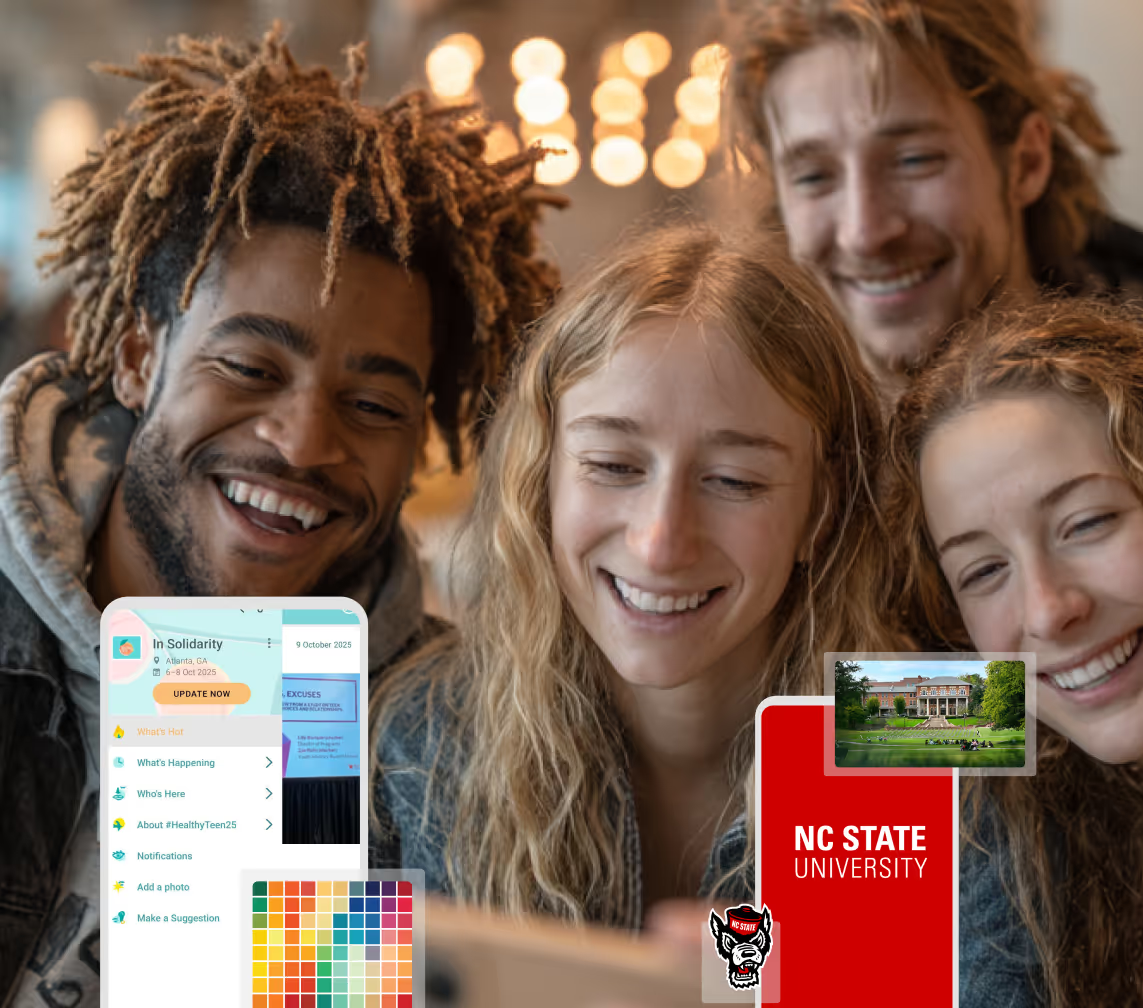
Boost Student Engagement
One hub for schedules, resources, and events that keeps students connected throughout the academic year.
Boost Student Engagement
One hub for schedules, resources, and events that keeps students connected throughout the academic year.
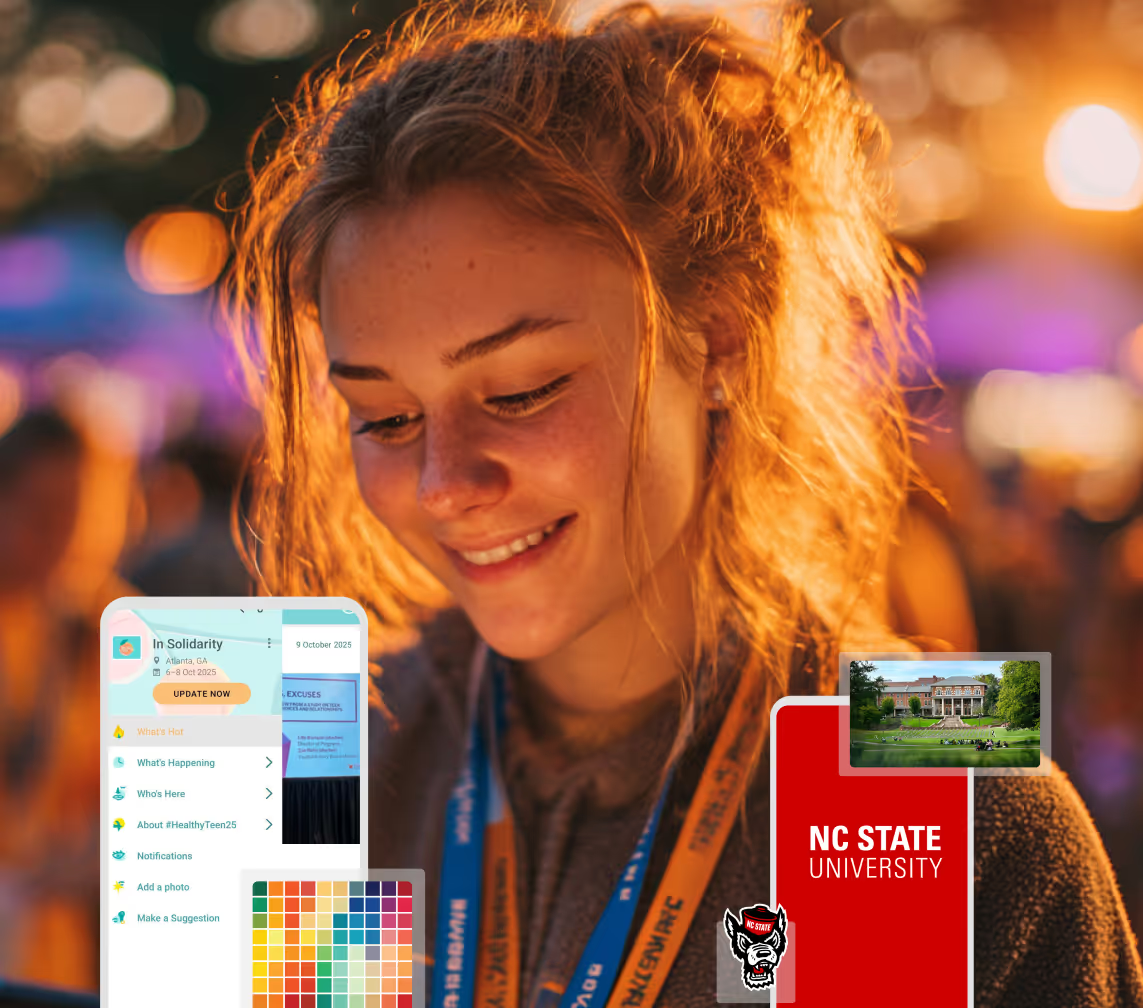
Planning Orientation?
Help new students feel prepared from day one with schedules, campus resources, and real-time updates in one app.
Planning Orientation?
Help new students feel prepared from day one with schedules, campus resources, and real-time updates in one app.
Running Admissions Events?
Manage open houses, tours, and yield events with a branded app that saves time and engages prospective students.

Running Admissions Events?
Manage open houses, tours, and yield events with a branded app that saves time and engages prospective students.
Get a custom Sponsorship Package Template
Stop starting from scratch. Grab free templates that helWe'll build a tailored sponsorship package with suggested pricing, tiers, and benefits..for your specific event.p you build professional sponsorship packages and close deals faster.
Get a custom Sponsorship Package Template
Stop starting from scratch. Grab free templates that helWe'll build a tailored sponsorship package with suggested pricing, tiers, and benefits..for your specific event.p you build professional sponsorship packages and close deals faster.
Plan Your Next Event Without Missing a Beat.
From venue selection to post-event wrap-up, this free checklist walks you through every step (so nothing falls through the cracks).
.avif)
Plan Your Next Event Without Missing a Beat.
From venue selection to post-event wrap-up, this free checklist walks you through every step (so nothing falls through the cracks).
Real Results From Real Events
100,000+ organizations trust Guidebook. See exactly how universities, associations, enterprises, and more put it to work.

Real Results From Real Events
100,000+ organizations trust Guidebook. See exactly how universities, associations, enterprises, and more put it to work.
Flexible pricing for every event size
Find the perfect plan for your needs, from intimate gatherings to large-scale conferences.

Flexible pricing for every event size
Find the perfect plan for your needs, from intimate gatherings to large-scale conferences.
Join our event experts
Watch on-demand webinars and join live sessions with industry leaders sharing best practices for event success.
.avif)
Join our event experts
Watch on-demand webinars and join live sessions with industry leaders sharing best practices for event success.
Guidebook in Action
Book a personalized walkthrough and discover how we help event teams create better attendee experiences.
Guidebook in Action
Book a personalized walkthrough and discover how we help event teams create better attendee experiences.
What to Include in an Event Registration Form: Essential Fields and Best Practices
.avif)





What to Include in an Event Registration Form: Essential Fields and Best Practices
A clear, well-structured event registration form is one of the biggest drivers of conversion for any event. If your form is confusing, too long, or missing key fields, you risk losing attendees before they’ve even signed up.
In this guide you'll learn exactly what to include in an event registration form, as we explore:
- which fields are essential.
- which ones should be optional.
- how to design a form that captures the right information without creating friction.
You’ll also learn best practices for improving completion rates and making your registration process smooth, mobile-friendly, and easy to manage.
Let's dive in!
What are the essential fields every event registration form needs?
Every event registration form needs a core set of fields that will make it easy to:
- track attendance and generate accurate reports.
- communicate with attendees before and after the event.
- handle payments, if applicable for your event.
- support logistics, safety, and accessibility.
Here's an overview of the core fields that your form should include.
1. Full name
Collect both first and last names so you can identify attendees correctly, personalize communications, and generate accurate badges, tickets, or check-in lists.
2. Email address
Email is the primary channel for sending registration confirmations, receipts, reminders, and post-event follow-up. Make sure this field is required and validate the format to reduce errors.
3. Phone number
Having a phone number for each attendee can come in handy when you need to send a text message with updates about schedule changes, venue adjustments, weather-related alerts. and more.
That said SMS costs can add up quickly and there's always a chance that attendees provided a wrong number. A simpler alternative is to use a mobile event app with push notifications, so you can communicate instantly without relying on phone numbers at all.
4. Payment details (for paid events)
For paid events, include secure fields that capture payment information or connect directly to a trusted payment gateway (like Stripe or PayPal). Clearly show the ticket type, price, and any taxes or fees before attendees submit the form.
5. Consent and agreement
Add a checkbox for attendees to confirm they agree to your terms and conditions, cancellation policy, and privacy or data-use statements. This is important for compliance, as well as for protecting your organization and your attendees.
Which optional fields can improve your event registration form (without adding friction)?
Once you’ve covered the essentials, optional fields can help you gather richer insights about your attendees and personalize their experience. The key is to only add fields that you’ll genuinely use because every additional question introduces a small amount of friction. So choose wisely.
Here are some optional fields that can meaningfully enhance your event registration process.
Industry
This is helpful for understanding who's attending and for shaping your content or communication to match their needs.
Job title
Similar to industry, this provides context for things like networking, session recommendations, or marketing follow-up.
Company or organization
Helps you identify organizational trends and tailor communications for specific sectors.
Company size
Helpful for understanding attendee demographics and refining content or sponsorship opportunities.
Dietary preferences
Critical for events that provide meals or refreshments, this field helps your deliver an inclusive experience and reduces attendee friction later.
Accessibility requirements
Include a space for attendees to share any accommodations they need, such as wheelchair access, captioning, ASL interpretation, or seating preferences. Not only is this an inclusivity best practice, but it may be required depending on your region and event type.
Social media handles
These are especially useful for events that emphasize community-building, influencer engagement, or pre-event networking.
-------------------------
These are some of the most common optional fields planners use today, but they’re far from the only choices.
If you want even more ideas, you can explore our guide with 45+ examples of event registration questions. The more you understand your attendees and what they need, the easier it becomes to create a smooth, personalized event experience.
How can you make your event registration form accessible to everyone?
As laws and regulations around online accessibility continue to evolve, event planners need to be aware of them when creating registration forms. By ensuring your form is inclusive, you open your event to a broader audience and demonstrate your commitment to diversity and equity.
Here are some practical ways to make your form more accessible.
Use a simple and clean layout
Use clear labels, logical field order, and plenty of spacing. This helps all users, especially those using screen readers or keyboard navigation.
Make sure the from navigation is keyboard-friendly
Every field, button, and dropdown should be accessible without a mouse. This is essential for users who rely on assistive technology.
Include alt text for images
If your form has images, add short, descriptive alt text so visually impaired users can understand what’s displayed.
Use readable colors and font sizes
Choose high-contrast colors and font sizes that are easy to read. This improves usability for attendees with visual impairments and also helps mobile users in bright environments.
How do you create a user-friendly online event registration form?
A user-friendly registration form can significantly enhance the attendee experience. By keeping the process simple and intuitive, you reduce barriers to entry and encourage more sign-ups. Here are some practical tips:
1. Integrate your form with your tech stack
First, make sure the tool or software you're using for your registration form integrates with the rest of your tech stack, particularly your AMS or CRM. This ensures that all data submitted through the form flows seamlessly into your central database, eliminating the need for manual data entry and reducing errors.
Additionally, this gives you a unified, single source of truth for all data. Unified data makes it much easier to track and report your event data, nurture relationships with attendees, spot trends and patterns, and much more.
2. Keep the form short and focused
Reduce overwhelm for future attendees by limiting the number of fields in the form. Only ask for relevant information—if you don’t plan on using a particular piece of information, don’t ask for it.
3. Use automation for a smoother experience
Give users a more streamlined, personalized experience with automation. For example:
- Automatically offer special pricing or discounts for members, early-bird registrations, and so on.
- Use conditional logic to ask follow-up question based on the attendee’s responses. It's also a great way keep your form short, with relevant questions only!
- Use registration form submissions as a trigger to automatically send a confirmation email, a pre-event guide, and other event recommendations.
4. Offer autofill and dropdown options
Save time for users by enabling autofill or providing dropdown menus for repetitive fields like country or state.
If you’ve already integrated your registration tool with the rest of your tech stack, you could even allow members or past attendees to log in with single sign-on (SSO), which can automatically populate all known information.
5. Provide real-time field validation
Guide users with immediate feedback for errors in required fields, such as invalid email formats. Don’t give them any reason to drop out of the registration process or doubt your professionalism.
6. Make sure the form works on mobile
Ensure your form is fully responsive and functional on all devices, especially smartphones. As more people manage all aspects of their life on mobile devices, this becomes a non-negotiable.
7. Trigger helpful follow-up messages after the event
The first few hours and days after your event ends are the perfect time to get feedback from attendees because the experience is still top-of-mind for them.
So, don't forget to send a post-event survey, or even, invitations to join your next event. In addition, a timely, personalized thank-you message can go a long way, making attendees feel valued and more likely to return to future events.
And when it comes to the survey responses, mine them for all they're worth. The information in those surveys will help you identify key areas for improvement, allowing you to enhance future registration and event experiences.
Design A Seamless Registration Experience
When your registration form is clear, accessible, and easy to complete, attendees are far more likely to finish the registration process and arrive at your event feeling prepared. Every field you include should have a purpose, and the overall form should help attendees register quickly, whether they’re on a laptop or a mobile device.
If you’re looking for a simple way to build a polished, user-friendly registration form, Guidebook's event registration tools give you everything you need to turn curiosity into commitment. Start building your registration now and see how these tools fit your event workflow.
FAQs About Event Registration Forms
[faq]
Q: What should be included in an event registration form?
A: Most event registration forms include a full name, email address, ticket type or registration option, payment information (if your event is paid), and a terms and conditions checkbox. These fields help you confirm attendance, process payments, and send necessary event information.
Q: Should event registration forms include payment fields?
A: If your event requires payment, your form should include secure payment fields or connect to a trusted payment provider. If your event is free, you can skip payment fields and focus only on the information you need to confirm attendance.
Q: How long should an event registration form be?
A: There’s no universal “ideal length” for an event registration form, but research shows a clear trend for online forms: as the number of form fields increases and become more complex, conversion rates tend to decrease.
Simple single-line fields have a much smaller negative impact, meaning you should aim to collect only essential information up front (such as name, email, ticket type, payment if needed, consent). For any additional data you need (dietary preferences, company info, accessibility needs), consider using optional or conditional fields. This approach balances ease of registration with data collection, minimizing abandonment while still giving you meaningful attendee insights.
Q: How do you make an event registration form mobile-friendly?
A: Use large tap targets, readable text, and a layout that adjusts automatically on small screens. Test your form on a phone to make sure every field is easy to complete without zooming or scrolling side to side.
Q: Where can I find more examples of event registration questions?
A: Use this collection of 45+ examples of event registration questions to get more ideas and inspiration.
[/faq]

Get the Mobile App Playbook
A short guide to running the whole student journey in one app. No fluff, just what works.
for higher ed
Campus
Playbook
A practical guide to building a connected campus experience.
Free playbook
The Mobile App Playbook for Universities
Students decide if they belong long before they set foot on campus. This playbook shows how to win them over from the first visit through graduation.
- Grow enrollment and boost recruitment
- Increase belonging and retention
- Run every event from one branded app
By submitting, you agree to our Privacy Policy.
You're in.
.png)