Campus apps by department
Admissions, orientation, student life, and more — one campus app that works across departments.

Campus apps by department
Admissions, orientation, student life, and more — one campus app that works across departments.
Build unlimited event apps on one license
One partnership for unlimited campus events — orientation, tours, student life, and everything in between.
Build unlimited event apps on one license
One partnership for unlimited campus events — orientation, tours, student life, and everything in between.
Compare event app platforms
See how Guidebook stacks up against other event app and registration platforms.
Compare event app platforms
See how Guidebook stacks up against other event app and registration platforms.
Event apps for nonprofit and community programs
Give members, volunteers, and donors one branded app for conferences, fundraisers, and year-round community.
Event apps for nonprofit and community programs
Give members, volunteers, and donors one branded app for conferences, fundraisers, and year-round community.
Campus integrations and an open API
Connect Guidebook with the campus systems, APIs, and tools your team already uses.
Campus integrations and an open API
Connect Guidebook with the campus systems, APIs, and tools your team already uses.
Event apps for corporate and enterprise teams
Internal meetings, offsites, and large-scale corporate events — with the branding and control enterprise teams need.
Event apps for corporate and enterprise teams
Internal meetings, offsites, and large-scale corporate events — with the branding and control enterprise teams need.
Create a branded event app with no coding
Put schedules, maps, resources, and updates in every attendee's pocket — built for campus events and programs.
Create a branded event app with no coding
Put schedules, maps, resources, and updates in every attendee's pocket — built for campus events and programs.
Launch a branded, white-label event app
A white-label event app with your branding, your content, and your attendee experience — no coding required.
Launch a branded, white-label event app
A white-label event app with your branding, your content, and your attendee experience — no coding required.
Everything in the Guidebook platform
Explore the features event teams use to engage attendees before, during, and after the event.
Everything in the Guidebook platform
Explore the features event teams use to engage attendees before, during, and after the event.
One app for in-person and virtual attendees
The same schedule, networking, and updates whether people are in the room or joining remotely.
One app for in-person and virtual attendees
The same schedule, networking, and updates whether people are in the room or joining remotely.
Event apps built for associations
Annual meetings, chapter events, and member engagement — without rebuilding a new app every year.
Event apps built for associations
Annual meetings, chapter events, and member engagement — without rebuilding a new app every year.
A branded event website that matches the app
Promote the event, collect interest, and keep branding consistent from the first click to check-in.
A branded event website that matches the app
Promote the event, collect interest, and keep branding consistent from the first click to check-in.
Plan, run, and measure events on one platform
App, registration, badges, and websites in one workflow — so planning isn't a pile of disconnected tools.
Plan, run, and measure events on one platform
App, registration, badges, and websites in one workflow — so planning isn't a pile of disconnected tools.
Keep members engaged between events
One branded app for the conference and everything that happens the other 51 weeks of the year.
Keep members engaged between events
One branded app for the conference and everything that happens the other 51 weeks of the year.
The conference app attendees actually use
Schedules, maps, networking, and live updates for annual meetings, summits, and multi-day conferences.
The conference app attendees actually use
Schedules, maps, networking, and live updates for annual meetings, summits, and multi-day conferences.
Registration that feeds your app and badges
Collect registrations, payments, and attendee data in the same platform as your event app.
Registration that feeds your app and badges
Collect registrations, payments, and attendee data in the same platform as your event app.
Design and print event badges in one place
Custom badges, QR check-in, and on-site printing — without a separate badge vendor.
Design and print event badges in one place
Custom badges, QR check-in, and on-site printing — without a separate badge vendor.
A Smaller School?
Deliver a polished, branded event experience without a large team or a big budget.
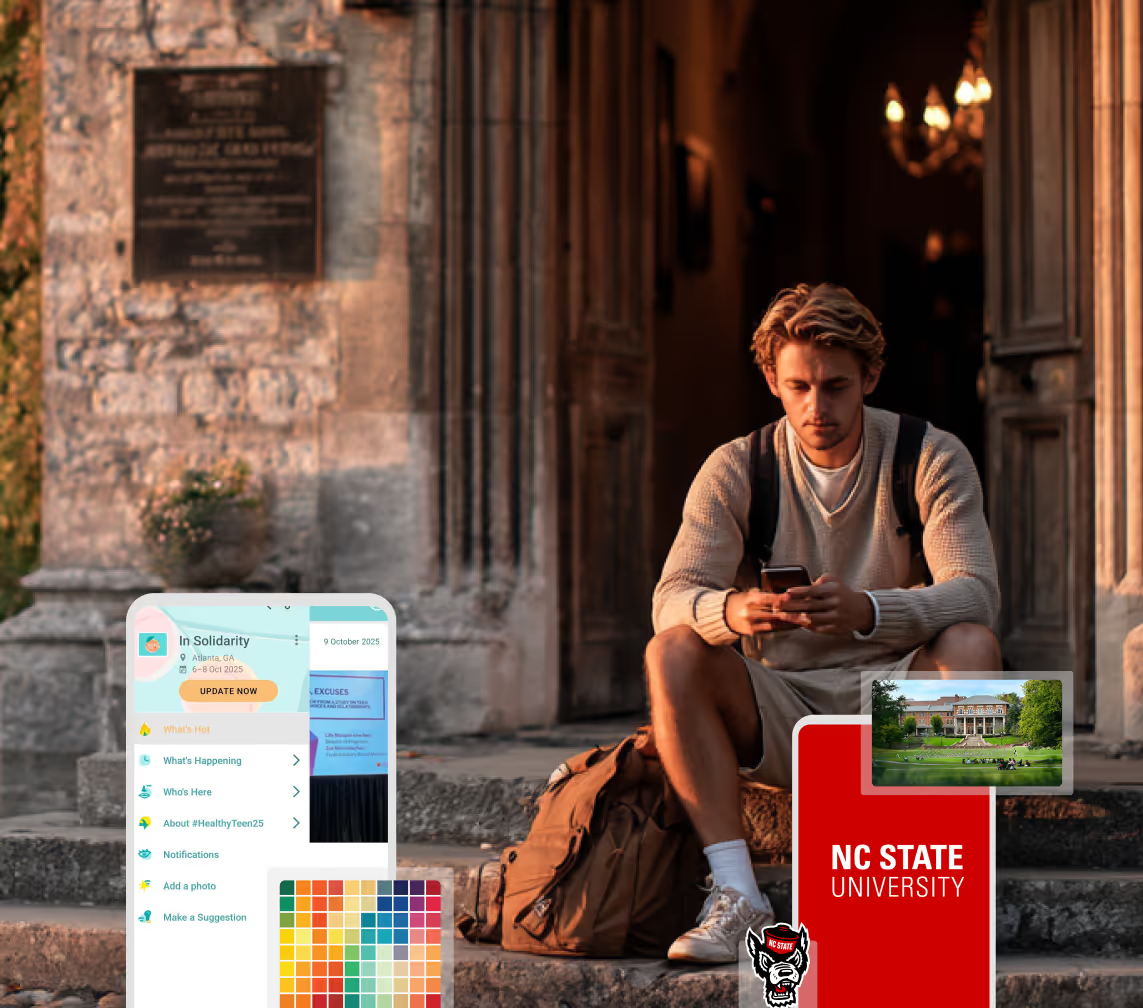
A Smaller School?
Deliver a polished, branded event experience without a large team or a big budget.
Running Family Programs?
Give families everything they need, from schedules and maps to real-time updates, all in one place.
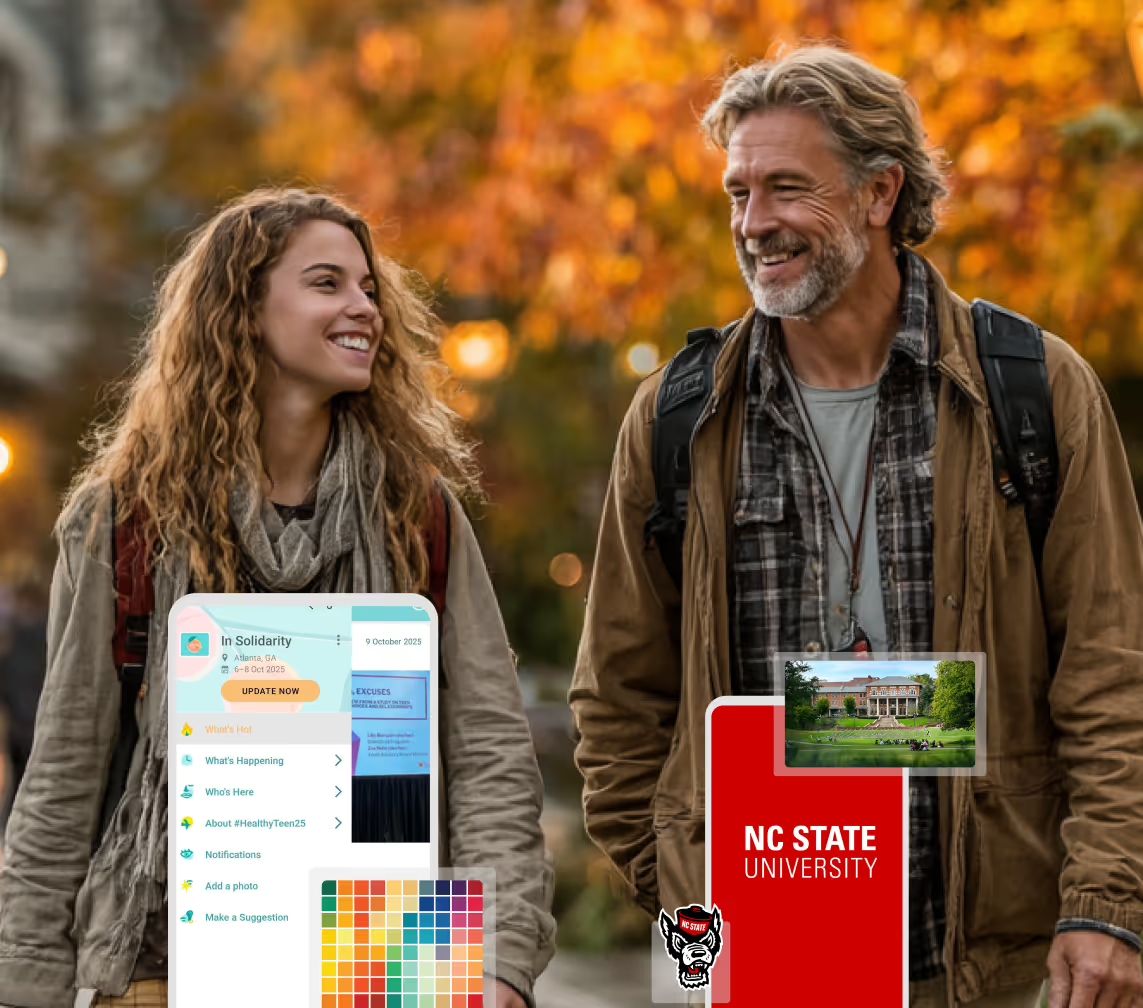
Running Family Programs?
Give families everything they need, from schedules and maps to real-time updates, all in one place.
Coordinating Move-In Day?
Share updates, manage events, and keep students informed from move-in through the academic year.

Coordinating Move-In Day?
Share updates, manage events, and keep students informed from move-in through the academic year.
Offering Campus Tours?
Deliver branded, self-guided tour experiences with interactive maps and rich media, available 24/7.

Offering Campus Tours?
Deliver branded, self-guided tour experiences with interactive maps and rich media, available 24/7.
Organising a Career Fair?
Simplify logistics for students, employers, and Career Services staff with one easy-to-use app.
Organising a Career Fair?
Simplify logistics for students, employers, and Career Services staff with one easy-to-use app.
Managing Alumni Events?
Plan reunions, regional events, and fundraising campaigns with an app built for alumni engagement.
Managing Alumni Events?
Plan reunions, regional events, and fundraising campaigns with an app built for alumni engagement.
Boost Student Engagement
One hub for schedules, resources, and events that keeps students connected throughout the academic year.
Boost Student Engagement
One hub for schedules, resources, and events that keeps students connected throughout the academic year.
Planning Orientation?
Help new students feel prepared from day one with schedules, campus resources, and real-time updates in one app.
Planning Orientation?
Help new students feel prepared from day one with schedules, campus resources, and real-time updates in one app.
Running Admissions Events?
Manage open houses, tours, and yield events with a branded app that saves time and engages prospective students.

Running Admissions Events?
Manage open houses, tours, and yield events with a branded app that saves time and engages prospective students.
Get a custom Sponsorship Package Template
Stop starting from scratch. Grab free templates that helWe'll build a tailored sponsorship package with suggested pricing, tiers, and benefits..for your specific event.p you build professional sponsorship packages and close deals faster.
Get a custom Sponsorship Package Template
Stop starting from scratch. Grab free templates that helWe'll build a tailored sponsorship package with suggested pricing, tiers, and benefits..for your specific event.p you build professional sponsorship packages and close deals faster.
Plan Your Next Event Without Missing a Beat.
From venue selection to post-event wrap-up, this free checklist walks you through every step (so nothing falls through the cracks).
.avif)
Plan Your Next Event Without Missing a Beat.
From venue selection to post-event wrap-up, this free checklist walks you through every step (so nothing falls through the cracks).
Real Results From Real Events
100,000+ organizations trust Guidebook. See exactly how universities, associations, enterprises, and more put it to work.

Real Results From Real Events
100,000+ organizations trust Guidebook. See exactly how universities, associations, enterprises, and more put it to work.
Flexible pricing for every event size
Find the perfect plan for your needs, from intimate gatherings to large-scale conferences.
Flexible pricing for every event size
Find the perfect plan for your needs, from intimate gatherings to large-scale conferences.
Join our event experts
Watch on-demand webinars and join live sessions with industry leaders sharing best practices for event success.
.avif)
Join our event experts
Watch on-demand webinars and join live sessions with industry leaders sharing best practices for event success.
Guidebook in Action
Book a personalized walkthrough and discover how we help event teams create better attendee experiences.
Guidebook in Action
Book a personalized walkthrough and discover how we help event teams create better attendee experiences.
AI Is Changing the Attendee Experience. Here's What's Actually Working.
.avif)




AI Is Changing the Attendee Experience. Here's What's Actually Working.
AI is everywhere, but for most planners, the real question isn't whether to use it. It's where to actually start, and how to know if it's working.
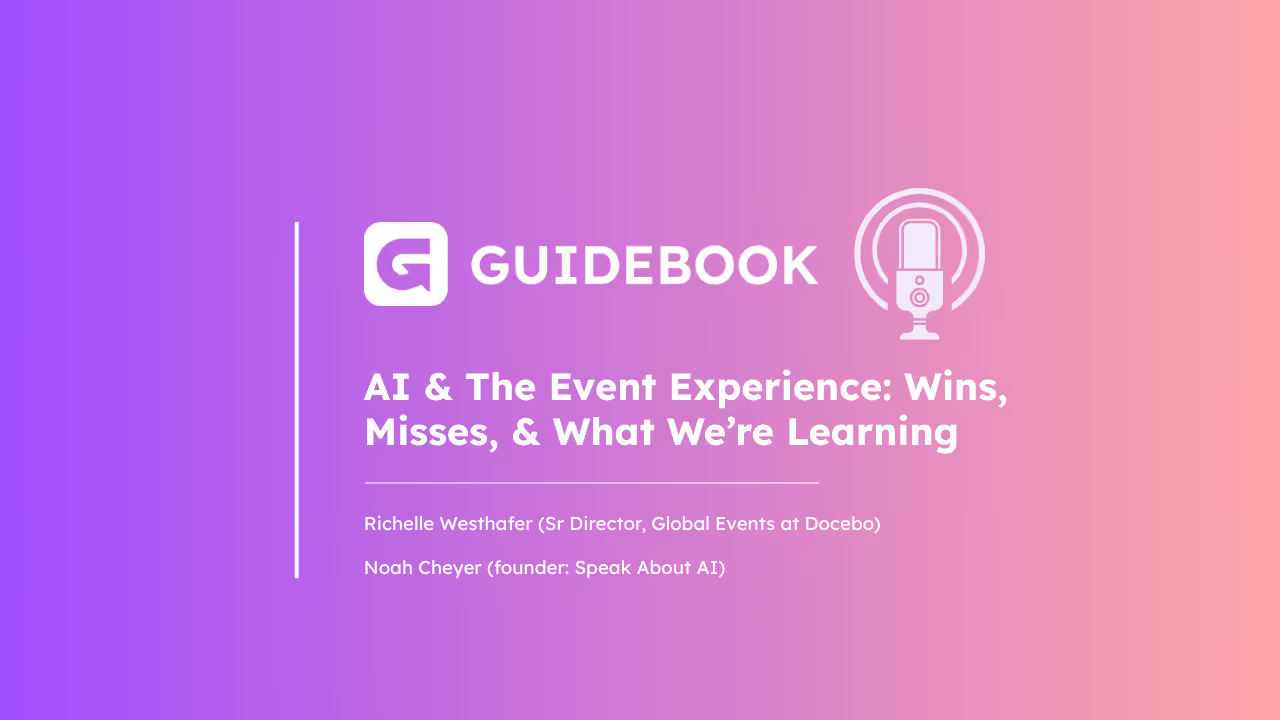
That's exactly what Richelle Westhafer (Head of Global Events at Docebo), and Noah Cheyer, (founder of Speak About AI), came to talk through in a recent Guidebook Meets webinar.
Between them, they brought real tools, real numbers, and a grounded take on what AI can (and can't) do for events right now.
Here's what you'll learn:
- How AI-assisted speaker selection can compress a months-long process into weeks
- Why the best AI implementations for attendees are the ones they never notice
- How one team achieved 91% attendee activation with a facial recognition photo tool
- What to do with your webinar chat logs after every virtual event
- How to measure AI ROI using the KPIs you're already tracking
Note: this article is based on a Guidebook Meets session we did with Richelle Westhafer and Noah Cheyer. You can watch the full conversation below:
The Principle That Should Guide Every AI Decision You Make
Before diving into specific tools and workflows, Noah Cheyer (who runs Speak About AI and represents 50+ top AI speakers from companies like Amazon and Google) offered a framing that's worth holding onto throughout everything else in this post.
AI should really do a better job of feeling invisible in a lot of ways when it comes to the attendee experience. When you go to an event, you don't want to feel that you're interacting with AI. You want to feel like you're interacting with people.
— Noah Cheyer, Founder, Speak About AI
This is the right lens. The most effective AI implementations in events aren't the flashy, obvious ones. They're the ones quietly doing the work behind the scenes so that the attendee experience on the surface feels more thoughtful, more personalized, and more seamless.
Keep that in mind as you read through what the other webinar guest, Richelle, has actually built together with her team.
Pre-Event: Rebuilding the Speaker Selection Process
Richelle Westhafer is direct about which part of event planning causes the most pain.
The agenda reveal, especially with larger events that are more complex and span multiple days. Without a doubt, that's the most painful piece of the puzzle for me.
— Richelle Westhafer, Head of Global Events, Docebo
Her team piloted SessionBoard, an AI-powered speaker management platform that scores incoming submissions against pre-set rubrics — things like audience relevance, topic originality, and speaker diversity — and routes abstracts automatically to the right track reviewers.
The timeline compression is significant.
Previously, this process stretched across months. With SessionBoard in place, submissions opened the first week of September, closed the first week of October, and the agenda published in early November.
We evaluated the tool in August. We went live with our registration and speaker submission first week of September. We're closing speaker submissions first week of October. And then we're hoping to publish the agenda in early November. We've cut that way, way, way down.
— Richelle Westhafer, Head of Global Events, Docebo
Once speakers are selected and their information is managed inside SessionBoard — bios, headshots, logistics checklists — all of that data pulls through directly to the app that attendees use on the day of the event.
The AI-assisted pre-event workflow doesn't just save the team time; it directly improves the quality and completeness of what attendees see inside the app.
The Human Layer Is Non-Negotiable
One thing Richelle's team was careful about: AI sets the criteria, but humans gut-check it.
Before going live, her team held a dedicated call to review how they had worded their diversity and inclusion criteria inside the scoring rubric. That kind of review isn't optional; it's the work that keeps AI-assisted decisions defensible and aligned with your organization's values.
As Richelle put it, it has to be a two-pronged approach. AI can help you move faster, but it's never going to replace the common sense, human layer.
Mining Your Own Organization for Speaker Candidates
Here's a tactic that costs nothing and most teams overlook entirely.
Richelle's teammate Jen used Gong (a sales intelligence tool already deployed by their sales team) to surface potential customer speakers.
She fed the tool criteria for what they were looking for and asked it to identify customers who might be a strong match. The output was an instant shortlist of company logos, individual names, and relevant talking points.
Before you purchase a new AI tool for speaker sourcing, ask what your sales, marketing, or HR teams are already using. You may already have access to something powerful enough to do the job.
During the Event: Creating Moments That Extend Beyond the Room
On-site, Richelle's team has been experimenting with tools that turn passive event moments into lasting, shareable assets (without adding friction for attendees).
Facial Recognition Photo Sharing: The Numbers Speak
At a recent North American event, Richelle's team deployed GetPica, a facial recognition photo sharing tool that lets attendees opt in via selfie and instantly access a personalized album of event photos featuring them.
The results were striking:
- 91% of attendees activated their personal photo album.
- 62% of those who activated shared photos on social platforms.
- At a prior European event six months earlier, activation reached 67%; lower, but still strong, and Richelle attributes the difference to regional data privacy norms
One practical tip her team used: pre-seed each album with 5–10 universal event photos (the keynote stage, the welcome wall, arrival moments) that every attendee would want, regardless of where they appear in photographer coverage.
It maximizes the perceived value of opting in.
Social sharing rate is a direct, trackable ROI metric. If you're currently measuring social amplification manually or not at all, this kind of tool makes it automatic.
Post-Event: Turning Data You Already Have Into Content and Intelligence
The post-event phase is where most teams leave the most value on the table. Not because they lack data, but because they don't have the bandwidth to process it.
Richelle's team has changed that with a simple, repeatable workflow.
What's Hiding in Your Webinar Chat Logs
After every virtual event, Richelle's webinar lead exports the full Zoom chat log and feeds it into ChatGPT.
The output: 5–10 recurring themes condensed from hundreds of individual comments, plus a flagged list of high-priority comments that need one-to-one follow-up from sales, product, or customer success.
There's like a ton of gold sitting in those chats, especially on larger virtual events where there may be hundreds and hundreds of comments happening. She's feeding them into a tool like ChatGPT and consolidating from hundreds of comments down to 5 to 10 themes, and pulling out things that actually need one-to-one follow-up.
— Richelle Westhafer, Head of Global Events, Docebo
Those themes don't just inform follow-up; they directly shape the agenda for the next webinar in the series. It's a feedback loop that most teams have the raw material for but have never been able to act on at speed.
AI Content Production: The 80–85% Rule
Both Richelle and Noah landed on the same benchmark independently: AI gets you to about 80–85% of market-ready quality on the first pass.
Noah, referencing Opus Clip for social video: "They're like 85% of the way there."
For Richelle, on her webinar lead's workflow: AI produces a first draft that's about 80% usable, and then with 20–30 minutes of editing, she's able to produce market-ready content on her own.
The shift in mindset this requires is real but worth it. The goal isn't a perfect first draft. The goal is eliminating the multi-day production cycle and redirecting your specialist writers to final review only.
As Richelle put it: "Anyone can produce a first draft of copywriting. Instead of waiting on a writer to write it for us, it's taking it to a writer to say, 'How does this look? Any final tweaks?' And that takes 10 minutes instead of 10 days."
How to Measure AI ROI Without Inventing New Metrics
One of the most practical things Richelle shared is her approach to measuring whether AI investments are actually working. And it starts before a tool is ever deployed.
Her framework ties AI outcomes to metrics her team already tracks:
- Pre-event: Did publishing the agenda earlier accelerate ticket sales velocity?
- During the event: Did social sharing rates, photo activation, and brand mentions improve?
- Post-event: What do survey scores and AI-analyzed chat sentiment tell you together?
She also advocates for being transparent with leadership about experiments that don't pan out. Ruling something out is valid data and framing it that way internally builds credibility for future AI investments rather than eroding it.
Noah reinforced the same point from a different angle: AI doesn't have to be perfect to be worth it. If you're saving meaningful time, a few mistakes along the way are a reasonable tradeoff.
AI Tools Referenced in This Session
Takeaways: What Your Team Can Apply Right Now
If you're looking to move from AI curiosity to AI action, here's where to start:
- Pilot an AI-assisted speaker submission tool for your next call for speakers. Define your scoring rubric before the tool goes live, and gut-check criteria around sensitive dimensions like diversity as a team, not individually.
- Audit what AI tools already exist in your organization before buying anything new. Sales, marketing, and HR teams may already have tools with AI capabilities you can borrow for event planning workflows.
- Deploy facial recognition photo sharing at your next large in-person event. Pre-seed albums with universal event photos to maximize opt-in value, and track social sharing rate as a direct ROI metric.
- Export your webinar chat logs after every virtual event and run them through ChatGPT. Ask the tool to identify 5–10 recurring themes and flag comments that need one-to-one follow-up from sales or customer success.
- Use AI to produce first drafts of post-event content, then budget 20–30 minutes for human editing. The goal is eliminating the multi-day production cycle, not perfection on the first pass.
- Build your AI ROI framework before you deploy a tool, not after. Tie AI investments to metrics you already track and be transparent with leadership when something doesn't work. It builds credibility for future experiments.
Ready to Bring This to Your Next Event?
If you're looking to build a faster, smarter event workflow that delivers a better experience for every attendee, we'd love to help.
You can start building your app or book a demo with one of our product experts.
Frequently Asked Questions
[faq]
Q: How can AI improve the attendee experience at events?A: The most effective AI applications for attendees work invisibly:
- Matching algorithms that surface the right networking connections
- Speaker selection tools that produce a better-curated agenda
- Photo sharing tools that create personalized moments without requiring attendee effort.
The goal is a more thoughtful, seamless experience that feels human, not automated.
Q: What AI tools can speed up the speaker selection process for conferences?
A: Tools like SessionBoard allow teams to set scoring rubrics and automatically score incoming submissions against those criteria. This compresses a process that typically takes months into a matter of weeks, while still preserving a human review layer for final decisions.
Q: How do I use AI to analyze webinar chat logs after an event?
A: Export your full chat log from Zoom or your webinar platform and paste it into ChatGPT or a similar tool. Ask it to identify 5–10 recurring themes, flag comments that need one-to-one follow-up, and assess overall sentiment.
Route high-priority comments to the relevant team (sales, product, or customer success) and use the themes to shape your next event's agenda.
Q: What is facial recognition photo sharing and how does it work at events?
A: Tools like GetPica allow photographers to upload event photos to a central platform. Attendees opt in by taking a selfie, and the tool automatically identifies and delivers photos featuring that attendee to their personal album. It drives social sharing and gives event teams a trackable amplification metric (Richelle's team saw 91% activation and 62% social share rates at a recent event).
Q: How do I measure the ROI of AI tools for event planning?
A: Tie AI investments to metrics you already track: ticket sales velocity (did publishing the agenda earlier accelerate registrations?), social engagement rates, session satisfaction scores, and post-event survey sentiment. Build your measurement framework before deploying the tool, not after, so you have a clear baseline to compare against.
Q: How much can AI improve post-event content production?
A: Current benchmarks suggest AI gets content to roughly 80–85% of market-ready quality on the first pass. With 20–30 minutes of human editing, that content is typically ready to publish. The net result is eliminating multi-day production cycles and enabling non-specialists on your team to produce polished content independently.
Q: Should AI in events be visible to attendees, or work in the background?
A: The strongest implementations work in the background. Attendees shouldn't feel like they're interacting with AI; they should feel like they're getting a better, more personalized experience. The technology that powers that experience is most effective when it's invisible.
Q: Can I use AI tools my company already has for event planning purposes?
A: Absolutely, and this is one of the most underutilized opportunities for event teams. Sales intelligence tools like Gong, for example, can be repurposed to identify customer speaker candidates by surfacing contacts who match your speaker criteria. Before purchasing new tools, audit what's already deployed across your organization.
[/faq]

Get the Mobile App Playbook
A short guide to running the whole student journey in one app. No fluff, just what works.
for higher ed
Campus
Playbook
A practical guide to building a connected campus experience.
Free playbook
The Mobile App Playbook for Universities
Students decide if they belong long before they set foot on campus. This playbook shows how to win them over from the first visit through graduation.
- Grow enrollment and boost recruitment
- Increase belonging and retention
- Run every event from one branded app
By submitting, you agree to our Privacy Policy.
You're in.
.png)