Campus apps by department
Admissions, orientation, student life, and more — one campus app that works across departments.

Campus apps by department
Admissions, orientation, student life, and more — one campus app that works across departments.
Build unlimited event apps on one license
One partnership for unlimited campus events — orientation, tours, student life, and everything in between.
Build unlimited event apps on one license
One partnership for unlimited campus events — orientation, tours, student life, and everything in between.
Compare event app platforms
See how Guidebook stacks up against other event app and registration platforms.
Compare event app platforms
See how Guidebook stacks up against other event app and registration platforms.
Event apps for nonprofit and community programs
Give members, volunteers, and donors one branded app for conferences, fundraisers, and year-round community.
Event apps for nonprofit and community programs
Give members, volunteers, and donors one branded app for conferences, fundraisers, and year-round community.
Campus integrations and an open API
Connect Guidebook with the campus systems, APIs, and tools your team already uses.
Campus integrations and an open API
Connect Guidebook with the campus systems, APIs, and tools your team already uses.
Event apps for corporate and enterprise teams
Internal meetings, offsites, and large-scale corporate events — with the branding and control enterprise teams need.
Event apps for corporate and enterprise teams
Internal meetings, offsites, and large-scale corporate events — with the branding and control enterprise teams need.
Create a branded event app with no coding
Put schedules, maps, resources, and updates in every attendee's pocket — built for campus events and programs.
Create a branded event app with no coding
Put schedules, maps, resources, and updates in every attendee's pocket — built for campus events and programs.
Launch a branded, white-label event app
A white-label event app with your branding, your content, and your attendee experience — no coding required.
Launch a branded, white-label event app
A white-label event app with your branding, your content, and your attendee experience — no coding required.
Everything in the Guidebook platform
Explore the features event teams use to engage attendees before, during, and after the event.
Everything in the Guidebook platform
Explore the features event teams use to engage attendees before, during, and after the event.
One app for in-person and virtual attendees
The same schedule, networking, and updates whether people are in the room or joining remotely.
One app for in-person and virtual attendees
The same schedule, networking, and updates whether people are in the room or joining remotely.
Event apps built for associations
Annual meetings, chapter events, and member engagement — without rebuilding a new app every year.
Event apps built for associations
Annual meetings, chapter events, and member engagement — without rebuilding a new app every year.
A branded event website that matches the app
Promote the event, collect interest, and keep branding consistent from the first click to check-in.
A branded event website that matches the app
Promote the event, collect interest, and keep branding consistent from the first click to check-in.
Plan, run, and measure events on one platform
App, registration, badges, and websites in one workflow — so planning isn't a pile of disconnected tools.
Plan, run, and measure events on one platform
App, registration, badges, and websites in one workflow — so planning isn't a pile of disconnected tools.
Keep members engaged between events
One branded app for the conference and everything that happens the other 51 weeks of the year.
Keep members engaged between events
One branded app for the conference and everything that happens the other 51 weeks of the year.
The conference app attendees actually use
Schedules, maps, networking, and live updates for annual meetings, summits, and multi-day conferences.
The conference app attendees actually use
Schedules, maps, networking, and live updates for annual meetings, summits, and multi-day conferences.
Registration that feeds your app and badges
Collect registrations, payments, and attendee data in the same platform as your event app.
Registration that feeds your app and badges
Collect registrations, payments, and attendee data in the same platform as your event app.
Design and print event badges in one place
Custom badges, QR check-in, and on-site printing — without a separate badge vendor.
Design and print event badges in one place
Custom badges, QR check-in, and on-site printing — without a separate badge vendor.
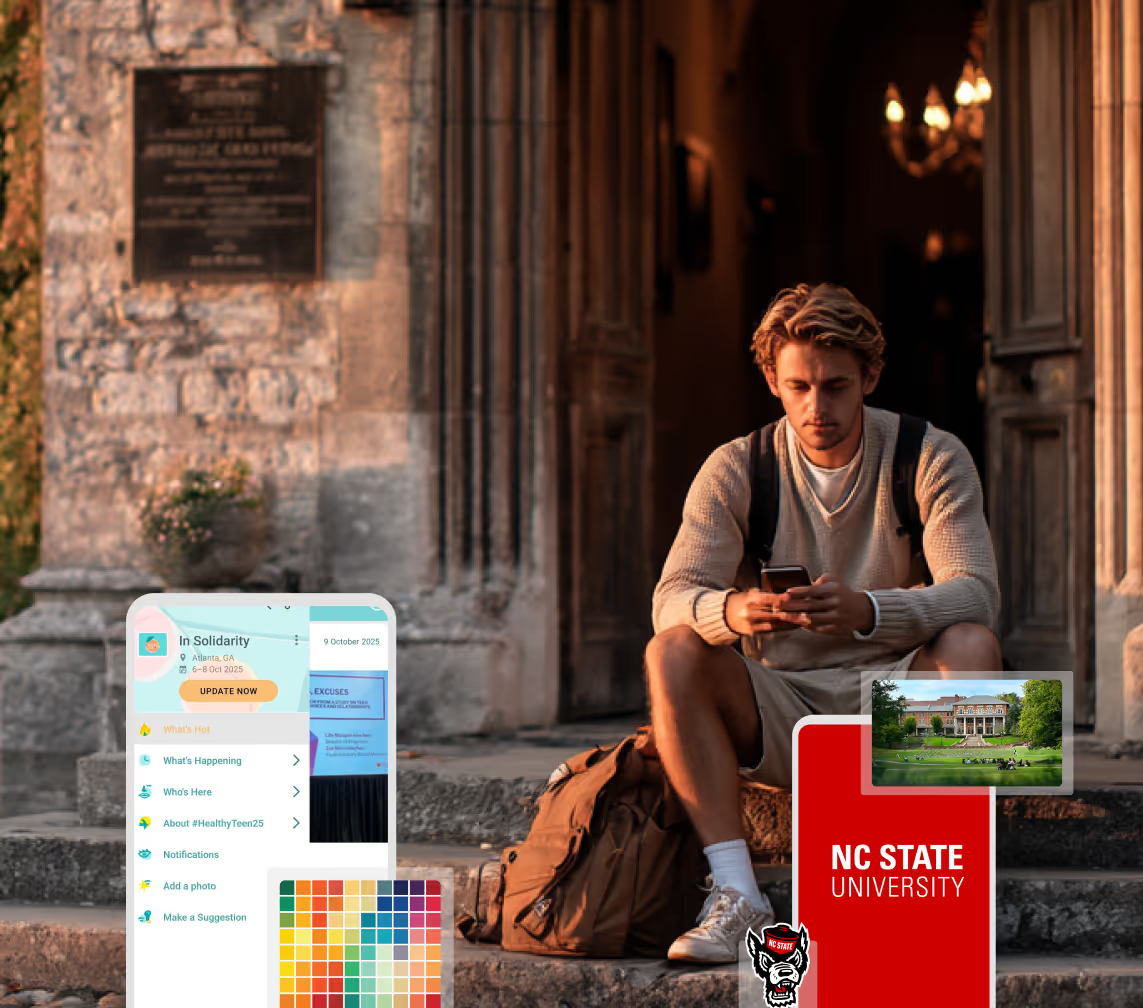
A Smaller School?
Deliver a polished, branded event experience without a large team or a big budget.
A Smaller School?
Deliver a polished, branded event experience without a large team or a big budget.
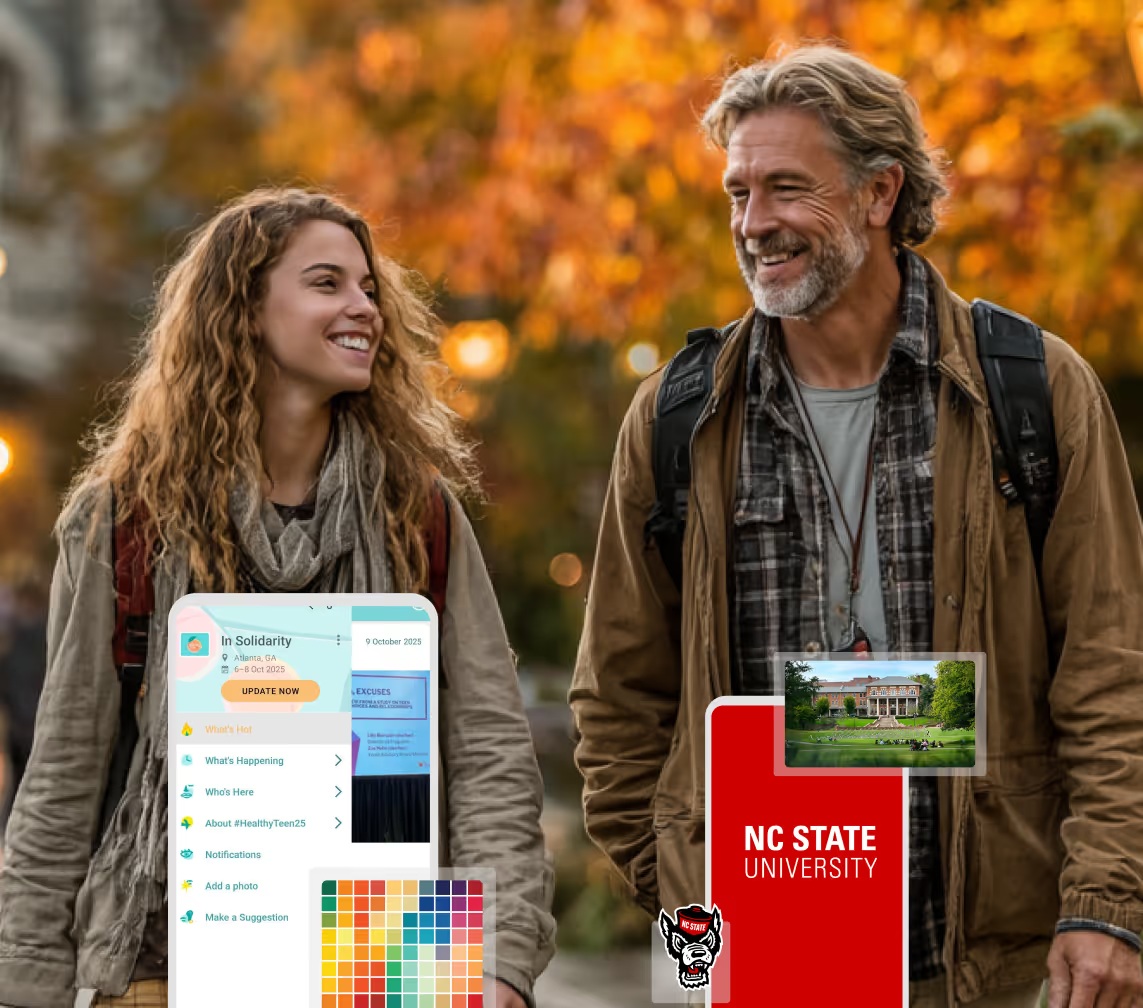
Running Family Programs?
Give families everything they need, from schedules and maps to real-time updates, all in one place.
Running Family Programs?
Give families everything they need, from schedules and maps to real-time updates, all in one place.
Coordinating Move-In Day?
Share updates, manage events, and keep students informed from move-in through the academic year.

Coordinating Move-In Day?
Share updates, manage events, and keep students informed from move-in through the academic year.
Offering Campus Tours?
Deliver branded, self-guided tour experiences with interactive maps and rich media, available 24/7.

Offering Campus Tours?
Deliver branded, self-guided tour experiences with interactive maps and rich media, available 24/7.
Organising a Career Fair?
Simplify logistics for students, employers, and Career Services staff with one easy-to-use app.
Organising a Career Fair?
Simplify logistics for students, employers, and Career Services staff with one easy-to-use app.
Managing Alumni Events?
Plan reunions, regional events, and fundraising campaigns with an app built for alumni engagement.
Managing Alumni Events?
Plan reunions, regional events, and fundraising campaigns with an app built for alumni engagement.
Boost Student Engagement
One hub for schedules, resources, and events that keeps students connected throughout the academic year.
Boost Student Engagement
One hub for schedules, resources, and events that keeps students connected throughout the academic year.
Planning Orientation?
Help new students feel prepared from day one with schedules, campus resources, and real-time updates in one app.
Planning Orientation?
Help new students feel prepared from day one with schedules, campus resources, and real-time updates in one app.
Running Admissions Events?
Manage open houses, tours, and yield events with a branded app that saves time and engages prospective students.

Running Admissions Events?
Manage open houses, tours, and yield events with a branded app that saves time and engages prospective students.
Get a custom Sponsorship Package Template
Stop starting from scratch. Grab free templates that helWe'll build a tailored sponsorship package with suggested pricing, tiers, and benefits..for your specific event.p you build professional sponsorship packages and close deals faster.
Get a custom Sponsorship Package Template
Stop starting from scratch. Grab free templates that helWe'll build a tailored sponsorship package with suggested pricing, tiers, and benefits..for your specific event.p you build professional sponsorship packages and close deals faster.
Plan Your Next Event Without Missing a Beat.
From venue selection to post-event wrap-up, this free checklist walks you through every step (so nothing falls through the cracks).
.avif)
Plan Your Next Event Without Missing a Beat.
From venue selection to post-event wrap-up, this free checklist walks you through every step (so nothing falls through the cracks).
Real Results From Real Events
100,000+ organizations trust Guidebook. See exactly how universities, associations, enterprises, and more put it to work.

Real Results From Real Events
100,000+ organizations trust Guidebook. See exactly how universities, associations, enterprises, and more put it to work.
Flexible pricing for every event size
Find the perfect plan for your needs, from intimate gatherings to large-scale conferences.

Flexible pricing for every event size
Find the perfect plan for your needs, from intimate gatherings to large-scale conferences.
Join our event experts
Watch on-demand webinars and join live sessions with industry leaders sharing best practices for event success.
.avif)
Join our event experts
Watch on-demand webinars and join live sessions with industry leaders sharing best practices for event success.
Guidebook in Action
Book a personalized walkthrough and discover how we help event teams create better attendee experiences.
Guidebook in Action
Book a personalized walkthrough and discover how we help event teams create better attendee experiences.
Symposium Planning Checklist: Your Complete Guide with Phase by Phase Breakdown
.avif)




Symposium Planning Checklist: Your Complete Guide with Phase by Phase Breakdown
Planning a symposium can feel like coordinating a hundred moving pieces at once: speakers, venues, technology, catering, marketing, and the ever-present question of whether you've forgotten something critical.
The good news? With the right checklist and a clear timeline, you can move from overwhelmed to organized.
This guide walks you through every phase of symposium planning, from your earliest goal-setting conversations to post-event follow-up.
Whether you're planning a focused academic symposium or a larger multi-day convention, you'll find a practical roadmap to keep your team aligned and your attendees informed.
Here's what you'll walk away with:
- How to distinguish between a symposium, conference, and seminar (and why it matters for your planning).
- A framework for setting clear, measurable goals.
- A phase-by-phase symposium planning checklist that covers everything from concept to day-of execution.
- How to choose the right event technology for registration, communication, and on-site check-in.
- Practical strategies for promoting your event and driving registrations.
- A post-event follow-up process that captures feedback and demonstrates ROI.
What is a symposium, and how does it differ from conferences and seminars?
Before diving into logistics, it helps to clarify exactly what kind of event you're planning. The terms "symposium," "conference," and "seminar" are sometimes used interchangeably, but in reality, they represent different event formats.
A symposium is a type of conference and it’s typically a collaborative gathering that focuses on a specific topic. It features expert-led discussions, presentations, and Q&A sessions designed to explore that topic in depth. Attendees often include researchers, practitioners, or professionals with a shared interest in the subject matter.
A conference, on the other hand, tends to have a broader scope. It usually features multiple tracks and breakout sessions that cover a wide range of subjects within an industry or field.
A seminar is usually smaller and more educational in nature. It often takes the form of a lecture, training session, or hands-on workshop focused on skill-building or knowledge transfer.
Understanding these distinctions matters because it shapes your planning, from how many speakers you'll need to the type of venue.
How to set clear goals for your symposium
The first step to having a successful symposium is to get clear on the event's purpose (i.e. goals and objectives).
These goals will shape every subsequent decision, from content and speakers to marketing and technology. Without clarity here, you risk building an event that feels unfocused or fails to deliver meaningful value to attendees.
If you’re not sure how to define your goals, consider using the SMART framework. It stands for Specific, Measurable, Attainable, Relevant and Time-bound and it will ensure that you can actually measure whether your symposium achieved what you set out to accomplish.
To get started, ask yourself these three foundational questions:
- Purpose: “What do I want attendees to walk away with?” This might be new knowledge, professional connections, inspiration, or a combination of outcomes.
- Audience: “Who am I trying to reach, and what do they need?” Consider whether you're targeting academics, industry professionals, students, or a mix.
- Outcomes: “How will I measure whether the symposium succeeded?” Think about attendance numbers, survey feedback, social media engagement, or follow-up actions attendees take.
With a clear vision and goals, you are more likely to put together an agenda that delivers value for attendees.
How to build your symposium planning timeline
One of the most common questions that come up in event planning is "How far in advance should I start planning?"
The truth is, it depends on the size and complexity of your symposium.
In this section, we’ve provided some general guidelines based on the size of the symposium. Use these as a general guideline and adapt as necessary based on your specific event.
Large multi-day symposium or convention
For a large, multi-day gathering, start planning 9 to 12 months in advance (or even earlier for major conventions)
The biggest drivers for this long lead time are:
- Venue availability.
- Keynote speaker recruitment.
- Sponsor relationship-building.
This extended timeline provides the necessary buffer for contract negotiations, marketing campaigns, and complex logistical coordination.
Single-day or internal symposium
Smaller, single-day, or internal symposiums require less lead time but still benefit immensely from a structured conference preparation checklist. You can often plan these events in 3 to 6 months.
The focus shifts to more streamlined tasks: booking an on-campus room or office space, arranging catering, and managing internal communications to drive attendance. While the timeline is compressed, the same phase-by-phase approach keeps you on track.
Virtual or hybrid conference
A virtual or hybrid symposium introduces unique logistical challenges, specifically related to technology. A major part of the planning process will involve selecting a reliable event platform, conducting thorough tech rehearsals with speakers, and planning for digital attendee engagement.
Hybrid events can be the most complex, as they require planning two distinct experiences simultaneously: one for the in-person audience and one for the virtual audience.
Complete symposium planning checklist by phase
Now it’s time to dive into the symposium planning checklist. As you explore this section, you’ll see that the content is organized by phases. This isn’t just for readability; this is how you’ll actually want to approach planning in order to reduce overwhelm and ensure you don’t miss a beat.
1. Six to twelve months before your event
This initial phase is about laying the foundation for your entire event because decisions made here will impact all subsequent phases.
Tasks for this phase include:
- Define your format: Decide whether your symposium will be in-person, virtual, or hybrid.
- Secure your venue: Book early to get preferred dates and negotiate favorable terms.
- Build your planning committee: Assign clear roles and responsibilities to team members.
- Set your budget: Include contingency funds for unexpected costs.
- Select event technology: Choose your registration platform, event app, and communication tools.
2. Three to six months before your event
With the foundation in place, this phase focuses on developing your event's content and beginning promotional efforts. This is when your symposium starts to take shape publicly.
Key tasks include:
- Confirm speakers and panelists: Finalize session topics and presentation formats.
- Launch registration: Set up ticketing tiers if needed (early bird, standard, student rates).
- Build your event website: Include agenda, speaker bios, venue logistics, and FAQs.
- Begin marketing: Launch email campaigns, social media promotion, and partner outreach.
If your symposium includes academic contributions, this is also the time to manage the call for papers or abstracts. Your call for abstracts should spell out:
- The symposium name.
- Symposium organizer(s).
- Potential speakers or lecturers (if you’ve already honed in on this).
- Potential schedule
- Potential sponsors or partners
You’ll notice we specified “potential” in a few bullet points above. That’s because you want your call for abstracts to make an impact and produce results. So, even if you haven’t finalized speakers or schedule, you want to paint as clear a picture as possible.
3. One to three months before your event
Now the focus shifts to operational and logistical planning. During this phase, you will finalize the detailed conference itinerary, coordinate with all external vendors, and prepare the materials your attendees will need on-site.
Tasks for this phase:
- Finalize your schedule: Lock in session times and room assignments.
- Coordinate vendors: Catering, A/V, signage, printing, and any specialty services.
- Prepare attendee materials: Badges, programs, swag bags, and handouts.
- Activate engagement tools: Open networking features, set up polls, and configure Q&A in your event app.
This is also the perfect time to start encouraging pre-event networking by opening up engagement features within your event app. Attendees who connect before the event often get more value from their in-person interactions, so make sure they get their hands on the app about a month before event day.
4. Two to four weeks before your event
In the final weeks, your checklist moves to final confirmations and testing. This involves sending out detailed pre-event communications to attendees, conducting briefings with speakers to ensure they are prepared, and testing all technology.
Key tasks include:
- Send pre-event communications: Share logistics emails and mobile app download instructions.
- Brief speakers: Provide presentation guidelines, tech requirements, and day-of schedules.
- Test technology: Run through registration check-in, A/V systems, and your event app.
- Finalize staffing: Confirm volunteer and team assignments with clear role descriptions.
5. One week before your event
The final week is all about last-minute checks and preparations. You'll confirm final headcounts with your caterer and venue, assemble all registration materials, and send a final reminder email to all attendees.
This is also a critical time to conduct full tech rehearsals with speakers, especially for any virtual or hybrid components, to ensure a smooth day-of experience.
- Confirm final headcounts: Update catering orders and seating arrangements.
- Prepare check-in materials: Print badges and test QR scanners.
- Send final reminders: Include parking information, directions, and what to bring.
- Run tech rehearsals: Practice with speakers, especially for virtual or hybrid sessions.
6. The day before your event
The day before is all about on-site setup and final team alignment. Key tasks include:
- Walk through the venue: Check room setups, signage placement, and attendee flow
- Set up registration area: Organize badges, welcome materials, and check-in technology
- Brief your team: Review roles, emergency procedures, and communication channels
- Charge devices: Ensure all tech (laptops, tablets, scanners, TVs) is ready to go
Having a single source of truth, like a mobile event app, is crucial at this stage so everyone — from volunteers to speakers — knows the plan and can access the latest information.
This is where a native, branded event app with offline capabilities becomes essential; venue WiFi can be unreliable during high-traffic moments, and your team needs to access schedules and attendee information regardless of connectivity.
Essential tools and technology for conference planning
The right event technology can transform your symposium planning checklist from a daunting document into a streamlined, manageable workflow.
Focus on tool categories that solve specific problems to avoid tool sprawl and create a seamless experience for both your team and your attendees.
Event apps and attendee communication platforms
A mobile event app is the digital hub for your symposium, providing attendees with instant access to schedules, speaker bios, and venue maps.
Features like push notifications are invaluable for real-time updates—you can alert attendees to room changes, schedule adjustments, or networking opportunities instantly.
For in-person events where WiFi can be unreliable, a native app with offline capabilities ensures that essential details (like schedules, and interactive map) are always accessible.
This matters more than you might expect: crowded venues, basement conference rooms, and older buildings often have spotty connectivity exactly when attendees need information most.
A native app helps ensure that attendees still have a good experience, regardless of what’s going on with the venue Wifi.
Event registration and ticketing software
Look for event registration software that is flexible and powerful. At a minimum, it should allow you to create multiple ticket types (such as early bird, VIP, general admission), use conditional logic in forms to gather relevant attendee data, and securely process payments.
The greatest benefit comes from a registration system that syncs directly with your event app, automatically populating attendee profiles and ensuring data consistency across your entire event technology stack.
Scheduling and conference itinerary tools
Building and managing a complex agenda requires a dedicated scheduling tool. This software helps you assign sessions to rooms, manage speaker availability, and avoid conflicts in your conference itinerary.
From the attendee's perspective, the best tools allow them to browse the full agenda and build a personalized schedule of the sessions they want to attend. Personal schedules increase engagement because attendees feel ownership over their experience.
On-site check-in and badge printing solutions
A smooth check-in process sets a positive tone for the entire event. Modern solutions use QR code scanning for fast, contactless entry, dramatically reducing wait times compared to traditional name-lookup methods.
You can choose from various badge printing options, including pre-printed, on-demand, or DIY. A unified system where registration data connects directly to check-in and the event app ensures that attendance is tracked accurately and securely.
How to promote your conference and drive registrations
A well-planned event is only successful if people actually attend. Therefore, a strong event promotion strategy is a critical part of any conference event plan, designed to build excitement and drive registrations.
Building your event website and landing pages
Your event website is the cornerstone of your marketing efforts and therefore, it should be clean, professional, and easy to navigate.
Make sure the website clearly lists essential information, including:
- The agenda.
- Speaker profiles.
- Venue details.
- FAQs.
- Prominent registration link.
Also, emphasize clear calls to action and ensure the entire site is mobile-friendly, as many potential attendees will be visiting the website and registering on their phones.
Email marketing and speaker outreach strategies
Email remains one of the most effective tools for event promotion. Build an email marketing sequence that includes:
- A save-the-date announcement.
- An official launch with registration details.
- Early-bird deadline reminders.
- Speaker spotlight emails.
- Last-chance-to-register messages.
To get the most out of email marketing, it’s a good idea to segment your lists and send targeted messages to different attendee types (past attendees, students, specific industries). This approach can significantly boost conversion rates and is well worth the extra step.
In addition, we recommend leaning into your speakers’ email subscribers too by creating email templates that they can send to their audience.
This gets your event in front of a whole new set of potential attendees that you wouldn’t otherwise be able to reach.
Social media and community promotion tactics
Use social media to build a community around your event. Create a unique event hashtag and use it consistently across all posts.
Share speaker spotlights, behind-the-scenes content, and countdown posts to generate buzz. Partner with sponsors, speakers, and industry influencers to amplify your message and reach a wider audience.
Day-of symposium execution checklist
After months of planning, the event day is where your preparation pays off. A day-of checklist ensures that your team runs the event smoothly and professionally.
1. Morning setup and team briefing
Arrive early. Your morning tasks include conducting final checks of all session rooms, testing A/V equipment one last time, and ensuring catering is ready.
Hold a brief team huddle to review the day's schedule, assign roles, and confirm communication channels (walkie-talkies or a dedicated chat group work well for larger events).
2. Registration and attendee check-in
A seamless check-in experience is crucial for making a great first impression. Ensure your registration desk is well-staffed and organized for a smooth flow.
Use QR code scanning to speed up the process. Have team members ready to distribute badges and welcome materials, and to direct attendees toward coffee, networking areas, or the opening session.
3. Session facilitation and speaker support
Keep the event running on schedule. Have a dedicated room monitor or runner for each session to support speakers with their tech needs (advancing slides, managing microphones) and to provide time cues.
This person can also manage room transitions and assist attendees with finding seats, especially during popular sessions that may fill up quickly.
4. Attendee engagement and networking activities
Don't leave engagement to chance. Actively use the features in your event app: launch live polls during sessions, facilitate Q&A, and send push notifications with networking prompts.
5. Closing remarks and end-of-day wrap-up
End the day on a high note. Use the closing remarks to thank attendees, speakers, and sponsors. Announce any next steps, such as when session recordings will be available.
Most importantly, direct attendees to a post-event survey. Collecting feedback immediately while the experience is still fresh in their minds will yield the most valuable insights.
Post-event follow-up and evaluation tasks
The work isn't over when the last attendee leaves. A thorough post-event follow-up provides the data and insights needed to prove ROI and improve future events.
Collecting attendee feedback through surveys
Send your post-event survey within 24 hours to maximize response rates. Ask targeted questions about content quality, session relevance, logistical execution, and the value of networking opportunities.
Keep the survey short and focused to encourage completion—aim for 5-10 questions maximum. A lengthy survey will tank your response rates.
Analyzing event engagement data and metrics
Dive into the data from your event tech platform. Review details like:
- App usage statistics.
- Session attendance numbers.
- Poll responses.
- Networking activity.
In addition, you should review other metrics like:
- Traffic to your event marketing website.
- Email open rates.
- Social media engagement and reach.
- Paid ads conversion rates.
The above will give you insights into which marketing channels actually drove the most registrations, so that you know what to double down on next time (and what to avoid or adjust).
Combined with qualitative survey feedback, this data helps you demonstrate the event's success to stakeholders and identify what content and formats resonated most with your audience.
Sending thank-you communications to speakers and sponsors
A personal thank-you note goes a long way in strengthening relationships. Follow up with speakers, sponsors, and key partners to express your gratitude for their contribution.
For sponsors, share relevant highlights and engagement data that demonstrate the value of their investment. This sets the foundation for future partnerships.
Documenting lessons learned for future conference planning
Schedule a debrief meeting with your planning committee and key staff. Discuss what worked well, what challenges you faced, and what you would do differently next time.
Document these lessons learned in a formal report or template that you can reference when planning your next event. This institutional knowledge becomes increasingly valuable as you build on each event's success.
How to adapt this checklist for different event sizes
As you’ve read through everything in this article, you may have come across items that are irrelevant for your symposium.
That’s okay; this checklist is simply meant to be a starting point. Feel free to customize it based on your event's unique requirements and your team's capacity:
- Small internal symposiums: Focus on content and logistics; less emphasis on marketing and sponsors. You can often skip formal promotional campaigns and rely on internal communications.
- Medium academic conferences: The full checklist applies; strong focus on speaker coordination, abstract management, and peer review processes.
- Large conventions: Add phases for exhibitor management, multiple tracks, extended on-site teams, and transportation logistics. Consider dedicated staff for sponsor relations.
Plan your next symposium with confidence
Planning a conference, symposium, or convention doesn't have to feel overwhelming. With a clear, step-by-step checklist and the right tools, you can manage the process with confidence.
By centralizing your event information in a single platform, you ensure that both your planning team and your attendees always know what's happening. This leads to a seamless and professional experience for everyone involved, from your first planning meeting to your post-event debrief.
The key is starting early, staying organized, and choosing technology that supports your goals rather than adding complexity.
Ready to simplify your symposium planning? Book a demo to see how Guidebook helps you organize information, communicate with attendees, and create events that feel seamless.
FAQs about symposium and conference planning
[faq]
Q: How far in advance should I start planning a symposium?
A: Most symposiums benefit from several months of lead time, with larger or more complex events requiring 9–12 months or more. Start as early as possible to secure your preferred venue and speakers. Even smaller internal symposiums benefit from at least 3–6 months of planning time to coordinate logistics and communications effectively.
Q: What is the difference between a symposium, a conference, and a seminar?
A: A symposium is typically a focused gathering on a single topic with expert discussions and Q&A sessions. A conference covers broader themes across multiple sessions and tracks, often spanning several days. A seminar is a smaller educational workshop focused on skill-building. The terms are sometimes used interchangeably, but understanding the distinctions helps you set appropriate expectations for format, size, and content depth.
Q: How do I handle last-minute speaker cancellations at a conference?
A: Have backup speakers or panel moderators identified in advance as part of your contingency planning. When a cancellation occurs, communicate changes quickly through your event app's push notifications so attendees can adjust their schedules. Flexibility and fast communication prevent attendee frustration and demonstrate professionalism.
Q: What is a reasonable budget range for a small symposium?
A: Budgets vary widely based on venue, catering, speaker fees, technology, and marketing needs. Start by listing your must-haves and getting quotes early in the planning process. Build in contingency funds (typically 10–15% of your total budget) for unexpected costs. Comparing multiple vendor quotes and negotiating bundled services can help stretch your budget further.
Q: How many speakers should a symposium typically include?
A: The number depends on your format and duration. Single-day symposiums often feature 3–6 speakers, while multi-day events may include more. Focus on quality and relevance over quantity; attendees prefer fewer excellent speakers over a packed agenda of mediocre content. Consider the balance between presentations, Q&A time, and networking breaks.
Q: Can I plan a symposium in less than three months?
A: Yes, especially for smaller or internal events where venue booking and speaker recruitment are simpler. You'll need to move quickly on venue, speakers, and promotion, and some elements (like elaborate printed materials or complex registration tiers) may need to be simplified. A detailed checklist helps you stay on track with a compressed timeline.
Q: How do I choose between an in-person, virtual, or hybrid symposium format?
A: Consider your audience's preferences, geographic distribution, and budget. Virtual expands reach and reduces travel costs, while in-person fosters deeper connection and more meaningful networking. Hybrid offers flexibility but requires additional planning and technology investment to deliver quality experiences for both audiences simultaneously. Survey your potential attendees if you're unsure which format they prefer.
Q: What event technology is essential for a successful symposium?
A: At minimum, you need a registration system and a way to communicate with attendees. For larger events, add an event app for schedules and real-time updates, a check-in solution for smooth registration, and engagement tools like polls and Q&A. The most important factor is choosing tools that integrate well together because disconnected systems create extra work and increase the chance of errors.
[/faq]

Get the Mobile App Playbook
A short guide to running the whole student journey in one app. No fluff, just what works.
for higher ed
Campus
Playbook
A practical guide to building a connected campus experience.
Free playbook
The Mobile App Playbook for Universities
Students decide if they belong long before they set foot on campus. This playbook shows how to win them over from the first visit through graduation.
- Grow enrollment and boost recruitment
- Increase belonging and retention
- Run every event from one branded app
By submitting, you agree to our Privacy Policy.
You're in.
.png)