Campus apps by department
Admissions, orientation, student life, and more — one campus app that works across departments.

Campus apps by department
Admissions, orientation, student life, and more — one campus app that works across departments.
Build unlimited event apps on one license
One partnership for unlimited campus events — orientation, tours, student life, and everything in between.
Build unlimited event apps on one license
One partnership for unlimited campus events — orientation, tours, student life, and everything in between.
Compare event app platforms
See how Guidebook stacks up against other event app and registration platforms.
Compare event app platforms
See how Guidebook stacks up against other event app and registration platforms.
Event apps for nonprofit and community programs
Give members, volunteers, and donors one branded app for conferences, fundraisers, and year-round community.
Event apps for nonprofit and community programs
Give members, volunteers, and donors one branded app for conferences, fundraisers, and year-round community.
Campus integrations and an open API
Connect Guidebook with the campus systems, APIs, and tools your team already uses.
Campus integrations and an open API
Connect Guidebook with the campus systems, APIs, and tools your team already uses.
Event apps for corporate and enterprise teams
Internal meetings, offsites, and large-scale corporate events — with the branding and control enterprise teams need.
Event apps for corporate and enterprise teams
Internal meetings, offsites, and large-scale corporate events — with the branding and control enterprise teams need.
Create a branded event app with no coding
Put schedules, maps, resources, and updates in every attendee's pocket — built for campus events and programs.
Create a branded event app with no coding
Put schedules, maps, resources, and updates in every attendee's pocket — built for campus events and programs.
Launch a branded, white-label event app
A white-label event app with your branding, your content, and your attendee experience — no coding required.
Launch a branded, white-label event app
A white-label event app with your branding, your content, and your attendee experience — no coding required.
Everything in the Guidebook platform
Explore the features event teams use to engage attendees before, during, and after the event.
Everything in the Guidebook platform
Explore the features event teams use to engage attendees before, during, and after the event.
One app for in-person and virtual attendees
The same schedule, networking, and updates whether people are in the room or joining remotely.
One app for in-person and virtual attendees
The same schedule, networking, and updates whether people are in the room or joining remotely.
Event apps built for associations
Annual meetings, chapter events, and member engagement — without rebuilding a new app every year.
Event apps built for associations
Annual meetings, chapter events, and member engagement — without rebuilding a new app every year.
A branded event website that matches the app
Promote the event, collect interest, and keep branding consistent from the first click to check-in.
A branded event website that matches the app
Promote the event, collect interest, and keep branding consistent from the first click to check-in.
Plan, run, and measure events on one platform
App, registration, badges, and websites in one workflow — so planning isn't a pile of disconnected tools.
Plan, run, and measure events on one platform
App, registration, badges, and websites in one workflow — so planning isn't a pile of disconnected tools.
Keep members engaged between events
One branded app for the conference and everything that happens the other 51 weeks of the year.
Keep members engaged between events
One branded app for the conference and everything that happens the other 51 weeks of the year.
The conference app attendees actually use
Schedules, maps, networking, and live updates for annual meetings, summits, and multi-day conferences.
The conference app attendees actually use
Schedules, maps, networking, and live updates for annual meetings, summits, and multi-day conferences.
Registration that feeds your app and badges
Collect registrations, payments, and attendee data in the same platform as your event app.
Registration that feeds your app and badges
Collect registrations, payments, and attendee data in the same platform as your event app.
Design and print event badges in one place
Custom badges, QR check-in, and on-site printing — without a separate badge vendor.
Design and print event badges in one place
Custom badges, QR check-in, and on-site printing — without a separate badge vendor.
A Smaller School?
Deliver a polished, branded event experience without a large team or a big budget.
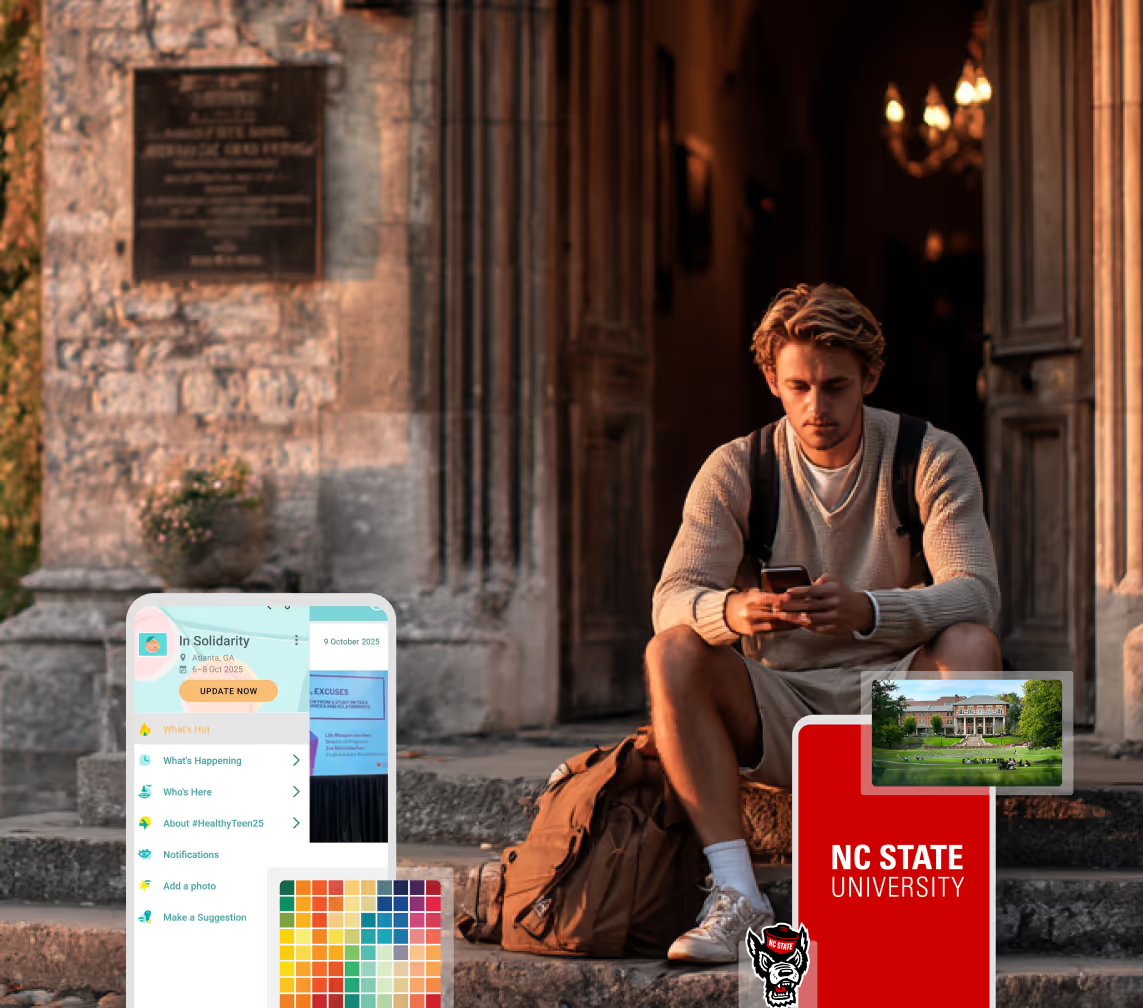
A Smaller School?
Deliver a polished, branded event experience without a large team or a big budget.
Running Family Programs?
Give families everything they need, from schedules and maps to real-time updates, all in one place.
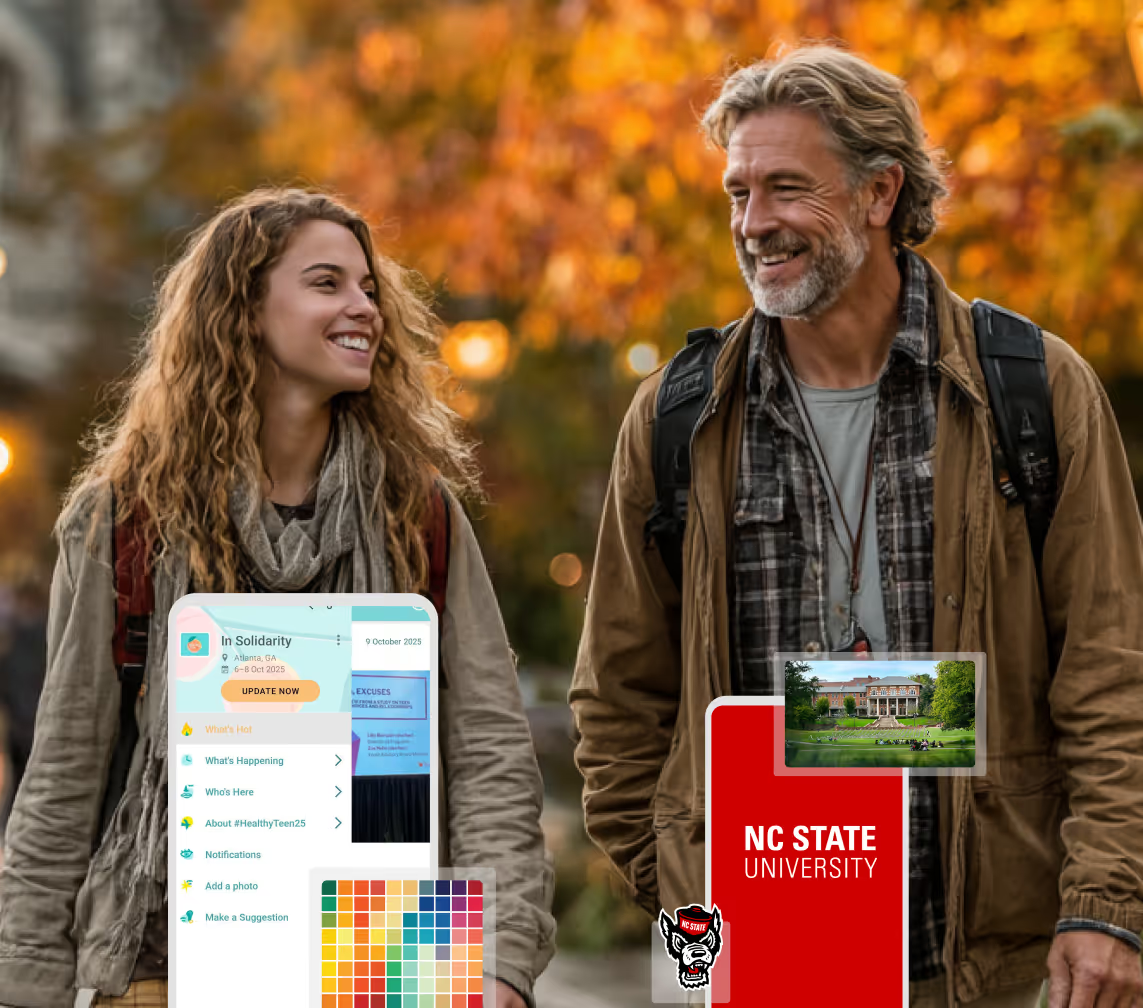
Running Family Programs?
Give families everything they need, from schedules and maps to real-time updates, all in one place.
Coordinating Move-In Day?
Share updates, manage events, and keep students informed from move-in through the academic year.

Coordinating Move-In Day?
Share updates, manage events, and keep students informed from move-in through the academic year.
Offering Campus Tours?
Deliver branded, self-guided tour experiences with interactive maps and rich media, available 24/7.

Offering Campus Tours?
Deliver branded, self-guided tour experiences with interactive maps and rich media, available 24/7.
Organising a Career Fair?
Simplify logistics for students, employers, and Career Services staff with one easy-to-use app.
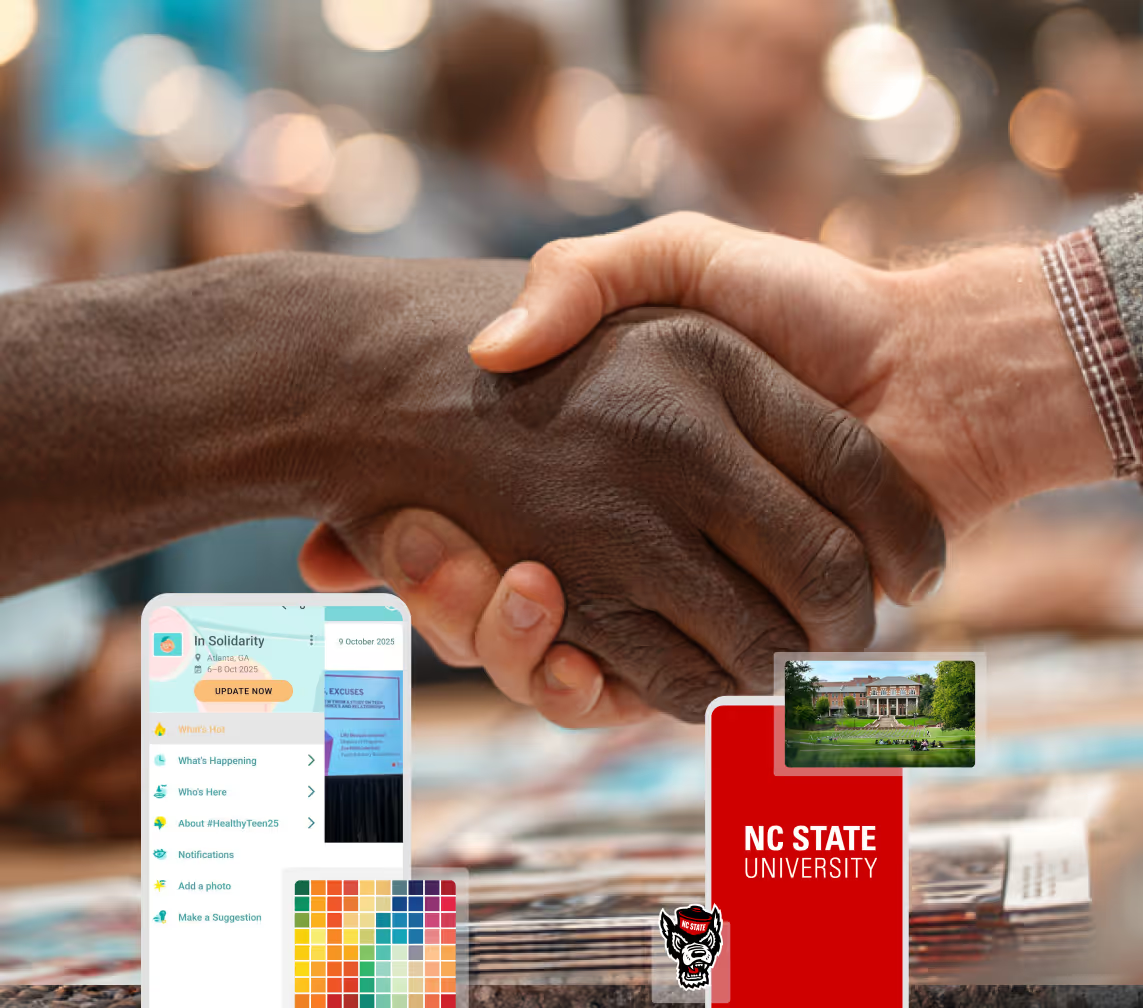
Organising a Career Fair?
Simplify logistics for students, employers, and Career Services staff with one easy-to-use app.
Managing Alumni Events?
Plan reunions, regional events, and fundraising campaigns with an app built for alumni engagement.
Managing Alumni Events?
Plan reunions, regional events, and fundraising campaigns with an app built for alumni engagement.
Boost Student Engagement
One hub for schedules, resources, and events that keeps students connected throughout the academic year.
Boost Student Engagement
One hub for schedules, resources, and events that keeps students connected throughout the academic year.
Planning Orientation?
Help new students feel prepared from day one with schedules, campus resources, and real-time updates in one app.
Planning Orientation?
Help new students feel prepared from day one with schedules, campus resources, and real-time updates in one app.
Running Admissions Events?
Manage open houses, tours, and yield events with a branded app that saves time and engages prospective students.

Running Admissions Events?
Manage open houses, tours, and yield events with a branded app that saves time and engages prospective students.
Get a custom Sponsorship Package Template
Stop starting from scratch. Grab free templates that helWe'll build a tailored sponsorship package with suggested pricing, tiers, and benefits..for your specific event.p you build professional sponsorship packages and close deals faster.
Get a custom Sponsorship Package Template
Stop starting from scratch. Grab free templates that helWe'll build a tailored sponsorship package with suggested pricing, tiers, and benefits..for your specific event.p you build professional sponsorship packages and close deals faster.
Plan Your Next Event Without Missing a Beat.
From venue selection to post-event wrap-up, this free checklist walks you through every step (so nothing falls through the cracks).
.avif)
Plan Your Next Event Without Missing a Beat.
From venue selection to post-event wrap-up, this free checklist walks you through every step (so nothing falls through the cracks).
Real Results From Real Events
100,000+ organizations trust Guidebook. See exactly how universities, associations, enterprises, and more put it to work.

Real Results From Real Events
100,000+ organizations trust Guidebook. See exactly how universities, associations, enterprises, and more put it to work.
Flexible pricing for every event size
Find the perfect plan for your needs, from intimate gatherings to large-scale conferences.

Flexible pricing for every event size
Find the perfect plan for your needs, from intimate gatherings to large-scale conferences.
Join our event experts
Watch on-demand webinars and join live sessions with industry leaders sharing best practices for event success.
.avif)
Join our event experts
Watch on-demand webinars and join live sessions with industry leaders sharing best practices for event success.
Guidebook in Action
Book a personalized walkthrough and discover how we help event teams create better attendee experiences.
Guidebook in Action
Book a personalized walkthrough and discover how we help event teams create better attendee experiences.
Event Venue Checklist: 12 Essentials for a Perfect Event Space
.avif)





Event Venue Checklist: 12 Essentials for a Perfect Event Space
Choosing the right event venue is often a balancing act that requires planners to work within certain constraints - such as budget and time - while also delivering the “wow” factor that attendees long for.
With the right venue, it’s easy to make a lasting impression on attendees, making it more likely that they’ll return for future events (and also tell others about the event).
At Guidebook, we’ve supported thousands of event organizers through the event planning process, and we know it can feel overwhelming. That’s why we created this comprehensive event venue checklist with the 12 most critical venue considerations.
This article will help you:
- ask the right questions.
- spot red flags.
- plan ahead with confidence.
Let’s dive in!
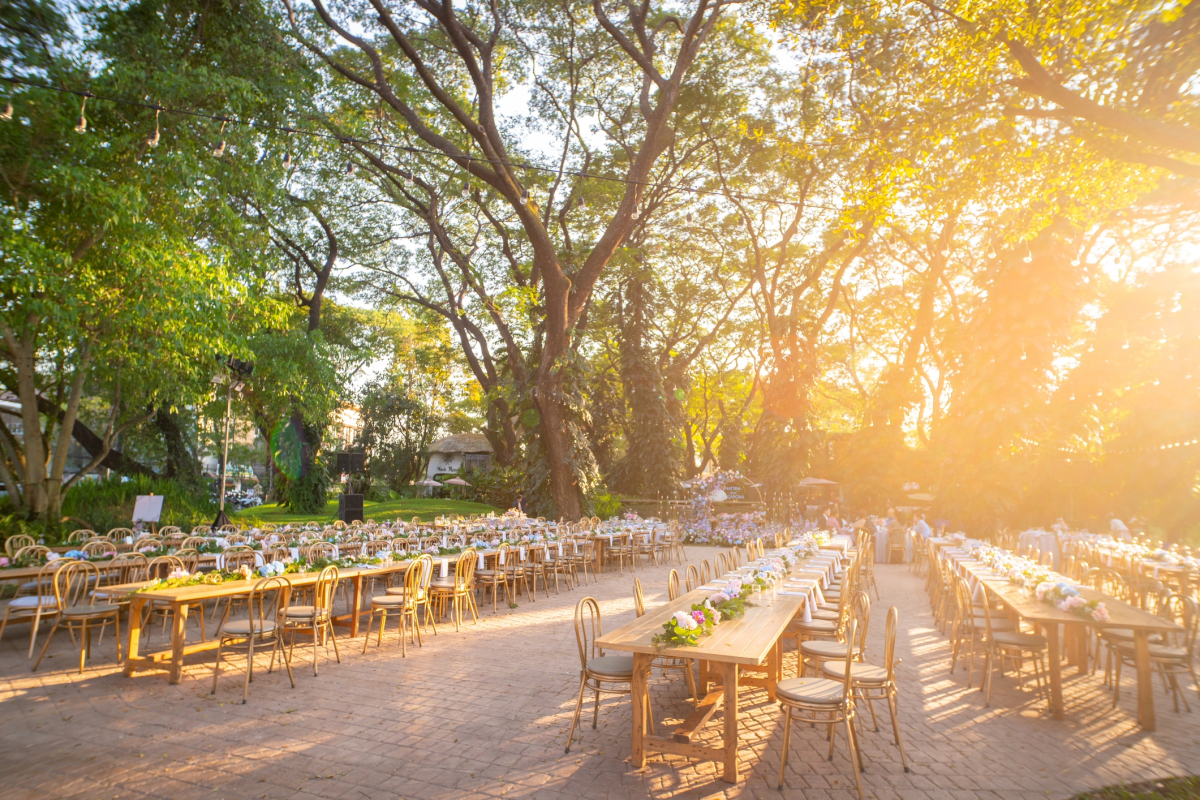
1. Define Your Event Requirements
Before you start hunting for venues, you have to get clear on:
- Your event’s target audience
- Your event goals (both for yourself as the planner and for attendees)
- The event type (conference, gala, trade show, and so on)
- Space requirements for your event
Questions to ask yourself:
- How many attendees will you have?
- What type of event are you hosting (conference, seminar, gala, expo, student event, etc.)
- Do you need dedicated spaces for networking, on-site child care, exhibitors, breakout sessions and more?
- Will your speakers need a stage, podium, or other presentation areas?
Having clear answers to the above questions will help narrow down your options so you avoid visiting venues that don’t meet your basic requirements.
And if you haven’t already, review our event planning checklist and event planner timeline. These resources will help ensure that you’re sourcing venues - and completing other event planning tasks - in the right order and at the time.
2. Venue Layout and Design
The space you choose will strongly influence your event’s vibe. An overcrowded room can create frustration and lead to a negative experience, while an oversized space can feel empty and dampen excitement amongst attendees.
Think about how your event will use the space, from seating arrangements to traffic flow. Ideally, choose a venue that is flexible and accommodates different types of setups or layouts.
Questions to ask yourself:
- How many attendees can the venue comfortably accommodate?
- Can the space be configured in different ways?
- Is there space for networking, breakout sessions or exhibitor booths?
- Is a floor plan or virtual walkthrough available (so that you can do an initial evaluation without going there in-person)?
Pro Tip: Ask for a sample layout of a past event that is most similar to yours so you can visualize the setup and traffic flow.
3. Location and Access
Your venue's location directly impacts attendance and overall event success. For example, if a venue isn’t easy to get to or lacks convenient accommodations nearby, it may discourage people from attending.
In addition, think about where your attendees will be coming from. If your event is mainly for locals, then you want to ensure that there’s sufficient parking (for personal cars) or convenient public. On the other hand, if many attendees will be coming from other regions, then you’ll want to consider ease of access from the airport or national/international train stations
Furthermore, remember that accessibility is also key. Your venue should be welcoming to all guests, including those with mobility challenges.
Questions to ask yourself:
- Is the venue near public transportation and major roads?
- Does it have ample parking for personal vehicles (and is the parking free or paid)?
- Are there hotels nearby for out-of-town attendees?
- Is the venue in a safe neighborhood?
- Are roads to the venue paved or will attendees need to take a dirt road that requires a sturdy vehicle?
4. Style and Ambiance
Presentation matters and when it comes to your venue, the appearance plays a big role in setting the tone for your event.
For example, a modern, high-tech space may work well for a product launch, while a historic venue may be ideal for a formal gala.
Evaluate whether the venue’s existing decor aligns with your event’s theme. If you need to customize the aesthetics, make sure to get specifics about what type of design elements you can change.
Questions to ask yourself:
- Does the venue’s style match the tone of your event?
- Can you decorate or customize the space?
- Are there restrictions on branding, signage, or lighting?
- Is there adequate natural lighting or will you need additional lighting equipment?
5. Load-In, Setup & Logistics
There are a lot of moving parts with event planning. Literally.
Consider how easy - or not-so-easy - it will be to move equipment, decor, and supplies in and out of the venue.
Some venues have strict rules on delivery times and vendor access so you’ll need to plan accordingly.
If your event involves exhibitors or large set pieces, check if the venue has freight elevators or loading docks to simplify the setup process.
Questions to ask yourself:
- What are the load-in and load-out hours?
- Are there freight elevators, loading docks and dollies available?
- Does the venue provide setup assistance or event staff?
- Is there a staging area for vendors and performers?
- How easy is it for exhibitors or sponsors to access their booths?
Pro Tip:Some venues are unionized and this can impact costs, as well as what your team - or vendors - can set up themselves. Be sure to clarify this early in the venue research process.
6. Technical & AV Capabilities
Unless your event is a no-tech, silent meditation retreat, there’s a pretty good chance that attendees will be using their mobile devices during your event. So, you’ll want to make sure that the venue has reliable Wifi (and test it to ensure it is actually reliable).
In addition, ask about built-in AV equipment, on-site tech support, and backup solutions for power or internet failures.
If your event relies on live streaming, ensure the venue’s bandwidth can support this without interruptions.
Questions to ask yourself:
- Are there union labor requirements for AV setup or tech support?
- Does the venue offer high-speed, reliable WiFi?
- Is there built-in AV equipment (microphones, projectors, lighting)?
- Is there onsite tech support staff in case something goes wrong?
- Does the venue have backup power sources in case of an outage?
- Does the venue’s sound system meet your needs?
- Are there enough electrical outlets for exhibitors or production teams?
Pro Tip:Check your venue’s Wifi bandwidth ahead of time and ask about upgraded bandwidth because some venues may charge extra for this.
7. Vendor & Catering Policies
Many venues have strict policies regarding catering and outside vendors. Some require that you use their in-house catering, while others will allow outside vendors. For the latter case, there’s often an additional cost, so be sure to get clarification before securing the venue.
Additionally, most venues will also have food & beverage (F&B) minimums and these can significantly impact your budget. So it’s important to understand what those minimums include and how much flexibility you have to meet them.
Questions to ask yourself:
- Does the venue require in-house catering or can you bring external vendors?
- What is the F&B minimum and what happens if you don’t meet it?
- What’s included in the F&B minimum and is there flexibility in how it’s applied?
- Are there alcohol restrictions or bar service requirements?
- What is the policy on outside vendors, such as AV, florists, furniture rentals?
- Can the venue’s catering service accommodate different dietary restrictions?
- Are there additional fees for kitchen access or using external caterers?
8. Budget & Contracts
Understanding venue pricing is essential for staying within budget. Rental costs often include hidden fees, such as service charges, cleaning fees, or overtime penalties.
Before signing a contract, request a full breakdown of costs and clarify the payment schedule. Also, lookout for cancellation policies and any penalties that may apply if you need to reschedule or adjust your booking.
Questions to ask yourself:
- What is the total venue rental cost, and what’s included?
- Are there hidden fees (cleaning, security, overtime, insurance, internet fees)?
- What’s the deposit amount and payment schedule?
- What is the cancellation policy and refund process?
- Does the venue offer discounts for off-peak days or seasons?
- Are there penalties for exceeding rental hours?
9. Accessibility & Inclusion
Your venue should be accessible to all attendees, so check for ramps, elevators, and wheelchair-friendly facilities.
Ask if the venue offers assistive listening devices, ASL interpreters or quiet rooms for neurodivergent guests.
A truly inclusive venue ensures that every guest has a positive experience, regardless of ability.
Questions to ask yourself:
- Are there ramps, elevators, and wheelchair-accessible restrooms?
- Does the venue have hearing loop systems or ASL interpreters?
- Are there gender-neutral restrooms and nursing rooms?
- Can the venue accommodate different dietary restrictions?
- Are there designated quiet areas for neurodivergent attendees?
10. Safety, Security & Emergency Planning
Event safety should always be a priority. Review the venue’s emergency plans, security measures, and medical support services. There should be clear evacuation routes, fire exits, and first-aid stations.
While some venues provide on-site security, others may require you to hire external personnel. So make sure to enquire about this.
Questions to ask yourself:
- Are there emergency exits and evacuation plans?
- Does the venue have onsite security staff or requirements for hired security?
- Is there an emergency medical plan (AED machines, first-aid stations, paramedics on call)?
- Does the venue provide liability insurance, or do you need additional coverage?
- Are there restrictions on open flames, pyrotechnics, or special effects?
11. Sustainability & Eco-Friendly Features
As sustainability becomes a bigger concern for attendees, planners should start prioritizing venues with eco-friendly practices (such as energy-efficient lighting, recycling programs and sustainable catering).
Ask if the venue participates in green initiatives, reduces single-use plastics or donates excess food to minimize waste. Choosing a sustainable venue helps reduce your event’s environmental impact.
- Does the venue have a green policy (recycling, energy efficiency, water conservation)?
- Does the catering service source food locally and sustainably?
- Does the venue minimize single-use plastics and support waste reduction?
- Are there incentives for using public transit to and from the venue?
- How does the venue handle excess food (donate to a shelter, compost, or something else)?
12. Final Walkthrough & Site Visit Checklist
Before signing the venue contract, conduct a final site visit to verify all details.
Walk through the space with the venue manager to confirm seating layouts, AV equipment, security plans, and accessibility features.
Take note of any potential issues and double check all venue policies. A thorough site visit ensures there are no surprises on event day.
Questions to ask yourself:
- Have you visited the venue in person to test logistics?
- Are all contract details confirmed in writing?
- Have you collected emergency contacts and day-of point persons?
- Have you tested WiFi, sound systems, and lighting?
Pro Tip: Bring a checklist and a camera to document your walkthrough. This will help in making final decisions.
Final Thoughts: Don’t Forget the Digital Experience
Your event venue is just one piece of the attendee experience. The other piece of the experience comes from your event technology. With an event management platform like Guidebook, you can:
- Implement contactless check-in and manage badge printing seamlessly
- Offer real-time updates, maps, multi-track schedules and more in a branded event mobile app
- Manage RSVPs and session signups with Guidebook Registration
Using a fully integrated event platform reduces stress and minimizes errors so that you can focus on creating an unforgettable attendee experience.

Get the Mobile App Playbook
A short guide to running the whole student journey in one app. No fluff, just what works.
for higher ed
Campus
Playbook
A practical guide to building a connected campus experience.
Free playbook
The Mobile App Playbook for Universities
Students decide if they belong long before they set foot on campus. This playbook shows how to win them over from the first visit through graduation.
- Grow enrollment and boost recruitment
- Increase belonging and retention
- Run every event from one branded app
By submitting, you agree to our Privacy Policy.
You're in.
.png)