Campus apps by department
Admissions, orientation, student life, and more — one campus app that works across departments.

Campus apps by department
Admissions, orientation, student life, and more — one campus app that works across departments.
Build unlimited event apps on one license
One partnership for unlimited campus events — orientation, tours, student life, and everything in between.
Build unlimited event apps on one license
One partnership for unlimited campus events — orientation, tours, student life, and everything in between.
Compare event app platforms
See how Guidebook stacks up against other event app and registration platforms.
Compare event app platforms
See how Guidebook stacks up against other event app and registration platforms.
Event apps for nonprofit and community programs
Give members, volunteers, and donors one branded app for conferences, fundraisers, and year-round community.
Event apps for nonprofit and community programs
Give members, volunteers, and donors one branded app for conferences, fundraisers, and year-round community.
Campus integrations and an open API
Connect Guidebook with the campus systems, APIs, and tools your team already uses.
Campus integrations and an open API
Connect Guidebook with the campus systems, APIs, and tools your team already uses.
Event apps for corporate and enterprise teams
Internal meetings, offsites, and large-scale corporate events — with the branding and control enterprise teams need.
Event apps for corporate and enterprise teams
Internal meetings, offsites, and large-scale corporate events — with the branding and control enterprise teams need.
Create a branded event app with no coding
Put schedules, maps, resources, and updates in every attendee's pocket — built for campus events and programs.
Create a branded event app with no coding
Put schedules, maps, resources, and updates in every attendee's pocket — built for campus events and programs.
Launch a branded, white-label event app
A white-label event app with your branding, your content, and your attendee experience — no coding required.
Launch a branded, white-label event app
A white-label event app with your branding, your content, and your attendee experience — no coding required.
Everything in the Guidebook platform
Explore the features event teams use to engage attendees before, during, and after the event.
Everything in the Guidebook platform
Explore the features event teams use to engage attendees before, during, and after the event.
One app for in-person and virtual attendees
The same schedule, networking, and updates whether people are in the room or joining remotely.
One app for in-person and virtual attendees
The same schedule, networking, and updates whether people are in the room or joining remotely.
Event apps built for associations
Annual meetings, chapter events, and member engagement — without rebuilding a new app every year.
Event apps built for associations
Annual meetings, chapter events, and member engagement — without rebuilding a new app every year.
A branded event website that matches the app
Promote the event, collect interest, and keep branding consistent from the first click to check-in.
A branded event website that matches the app
Promote the event, collect interest, and keep branding consistent from the first click to check-in.
Plan, run, and measure events on one platform
App, registration, badges, and websites in one workflow — so planning isn't a pile of disconnected tools.
Plan, run, and measure events on one platform
App, registration, badges, and websites in one workflow — so planning isn't a pile of disconnected tools.
Keep members engaged between events
One branded app for the conference and everything that happens the other 51 weeks of the year.
Keep members engaged between events
One branded app for the conference and everything that happens the other 51 weeks of the year.
The conference app attendees actually use
Schedules, maps, networking, and live updates for annual meetings, summits, and multi-day conferences.
The conference app attendees actually use
Schedules, maps, networking, and live updates for annual meetings, summits, and multi-day conferences.
Registration that feeds your app and badges
Collect registrations, payments, and attendee data in the same platform as your event app.
Registration that feeds your app and badges
Collect registrations, payments, and attendee data in the same platform as your event app.
Design and print event badges in one place
Custom badges, QR check-in, and on-site printing — without a separate badge vendor.
Design and print event badges in one place
Custom badges, QR check-in, and on-site printing — without a separate badge vendor.
A Smaller School?
Deliver a polished, branded event experience without a large team or a big budget.
A Smaller School?
Deliver a polished, branded event experience without a large team or a big budget.
Running Family Programs?
Give families everything they need, from schedules and maps to real-time updates, all in one place.

Running Family Programs?
Give families everything they need, from schedules and maps to real-time updates, all in one place.
Coordinating Move-In Day?
Share updates, manage events, and keep students informed from move-in through the academic year.

Coordinating Move-In Day?
Share updates, manage events, and keep students informed from move-in through the academic year.
Offering Campus Tours?
Deliver branded, self-guided tour experiences with interactive maps and rich media, available 24/7.

Offering Campus Tours?
Deliver branded, self-guided tour experiences with interactive maps and rich media, available 24/7.
Organising a Career Fair?
Simplify logistics for students, employers, and Career Services staff with one easy-to-use app.
Organising a Career Fair?
Simplify logistics for students, employers, and Career Services staff with one easy-to-use app.
Managing Alumni Events?
Plan reunions, regional events, and fundraising campaigns with an app built for alumni engagement.

Managing Alumni Events?
Plan reunions, regional events, and fundraising campaigns with an app built for alumni engagement.
Boost Student Engagement
One hub for schedules, resources, and events that keeps students connected throughout the academic year.

Boost Student Engagement
One hub for schedules, resources, and events that keeps students connected throughout the academic year.
Planning Orientation?
Help new students feel prepared from day one with schedules, campus resources, and real-time updates in one app.
Planning Orientation?
Help new students feel prepared from day one with schedules, campus resources, and real-time updates in one app.
Running Admissions Events?
Manage open houses, tours, and yield events with a branded app that saves time and engages prospective students.

Running Admissions Events?
Manage open houses, tours, and yield events with a branded app that saves time and engages prospective students.
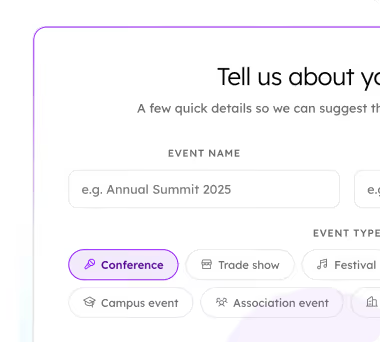
Get a custom Sponsorship Package Template
Stop starting from scratch. Grab free templates that helWe'll build a tailored sponsorship package with suggested pricing, tiers, and benefits..for your specific event.p you build professional sponsorship packages and close deals faster.
Get a custom Sponsorship Package Template
Stop starting from scratch. Grab free templates that helWe'll build a tailored sponsorship package with suggested pricing, tiers, and benefits..for your specific event.p you build professional sponsorship packages and close deals faster.
Plan Your Next Event Without Missing a Beat.
From venue selection to post-event wrap-up, this free checklist walks you through every step (so nothing falls through the cracks).
.avif)
Plan Your Next Event Without Missing a Beat.
From venue selection to post-event wrap-up, this free checklist walks you through every step (so nothing falls through the cracks).
Real Results From Real Events
100,000+ organizations trust Guidebook. See exactly how universities, associations, enterprises, and more put it to work.

Real Results From Real Events
100,000+ organizations trust Guidebook. See exactly how universities, associations, enterprises, and more put it to work.
Flexible pricing for every event size
Find the perfect plan for your needs, from intimate gatherings to large-scale conferences.

Flexible pricing for every event size
Find the perfect plan for your needs, from intimate gatherings to large-scale conferences.
Join our event experts
Watch on-demand webinars and join live sessions with industry leaders sharing best practices for event success.
.avif)
Join our event experts
Watch on-demand webinars and join live sessions with industry leaders sharing best practices for event success.
Guidebook in Action
Book a personalized walkthrough and discover how we help event teams create better attendee experiences.
Guidebook in Action
Book a personalized walkthrough and discover how we help event teams create better attendee experiences.
How Much Do Event Apps Cost? Full Pricing Breakdown
.avif)





How Much Do Event Apps Cost? Full Pricing Breakdown
Planning an event means making dozens of decisions, and one of the most common questions planners ask early is: How much does an event app cost?
The answer, unfortunately, isn’t always straightforward because pricing can vary widely depending on the event size, required features, level of customization, and the type of support included. As a result, planners often spend time researching different platforms just to understand what a realistic budget looks like.
In this guide, we’re going to de-mystify and breakdown event app pricing, by covering
- Typical costs based on whether you go with an event tech platform or a development agency
- How event app pricing models work
- Differences between free and paid event apps
- Tips for keeping your event app costs low
- How to choose the right pricing model for your event
Let’s dive in!
How Much Do Event Apps Typically Cost
Event apps typically cost between $1,000 and $20,000 when built using an event app platform, though enterprise solutions can exceed $50,000 annually. Fully custom event apps developed by agencies may cost $10,000 to $100,000 or more depending on complexity, integrations, and development time.
Most event organizers create their event app in one of two ways:
- Event tech platforms that provide ready-made event app technology.
- Custom-built event apps developed by a software agency.
Because these options involve very different development processes, they also come with very different price ranges.
Here’s a quick overview:
Now, let’s take a closer look at the two main approaches.
Event Tech or Event App Platforms
Most modern event apps are created using event technology platforms rather than being built from scratch.
Platforms provide pre-built infrastructure and event-specific tools such as:
- Event schedules and session management
- Speaker and sponsor profiles
- Push notifications
- Attendee networking features
- Live polling and Q&A
- Analytics and engagement reporting
Because the technology already exists, event organizers can create an app without hiring developers or building custom infrastructure.
Pricing for these platforms varies depending on features, attendee count, and support levels, but typical ranges include:
- Small events: $1,000 – $5,000
- Mid-size conferences: $5,000 – $20,000
- Enterprise platforms: $20,000+ annually
Some vendors offer per-event pricing, while others provide annual subscriptions or unlimited event plans.
For organizations running multiple events each year, event tech platforms are the best value because they provide a good balance between cost, speed, and flexibility.
Custom Event App From An Agency or Dev Team
Another option for building an event app is to work with a development agency or internal engineering team.
While this approach offers maximum flexibility, it is typically far more expensive and time-consuming than using an event platform.
Custom mobile apps require a full development process, including:
- Product planning and technical architecture
- UX and interface design
- iOS and Android development
- Backend infrastructure
- Quality assurance and testing
- Ongoing updates and maintenance
Because of the complexity involved, development agencies typically charge hourly rates for mobile app projects.
According to pricing data from Clutch, mobile app development companies commonly charge between $25 and $49 per hour globally, with higher rates in regions such as the United States.
Project costs vary widely depending on complexity, but many mobile app development projects fall between $10,000 and $49,999 based on data from Clutch’s marketplace of development projects.
However, more complex applications with advanced features, integrations, and multi-platform support can cost significantly more.
Several factors can increase the cost of a custom event app, including:
- Developing separate apps for iOS and Android
- Building custom backend systems
- Creating features like networking, messaging, or real-time updates
- Integrating with registration platforms, CRMs, or marketing tools
Organizations must also budget for ongoing maintenance, infrastructure, and updates, which continue long after the initial launch.
For many event planners, these costs and timelines make custom development impractical (especially when event app platforms can deliver similar attendee experiences much faster, at a fraction of the cost).
Typical Event App Pricing Tiers
Regardless of whether you're using a platform or custom solution, event apps usually fall into three general pricing tiers.
Disclaimer: The price ranges and associated features listed below will vary significantly from one vendor to another. In addition, it's possible to have all the features listed in all three categories without sticker shock, especially when you partner with a vendor that offers all-inclusive pricing.
Entry-Level Event Apps ($0 – $5,000)
Entry-level event apps usually include:
- Basic event schedule
- Speaker profiles
- Push notifications
- Limited branding
These apps work well for:
- Small conferences
- Internal meetings
- Community events
- First-time event planners
Some event tools even offer freemium plans or low-cost subscriptions under $500, though they often limit branding or advanced engagement features.
Mid-Range Event Apps ($5,000 – $50,000)
Mid-range event apps introduce the engagement features most professional events need, such as:
- Custom branding
- Interactive maps
- Attendee networking
- Live polling and Q&A
- Session feedback
- Sponsor and exhibitor listings
This tier is common for:
- Professional conferences
- Association events
- Trade shows
- Multi-day events
Many mid-size organizations choose this range because it balances professional attendee experiences with manageable costs.
Enterprise Event Apps ($50,000+)
Enterprise event apps are designed for large organizations running multiple large-scale events annually.
They typically include:
- White-label apps with full branding
- Deep integrations with CRM and marketing platforms
- Advanced analytics and reporting
- Dedicated support and onboarding
- Multi-event management capabilities
At this level, the event app becomes part of a broader event technology ecosystem, often connected to registration systems, marketing automation tools, and data platforms.
A Quick Rule of Thumb
For most events today:
- Small events: Free – $5,000
- Professional conferences: $5,000 – $20,000
- Enterprise programs: $20,000+
Compared to other event expenses — like venue, catering, and travel — the event app typically represents only a small portion of the overall event budget.
Event App Pricing Models Explained
Understanding how you're charged matters as much as understanding how much you'll pay. Different pricing models suit different event strategies, and choosing the wrong one can leave you overpaying (or facing unexpected costs at the worst possible time).
A pricing model is simply the structure a vendor uses to calculate your cost. Some charge per event, others per attendee, and some offer unlimited access for a flat annual fee. Here's what each approach means for your budget.
Subscription-Based Pricing
Subscription pricing means you pay a recurring monthly or annual fee for access to the platform. This model offers predictable budgeting and typically includes ongoing access to features, updates, and support.
The main advantage here is simplicity. You know exactly what you'll spend, and you can use the platform whenever you need it without calculating per-event costs.
The downside? If you only run one event annually, you may be paying for access you don't use.
Pay-Per-Event Pricing
Pay-per-event pricing charges you each time you create and launch an event app. It provides the most flexible pricing for organizations hosting a single conference with limited requirements. Costs scale based on attendee count, selected products, and add-ons including registration, badge printing, check-in, event app, lead capture, and virtual event capabilities.
This model suits organizations with occasional or annual events who don't want ongoing commitments. You pay when you use the platform and nothing when you don't.
However, the per-event approach can become expensive if your event calendar grows. What seemed economical for one annual conference may not make sense when you're running quarterly meetings or regional events. Always calculate your total annual cost before committing.
Per-Attendee Pricing
Per-attendee pricing scales your cost based on how many people use the app. This model seems logical on the surface: larger events pay more, smaller events pay less.
The challenge comes with unpredictability. If registration exceeds your projections, you could face unexpected bills. And for large events, per-attendee fees add up quickly.
Consider a conference expecting 2,000 attendees. Even a modest per-attendee fee of $5 translates to $10,000. And that's before you've added any premium features.
If walk-ins push attendance to 2,500, you're looking at an additional $2,500 you didn't budget for.
Per-attendee pricing works best when you have highly predictable attendance and relatively small events. For anything else, the uncertainty can create budget headaches.
Flat-Rate Unlimited Pricing
Flat-rate unlimited pricing charges a fixed annual fee regardless of how many events you run or attendees you serve. This model eliminates surprise costs and gives you freedom to scale.
The budgeting advantages are significant because you:
- Add events to your calendar without recalculating costs.
- Promote your app aggressively without worrying about per-download fees.
- Plan your annual technology budget with confidence.
Flat-rate pricing tends to deliver the best value for organizations running multiple events or those with large, unpredictable attendance.
It removes the mental math from every planning decision and lets you focus on creating great experiences.
Factors That Affect Event App Pricing
Beyond the pricing model, several variables influence your total cost. Understanding these factors helps you anticipate quotes and negotiate effectively.
Here's what moves the needle on event app pricing:
- Number of attendees
- Features and customization level
- White-label branding requirements
- Support and onboarding needs
- Integrations with other systems
Number of Attendees
Many vendors charge based on attendee count. Larger events may trigger higher pricing tiers or overage fees, especially with per-attendee models.
Even vendors who don't explicitly charge per attendee often structure their tiers around expected attendance. An app designed for 500 attendees may cost significantly less than one built for 5,000.
When evaluating quotes, always clarify what happens if attendance exceeds projections. Some vendors charge overages; others cap access at your paid limit. Neither surprise is pleasant to discover during your event.
Features and Customization
The features you need directly impact your cost. Basic scheduling and maps come standard, but advanced capabilities often carry premium pricing.
Features that may increase costs include:
- Interactive venue maps with wayfinding
- Live polling and Q&A
- Gamification and leaderboards
- AI-powered networking and matchmaking
- Session check-in and attendance tracking
- Lead retrieval for sponsors and exhibitors
- Advanced analytics and reporting
Before requesting quotes, identify which features are essential versus nice-to-have for your event. This clarity helps you compare vendors accurately and avoid overpaying.
White-Label Branding
White-labeling means your event app carries your organization's branding rather than the vendor's logo and design. Attendees see your brand throughout the experience.
This customization often comes as a premium add-on or is included only in higher pricing tiers. For client-facing events or branded conferences, white-labeling may be non-negotiable. For internal meetings, you may not need it.
When evaluating white-label options, consider both the app itself and any associated web presence. Consistent branding across mobile, event website, and registration creates a more professional impression.
Support and Onboarding
Some vendors charge extra for dedicated account managers, training sessions, or live event-day support. Others include support in all plans.
Consider your team's technical comfort level and available time. If you're new to event apps or running a high-stakes event, dedicated support can be worth the investment. If you have experienced staff and straightforward needs, self-service support may be enough.
Integrations and Add-Ons
Connecting your event app to registration systems, CRMs, badge printing, and marketing tools creates a seamless experience. But integrations may also carry additional fees.
Standard integrations with popular platforms like Eventbrite, MailChimp, or HubSpot are often included or available at modest cost. As for custom integrations, they require development work and can add significantly to your budget.
Before signing, clarify which integrations you need and whether they're included in your quoted price.
Free vs Paid Event Apps
Free event apps exist, and for certain situations, they can work. But understanding the tradeoffs helps you make an informed decision rather than a regrettable one.
Free apps typically lack branding control, advanced engagement features, and dedicated support. They may display the vendor's branding prominently, limit your attendee count, or offer only basic functionality.
When free makes sense:
- Very small events (under 50 attendees)
- Internal meetings with low visibility
- Testing event app technology before investing
- Extremely tight budgets with no alternatives
When paid apps deliver better value:
- Professional conferences and client-facing events
- Recurring programs where consistency matters
- Events where attendee engagement is a priority
- Situations requiring reliable performance and support
Event App Pricing Comparison
Comparing vendors can feel overwhelming when each structures pricing differently. Some charge per event, others per attendee, and many require custom quotes.
Here's an overview of how leading event app vendors approach pricing:
Hidden Costs to Watch Out For
The sticker price isn't always the full cost. Budget surprises often come from fees not clearly advertised upfront.
Knowing what to ask about before you sign, protects your budget and your sanity.
Feature Upgrade Fees
Some vendors lock essential features behind higher tiers. Push notifications, custom branding, or advanced analytics may require upgrades that weren't in your original quote.
If you're looking for certain trendy features such as gamification or want a stand-alone white label event app, then expect pricing to creep up (potentially to tens of thousands of dollars for some vendors).
Ask vendors to confirm which features are included at your price point and what triggers an upgrade. The feature you assume is standard may cost extra.
Overage Charges for Extra Attendees
Per-attendee models can result in unexpected bills if registration exceeds projections. Even vendors with tiered pricing may charge overages when you cross into the next bracket.
Before signing, understand exactly what happens if attendance grows beyond your estimate. Some vendors are flexible; others enforce strict limits.
Support and Training Fees
Onboarding, training sessions, and access to dedicated account managers may cost extra with some vendors. Others include comprehensive support in all plans.
Clarify what support is included and what costs extra. If you're new to event apps, factor training time and assistance into your evaluation.
Per-Event Publishing Fees
Some platforms charge each time you publish a new event app to app stores. For organizations running multiple events, these fees add up.
If you're planning several events annually, ask about publishing fees and how they're calculated. A platform with unlimited publishing may cost more upfront but save money over time.
Event App vs. Printed Programs: What Does It Actually Cost?
For many event planners, printing programs can feel like the safer choice. You know what you're getting, you've budgeted for it before, and it's familiar.
But when you actually run the numbers, the gap between printing and a digital event app is often much smaller than you'd expect (and at larger event sizes, the app wins decisively).
Here's how the two options compare at the event sizes we see most often.
Print Costs vs. App Costs By Event Size
Note: The print estimates below assume a 20-page color program. Actual costs vary by vendor, page count, finish, and shipping.
Notice what happens here: printing costs scale linearly with your headcount, while app costs don't. The bigger your event, the stronger the case for going digital.
And that's before you factor in the hidden costs of print, such as:
- Rush fees when a speaker cancels the week before.
- The staff hours spent boxing and distributing programs on-site.
- The awkward moment when an attendee points out a session time that's already changed.
What Guidebook Customers Have Saved
The estimates presented above aren’t just theoretical; here's what two organizations experienced when they made the switch to an event app with Guidebook:
A Full Side-by-Side Comparison
For most professional events, planners aren't choosing between an expensive app and affordable printing.
They're choosing between two options that cost roughly the same: one is a pile of paper that's out of date before the opening keynote, and one is a living, interactive experience that works before, during, and after the event.
Want to see what Guidebook would cost for your specific event? See our pricing or book a demo to get a custom quote.
How to Choose the Right Pricing Model for Your Events
The right pricing model depends on your specific situation. Ask yourself these questions:
How many events do you run per year? If you run one major annual conference, per-event pricing may work. If you run multiple events throughout the year, subscription or unlimited pricing typically offers better value.
How predictable is your attendance? If you know exactly how many people will attend, per-attendee pricing poses less risk. If attendance varies or you're working to grow registration, flat-rate pricing removes uncertainty.
Do you need a dedicated support partner? If your team is small or new to event technology, look for plans with dedicated account managers included. If you have experienced staff, self-service support may be sufficient.
Here's a quick framework:
- One-off or annual events: Pay-per-event may suit your needs
- Multiple events per year: Subscription or unlimited pricing offers better value
- Large or unpredictable attendance: Avoid per-attendee pricing
- Need hands-on support: Look for plans with dedicated account managers included
Tips to Reduce Your Event App Costs
Budget constraints are real. Here's how to get maximum value without sacrificing quality.
1. Choose Annual Billing Over Monthly Plans
Annual commitments typically come with discounts compared to month-to-month billing. If you're confident you'll use the platform for a full year, annual billing can save 10-20% or more.
The tradeoff is commitment. Make sure you've thoroughly evaluated the platform before locking in an annual contract.
2. Bundle Your Event Tools Together
Build your event app, registration, website, and badges in one place (and remember what it feels like to enjoy the process). Event app, registration, badges, and websites in one platform - so nothing falls through the cracks.
Choosing an event management solution that includes registration, event websites, and badge printing means you avoid paying for multiple standalone tools. Integration headaches disappear when everything lives in one system.
Bundled platforms also reduce the risk of data sync issues and create a more consistent attendee experience from registration through event day.
3. Match Your Plan to Your Event Frequency
Don't overpay for unlimited plans if you only run one event. And don't underpay for per-event pricing if you run many.
Calculate your total annual cost under different models. Sometimes a higher-priced unlimited plan costs less than multiple per-event charges.
4. Avoid Per-Attendee Fees for Large Events
While per‑attendee pricing can work for smaller events, costs add up quickly as the event size grows, often becoming one of the largest line items in your event budget.
For large conferences or trade shows, flat‑rate or unlimited pricing models offer more predictability for your budget and better value overall. With these plans, you pay a fixed amount no matter how many people use the app, which eliminates the risk of surprise charges as your event scales.
Why Transparent Pricing Makes Event Budgeting Easier
Event planning involves enough uncertainty without adding unpredictable technology costs to the mix. All-inclusive pricing removes the guesswork and lets you focus on the event experience rather than tracking fees.
When you know exactly what you'll spend, you can allocate budget confidently, plan your calendar without recalculating costs, and avoid the frustrating conversations that happen when unexpected charges appear.
Ready to see what transparent event app pricing looks like? Request a demo and learn more about Guidebook's all-inclusive event tech pricing.
FAQs About Event App Pricing
[faq]
Q: How much does it cost to build a custom event app from scratch?
A: Building a fully custom event app through a development agency can cost significantly more than using a SaaS event app platform. The cost to develop an event app varies depending on the size and needs of the organization. For startups and SMEs, a basic app with essential features might be sufficient, while enterprises might require more complex solutions. Most organizations find that no-code event app builders deliver the customization they need at a fraction of the cost (often under $10,000) compared to six figures for custom development.
Q: Are free event apps reliable enough for professional events?
A: Free event apps often lack the reliability, branding options, and support needed for professional conferences or large gatherings. Paid platforms are built to perform under live event conditions where connectivity and timing are critical. For professional events, the investment in a paid solution typically pays for itself through better attendee experiences and reduced printing costs.
Q: Can event planners generate revenue through their event app?
A: Yes, many event apps allow you to sell sponsorship opportunities like banner ads, sponsored posts, and premium placements within the app. This can help offset your event app costs or even create a new revenue stream. Lead retrieval features for exhibitors and sponsors also add value that can be monetized.
Q: What is the difference between a native event app and a web-based event app?
A: A native app is built specifically for iOS and Android devices and downloaded from app stores, offering better performance and offline access. Web-based apps run in a browser and don't require downloads but may lack speed and reliability during live events. For events where connectivity is uncertain or offline access matters, native apps provide a more reliable experience.
Q: Do event app vendors charge extra for customer support?
A: Some vendors include support in all plans while others charge extra for dedicated account managers or priority assistance. Look for vendors that offer transparent, all-inclusive pricing with support built in. The level of support you need depends on your team's experience and the complexity of your events, but knowing the cost upfront helps you budget accurately.
Q: How do I know which pricing model is right for my organization?
A: Start by calculating your total annual cost under different models. If you run multiple events per year, subscription or unlimited pricing usually delivers better value than per-event charges. If attendance is unpredictable or large, avoid per-attendee pricing. And if you need dedicated support, look for plans that include account management rather than charging it as an add-on. The best pricing model aligns with how you actually use the platform, not just your next single event.
Q: What should I ask vendors before signing a contract?
A: Before committing, clarify these key points: What features are included at your quoted price? What happens if attendance exceeds your estimate? Are integrations with your existing systems included? What support is available, and does it cost extra? Are there per-event publishing fees? How do prices change at renewal? Getting clear answers upfront prevents budget surprises later.
Q: Can I switch pricing models if my needs change?
A: Most vendors allow you to change plans, though timing and terms vary. Some require you to wait until your current contract ends; others allow mid-term upgrades (and occasionally downgrades). If you anticipate your needs changing, ask about flexibility before signing. A vendor willing to grow with you is more valuable than one that locks you into rigid terms.
[/faq]

Get the Mobile App Playbook
A short guide to running the whole student journey in one app. No fluff, just what works.
for higher ed
Campus
Playbook
A practical guide to building a connected campus experience.
Free playbook
The Mobile App Playbook for Universities
Students decide if they belong long before they set foot on campus. This playbook shows how to win them over from the first visit through graduation.
- Grow enrollment and boost recruitment
- Increase belonging and retention
- Run every event from one branded app
By submitting, you agree to our Privacy Policy.
You're in.
.png)