Campus apps by department
Admissions, orientation, student life, and more — one campus app that works across departments.

Campus apps by department
Admissions, orientation, student life, and more — one campus app that works across departments.
Build unlimited event apps on one license
One partnership for unlimited campus events — orientation, tours, student life, and everything in between.
Build unlimited event apps on one license
One partnership for unlimited campus events — orientation, tours, student life, and everything in between.
Compare event app platforms
See how Guidebook stacks up against other event app and registration platforms.
Compare event app platforms
See how Guidebook stacks up against other event app and registration platforms.
Event apps for nonprofit and community programs
Give members, volunteers, and donors one branded app for conferences, fundraisers, and year-round community.
Event apps for nonprofit and community programs
Give members, volunteers, and donors one branded app for conferences, fundraisers, and year-round community.
Campus integrations and an open API
Connect Guidebook with the campus systems, APIs, and tools your team already uses.
Campus integrations and an open API
Connect Guidebook with the campus systems, APIs, and tools your team already uses.
Event apps for corporate and enterprise teams
Internal meetings, offsites, and large-scale corporate events — with the branding and control enterprise teams need.
Event apps for corporate and enterprise teams
Internal meetings, offsites, and large-scale corporate events — with the branding and control enterprise teams need.
Create a branded event app with no coding
Put schedules, maps, resources, and updates in every attendee's pocket — built for campus events and programs.
Create a branded event app with no coding
Put schedules, maps, resources, and updates in every attendee's pocket — built for campus events and programs.
Launch a branded, white-label event app
A white-label event app with your branding, your content, and your attendee experience — no coding required.
Launch a branded, white-label event app
A white-label event app with your branding, your content, and your attendee experience — no coding required.
Everything in the Guidebook platform
Explore the features event teams use to engage attendees before, during, and after the event.
Everything in the Guidebook platform
Explore the features event teams use to engage attendees before, during, and after the event.
One app for in-person and virtual attendees
The same schedule, networking, and updates whether people are in the room or joining remotely.
One app for in-person and virtual attendees
The same schedule, networking, and updates whether people are in the room or joining remotely.
Event apps built for associations
Annual meetings, chapter events, and member engagement — without rebuilding a new app every year.
Event apps built for associations
Annual meetings, chapter events, and member engagement — without rebuilding a new app every year.
A branded event website that matches the app
Promote the event, collect interest, and keep branding consistent from the first click to check-in.
A branded event website that matches the app
Promote the event, collect interest, and keep branding consistent from the first click to check-in.
Plan, run, and measure events on one platform
App, registration, badges, and websites in one workflow — so planning isn't a pile of disconnected tools.
Plan, run, and measure events on one platform
App, registration, badges, and websites in one workflow — so planning isn't a pile of disconnected tools.
Keep members engaged between events
One branded app for the conference and everything that happens the other 51 weeks of the year.
Keep members engaged between events
One branded app for the conference and everything that happens the other 51 weeks of the year.
The conference app attendees actually use
Schedules, maps, networking, and live updates for annual meetings, summits, and multi-day conferences.
The conference app attendees actually use
Schedules, maps, networking, and live updates for annual meetings, summits, and multi-day conferences.
Registration that feeds your app and badges
Collect registrations, payments, and attendee data in the same platform as your event app.
Registration that feeds your app and badges
Collect registrations, payments, and attendee data in the same platform as your event app.
Design and print event badges in one place
Custom badges, QR check-in, and on-site printing — without a separate badge vendor.
Design and print event badges in one place
Custom badges, QR check-in, and on-site printing — without a separate badge vendor.
A Smaller School?
Deliver a polished, branded event experience without a large team or a big budget.

A Smaller School?
Deliver a polished, branded event experience without a large team or a big budget.
Running Family Programs?
Give families everything they need, from schedules and maps to real-time updates, all in one place.

Running Family Programs?
Give families everything they need, from schedules and maps to real-time updates, all in one place.
Coordinating Move-In Day?
Share updates, manage events, and keep students informed from move-in through the academic year.

Coordinating Move-In Day?
Share updates, manage events, and keep students informed from move-in through the academic year.
Offering Campus Tours?
Deliver branded, self-guided tour experiences with interactive maps and rich media, available 24/7.

Offering Campus Tours?
Deliver branded, self-guided tour experiences with interactive maps and rich media, available 24/7.
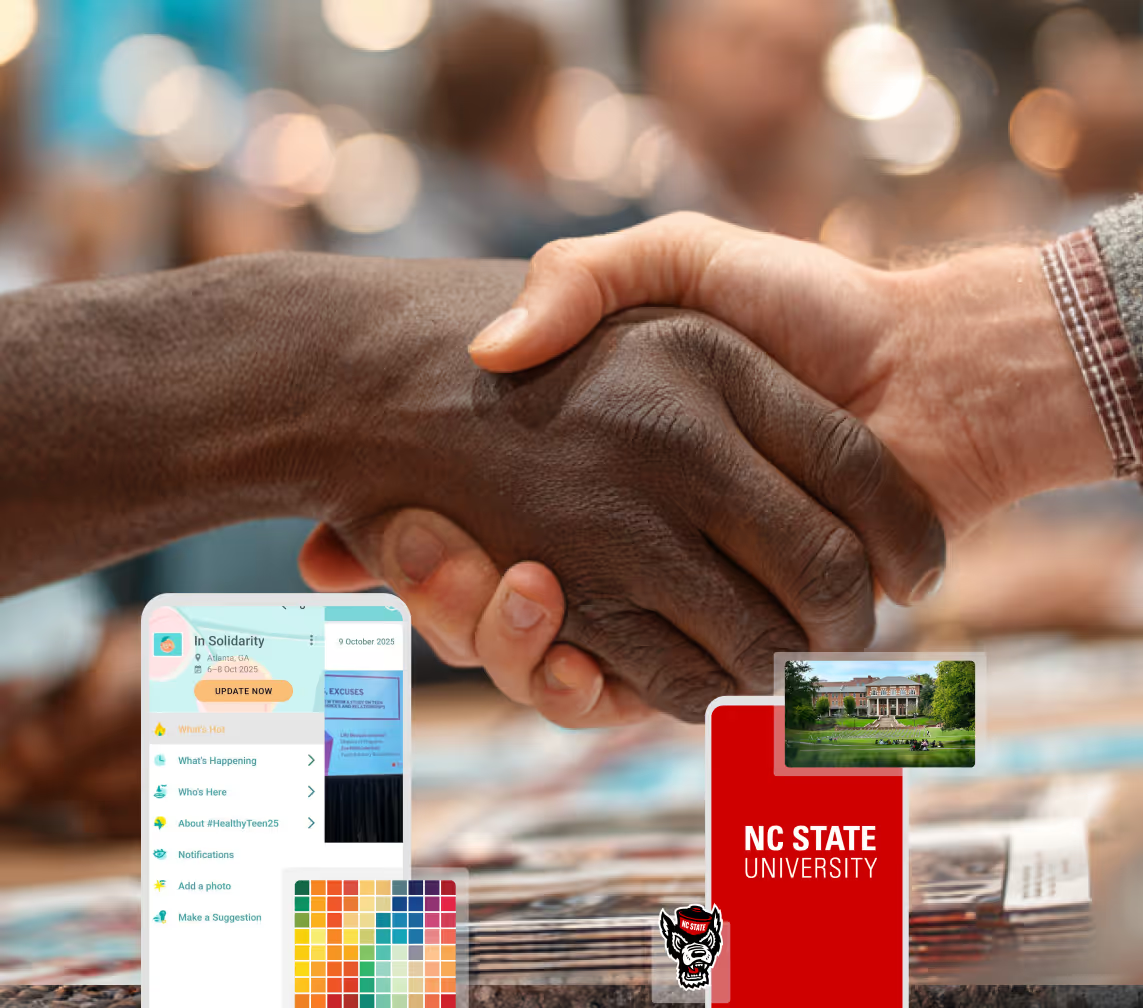
Organising a Career Fair?
Simplify logistics for students, employers, and Career Services staff with one easy-to-use app.
Organising a Career Fair?
Simplify logistics for students, employers, and Career Services staff with one easy-to-use app.
Managing Alumni Events?
Plan reunions, regional events, and fundraising campaigns with an app built for alumni engagement.

Managing Alumni Events?
Plan reunions, regional events, and fundraising campaigns with an app built for alumni engagement.
Boost Student Engagement
One hub for schedules, resources, and events that keeps students connected throughout the academic year.

Boost Student Engagement
One hub for schedules, resources, and events that keeps students connected throughout the academic year.
Planning Orientation?
Help new students feel prepared from day one with schedules, campus resources, and real-time updates in one app.

Planning Orientation?
Help new students feel prepared from day one with schedules, campus resources, and real-time updates in one app.
Running Admissions Events?
Manage open houses, tours, and yield events with a branded app that saves time and engages prospective students.

Running Admissions Events?
Manage open houses, tours, and yield events with a branded app that saves time and engages prospective students.
Get a custom Sponsorship Package Template
Stop starting from scratch. Grab free templates that helWe'll build a tailored sponsorship package with suggested pricing, tiers, and benefits..for your specific event.p you build professional sponsorship packages and close deals faster.
Get a custom Sponsorship Package Template
Stop starting from scratch. Grab free templates that helWe'll build a tailored sponsorship package with suggested pricing, tiers, and benefits..for your specific event.p you build professional sponsorship packages and close deals faster.
Plan Your Next Event Without Missing a Beat.
From venue selection to post-event wrap-up, this free checklist walks you through every step (so nothing falls through the cracks).
.avif)
Plan Your Next Event Without Missing a Beat.
From venue selection to post-event wrap-up, this free checklist walks you through every step (so nothing falls through the cracks).
Real Results From Real Events
100,000+ organizations trust Guidebook. See exactly how universities, associations, enterprises, and more put it to work.

Real Results From Real Events
100,000+ organizations trust Guidebook. See exactly how universities, associations, enterprises, and more put it to work.
Flexible pricing for every event size
Find the perfect plan for your needs, from intimate gatherings to large-scale conferences.

Flexible pricing for every event size
Find the perfect plan for your needs, from intimate gatherings to large-scale conferences.
Join our event experts
Watch on-demand webinars and join live sessions with industry leaders sharing best practices for event success.
.avif)
Join our event experts
Watch on-demand webinars and join live sessions with industry leaders sharing best practices for event success.
Guidebook in Action
Book a personalized walkthrough and discover how we help event teams create better attendee experiences.
Guidebook in Action
Book a personalized walkthrough and discover how we help event teams create better attendee experiences.
Event Registration Technology: The Modern Planner’s Guide
.avif)





Event Registration Technology: The Modern Planner’s Guide
You know the drill: the event is shaping up, the venue is locked, speakers are lined up, and now it’s time to open registration.
Time for attendees to raise their hand and say “I’m in!”
But here’s the thing: registration isn’t just about forms.
And it’s not just tickets.
It’s the first real experience your attendees have with your event, making it one of the most important tools in your toolkit.
In 2026, event registration technology has become smarter, more flexible, and deeply integrated with the rest of the event tech stack. And for planners juggling a million things, that shift is a game changer.
This guide is here to show you what that evolution looks like. Whether you’re planning a campus-wide orientation, a city festival, or a three-day industry summit, you’ll find strategies, best practices, and tool recommendations that match the way modern planners work. We’ll also link out to real examples and expert blog content along the way — because registration shouldn’t be stressful.
Let’s start with the foundational elements.
What Is Event Registration Technology?
Event registration technology is the software that helps you build and manage the full attendee sign-up experience, from branded ticket pages and customizable forms to payments, check-ins, and real-time analytics.
In 2026, the best tools do a lot more than just collect RSVPs. They help you:
- Customize experiences for different attendee types (like sponsors, speakers, and VIPs).
- Capture clean, usable data from the start (no post-event spreadsheet chaos required).
- Streamline communication by connecting with your app, website, or CRM.
- Reduce your admin load, so you can focus on the attendee experience.
Think of your registration platform as more than a one-time touchpoint. Rather, it's the operational backbone that supports marketing, logistics, reporting, and attendee satisfaction.
And when it’s working well? Your workflow is smoother and attendees get a seamless first impression.
Why Event Registration Technology Matters More Than Ever
Event planning in 2026 means juggling more channels, higher attendee expectations, and increasingly complex experiences — while also dealing with leaner teams and tighter timelines.
With this context, registration isn’t just a box to check; it’s a strategic lever that can:
- Simplify operations.
- Improve outcomes.
- Shape how your event is experienced from the very first touchpoint.
Here’s why the right technology is more essential than ever before:
1. Clean data is no longer a nice-to-have
When you’re planning an event, inconsistent data is more than a nuisance; it’s a blocker.
With advanced registration tools, you collect structured, standardized responses from the start.
No more “Lg” vs. “Large” vs. “L.”
No more “didn’t answer that question” moments in check-in.
Clean inputs mean:
- Smoother onsite experiences.
- Smarter follow-up segmentation.
- Less time fixing things that should’ve worked the first time.
2. Conversions (still) win
Most events don’t have an attendance problem; they have a drop-off problem.
Every additional field, every clunky step, every “wait, what do I do here?” moment is a chance to lose someone.
Modern registration tech reduces friction with:
- Conditional logic that hides irrelevant questions.
- Lightning-fast mobile responsiveness.
- Clear, simple CTAs with branded design.
- Multiple flows for different audience types.
And when you make registration easier, you make attendance more likely.
3. Your brand is always on
The registration page is where first impressions happen and smart planners are using that page to set a tone: polished, professional, and totally on-brand.
Custom themes, logos, messaging, and ticket flows help your attendees feel like they’re in the right place and that they made the right decision.
4. Registration is no longer a silo
In 2026, tools that don’t integrate seamlessly are tools that hold you back.
The best registration platforms now connect directly to your:
- Event app, so attendees are pre-loaded and ready.
- Website, so updates sync automatically.
- CRM, so sales, marketing, and ops can all see the same attendee data.
That means less copy/pasting and more automation. It also means your data works for you, not the other way around.
Must-Have Features of Modern Registration Platforms
You’ve likely used a few registration tools over the years — and you know they’re not all created equal. A decent one might get the job done. A great one? It actually gives you time back and helps create a standout attendee experience from the very start.
So what should you expect from modern registration tech in 2026?
Here’s what truly makes a difference for your workflow and your attendees.
1. Custom-branded pages that reflect your event identity
A registration form isn’t just a form. It’s your opening handshake, your visual first impression, and in many cases, the very first interaction an attendee has with your event.
That’s why branding matters. From color and layout to tone and structure, your registration experience should reflect the look and feel of your event
Here’s what to expect from your platform:
- Full control over logos, colors, and styling.
- Support for multiple, audience-specific registration flows.
- The ability to launch polished, professional pages without engineering help.
When registration feels like an extension of your brand, it builds trust, which carries through the entire event experience.
2, Form logic that collects better data without wasting time
Attendees don’t want to wade through irrelevant questions and you don’t want to clean up bad data.
A modern registration form builder solves both problems with logic that adapts as the attendee moves through the process.
Conditional logic — sometimes called skip logic or branching — lets you show only the fields that are relevant based on previous answers. When you combine this with user-friendly fields like dropdowns, checkboxes, and date pickers, you end up with cleaner submissions and less follow-up.
This isn’t just about a better form experience. It’s about unlocking higher-quality insights, and smoother coordination across your planning team. Everyone wins.
3. Flexible ticketing that matches your event’s structure
From tiered passes and discount codes to VIP experiences or invite-only flows, your platform should allow you to structure ticketing in a way that aligns with how your event is actually run.
What this looks like:
- Unlimited ticket types and groupings.
- Promo code support for targeted outreach.
- Custom flows for speakers, sponsors, press, and more.
The more flexibility you have, the less manual wrangling you’ll need to do later (and the more seamless the experience will feel for every registrant).
4. Built-in payments that are seamless for everyone
When money is involved, there’s no such thing as a minor friction point. Every extra click or unexpected field in the payment process introduces a risk of drop-off.
A platform that supports secure, built-in payment processing (via Stripe, Paypal, and other trusted equivalents) removes that friction, while protecting you from unnecessary administrative overhead.
When choosing your registration platform, look for fast, mobile-friendly checkout, automatic confirmations, and global payment support.
Not only does this give your attendees peace of mind, but it also ensures you can track revenue in real time and reconcile reports without digging through spreadsheets or external dashboards.
5. Real-time reporting that keeps you informed
When you’re weeks (or days) out from your event, your data needs to be up-to-date.
A strong registration platform should give you immediate visibility into key metrics, such as:
- Who’s registering (and when).
- How ticket sales are tracking.
- Which attendee segments are growing fastest.
It should also make it easy to export attendee lists and form responses in usable formats, so you’re not spending hours manually reformatting data before a handoff.
6. Native integration with your app and website
If you’re still manually updating your website when ticket availability changes, or copying data from your registration tool into your event app, it’s time for an upgrade.
Your registration platform should automatically sync with your event tech stack:
- Attendees should show up in your event app without double entry.
- Your website should reflect live ticketing updates without requiring a web developer.
- Your CRM and email tools should be able to plug in cleanly.
That kind of connectivity doesn’t just save time; it eliminates human error and creates a smoother attendee experience.
7. File uploads for when forms aren’t enough
If you collect speaker bios, government-issued IDs, medical waivers, or visa documents, your registration platform should let you do that securely, without redirecting people to another tool — or worse, relying on email attachments.
Modern platforms offer secure PDF upload functionality with:
- Auto-expiring links to protect sensitive documents.
- Controlled access for admins only.
- Built-in logic to determine when uploads are required vs. optional.
This kind of functionality is essential for planners working in regulated industries, higher education, international events, or anything with a more complex onboarding process.
8. Scalability that grows with you
As an event planner, your needs will always evolve based on attendee expectations, as well as changes in the world at large. So, you need a registration that is flexible enough to adapt to those evolutions.
Whether you're running a 200-person summit or a 20,000-person trade show, you want a platform that can:
- Handle high-volume spikes without performance issues.
- Support a growing team and evolving workflows.
- Avoid artificial limits on forms, fields, or attendees.
In this case, scalability isn’t just about size; it’s about future-proofing your event ops so you can focus on experience, not infrastructure.
Designing Smarter Registration Flows
At first glance, registration may seem like a simple process: collect names, collect payments, move on.
But as you dive deeper, it becomes clear that registration is a critical step where you can segment your audience for tailored communications, and gather data to enhance the attendee experience.
So, here are our best practices for designing your registration flow with intention.
1. Start with your audiences, not your form
A smarter registration experience starts by mapping out who will be signing up and what their journey should look like.
Are you welcoming general attendees, speakers, press, sponsors, VIPs, students, or members? If so, each group probably needs different fields, different ticket types, and even, different confirmation messaging or pre-event instructions.
Modern platforms give you the tools to segment these flows from the start, with:
- Dedicated landing pages for each audience.
- Custom logic for questions based on attendee type.
- Ticket access controls (e.g. codes or private links).
Instead of forcing everyone through the same process, you’re creating a tailored experience that respects their role and saves them time (which makes you look thoughtful and professional from the first click!).
2. Use conditional logic to streamline, not just personalize
Conditional logic or branching often comes up in the context of personalization. But its real power lies in efficiency.
When used correctly, conditional logic helps you:
- Ask better questions.
- Collect cleaner data.
- Reduce friction during the registration process.
Here’s an example:
Let’s say you’re hosting an international summit. One question might be:
“Do you need a visa invitation letter?”
- If YES: You can trigger follow-ups like full name as it appears on ID, passport number, or a required PDF upload for supporting documents.
- If NO: Skip to the next question.
This kind of logic makes your forms feel shorter, simpler, and more relevant, without actually removing any important questions.
And the benefit for you is a data set that’s complete, clean, and easy to act on.
3. Think beyond registration: design for what comes next
Your registration flow doesn’t end with the submit button. Every choice you make during setup will either create clarity later or create more cleanup work.
Smarter flows anticipate:
- What details your team needs on the backend (e.g. t-shirt size for swag, track preference for session planning).
- What information attendees need in return (confirmation details, access to a mobile app, or event logistics).
- How registration data will connect to other tools in your stack (CRMs, comms platforms, check-in software, etc.)
A little planning here saves a lot of follow-up later. And most importantly, it helps you move from "getting people registered" to actually designing a thoughtful pre-event experience.
4. Smarter doesn’t mean more complicated
Here’s the bottom line: smarter registration flows aren’t about adding more tools or building more complex forms.
They’re about being intentional with your setup, giving attendees only what they need, making it easy for them to say “yes,” and making it easy for you to move forward with confidence.
The right platform should help you do all of that without needing a project manager or a degree in logic mapping. It should feel natural to build, flexible to adjust, and effortless to maintain.
Make Every Click Count: Optimizing Your Registration Pages for Conversions
By the time someone lands on your registration page, a lot of work has already happened. You've planned the event, defined your audiences, built your form, and launched your campaign.
Now it's go time and your registration page has one job: turn interest into commitment.
This is the moment where small decisions make a big difference. A confusing layout, an overwhelming list of fields, or a mismatched design can cause hesitation (or worse, drop offs).
On the flip side, clear structure, smart copy, and trust-building cues can turn a maybe into a yes.
So how do you make sure your registration page converts?
1. Prioritize clarity over cleverness
Attendees should know exactly what they’re signing up for, how long it will take, and what happens next. That means your page should include:
- A strong headline that matches the email, ad, social post, or link that brought them there.
- A subheading that reinforces value: what will they get out of attending?
- Brief supporting copy that sets expectations and eliminates surprises.
- A clear presentation of basic event details: where, when, and cost.
- Easy access to supplemental information related to accommodations and transportation, for example.
Basically, the goal is to provide a user-friendly landing page so visitors don’t have to spend time digging for information that’s buried several clicks down.
2. Reduce visual and cognitive load
Too much text? Cluttered layout? Unclear hierarchy? These all create friction. Instead:
- Group information into digestible sections (like contact info, ticket options, extras). Use clear section headers so attendees always know where they are in the process.
- Use short paragraphs, bullets, and bolding to guide the eye and call out key points (like refund policies or what’s included in each ticket).
- Create strong visual hierarchy with spacing, font sizes, and button placement. Your primary CTA (“Register Now,” “Save My Spot”) should be obvious at a glance.
- Remove anything that doesn’t support decision-making. If a field or sentence doesn’t help someone complete the form, it’s probably noise.
If your form looks overwhelming, attendees will assume it is overwhelming and respond accordingly.
3. Match the branding to your event
We’ve said this in different ways and it’s worth reiterating: your registration page is part of your brand. So, make sure it looks and feels like the event it represents:
- Use your event logo, brand colors, and visual identity.
- Reinforce trust with testimonials, partner logos, or organizer info.
- Include images or banners that showcase the energy or professionalism of your event.
- Write in your brand voice.
- Use clear headings and scannable sections to make the experience feel thoughtful and easy.
- Add speaker headshots, or photos and videos from past events to give a sense of community and credibility.
- Include a short “why attend” section or benefit-driven headline above the fold to quickly hook visitors.
When people land on your page and feel “this is exactly what I expected,” you’re on the right track!
4. Make it effortless on mobile
If your form isn’t optimized for mobile, you're missing out on conversions. So, here are some best practices to keep in mind as your build your registration page:
- Test it on different devices and browsers.
- Use large tap targets, mobile-friendly dropdowns, and responsive layouts.
- Minimize required text input when possible (checkboxes and dropdowns are your friend).
Keep the number of steps and fields as low as possible — especially above the fold. - Use clear, high-contrast CTAs that are easy to tap.
- Ensure error states are easy to understand and fix (e.g. “Please enter a valid email address”).
Let users save their progress or autofill common details. - Avoid pop-ups or elements that might interfere with mobile usability.
- Pre-load branded images or videos efficiently to avoid lag on slower networks.
5. Eliminate the unknowns
Make it easy for attendees to say “yes” by ensuring that your page answers questions they’ll likely ask themselves, such as:
- What’s included in each ticket?
- Is there a refund or cancellation policy?
- What happens after I click “submit”?
- Can I register multiple people at once?
- Can I modify my registration later if needed?
- Is my payment information secure?
- Are there discounts or promo codes available?
- Will I need a ticket or QR code for check-in?
- Is there a deadline for registration?
Use a mix of tooltips, confirmation messages, and FAQs to answer questions and reduce hesitation. This increases trust and helps future attendees feel confident about moving forward with securing their ticket.
You're absolutely right to pause here — and yes, there is room to expand this section to ensure it reflects what real planners are actually tracking and using to make decisions. Let’s treat this as an opportunity to deepen the value without adding fluff — just sharper insights and richer context.
Here’s the enhanced version of the section, fully fleshed out with practical considerations and use cases:
Unlocking the Power of Analytics and Personalization
Your registration data is a rich source of information that can totally transform how you plan and execute.
When you put that data to work, it becomes one of your most powerful assets, helping you understand who’s coming, what they care about, and how to serve them better.
From real-time sign-up trends to individual preferences, the right insights allow you to adjust strategy, improve outcomes, and deliver a more personalized experience.
So what does that actually look like in practice? Let’s break it down.
Track the metrics that actually matter
You’re likely already watching your registration totals, but deeper insights come from drilling into what’s really happening under the surface. Here are the metrics that planners often rely on:
Conversion Metrics
- Form abandonment rate: Where are people dropping off?
- Mobile vs. desktop conversions: Are certain formats underperforming?
- Time to completion: Are certain fields slowing people down?
Marketing Attribution
- Top registration sources: email, social, referral partners, organic search, etc.
- Promo code performance: especially for early-bird, VIP, or affiliate efforts.
- Geographic and organizational trends: where are signups coming from?
Ticketing Insights
- Which ticket types are selling fastest (and slowest)?
- Average revenue per attendee.
- Waitlist or sellout signals: Do you need to release more capacity?
Audience Segmentation
- Who’s registering: roles, org types, titles, etc.
- What are their stated interests or session preferences?
- Are key personas (e.g., sponsors, speakers, VIPs) pacing as expected?
Having access to these kinds of real-time insights means you can pivot as necessary, whether that’s doubling down on a high-performing channel or rethinking how you’re presenting your value proposition.
Use data to personalize the entire journey
Personalization starts at registration and if you’ve structured your forms correctly, it continues throughout the lifecycle of the event.
Here’s how experienced planners are leveraging their data to create standout, tailored experiences:
- Send custom confirmation messages based on ticket type or attendee role.
- Segmented pre-event emails e.g. agenda highlights for sponsors vs. networking tips for general attendees.
- Create personalized mobile app experiences, like starred sessions or badge QR codes that adapt to attendee role.
- Role-specific check-in flows e.g. dedicated lines, badges, or materials at registration.
Bonus: These personalized touches aren’t just delightful; they also cut down on confusion and reduce help desk volume at the event itself.
Connect registration data to your droader ecosystem
Your registration platform shouldn’t live in isolation. When it integrates tightly with the rest of your event stack, you unlock a whole new level of control, visibility, and automation.
Look for platforms that sync with:
- Your event app, so attendee profiles, ticket access, and agendas are pre-loaded and personalized.
- Your CRM, so sales and marketing teams can see engagement history, segment properly, and follow up post-event.
- Email and automation tools, for smart, role-specific nurture sequences and updates
- Check-in software or badge printing, so there's no double entry or last-minute scrambling.
- Analytics dashboards, to see how engagement during the event aligns with registration data.
This type ecosystem turns your registration process into a strategic control center, not just a data collection or ticketing touchpoint.
Planning for Growth: Scaling Your Registration Strategy
Absolutely — let’s flesh out the “Planning for Growth: Scaling Your Registration Strategy” section further. The goal is to give experienced planners more strategic depth while staying grounded in real-world scenarios and keeping the warm, insightful tone. Here's the expanded version:
Planning for Growth: Scaling Your Registration Strategy
Maybe you’re launching your first paid ticketing tier. Maybe you’re expanding from a single conference to a nationwide series. Or maybe your audience has simply outgrown the patchwork tools you started with.
Whatever growth means for you, your registration strategy needs to scale with it in terms of volume and sophistication.
Here’s what that really means in practice:
1. Handle spikes without overwhelm
When registration opens, excitement and demand are high. A platform built for growth can handle the influx without crashing, lagging, or locking you out of key analytics.
More importantly, your platform doesn’t just survive those spikes; it helps you capitalize on them. Real-time dashboards, automatic email triggers, and seamless mobile checkout all work together to keep momentum going.
You shouldn’t need to send a Slack message saying “Wait, is the site down?” You should be watching registrations roll in with confidence.
2. Design workflows that grow with your team
As your event scales, so does your team — whether that’s internal staff, external partners, volunteers, or new stakeholders from other departments. Your registration tool needs to support that growth operationally.
Look for features like:
- User permissions and roles, so marketing, operations, and finance each have the access they need.
- Custom exports, tailored to different team needs (like a name badge export for your print vendor).
- Analytics filtering, so each stakeholder sees the metrics that matter most to them.
This kind of flexibility prevents bottlenecks and turns registration into a shared system, not a silo.
3. Adaptability for different event types and formats
If there’s one constant in event planning, it’s change. You might start with a single annual summit and evolve into multi-city roadshows. Or layer in webinars and hybrid components. Or shift to member-exclusive experiences with gated access.
A scalable registration platform gives you the flexibility to:
- Run multiple events under one digital roof.
- Customize flows and forms per event or audience.
- Support different pricing structures, timelines, and communication plans, all from the same dashboard.
Instead of duct-taping new tools together, you’re building on a stable core that grows with you.
4. Avoid hidden ceilings that stall progress
Some platforms look great until you start digging deeper and come up against limitations like a cap on ticket types, limited form logic, or an integration that breaks when volume spikes.
Those limitations force you to compromise and that can lead you to make less-than-ideal choices like oversimplifying your forms, offering fewer ticket tiers, or relying on manual workarounds.
With a scalable platform, you eliminate these concerns entirely because you’re free to:
- Create unlimited registration types and flows.
- Build advanced forms with logic and uploads, no matter how big your event.
- Track thousands of attendees without degrading performance.
Recommended Registration Platforms Tools for Every Type of Event
There’s no one-size-fits-all registration platform. The best tool for your event depends on your audience, your goals, and your operational needs.
A university onboarding thousands of new students doesn’t need the exact same features as a nonprofit gala or an internal sales kickoff. And as your registration process becomes more strategic, choosing the right platform becomes less about who has the longest feature list, and more about who actually supports the way you work.
To help you navigate the options, we’ve broken down key event types, their must-have features, and examples of platforms that meet those needs.
Start Building Smarter Registration Today
The best registration platforms don't just collect signups.
They reduce friction for attendees.
They unlock clean, actionable data.
They give your team time back.
And when done well, they become a quiet engine behind the scenes, helping everything else run more smoothly.
Whether you're refining an existing flow or building something new from scratch, the tools and strategies we’ve covered here are built for where events are headed in 2026: more connected, more personalized, and more strategic than ever before.
So, if your current registration process feels clunky, disconnected, or just not up to the task, it might be time to rethink the foundation.
With tools like Guidebook Registration, you can:
- Build branded, mobile-friendly forms in minutes.
- Use conditional logic and file uploads to get cleaner data.
- Offer flexible ticketing with secure payment processing.
- Connect seamlessly with your app, website, and analytics.
Ready to see it in action?
Start building now or book a personalized demo to explore how smarter registration can support your next great event.
Looking to dig deeper into specific aspects of event registration?
Here are some curated guides to help you apply what you’ve learned:
- What to Include in an Event Registration Form: Essential fields, best practices, and layout tips.
- 7 Best Practices to Create a High-Converting Event Registration Landing Page: Great for optimizing your next launch.
- 45+ Registration Survey Questions: Improve attendee experience and collect smarter data.
- 10 Event Registration Page Examples: Get inspired by what real events are doing well.
- How to Set Up Pre-Registration for an Event: For when you want to build momentum early.
- 6 Registration Ideas That Boost Signups: Creative tactics to increase attendance.
- Best Event Registration Platforms for Nonprofits: Free and paid options tailored to mission-driven organizations.

Get the Mobile App Playbook
A short guide to running the whole student journey in one app. No fluff, just what works.
for higher ed
Campus
Playbook
A practical guide to building a connected campus experience.
Free playbook
The Mobile App Playbook for Universities
Students decide if they belong long before they set foot on campus. This playbook shows how to win them over from the first visit through graduation.
- Grow enrollment and boost recruitment
- Increase belonging and retention
- Run every event from one branded app
By submitting, you agree to our Privacy Policy.
You're in.
.png)