Campus apps by department
Admissions, orientation, student life, and more — one campus app that works across departments.

Campus apps by department
Admissions, orientation, student life, and more — one campus app that works across departments.
Build unlimited event apps on one license
One partnership for unlimited campus events — orientation, tours, student life, and everything in between.
Build unlimited event apps on one license
One partnership for unlimited campus events — orientation, tours, student life, and everything in between.
Compare event app platforms
See how Guidebook stacks up against other event app and registration platforms.
Compare event app platforms
See how Guidebook stacks up against other event app and registration platforms.
Event apps for nonprofit and community programs
Give members, volunteers, and donors one branded app for conferences, fundraisers, and year-round community.
Event apps for nonprofit and community programs
Give members, volunteers, and donors one branded app for conferences, fundraisers, and year-round community.
Campus integrations and an open API
Connect Guidebook with the campus systems, APIs, and tools your team already uses.
Campus integrations and an open API
Connect Guidebook with the campus systems, APIs, and tools your team already uses.
Event apps for corporate and enterprise teams
Internal meetings, offsites, and large-scale corporate events — with the branding and control enterprise teams need.
Event apps for corporate and enterprise teams
Internal meetings, offsites, and large-scale corporate events — with the branding and control enterprise teams need.
Create a branded event app with no coding
Put schedules, maps, resources, and updates in every attendee's pocket — built for campus events and programs.
Create a branded event app with no coding
Put schedules, maps, resources, and updates in every attendee's pocket — built for campus events and programs.
Launch a branded, white-label event app
A white-label event app with your branding, your content, and your attendee experience — no coding required.
Launch a branded, white-label event app
A white-label event app with your branding, your content, and your attendee experience — no coding required.
Everything in the Guidebook platform
Explore the features event teams use to engage attendees before, during, and after the event.
Everything in the Guidebook platform
Explore the features event teams use to engage attendees before, during, and after the event.
One app for in-person and virtual attendees
The same schedule, networking, and updates whether people are in the room or joining remotely.
One app for in-person and virtual attendees
The same schedule, networking, and updates whether people are in the room or joining remotely.
Event apps built for associations
Annual meetings, chapter events, and member engagement — without rebuilding a new app every year.
Event apps built for associations
Annual meetings, chapter events, and member engagement — without rebuilding a new app every year.
A branded event website that matches the app
Promote the event, collect interest, and keep branding consistent from the first click to check-in.
A branded event website that matches the app
Promote the event, collect interest, and keep branding consistent from the first click to check-in.
Plan, run, and measure events on one platform
App, registration, badges, and websites in one workflow — so planning isn't a pile of disconnected tools.
Plan, run, and measure events on one platform
App, registration, badges, and websites in one workflow — so planning isn't a pile of disconnected tools.
Keep members engaged between events
One branded app for the conference and everything that happens the other 51 weeks of the year.
Keep members engaged between events
One branded app for the conference and everything that happens the other 51 weeks of the year.
The conference app attendees actually use
Schedules, maps, networking, and live updates for annual meetings, summits, and multi-day conferences.
The conference app attendees actually use
Schedules, maps, networking, and live updates for annual meetings, summits, and multi-day conferences.
Registration that feeds your app and badges
Collect registrations, payments, and attendee data in the same platform as your event app.
Registration that feeds your app and badges
Collect registrations, payments, and attendee data in the same platform as your event app.
Design and print event badges in one place
Custom badges, QR check-in, and on-site printing — without a separate badge vendor.
Design and print event badges in one place
Custom badges, QR check-in, and on-site printing — without a separate badge vendor.
A Smaller School?
Deliver a polished, branded event experience without a large team or a big budget.
A Smaller School?
Deliver a polished, branded event experience without a large team or a big budget.
Running Family Programs?
Give families everything they need, from schedules and maps to real-time updates, all in one place.

Running Family Programs?
Give families everything they need, from schedules and maps to real-time updates, all in one place.
Coordinating Move-In Day?
Share updates, manage events, and keep students informed from move-in through the academic year.

Coordinating Move-In Day?
Share updates, manage events, and keep students informed from move-in through the academic year.
Offering Campus Tours?
Deliver branded, self-guided tour experiences with interactive maps and rich media, available 24/7.

Offering Campus Tours?
Deliver branded, self-guided tour experiences with interactive maps and rich media, available 24/7.
Organising a Career Fair?
Simplify logistics for students, employers, and Career Services staff with one easy-to-use app.
Organising a Career Fair?
Simplify logistics for students, employers, and Career Services staff with one easy-to-use app.
Managing Alumni Events?
Plan reunions, regional events, and fundraising campaigns with an app built for alumni engagement.

Managing Alumni Events?
Plan reunions, regional events, and fundraising campaigns with an app built for alumni engagement.
Boost Student Engagement
One hub for schedules, resources, and events that keeps students connected throughout the academic year.
Boost Student Engagement
One hub for schedules, resources, and events that keeps students connected throughout the academic year.
Planning Orientation?
Help new students feel prepared from day one with schedules, campus resources, and real-time updates in one app.
Planning Orientation?
Help new students feel prepared from day one with schedules, campus resources, and real-time updates in one app.
Running Admissions Events?
Manage open houses, tours, and yield events with a branded app that saves time and engages prospective students.

Running Admissions Events?
Manage open houses, tours, and yield events with a branded app that saves time and engages prospective students.
Get a custom Sponsorship Package Template
Stop starting from scratch. Grab free templates that helWe'll build a tailored sponsorship package with suggested pricing, tiers, and benefits..for your specific event.p you build professional sponsorship packages and close deals faster.
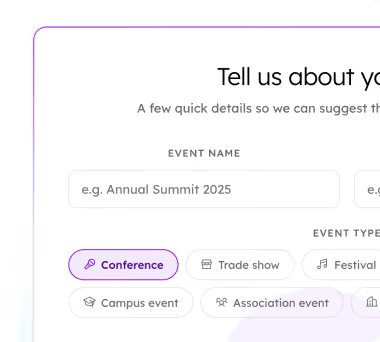
Get a custom Sponsorship Package Template
Stop starting from scratch. Grab free templates that helWe'll build a tailored sponsorship package with suggested pricing, tiers, and benefits..for your specific event.p you build professional sponsorship packages and close deals faster.
Plan Your Next Event Without Missing a Beat.
From venue selection to post-event wrap-up, this free checklist walks you through every step (so nothing falls through the cracks).
.avif)
Plan Your Next Event Without Missing a Beat.
From venue selection to post-event wrap-up, this free checklist walks you through every step (so nothing falls through the cracks).
Real Results From Real Events
100,000+ organizations trust Guidebook. See exactly how universities, associations, enterprises, and more put it to work.

Real Results From Real Events
100,000+ organizations trust Guidebook. See exactly how universities, associations, enterprises, and more put it to work.
Flexible pricing for every event size
Find the perfect plan for your needs, from intimate gatherings to large-scale conferences.

Flexible pricing for every event size
Find the perfect plan for your needs, from intimate gatherings to large-scale conferences.
Join our event experts
Watch on-demand webinars and join live sessions with industry leaders sharing best practices for event success.
.avif)
Join our event experts
Watch on-demand webinars and join live sessions with industry leaders sharing best practices for event success.
Guidebook in Action
Book a personalized walkthrough and discover how we help event teams create better attendee experiences.
Guidebook in Action
Book a personalized walkthrough and discover how we help event teams create better attendee experiences.
10 Best Whova Alternatives That Save Time and Budget
.avif)





10 Best Whova Alternatives That Save Time and Budget
If you’re reading this article, then you’ve most likely used Whova and are looking to make a change.
Maybe your needs have evolved.
Maybe the pricing surprised you.
Or maybe you're simply exploring what else is out there before committing to another contract year.
Whatever brought you here, this guide will help you evaluate your options. We’re not just going to compare features between platforms; we’ll also share additional context to help you decide what actually works for your events, your team, and your attendees.
Here's what you'll learn:
- What Whova does well and where users say it falls short.
- The key criteria for evaluating any event management platform.
- A detailed look at 10 Whova alternatives, including who each one is best suited for.
- How to compare mobile app quality, pricing models, and integrations.
- A framework for making your final decision with confidence.
Let’s get into it.
What Is Whova and Why Consider a Different Event Management Platform
Whova is an all-in-one event management platform that handles everything from registration and ticketing to attendee engagement and networking.
It's quite a versatile tool with features for different aspects of event planning, from the backend needs of organizers to attendee-facing experiences.
When it comes to Whova's customers, the platform has numerous leading brands under its belt, like L'oréal, Ford, and Yale University.
At its core, Whova offers:
- Event registration: Online ticketing, custom registration forms, and attendee management with features like early bird pricing and group tickets.
- Mobile event app: Schedules, interactive maps, speaker information, and push notifications for attendees on the go.
- Networking tools: Attendee matchmaking, in-app messaging, and community features that help participants connect before, during, and after events.
- Engagement features: Live polling, Q&A sessions, surveys, and social walls to keep attendees actively participating.
For large conferences and networking-heavy events, Whova's feature set can be genuinely impressive. The platform has built a strong reputation for helping attendees connect with each other, and many organizers appreciate having so many tools under one roof.
However, having every feature imaginable doesn't automatically translate to the right fit for your specific situation. Many planners find themselves paying for capabilities they'll never use, or struggling with complexity that overshadows the benefits.
Why Event Planners Switch from Whova
If you've used Whova before, some of these frustrations might sound familiar.
Unpredictable Pricing and Hidden Fees
At the time of writing this article, Whova’s website doesn’t show pricing. In addition, reviewers on sites like G2 and Capterra state that Whova can be rather expensive, especially for small or budget-constrained events or, for anyone who doesn’t need a lot of extra capabilities.
Some even mention hidden costs for add-ons that took them by surprise after they became a customer.
When you can't easily compare the value against competitors without multiple sales calls, the decision-making process stretches longer than it needs to (not to mention, unexpected fees can throw off carefully planned budgets).
Overwhelming Notifications That Frustrate Attendees
You've worked hard to create a great event experience. The last thing you want is for attendees to associate your brand with inbox overload.
Some Whova users online complain about overwhelming notifications, whether it's aggressive email marketing or notifications coming from the app. Some turn off notifications entirely because they find the notifications distracting.
When attendees disable notifications, they miss the updates that actually matter, like session changes, important announcements, networking opportunities. The feature that was supposed to enhance engagement ends up undermining it.
User Interface Isn't Intuitive
Some users report that Whova's interface is difficult to use, with some online reviews referring to the user experience as "clunky."
For teams without dedicated tech support, a clunky interface can create a steep learning curve that translates directly into lost time. Event planners generally don't want to wade through PDFs or training videos just to understand basic functionality.
Too Many Features for Smaller Events
Having options is great. Paying for features you’ll never use? That’s less than ideal.
Whova offers a wide range of tools designed for large conferences and complex events. But for planners organizing smaller gatherings, their online reviews indicate that Whova’s extensive feature set feels like too much.
When an event is relatively simple, all those extra options can add unnecessary complexity. Many organizers prefer platforms that keep things streamlined so they can focus on delivering a great event experience rather than configuring features they may never use.
Limited Branding and Control Over Attendee Data
Some reviewers of Whova mention limitations around how much they can tailor the app’s appearance and experience to fully match their organization’s branding.
While the platform does provide branding options such as logos, colors, and sponsor placements, planners with more specific design requirements sometimes note that deeper customization can be limited compared with more flexible platforms.
In addition, some organizers on review sites mention that exporting or working with attendee data can require additional steps or may not always provide the level of flexibility they want for deeper analysis.
For planners who place a strong emphasis on full brand control and flexible access to attendee insights, these factors can play a role when comparing event platforms.
What to Look for in a Whova Alternative
Before diving into specific platforms, it helps to establish what actually matters for your situation. Use these criteria as a framework for evaluating any option you consider.
Transparent Pricing Without Surprises
Look for platforms that clearly communicate their pricing structure upfront or better yet, platforms with all-inclusive pricing that gives you access to all features.
The best pricing models for most planners include:
- Flat-rate pricing: One annual fee covers all events and features, making budgeting predictable
- Clearly tiered plans: You can see exactly what each level includes before committing
- No per-attendee surprises: Costs don't spike unexpectedly as registration grows
Some platforms bundle all features into one plan, eliminating the "nickel and diming" that catches many planners off guard.
Fast Setup and Intuitive Design
Look for platforms offering:
- Drag-and-drop builders that let you arrange content visually.
- Templates you can customize without technical expertise.
- Bulk import options for schedules and attendee lists.
- Quick publishing with real-time updates.
Native Mobile App Performance
Not all “mobile apps” are created equal. When evaluating platforms, ask specifically whether their app is native or a web-based wrapper.
The answer matters because native apps perform better since they:
- Work reliably without WiFi (critical for convention centers with crowded networks)
- Load schedules and maps faster
- Deliver push notifications more consistently
- Feel smoother and more responsive to attendees
Responsive Customer Support and Dedicated Account Management
There's a meaningful difference between submitting a support ticket and having someone who knows your event pick up the phone.
When evaluating support, consider:
- Do you get a dedicated contact, or are you routed to whomever's available?
- What are typical response times during business hours?
- Is support available during your event if something goes wrong?
- Are support teams based in regions where communication is straightforward?
For high-stakes events, the difference between "submit a ticket" and "call your account manager" can make all the difference for you and your attendees.
Full Branding and White-Label Capabilities
Your attendees should see your brand, not your software vendor's. White-label capabilities mean every touchpoint, from registration to the mobile app, reflects your organization's identity.
When attendees download an app that's clearly branded to your conference or organization, it reinforces the quality of the experience you're delivering.
10 Best Whova Alternatives for Events
We've evaluated the platforms below based on the criteria above: pricing transparency, ease of use, mobile app quality, support, and branding capabilities.
For each alternative, you'll find who it's best suited for, key features, and honest considerations about limitations.
1. Guidebook
Best for: In-person events, higher education, associations, and organizations that prioritize attendee experience
Key features:
- User-friendly, mobile app and web platform built to power events, conferences, associations, campuses, and enterprises. With its intuitive drag-and-drop builder, organizations can create branded iOS, Android, and web experiences in just a few steps without writing a single line of code.
- Manage schedules, registration, and ticketing; engage attendees with push notifications, interactive maps, and social feeds; and deliver a consistent branded experience across every touchpoint.
- Make your content available offline with a native app.
- A dedicated Account Manager to help you succeed and deliver an unforgettable attendee experience.
What sets it apart:
While most event platforms focus on the "back-office" logistics, Guidebook is engineered for the human experience. It bridges the gap between complex event planning and seamless attendee interaction.
Here is why organizations — from associations to Fortune 500s — choose Guidebook:
- A "native-first" philosophy: Guidebook provides true native iOS and Android apps. This means attendees see your name, your brand on the app stores. In addition, this ensures your event guide is fast, reliable, and available offline (essential in case the venue WiFi goes down).
- All-inclusive pricing: Guidebook offers a transparent, all-inclusive pricing model that gives planners access to all functionality — app builder, registration, event website, and badges — without hidden upgrades.
- Not just a vendor; a partner: Every Guidebook customer is paired with a dedicated Account Manager. From initial onboarding to real-time troubleshooting during your "doors open" moment, you have a strategic partner invested in your success.
- Revenue generation: Guidebook helps event planners make money. Through integrated sponsorship tools like banner ads and sponsored "Interact" feed posts, planners can generate revenue via their app.
Real results and feedback from Guidebook users:
“I bought relief from Whova's headaches and nightmares… I bought myself peace of mind." - Kate Brenner, SIL International
“I looked at another platform but…it just snowballed the cost for what I wanted to do. You [Guidebook] have got all-inclusive. That was fantastic and it got me everything I needed! - Lance Johnson, Alaska Behavioral Health Association
“Our app costs 29% less than printing, and our student yield increased by 105% once we began using Guidebook.” - Andrea Crilly, Indiana Tech University
Considerations: Guidebook is designed for events where in-person experience matters most. If you're running primarily virtual webinars, other platforms may be better suited to that specific use case.
Learn more about why Guidebook is the best Whova alternative (includes a detailed feature comparison table).
2. Eventee
Best for: Budget-conscious planners running small to mid-sized events who want simplicity over complexity
Key features:
- Setting up an event app takes only about ten minutes.
- Event mobile app and web app included in every plan.
- The introduction of registration and check-in features has turned it into a true end-to-end event platform.
- Transparent pricing with no hidden fees.
What sets it apart: Eventee is strictly self-service and fully transparent with pricing. All subscription plans are clearly listed on the website, complete with details about what each package includes.
Because Eventee is a self-service platform, the team strives to keep its pricing fully transparent. All subscription plans are clearly listed on the website, complete with details about what each package includes.
Considerations: Eventee works well for events of any size: large, medium, or small. Unlike Whova, which offers a vast range of features that can feel overwhelming for smaller gatherings, Eventee focuses on the essentials and keeps things simple. However, if you need advanced integrations or highly specialized features, you may need to look elsewhere.
3. Sched
Best for: Academic conferences, multi-track events, and organizations that need strong schedule management
Key features:
- Sched's all-in-one event planning toolkit includes features, such as registration, ticketing, scheduling, event management, event marketing, attendance tracking, badges, and a customizable call for papers.
- Mobile event app that you can fully brand for your event.
- Offline Access: View schedules, attendee lists, and event details even without an internet connection.
- Data Syncing: Automatically sync data when you regain internet access.
- Unlimited events and unlimited free participants for smaller gatherings all year round.
What sets it apart: Sched prioritizes the speaker and session workflow. It includes a built-in "Call for Papers" tool to manage proposals (a feature often missing from competitors) and offers transparent, flat-rate pricing that includes a robust free tier. It’s the ideal choice for organizers who want a professional, multi-track schedule without the "feature bloat" or aggressive sales quotes typical of larger platforms.
Considerations: While it is useful for large events with complex schedules, the many features would be overwhelming and unnecessary for attendees registered to go to a smaller oar one-off event. Sched excels at schedule-centric events but may have fewer engagement bells and whistles than some competitors.
4. EventsAir
Best for: Organizations needing a comprehensive end-to-end event management platform with advanced customization.
Key features:
- Integrated registration, ticketing, and payment processing
- Fully customizable event websites and mobile apps
- Advanced networking features including AI-powered attendee matching
- Comprehensive speaker and session management
- Real-time reporting and analytics dashboards
- Multi-event and multi-session management capabilities
What sets it apart:
EventsAir's enterprise-grade platform handles everything from small meetings to large-scale conferences within a single system. Unlike Whova's app-focused approach, EventsAir provides complete control over the entire event experience with white-labeling and branding options, making it ideal for organizations that need a professional, fully integrated solution.
Considerations: While EventsAir offers powerful capabilities and flexibility, it has a rich feature set that will be best leveraged by organizations running multiple or complex events. Smaller organizations with basic needs may find the platform more robust than necessary.
5. Bizzabo
Best for: Enterprise marketing teams running complex, high-visibility conferences
Key features:
- Strong CRM and marketing automation integrations
- Robust analytics and performance tracking
- Customizable event websites and registration
- Tools for both in-person and virtual events
What sets it apart: Bizzabo excels at connecting event data to broader marketing efforts. If proving event ROI to stakeholders is a priority, its analytics capabilities are genuinely strong.
Considerations: Premium pricing means Bizzabo works best for organizations with dedicated event budgets. Smaller teams or associations may find the investment difficult to justify, and the feature depth can require more setup time than simpler alternatives.
6. Swapcard
Best for: Trade shows, B2B conferences, and events where networking and lead generation are primary goals
Key features:
- AI-powered attendee recommendations for meaningful connections
- Strong virtual and hybrid event capabilities
- Sponsor and exhibitor tools for lead capture
- Customizable event apps
What sets it apart: Swapcard's AI matchmaking helps attendees find relevant connections without manually browsing through hundreds of profiles. For events where networking ROI matters, this can be a significant differentiator.
Considerations: Some online reviews suggest there’s a learning curve, and the focus on networking features means simpler events may not fully utilize what you're paying for.
7. Swoogo
Best for: Agencies and teams managing multiple events who need flexibility and collaboration tools
Key features:
- Registration with unlimited custom rules, logic, and fields.
- User-based pricing offers unlimited events and registrations without hidden fees.
- Swoogo + Salesforce integration and Zapier automation to connect with thousands of tools.
- Support from a human, not bots.
What sets it apart: Swoogo offers a flexible registration engine with unlimited custom logic and branding. Because it uses a flat, user-based pricing model rather than charging per attendee, it can be a cost-effective alternative for agencies and organizations running dozens of events at scale.
Considerations: Pricing starts at $11,800 per year (at the time of writing this article in March 2026), which makes Swoogo better suited for organizations running multiple events annually. For occasioanal events, the investment may not pencil out.
8. EventMobi
Best for: Mid-market conferences that prioritize branded event experiences and native live streaming.
Key features:
- Mobile event app with engagement tools
- Registration and attendee management
- Virtual event capabilities with native live streaming (EventMobi Studio)
- Advanced analytics and reporting
- Highly customizable branded event spaces
What sets it apart:
EventMobi's clearest advantages over Whova are its branding flexibility and built-in live streaming. Organizers can create fully branded event environments (custom backgrounds, banners, sponsor layouts, and widgets) and EventMobi Studio allows native live stream broadcasts without relying on third-party tools like Zoom (which Whova requires). Its analytics also allow for granular querying (e.g., sponsor banner clicks, video view duration by attendee).
Considerations: Whova holds a higher overall user rating (4.8 vs. 4.6 on G2 at the time of writing this article) but this may simply due to the fact that Whova has significantly more reviews. Pricing structures and support models differ from Whova, so compare carefully based on your feature needs and event scale.
9. Accelevents
Best for: Hybrid events that want to blend virtual and in-person experiences with gamification elements
Key features:
- Virtual event platform with streaming capabilities
- In-person event tools including registration and check-in
- Gamification features to boost engagement
- Lead retrieval for exhibitors
What sets it apart: If you're running truly hybrid events (i.e. you’re not just streaming an in-person event, but creating integrated experiences for both in-person and virtual audiences) Accelevents provides tools designed specifically for that challenge.
Considerations: The hybrid focus means pure in-person events may not be able to leverage the platform's full value. Evaluate whether your event format genuinely benefits from hybrid-specific features.
10. Cvent
Best for: Large enterprises with dedicated event teams, complex logistics, and substantial budgets
Key features:
- Extensive feature coverage across the entire event lifecycle
- Advanced analytics and reporting
- Enterprise security and compliance capabilities
- Venue sourcing and supplier management
What sets it apart: For organizations running large-scale conferences with complex requirements — multiple tracks, hundreds of sessions, sophisticated attendee management — Cvent provides the depth to handle it.
Considerations: The tradeoff is cost and complexity, which can outweigh the benefits for smaller teams. Cvent typically requires more implementation time and ongoing administration than simpler alternatives. If you don't need enterprise-grade features, you're likely paying for capabilities you'll never use.
How Mobile App Quality Compares Across Whova Alternatives
The mobile app your attendees use shapes their entire event experience. As a result, it’s important to understand the difference between native apps and web-based alternatives before you make your final choice.
Native apps are built specifically for iOS and Android platforms. They're downloaded from app stores, run directly on the device, and can access device features like offline storage and push notifications reliably.
Web-wrapped apps are essentially mobile websites packaged to look like apps. They depend more heavily on internet connectivity and often feel less responsive.
When evaluating mobile app quality, consider:
- Offline functionality: Does the app work without WiFi? Convention centers are notorious for spotty connectivity, and attendees shouldn't lose access to their schedule just because the network is overwhelmed.
- Load speed: How quickly do schedules, maps, and speaker information appear? Slow load times frustrate attendees and reflect poorly on your event.
- Push notification reliability: Do alerts arrive on time? Delayed notifications about session changes or important announcements defeat the purpose.
- App store presence: Is it a branded app your attendees download, or a generic container app where they search for your event? The former creates a more professional impression.
Native apps can cache most essential content locally, allowing users to access key features even without an internet connection. This becomes critical during live events when connectivity is unreliable.
Pricing Breakdown for Top Whova Competitors
Event management platforms use several different pricing models. Understanding these helps you calculate the true cost of ownership, not just the headline number.
- Per-event pricing: You pay separately for each event you run. This works well for organizations hosting one or two events annually but becomes expensive for those with multiple events.
- Per-attendee pricing: Costs scale with registration numbers. Be careful with this pricing model because as your event grows, you’ll end up with significantly higher expenses.
- Flat-rate/unlimited: One annual fee covers all events and features. This model provides the most predictable budgeting and rewards organizations that run multiple events.
- Tiered plans: Features are locked behind upgrade paywalls. The base price gets you in the door, but the capabilities you actually need may require higher tiers.
- User-based pricing: Costs scale with the number of team members who need access, with unlimited events included.
In addition, be aware that some platforms advertise attractive starting prices but charge extra for:
- Branded apps (versus generic container apps)
- Premium support or dedicated account management
- API access for custom integrations
- Advanced features like gamification or AI matchmaking
- Additional admin seats
When comparing platforms, ask for total cost of ownership, including all the features you'll actually use, the support level you need, and any scaling fees as your events grow.
Integration and API Options for Each Alternative
Your event management platform doesn't exist in isolation. It needs to connect with the other tools your organization uses, such as CRMs, marketing automation, and registration systems.
Why integrations matter:
- CRM sync: Attendee data flows automatically to Salesforce, HubSpot, or your system of record
- Marketing automation: Registration triggers follow-up sequences in Marketo, Mailchimp, or similar tools
- Registration platforms: If you're already using Eventbrite or another ticketing system, integration prevents duplicate data entry
- Single sign-on (SSO): Enterprise organizations often require SAML-based authentication for security compliance
What to evaluate:
- Pre-built connectors: Does the platform offer native integrations with the tools you already use?
- Open APIs: Can your development team build custom connections if needed?
- Zapier support: For organizations without dedicated developers, Zapier connections can bridge many gaps
- Data export capabilities: Even without live integrations, can you easily export data in formats your other systems accept?
When evaluating integration capabilities, be specific about your actual needs. A platform with 50 integrations isn't helpful if none of them connect to your CRM.
How to Pick the Right Whova Alternative for Your Events
With so many options available, choosing a substitute for Whova can feel overwhelming. Here's a framework to cut through the noise and focus on what matters for your specific situation.
Start with your event type:
- In-person focused: Prioritize native mobile apps, offline functionality, and on-site tools like badge printing
- Hybrid events: Look for platforms designed specifically for dual-audience experiences
- Virtual-first: Streaming quality and virtual engagement tools matter most
Assess your team's technical comfort:
- Do you have dedicated tech support, or will planners manage the platform themselves?
- How much time can you realistically invest in learning a new tool?
- Do you need a no-code builder, or are you comfortable with more complex configurations?
Calculate total cost of ownership:
- Include setup and implementation fees
- Factor in support costs (is premium support extra?)
- Consider scaling fees as your events grow
- Account for add-ons you'll actually need
Request demos from top contenders:
- See the platform in action, not just marketing materials
- Ask about specific scenarios relevant to your events
- Pay attention to how responsive the sales team is—it often reflects support quality
Ask about onboarding support:
- How much help will you get during setup?
- Is there a dedicated contact, or are you on your own after signing?
- What resources are available for training your team?
Prioritize clarity over feature count:
It's tempting to choose the platform with the longest feature list. But features you don't use just add complexity without adding value.
Rather than having every needless feature in the book, the best platforms focus on making the essential features work effortlessly.
The right Whova alternative isn't necessarily the one with the most features; it's the one that fits your events, your team, and your budget without creating unnecessary friction.
FAQs About Whova Alternatives
[faq]
Q: What is the difference between Whova and EventMobi?
A: Both are full-featured event management platforms with similar core capabilities: registration, mobile apps, engagement tools, and analytics. EventMobi tends to offer a cleaner, more intuitive interface, while Whova emphasizes networking and community features. Pricing structures and support models also differ, so compare quotes carefully based on your specific event needs.
Q: Can I migrate my event data from Whova to another platform?
A: Most platforms allow you to export attendee lists, session data, and other event information from Whova, typically in CSV format. You can then import this data into your new platform via CSV upload or API connection. Contact your new provider's support team before migrating to confirm their specific process and ensure a smooth transition.
Q: Which Whova alternative is best for higher education events?
A: Guidebook is a solid choice for campus events because it has been battle tested by universities in the U.S. and U.K. Institutions like Indiana Tech have been able to double yield and save staff 375 hours by using Guidebook’s event tech. In addition, Guidebook is trusted by 75% of the top 50 U.S. colleges, proving that the platform has what it takes to support both student and staff needs.
Q: Do any Whova alternatives offer dedicated account managers?
A: Yes. Guidebook provides a dedicated Account Manager to help you devise game-changing mobile strategies. Other platforms like Swoogo and Bizzabo offer dedicated support at certain subscription levels. Overall, many platforms reserve this level of service for enterprise tiers, so clarify what's included in the plan you're considering.
Q: Which Whova alternative has the best attendee networking features?
A: Swapcard focuses on attendee networking through AI-driven matchmaking, making it a strong choice for B2B events and trade shows where connections drive value. Guidebook offers in-app messaging and a social feed called Interact for more organic networking. The best choice depends on whether you prioritize automated matchmaking suggestions or want attendees to discover connections naturally.
Q: What should I prioritize if I'm switching platforms mid-year?
A: Focus on data migration first and ensure you can export and import attendee information smoothly. Then prioritize support quality, since you'll likely have questions during the transition. Finally, consider how quickly you can get the new platform operational. Switching mid-year adds pressure, so choose a platform with strong onboarding support and responsive customer service.
Q: Are there Whova alternatives that work well for small events?
A: Eventee works well for events of any size, and unlike Whova (which offers a vast range of features that can feel overwhelming for smaller gatherings), Eventee focuses on the essentials and keeps things simple. Guidebook and Sched also offer pricing plans that are specifically designs for smaller gatherings.
[/faq]
Make Your Next Event Easier
Choosing the right event management platform is a significant decision, but it doesn't have to be overwhelming.
By focusing on what actually matters for your events (transparent pricing, reliable mobile apps, responsive support, and the features you'll genuinely use), you can find a solution that saves time, protects your budget, and creates better experiences for your attendees.
If you're looking for a Whova alternative that combines native mobile apps, all-inclusive pricing, and dedicated account management, Guidebook might be the right fit.
Book a demo to see how it works or explore our complete guide to event app features to learn which capabilities are non-negotiable (and which ones are nice-to-haves).

Get the Mobile App Playbook
A short guide to running the whole student journey in one app. No fluff, just what works.
for higher ed
Campus
Playbook
A practical guide to building a connected campus experience.
Free playbook
The Mobile App Playbook for Universities
Students decide if they belong long before they set foot on campus. This playbook shows how to win them over from the first visit through graduation.
- Grow enrollment and boost recruitment
- Increase belonging and retention
- Run every event from one branded app
By submitting, you agree to our Privacy Policy.
You're in.
.png)