
Campus apps by department
Admissions, orientation, student life, and more — one campus app that works across departments.

Campus apps by department
Admissions, orientation, student life, and more — one campus app that works across departments.
Build unlimited event apps on one license
One partnership for unlimited campus events — orientation, tours, student life, and everything in between.
Build unlimited event apps on one license
One partnership for unlimited campus events — orientation, tours, student life, and everything in between.
Compare event app platforms
See how Guidebook stacks up against other event app and registration platforms.
Compare event app platforms
See how Guidebook stacks up against other event app and registration platforms.
Event apps for nonprofit and community programs
Give members, volunteers, and donors one branded app for conferences, fundraisers, and year-round community.
Event apps for nonprofit and community programs
Give members, volunteers, and donors one branded app for conferences, fundraisers, and year-round community.
Campus integrations and an open API
Connect Guidebook with the campus systems, APIs, and tools your team already uses.
Campus integrations and an open API
Connect Guidebook with the campus systems, APIs, and tools your team already uses.
Event apps for corporate and enterprise teams
Internal meetings, offsites, and large-scale corporate events — with the branding and control enterprise teams need.
Event apps for corporate and enterprise teams
Internal meetings, offsites, and large-scale corporate events — with the branding and control enterprise teams need.
Create a branded event app with no coding
Put schedules, maps, resources, and updates in every attendee's pocket — built for campus events and programs.
Create a branded event app with no coding
Put schedules, maps, resources, and updates in every attendee's pocket — built for campus events and programs.
Launch a branded, white-label event app
A white-label event app with your branding, your content, and your attendee experience — no coding required.
Launch a branded, white-label event app
A white-label event app with your branding, your content, and your attendee experience — no coding required.
Everything in the Guidebook platform
Explore the features event teams use to engage attendees before, during, and after the event.
Everything in the Guidebook platform
Explore the features event teams use to engage attendees before, during, and after the event.
One app for in-person and virtual attendees
The same schedule, networking, and updates whether people are in the room or joining remotely.
One app for in-person and virtual attendees
The same schedule, networking, and updates whether people are in the room or joining remotely.
Event apps built for associations
Annual meetings, chapter events, and member engagement — without rebuilding a new app every year.
Event apps built for associations
Annual meetings, chapter events, and member engagement — without rebuilding a new app every year.
A branded event website that matches the app
Promote the event, collect interest, and keep branding consistent from the first click to check-in.
A branded event website that matches the app
Promote the event, collect interest, and keep branding consistent from the first click to check-in.
Plan, run, and measure events on one platform
App, registration, badges, and websites in one workflow — so planning isn't a pile of disconnected tools.
Plan, run, and measure events on one platform
App, registration, badges, and websites in one workflow — so planning isn't a pile of disconnected tools.
Keep members engaged between events
One branded app for the conference and everything that happens the other 51 weeks of the year.
Keep members engaged between events
One branded app for the conference and everything that happens the other 51 weeks of the year.
The conference app attendees actually use
Schedules, maps, networking, and live updates for annual meetings, summits, and multi-day conferences.
The conference app attendees actually use
Schedules, maps, networking, and live updates for annual meetings, summits, and multi-day conferences.
Registration that feeds your app and badges
Collect registrations, payments, and attendee data in the same platform as your event app.
Registration that feeds your app and badges
Collect registrations, payments, and attendee data in the same platform as your event app.
Design and print event badges in one place
Custom badges, QR check-in, and on-site printing — without a separate badge vendor.
Design and print event badges in one place
Custom badges, QR check-in, and on-site printing — without a separate badge vendor.
A Smaller School?
Deliver a polished, branded event experience without a large team or a big budget.
A Smaller School?
Deliver a polished, branded event experience without a large team or a big budget.
Running Family Programs?
Give families everything they need, from schedules and maps to real-time updates, all in one place.
Running Family Programs?
Give families everything they need, from schedules and maps to real-time updates, all in one place.
Coordinating Move-In Day?
Share updates, manage events, and keep students informed from move-in through the academic year.

Coordinating Move-In Day?
Share updates, manage events, and keep students informed from move-in through the academic year.
Offering Campus Tours?
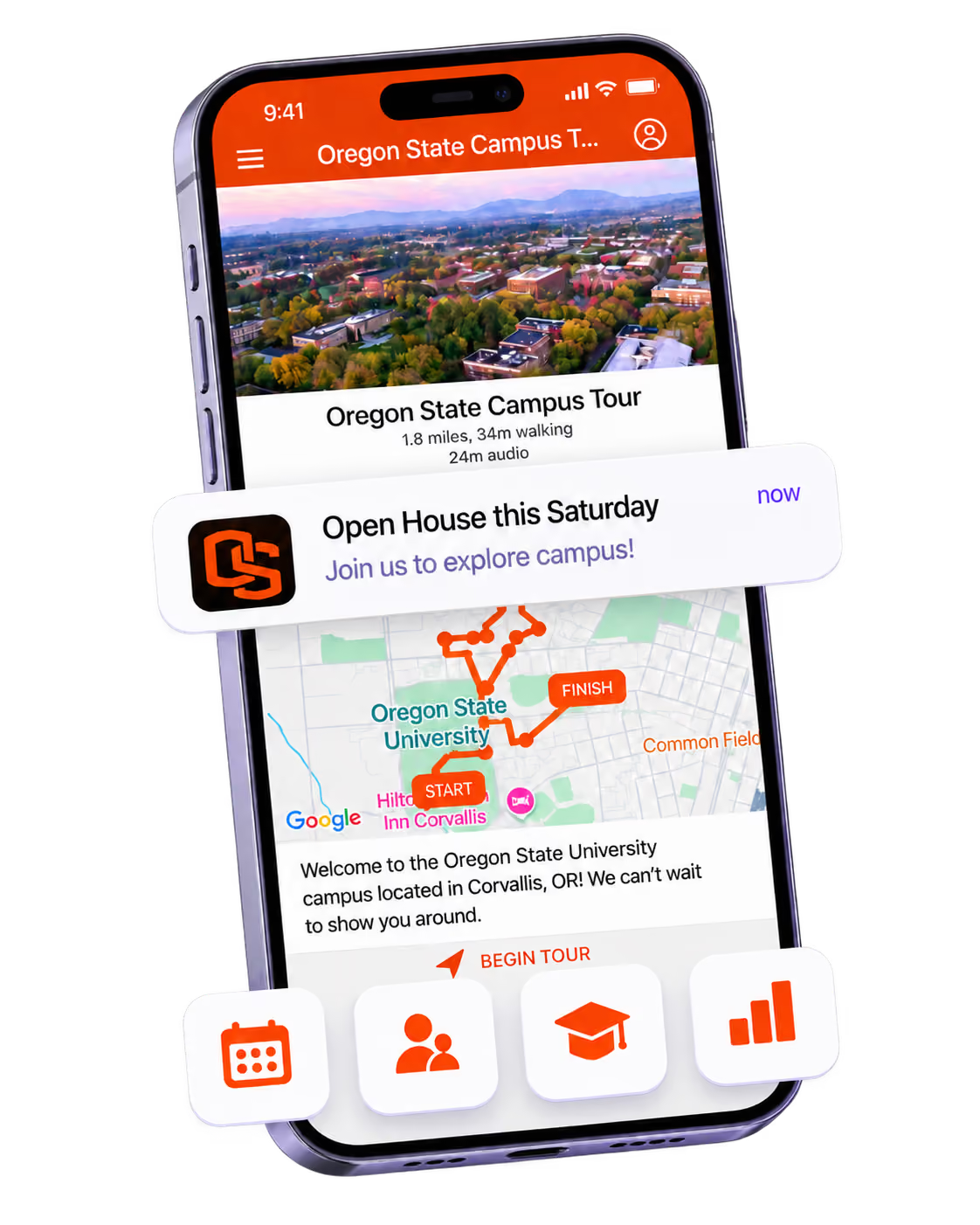
Deliver branded, self-guided tour experiences with interactive maps and rich media, available 24/7.

Offering Campus Tours?
Deliver branded, self-guided tour experiences with interactive maps and rich media, available 24/7.
Organising a Career Fair?
Simplify logistics for students, employers, and Career Services staff with one easy-to-use app.
Organising a Career Fair?
Simplify logistics for students, employers, and Career Services staff with one easy-to-use app.
Managing Alumni Events?
Plan reunions, regional events, and fundraising campaigns with an app built for alumni engagement.
Managing Alumni Events?
Plan reunions, regional events, and fundraising campaigns with an app built for alumni engagement.
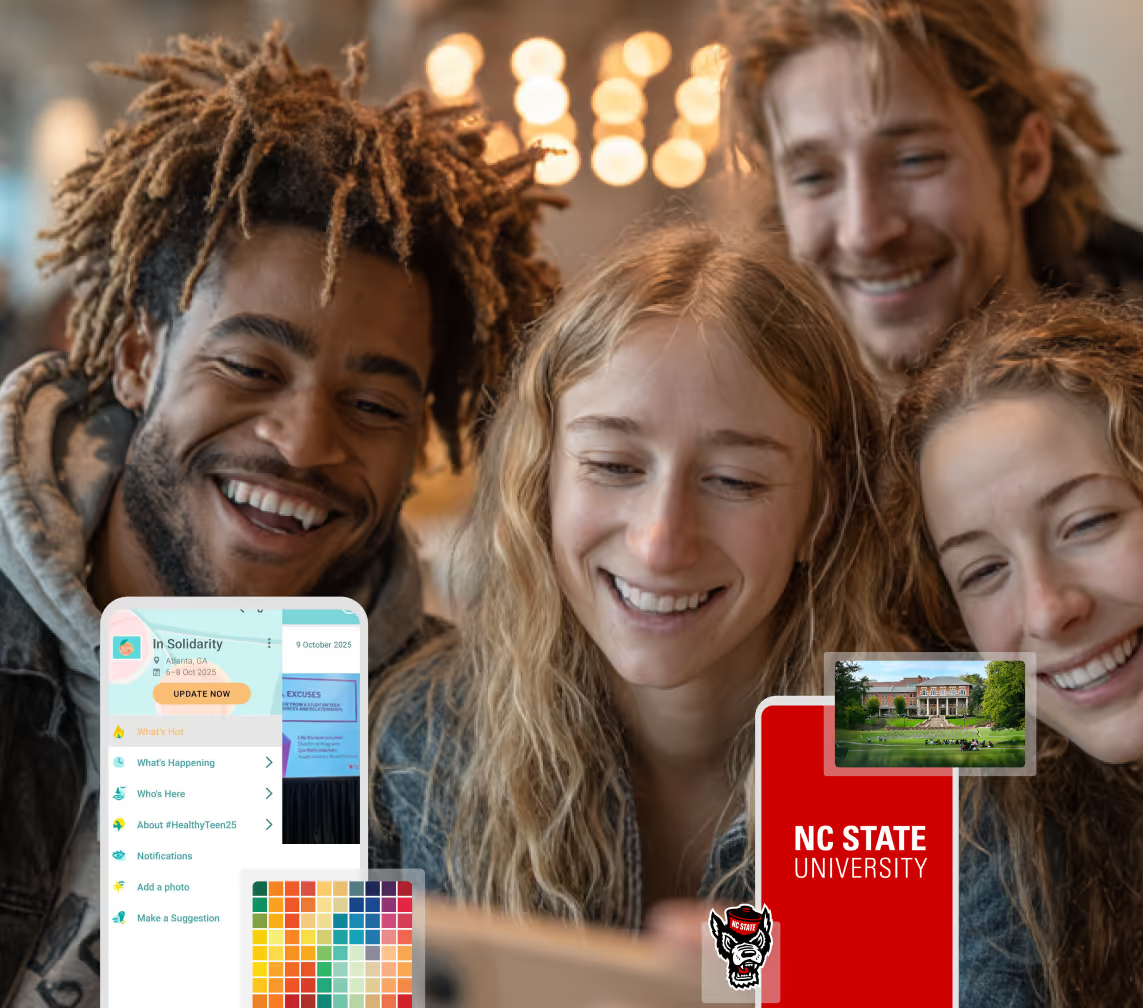
Boost Student Engagement
One hub for schedules, resources, and events that keeps students connected throughout the academic year.
Boost Student Engagement
One hub for schedules, resources, and events that keeps students connected throughout the academic year.
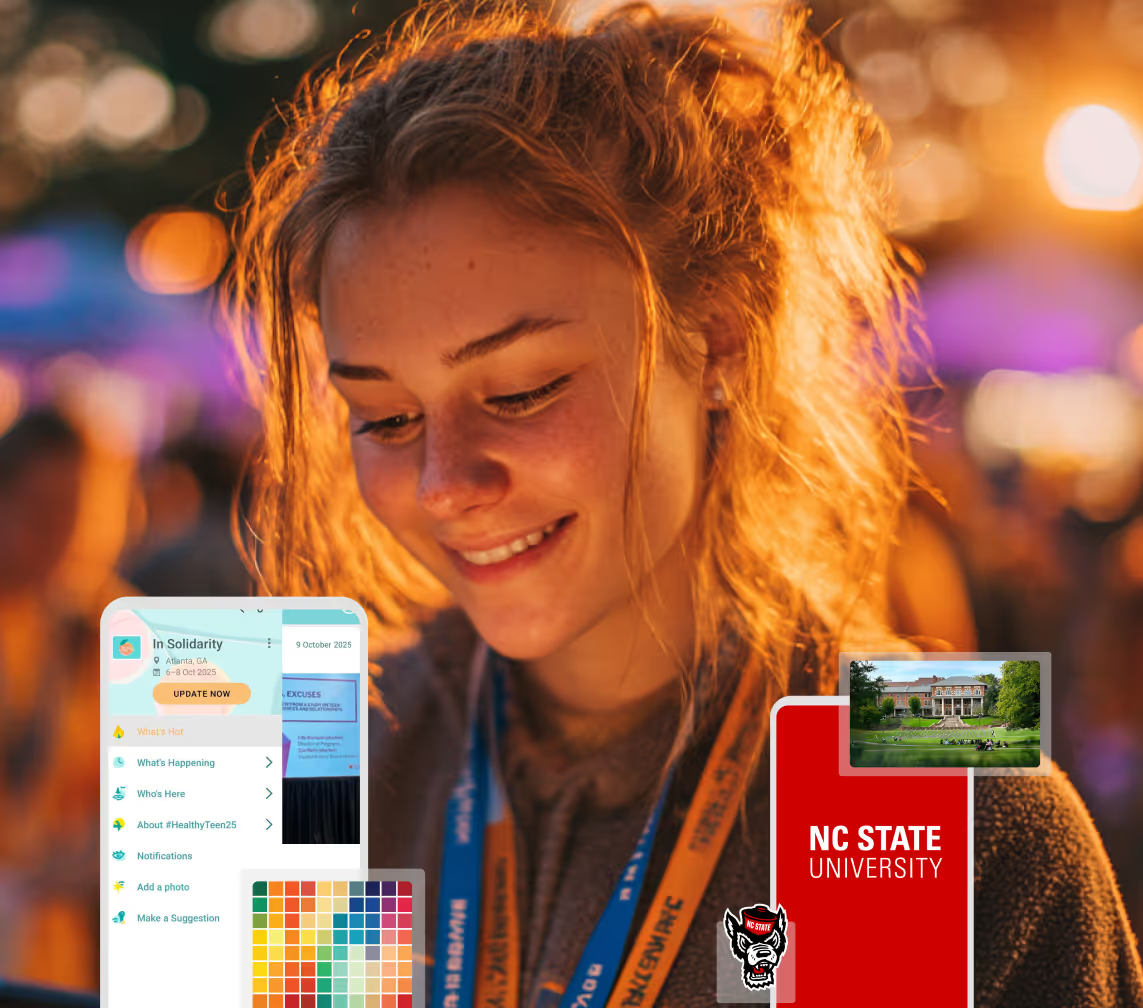
Planning Orientation?
Help new students feel prepared from day one with schedules, campus resources, and real-time updates in one app.
Planning Orientation?
Help new students feel prepared from day one with schedules, campus resources, and real-time updates in one app.
Running Admissions Events?
Manage open houses, tours, and yield events with a branded app that saves time and engages prospective students.

Running Admissions Events?
Manage open houses, tours, and yield events with a branded app that saves time and engages prospective students.
Get a custom Sponsorship Package Template
Stop starting from scratch. Grab free templates that helWe'll build a tailored sponsorship package with suggested pricing, tiers, and benefits..for your specific event.p you build professional sponsorship packages and close deals faster.
Get a custom Sponsorship Package Template
Stop starting from scratch. Grab free templates that helWe'll build a tailored sponsorship package with suggested pricing, tiers, and benefits..for your specific event.p you build professional sponsorship packages and close deals faster.
Plan Your Next Event Without Missing a Beat.
From venue selection to post-event wrap-up, this free checklist walks you through every step (so nothing falls through the cracks).
.avif)
Plan Your Next Event Without Missing a Beat.
From venue selection to post-event wrap-up, this free checklist walks you through every step (so nothing falls through the cracks).
Real Results From Real Events
100,000+ organizations trust Guidebook. See exactly how universities, associations, enterprises, and more put it to work.

Real Results From Real Events
100,000+ organizations trust Guidebook. See exactly how universities, associations, enterprises, and more put it to work.
Flexible pricing for every event size
Find the perfect plan for your needs, from intimate gatherings to large-scale conferences.
Flexible pricing for every event size
Find the perfect plan for your needs, from intimate gatherings to large-scale conferences.
Join our event experts
Watch on-demand webinars and join live sessions with industry leaders sharing best practices for event success.
.avif)
Join our event experts
Watch on-demand webinars and join live sessions with industry leaders sharing best practices for event success.
Guidebook in Action
Book a personalized walkthrough and discover how we help event teams create better attendee experiences.
Guidebook in Action
Book a personalized walkthrough and discover how we help event teams create better attendee experiences.

What is an Event Marketing Plan?
An event marketing plan outlines strategies and tactics to promote events, boost attendance, and achieve goals. Learn key components, planning steps, and best practices.

An Event Marketing Plan is the strategic roadmap that outlines exactly how you'll promote your event, attract the right attendees, and hit your registration goals. It covers everything from messaging and channels to timelines and budgets. Without one, you're basically throwing darts in the dark.
Here's the thing: an event marketing plan isn't just a to-do list. It's your game plan for cutting through the noise. It tells you who to target, what to say, and when to say it. Most importantly, it keeps your whole team aligned and accountable.
Key Characteristics of an Event Marketing Plan
- Goal-Oriented Structure: Every element ties back to specific, measurable objectives like registration numbers, ticket sales, or brand awareness targets.
- Audience-Centric Focus: The plan starts with deep knowledge of who you're trying to reach. Demographics, pain points, and motivations drive every decision.
- Multi-Channel Approach: Effective plans use a mix of channels—email, social, paid ads, PR—to reach attendees wherever they are.
- Timeline-Driven Execution: Clear deadlines and milestones keep campaigns on track. Most plans span 8-12 weeks before the event.
- Budget Allocation: Resources are assigned to each channel and tactic. This prevents overspending and ensures ROI tracking.
- Measurable KPIs: Built-in metrics let you track what's working. Think open rates, click-throughs, and conversion percentages.
- Flexibility for Optimization: Good plans leave room to pivot. If something isn't working, you can shift resources quickly.
Event Marketing Plan vs. Related Terms
Event Marketing Strategy
- Scope: High-level vision and positioning for your event brand
- Focus: Long-term goals and competitive differentiation
- Timeline: Ongoing, often spans multiple events or years
- Channels: Broad channel philosophy rather than specific tactics
- Goal: Define your event's market position and value proposition
Event Promotion
- Scope: Tactical execution of marketing activities
- Focus: Getting the word out through specific campaigns
- Timeline: Short-term, campaign-specific bursts
- Channels: Individual platforms like social media or email
- Goal: Drive immediate awareness and registrations
Event Communications Plan
- Scope: All attendee touchpoints before, during, and after
- Focus: Information delivery and attendee experience
- Timeline: Extends through post-event follow-up
- Channels: Email, event apps, signage, and direct messaging
- Goal: Keep attendees informed and engaged throughout
Think of it this way: your strategy sets the direction, your marketing plan maps the route, and your promotions are the actual steps you take. They work together, but each serves a distinct purpose.
Essential Components of an Event Marketing Plan
Define Your Target Audience
Start by getting crystal clear on who you want to attend. Create detailed personas that go beyond basic demographics.
Ask yourself: What problems does your event solve for them? Where do they spend time online? What messaging will resonate?
- Job titles and industries
- Pain points and challenges
- Preferred content formats
- Social media habits
- Past event attendance patterns
Set Clear, Measurable Goals
Vague goals lead to vague results. Get specific with numbers and deadlines.
Instead of "increase attendance," try "register 500 attendees by March 15." This gives your team a clear target and makes measuring event ROI much easier.
Choose Your Marketing Channels
Not every channel works for every event. Match your channels to where your audience actually hangs out.
- Email marketing: Still the highest ROI channel for most events
- Social media: Great for awareness and community building
- Paid advertising: Useful for reaching new audiences quickly
- Content marketing: Builds authority and drives organic traffic
- Partner promotions: Leverage sponsor and speaker networks
Learn more about types of event marketing to find the right mix for your goals.
Create Your Messaging Framework
Consistent messaging builds recognition and trust. Develop core messages that highlight your event's unique value.
Your framework should include a primary tagline, 3-5 key benefits, and proof points like speaker names or past attendee testimonials.
Build Your Campaign Timeline
Map out every marketing activity on a calendar. Most successful event marketing plans follow this pattern:
- 12-8 weeks out: Launch announcement, early bird pricing
- 8-4 weeks out: Speaker reveals, content marketing push
- 4-2 weeks out: Urgency messaging, last-chance promotions
- Final 2 weeks: Countdown campaigns, final reminders
The Event Marketing Plan Process
Research and Discovery Phase
Before you write a single email, do your homework. Analyze past event data if you have it. What worked? What flopped?
Study your competitors too. What are similar events doing well? Where are the gaps you can fill? This research shapes everything that follows.
Planning and Strategy Development
Now it's time to put pen to paper. Document your goals, audience, channels, and timeline in one central place.
Get buy-in from stakeholders early. Nothing derails a marketing plan faster than last-minute changes from leadership. The event planning process should include marketing from day one.
Content Creation and Asset Development
Create all the materials you'll need before campaigns launch. This includes:
- Email templates and sequences
- Social media graphics and copy
- Landing page content
- Ad creative and copy variations
- Press releases and media kits
Need help with media outreach? Check out this guide on press release examples for events.
Execution and Optimization
Launch your campaigns according to your timeline. But don't just set it and forget it.
Monitor performance daily during active campaigns. If email open rates drop, test new subject lines. If ads aren't converting, try different audiences. The best plans evolve based on real data.
Measurement and Reporting
Track everything. Build a dashboard that shows key metrics at a glance.
After the event, create a detailed report. What drove the most registrations? What was your cost per acquisition? This data becomes gold for planning your next event.
Why Event Marketing Plan Matters
For Event Success:
- Higher Registration Numbers: Planned campaigns consistently outperform ad-hoc promotion by 40-60%.
- Better Audience Quality: Targeted marketing attracts attendees who actually want to be there.
- Stronger Brand Recognition: Consistent messaging builds awareness and credibility over time.
- Reduced Last-Minute Scrambling: When everything's mapped out, your team stays calm under pressure.
- Improved Attendee Experience: Good marketing sets accurate expectations, leading to happier attendees.
For Business Objectives:
- Measurable ROI: Clear goals and tracking show exactly what your marketing investment delivers.
- Sales Pipeline Growth: Events generate qualified leads when marketed to the right audience.
- Sponsor Satisfaction: Strong attendance numbers keep sponsors happy and coming back.
- Team Alignment: Everyone knows their role and responsibilities when there's a documented plan.
- Budget Efficiency: Planned spending prevents waste and maximizes every dollar.
Platforms like Guidebook's event management platform help you execute your marketing plan while also delivering an amazing attendee experience through branded mobile apps.
Event Marketing Plan Best Practices
- Start Planning Early: Begin your marketing plan at least 12 weeks before the event. Rushed campaigns show in the results.
- Know Your Numbers: Set specific targets for registrations, email opens, click rates, and conversions. Track them religiously.
- Segment Your Audience: Don't send the same message to everyone. Past attendees need different messaging than first-timers.
- Create Urgency Strategically: Early bird pricing, limited seats, and countdown timers work. But use them honestly.
- Leverage Your Speakers and Sponsors: Give them ready-made content to share. Their networks expand your reach significantly.
- Test Everything: A/B test subject lines, ad creative, and landing pages. Small improvements compound into big results.
- Optimize for Mobile: Over 60% of emails are opened on phones. Make sure everything looks great on small screens.
- Plan Your Follow-Up: Don't stop at registration. Confirmation emails, reminder sequences, and pre-event content keep attendees engaged.
- Document What Works: Keep detailed notes on successful tactics. Your future self will thank you.
- Integrate Your Tech Stack: Connect your event registration system with your marketing tools for seamless data flow.
Common Event Marketing Plan Mistakes
Starting Too Late: Many planners wait until 4-6 weeks out to begin marketing. By then, your ideal attendees have already made other plans. Start early and build momentum over time.
Ignoring Data from Past Events: If you've run events before, that data is invaluable. Skipping this analysis means repeating mistakes and missing opportunities to double down on what worked.
One-Size-Fits-All Messaging: Sending identical emails to your entire list tanks engagement. Different audience segments have different motivations. Personalize your approach.
Neglecting Post-Registration Communication: Getting someone to register is just the start. Without ongoing engagement, no-show rates climb. Keep the excitement building until event day.
Underestimating Content Needs: A 12-week campaign requires a lot of content. Running out of fresh material mid-campaign leads to repetitive, ignored messages. Plan your content calendar thoroughly.
Forgetting Mobile Optimization: If your registration page doesn't work on phones, you're losing registrations. Test every touchpoint on mobile devices before launching.
Skipping the Debrief: After the event, exhaustion sets in. But failing to document lessons learned means starting from scratch next time. Use an event debrief template while details are fresh.
Final Thoughts
A solid event marketing plan isn't optional—it's the difference between a packed room and empty seats. It brings structure to chaos and turns good intentions into actual results.
The events industry keeps evolving. New channels emerge, attendee expectations shift, and competition grows fiercer. Staying on top of event trends helps you adapt your marketing approach year over year.
Here's the exciting part: you don't have to figure this out alone. The right tools and partners make execution so much easier. When your marketing plan connects seamlessly with your event technology, magic happens.
Ready to level up your event marketing? Explore event digital marketing strategies, learn how to advertise your event effectively, and discover how Guidebook's platform can help you deliver unforgettable experiences. Your next sold-out event starts with a plan.
The power of your brand in your app, from first visit to alumni.
Build trust
Attendees download your app, not ours. Your name, colors, and crest in the stores.
.avif)
One place for the whole event
Schedules, maps, registration, and updates in one branded hub - not five tools.
Stand out
A branded app is what people keep on their phone after the printed program is in the recycling.

Get the Mobile App Playbook
A short guide to running the whole student journey in one app. No fluff, just what works.
for higher ed
Campus
Playbook
A practical guide to building a connected campus experience.
Free playbook
The Mobile App Playbook for Universities
Students decide if they belong long before they set foot on campus. This playbook shows how to win them over from the first visit through graduation.
- Grow enrollment and boost recruitment
- Increase belonging and retention
- Run every event from one branded app
By submitting, you agree to our Privacy Policy.
You're in.
.png)