
Campus apps by department
Admissions, orientation, student life, and more — one campus app that works across departments.

Campus apps by department
Admissions, orientation, student life, and more — one campus app that works across departments.
Build unlimited event apps on one license
One partnership for unlimited campus events — orientation, tours, student life, and everything in between.
Build unlimited event apps on one license
One partnership for unlimited campus events — orientation, tours, student life, and everything in between.
Compare event app platforms
See how Guidebook stacks up against other event app and registration platforms.
Compare event app platforms
See how Guidebook stacks up against other event app and registration platforms.
Event apps for nonprofit and community programs
Give members, volunteers, and donors one branded app for conferences, fundraisers, and year-round community.
Event apps for nonprofit and community programs
Give members, volunteers, and donors one branded app for conferences, fundraisers, and year-round community.
Campus integrations and an open API
Connect Guidebook with the campus systems, APIs, and tools your team already uses.
Campus integrations and an open API
Connect Guidebook with the campus systems, APIs, and tools your team already uses.
Event apps for corporate and enterprise teams
Internal meetings, offsites, and large-scale corporate events — with the branding and control enterprise teams need.
Event apps for corporate and enterprise teams
Internal meetings, offsites, and large-scale corporate events — with the branding and control enterprise teams need.
Create a branded event app with no coding
Put schedules, maps, resources, and updates in every attendee's pocket — built for campus events and programs.
Create a branded event app with no coding
Put schedules, maps, resources, and updates in every attendee's pocket — built for campus events and programs.
Launch a branded, white-label event app
A white-label event app with your branding, your content, and your attendee experience — no coding required.
Launch a branded, white-label event app
A white-label event app with your branding, your content, and your attendee experience — no coding required.
Everything in the Guidebook platform
Explore the features event teams use to engage attendees before, during, and after the event.
Everything in the Guidebook platform
Explore the features event teams use to engage attendees before, during, and after the event.
One app for in-person and virtual attendees
The same schedule, networking, and updates whether people are in the room or joining remotely.
One app for in-person and virtual attendees
The same schedule, networking, and updates whether people are in the room or joining remotely.
Event apps built for associations
Annual meetings, chapter events, and member engagement — without rebuilding a new app every year.
Event apps built for associations
Annual meetings, chapter events, and member engagement — without rebuilding a new app every year.
A branded event website that matches the app
Promote the event, collect interest, and keep branding consistent from the first click to check-in.
A branded event website that matches the app
Promote the event, collect interest, and keep branding consistent from the first click to check-in.
Plan, run, and measure events on one platform
App, registration, badges, and websites in one workflow — so planning isn't a pile of disconnected tools.
Plan, run, and measure events on one platform
App, registration, badges, and websites in one workflow — so planning isn't a pile of disconnected tools.
Keep members engaged between events
One branded app for the conference and everything that happens the other 51 weeks of the year.
Keep members engaged between events
One branded app for the conference and everything that happens the other 51 weeks of the year.
The conference app attendees actually use
Schedules, maps, networking, and live updates for annual meetings, summits, and multi-day conferences.
The conference app attendees actually use
Schedules, maps, networking, and live updates for annual meetings, summits, and multi-day conferences.
Registration that feeds your app and badges
Collect registrations, payments, and attendee data in the same platform as your event app.
Registration that feeds your app and badges
Collect registrations, payments, and attendee data in the same platform as your event app.
Design and print event badges in one place
Custom badges, QR check-in, and on-site printing — without a separate badge vendor.
Design and print event badges in one place
Custom badges, QR check-in, and on-site printing — without a separate badge vendor.
A Smaller School?
Deliver a polished, branded event experience without a large team or a big budget.
A Smaller School?
Deliver a polished, branded event experience without a large team or a big budget.
Running Family Programs?
Give families everything they need, from schedules and maps to real-time updates, all in one place.
Running Family Programs?
Give families everything they need, from schedules and maps to real-time updates, all in one place.
Coordinating Move-In Day?
Share updates, manage events, and keep students informed from move-in through the academic year.

Coordinating Move-In Day?
Share updates, manage events, and keep students informed from move-in through the academic year.
Offering Campus Tours?
Deliver branded, self-guided tour experiences with interactive maps and rich media, available 24/7.

Offering Campus Tours?
Deliver branded, self-guided tour experiences with interactive maps and rich media, available 24/7.
Organising a Career Fair?
Simplify logistics for students, employers, and Career Services staff with one easy-to-use app.
Organising a Career Fair?
Simplify logistics for students, employers, and Career Services staff with one easy-to-use app.
Managing Alumni Events?
Plan reunions, regional events, and fundraising campaigns with an app built for alumni engagement.
Managing Alumni Events?
Plan reunions, regional events, and fundraising campaigns with an app built for alumni engagement.
Boost Student Engagement
One hub for schedules, resources, and events that keeps students connected throughout the academic year.
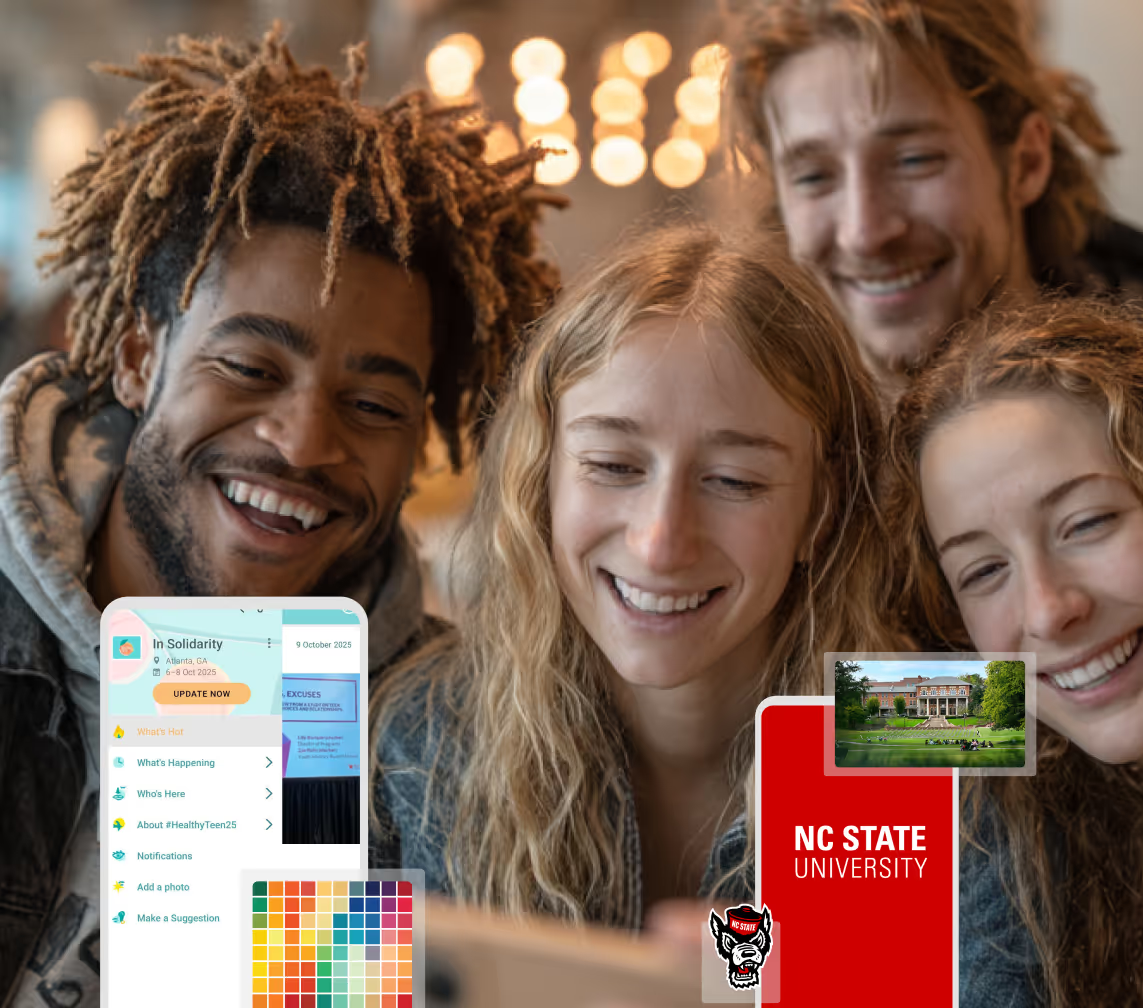
Boost Student Engagement
One hub for schedules, resources, and events that keeps students connected throughout the academic year.
Planning Orientation?
Help new students feel prepared from day one with schedules, campus resources, and real-time updates in one app.
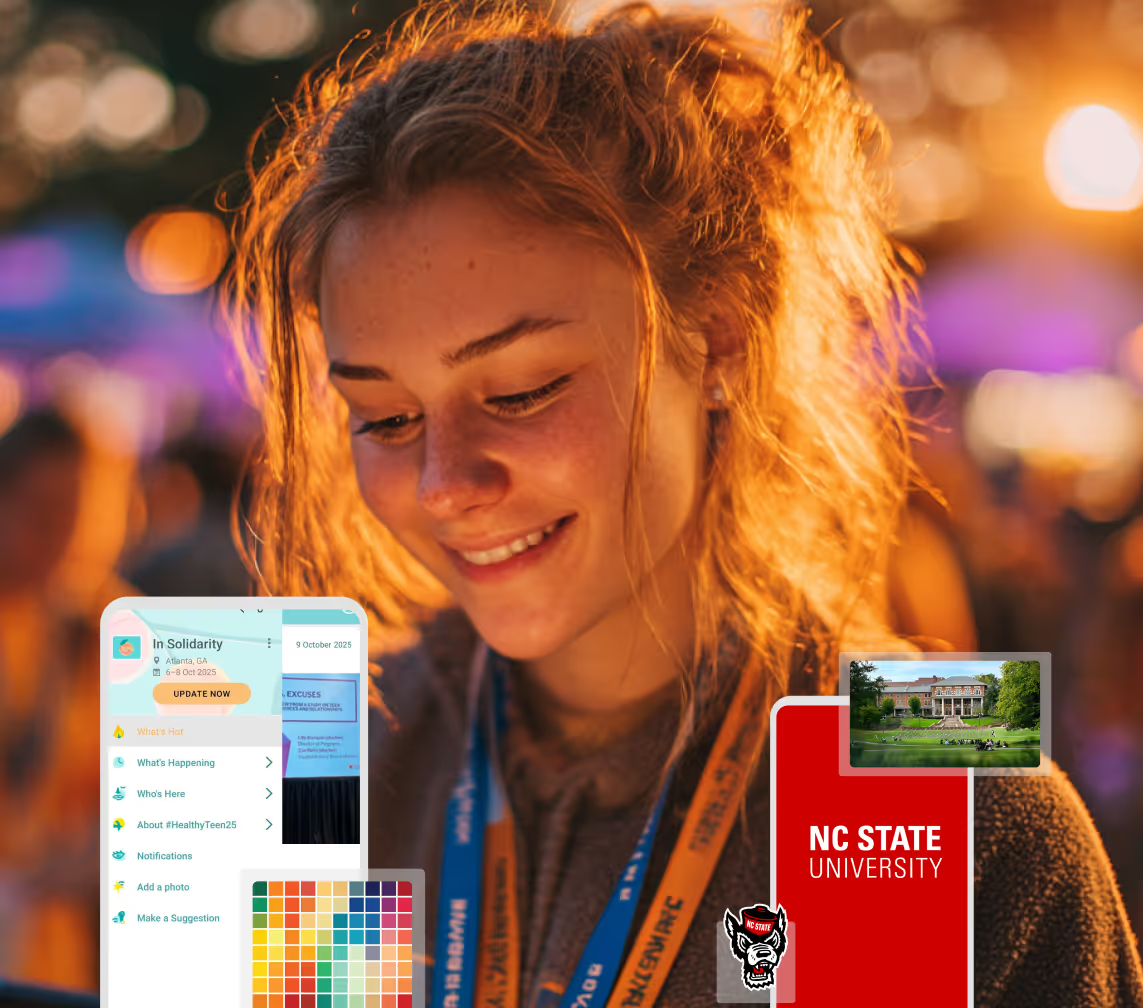
Planning Orientation?
Help new students feel prepared from day one with schedules, campus resources, and real-time updates in one app.
Running Admissions Events?
Manage open houses, tours, and yield events with a branded app that saves time and engages prospective students.

Running Admissions Events?
Manage open houses, tours, and yield events with a branded app that saves time and engages prospective students.
Get a custom Sponsorship Package Template
Stop starting from scratch. Grab free templates that helWe'll build a tailored sponsorship package with suggested pricing, tiers, and benefits..for your specific event.p you build professional sponsorship packages and close deals faster.
Get a custom Sponsorship Package Template
Stop starting from scratch. Grab free templates that helWe'll build a tailored sponsorship package with suggested pricing, tiers, and benefits..for your specific event.p you build professional sponsorship packages and close deals faster.
Plan Your Next Event Without Missing a Beat.
From venue selection to post-event wrap-up, this free checklist walks you through every step (so nothing falls through the cracks).
.avif)
Plan Your Next Event Without Missing a Beat.
From venue selection to post-event wrap-up, this free checklist walks you through every step (so nothing falls through the cracks).
Real Results From Real Events
100,000+ organizations trust Guidebook. See exactly how universities, associations, enterprises, and more put it to work.

Real Results From Real Events
100,000+ organizations trust Guidebook. See exactly how universities, associations, enterprises, and more put it to work.
Flexible pricing for every event size
Find the perfect plan for your needs, from intimate gatherings to large-scale conferences.

Flexible pricing for every event size
Find the perfect plan for your needs, from intimate gatherings to large-scale conferences.
Join our event experts
Watch on-demand webinars and join live sessions with industry leaders sharing best practices for event success.
.avif)
Join our event experts
Watch on-demand webinars and join live sessions with industry leaders sharing best practices for event success.
Guidebook in Action
Book a personalized walkthrough and discover how we help event teams create better attendee experiences.
Guidebook in Action
Book a personalized walkthrough and discover how we help event teams create better attendee experiences.

What is an Event Debrief Template?
An event debrief template streamlines post-event analysis by guiding teams through feedback, lessons learned, and actionable improvements. Access key questions, reporting formats, and best practices.

Event Debrief Template is the structured framework that captures what worked, what didn't, and what to improve after any event ends. It transforms scattered feedback into actionable insights. Without one, valuable lessons slip through the cracks—and you repeat the same mistakes.
Here's the thing: most event teams skip the debrief or do it poorly. They wait too long, forget key details, or never document anything. A solid template fixes this. It gives your team a clear process to follow while memories are fresh. The result? Each event gets better than the last.
Key Characteristics of an Event Debrief Template
- Structured Format: Provides consistent sections and questions so nothing important gets missed. Every team member knows exactly what to cover.
- Timeline-Specific: Designed for completion within 24-48 hours post-event. This captures details before they fade from memory.
- Multi-Stakeholder Input: Includes space for feedback from organizers, vendors, sponsors, and attendees. Different perspectives reveal blind spots.
- Quantitative and Qualitative: Balances hard metrics (attendance, revenue, ratings) with subjective observations. Numbers tell part of the story; context tells the rest.
- Action-Oriented: Every section ties back to specific improvements. It's not just reflection—it's a roadmap for next time.
- Reusable Framework: Works across different event types with minor adjustments. One template serves conferences, team building events, and trade shows alike.
Event Debrief Template vs. Related Documents
Post-Event Report
- Scope: Formal document for stakeholders and executives
- Focus: Results, ROI, and high-level outcomes
- Timeline: Created 1-2 weeks after the event
- Audience: Leadership, sponsors, board members
- Goal: Demonstrate value and justify investment
Event Debrief Template
- Scope: Internal working document for the planning team
- Focus: Lessons learned and process improvements
- Timeline: Completed within 24-48 hours
- Audience: Event coordinators and operational staff
- Goal: Capture insights while they're fresh
Meeting Minutes
- Scope: Record of a single debrief discussion
- Focus: What was said during the meeting
- Timeline: Created during or immediately after the meeting
- Audience: Meeting participants and absent team members
- Goal: Document decisions and action items
These documents work together. Your debrief template guides the conversation. Meeting minutes capture what's discussed. The post-event report packages everything for stakeholders. Smart teams use all three.
Essential Components of an Event Debrief Template
Event Overview Section
Start with the basics. Include event name, date, location, and attendance numbers. Add your original goals and budget figures.
This section creates context for everything that follows. It also builds a searchable archive for future reference.
Goals vs. Results Analysis
List each objective you set during event planning. Next to it, document what actually happened. Be specific with numbers.
Did you aim for 500 attendees and get 423? Write that down. Wanted 50 leads and captured 78? Document it. This honest comparison reveals where you exceeded expectations and where you fell short.
Timeline and Logistics Review
Walk through the event chronologically. Note what ran on schedule and what didn't. Identify bottlenecks in:
- Registration and check-in processes
- Session transitions
- Catering timing
- Vendor setup and breakdown
- Technology performance
Budget Breakdown
Compare projected costs against actual spending. Flag any surprises—both overages and savings. This data improves future budget accuracy.
Include a section for hidden costs you didn't anticipate. These insights are gold for planning resources next time.
Feedback Collection Summary
Compile attendee survey results, social media sentiment, and verbal feedback. Look for patterns. Three people mentioning long registration lines is a trend worth addressing.
Don't cherry-pick only positive comments. The critical feedback drives real improvement.
How to Run an Effective Debrief Meeting
Schedule It Immediately
Book your debrief meeting before the event even happens. Put it on calendars for 24-48 hours post-event. Waiting longer means losing details.
Memory fades fast. That vendor issue that seemed huge on event day? You'll forget the specifics by next week.
Invite the Right People
Include everyone who touched the event:
- Core planning team
- Day-of volunteers and staff
- Key vendors (if appropriate)
- Sponsor representatives
- Tech support team
Different roles see different problems. Your event coordinator might miss issues that registration volunteers caught.
Create a Safe Space for Honesty
Make it clear: this isn't about blame. It's about improvement. When people fear criticism, they hide problems. Hidden problems repeat.
Start by sharing your own mistakes. This sets the tone and gives others permission to be honest.
Use a Structured Agenda
Don't let the meeting wander. Follow your template section by section. Assign a timekeeper to keep discussions focused.
A 60-90 minute meeting works for most events. Larger conferences might need longer sessions or multiple meetings.
Why Event Debrief Templates Matter
For Event Success:
- Continuous Improvement: Each event builds on lessons from the last. Your tenth conference runs smoother than your first.
- Knowledge Preservation: Staff turnover doesn't mean starting from scratch. New team members inherit documented wisdom.
- Vendor Accountability: Written records of vendor performance inform future hiring decisions. Great partners get rehired; problematic ones don't.
- Risk Reduction: Identifying near-misses prevents future disasters. That almost-failed AV setup becomes a checklist item.
- Team Alignment: Everyone shares the same understanding of what happened. No conflicting memories or finger-pointing.
For Business Objectives:
- Better Event ROI: Eliminating waste and doubling down on what works improves returns over time.
- Stakeholder Confidence: Documented improvement processes impress executives and sponsors. They see a professional operation.
- Budget Accuracy: Historical data from debriefs makes future budgets more realistic. Fewer surprises mean happier finance teams.
- Competitive Advantage: Organizations that learn faster outperform those that don't. Your events get better while competitors stagnate.
- Scalability: Documented processes let you grow. What works for 200 attendees can scale to 2,000 with the right systems.
Event Debrief Template Best Practices
- Complete It Within 48 Hours: Fresh memories produce accurate insights. Schedule the debrief before the event ends.
- Assign a Dedicated Facilitator: Someone needs to guide the conversation and keep it productive. This shouldn't be the lead planner—they're too close to the work.
- Gather Data Before the Meeting: Collect survey results, attendance numbers, and budget figures in advance. Don't waste meeting time hunting for information.
- Balance Positives and Negatives: Celebrate wins before diving into problems. Teams that only focus on failures burn out fast.
- Be Specific, Not Vague: "Registration was slow" doesn't help. "Registration averaged 4 minutes per person; target was 90 seconds" does.
- Assign Owners to Action Items: Every improvement needs a name attached. "We should fix this" means nobody will.
- Set Deadlines for Follow-Up: Action items without due dates become forgotten items. Build accountability into the process.
- Store Templates Accessibly: Use shared drives or event management tools everyone can access. Lost documents help no one.
- Review Past Debriefs Before Planning: Your next event should start by reading the last debrief. This closes the improvement loop.
- Update Your Template Regularly: Add new sections as your events evolve. Remove questions that never produce useful answers.
Common Event Debrief Template Mistakes
Waiting Too Long: Scheduling debriefs weeks after the event guarantees fuzzy memories and missing details. By then, your team has moved on mentally. Critical insights vanish.
Skipping the Meeting Entirely: "We're too busy" is the enemy of improvement. Teams that skip debriefs repeat mistakes indefinitely. Make it non-negotiable.
Focusing Only on Problems: Debrief meetings that become complaint sessions demoralize teams. Acknowledge what worked well. Successes deserve documentation too.
Vague Feedback Without Data: "Attendees seemed happy" tells you nothing actionable. Tie observations to specific metrics, survey scores, or concrete examples.
No Follow-Through on Action Items: The best debrief is worthless if nothing changes. Without assigned owners and deadlines, insights become forgotten notes.
Excluding Key Voices: Only including senior staff misses ground-level insights. Volunteers, vendors, and junior team members often spot issues leadership misses.
Using the Same Template Forever: Events evolve. Event trends shift. Your template should adapt. Review and update it annually at minimum.
Final Thoughts
An event debrief template isn't just paperwork. It's the difference between teams that improve and teams that plateau. Every successful event organization treats post-event analysis as seriously as pre-event planning.
The event planning process doesn't end when attendees leave. It ends when you've captured every lesson and assigned every improvement. That's when you're truly ready for next time.
Think of your debrief template as institutional memory. Staff will change. Priorities will shift. But documented insights persist. They compound over years, turning good event teams into great ones.
Ready to level up your post-event process? Explore Guidebook's templates and planning guides to build a debrief system that actually drives results. Or book a demo to see how the right event management platform makes capturing and acting on insights effortless.
Your next event is only as good as the lessons you learned from your last one.
The power of your brand in your app, from first visit to alumni.
Build trust
Your brand, front and center in your own app, downloaded directly from the app stores.
.avif)
Deliver continuity
One app for everything a student needs. From being a prospective student through to graduation and beyond.
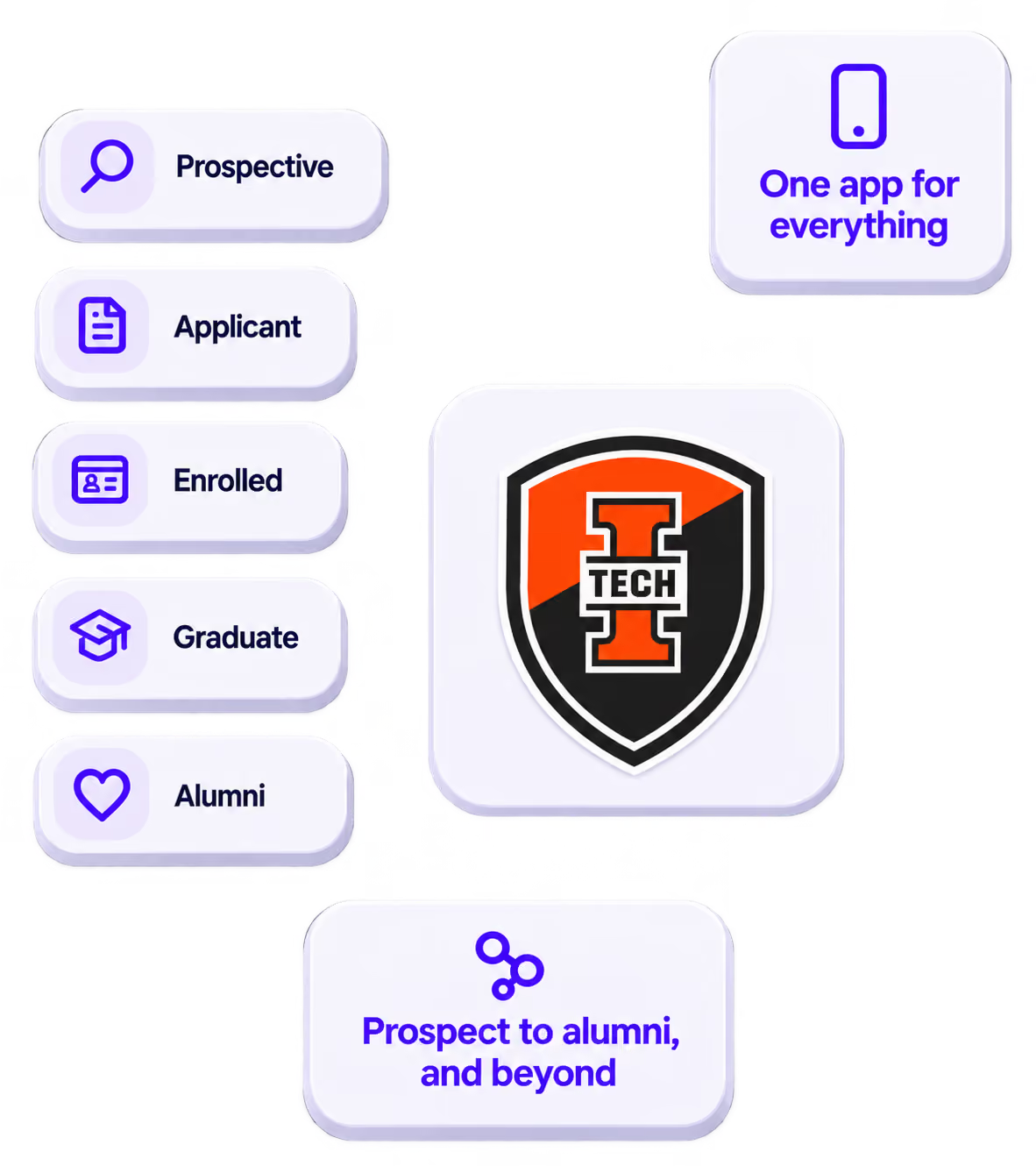
Stand out
Your own app helps you to stand out from the competition, stay top of mind, and be remembered.
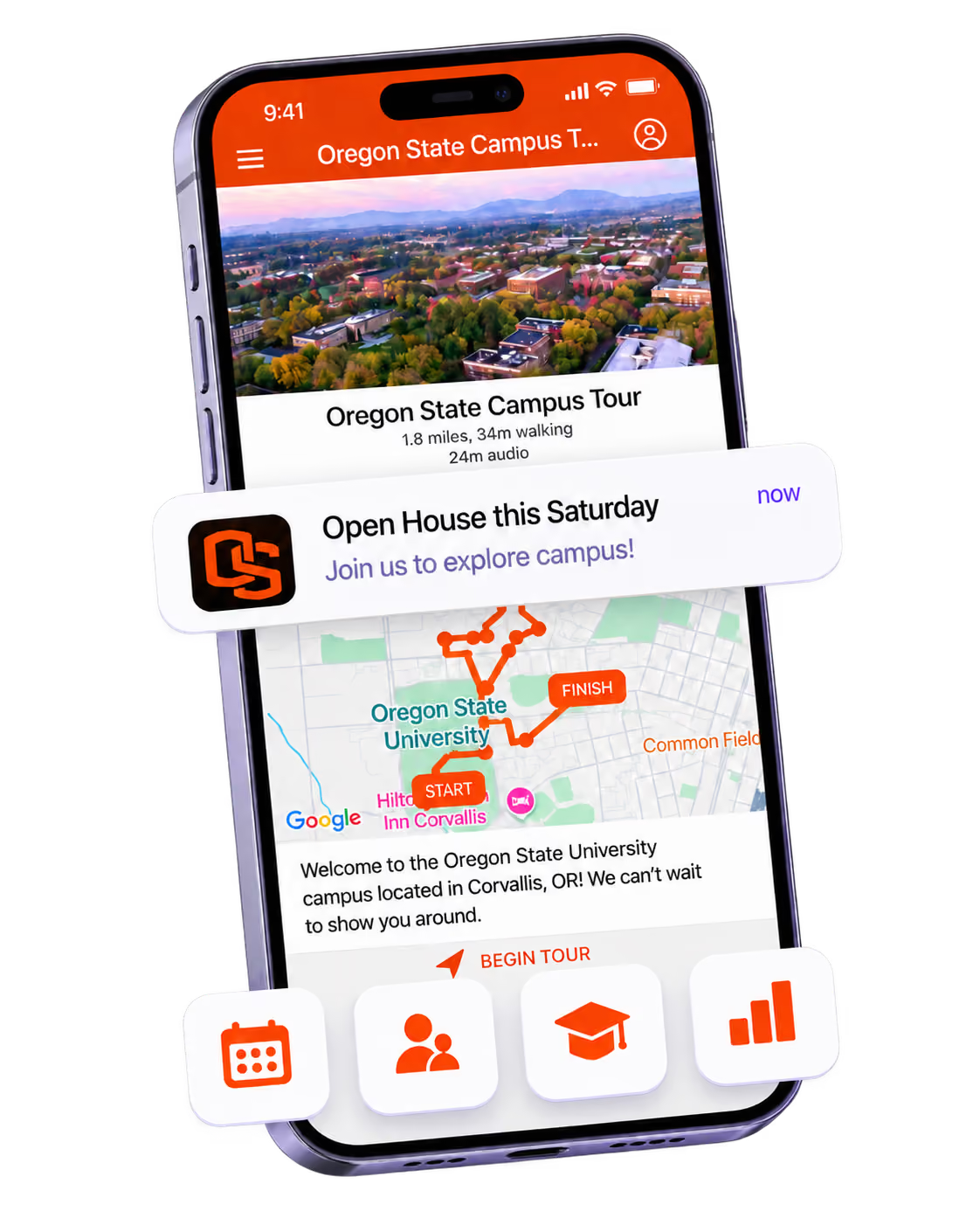

Get the Mobile App Playbook
A short guide to running the whole student journey in one app. No fluff, just what works.
for higher ed
Campus
Playbook
A practical guide to building a connected campus experience.
Free playbook
The Mobile App Playbook for Universities
Students decide if they belong long before they set foot on campus. This playbook shows how to win them over from the first visit through graduation.
- Grow enrollment and boost recruitment
- Increase belonging and retention
- Run every event from one branded app
By submitting, you agree to our Privacy Policy.
You're in.
.png)