
Campus apps by department
Admissions, orientation, student life, and more — one campus app that works across departments.

Campus apps by department
Admissions, orientation, student life, and more — one campus app that works across departments.
Build unlimited event apps on one license
One partnership for unlimited campus events — orientation, tours, student life, and everything in between.
Build unlimited event apps on one license
One partnership for unlimited campus events — orientation, tours, student life, and everything in between.
Compare event app platforms
See how Guidebook stacks up against other event app and registration platforms.
Compare event app platforms
See how Guidebook stacks up against other event app and registration platforms.
Event apps for nonprofit and community programs
Give members, volunteers, and donors one branded app for conferences, fundraisers, and year-round community.
Event apps for nonprofit and community programs
Give members, volunteers, and donors one branded app for conferences, fundraisers, and year-round community.
Campus integrations and an open API
Connect Guidebook with the campus systems, APIs, and tools your team already uses.
Campus integrations and an open API
Connect Guidebook with the campus systems, APIs, and tools your team already uses.
Event apps for corporate and enterprise teams
Internal meetings, offsites, and large-scale corporate events — with the branding and control enterprise teams need.
Event apps for corporate and enterprise teams
Internal meetings, offsites, and large-scale corporate events — with the branding and control enterprise teams need.
Create a branded event app with no coding
Put schedules, maps, resources, and updates in every attendee's pocket — built for campus events and programs.
Create a branded event app with no coding
Put schedules, maps, resources, and updates in every attendee's pocket — built for campus events and programs.
Launch a branded, white-label event app
A white-label event app with your branding, your content, and your attendee experience — no coding required.
Launch a branded, white-label event app
A white-label event app with your branding, your content, and your attendee experience — no coding required.
Everything in the Guidebook platform
Explore the features event teams use to engage attendees before, during, and after the event.
Everything in the Guidebook platform
Explore the features event teams use to engage attendees before, during, and after the event.
One app for in-person and virtual attendees
The same schedule, networking, and updates whether people are in the room or joining remotely.
One app for in-person and virtual attendees
The same schedule, networking, and updates whether people are in the room or joining remotely.
Event apps built for associations
Annual meetings, chapter events, and member engagement — without rebuilding a new app every year.
Event apps built for associations
Annual meetings, chapter events, and member engagement — without rebuilding a new app every year.
A branded event website that matches the app
Promote the event, collect interest, and keep branding consistent from the first click to check-in.
A branded event website that matches the app
Promote the event, collect interest, and keep branding consistent from the first click to check-in.
Plan, run, and measure events on one platform
App, registration, badges, and websites in one workflow — so planning isn't a pile of disconnected tools.
Plan, run, and measure events on one platform
App, registration, badges, and websites in one workflow — so planning isn't a pile of disconnected tools.
Keep members engaged between events
One branded app for the conference and everything that happens the other 51 weeks of the year.
Keep members engaged between events
One branded app for the conference and everything that happens the other 51 weeks of the year.
The conference app attendees actually use
Schedules, maps, networking, and live updates for annual meetings, summits, and multi-day conferences.
The conference app attendees actually use
Schedules, maps, networking, and live updates for annual meetings, summits, and multi-day conferences.
Registration that feeds your app and badges
Collect registrations, payments, and attendee data in the same platform as your event app.
Registration that feeds your app and badges
Collect registrations, payments, and attendee data in the same platform as your event app.
Design and print event badges in one place
Custom badges, QR check-in, and on-site printing — without a separate badge vendor.
Design and print event badges in one place
Custom badges, QR check-in, and on-site printing — without a separate badge vendor.
A Smaller School?
Deliver a polished, branded event experience without a large team or a big budget.
A Smaller School?
Deliver a polished, branded event experience without a large team or a big budget.
Running Family Programs?
Give families everything they need, from schedules and maps to real-time updates, all in one place.
Running Family Programs?
Give families everything they need, from schedules and maps to real-time updates, all in one place.
Coordinating Move-In Day?
Share updates, manage events, and keep students informed from move-in through the academic year.

Coordinating Move-In Day?
Share updates, manage events, and keep students informed from move-in through the academic year.
Offering Campus Tours?
Deliver branded, self-guided tour experiences with interactive maps and rich media, available 24/7.

Offering Campus Tours?
Deliver branded, self-guided tour experiences with interactive maps and rich media, available 24/7.
Organising a Career Fair?
Simplify logistics for students, employers, and Career Services staff with one easy-to-use app.
Organising a Career Fair?
Simplify logistics for students, employers, and Career Services staff with one easy-to-use app.
Managing Alumni Events?
Plan reunions, regional events, and fundraising campaigns with an app built for alumni engagement.
Managing Alumni Events?
Plan reunions, regional events, and fundraising campaigns with an app built for alumni engagement.
Boost Student Engagement
One hub for schedules, resources, and events that keeps students connected throughout the academic year.
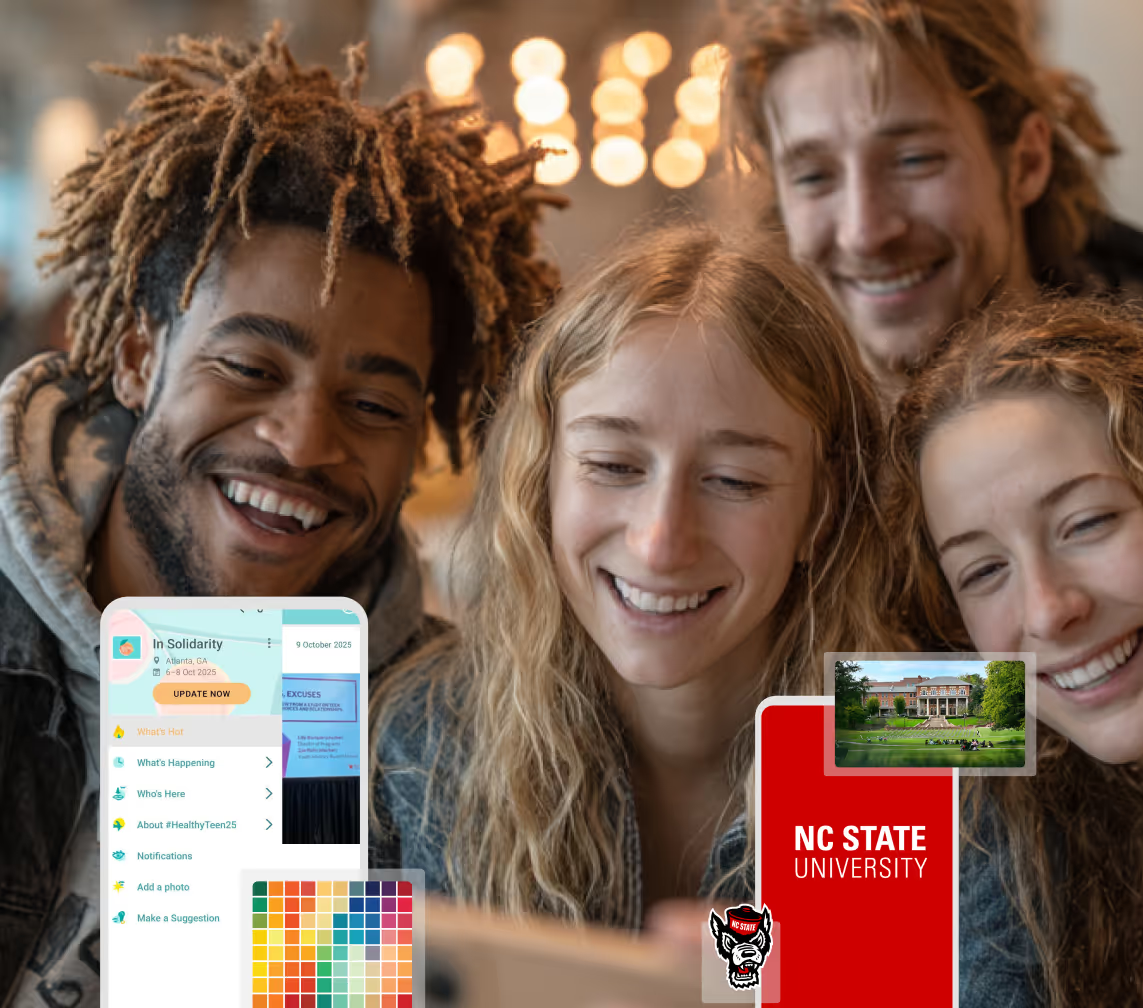
Boost Student Engagement
One hub for schedules, resources, and events that keeps students connected throughout the academic year.
Planning Orientation?
Help new students feel prepared from day one with schedules, campus resources, and real-time updates in one app.
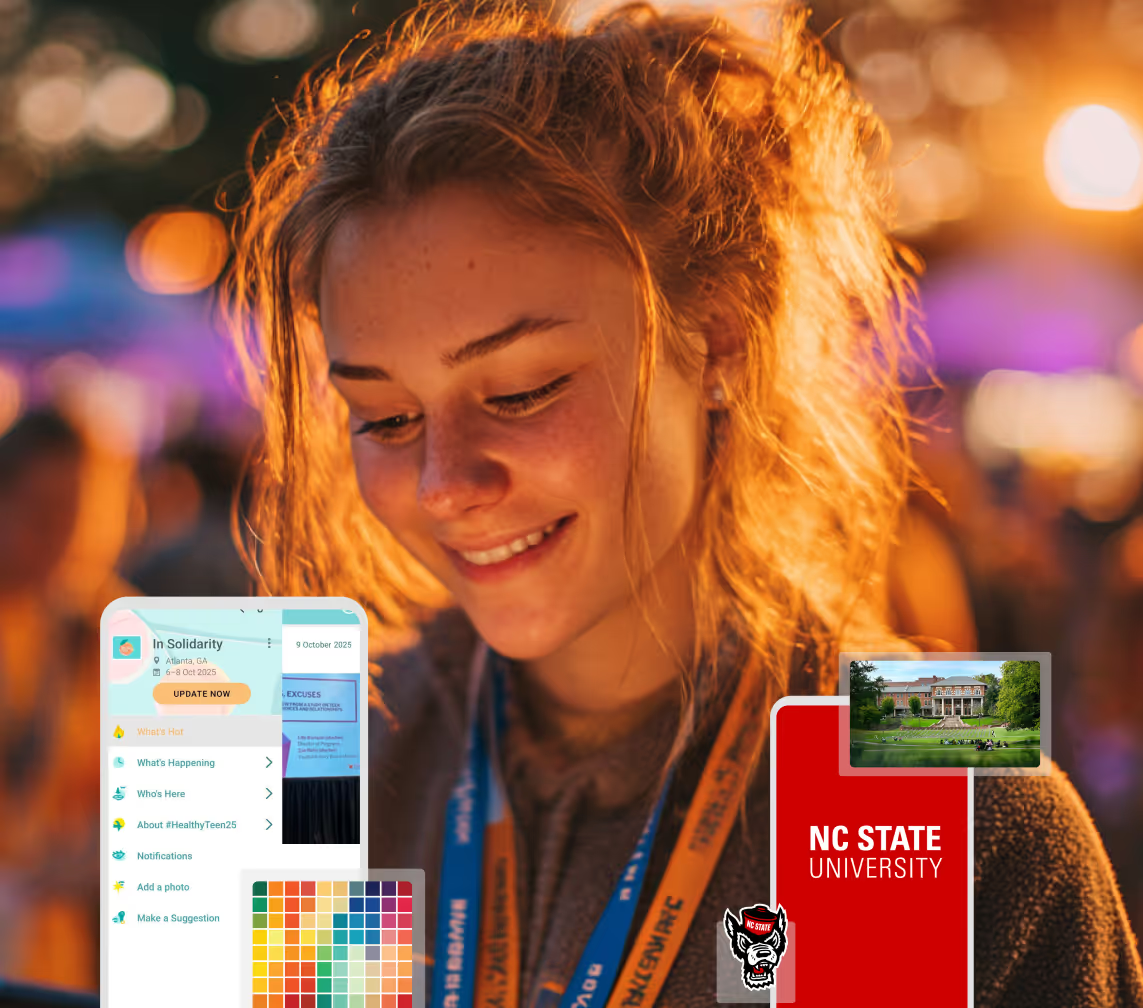
Planning Orientation?
Help new students feel prepared from day one with schedules, campus resources, and real-time updates in one app.
Running Admissions Events?
Manage open houses, tours, and yield events with a branded app that saves time and engages prospective students.

Running Admissions Events?
Manage open houses, tours, and yield events with a branded app that saves time and engages prospective students.
Get a custom Sponsorship Package Template
Stop starting from scratch. Grab free templates that helWe'll build a tailored sponsorship package with suggested pricing, tiers, and benefits..for your specific event.p you build professional sponsorship packages and close deals faster.
Get a custom Sponsorship Package Template
Stop starting from scratch. Grab free templates that helWe'll build a tailored sponsorship package with suggested pricing, tiers, and benefits..for your specific event.p you build professional sponsorship packages and close deals faster.
Plan Your Next Event Without Missing a Beat.
From venue selection to post-event wrap-up, this free checklist walks you through every step (so nothing falls through the cracks).
.avif)
Plan Your Next Event Without Missing a Beat.
From venue selection to post-event wrap-up, this free checklist walks you through every step (so nothing falls through the cracks).
Real Results From Real Events
100,000+ organizations trust Guidebook. See exactly how universities, associations, enterprises, and more put it to work.

Real Results From Real Events
100,000+ organizations trust Guidebook. See exactly how universities, associations, enterprises, and more put it to work.
Flexible pricing for every event size
Find the perfect plan for your needs, from intimate gatherings to large-scale conferences.
Flexible pricing for every event size
Find the perfect plan for your needs, from intimate gatherings to large-scale conferences.
Join our event experts
Watch on-demand webinars and join live sessions with industry leaders sharing best practices for event success.
.avif)
Join our event experts
Watch on-demand webinars and join live sessions with industry leaders sharing best practices for event success.
Guidebook in Action
Book a personalized walkthrough and discover how we help event teams create better attendee experiences.
Guidebook in Action
Book a personalized walkthrough and discover how we help event teams create better attendee experiences.

What is an Interactive Trade Show Booth?
Discover what an interactive trade show booth is and how it engages attendees with hands-on experiences. Explore design ideas, engagement strategies, and tips for maximizing event impact.

An Interactive Trade Show Booth is the strategic exhibit space that uses technology and hands-on experiences to actively engage visitors rather than passively display products. These booths transform attendees from observers into participants. They create memorable brand moments that drive real business results.
Here's the thing: static displays don't cut it anymore. Today's trade show attendees walk past hundreds of booths. They stop only when something grabs their attention. Interactive booths solve this problem by giving visitors a reason to engage, explore, and remember your brand long after the event ends.
Key Characteristics of Interactive Trade Show Booths
- Active Participation: Visitors do something rather than just look. They touch screens, play games, or test products firsthand.
- Technology Integration: Digital elements like touchscreens, VR headsets, or AR displays create immersive experiences that static signage can't match.
- Data Collection: Interactive elements capture visitor information naturally. Attendees share details willingly when they're engaged.
- Personalized Experiences: Smart booths adapt content based on visitor interests. This makes each interaction feel tailored and relevant.
- Social Sharing Potential: Photo ops, games, and unique experiences encourage visitors to post on social media. This extends your reach beyond the show floor.
- Extended Dwell Time: Engaging activities keep visitors at your booth longer. More time means more conversations and stronger connections.
- Measurable Results: Digital interactions generate trackable data. You'll know exactly how many people engaged and what interested them most.
Interactive Trade Show Booth vs. Related Exhibit Types
Traditional Display Booth
- Scope: Static banners, product displays, and printed materials
- Focus: Visual presentation and brand awareness
- Timeline: Quick setup with minimal technical requirements
- Channels: In-person viewing only
- Goal: Inform visitors about products and services
Experiential Marketing Activation
- Scope: Full sensory brand experiences, often outside traditional venues
- Focus: Emotional connection and brand storytelling
- Timeline: Extensive planning, often months in advance
- Channels: Physical experience plus social media amplification
- Goal: Create shareable moments that build brand loyalty
Virtual Exhibition Space
- Scope: Online-only booth accessible from anywhere
- Focus: Digital content delivery and remote engagement
- Timeline: Flexible, can run before, during, and after physical events
- Channels: Web browsers, virtual event platforms, mobile apps
- Goal: Reach attendees who can't visit in person
Interactive trade show booths blend the best of all three approaches. They combine physical presence with digital engagement and shareable experiences. This hybrid approach maximizes your investment in event marketing.
Essential Interactive Trade Show Booth Components
Touchscreen Displays and Kiosks
Touchscreens let visitors explore at their own pace. They can browse product catalogs, watch videos, or take quizzes. Self-service kiosks also free up your staff to have deeper conversations with qualified leads.
The best touchscreen experiences are intuitive. Visitors shouldn't need instructions. Keep interfaces simple with clear calls to action.
Virtual and Augmented Reality Experiences
VR transports visitors to impossible places. Show them inside your factory, on a job site, or using your product in action. AR overlays digital content onto the real world. Visitors can see how furniture looks in their office or how equipment fits their space.
These technologies create "wow" moments. They also solve practical problems. Complex products become easy to understand when people can experience them virtually.
Gamification Elements
Games draw crowds. Leaderboards spark competition. Prizes motivate participation. But the best booth games do more than entertain. They teach visitors about your products while they play.
Consider these gamification options:
- Spin-to-win wheels with branded prizes
- Trivia games about your industry
- Product configuration challenges
- Scavenger hunts across the show floor
- Photo contests with social sharing
Live Demonstrations and Product Testing
Nothing beats hands-on experience. Let visitors try your products themselves. Guide them through key features. Answer questions in real time.
Live demos also create natural gathering points. Crowds attract more crowds. Schedule demonstrations throughout the day to maintain consistent booth traffic.
Lead Capture Technology
Every interaction should capture data. Badge scanners, digital forms, and app integrations make this seamless. The key is offering value in exchange for information.
Visitors happily share contact details when they get something useful. This might be contest entries, personalized recommendations, or exclusive content access. Your event check-in software can integrate with booth systems for smooth data flow.
How Interactive Trade Show Booths Work
Pre-Show Planning and Design
Great interactive booths start months before the event. Define your goals first. Do you want leads, brand awareness, or product education? Your objectives shape every design decision.
Work with your event planning process to align booth activities with overall event strategy. Consider traffic flow, electrical needs, and internet requirements early.
Technology Setup and Testing
Interactive elements need thorough testing. Check every touchscreen, game, and display before the show opens. Have backup plans for technical failures. Nothing kills booth energy faster than a "sorry, this isn't working" sign.
Bring extra cables, chargers, and equipment. Train your team on troubleshooting basics. Quick fixes keep the experience running smoothly.
Staff Training and Engagement
Your team makes or breaks the booth experience. Train them on every interactive element. They should guide visitors naturally, not hover awkwardly.
The best booth staff:
- Greet visitors warmly within seconds
- Ask questions to understand visitor needs
- Match interactive experiences to those needs
- Capture lead information without being pushy
- Follow up with qualified prospects quickly
Real-Time Optimization
Monitor what's working during the show. Which activities draw the biggest crowds? Where do visitors lose interest? Adjust on the fly.
Track metrics like dwell time, interaction completions, and lead captures. Use this data to improve future events. Your event ROI depends on continuous improvement.
Why Interactive Trade Show Booths Matter
For Event Success:
- Increased Foot Traffic: Interactive elements visible from the aisle draw curious visitors who might otherwise walk past.
- Longer Engagement Time: Visitors spend 3-5 times longer at interactive booths compared to static displays.
- Better Lead Quality: Engaged visitors are more qualified. They've already shown interest through their interactions.
- Social Media Amplification: Shareable experiences extend your reach far beyond the show floor.
- Competitive Differentiation: Stand out in a sea of similar booths with memorable, unique experiences.
For Business Objectives:
- Higher Conversion Rates: Hands-on experience builds confidence. Confident prospects become customers faster.
- Valuable Data Collection: Interactive elements capture behavioral data that surveys can't match.
- Stronger Brand Recall: Experiences stick in memory longer than brochures or conversations alone.
- Sales Team Efficiency: Pre-qualified leads from booth interactions save time in the sales process.
- Measurable Marketing ROI: Digital interactions provide clear metrics for event digital marketing success.
Platforms like Guidebook's event management platform help you extend interactive experiences beyond the booth. Mobile apps keep attendees engaged before, during, and after the show.
Interactive Trade Show Booth Best Practices
- Start with Clear Goals: Define what success looks like before designing anything. Lead quantity? Brand awareness? Product education? Your goals drive every decision.
- Know Your Audience: Research who attends the show. What problems do they face? What interests them? Design experiences that speak directly to their needs.
- Keep Technology Intuitive: If visitors need instructions, your tech is too complicated. The best interactive elements feel natural and obvious.
- Balance High-Tech and High-Touch: Technology should enhance human connection, not replace it. Use interactive elements to start conversations, not avoid them.
- Plan for Lines and Crowds: Popular activities create bottlenecks. Design your booth flow to handle success. Add secondary engagement options for waiting visitors.
- Integrate Lead Capture Seamlessly: Don't interrupt the experience to collect information. Build data capture into the interaction itself.
- Train Staff Thoroughly: Your team should know every feature of every interactive element. They should also know when to step back and let visitors explore.
- Test Everything Multiple Times: Run through every scenario before the show. What happens when WiFi fails? When screens freeze? When crowds overwhelm capacity?
- Follow Up Fast: Leads go cold quickly. Contact engaged visitors within 24-48 hours while the experience is fresh. Use your event management tips to streamline follow-up.
- Measure and Learn: Track every metric you can. Analyze what worked and what didn't. Apply lessons to your next event.
Common Interactive Trade Show Booth Mistakes
Prioritizing Flash Over Function: Impressive technology means nothing if it doesn't serve your goals. A simple touchscreen that captures leads beats a fancy VR experience that just entertains. Always ask: "How does this help us achieve our objectives?"
Ignoring the Human Element: Technology can't replace genuine human connection. Booths that rely entirely on screens feel cold and impersonal. Use interactive elements to start conversations, then let your team build relationships.
Underestimating Technical Requirements: Interactive booths need power, internet, and space. Many exhibitors discover too late that their booth location can't support their technology. Confirm requirements with show organizers months in advance.
Skipping Staff Training: Untrained staff fumble with technology and miss engagement opportunities. They can't answer questions about interactive features. Invest time in thorough training before every show.
Forgetting Mobile Integration: Your booth experience shouldn't end when visitors walk away. Connect interactive elements to mobile apps, email sequences, and social media. Extend engagement beyond the show floor with tools like branded apps.
Neglecting Data Strategy: Collecting data without a plan wastes opportunity. Know exactly what information you need and how you'll use it before the show starts. Align with your event planning team on data requirements.
Overcomplicating the Experience: Too many options overwhelm visitors. They don't know where to start, so they leave. Focus on one or two signature experiences rather than a dozen mediocre ones.
Final Thoughts
Interactive trade show booths have become essential for standing out in crowded exhibition halls. Static displays simply can't compete with immersive, engaging experiences. The brands that invest in interactivity capture more attention, generate better leads, and build stronger relationships.
The trade show industry continues evolving rapidly. Attendee expectations rise every year. What felt innovative last year becomes standard this year. Staying ahead requires continuous experimentation and improvement. Keep exploring new event trends to maintain your competitive edge.
The good news? You don't need massive budgets to create interactive experiences. Start small with touchscreens or simple games. Learn what resonates with your audience. Scale up as you prove results. Even modest interactivity outperforms passive displays.
Ready to take your trade show presence to the next level? Request a demo to see how Guidebook helps exhibitors extend engagement beyond the booth. From event registration to post-show follow-up, the right technology makes every interaction count. Check out our case studies for inspiration from brands already winning at trade shows.
Your next trade show booth could be the one attendees talk about for months. Make it interactive, make it memorable, and make it count.
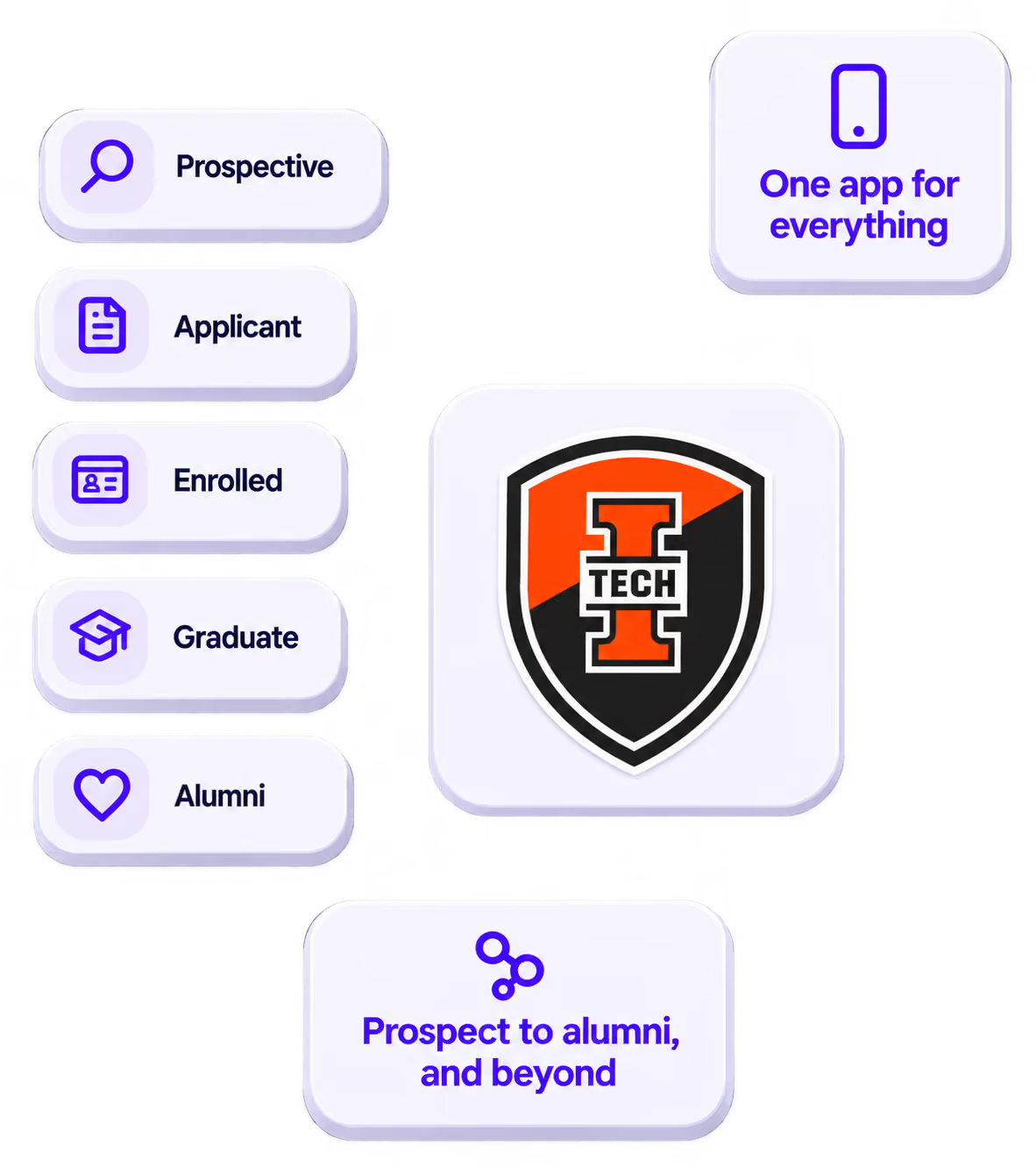
The power of your brand in your app, from first visit to alumni.
Build trust
Attendees download your app, not ours. Your name, colors, and crest in the stores.
.avif)
One place for the whole event
Schedules, maps, registration, and updates in one branded hub - not five tools.
Stand out
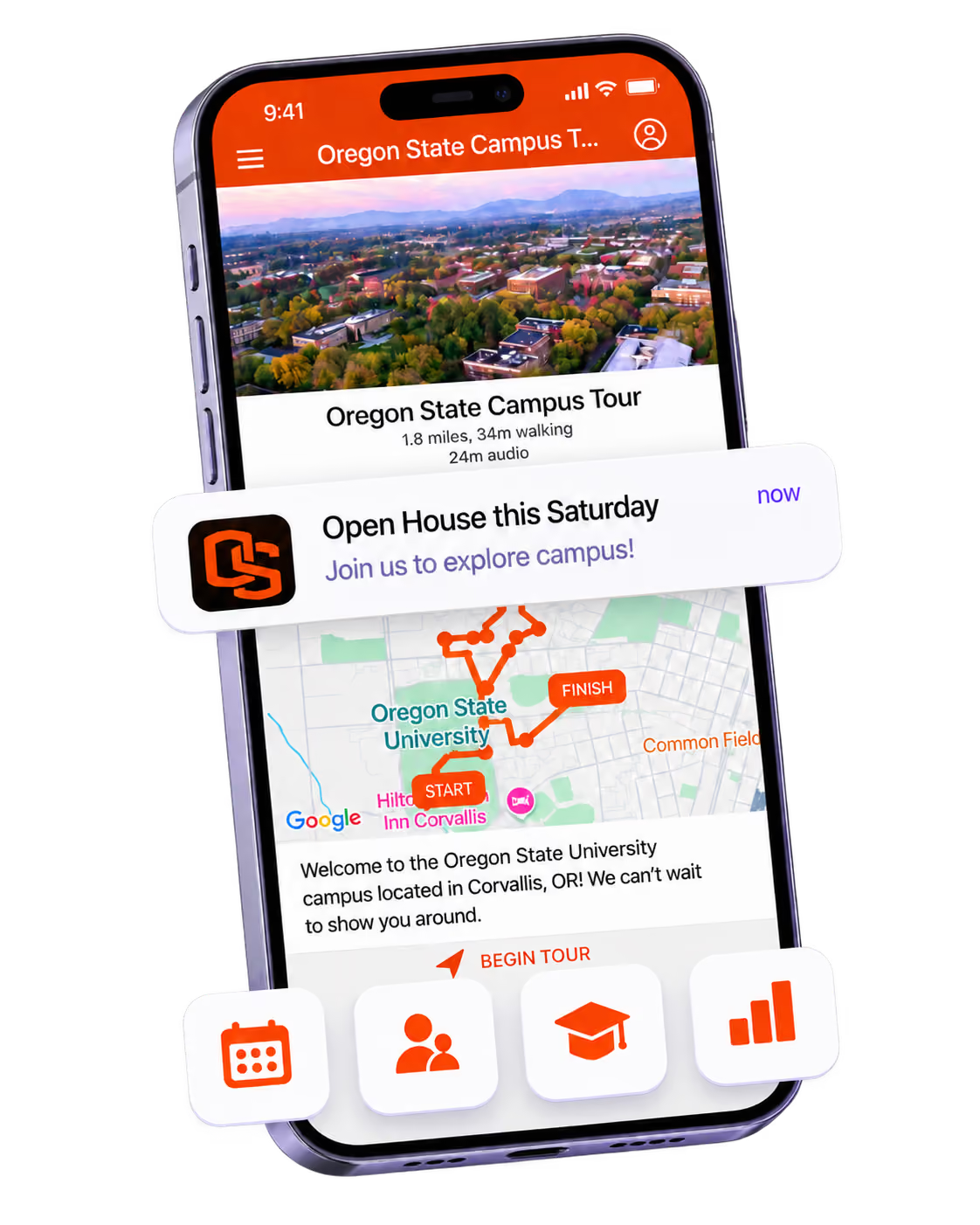
A branded app is what people keep on their phone after the printed program is in the recycling.

Get the Mobile App Playbook
A short guide to running the whole student journey in one app. No fluff, just what works.
for higher ed
Campus
Playbook
A practical guide to building a connected campus experience.
Free playbook
The Mobile App Playbook for Universities
Students decide if they belong long before they set foot on campus. This playbook shows how to win them over from the first visit through graduation.
- Grow enrollment and boost recruitment
- Increase belonging and retention
- Run every event from one branded app
By submitting, you agree to our Privacy Policy.
You're in.
.png)