
Campus apps by department
Admissions, orientation, student life, and more — one campus app that works across departments.

Campus apps by department
Admissions, orientation, student life, and more — one campus app that works across departments.
Build unlimited event apps on one license
One partnership for unlimited campus events — orientation, tours, student life, and everything in between.
Build unlimited event apps on one license
One partnership for unlimited campus events — orientation, tours, student life, and everything in between.
Compare event app platforms
See how Guidebook stacks up against other event app and registration platforms.
Compare event app platforms
See how Guidebook stacks up against other event app and registration platforms.
Event apps for nonprofit and community programs
Give members, volunteers, and donors one branded app for conferences, fundraisers, and year-round community.
Event apps for nonprofit and community programs
Give members, volunteers, and donors one branded app for conferences, fundraisers, and year-round community.
Campus integrations and an open API
Connect Guidebook with the campus systems, APIs, and tools your team already uses.
Campus integrations and an open API
Connect Guidebook with the campus systems, APIs, and tools your team already uses.
Event apps for corporate and enterprise teams
Internal meetings, offsites, and large-scale corporate events — with the branding and control enterprise teams need.
Event apps for corporate and enterprise teams
Internal meetings, offsites, and large-scale corporate events — with the branding and control enterprise teams need.
Create a branded event app with no coding
Put schedules, maps, resources, and updates in every attendee's pocket — built for campus events and programs.
Create a branded event app with no coding
Put schedules, maps, resources, and updates in every attendee's pocket — built for campus events and programs.
Launch a branded, white-label event app
A white-label event app with your branding, your content, and your attendee experience — no coding required.
Launch a branded, white-label event app
A white-label event app with your branding, your content, and your attendee experience — no coding required.
Everything in the Guidebook platform
Explore the features event teams use to engage attendees before, during, and after the event.
Everything in the Guidebook platform
Explore the features event teams use to engage attendees before, during, and after the event.
One app for in-person and virtual attendees
The same schedule, networking, and updates whether people are in the room or joining remotely.
One app for in-person and virtual attendees
The same schedule, networking, and updates whether people are in the room or joining remotely.
Event apps built for associations
Annual meetings, chapter events, and member engagement — without rebuilding a new app every year.
Event apps built for associations
Annual meetings, chapter events, and member engagement — without rebuilding a new app every year.
A branded event website that matches the app
Promote the event, collect interest, and keep branding consistent from the first click to check-in.
A branded event website that matches the app
Promote the event, collect interest, and keep branding consistent from the first click to check-in.
Plan, run, and measure events on one platform
App, registration, badges, and websites in one workflow — so planning isn't a pile of disconnected tools.
Plan, run, and measure events on one platform
App, registration, badges, and websites in one workflow — so planning isn't a pile of disconnected tools.
Keep members engaged between events
One branded app for the conference and everything that happens the other 51 weeks of the year.
Keep members engaged between events
One branded app for the conference and everything that happens the other 51 weeks of the year.
The conference app attendees actually use
Schedules, maps, networking, and live updates for annual meetings, summits, and multi-day conferences.
The conference app attendees actually use
Schedules, maps, networking, and live updates for annual meetings, summits, and multi-day conferences.
Registration that feeds your app and badges
Collect registrations, payments, and attendee data in the same platform as your event app.
Registration that feeds your app and badges
Collect registrations, payments, and attendee data in the same platform as your event app.
Design and print event badges in one place
Custom badges, QR check-in, and on-site printing — without a separate badge vendor.
Design and print event badges in one place
Custom badges, QR check-in, and on-site printing — without a separate badge vendor.
A Smaller School?
Deliver a polished, branded event experience without a large team or a big budget.
A Smaller School?
Deliver a polished, branded event experience without a large team or a big budget.
Running Family Programs?
Give families everything they need, from schedules and maps to real-time updates, all in one place.
Running Family Programs?
Give families everything they need, from schedules and maps to real-time updates, all in one place.
Coordinating Move-In Day?
Share updates, manage events, and keep students informed from move-in through the academic year.

Coordinating Move-In Day?
Share updates, manage events, and keep students informed from move-in through the academic year.
Offering Campus Tours?
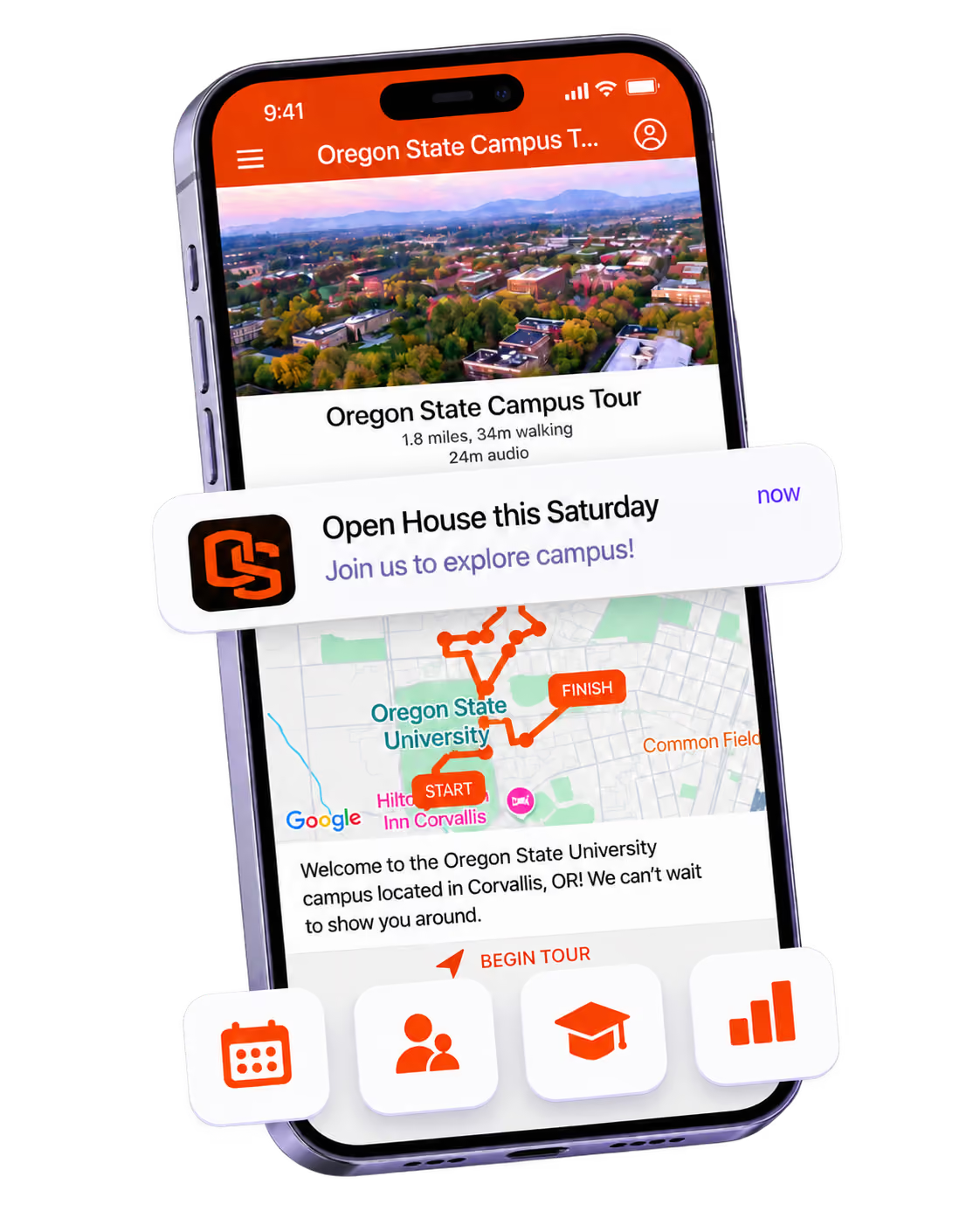
Deliver branded, self-guided tour experiences with interactive maps and rich media, available 24/7.

Offering Campus Tours?
Deliver branded, self-guided tour experiences with interactive maps and rich media, available 24/7.
Organising a Career Fair?
Simplify logistics for students, employers, and Career Services staff with one easy-to-use app.
Organising a Career Fair?
Simplify logistics for students, employers, and Career Services staff with one easy-to-use app.
Managing Alumni Events?
Plan reunions, regional events, and fundraising campaigns with an app built for alumni engagement.
Managing Alumni Events?
Plan reunions, regional events, and fundraising campaigns with an app built for alumni engagement.
Boost Student Engagement
One hub for schedules, resources, and events that keeps students connected throughout the academic year.
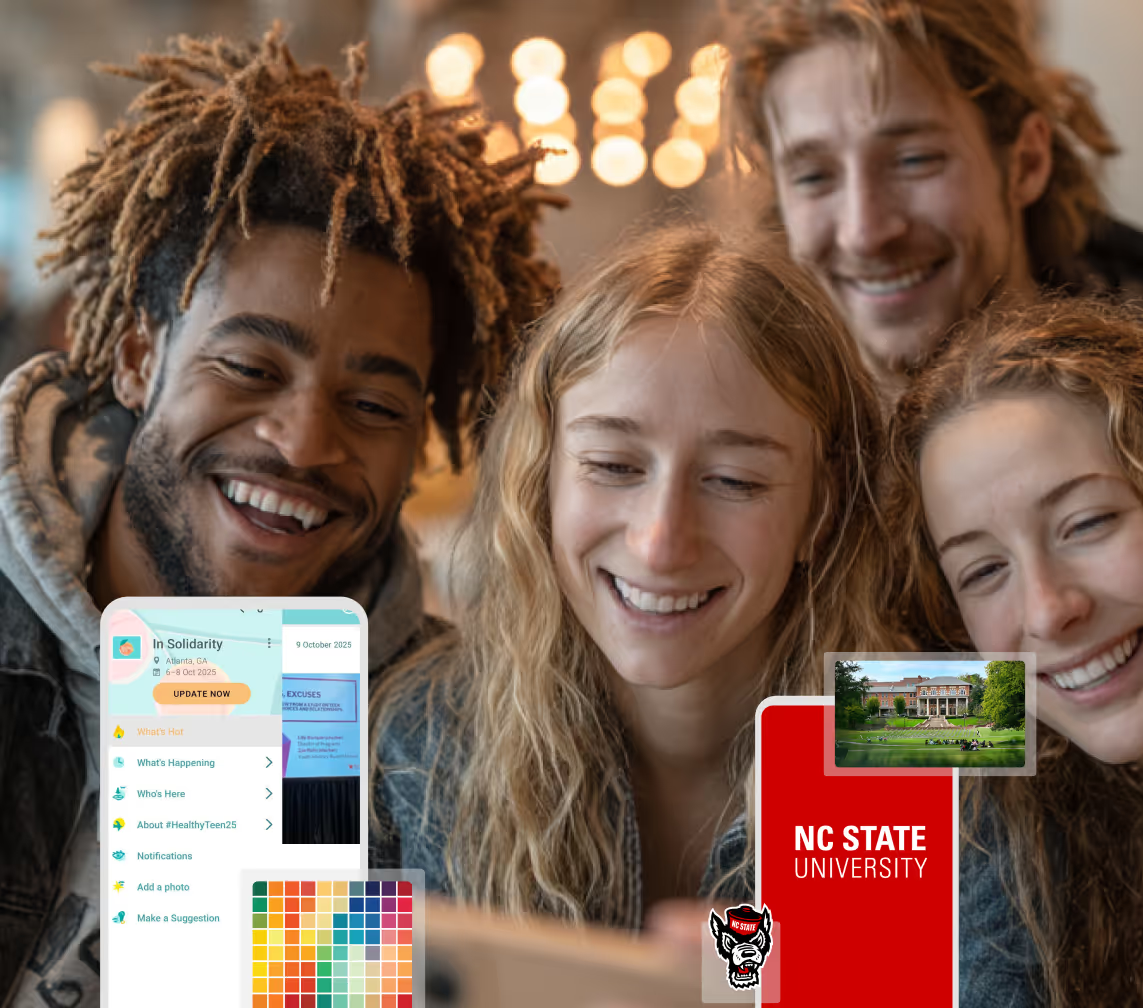
Boost Student Engagement
One hub for schedules, resources, and events that keeps students connected throughout the academic year.
Planning Orientation?
Help new students feel prepared from day one with schedules, campus resources, and real-time updates in one app.
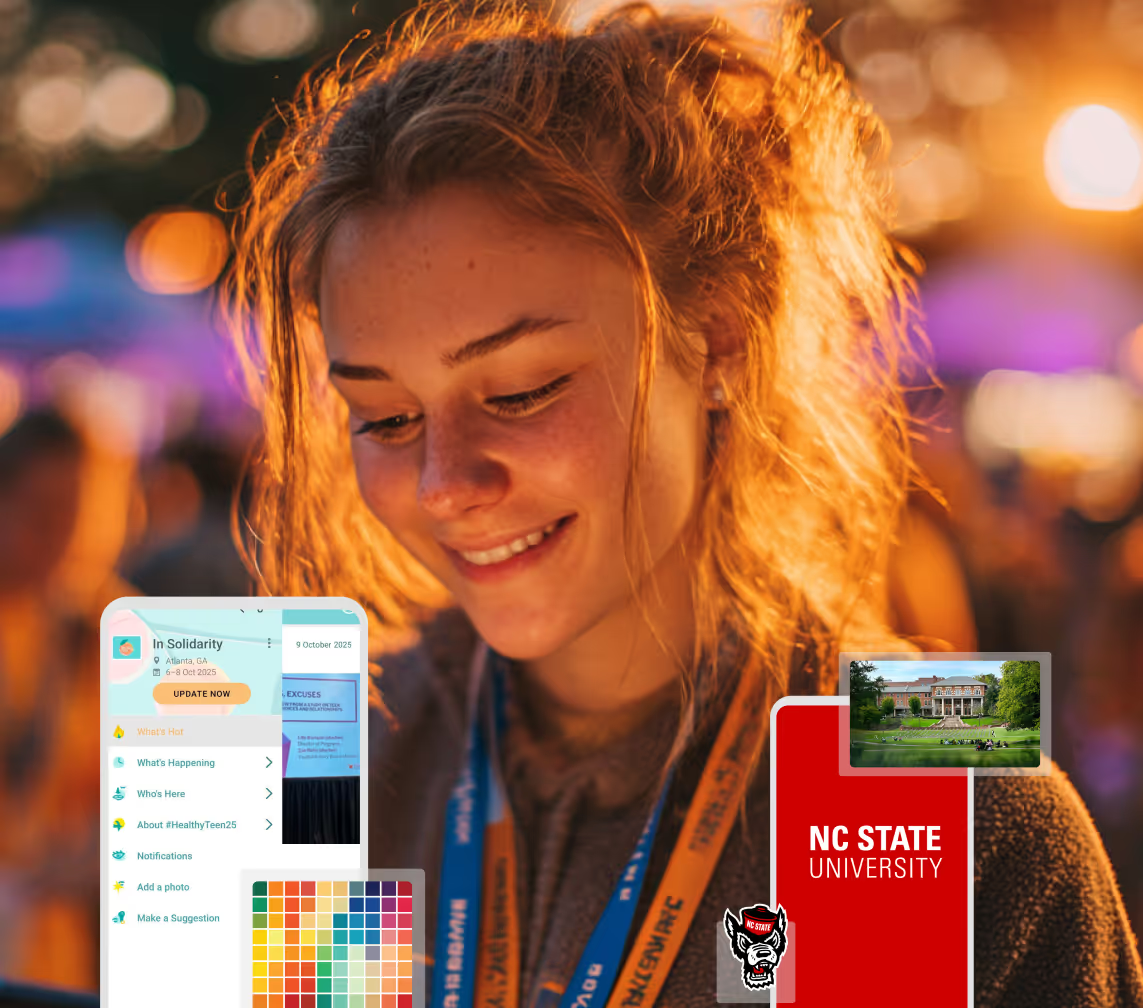
Planning Orientation?
Help new students feel prepared from day one with schedules, campus resources, and real-time updates in one app.
Running Admissions Events?
Manage open houses, tours, and yield events with a branded app that saves time and engages prospective students.

Running Admissions Events?
Manage open houses, tours, and yield events with a branded app that saves time and engages prospective students.
Get a custom Sponsorship Package Template
Stop starting from scratch. Grab free templates that helWe'll build a tailored sponsorship package with suggested pricing, tiers, and benefits..for your specific event.p you build professional sponsorship packages and close deals faster.
Get a custom Sponsorship Package Template
Stop starting from scratch. Grab free templates that helWe'll build a tailored sponsorship package with suggested pricing, tiers, and benefits..for your specific event.p you build professional sponsorship packages and close deals faster.
Plan Your Next Event Without Missing a Beat.
From venue selection to post-event wrap-up, this free checklist walks you through every step (so nothing falls through the cracks).
.avif)
Plan Your Next Event Without Missing a Beat.
From venue selection to post-event wrap-up, this free checklist walks you through every step (so nothing falls through the cracks).
Real Results From Real Events
100,000+ organizations trust Guidebook. See exactly how universities, associations, enterprises, and more put it to work.

Real Results From Real Events
100,000+ organizations trust Guidebook. See exactly how universities, associations, enterprises, and more put it to work.
Flexible pricing for every event size
Find the perfect plan for your needs, from intimate gatherings to large-scale conferences.

Flexible pricing for every event size
Find the perfect plan for your needs, from intimate gatherings to large-scale conferences.
Join our event experts
Watch on-demand webinars and join live sessions with industry leaders sharing best practices for event success.
.avif)
Join our event experts
Watch on-demand webinars and join live sessions with industry leaders sharing best practices for event success.
Guidebook in Action
Book a personalized walkthrough and discover how we help event teams create better attendee experiences.
Guidebook in Action
Book a personalized walkthrough and discover how we help event teams create better attendee experiences.

What creates a seamless event check-in experience?
A seamless event check-in experience is created through efficient technology, clear communication, and streamlined processes. Discover best practices, essential tools, and tips for smooth guest arrivals.

Event check-in experience is the complete journey attendees take from arrival to entry, shaping their first impression and setting the tone for everything that follows. It covers every touchpoint: signage, queues, badge pickup, credential verification, and staff interactions. A smooth check-in builds excitement. A clunky one creates frustration that lingers all day.
Here's the thing: check-in isn't just logistics. It's your event's handshake. Attendees form opinions within seconds of arriving. Long lines signal disorganization. Confusing signage suggests chaos ahead. But a fast, friendly, tech-enabled welcome? That tells people they're in good hands. The best event planners treat check-in as a strategic moment, not an afterthought.
Key Characteristics of Event Check-In Experience
- Speed and Efficiency: Top check-in experiences process attendees in under 60 seconds. Every extra minute in line chips away at goodwill.
- Personalization: Great check-in greets people by name and delivers customized materials based on their registration type or session preferences.
- Technology Integration: Modern check-in uses event check-in software like QR codes, mobile apps, and self-service kiosks to eliminate bottlenecks.
- Clear Wayfinding: Attendees should know exactly where to go from the moment they spot your venue. Signage, staff, and digital tools work together.
- Brand Consistency: Check-in areas reflect your event's visual identity. Colors, logos, and messaging create a cohesive first impression.
- Staff Preparedness: Trained, friendly staff can troubleshoot issues quickly. They're the human element that technology can't replace.
- Data Capture: Smart check-in collects attendance data in real-time, feeding into your event ROI calculations and post-event analysis.
Event Check-In Experience vs. Related Concepts
Event Registration
- Scope: Pre-event sign-up and payment processing
- Focus: Collecting attendee information and preferences
- Timeline: Days, weeks, or months before the event
- Channels: Website forms, email, phone
- Goal: Secure commitments and gather data for planning
Event Check-In Experience
- Scope: On-site arrival and entry process
- Focus: Verifying credentials and welcoming attendees
- Timeline: Event day, typically 15-60 minutes before start
- Channels: Physical stations, mobile apps, kiosks
- Goal: Create positive first impressions and capture attendance
Badge Management
- Scope: Creating, printing, and distributing name badges
- Focus: Identification and access control
- Timeline: Pre-event production through on-site distribution
- Channels: Print stations, pre-printed materials, on-demand printing
- Goal: Enable networking and manage venue access
Event registration happens before your event. Check-in happens at your event. Badge management is one component of check-in. Understanding these distinctions helps you optimize each phase separately while ensuring they work together seamlessly.
Essential Components of Event Check-In Experience
Pre-Arrival Communication
Check-in starts before anyone shows up. Send attendees clear instructions 24-48 hours before your event. Include parking details, entrance locations, and what they need to bring.
Mobile confirmations with QR codes speed things up dramatically. When attendees have their credentials ready on their phones, you've already won half the battle.
Physical Space Design
Your check-in area needs room to breathe. Cramped spaces create bottlenecks and stress. Plan for peak arrival times, not average flow.
Consider these layout elements:
- Clear sight lines from entrance to check-in stations
- Separate lanes for pre-registered vs. walk-in attendees
- Adequate space for queuing without blocking pathways
- Accessible routes for attendees with mobility needs
Technology Infrastructure
Your tech setup can make or break check-in. Test everything the day before. Then test it again the morning of.
Essential tech considerations include:
- Reliable WiFi or cellular backup for scanning devices
- Multiple devices per station to prevent single points of failure
- Battery packs for mobile devices
- Offline capability in case connectivity drops
Staffing and Training
Even the best technology needs human support. Staff should know how to handle common issues without escalating every problem.
Train your team on the check-in system at least one week before the event. Role-play difficult scenarios: missing registrations, name changes, VIP arrivals, and technical failures.
Contingency Planning
What happens when the WiFi dies? When your badge printer jams? When 200 people arrive at once?
Build backup plans for every critical system. Keep printed attendee lists as a last resort. Have extra supplies ready. The best check-in experiences are the ones where attendees never see the problems you solved behind the scenes.
The Event Check-In Process
Set Up Your Check-In Stations
Arrive early. Really early. Give yourself at least two hours before doors open for a mid-sized event.
Station setup checklist:
- Test all devices and confirm software is updated
- Verify badge stock and printer functionality
- Position signage for maximum visibility
- Brief staff on their specific roles and escalation procedures
Manage the Arrival Rush
Most events see 60-70% of attendees arrive in the first 30 minutes. Plan your staffing accordingly. You might need twice as many people at peak times.
Use line management techniques from theme parks and airports. Stanchions guide flow. Greeters direct traffic. Express lanes reward prepared attendees.
Handle Exceptions Gracefully
Not every check-in goes smoothly. Some attendees forget their confirmation. Others have name spelling issues. A few will insist they registered when they didn't.
Create a dedicated "help desk" station away from the main flow. This keeps problems from slowing down everyone else. Empower staff to solve issues on the spot when possible.
Capture Real-Time Data
Modern event management platforms track check-ins as they happen. This data powers everything from session capacity management to sponsor reports.
Monitor your dashboard throughout the event. If certain sessions are filling up, you can alert attendees before they walk across the venue to find standing room only.
Why Event Check-In Experience Matters
For Event Success:
- First Impression Impact: Attendees who have positive check-in experiences rate overall event satisfaction 23% higher on average.
- Reduced Stress: Smooth arrivals let attendees focus on networking and content instead of recovering from frustration.
- Accurate Attendance Data: Real-time check-in feeds into event planning processes for future improvements.
- Session Management: Knowing who's actually present helps you manage room capacities and catering counts.
- Security and Compliance: Proper check-in ensures only registered attendees access your event, protecting everyone inside.
For Business Objectives:
- Sponsor Value: Verified attendance numbers strengthen your sponsorship packages and renewal conversations.
- Lead Quality: Badge scans at sessions and booths create actionable data for exhibitors and partners.
- Brand Perception: Professional check-in signals organizational competence to attendees, speakers, and stakeholders.
- Operational Efficiency: Faster check-in means fewer staff hours and lower labor costs per attendee.
- Post-Event Marketing: Attendance data powers personalized follow-up through your event digital marketing efforts.
Guidebook's event management platform streamlines check-in with mobile-first tools that attendees actually enjoy using. From QR code scanning to real-time attendance tracking, the right technology transforms check-in from a chore into a competitive advantage.
Event Check-In Experience Best Practices
- Send Pre-Event Instructions 48 Hours Out: Include parking info, entrance locations, and mobile tickets. Prepared attendees check in faster.
- Use QR Codes for Instant Verification: Scanning beats typing names every time. Most attendees can pull up their code in seconds.
- Create Express Lanes for Pre-Registered Guests: Reward people who registered early with faster entry. It also encourages advance registration for future events.
- Staff Up for Peak Arrival Times: Double your check-in team for the first 45 minutes. Scale down as the rush subsides.
- Position Greeters Before the Check-In Area: Friendly faces who direct traffic prevent confusion and reduce perceived wait times.
- Test All Technology the Morning Of: WiFi, scanners, printers, and backup systems. If something's going to fail, find out before attendees arrive.
- Keep Printed Backup Lists Ready: Technology fails sometimes. Paper lists let you keep moving when systems go down.
- Train Staff on Common Exceptions: Name changes, missing registrations, and VIP handling. Confident staff solve problems faster.
- Collect Feedback at Check-In: A simple "How was your arrival experience?" question captures insights while memories are fresh.
- Debrief Within 24 Hours: Document what worked and what didn't using an event debrief template while details are still clear.
Common Event Check-In Experience Mistakes
Underestimating Peak Arrival Volume: Most planners staff for average flow, not the 30-minute rush when everyone shows up at once. This creates long lines and frustrated attendees right when first impressions matter most.
Relying on Single Points of Failure: One WiFi network. One badge printer. One person who knows the system. When that single point fails, everything stops. Build redundancy into every critical component.
Skipping the Tech Rehearsal: "It worked in the office" doesn't mean it'll work on-site. Venue WiFi, lighting conditions, and power availability all affect performance. Test in the actual space.
Ignoring Accessibility Needs: Check-in stations that work for standing adults may not work for wheelchair users or people with visual impairments. Design for everyone from the start.
Forgetting About Walk-Ins: Even "registration required" events get walk-ins. Have a process ready. Turning people away creates bad word-of-mouth. Accommodating them without a plan creates chaos.
Overcomplicating the Process: Every extra step adds friction. If attendees need to show ID, scan a code, sign a waiver, pick up a badge, AND grab a lanyard from separate stations, you've created an obstacle course.
Neglecting Staff Breaks: Check-in teams standing for hours without breaks get tired and cranky. Tired staff make mistakes and provide worse service. Rotate people out regularly.
Final Thoughts
Event check-in experience deserves more attention than most planners give it. Those first few minutes shape how attendees feel about everything that follows. A smooth arrival builds goodwill. A rough one creates a deficit you'll spend the rest of the event trying to overcome.
The events industry has moved far beyond clipboard sign-in sheets. Today's attendees expect the same seamless experiences they get from airline check-in and hotel arrivals. Meeting those expectations requires thoughtful planning, reliable technology, and well-trained staff working together.
Think of check-in as your event's opening act. It sets the energy. It establishes the tone. It tells attendees whether they made a good decision showing up. The best event coordinators treat it as a strategic opportunity, not just a logistical necessity.
Ready to transform your check-in experience? Guidebook's event management platform combines mobile check-in, real-time attendance tracking, and branded app experiences that attendees love. Explore our case studies to see how organizations like yours have streamlined their arrivals. Or book a demo to see the platform in action. Your attendees' first impression is waiting to be upgraded.
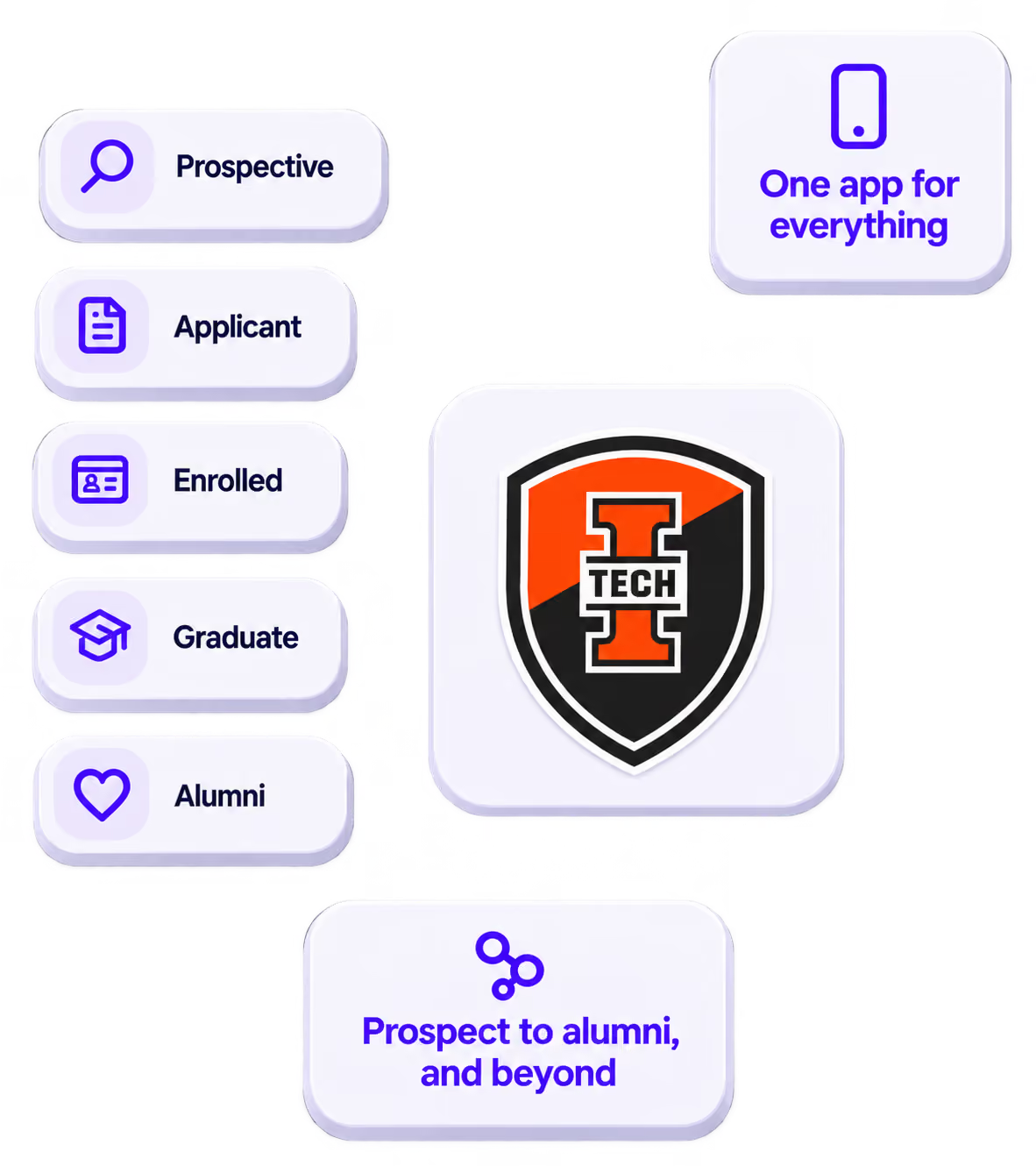
The power of your brand in your app, from first visit to alumni.
Build trust
Attendees download your app, not ours. Your name, colors, and crest in the stores.
.avif)
One place for the whole event
Schedules, maps, registration, and updates in one branded hub - not five tools.
Stand out
A branded app is what people keep on their phone after the printed program is in the recycling.

Get the Mobile App Playbook
A short guide to running the whole student journey in one app. No fluff, just what works.
for higher ed
Campus
Playbook
A practical guide to building a connected campus experience.
Free playbook
The Mobile App Playbook for Universities
Students decide if they belong long before they set foot on campus. This playbook shows how to win them over from the first visit through graduation.
- Grow enrollment and boost recruitment
- Increase belonging and retention
- Run every event from one branded app
By submitting, you agree to our Privacy Policy.
You're in.
.png)