
Campus apps by department
Admissions, orientation, student life, and more — one campus app that works across departments.

Campus apps by department
Admissions, orientation, student life, and more — one campus app that works across departments.
Build unlimited event apps on one license
One partnership for unlimited campus events — orientation, tours, student life, and everything in between.
Build unlimited event apps on one license
One partnership for unlimited campus events — orientation, tours, student life, and everything in between.
Compare event app platforms
See how Guidebook stacks up against other event app and registration platforms.
Compare event app platforms
See how Guidebook stacks up against other event app and registration platforms.
Event apps for nonprofit and community programs
Give members, volunteers, and donors one branded app for conferences, fundraisers, and year-round community.
Event apps for nonprofit and community programs
Give members, volunteers, and donors one branded app for conferences, fundraisers, and year-round community.
Campus integrations and an open API
Connect Guidebook with the campus systems, APIs, and tools your team already uses.
Campus integrations and an open API
Connect Guidebook with the campus systems, APIs, and tools your team already uses.
Event apps for corporate and enterprise teams
Internal meetings, offsites, and large-scale corporate events — with the branding and control enterprise teams need.
Event apps for corporate and enterprise teams
Internal meetings, offsites, and large-scale corporate events — with the branding and control enterprise teams need.
Create a branded event app with no coding
Put schedules, maps, resources, and updates in every attendee's pocket — built for campus events and programs.
Create a branded event app with no coding
Put schedules, maps, resources, and updates in every attendee's pocket — built for campus events and programs.
Launch a branded, white-label event app
A white-label event app with your branding, your content, and your attendee experience — no coding required.
Launch a branded, white-label event app
A white-label event app with your branding, your content, and your attendee experience — no coding required.
Everything in the Guidebook platform
Explore the features event teams use to engage attendees before, during, and after the event.
Everything in the Guidebook platform
Explore the features event teams use to engage attendees before, during, and after the event.
One app for in-person and virtual attendees
The same schedule, networking, and updates whether people are in the room or joining remotely.
One app for in-person and virtual attendees
The same schedule, networking, and updates whether people are in the room or joining remotely.
Event apps built for associations
Annual meetings, chapter events, and member engagement — without rebuilding a new app every year.
Event apps built for associations
Annual meetings, chapter events, and member engagement — without rebuilding a new app every year.
A branded event website that matches the app
Promote the event, collect interest, and keep branding consistent from the first click to check-in.
A branded event website that matches the app
Promote the event, collect interest, and keep branding consistent from the first click to check-in.
Plan, run, and measure events on one platform
App, registration, badges, and websites in one workflow — so planning isn't a pile of disconnected tools.
Plan, run, and measure events on one platform
App, registration, badges, and websites in one workflow — so planning isn't a pile of disconnected tools.
Keep members engaged between events
One branded app for the conference and everything that happens the other 51 weeks of the year.
Keep members engaged between events
One branded app for the conference and everything that happens the other 51 weeks of the year.
The conference app attendees actually use
Schedules, maps, networking, and live updates for annual meetings, summits, and multi-day conferences.
The conference app attendees actually use
Schedules, maps, networking, and live updates for annual meetings, summits, and multi-day conferences.
Registration that feeds your app and badges
Collect registrations, payments, and attendee data in the same platform as your event app.
Registration that feeds your app and badges
Collect registrations, payments, and attendee data in the same platform as your event app.
Design and print event badges in one place
Custom badges, QR check-in, and on-site printing — without a separate badge vendor.
Design and print event badges in one place
Custom badges, QR check-in, and on-site printing — without a separate badge vendor.
A Smaller School?
Deliver a polished, branded event experience without a large team or a big budget.
A Smaller School?
Deliver a polished, branded event experience without a large team or a big budget.
Running Family Programs?
Give families everything they need, from schedules and maps to real-time updates, all in one place.
Running Family Programs?
Give families everything they need, from schedules and maps to real-time updates, all in one place.
Coordinating Move-In Day?
Share updates, manage events, and keep students informed from move-in through the academic year.

Coordinating Move-In Day?
Share updates, manage events, and keep students informed from move-in through the academic year.
Offering Campus Tours?
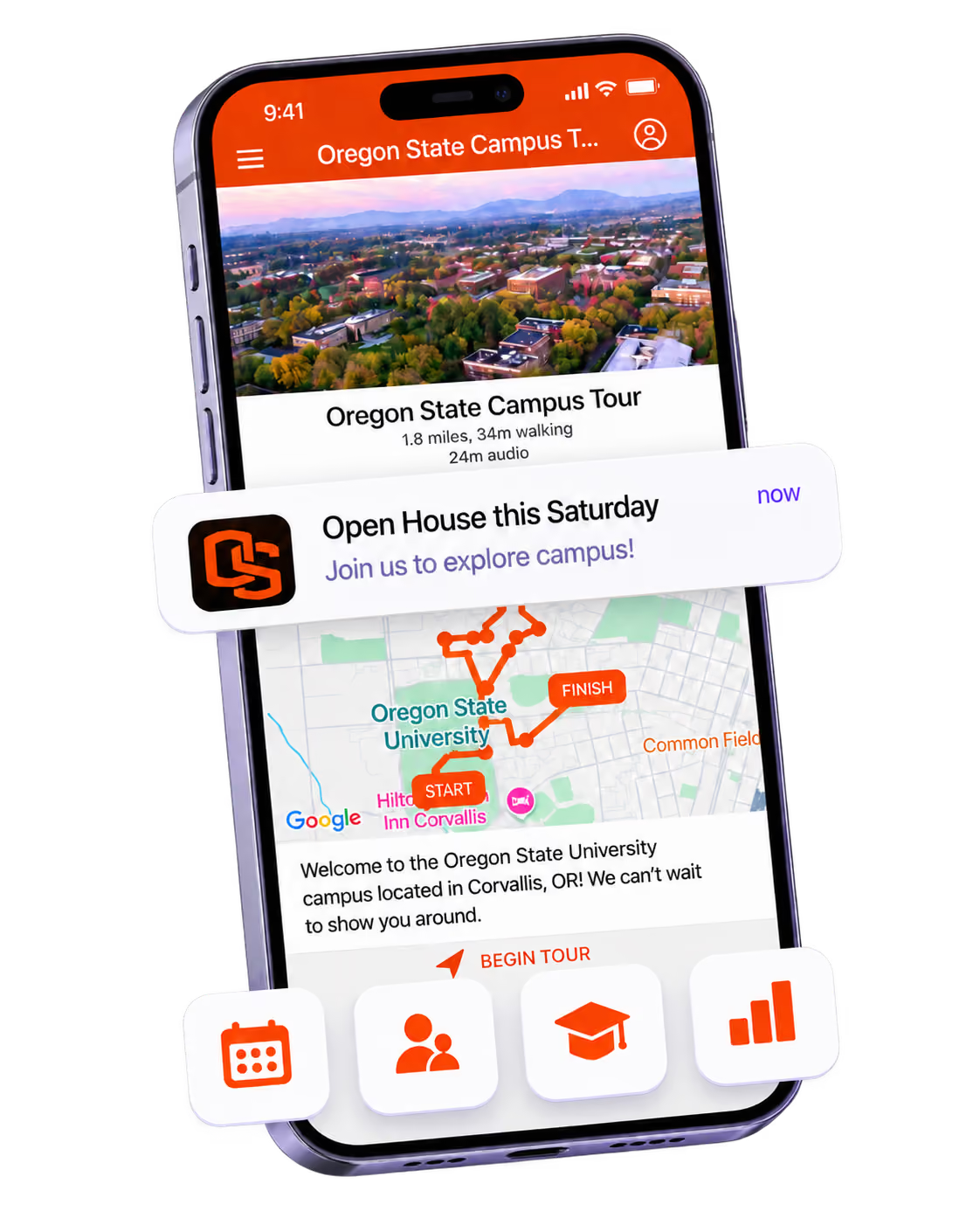
Deliver branded, self-guided tour experiences with interactive maps and rich media, available 24/7.

Offering Campus Tours?
Deliver branded, self-guided tour experiences with interactive maps and rich media, available 24/7.
Organising a Career Fair?
Simplify logistics for students, employers, and Career Services staff with one easy-to-use app.
Organising a Career Fair?
Simplify logistics for students, employers, and Career Services staff with one easy-to-use app.
Managing Alumni Events?
Plan reunions, regional events, and fundraising campaigns with an app built for alumni engagement.
Managing Alumni Events?
Plan reunions, regional events, and fundraising campaigns with an app built for alumni engagement.
Boost Student Engagement
One hub for schedules, resources, and events that keeps students connected throughout the academic year.
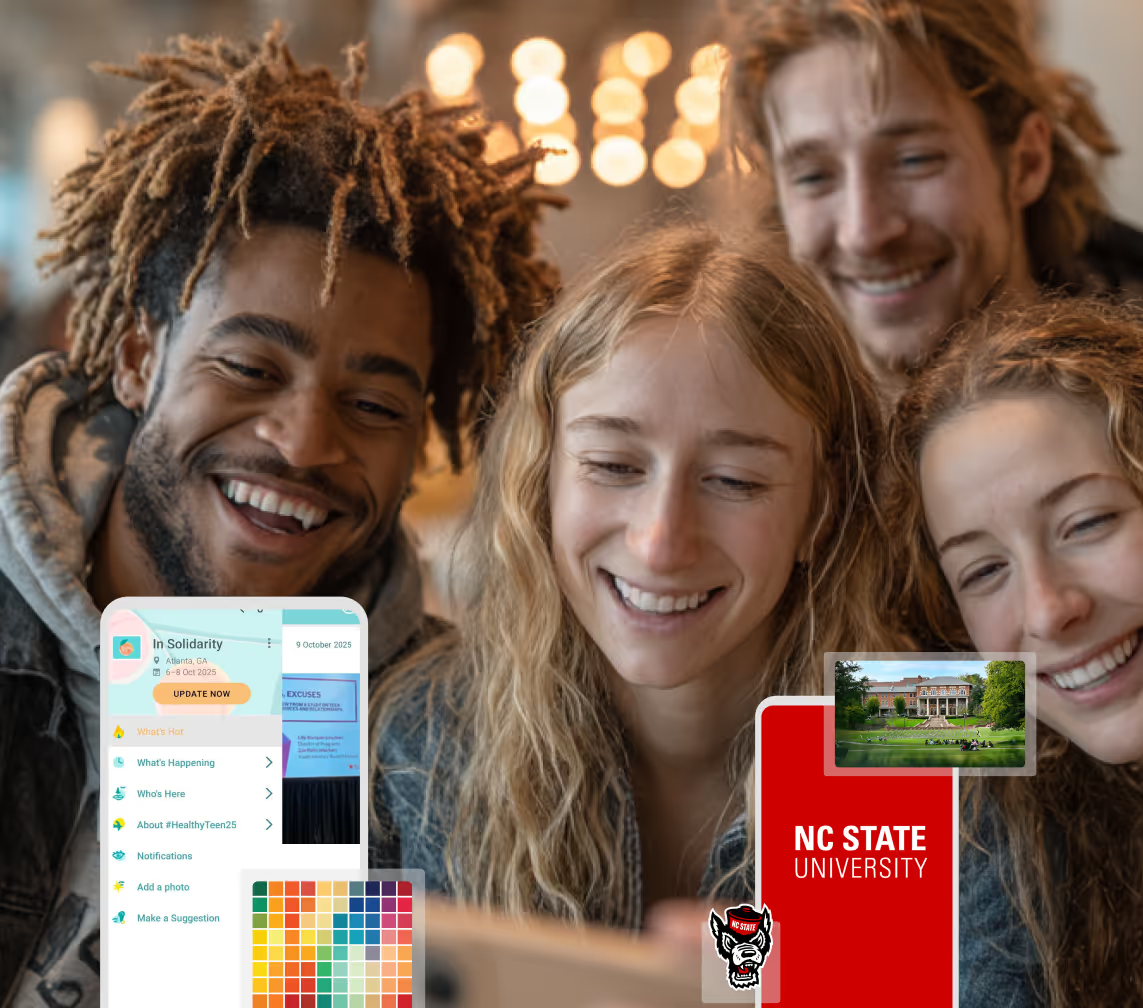
Boost Student Engagement
One hub for schedules, resources, and events that keeps students connected throughout the academic year.
Planning Orientation?
Help new students feel prepared from day one with schedules, campus resources, and real-time updates in one app.
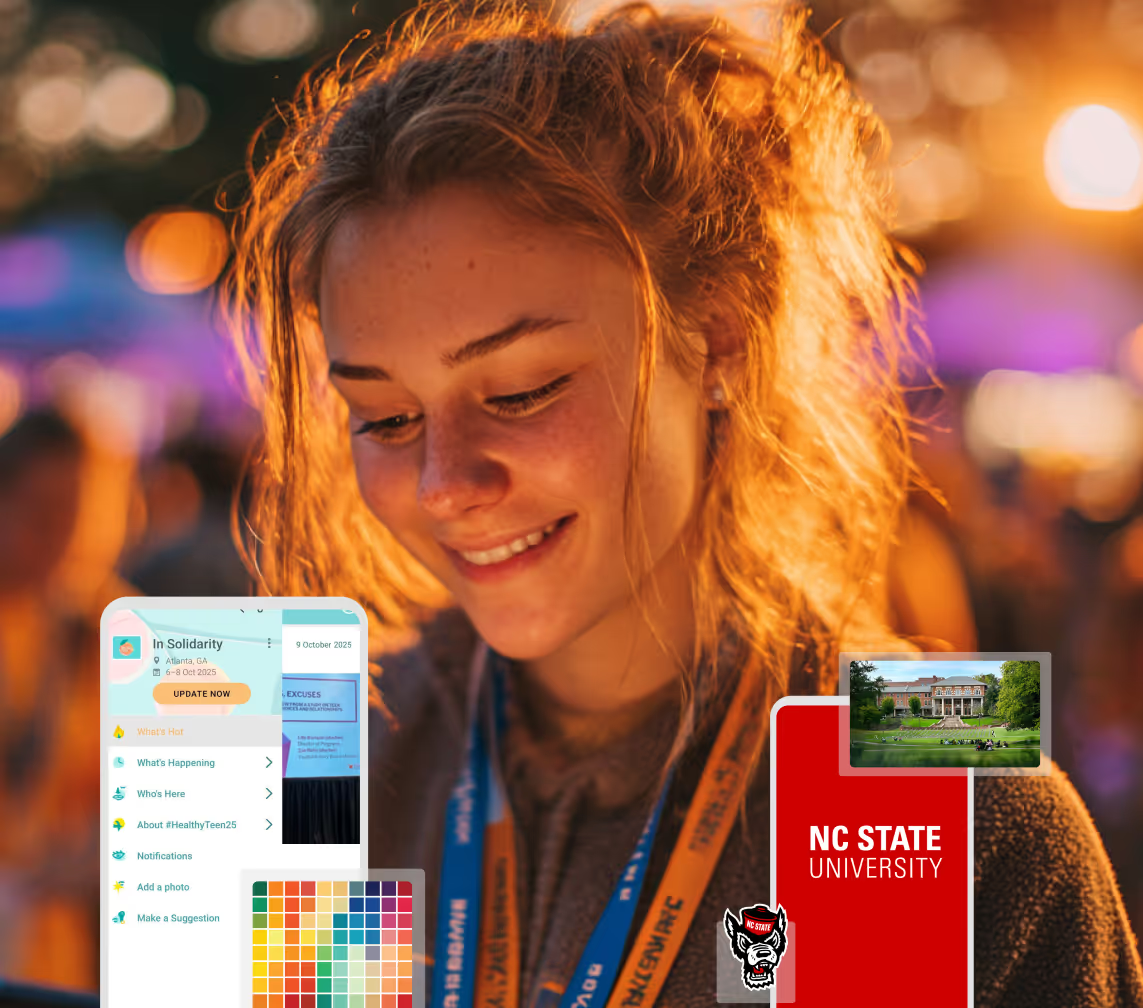
Planning Orientation?
Help new students feel prepared from day one with schedules, campus resources, and real-time updates in one app.
Running Admissions Events?
Manage open houses, tours, and yield events with a branded app that saves time and engages prospective students.

Running Admissions Events?
Manage open houses, tours, and yield events with a branded app that saves time and engages prospective students.
Get a custom Sponsorship Package Template
Stop starting from scratch. Grab free templates that helWe'll build a tailored sponsorship package with suggested pricing, tiers, and benefits..for your specific event.p you build professional sponsorship packages and close deals faster.
Get a custom Sponsorship Package Template
Stop starting from scratch. Grab free templates that helWe'll build a tailored sponsorship package with suggested pricing, tiers, and benefits..for your specific event.p you build professional sponsorship packages and close deals faster.
Plan Your Next Event Without Missing a Beat.
From venue selection to post-event wrap-up, this free checklist walks you through every step (so nothing falls through the cracks).
.avif)
Plan Your Next Event Without Missing a Beat.
From venue selection to post-event wrap-up, this free checklist walks you through every step (so nothing falls through the cracks).
Real Results From Real Events
100,000+ organizations trust Guidebook. See exactly how universities, associations, enterprises, and more put it to work.

Real Results From Real Events
100,000+ organizations trust Guidebook. See exactly how universities, associations, enterprises, and more put it to work.
Flexible pricing for every event size
Find the perfect plan for your needs, from intimate gatherings to large-scale conferences.

Flexible pricing for every event size
Find the perfect plan for your needs, from intimate gatherings to large-scale conferences.
Join our event experts
Watch on-demand webinars and join live sessions with industry leaders sharing best practices for event success.
.avif)
Join our event experts
Watch on-demand webinars and join live sessions with industry leaders sharing best practices for event success.
Guidebook in Action
Book a personalized walkthrough and discover how we help event teams create better attendee experiences.
Guidebook in Action
Book a personalized walkthrough and discover how we help event teams create better attendee experiences.

What is a Virtual Open House?
A virtual open house is an online event showcasing properties to potential buyers or renters. Learn key benefits, hosting tips, and top digital tools for success.

A Virtual Open House is the digital event format that lets prospective students, buyers, or members explore your space, meet your team, and ask questions—all from their couch. These online experiences combine live video, interactive tours, and real-time Q&A to create meaningful connections without travel. When done right, they can match or exceed in-person attendance rates.
Here’s the thing: for admissions and enrollment teams, the virtual open house isn’t a pandemic workaround — it’s become a permanent, high-yield tool in the admissions arsenal. Families in distant time zones who can’t travel, first-generation students doing their research late at night, prospective students narrowing a list of ten schools to three — a virtual open house reaches all of them. And when it’s done well, it creates the same deposit-driving connection that an in-person campus visit does. Sometimes better. It’s a fully designed experience that guides visitors through your space, introduces key people, and answers questions on the spot. The best ones feel personal and engaging—not like watching a boring webinar. They give attendees control to explore what matters most to them.
Key Characteristics of Virtual Open House
- Live Interactive Elements: Real-time video tours, live Q&A sessions, and instant chat features let attendees engage directly with hosts rather than passively watching recorded content.
- On-Demand Accessibility: Participants can join from anywhere with an internet connection, removing geographic barriers and travel costs that limit in-person attendance.
- Multi-Format Content: Combines video walkthroughs, photo galleries, downloadable resources, and interactive maps to create a rich, immersive experience.
- Personalized Pathways: Attendees choose which rooms, departments, or topics to explore based on their interests rather than following a fixed tour route.
- Real-Time Data Collection: Hosts can track which areas get the most attention, what questions come up frequently, and how long visitors stay engaged.
- Scalable Reach: A single event can accommodate hundreds or thousands of attendees without space limitations or additional staffing costs.
- Recording Capabilities: Sessions can be recorded and repurposed for those who couldn’t attend live or for future marketing efforts.
Virtual Open House vs. Related Event Formats
In-Person Open House
- Scope: Limited to those who can physically travel to your location
- Focus: Hands-on, sensory experience of the actual space
- Timeline: Fixed date and time with no replay option
- Channels: Face-to-face interaction only
- Goal: Create memorable physical impressions and personal connections
Virtual Tour
- Scope: Pre-recorded or 360-degree content available anytime
- Focus: Self-guided exploration without live interaction
- Timeline: Always available, no scheduled component
- Channels: Website, app, or VR platform
- Goal: Provide visual overview for initial research phase
Webinar
- Scope: Presentation-focused with limited audience participation
- Focus: Information delivery on specific topics
- Timeline: Scheduled live event, often with recording
- Channels: Video conferencing platforms
- Goal: Educate and inform rather than showcase physical spaces
Virtual open houses blend the best of all three. They offer the live interaction of in-person events, the accessibility of virtual tours, and the structured format of webinars. This combination makes them powerful tools for event digital marketing strategies.
Essential Virtual Open House Components
Choose the Right Platform
Your platform choice shapes the entire attendee experience. Look for tools that support live video, screen sharing, breakout rooms, and chat functions.
Some organizations use dedicated virtual event platforms. Others combine video conferencing with a mobile app for schedules and resources. The key is picking technology your team can manage confidently.
Design Your Virtual Space
Think about how visitors will move through your event. Create clear pathways between different areas or sessions.
- Main stage for welcome and keynote content
- Breakout rooms for specific departments or topics
- Resource library with downloadable materials
- Chat lounges for informal conversations
- Help desk for technical support
Prepare Your Hosts and Presenters
On-camera presence matters more than ever in virtual settings. Train your team on lighting, audio quality, and engaging delivery.
Practice runs help everyone feel comfortable with the technology. Create backup plans for common technical issues. Assign someone to monitor chat and surface questions to presenters.
Build Interactive Elements
Passive viewing kills engagement. Build in moments that require attendee participation.
- Live polls to gauge interests and preferences
- Q&A sessions with real-time responses
- Virtual hand-raising for questions
- Breakout discussions in small groups
- Interactive maps or clickable floor plans
Create Supporting Content
Don’t rely solely on live video. Prepare materials attendees can explore at their own pace. This includes photo galleries, fact sheets, testimonials, and contact information for follow-up.
The Virtual Open House Process
Set Clear Goals First
What does success look like for your event? Define specific, measurable outcomes before planning anything else.
For admissions teams, this might mean application submissions, campus visit bookings, or deposit rate lift from virtual event attendees. Know your numbers so you can track event ROI effectively.
Plan Your Promotion Strategy
Great events fail without great promotion. Start spreading the word 3-4 weeks before your date.
- Email invitations to your admitted student database
- Social media posts with registration links
- Website banners and landing pages
- Partner cross-promotion opportunities
- Reminder sequences as the date approaches
Execute with Energy
Event day requires all hands on deck. Assign clear roles: host, technical support, chat moderator, and backup presenter.
Start with energy and enthusiasm. Welcome attendees by name when possible. Keep the pace moving—virtual attention spans are shorter than in-person ones.
Follow Up Fast
The 24 hours after your event are critical. Send thank-you emails with recording links and next steps. Reach out personally to high-interest admitted students. Share resources mentioned during the event.
Why Virtual Open House Matters
For Event Success:
- Expanded Reach: Connect with prospects who can’t travel due to distance, cost, or scheduling conflicts.
- Higher Attendance Rates: Lower barriers mean more people actually show up compared to in-person events.
- Rich Data Insights: Track exactly which content resonates and where attendees spend their time.
- Cost Efficiency: Eliminate venue rental, catering, printed materials, and travel reimbursements.
- Content Longevity: Recordings become evergreen assets for future marketing and follow-up.
For Enrollment and Yield Outcomes:
- Yield and Deposit Rate Impact: Admitted students who attend a virtual open house convert at higher rates than those who don’t engage before decision day. Every interaction — a Q&A with a professor, a virtual tour of the residence hall, a chat with a current student — reduces uncertainty and builds confidence in the deposit decision.
- Reaching the Unreachable: First-generation students, rural families, international prospects, and those who simply can’t afford a campus visit are now in your yield funnel. The virtual open house makes your institution geographically equitable in the way in-person events never could.
- Reducing Summer Melt: Post-deposit virtual events — meet-your-roommate sessions, academic department previews, orientation previews — keep deposited students engaged between decision day and move-in. Engaged students don’t melt. They show up in August.
- Cost-Effective Admissions Programming: Running four virtual open houses costs far less than four in-person yield events. The yield impact per dollar is dramatically better, particularly for reaching out-of-state and international admitted students.
- Data and Behavioral Intelligence: Virtual events generate attendance data, engagement metrics, and behavioral signals that in-person events can’t capture. Which admitted students attended? Which sessions? Who dropped off? That data informs follow-up strategy and predicts melt risk.
Guidebook helps admissions and enrollment teams run virtual open houses with a custom-branded experience that feels like your institution — not a generic Zoom link. See how higher education teams use Guidebook for admissions events.
Virtual Open House Best Practices
- Test Everything Twice: Run full technical rehearsals at least 48 hours before your event. Check audio, video, screen sharing, and backup systems.
- Start Strong with a Hook: Open with something attention-grabbing. Don’t waste the first two minutes on housekeeping.
- Keep Sessions Short and Focused: Break content into 15-20 minute segments. Build in transitions and interaction points between sections.
- Show, Don’t Just Tell: Use video walkthroughs, live demonstrations, and visual content. Talking heads get boring fast.
- Assign a Dedicated Chat Monitor: Someone should watch the chat constantly, answer simple questions, and flag important ones for presenters.
- Create FOMO Moments: Offer exclusive content or special access only available to live attendees.
- Prepare for Technical Issues: Have backup presenters and pre-recorded segments ready. Have a communication plan if things go wrong.
- Personalize the Experience: Use attendee names, reference their interests based on registration data, and offer breakout options based on their needs.
- End with Clear Next Steps: Tell attendees exactly what to do after the event. For admissions, that means a clear path to the next engagement or deposit.
- Gather Feedback Immediately: Send a short survey within an hour of the event ending while the experience is fresh.
Common Virtual Open House Mistakes
Treating It Like a Webinar: Virtual open houses need interaction and exploration, not just presentations. Build in choices, questions, and engagement throughout.
Ignoring Technical Preparation: Nothing kills credibility faster than audio problems or platform crashes. Invest time in testing and have backup plans ready.
Overwhelming Attendees with Content: More isn’t better. Curate your content ruthlessly. Focus on what matters most to your audience, not everything you could possibly share.
Forgetting Mobile Users: Many admitted students will join from phones. Test your entire experience on mobile devices before the event.
Skipping the Follow-Up: The event is just the beginning. Without prompt, personalized follow-up, you’ll lose the momentum you worked so hard to build.
Neglecting Accessibility: Closed captions, screen reader compatibility, and clear audio aren’t optional. Make your event welcoming for all attendees regardless of ability.
Virtual Open Houses in Higher Education Admissions
The virtual open house has become one of the most important yield events in the admissions calendar. It’s not a substitute for an in-person campus visit — it’s a complement to it, and for many prospective students, it’s the only form of campus exploration they’ll do before making their deposit decision.
Pre-Application Awareness Events
Virtual open houses for prospective juniors and seniors introduce your institution before the application is submitted. The goal here isn’t a deposit — it’s a completed application. Virtual panels with current students, faculty showcases, and campus culture sessions plant the institutional identity early. Students who attended a virtual event before applying are more invested from day one.
Admitted Student Virtual Open Houses
This is the highest-stakes virtual open house you run. Admitted students have options. They’re weighing your institution against competitors, often down to the wire before May 1. A virtual event that feels warm, personal, and academically substantive — not just a polished pitch — can be the difference between a deposit and a loss. Include current students, specific faculty from popular majors, financial aid Q&A, and authentic campus culture. Learn how Guidebook supports admitted student events.
Post-Deposit Engagement Events
The work doesn’t stop at the deposit. Summer melt is real. Virtual events between deposit day and move-in — major-specific previews, meet-your-orientation-leader sessions, residence hall virtual tours, first-generation student welcome events — keep deposited students connected and reduce the probability they’ll quietly disappear before August. See how Guidebook powers new student programs.
Virtual Campus Tours and Information Sessions
For international students, students with disabilities, and families who can’t afford campus visits, the virtual campus tour is often the only one they’ll take. Treat it with that weight. A polished, interactive virtual tour that answers real questions — not just shows pretty buildings — serves the equity imperative of modern admissions and broadens your enrolled class geographically and demographically.
Final Thoughts
Virtual open houses have moved from “nice to have” to essential admissions strategy. They expand your reach, reduce costs, and create data-rich experiences that inform your entire enrollment approach. Institutions that master this format gain a serious competitive yield advantage.
The shift toward digital-first experiences isn’t slowing down. Prospective students and admitted students now expect virtual options alongside in-person ones. Meeting them where they are—on their devices, on their schedules—shows you understand modern expectations and respect the constraints that many families face.
For admissions teams, the virtual open house is a yield tool, a melt-prevention tool, and an equity tool simultaneously. See how Guidebook supports admissions event planning, or book a demo to see the platform in action. Your next virtual open house could be the event that converts a hesitant admitted student into an enrolled one.
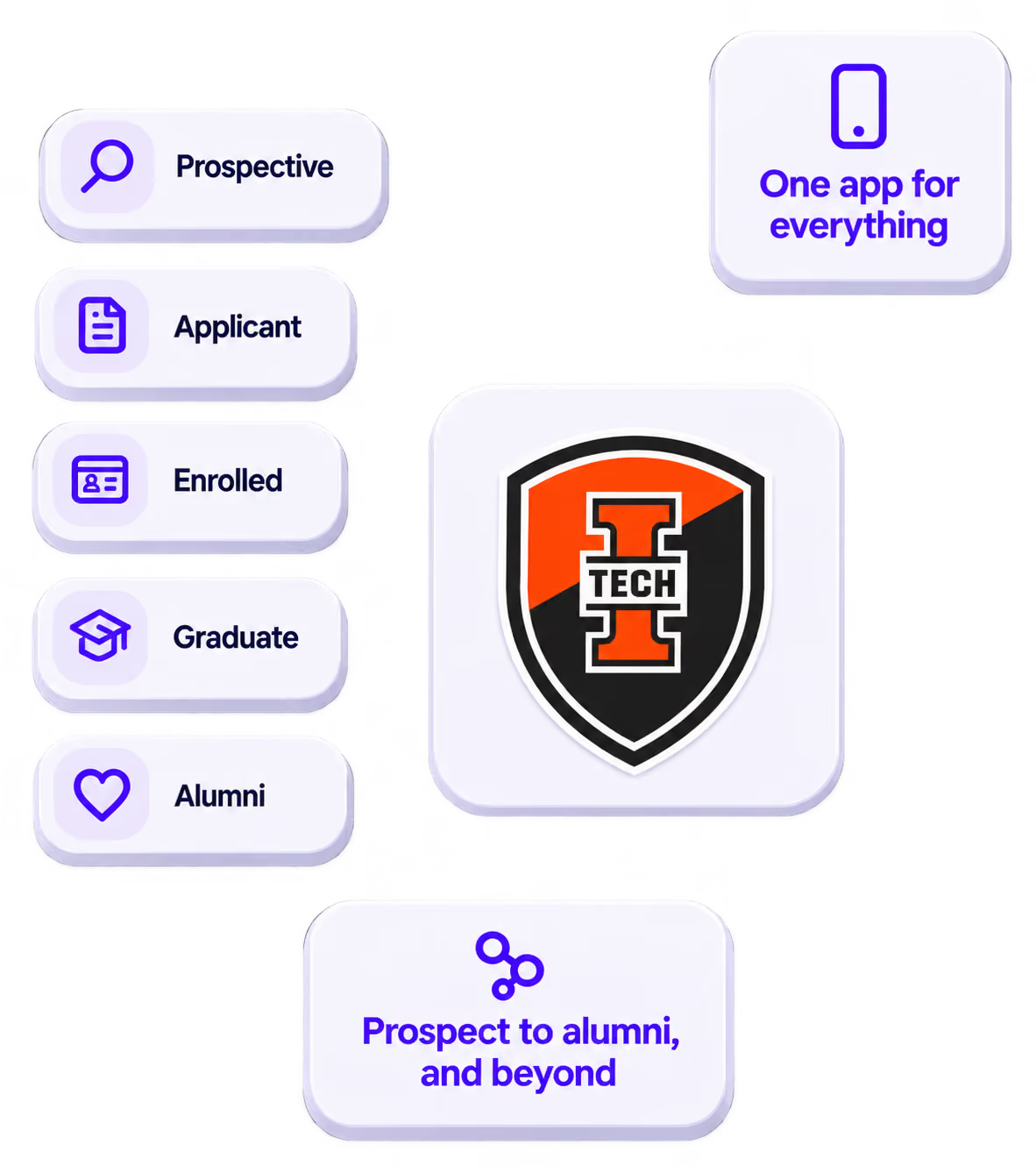
The power of your brand in your app, from first visit to alumni.
Build trust
Attendees download your app, not ours. Your name, colors, and crest in the stores.
.avif)
One place for the whole event
Schedules, maps, registration, and updates in one branded hub - not five tools.
Stand out
A branded app is what people keep on their phone after the printed program is in the recycling.

Get the Mobile App Playbook
A short guide to running the whole student journey in one app. No fluff, just what works.
for higher ed
Campus
Playbook
A practical guide to building a connected campus experience.
Free playbook
The Mobile App Playbook for Universities
Students decide if they belong long before they set foot on campus. This playbook shows how to win them over from the first visit through graduation.
- Grow enrollment and boost recruitment
- Increase belonging and retention
- Run every event from one branded app
By submitting, you agree to our Privacy Policy.
You're in.
.png)