
Campus apps by department
Admissions, orientation, student life, and more — one campus app that works across departments.

Campus apps by department
Admissions, orientation, student life, and more — one campus app that works across departments.
Build unlimited event apps on one license
One partnership for unlimited campus events — orientation, tours, student life, and everything in between.
Build unlimited event apps on one license
One partnership for unlimited campus events — orientation, tours, student life, and everything in between.
Compare event app platforms
See how Guidebook stacks up against other event app and registration platforms.
Compare event app platforms
See how Guidebook stacks up against other event app and registration platforms.
Event apps for nonprofit and community programs
Give members, volunteers, and donors one branded app for conferences, fundraisers, and year-round community.
Event apps for nonprofit and community programs
Give members, volunteers, and donors one branded app for conferences, fundraisers, and year-round community.
Campus integrations and an open API
Connect Guidebook with the campus systems, APIs, and tools your team already uses.
Campus integrations and an open API
Connect Guidebook with the campus systems, APIs, and tools your team already uses.
Event apps for corporate and enterprise teams
Internal meetings, offsites, and large-scale corporate events — with the branding and control enterprise teams need.
Event apps for corporate and enterprise teams
Internal meetings, offsites, and large-scale corporate events — with the branding and control enterprise teams need.
Create a branded event app with no coding
Put schedules, maps, resources, and updates in every attendee's pocket — built for campus events and programs.
Create a branded event app with no coding
Put schedules, maps, resources, and updates in every attendee's pocket — built for campus events and programs.
Launch a branded, white-label event app
A white-label event app with your branding, your content, and your attendee experience — no coding required.
Launch a branded, white-label event app
A white-label event app with your branding, your content, and your attendee experience — no coding required.
Everything in the Guidebook platform
Explore the features event teams use to engage attendees before, during, and after the event.
Everything in the Guidebook platform
Explore the features event teams use to engage attendees before, during, and after the event.
One app for in-person and virtual attendees
The same schedule, networking, and updates whether people are in the room or joining remotely.
One app for in-person and virtual attendees
The same schedule, networking, and updates whether people are in the room or joining remotely.
Event apps built for associations
Annual meetings, chapter events, and member engagement — without rebuilding a new app every year.
Event apps built for associations
Annual meetings, chapter events, and member engagement — without rebuilding a new app every year.
A branded event website that matches the app
Promote the event, collect interest, and keep branding consistent from the first click to check-in.
A branded event website that matches the app
Promote the event, collect interest, and keep branding consistent from the first click to check-in.
Plan, run, and measure events on one platform
App, registration, badges, and websites in one workflow — so planning isn't a pile of disconnected tools.
Plan, run, and measure events on one platform
App, registration, badges, and websites in one workflow — so planning isn't a pile of disconnected tools.
Keep members engaged between events
One branded app for the conference and everything that happens the other 51 weeks of the year.
Keep members engaged between events
One branded app for the conference and everything that happens the other 51 weeks of the year.
The conference app attendees actually use
Schedules, maps, networking, and live updates for annual meetings, summits, and multi-day conferences.
The conference app attendees actually use
Schedules, maps, networking, and live updates for annual meetings, summits, and multi-day conferences.
Registration that feeds your app and badges
Collect registrations, payments, and attendee data in the same platform as your event app.
Registration that feeds your app and badges
Collect registrations, payments, and attendee data in the same platform as your event app.
Design and print event badges in one place
Custom badges, QR check-in, and on-site printing — without a separate badge vendor.
Design and print event badges in one place
Custom badges, QR check-in, and on-site printing — without a separate badge vendor.
A Smaller School?
Deliver a polished, branded event experience without a large team or a big budget.
A Smaller School?
Deliver a polished, branded event experience without a large team or a big budget.
Running Family Programs?
Give families everything they need, from schedules and maps to real-time updates, all in one place.
Running Family Programs?
Give families everything they need, from schedules and maps to real-time updates, all in one place.
Coordinating Move-In Day?
Share updates, manage events, and keep students informed from move-in through the academic year.

Coordinating Move-In Day?
Share updates, manage events, and keep students informed from move-in through the academic year.
Offering Campus Tours?
Deliver branded, self-guided tour experiences with interactive maps and rich media, available 24/7.

Offering Campus Tours?
Deliver branded, self-guided tour experiences with interactive maps and rich media, available 24/7.
Organising a Career Fair?
Simplify logistics for students, employers, and Career Services staff with one easy-to-use app.
Organising a Career Fair?
Simplify logistics for students, employers, and Career Services staff with one easy-to-use app.
Managing Alumni Events?
Plan reunions, regional events, and fundraising campaigns with an app built for alumni engagement.
Managing Alumni Events?
Plan reunions, regional events, and fundraising campaigns with an app built for alumni engagement.
Boost Student Engagement
One hub for schedules, resources, and events that keeps students connected throughout the academic year.
Boost Student Engagement
One hub for schedules, resources, and events that keeps students connected throughout the academic year.
Planning Orientation?
Help new students feel prepared from day one with schedules, campus resources, and real-time updates in one app.
Planning Orientation?
Help new students feel prepared from day one with schedules, campus resources, and real-time updates in one app.
Running Admissions Events?
Manage open houses, tours, and yield events with a branded app that saves time and engages prospective students.

Running Admissions Events?
Manage open houses, tours, and yield events with a branded app that saves time and engages prospective students.
Get a custom Sponsorship Package Template
Stop starting from scratch. Grab free templates that helWe'll build a tailored sponsorship package with suggested pricing, tiers, and benefits..for your specific event.p you build professional sponsorship packages and close deals faster.
Get a custom Sponsorship Package Template
Stop starting from scratch. Grab free templates that helWe'll build a tailored sponsorship package with suggested pricing, tiers, and benefits..for your specific event.p you build professional sponsorship packages and close deals faster.
Plan Your Next Event Without Missing a Beat.
From venue selection to post-event wrap-up, this free checklist walks you through every step (so nothing falls through the cracks).
.avif)
Plan Your Next Event Without Missing a Beat.
From venue selection to post-event wrap-up, this free checklist walks you through every step (so nothing falls through the cracks).
Real Results From Real Events
100,000+ organizations trust Guidebook. See exactly how universities, associations, enterprises, and more put it to work.

Real Results From Real Events
100,000+ organizations trust Guidebook. See exactly how universities, associations, enterprises, and more put it to work.
Flexible pricing for every event size
Find the perfect plan for your needs, from intimate gatherings to large-scale conferences.
Flexible pricing for every event size
Find the perfect plan for your needs, from intimate gatherings to large-scale conferences.
Join our event experts
Watch on-demand webinars and join live sessions with industry leaders sharing best practices for event success.
.avif)
Join our event experts
Watch on-demand webinars and join live sessions with industry leaders sharing best practices for event success.
Guidebook in Action
Book a personalized walkthrough and discover how we help event teams create better attendee experiences.
Guidebook in Action
Book a personalized walkthrough and discover how we help event teams create better attendee experiences.

What are Engagement Event Ideas?
Engagement event ideas inspire memorable celebrations with creative themes, interactive activities, and planning tips. Discover unique concepts, décor inspiration, and ways to delight your guests.

Engagement event ideas are creative activities and experiences designed to capture attention, spark participation, and build meaningful connections between attendees and your event's purpose. These ideas range from interactive workshops to gamified challenges to networking formats that get people talking. When done right, they transform passive audiences into active participants.
Here's the thing: attendance doesn't equal engagement. You can fill a room with 500 people who spend the entire time checking email. True engagement means people are present, participating, and invested. The best engagement event ideas create moments that stick with attendees long after they leave.
Key Characteristics of Engagement Event Ideas
- Interactive by Design: These ideas require active participation, not passive observation. Attendees do something, not just watch something.
- Purpose-Driven: Each activity connects to your event's goals. Random fun isn't enough—it needs to serve a bigger purpose.
- Scalable: Good engagement ideas work for 50 people or 5,000. They adapt to your audience size without losing impact.
- Measurable: You can track participation rates, completion numbers, and feedback scores to prove what worked.
- Inclusive: The best ideas welcome everyone, regardless of personality type, physical ability, or comfort level.
- Memorable: They create stories people share. "Remember when we did that thing at the conference?" is the goal.
- Easy to Execute: Complex logistics kill engagement. Simple ideas with clear instructions win every time.
Engagement Event Ideas vs. Related Concepts
Event Entertainment
- Scope: Passive enjoyment like keynote speakers, performances, or displays
- Focus: Watching and listening
- Timeline: Scheduled segments with clear start and end times
- Channels: Stage, screens, audio systems
- Goal: Entertain and inform the audience
Team Building Events
- Scope: Activities specifically designed for existing groups or colleagues
- Focus: Strengthening relationships within established teams
- Timeline: Often standalone events or dedicated sessions
- Channels: In-person activities, challenges, shared experiences
- Goal: Improve collaboration and trust among team members
Networking Activities
- Scope: Structured or unstructured opportunities to meet new people
- Focus: Making professional connections
- Timeline: Dedicated networking breaks or sessions
- Channels: Conversation spaces, matchmaking tools, social events
- Goal: Expand professional networks and create business opportunities
Engagement event ideas often overlap with all three concepts. A great team building event includes engagement elements. Networking works better with structured engagement activities. The difference? Engagement ideas prioritize active participation above all else.
Types of Engagement Event Ideas
Interactive Technology Experiences
Technology creates engagement opportunities that weren't possible ten years ago. Live polling lets audiences shape presentations in real-time. AR scavenger hunts turn venues into interactive playgrounds.
Event apps drive massive engagement when used well. Features like live Q&A, session feedback, and gamified challenges keep attendees connected throughout your event. Guidebook's event management platform makes it easy to build these interactive experiences.
Gamification and Competitions
People love games. Leaderboards, point systems, and friendly competition tap into natural human motivation. Consider these options:
- Photo challenges with voting and prizes
- Trivia contests related to your event theme
- Scavenger hunts that encourage venue exploration
- Badge collection for attending sessions or meeting sponsors
- Team-based challenges with real-time scoring
The key is making participation easy and rewards meaningful. Nobody wants to work hard for a cheap pen.
Hands-On Workshops and Labs
Learning by doing beats learning by listening. Workshops where attendees create something—a plan, a prototype, a skill—generate deeper engagement than any lecture.
Keep groups small enough for real interaction. Provide clear instructions and all necessary materials. Build in time for sharing results. These details separate forgettable workshops from transformative ones.
Creative Networking Formats
Traditional networking is awkward. Standing around hoping someone talks to you isn't fun. Better formats include:
- Speed networking with timed rotations
- Interest-based meetups around specific topics
- Collaborative problem-solving sessions
- Mentor matching programs
- Conversation starter cards at tables
Structure removes awkwardness. Give people a reason to talk and a framework for conversation.
Immersive and Experiential Activities
Immersive experiences create emotional connections. Think escape rooms, simulation exercises, or themed environments that transport attendees somewhere unexpected.
These require more planning and budget. But the engagement payoff can be enormous. People remember experiences that made them feel something.
Planning Your Engagement Strategy
Know Your Audience First
What works for tech startup founders won't work for healthcare executives. Age, industry, personality types, and cultural backgrounds all matter. Survey past attendees. Talk to your target audience. Don't assume you know what they want.
Match Activities to Event Goals
Every engagement idea should connect to your objectives. Want more sponsor visibility? Design activities that naturally incorporate sponsor touchpoints. Need attendees to learn specific content? Build engagement around that material.
Random fun without purpose wastes everyone's time. Strategic engagement drives event ROI.
Plan for Different Engagement Levels
Not everyone wants the same experience. Some attendees love jumping into group activities. Others prefer quieter, individual engagement options. Offer variety:
- High-energy group activities for extroverts
- Self-paced digital challenges for introverts
- Optional participation with no pressure
- Multiple ways to earn rewards or recognition
Build in Recovery Time
Engagement fatigue is real. Back-to-back high-energy activities exhaust people. Balance active engagement with downtime. Let attendees recharge between intense sessions.
Why Engagement Event Ideas Matter
For Event Success:
- Higher Satisfaction Scores: Engaged attendees rate events more positively and recommend them to others.
- Better Content Retention: Active participation helps people remember what they learned.
- Increased Social Sharing: Engaging moments create shareable content that extends your event's reach.
- Stronger Community Building: Shared experiences create bonds between attendees that last beyond the event.
- Improved Sponsor Value: Engaged audiences pay more attention to sponsor messages and activations.
For Business Objectives:
- Higher Return Attendance: People come back to events where they felt engaged and valued.
- Better Lead Quality: Engaged attendees are more likely to convert into customers or members.
- Increased Revenue Opportunities: Engagement creates natural touchpoints for upsells and premium offerings.
- Stronger Brand Perception: Events known for great engagement build positive brand associations.
- Measurable Outcomes: Engagement metrics prove event value to stakeholders and justify budgets.
Guidebook's platform helps you track engagement across every touchpoint. From session attendance to app interactions to survey responses, you'll know exactly what's working. Book a demo to see how it works.
Engagement Event Ideas Best Practices
- Start Engagement Before the Event: Use pre-event surveys, social media challenges, and early app access to build momentum. Engagement shouldn't begin when doors open.
- Make Instructions Crystal Clear: Confused attendees don't participate. Test your activity instructions with someone unfamiliar with your event. If they don't get it immediately, simplify.
- Use Technology Strategically: Tech should enhance engagement, not complicate it. Choose tools that work reliably and require minimal learning. Event check-in software and mobile apps should feel effortless.
- Train Your Staff Thoroughly: Your team sets the engagement tone. Enthusiastic, well-prepared staff encourage participation. Confused or disengaged staff kill momentum.
- Create Low-Stakes Entry Points: Not everyone jumps into activities immediately. Offer easy first steps that build confidence before bigger commitments.
- Recognize and Reward Participation: Public recognition, prizes, and exclusive access motivate continued engagement. Make rewards visible and desirable.
- Collect Feedback in Real-Time: Don't wait until post-event surveys. Use live polling and quick feedback tools to adjust activities on the fly.
- Document Everything for Next Time: Track what worked, what flopped, and what surprised you. Use an event debrief template to capture insights while they're fresh.
- Test Activities Before Launch: Run through every engagement activity with a small group first. Technical glitches and confusing instructions are easier to fix before 1,000 people encounter them.
- Balance Digital and Physical Engagement: Don't rely entirely on screens. Mix app-based activities with face-to-face interactions for the best results.
Common Engagement Event Ideas Mistakes
Forcing Participation: Mandatory engagement backfires. When people feel forced into activities, they resent them. Make participation inviting, not required. The best engagement feels like an opportunity, not an obligation.
Overcomplicating Activities: Complex rules and multi-step processes confuse attendees. If your engagement idea needs a five-minute explanation, it's too complicated. Simplify until a first-grader could understand the basics.
Ignoring Accessibility: Physical activities that exclude people with disabilities, introverts, or those with different comfort levels alienate portions of your audience. Design engagement that welcomes everyone.
Copying Without Adapting: What worked at another event might flop at yours. Audience, venue, and context matter. Adapt ideas to fit your specific situation rather than copying blindly.
Neglecting the Quiet Moments: Not every minute needs structured engagement. Over-programming exhausts attendees. Leave space for organic conversations and personal reflection.
Forgetting to Measure Results: If you can't prove engagement happened, did it matter? Track participation rates, completion numbers, and feedback scores. Data helps you improve and justify future investments.
Launching Without Testing: Technical failures during live events destroy engagement momentum. Test every digital tool, every game mechanic, and every physical setup before attendees arrive.
Final Thoughts
Engagement event ideas separate forgettable events from unforgettable ones. In a world where attention is scarce and competition for it is fierce, creating moments that capture and hold engagement isn't optional. It's essential.
The event trends are clear: passive audiences are shrinking. Attendees expect to participate, contribute, and connect. They want experiences worth their time and attention. Meeting those expectations requires intentional planning and the right tools.
The good news? You don't need massive budgets or complex technology to create engaging events. Start with understanding your audience. Choose activities that match your goals. Execute with clarity and enthusiasm. Measure what matters.
Ready to transform your next event? Explore Guidebook's event templates for inspiration, check out our case studies to see engagement in action, or schedule a demo to discover how our platform can help you create events people actually want to attend. Because the best events aren't just attended—they're experienced.
The power of your brand in your app, from first visit to alumni.
Build trust
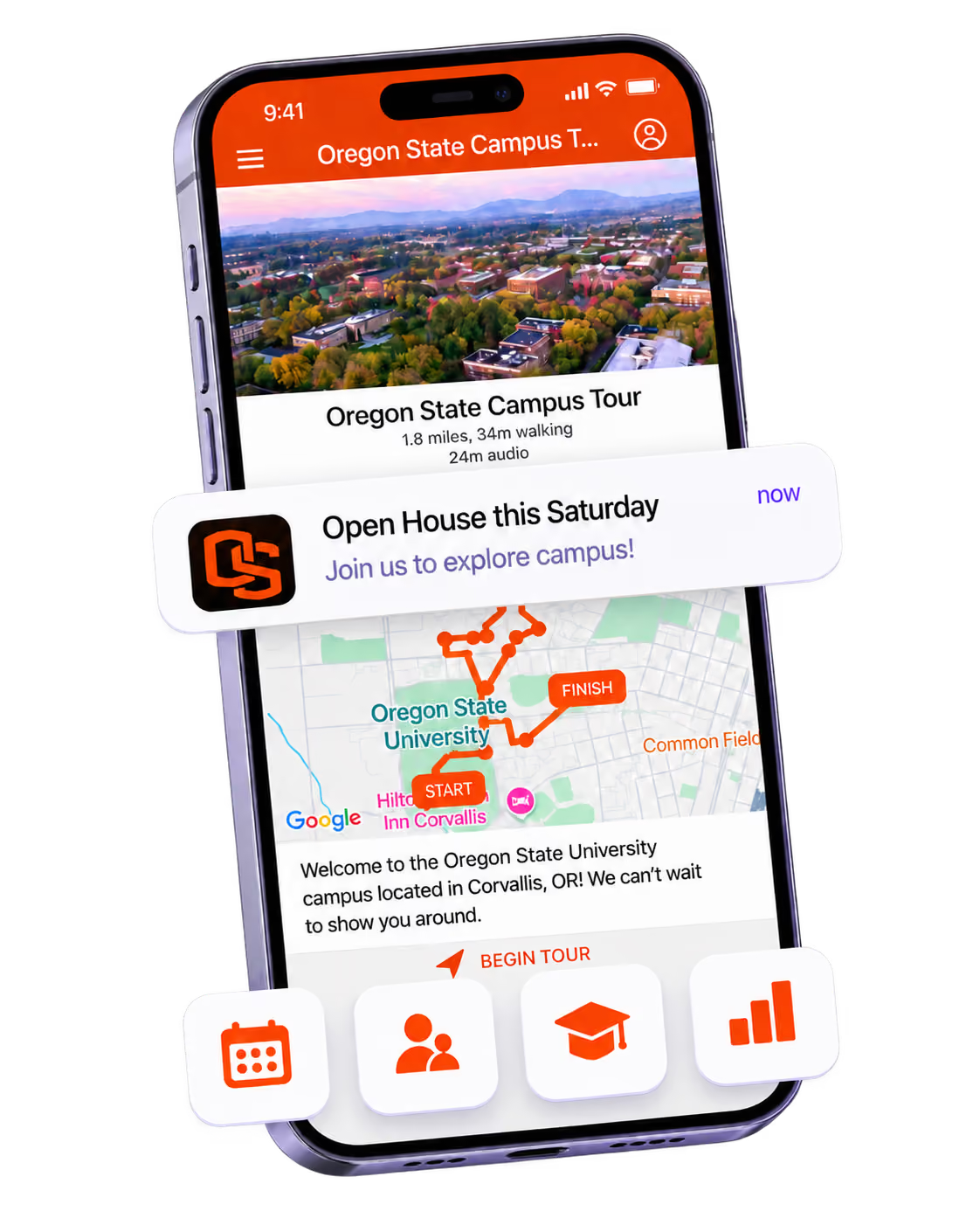
Attendees download your app, not ours. Your name, colors, and crest in the stores.
.avif)
One place for the whole event
Schedules, maps, registration, and updates in one branded hub - not five tools.
Stand out
A branded app is what people keep on their phone after the printed program is in the recycling.

Get the Mobile App Playbook
A short guide to running the whole student journey in one app. No fluff, just what works.
for higher ed
Campus
Playbook
A practical guide to building a connected campus experience.
Free playbook
The Mobile App Playbook for Universities
Students decide if they belong long before they set foot on campus. This playbook shows how to win them over from the first visit through graduation.
- Grow enrollment and boost recruitment
- Increase belonging and retention
- Run every event from one branded app
By submitting, you agree to our Privacy Policy.
You're in.
.png)