
Campus apps by department
Admissions, orientation, student life, and more — one campus app that works across departments.

Campus apps by department
Admissions, orientation, student life, and more — one campus app that works across departments.
Build unlimited event apps on one license
One partnership for unlimited campus events — orientation, tours, student life, and everything in between.
Build unlimited event apps on one license
One partnership for unlimited campus events — orientation, tours, student life, and everything in between.
Compare event app platforms
See how Guidebook stacks up against other event app and registration platforms.
Compare event app platforms
See how Guidebook stacks up against other event app and registration platforms.
Event apps for nonprofit and community programs
Give members, volunteers, and donors one branded app for conferences, fundraisers, and year-round community.
Event apps for nonprofit and community programs
Give members, volunteers, and donors one branded app for conferences, fundraisers, and year-round community.
Campus integrations and an open API
Connect Guidebook with the campus systems, APIs, and tools your team already uses.
Campus integrations and an open API
Connect Guidebook with the campus systems, APIs, and tools your team already uses.
Event apps for corporate and enterprise teams
Internal meetings, offsites, and large-scale corporate events — with the branding and control enterprise teams need.
Event apps for corporate and enterprise teams
Internal meetings, offsites, and large-scale corporate events — with the branding and control enterprise teams need.
Create a branded event app with no coding
Put schedules, maps, resources, and updates in every attendee's pocket — built for campus events and programs.
Create a branded event app with no coding
Put schedules, maps, resources, and updates in every attendee's pocket — built for campus events and programs.
Launch a branded, white-label event app
A white-label event app with your branding, your content, and your attendee experience — no coding required.
Launch a branded, white-label event app
A white-label event app with your branding, your content, and your attendee experience — no coding required.
Everything in the Guidebook platform
Explore the features event teams use to engage attendees before, during, and after the event.
Everything in the Guidebook platform
Explore the features event teams use to engage attendees before, during, and after the event.
One app for in-person and virtual attendees
The same schedule, networking, and updates whether people are in the room or joining remotely.
One app for in-person and virtual attendees
The same schedule, networking, and updates whether people are in the room or joining remotely.
Event apps built for associations
Annual meetings, chapter events, and member engagement — without rebuilding a new app every year.
Event apps built for associations
Annual meetings, chapter events, and member engagement — without rebuilding a new app every year.
A branded event website that matches the app
Promote the event, collect interest, and keep branding consistent from the first click to check-in.
A branded event website that matches the app
Promote the event, collect interest, and keep branding consistent from the first click to check-in.
Plan, run, and measure events on one platform
App, registration, badges, and websites in one workflow — so planning isn't a pile of disconnected tools.
Plan, run, and measure events on one platform
App, registration, badges, and websites in one workflow — so planning isn't a pile of disconnected tools.
Keep members engaged between events
One branded app for the conference and everything that happens the other 51 weeks of the year.
Keep members engaged between events
One branded app for the conference and everything that happens the other 51 weeks of the year.
The conference app attendees actually use
Schedules, maps, networking, and live updates for annual meetings, summits, and multi-day conferences.
The conference app attendees actually use
Schedules, maps, networking, and live updates for annual meetings, summits, and multi-day conferences.
Registration that feeds your app and badges
Collect registrations, payments, and attendee data in the same platform as your event app.
Registration that feeds your app and badges
Collect registrations, payments, and attendee data in the same platform as your event app.
Design and print event badges in one place
Custom badges, QR check-in, and on-site printing — without a separate badge vendor.
Design and print event badges in one place
Custom badges, QR check-in, and on-site printing — without a separate badge vendor.
A Smaller School?
Deliver a polished, branded event experience without a large team or a big budget.
A Smaller School?
Deliver a polished, branded event experience without a large team or a big budget.
Running Family Programs?
Give families everything they need, from schedules and maps to real-time updates, all in one place.
Running Family Programs?
Give families everything they need, from schedules and maps to real-time updates, all in one place.
Coordinating Move-In Day?
Share updates, manage events, and keep students informed from move-in through the academic year.

Coordinating Move-In Day?
Share updates, manage events, and keep students informed from move-in through the academic year.
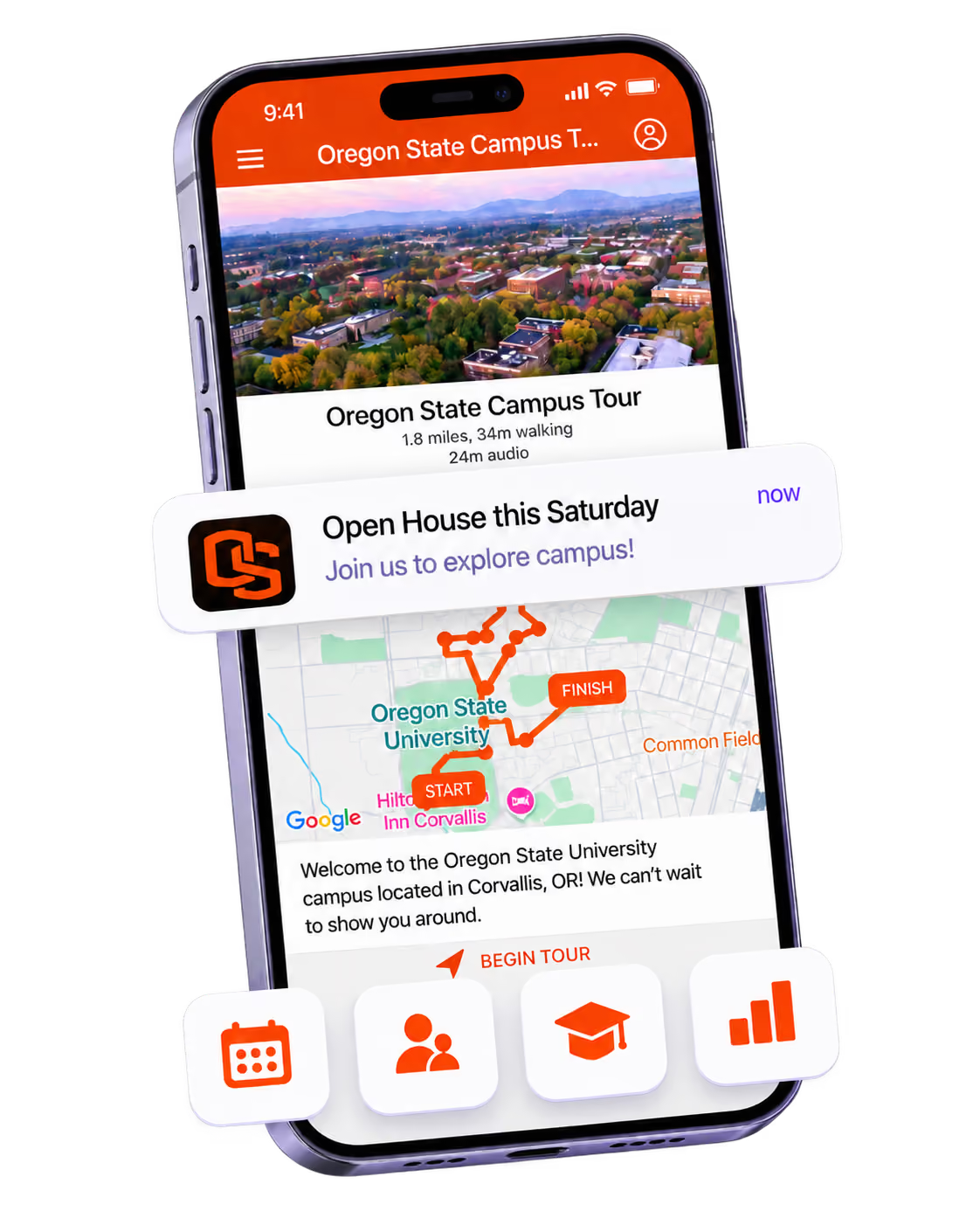
Offering Campus Tours?
Deliver branded, self-guided tour experiences with interactive maps and rich media, available 24/7.

Offering Campus Tours?
Deliver branded, self-guided tour experiences with interactive maps and rich media, available 24/7.
Organising a Career Fair?
Simplify logistics for students, employers, and Career Services staff with one easy-to-use app.
Organising a Career Fair?
Simplify logistics for students, employers, and Career Services staff with one easy-to-use app.
Managing Alumni Events?
Plan reunions, regional events, and fundraising campaigns with an app built for alumni engagement.
Managing Alumni Events?
Plan reunions, regional events, and fundraising campaigns with an app built for alumni engagement.
Boost Student Engagement
One hub for schedules, resources, and events that keeps students connected throughout the academic year.
Boost Student Engagement
One hub for schedules, resources, and events that keeps students connected throughout the academic year.
Planning Orientation?
Help new students feel prepared from day one with schedules, campus resources, and real-time updates in one app.
Planning Orientation?
Help new students feel prepared from day one with schedules, campus resources, and real-time updates in one app.
Running Admissions Events?
Manage open houses, tours, and yield events with a branded app that saves time and engages prospective students.

Running Admissions Events?
Manage open houses, tours, and yield events with a branded app that saves time and engages prospective students.
Get a custom Sponsorship Package Template
Stop starting from scratch. Grab free templates that helWe'll build a tailored sponsorship package with suggested pricing, tiers, and benefits..for your specific event.p you build professional sponsorship packages and close deals faster.
Get a custom Sponsorship Package Template
Stop starting from scratch. Grab free templates that helWe'll build a tailored sponsorship package with suggested pricing, tiers, and benefits..for your specific event.p you build professional sponsorship packages and close deals faster.
Plan Your Next Event Without Missing a Beat.
From venue selection to post-event wrap-up, this free checklist walks you through every step (so nothing falls through the cracks).
.avif)
Plan Your Next Event Without Missing a Beat.
From venue selection to post-event wrap-up, this free checklist walks you through every step (so nothing falls through the cracks).
Real Results From Real Events
100,000+ organizations trust Guidebook. See exactly how universities, associations, enterprises, and more put it to work.

Real Results From Real Events
100,000+ organizations trust Guidebook. See exactly how universities, associations, enterprises, and more put it to work.
Flexible pricing for every event size
Find the perfect plan for your needs, from intimate gatherings to large-scale conferences.

Flexible pricing for every event size
Find the perfect plan for your needs, from intimate gatherings to large-scale conferences.
Join our event experts
Watch on-demand webinars and join live sessions with industry leaders sharing best practices for event success.
.avif)
Join our event experts
Watch on-demand webinars and join live sessions with industry leaders sharing best practices for event success.
Guidebook in Action
Book a personalized walkthrough and discover how we help event teams create better attendee experiences.
Guidebook in Action
Book a personalized walkthrough and discover how we help event teams create better attendee experiences.

What is Planning a Corporate Event?
Planning a corporate event involves organizing and coordinating all aspects to achieve business goals. Discover key steps, best practices, and tips for successful corporate event planning.

Planning a corporate event is the strategic process of organizing business gatherings that achieve specific company goals while creating memorable experiences for attendees. It covers everything from small team meetings to large-scale conferences with thousands of participants. Done right, corporate event planning drives real business results—stronger relationships, better brand recognition, and measurable ROI.
Here's the thing: corporate events aren't just parties with a business card. They're powerful tools that connect people, share ideas, and move your organization forward. The best corporate events feel effortless to attendees. Behind the scenes? There's a detailed plan covering every moment from arrival to follow-up.
Key Characteristics of Planning a Corporate Event
- Goal-Driven Focus: Every decision ties back to specific business objectives. Whether you're launching a product or building team morale, the goal shapes everything.
- Budget Accountability: Corporate events require clear financial tracking and justification. You'll need to show event ROI to stakeholders.
- Professional Standards: These events reflect your company's brand and values. Quality matters at every touchpoint.
- Stakeholder Management: Multiple departments and decision-makers typically get involved. Communication and alignment are essential.
- Compliance Requirements: Corporate events often involve legal, HR, and procurement considerations that personal events don't face.
- Scalable Logistics: From 20-person workshops to 5,000-attendee conferences, corporate events need systems that scale.
- Measurable Outcomes: Success isn't just "people had fun." You need data to prove impact and improve future events.
Planning a Corporate Event vs. Related Event Types
Social Event Planning
- Scope: Personal celebrations like weddings, birthdays, or reunions
- Focus: Guest enjoyment and emotional experience
- Timeline: Flexible, often planned months in advance
- Channels: Personal invitations, social media
- Goal: Create memorable moments for loved ones
Non-Profit Event Planning
- Scope: Fundraisers, galas, awareness campaigns
- Focus: Donor engagement and mission advancement
- Timeline: Often tied to fiscal year or campaign cycles
- Channels: Donor databases, community outreach
- Goal: Raise funds and build supporter relationships
Trade Show Planning
- Scope: Industry exhibitions with multiple vendors
- Focus: Lead generation and product showcasing
- Timeline: Annual or bi-annual industry schedules
- Channels: Industry publications, exhibitor networks
- Goal: Connect buyers with sellers in a specific market
Corporate event planning borrows elements from each type. You might need the emotional impact of social events, the mission focus of non-profits, and the lead-gen mindset of trade shows. The key difference? Corporate events serve your organization's strategic business needs first.
Types of Corporate Events
Internal Company Events
These events bring your team together. Think annual meetings, team building events, training sessions, and company celebrations.
Internal events build culture and alignment. They're your chance to share vision, recognize achievements, and strengthen bonds between colleagues.
External Client-Facing Events
Client events showcase your brand to the outside world. Product launches, customer appreciation dinners, and VIP experiences fall into this category.
The stakes are high here. These events directly impact revenue and reputation. Every detail matters because clients are watching.
Hybrid and Virtual Corporate Events
Virtual event planning has become essential for modern corporate teams. Hybrid formats let you reach global audiences while keeping in-person energy.
- Webinars for thought leadership
- Virtual town halls for distributed teams
- Hybrid conferences with remote attendance options
- Online training programs
Industry Conferences and Summits
Large-scale events position your company as an industry leader. These require extensive event planning processes and often take 6-12 months to organize.
Conferences typically include keynote speakers, breakout sessions, networking opportunities, and sponsor activations.
The Corporate Event Planning Process
Define Your Event Goals
Start with the "why." What does success look like? Be specific.
Bad goal: "Have a great conference."
Good goal: "Generate 200 qualified leads and achieve 85% attendee satisfaction."
Clear goals guide every decision that follows. They also make it easier to measure results.
Build Your Budget and Timeline
Corporate events need realistic budgets with built-in contingencies. Plan for 10-15% buffer for unexpected costs.
Your timeline depends on event size:
- Small meetings: 4-6 weeks
- Mid-size events: 3-4 months
- Large conferences: 6-12 months
Select Your Venue and Vendors
Location sets the tone. Consider accessibility, capacity, technology infrastructure, and brand fit.
Build relationships with reliable vendors for catering, AV, décor, and transportation. Check out event planning resources for vendor selection tips.
Create Your Event Marketing Plan
Event digital marketing drives attendance and engagement. Your promotion strategy should include:
- Email campaigns to your database
- Social media promotion
- Partner and sponsor outreach
- Internal communications for company events
Learn how to advertise your event effectively across channels.
Manage Registration and Communications
Smooth event registration creates a great first impression. Use technology to automate confirmations, reminders, and updates.
Keep attendees informed without overwhelming their inboxes. Three to five touchpoints before the event usually works well.
Why Planning a Corporate Event Matters
For Event Success:
- Seamless Attendee Experience: Good planning eliminates confusion and frustration. Attendees focus on content, not logistics.
- Risk Mitigation: Anticipating problems prevents disasters. Backup plans save the day when things go wrong.
- Resource Optimization: Smart planning stretches budgets further. You get more impact per dollar spent.
- Team Coordination: Clear plans align everyone involved. No more "I thought you were handling that" moments.
- Quality Control: Detailed planning catches issues before they become visible problems.
For Business Objectives:
- Revenue Generation: Well-planned events convert attendees into customers and partners.
- Brand Building: Professional events strengthen your company's reputation and market position.
- Employee Engagement: Internal events boost morale, retention, and team performance.
- Relationship Development: Face-to-face connections build trust that emails can't match.
- Knowledge Sharing: Events spread ideas and best practices across your organization and industry.
Guidebook's event management platform helps corporate planners deliver exceptional experiences. From branded apps to real-time updates, the right technology makes planning easier and events more impactful.
Planning a Corporate Event Best Practices
- Start with Stakeholder Alignment: Get buy-in from leadership and key departments early. Misaligned expectations cause problems later.
- Create Detailed Run-of-Show Documents: Minute-by-minute schedules keep everyone on track. Include backup contacts and contingency plans.
- Invest in Event Technology: Event check-in software and mobile apps streamline operations and improve attendee experience.
- Prioritize Attendee Communication: Clear, timely information reduces questions and anxiety. Use multiple channels to reach everyone.
- Build in Buffer Time: Sessions run long. Transitions take time. Build 10-15 minute buffers between major segments.
- Train Your On-Site Team: Everyone should know the plan, their role, and who to contact with problems.
- Prepare for Technical Issues: Have backup equipment, IT support on standby, and offline alternatives ready.
- Collect Feedback in Real-Time: Don't wait until after the event. Pulse surveys during the event let you make adjustments.
- Document Everything: Photos, videos, and notes become valuable for future planning and marketing.
- Plan Your Post-Event Follow-Up: The event isn't over when attendees leave. Follow-up communications extend impact and gather insights.
Common Planning a Corporate Event Mistakes
Underestimating Time Requirements: Corporate events take longer to plan than you think. Rushing leads to mistakes, stress, and missed opportunities. Start earlier than feels necessary.
Ignoring the Attendee Perspective: Planners focus on logistics while forgetting the attendee experience. Walk through your event as an attendee would. What's confusing? What's missing?
Skipping the Rehearsal: Technical rehearsals catch problems before they embarrass you in front of attendees. Always do a full run-through with speakers and AV teams.
Overlooking Accessibility Needs: Dietary restrictions, mobility requirements, and sensory considerations matter. Ask about needs during registration and plan accordingly.
Poor Vendor Communication: Assuming vendors understand your vision leads to disappointment. Provide detailed briefs, confirm details in writing, and check in regularly.
Neglecting Post-Event Analysis: Without proper debrief, you repeat mistakes and miss improvement opportunities. Use an event debrief template to capture learnings.
Forgetting About Sponsors: If you have sponsors, their needs matter. Review sponsorship package examples and deliver on your promises.
Final Thoughts
Planning a corporate event is both art and science. It requires creativity to design memorable experiences and discipline to execute flawlessly. The best corporate event planners master both.
The corporate events landscape keeps evolving. Event trends shift toward more personalized, technology-enhanced experiences. Attendees expect seamless digital integration and meaningful connections. Staying current with event management tips helps you meet rising expectations.
Here's what separates good corporate events from great ones: intentionality. Every element serves a purpose. Every touchpoint reinforces your message. Every attendee feels valued. That level of care doesn't happen by accident—it happens through thoughtful planning.
Ready to elevate your corporate events? Guidebook helps organizations create branded event apps that impress attendees and simplify logistics. Explore our templates to get started, or book a demo to see how leading companies deliver exceptional corporate events.
Your next corporate event could be your best one yet. It all starts with a plan.
The power of your brand in your app, from first visit to alumni.
Build trust
Attendees download your app, not ours. Your name, colors, and crest in the stores.
.avif)
One place for the whole event
Schedules, maps, registration, and updates in one branded hub - not five tools.
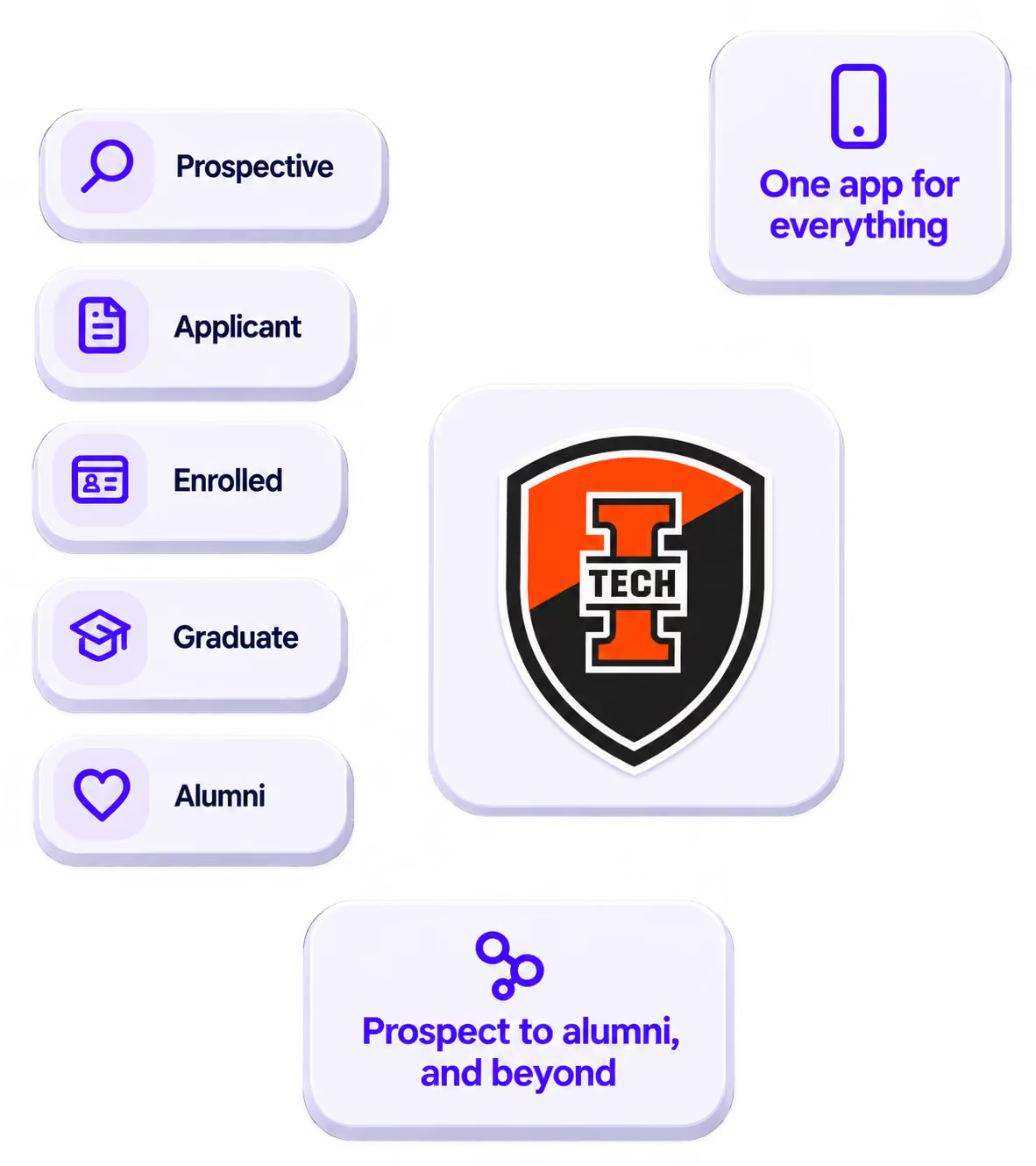
Stand out
A branded app is what people keep on their phone after the printed program is in the recycling.

Get the Mobile App Playbook
A short guide to running the whole student journey in one app. No fluff, just what works.
for higher ed
Campus
Playbook
A practical guide to building a connected campus experience.
Free playbook
The Mobile App Playbook for Universities
Students decide if they belong long before they set foot on campus. This playbook shows how to win them over from the first visit through graduation.
- Grow enrollment and boost recruitment
- Increase belonging and retention
- Run every event from one branded app
By submitting, you agree to our Privacy Policy.
You're in.
.png)