
Campus apps by department
Admissions, orientation, student life, and more — one campus app that works across departments.

Campus apps by department
Admissions, orientation, student life, and more — one campus app that works across departments.
Build unlimited event apps on one license
One partnership for unlimited campus events — orientation, tours, student life, and everything in between.
Build unlimited event apps on one license
One partnership for unlimited campus events — orientation, tours, student life, and everything in between.
Compare event app platforms
See how Guidebook stacks up against other event app and registration platforms.
Compare event app platforms
See how Guidebook stacks up against other event app and registration platforms.
Event apps for nonprofit and community programs
Give members, volunteers, and donors one branded app for conferences, fundraisers, and year-round community.
Event apps for nonprofit and community programs
Give members, volunteers, and donors one branded app for conferences, fundraisers, and year-round community.
Campus integrations and an open API
Connect Guidebook with the campus systems, APIs, and tools your team already uses.
Campus integrations and an open API
Connect Guidebook with the campus systems, APIs, and tools your team already uses.
Event apps for corporate and enterprise teams
Internal meetings, offsites, and large-scale corporate events — with the branding and control enterprise teams need.
Event apps for corporate and enterprise teams
Internal meetings, offsites, and large-scale corporate events — with the branding and control enterprise teams need.
Create a branded event app with no coding
Put schedules, maps, resources, and updates in every attendee's pocket — built for campus events and programs.
Create a branded event app with no coding
Put schedules, maps, resources, and updates in every attendee's pocket — built for campus events and programs.
Launch a branded, white-label event app
A white-label event app with your branding, your content, and your attendee experience — no coding required.
Launch a branded, white-label event app
A white-label event app with your branding, your content, and your attendee experience — no coding required.
Everything in the Guidebook platform
Explore the features event teams use to engage attendees before, during, and after the event.
Everything in the Guidebook platform
Explore the features event teams use to engage attendees before, during, and after the event.
One app for in-person and virtual attendees
The same schedule, networking, and updates whether people are in the room or joining remotely.
One app for in-person and virtual attendees
The same schedule, networking, and updates whether people are in the room or joining remotely.
Event apps built for associations
Annual meetings, chapter events, and member engagement — without rebuilding a new app every year.
Event apps built for associations
Annual meetings, chapter events, and member engagement — without rebuilding a new app every year.
A branded event website that matches the app
Promote the event, collect interest, and keep branding consistent from the first click to check-in.
A branded event website that matches the app
Promote the event, collect interest, and keep branding consistent from the first click to check-in.
Plan, run, and measure events on one platform
App, registration, badges, and websites in one workflow — so planning isn't a pile of disconnected tools.
Plan, run, and measure events on one platform
App, registration, badges, and websites in one workflow — so planning isn't a pile of disconnected tools.
Keep members engaged between events
One branded app for the conference and everything that happens the other 51 weeks of the year.
Keep members engaged between events
One branded app for the conference and everything that happens the other 51 weeks of the year.
The conference app attendees actually use
Schedules, maps, networking, and live updates for annual meetings, summits, and multi-day conferences.
The conference app attendees actually use
Schedules, maps, networking, and live updates for annual meetings, summits, and multi-day conferences.
Registration that feeds your app and badges
Collect registrations, payments, and attendee data in the same platform as your event app.
Registration that feeds your app and badges
Collect registrations, payments, and attendee data in the same platform as your event app.
Design and print event badges in one place
Custom badges, QR check-in, and on-site printing — without a separate badge vendor.
Design and print event badges in one place
Custom badges, QR check-in, and on-site printing — without a separate badge vendor.
A Smaller School?
Deliver a polished, branded event experience without a large team or a big budget.
A Smaller School?
Deliver a polished, branded event experience without a large team or a big budget.
Running Family Programs?
Give families everything they need, from schedules and maps to real-time updates, all in one place.
Running Family Programs?
Give families everything they need, from schedules and maps to real-time updates, all in one place.
Coordinating Move-In Day?
Share updates, manage events, and keep students informed from move-in through the academic year.

Coordinating Move-In Day?
Share updates, manage events, and keep students informed from move-in through the academic year.
Offering Campus Tours?
Deliver branded, self-guided tour experiences with interactive maps and rich media, available 24/7.

Offering Campus Tours?
Deliver branded, self-guided tour experiences with interactive maps and rich media, available 24/7.
Organising a Career Fair?
Simplify logistics for students, employers, and Career Services staff with one easy-to-use app.
Organising a Career Fair?
Simplify logistics for students, employers, and Career Services staff with one easy-to-use app.
Managing Alumni Events?
Plan reunions, regional events, and fundraising campaigns with an app built for alumni engagement.
Managing Alumni Events?
Plan reunions, regional events, and fundraising campaigns with an app built for alumni engagement.
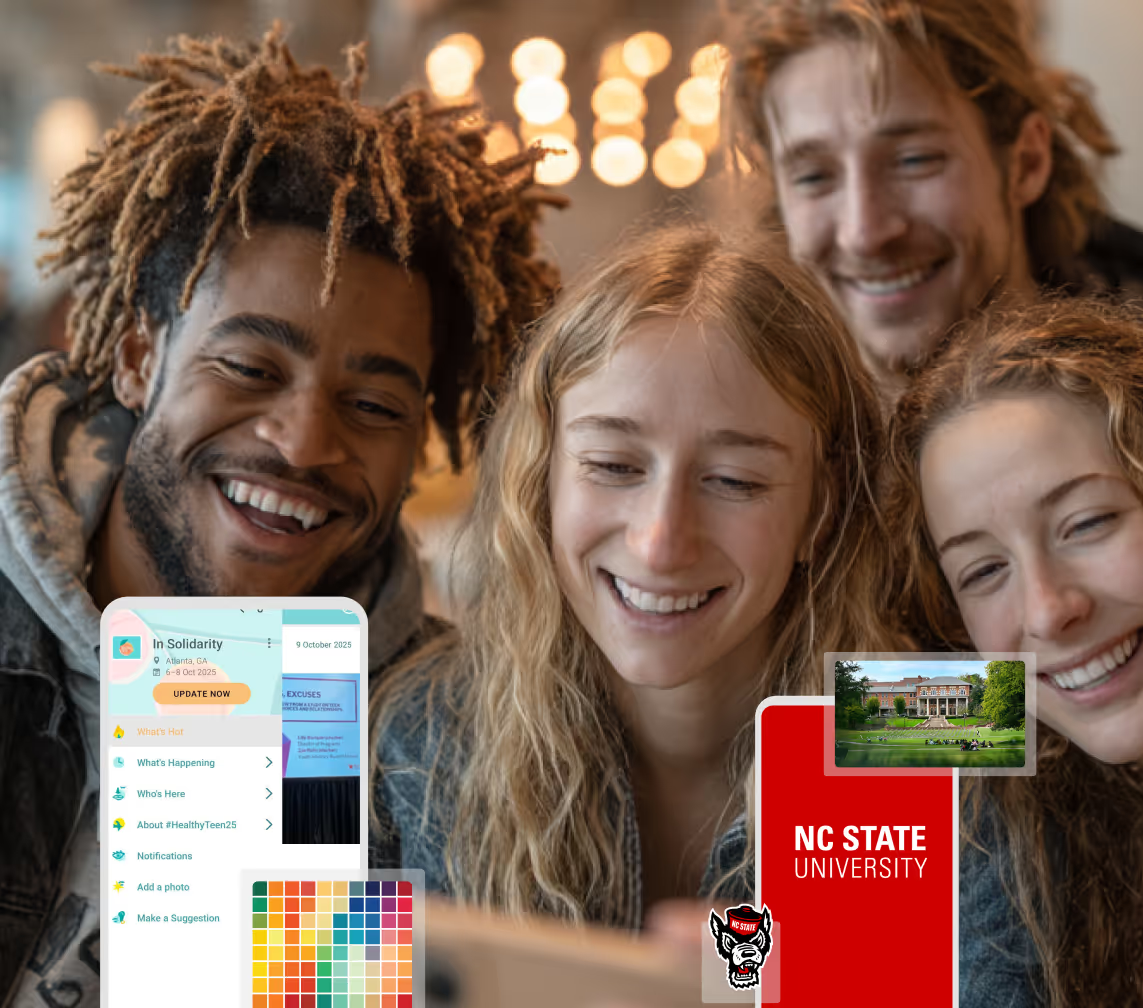
Boost Student Engagement
One hub for schedules, resources, and events that keeps students connected throughout the academic year.
Boost Student Engagement
One hub for schedules, resources, and events that keeps students connected throughout the academic year.
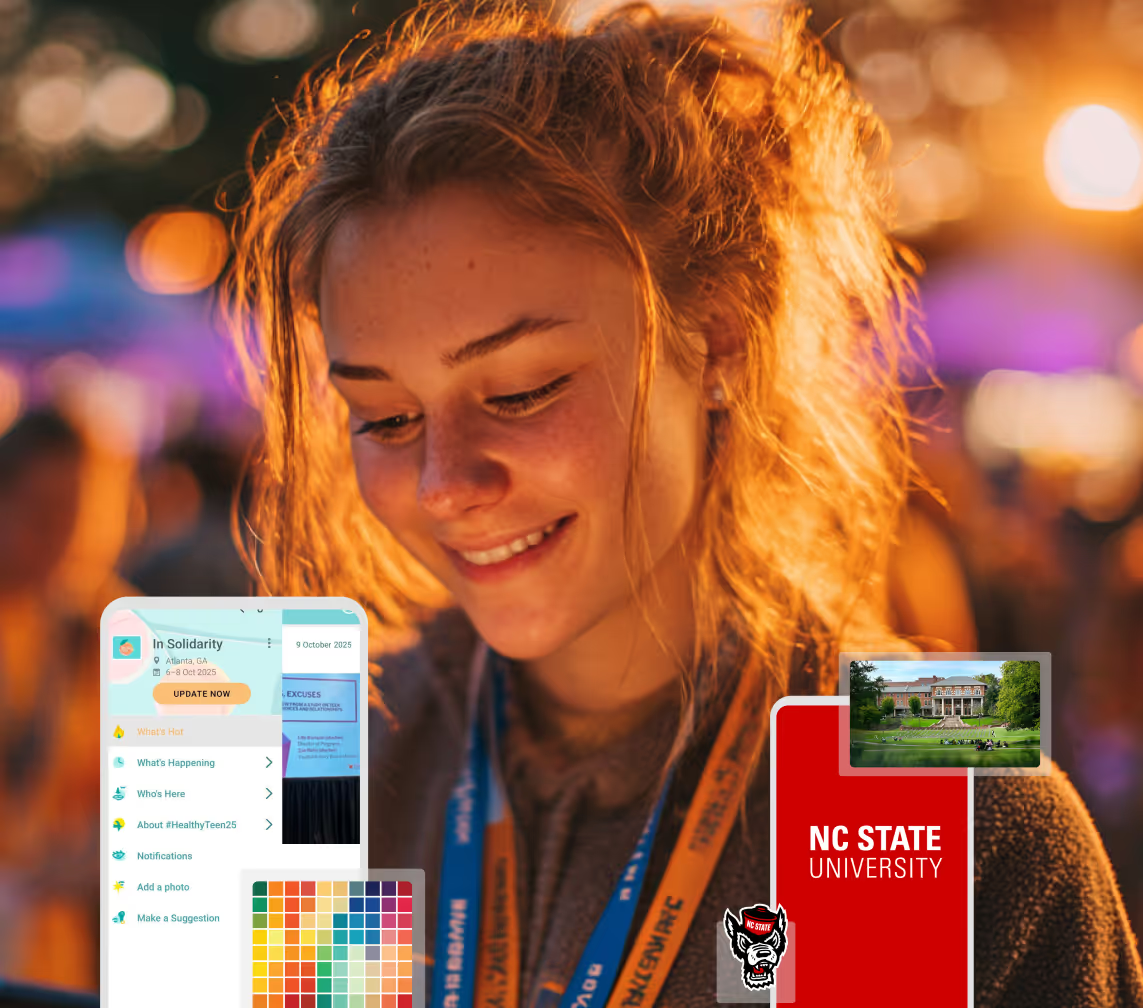
Planning Orientation?
Help new students feel prepared from day one with schedules, campus resources, and real-time updates in one app.
Planning Orientation?
Help new students feel prepared from day one with schedules, campus resources, and real-time updates in one app.
Running Admissions Events?
Manage open houses, tours, and yield events with a branded app that saves time and engages prospective students.

Running Admissions Events?
Manage open houses, tours, and yield events with a branded app that saves time and engages prospective students.
Get a custom Sponsorship Package Template
Stop starting from scratch. Grab free templates that helWe'll build a tailored sponsorship package with suggested pricing, tiers, and benefits..for your specific event.p you build professional sponsorship packages and close deals faster.
Get a custom Sponsorship Package Template
Stop starting from scratch. Grab free templates that helWe'll build a tailored sponsorship package with suggested pricing, tiers, and benefits..for your specific event.p you build professional sponsorship packages and close deals faster.
Plan Your Next Event Without Missing a Beat.
From venue selection to post-event wrap-up, this free checklist walks you through every step (so nothing falls through the cracks).
.avif)
Plan Your Next Event Without Missing a Beat.
From venue selection to post-event wrap-up, this free checklist walks you through every step (so nothing falls through the cracks).
Real Results From Real Events
100,000+ organizations trust Guidebook. See exactly how universities, associations, enterprises, and more put it to work.

Real Results From Real Events
100,000+ organizations trust Guidebook. See exactly how universities, associations, enterprises, and more put it to work.
Flexible pricing for every event size
Find the perfect plan for your needs, from intimate gatherings to large-scale conferences.
Flexible pricing for every event size
Find the perfect plan for your needs, from intimate gatherings to large-scale conferences.
Join our event experts
Watch on-demand webinars and join live sessions with industry leaders sharing best practices for event success.
.avif)
Join our event experts
Watch on-demand webinars and join live sessions with industry leaders sharing best practices for event success.
Guidebook in Action
Book a personalized walkthrough and discover how we help event teams create better attendee experiences.
Guidebook in Action
Book a personalized walkthrough and discover how we help event teams create better attendee experiences.

What makes conference gamification effective?
Conference gamification boosts engagement by using interactive challenges, rewards, and real-time feedback. Discover proven tactics, design tips, and success metrics.

Conference Gamification Effectiveness is the measurable impact that game-based elements have on attendee engagement, learning retention, and overall event success at professional conferences. It covers everything from point systems and leaderboards to challenges and rewards. When done right, gamification transforms passive attendees into active participants.
Here's the thing: gamification isn't just about making events "fun." It's a strategic tool backed by behavioral psychology. The best conference planners use it to drive specific outcomes—more networking, higher session attendance, better sponsor visibility. Random badges won't cut it. You need clear goals and smart design to see real results.
Key Characteristics of Conference Gamification Effectiveness
- Measurable Outcomes: Effective gamification ties directly to trackable metrics like session check-ins, app engagement, and networking connections made.
- Clear Objectives: Every game element serves a purpose. Points for visiting sponsor booths? That's intentional. Random achievements? That's noise.
- Balanced Competition: The best systems reward participation, not just winning. This keeps everyone engaged, not just the top 10%.
- Real-Time Feedback: Attendees see their progress instantly through leaderboards, progress bars, and notifications. Delayed gratification doesn't work here.
- Meaningful Rewards: Prizes matter. Gift cards, VIP access, and exclusive experiences outperform generic swag every time.
- Seamless Integration: Game mechanics blend naturally into the event flow. Clunky, separate systems kill momentum fast.
- Inclusive Design: Effective gamification works for introverts and extroverts alike. Multiple paths to success keep everyone playing.
Conference Gamification Effectiveness vs. Related Engagement Strategies
Traditional Networking Activities
- Scope: Limited to scheduled networking sessions and breaks
- Focus: Organic, unstructured connections between attendees
- Timeline: Confined to specific event time blocks
- Channels: In-person interactions only
- Goal: General relationship building without specific targets
Interactive Session Polling
- Scope: Single sessions or presentations
- Focus: Real-time audience feedback and participation
- Timeline: During presentations only
- Channels: Mobile apps, web platforms, or dedicated polling tools
- Goal: Increase session engagement and gather instant insights
Conference Gamification
- Scope: Entire event experience from registration to post-event
- Focus: Driving specific behaviors through rewards and competition
- Timeline: Continuous throughout the conference lifecycle
- Channels: Event apps, physical check-in stations, social media
- Goal: Achieve measurable engagement targets and ROI
Each strategy has its place. But gamification stands apart because it creates sustained engagement across your entire event. It connects the dots between sessions, networking, and sponsor activations into one cohesive experience.
Essential Components of Effective Conference Gamification
Build a Points-Based Foundation
Points are the backbone of any gamification system. They give attendees a clear way to track progress and compare themselves to others.
Assign different point values based on difficulty. Checking into a session might earn 10 points. Completing a sponsor challenge could be worth 50. This hierarchy guides behavior toward your most important goals.
Design Compelling Challenges
Challenges turn passive attendance into active participation. The best ones feel achievable but require effort.
- Scavenger hunts that explore the venue
- Networking bingo with specific connection types
- Quiz questions about session content
- Photo challenges at sponsor booths
- Social sharing tasks with event hashtags
Create Visible Leaderboards
Leaderboards tap into our natural competitive drive. Display them prominently on screens throughout your venue and within your event app.
Consider multiple leaderboard categories. Overall points, most connections made, and top session attendees give different personality types a chance to shine.
Offer Tiered Rewards
Not everyone will reach the top of the leaderboard. Tiered rewards keep mid-level participants motivated.
- Bronze tier: Small prizes like branded merchandise
- Silver tier: Gift cards or premium swag
- Gold tier: VIP experiences or high-value prizes
- Participation prizes: Raffle entries for everyone who plays
Integrate Social Elements
Gamification works best when it's social. Encourage attendees to share achievements, challenge friends, and celebrate wins together.
Team-based competitions can be especially powerful. They build camaraderie and give introverts a way to contribute without constant one-on-one networking.
Measuring Conference Gamification Effectiveness
Track Participation Rates
Start with the basics. What percentage of attendees actually engaged with your gamification system? Industry benchmarks suggest 40-60% participation indicates a well-designed program.
Break this down further. How many completed at least one challenge? How many earned rewards? These numbers tell you if your system was accessible and appealing.
Analyze Behavior Changes
Compare gamified activities to non-gamified ones. Did sessions with check-in points see higher attendance? Did sponsor booths with challenges get more traffic?
- Session attendance rates before and after gamification
- Sponsor booth visit duration and frequency
- Networking connections made through challenges
- App engagement time and feature usage
Calculate ROI Impact
Connect gamification to your event ROI metrics. Did sponsors report better lead quality? Did attendee satisfaction scores improve?
Survey participants specifically about gamification. Ask what motivated them, what they enjoyed, and what fell flat. This qualitative data shapes future improvements.
Monitor Real-Time Performance
If participation drops mid-event, you can adjust. Send push notifications, announce bonus point opportunities, or highlight leaderboard leaders to reignite interest.
Why Conference Gamification Effectiveness Matters
For Event Success:
- Higher Engagement Rates: Gamified events see 30-50% more app interactions than non-gamified ones, keeping attendees connected throughout.
- Better Session Attendance: Point incentives for check-ins reduce no-shows and encourage exploration of new topics.
- Increased Networking: Challenges that reward connections help introverts break the ice and extroverts meet more people.
- Stronger Sponsor Value: Booth visits driven by gamification give sponsors qualified leads, not just foot traffic.
- Memorable Experiences: Attendees remember events where they actively participated, not just passively observed.
For Business Objectives:
- Improved Data Collection: Every game interaction generates valuable behavioral data about attendee preferences.
- Higher Satisfaction Scores: Engaged attendees rate events more positively, boosting your reputation and return rates.
- Increased Social Reach: Sharing challenges expand your event digital marketing reach organically.
- Better Sponsor Retention: Demonstrable engagement metrics make sponsor renewals easier to secure.
- Competitive Differentiation: Well-executed gamification sets your conference apart in a crowded market.
Platforms like Guidebook make implementing effective gamification straightforward. Built-in features handle points, leaderboards, and challenges without requiring custom development or separate tools.
Conference Gamification Effectiveness Best Practices
- Start with Clear Goals: Define exactly what behaviors you want to encourage before designing any game elements. Vague objectives lead to scattered results.
- Keep Rules Simple: If attendees need a manual to understand your system, it's too complicated. Explain everything in under 60 seconds.
- Balance Effort and Reward: Easy tasks should offer small rewards. Difficult challenges deserve bigger prizes. This ratio keeps the system fair and motivating.
- Test Before Launch: Run your gamification system with a small group first. They'll find bugs and confusion points you missed.
- Promote Early and Often: Announce gamification in your event marketing materials. Remind attendees at registration, during opening remarks, and throughout the event.
- Make Progress Visible: Display leaderboards on venue screens. Send progress updates via push notifications. Visibility drives continued participation.
- Offer Multiple Paths to Success: Some attendees love competition. Others prefer collaboration. Design challenges that appeal to different motivations.
- Celebrate Winners Publicly: Announce top performers during closing sessions. This recognition motivates future participation and creates aspirational moments.
- Gather Feedback Immediately: Survey participants about gamification while the experience is fresh. Use insights to improve next year's program.
- Connect to Larger Event Themes: Gamification should feel integrated, not bolted on. Tie challenges to your meeting themes and overall event narrative.
Common Conference Gamification Effectiveness Mistakes
Overcomplicating the System: Too many point categories, confusing rules, and unclear objectives overwhelm attendees. They'll disengage rather than figure it out. Keep your system intuitive enough that anyone can start playing within minutes.
Offering Weak Rewards: Generic pens and stress balls don't motivate anyone. If your prizes aren't worth the effort, participation will tank. Invest in rewards people actually want—gift cards, exclusive experiences, or premium products.
Ignoring Non-Competitive Attendees: Not everyone wants to battle for first place. Systems that only reward top performers alienate the majority. Include participation-based rewards and collaborative challenges.
Launching Without Promotion: Building a great gamification system means nothing if attendees don't know about it. Promote through every channel—email, social, signage, and announcements. Make it impossible to miss.
Forgetting Mobile Optimization: Most gamification happens through event apps. If your system doesn't work smoothly on phones, you've lost before you started. Test extensively on multiple devices.
Setting Unrealistic Goals: Expecting 100% participation or dramatic behavior changes sets you up for disappointment. Benchmark against industry standards and your own past events for realistic targets.
Neglecting Post-Event Analysis: Many planners move on without properly analyzing gamification results. This wastes valuable learning opportunities. Schedule time for thorough event debriefs that include gamification performance.
Final Thoughts
Conference gamification effectiveness isn't about adding bells and whistles to your event. It's about strategically using game mechanics to achieve real business outcomes. When you nail it, you'll see higher engagement, happier sponsors, and attendees who can't wait to come back.
The events industry continues to evolve rapidly. Attendees expect more than passive consumption—they want experiences that involve them. Gamification meets this demand while giving planners powerful tools to guide behavior and measure success. It's become essential for conferences that want to stand out.
Don't let the complexity scare you off. Start small with a simple points system and a few challenges. Learn what works for your audience. Build from there. Even basic gamification outperforms no gamification when it comes to engagement metrics.
Ready to level up your next conference? Explore how Guidebook's event management platform makes gamification simple. Check out our case studies to see real results from events like yours. Or book a demo to see the platform in action. Your attendees are ready to play—give them a game worth winning.
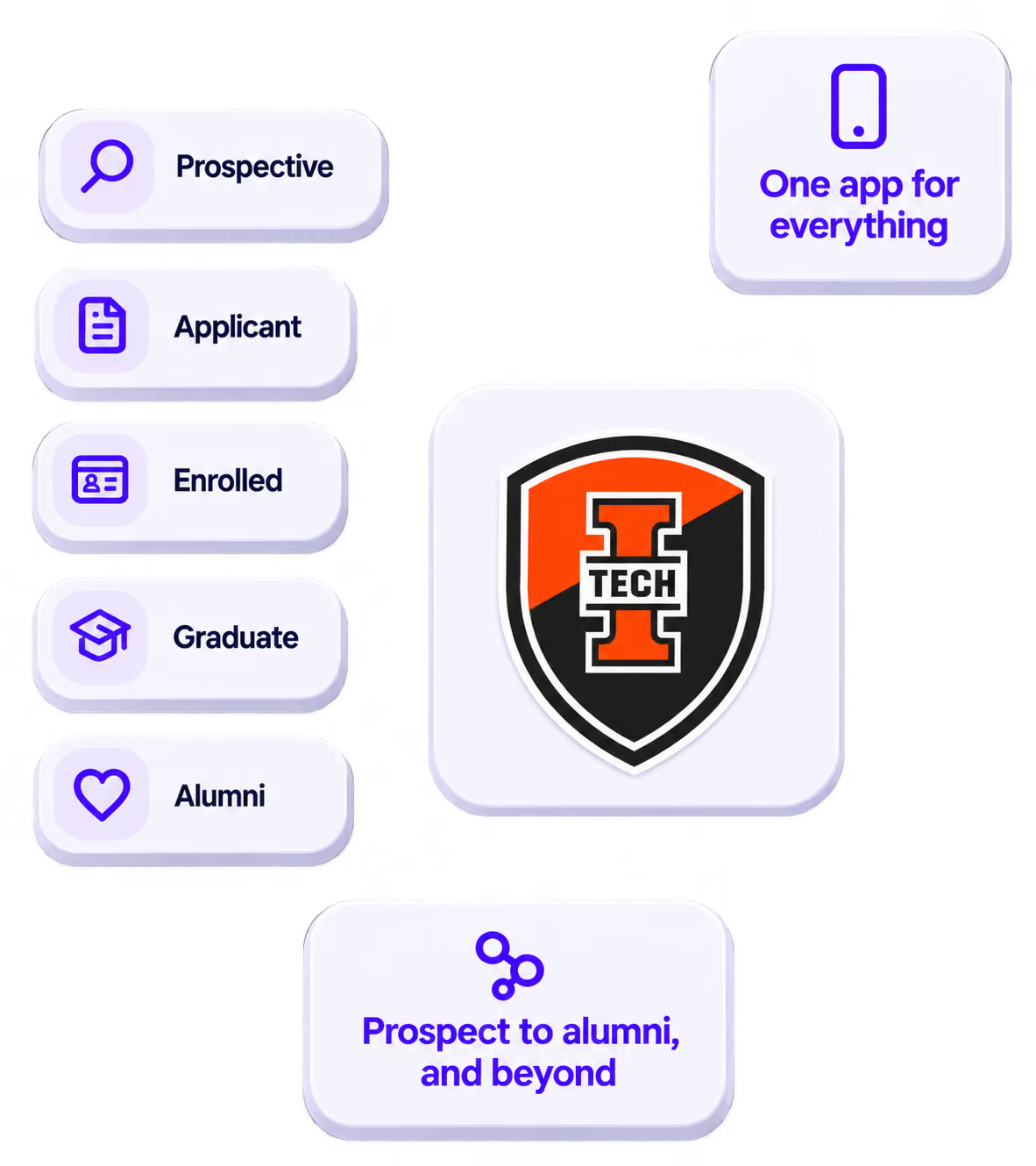
The power of your brand in your app, from first visit to alumni.
Build trust
Attendees download your app, not ours. Your name, colors, and crest in the stores.
.avif)
One place for the whole event
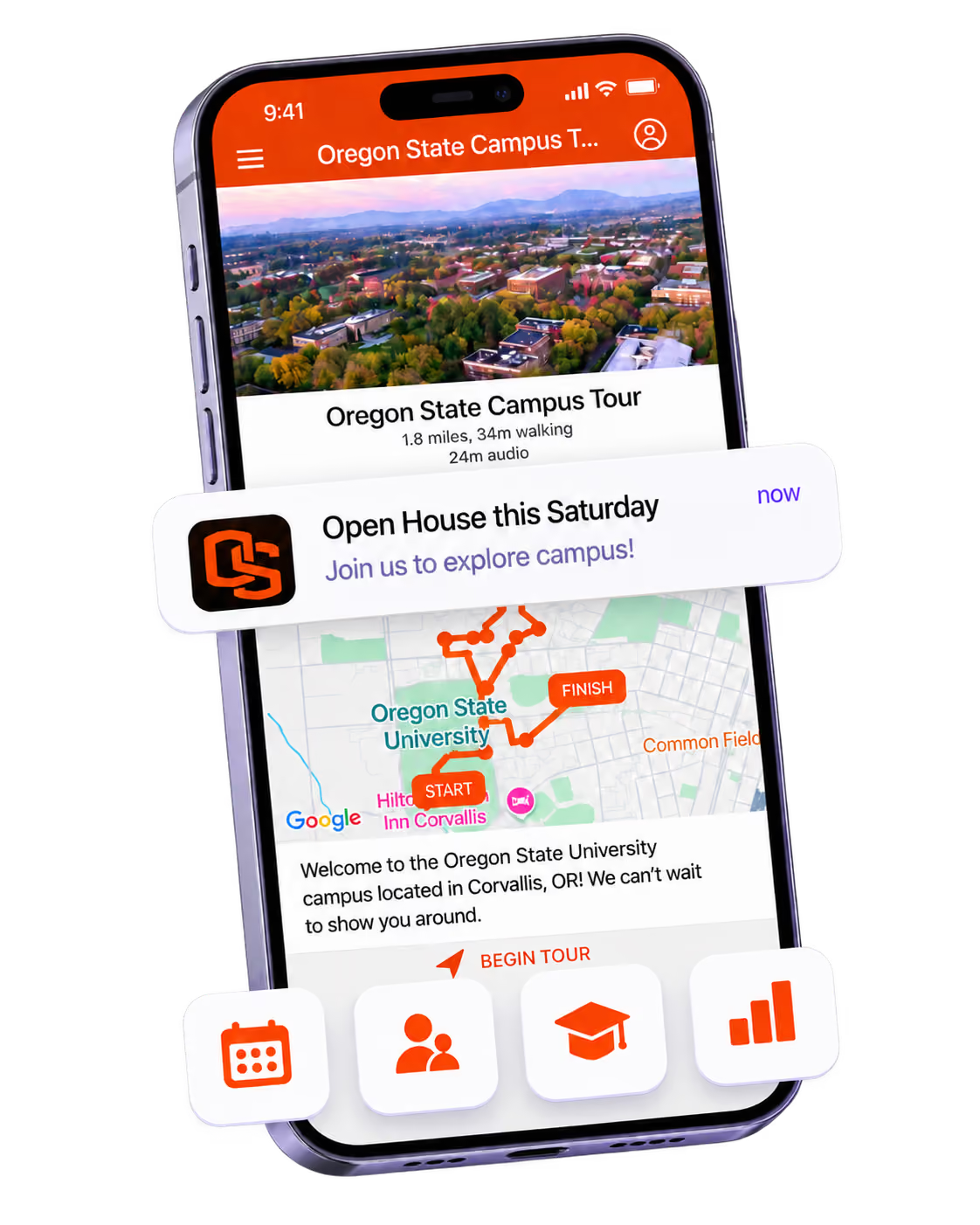
Schedules, maps, registration, and updates in one branded hub - not five tools.
Stand out
A branded app is what people keep on their phone after the printed program is in the recycling.

Get the Mobile App Playbook
A short guide to running the whole student journey in one app. No fluff, just what works.
for higher ed
Campus
Playbook
A practical guide to building a connected campus experience.
Free playbook
The Mobile App Playbook for Universities
Students decide if they belong long before they set foot on campus. This playbook shows how to win them over from the first visit through graduation.
- Grow enrollment and boost recruitment
- Increase belonging and retention
- Run every event from one branded app
By submitting, you agree to our Privacy Policy.
You're in.
.png)