
Campus apps by department
Admissions, orientation, student life, and more — one campus app that works across departments.

Campus apps by department
Admissions, orientation, student life, and more — one campus app that works across departments.
Build unlimited event apps on one license
One partnership for unlimited campus events — orientation, tours, student life, and everything in between.
Build unlimited event apps on one license
One partnership for unlimited campus events — orientation, tours, student life, and everything in between.
Compare event app platforms
See how Guidebook stacks up against other event app and registration platforms.
Compare event app platforms
See how Guidebook stacks up against other event app and registration platforms.
Event apps for nonprofit and community programs
Give members, volunteers, and donors one branded app for conferences, fundraisers, and year-round community.
Event apps for nonprofit and community programs
Give members, volunteers, and donors one branded app for conferences, fundraisers, and year-round community.
Campus integrations and an open API
Connect Guidebook with the campus systems, APIs, and tools your team already uses.
Campus integrations and an open API
Connect Guidebook with the campus systems, APIs, and tools your team already uses.
Event apps for corporate and enterprise teams
Internal meetings, offsites, and large-scale corporate events — with the branding and control enterprise teams need.
Event apps for corporate and enterprise teams
Internal meetings, offsites, and large-scale corporate events — with the branding and control enterprise teams need.
Create a branded event app with no coding
Put schedules, maps, resources, and updates in every attendee's pocket — built for campus events and programs.
Create a branded event app with no coding
Put schedules, maps, resources, and updates in every attendee's pocket — built for campus events and programs.
Launch a branded, white-label event app
A white-label event app with your branding, your content, and your attendee experience — no coding required.
Launch a branded, white-label event app
A white-label event app with your branding, your content, and your attendee experience — no coding required.
Everything in the Guidebook platform
Explore the features event teams use to engage attendees before, during, and after the event.
Everything in the Guidebook platform
Explore the features event teams use to engage attendees before, during, and after the event.
One app for in-person and virtual attendees
The same schedule, networking, and updates whether people are in the room or joining remotely.
One app for in-person and virtual attendees
The same schedule, networking, and updates whether people are in the room or joining remotely.
Event apps built for associations
Annual meetings, chapter events, and member engagement — without rebuilding a new app every year.
Event apps built for associations
Annual meetings, chapter events, and member engagement — without rebuilding a new app every year.
A branded event website that matches the app
Promote the event, collect interest, and keep branding consistent from the first click to check-in.
A branded event website that matches the app
Promote the event, collect interest, and keep branding consistent from the first click to check-in.
Plan, run, and measure events on one platform
App, registration, badges, and websites in one workflow — so planning isn't a pile of disconnected tools.
Plan, run, and measure events on one platform
App, registration, badges, and websites in one workflow — so planning isn't a pile of disconnected tools.
Keep members engaged between events
One branded app for the conference and everything that happens the other 51 weeks of the year.
Keep members engaged between events
One branded app for the conference and everything that happens the other 51 weeks of the year.
The conference app attendees actually use
Schedules, maps, networking, and live updates for annual meetings, summits, and multi-day conferences.
The conference app attendees actually use
Schedules, maps, networking, and live updates for annual meetings, summits, and multi-day conferences.
Registration that feeds your app and badges
Collect registrations, payments, and attendee data in the same platform as your event app.
Registration that feeds your app and badges
Collect registrations, payments, and attendee data in the same platform as your event app.
Design and print event badges in one place
Custom badges, QR check-in, and on-site printing — without a separate badge vendor.
Design and print event badges in one place
Custom badges, QR check-in, and on-site printing — without a separate badge vendor.
A Smaller School?
Deliver a polished, branded event experience without a large team or a big budget.
A Smaller School?
Deliver a polished, branded event experience without a large team or a big budget.
Running Family Programs?
Give families everything they need, from schedules and maps to real-time updates, all in one place.
Running Family Programs?
Give families everything they need, from schedules and maps to real-time updates, all in one place.
Coordinating Move-In Day?
Share updates, manage events, and keep students informed from move-in through the academic year.

Coordinating Move-In Day?
Share updates, manage events, and keep students informed from move-in through the academic year.
Offering Campus Tours?
Deliver branded, self-guided tour experiences with interactive maps and rich media, available 24/7.

Offering Campus Tours?
Deliver branded, self-guided tour experiences with interactive maps and rich media, available 24/7.
Organising a Career Fair?
Simplify logistics for students, employers, and Career Services staff with one easy-to-use app.
Organising a Career Fair?
Simplify logistics for students, employers, and Career Services staff with one easy-to-use app.
Managing Alumni Events?
Plan reunions, regional events, and fundraising campaigns with an app built for alumni engagement.
Managing Alumni Events?
Plan reunions, regional events, and fundraising campaigns with an app built for alumni engagement.
Boost Student Engagement
One hub for schedules, resources, and events that keeps students connected throughout the academic year.
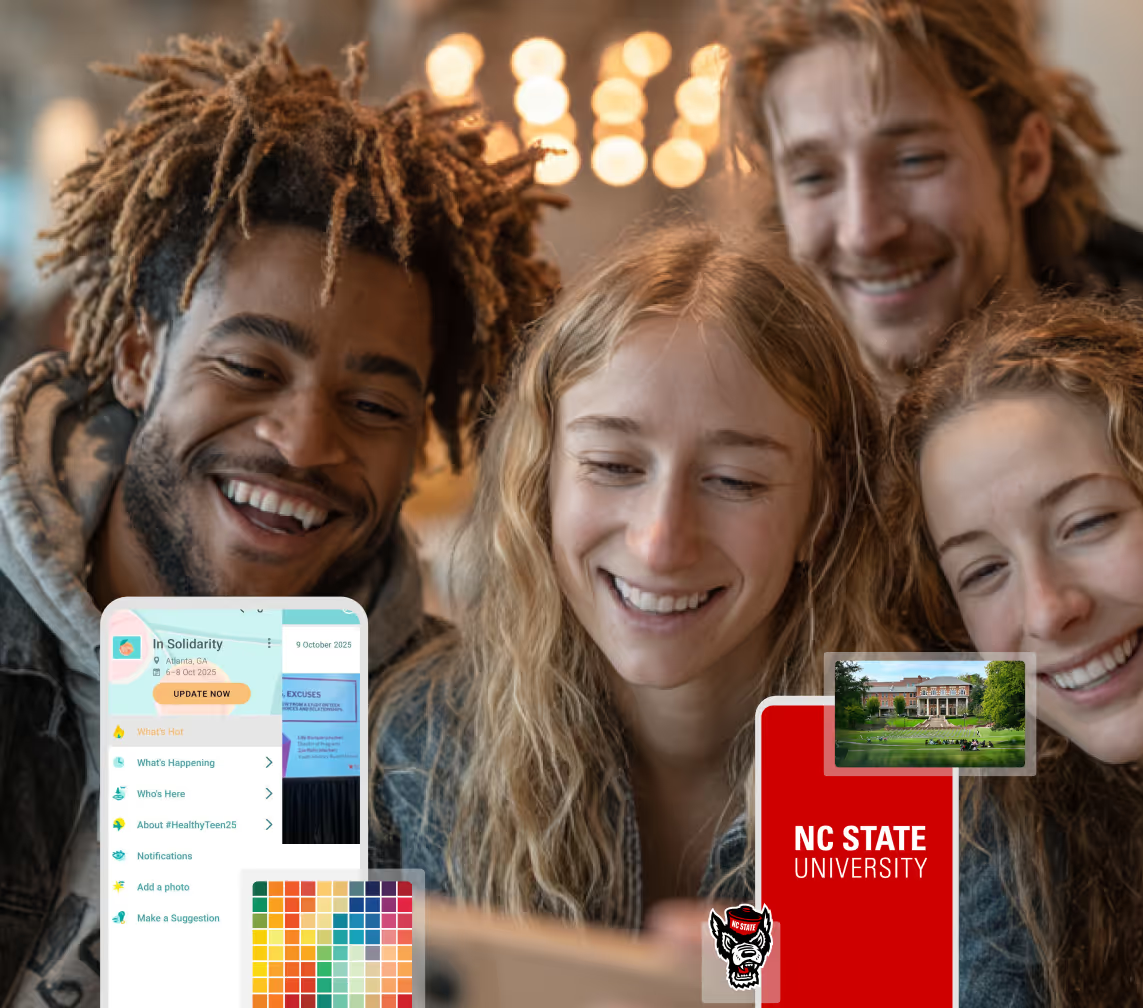
Boost Student Engagement
One hub for schedules, resources, and events that keeps students connected throughout the academic year.
Planning Orientation?
Help new students feel prepared from day one with schedules, campus resources, and real-time updates in one app.
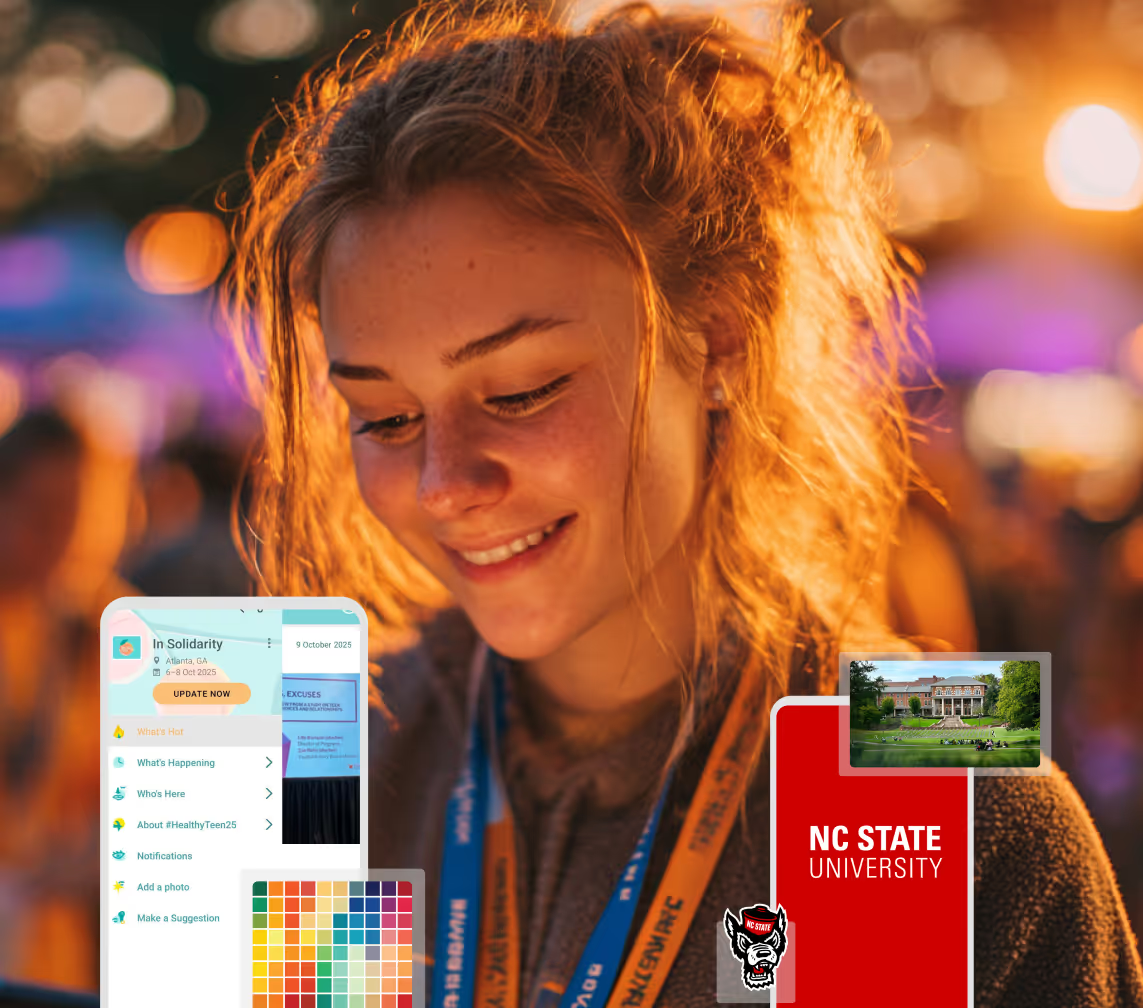
Planning Orientation?
Help new students feel prepared from day one with schedules, campus resources, and real-time updates in one app.
Running Admissions Events?
Manage open houses, tours, and yield events with a branded app that saves time and engages prospective students.

Running Admissions Events?
Manage open houses, tours, and yield events with a branded app that saves time and engages prospective students.
Get a custom Sponsorship Package Template
Stop starting from scratch. Grab free templates that helWe'll build a tailored sponsorship package with suggested pricing, tiers, and benefits..for your specific event.p you build professional sponsorship packages and close deals faster.
Get a custom Sponsorship Package Template
Stop starting from scratch. Grab free templates that helWe'll build a tailored sponsorship package with suggested pricing, tiers, and benefits..for your specific event.p you build professional sponsorship packages and close deals faster.
Plan Your Next Event Without Missing a Beat.
From venue selection to post-event wrap-up, this free checklist walks you through every step (so nothing falls through the cracks).
.avif)
Plan Your Next Event Without Missing a Beat.
From venue selection to post-event wrap-up, this free checklist walks you through every step (so nothing falls through the cracks).
Real Results From Real Events
100,000+ organizations trust Guidebook. See exactly how universities, associations, enterprises, and more put it to work.

Real Results From Real Events
100,000+ organizations trust Guidebook. See exactly how universities, associations, enterprises, and more put it to work.
Flexible pricing for every event size
Find the perfect plan for your needs, from intimate gatherings to large-scale conferences.

Flexible pricing for every event size
Find the perfect plan for your needs, from intimate gatherings to large-scale conferences.
Join our event experts
Watch on-demand webinars and join live sessions with industry leaders sharing best practices for event success.
.avif)
Join our event experts
Watch on-demand webinars and join live sessions with industry leaders sharing best practices for event success.
Guidebook in Action
Book a personalized walkthrough and discover how we help event teams create better attendee experiences.
Guidebook in Action
Book a personalized walkthrough and discover how we help event teams create better attendee experiences.
What are Meeting Themes?
Meeting themes provide a central focus for gatherings, enhancing engagement and aligning objectives. Discover creative theme ideas, planning tips, and ways to boost participation.
Meeting themes are unifying concepts that tie together every element of your gathering—from visuals and activities to messaging and takeaways—creating a cohesive, memorable experience. They transform ordinary meetings into engaging events that stick with attendees. The right theme boosts participation, reinforces your message, and makes planning decisions easier.
Here's the thing: a meeting theme isn't just decoration. It's a strategic framework that guides every choice you make. Without one, your meeting feels scattered. With one, everything clicks into place. Attendees remember themed meetings 40% better than generic ones, according to event industry research.
Key Characteristics of Meeting Themes
- Cohesive Visual Identity: Every design element—colors, fonts, graphics, and décor—connects back to your central concept. This creates instant recognition and professional polish.
- Clear Messaging Alignment: Your theme reinforces your meeting's core objectives. The concept and your goals should feel like natural partners.
- Scalable Flexibility: Great themes work for 10-person team huddles or 500-person conferences. They adapt to your budget and venue without losing impact.
- Audience Relevance: The best themes resonate with your specific attendees. A tech company's theme differs from a nonprofit's—and that's the point.
- Memorable Touchpoints: Themes create moments people talk about afterward. These could be themed snacks, creative name badges, or unexpected activities.
- Easy Implementation: If your theme requires a PhD to execute, it's too complicated. Simple concepts often deliver the biggest impact.
- Emotional Connection: Strong themes tap into feelings—excitement, nostalgia, curiosity, or inspiration. Logic informs, but emotion motivates.
Meeting Themes vs. Related Concepts
Event Branding
- Scope: Encompasses your organization's overall visual identity and reputation at events
- Focus: Long-term brand consistency across multiple gatherings
- Timeline: Ongoing, evolving with your organization
- Channels: All marketing materials, signage, and digital presence
- Goal: Build recognition and trust over time
Meeting Agenda
- Scope: The structured schedule of activities and sessions
- Focus: Timing, logistics, and content flow
- Timeline: Single meeting duration
- Channels: Printed schedules, apps, and digital calendars
- Goal: Keep attendees informed and on track
Event Décor
- Scope: Physical decorations and environmental design
- Focus: Visual aesthetics and ambiance
- Timeline: Setup through teardown
- Channels: Venue spaces, table settings, and displays
- Goal: Create an appealing physical environment
Your meeting theme connects all three. It informs your branding choices, shapes your agenda's tone, and guides your décor decisions. Think of it as the umbrella that keeps everything dry and coordinated.
Popular Meeting Theme Categories
Seasonal and Holiday Themes
These themes tap into shared cultural moments. Spring renewal themes work great for kickoff meetings. Summer beach vibes suit casual team gatherings. Fall harvest concepts fit annual reviews perfectly.
Holiday themes require care—be inclusive. "Winter Wonderland" works better than themes tied to specific religious celebrations. Consider your audience's diversity when planning.
Industry-Specific Themes
Tech companies love innovation themes: "Future Forward," "Breaking Barriers," or "Code Your Success." Healthcare organizations gravitate toward wellness concepts. Financial firms often choose growth and stability imagery.
The key? Make it relevant without being cliché. Your attendees have seen "Reaching New Heights" a hundred times. Find a fresh angle on familiar territory.
Pop Culture and Entertainment Themes
Movies, TV shows, and music offer endless inspiration. A "Mission Possible" spy theme adds intrigue to goal-setting meetings. Decade themes (80s, 90s) spark nostalgia and conversation.
Watch for copyright issues with specific properties. Generic concepts inspired by genres work better than direct copies. "Space Exploration" beats "Star Wars" for legal and budget reasons.
Nature and Adventure Themes
Outdoor concepts resonate universally. Mountain climbing themes suit goal-oriented meetings. Ocean themes work for team building events. Safari themes add excitement to discovery-focused sessions.
These themes translate easily to décor, activities, and messaging. They're also budget-friendly—nature imagery is widely available and affordable.
Abstract Concept Themes
Sometimes the best themes aren't literal. "Connections," "Momentum," "Spark," or "Elevate" give you creative freedom. They're sophisticated and adaptable to any industry.
Abstract themes require stronger visual execution. Without concrete imagery, your design choices matter more. Invest in quality graphics and consistent application.
How to Choose the Right Meeting Theme
Start With Your Objectives
What should attendees think, feel, or do after your meeting? A sales kickoff needs energy and motivation. A strategic planning session needs focus and clarity. Your theme should amplify your goals.
Write down three words that describe your ideal meeting outcome. Your theme should embody at least two of them.
Know Your Audience
A theme that delights one group might fall flat with another. Consider demographics, industry norms, and company culture. What references will resonate? What might alienate?
When in doubt, test your concept with a few attendees beforehand. Their reactions tell you everything.
Assess Your Resources
Grand themes require grand budgets. Be honest about what you can execute well. A simple theme done beautifully beats an ambitious theme done poorly.
Consider these factors:
- Budget for décor and materials
- Time available for planning
- Venue limitations and opportunities
- Staff capacity for execution
- Technology needs for virtual or hybrid elements
Check for Conflicts
Some themes carry unintended baggage. Research your concept thoroughly. A "Wild West" theme might seem fun until you consider its historical implications. Cultural sensitivity matters.
Also check your organization's recent history. Did a competitor just use your theme idea? Has your company used something similar recently? Fresh beats familiar.
Why Meeting Themes Matter
For Event Success:
- Increased Engagement: Themed meetings see 35% higher participation in activities and discussions. People lean in when there's a story to follow.
- Better Retention: Attendees remember themed content longer. The narrative structure helps information stick.
- Easier Planning: A clear theme simplifies countless decisions. When you know your concept, choices become obvious.
- Stronger Atmosphere: Themes transform ordinary spaces into immersive environments. Even basic venues feel special with thoughtful theming.
- Social Sharing: Themed elements photograph well. Attendees share more on social media, extending your meeting's reach.
For Business Objectives:
- Message Reinforcement: Themes hammer home your key points through repetition and association. Your message lands harder.
- Culture Building: Shared themed experiences create inside jokes and memories. They strengthen team bonds.
- Brand Differentiation: Memorable meetings set you apart from competitors. Attendees talk about unique experiences.
- ROI Improvement: Better engagement means better outcomes. Your event ROI increases when themes drive participation.
- Attendee Satisfaction: People enjoy themed events more. Higher satisfaction leads to better feedback and repeat attendance.
Platforms like Guidebook's event management solution help you extend your theme into the digital experience. Custom apps can carry your visual identity, themed notifications, and branded content throughout your meeting.
Meeting Themes Best Practices
- Commit Fully to Your Concept: Half-hearted themes feel awkward. If you choose a theme, carry it through every touchpoint—or don't theme at all.
- Create a Theme Style Guide: Document your colors, fonts, imagery, and language. Share it with everyone involved in planning. Consistency matters.
- Theme Your Communications Early: Start with save-the-dates and invitations. Build anticipation before the meeting even begins. Your event digital marketing should reflect your theme.
- Involve Your Speakers: Brief presenters on your theme. Ask them to incorporate relevant language and examples. Unified messaging amplifies impact.
- Plan Interactive Elements: Passive theming is forgettable. Active participation—themed activities, contests, or challenges—creates memories.
- Consider All Senses: Great themes engage beyond visuals. Think about music, scents, textures, and even themed food and drinks.
- Prepare Themed Takeaways: Send attendees home with something that reinforces your concept. Useful items beat trinkets—themed notebooks, for example.
- Document Everything: Capture photos and videos of your themed elements. Use them for post-event communications and future planning reference.
- Gather Feedback: Ask attendees specifically about the theme. What worked? What felt forced? Use insights for next time.
- Build a Theme Library: Track what you've used and how it performed. Over time, you'll develop proven concepts to revisit or avoid.
Common Meeting Theme Mistakes
Choosing Style Over Substance: A visually stunning theme that doesn't connect to your meeting's purpose wastes resources. Your theme should reinforce your message, not distract from it. Always start with objectives, then find a theme that fits.
Overcomplicating the Concept: If you need a paragraph to explain your theme, it's too complex. The best themes communicate instantly. "Innovation Summit" beats "Synergistic Paradigm Shift Experience" every time.
Inconsistent Execution: A themed registration area followed by a generic meeting room creates whiplash. Carry your theme throughout the entire experience or attendees notice the gaps. Partial theming often feels worse than no theming.
Ignoring Cultural Sensitivity: Themes that stereotype cultures, reference controversial topics, or exclude groups damage your reputation. Always research your concept and consider diverse perspectives. When uncertain, choose something safer.
Forgetting the Digital Experience: Modern meetings extend beyond physical spaces. Your event registration, mobile app, and virtual components need theming too. Disconnected digital experiences undermine your efforts.
Underestimating Budget Needs: Themes cost money to execute well. Cheap execution of an ambitious theme looks worse than simple execution of a modest theme. Be realistic about resources from the start.
Recycling Too Soon: Using the same theme annually feels lazy. Attendees notice and engagement drops. Wait at least three years before revisiting a concept, and refresh it when you do.
Final Thoughts
Meeting themes transform forgettable gatherings into memorable experiences. They're not just decoration—they're strategic tools that boost engagement, reinforce messages, and create lasting impressions. The investment in thoughtful theming pays dividends in attendee satisfaction and meeting outcomes.
The event trends point clearly toward more immersive, experience-driven gatherings. Attendees expect more than PowerPoint slides and coffee breaks. They want events worth talking about. Themes deliver that differentiation.
Don't let the planning overwhelm you. Start simple. Choose a concept that resonates with your audience and supports your goals. Execute it consistently across touchpoints. Learn from each meeting and improve over time. Even modest themes, done well, elevate the experience.
Ready to bring your meeting theme to life? Guidebook's platform helps you extend your concept into a branded mobile experience. From customizable templates to real-time updates, you can create cohesive themed experiences that attendees love. Check out our case studies to see how other organizations have transformed their meetings. Your next gathering deserves a theme that makes it unforgettable.
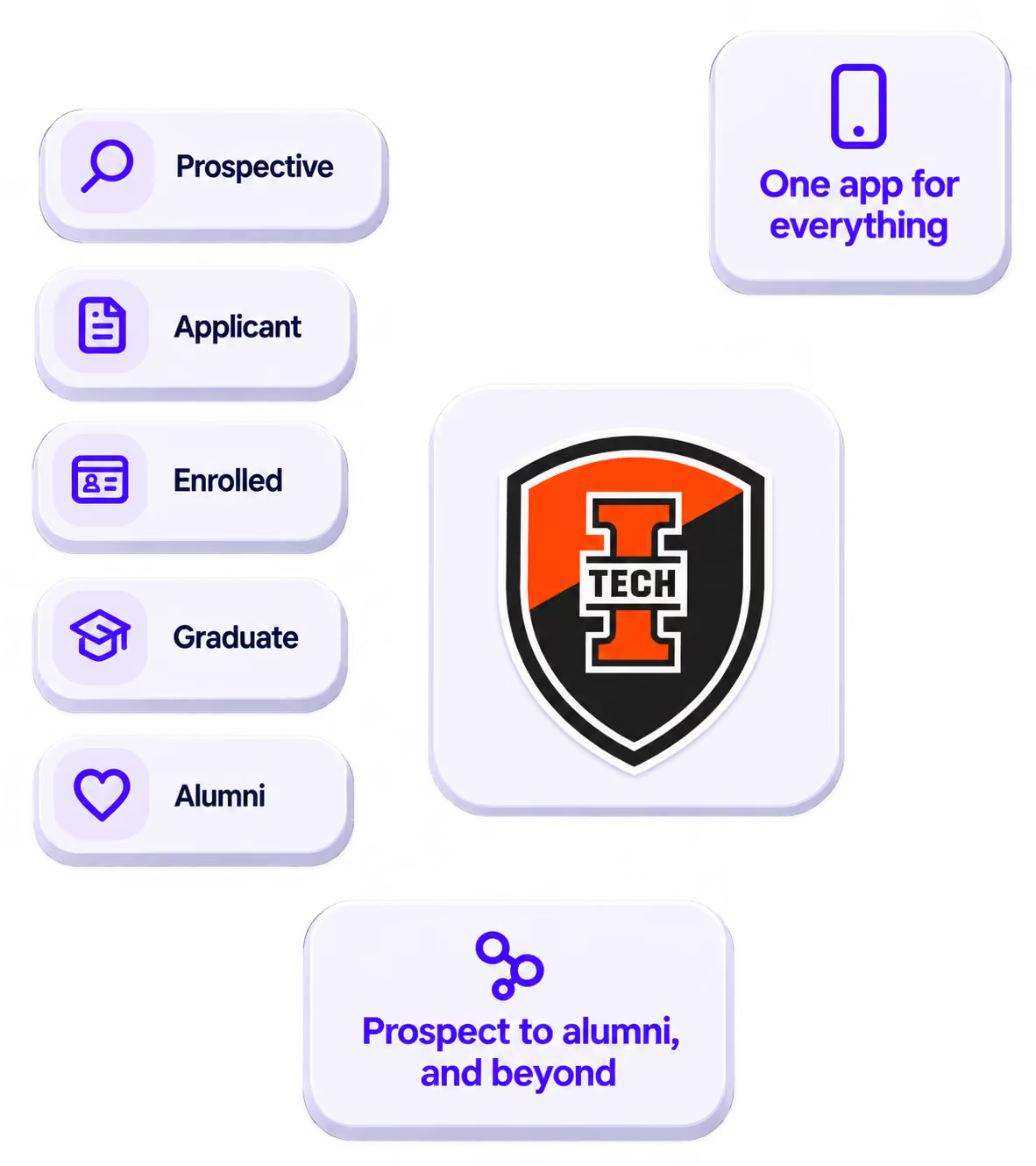
The power of your brand in your app, from first visit to alumni.
Build trust
Attendees download your app, not ours. Your name, colors, and crest in the stores.
.avif)
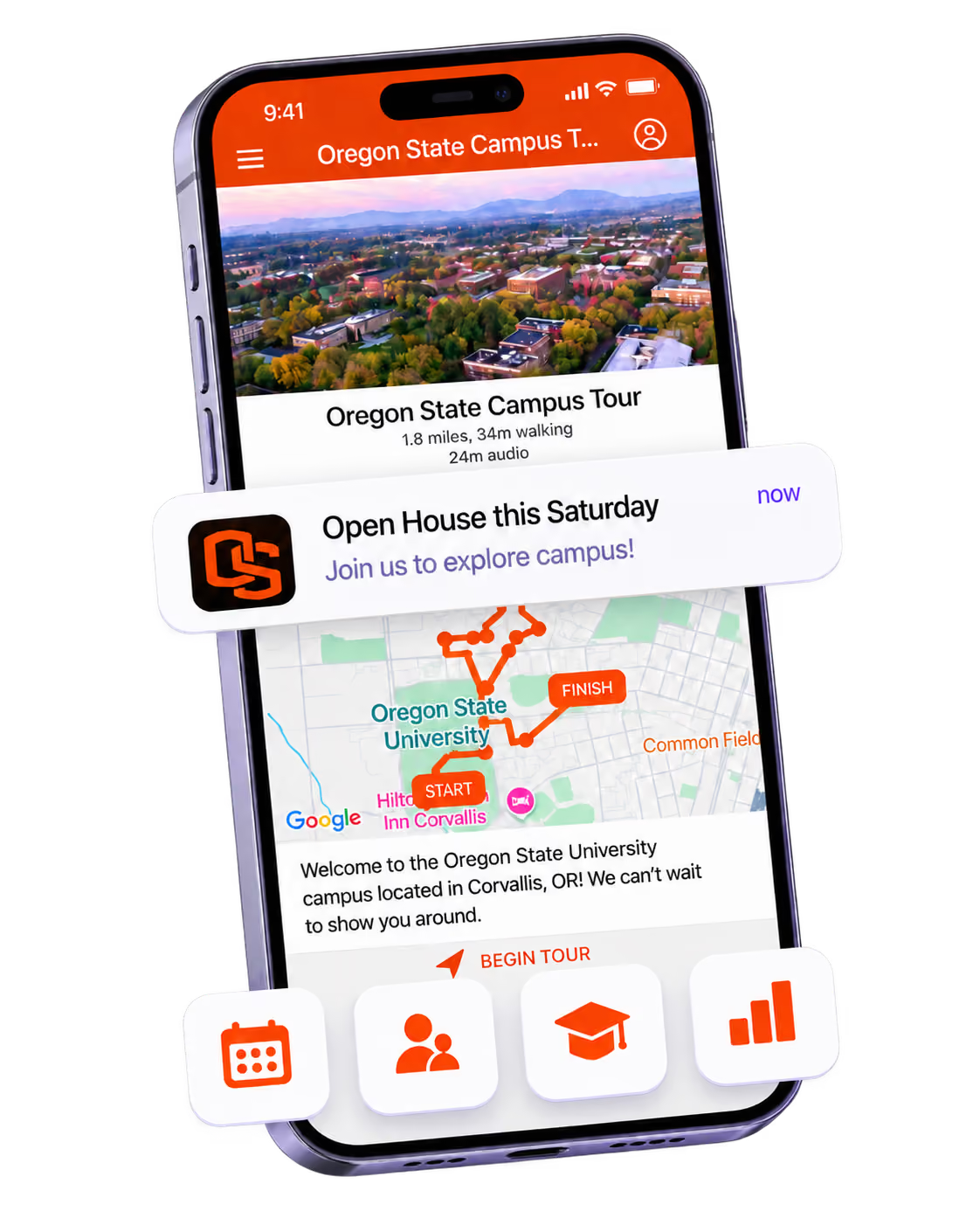
One place for the whole event
Schedules, maps, registration, and updates in one branded hub - not five tools.
Stand out
A branded app is what people keep on their phone after the printed program is in the recycling.

Get the Mobile App Playbook
A short guide to running the whole student journey in one app. No fluff, just what works.
for higher ed
Campus
Playbook
A practical guide to building a connected campus experience.
Free playbook
The Mobile App Playbook for Universities
Students decide if they belong long before they set foot on campus. This playbook shows how to win them over from the first visit through graduation.
- Grow enrollment and boost recruitment
- Increase belonging and retention
- Run every event from one branded app
By submitting, you agree to our Privacy Policy.
You're in.
.png)