
Campus apps by department
Admissions, orientation, student life, and more — one campus app that works across departments.

Campus apps by department
Admissions, orientation, student life, and more — one campus app that works across departments.
Build unlimited event apps on one license
One partnership for unlimited campus events — orientation, tours, student life, and everything in between.
Build unlimited event apps on one license
One partnership for unlimited campus events — orientation, tours, student life, and everything in between.
Compare event app platforms
See how Guidebook stacks up against other event app and registration platforms.
Compare event app platforms
See how Guidebook stacks up against other event app and registration platforms.
Event apps for nonprofit and community programs
Give members, volunteers, and donors one branded app for conferences, fundraisers, and year-round community.
Event apps for nonprofit and community programs
Give members, volunteers, and donors one branded app for conferences, fundraisers, and year-round community.
Campus integrations and an open API
Connect Guidebook with the campus systems, APIs, and tools your team already uses.
Campus integrations and an open API
Connect Guidebook with the campus systems, APIs, and tools your team already uses.
Event apps for corporate and enterprise teams
Internal meetings, offsites, and large-scale corporate events — with the branding and control enterprise teams need.
Event apps for corporate and enterprise teams
Internal meetings, offsites, and large-scale corporate events — with the branding and control enterprise teams need.
Create a branded event app with no coding
Put schedules, maps, resources, and updates in every attendee's pocket — built for campus events and programs.
Create a branded event app with no coding
Put schedules, maps, resources, and updates in every attendee's pocket — built for campus events and programs.
Launch a branded, white-label event app
A white-label event app with your branding, your content, and your attendee experience — no coding required.
Launch a branded, white-label event app
A white-label event app with your branding, your content, and your attendee experience — no coding required.
Everything in the Guidebook platform
Explore the features event teams use to engage attendees before, during, and after the event.
Everything in the Guidebook platform
Explore the features event teams use to engage attendees before, during, and after the event.
One app for in-person and virtual attendees
The same schedule, networking, and updates whether people are in the room or joining remotely.
One app for in-person and virtual attendees
The same schedule, networking, and updates whether people are in the room or joining remotely.
Event apps built for associations
Annual meetings, chapter events, and member engagement — without rebuilding a new app every year.
Event apps built for associations
Annual meetings, chapter events, and member engagement — without rebuilding a new app every year.
A branded event website that matches the app
Promote the event, collect interest, and keep branding consistent from the first click to check-in.
A branded event website that matches the app
Promote the event, collect interest, and keep branding consistent from the first click to check-in.
Plan, run, and measure events on one platform
App, registration, badges, and websites in one workflow — so planning isn't a pile of disconnected tools.
Plan, run, and measure events on one platform
App, registration, badges, and websites in one workflow — so planning isn't a pile of disconnected tools.
Keep members engaged between events
One branded app for the conference and everything that happens the other 51 weeks of the year.
Keep members engaged between events
One branded app for the conference and everything that happens the other 51 weeks of the year.
The conference app attendees actually use
Schedules, maps, networking, and live updates for annual meetings, summits, and multi-day conferences.
The conference app attendees actually use
Schedules, maps, networking, and live updates for annual meetings, summits, and multi-day conferences.
Registration that feeds your app and badges
Collect registrations, payments, and attendee data in the same platform as your event app.
Registration that feeds your app and badges
Collect registrations, payments, and attendee data in the same platform as your event app.
Design and print event badges in one place
Custom badges, QR check-in, and on-site printing — without a separate badge vendor.
Design and print event badges in one place
Custom badges, QR check-in, and on-site printing — without a separate badge vendor.
A Smaller School?
Deliver a polished, branded event experience without a large team or a big budget.
A Smaller School?
Deliver a polished, branded event experience without a large team or a big budget.
Running Family Programs?
Give families everything they need, from schedules and maps to real-time updates, all in one place.
Running Family Programs?
Give families everything they need, from schedules and maps to real-time updates, all in one place.
Coordinating Move-In Day?
Share updates, manage events, and keep students informed from move-in through the academic year.

Coordinating Move-In Day?
Share updates, manage events, and keep students informed from move-in through the academic year.
Offering Campus Tours?
Deliver branded, self-guided tour experiences with interactive maps and rich media, available 24/7.

Offering Campus Tours?
Deliver branded, self-guided tour experiences with interactive maps and rich media, available 24/7.
Organising a Career Fair?
Simplify logistics for students, employers, and Career Services staff with one easy-to-use app.
Organising a Career Fair?
Simplify logistics for students, employers, and Career Services staff with one easy-to-use app.
Managing Alumni Events?
Plan reunions, regional events, and fundraising campaigns with an app built for alumni engagement.
Managing Alumni Events?
Plan reunions, regional events, and fundraising campaigns with an app built for alumni engagement.
Boost Student Engagement
One hub for schedules, resources, and events that keeps students connected throughout the academic year.
Boost Student Engagement
One hub for schedules, resources, and events that keeps students connected throughout the academic year.
Planning Orientation?
Help new students feel prepared from day one with schedules, campus resources, and real-time updates in one app.
Planning Orientation?
Help new students feel prepared from day one with schedules, campus resources, and real-time updates in one app.
Running Admissions Events?
Manage open houses, tours, and yield events with a branded app that saves time and engages prospective students.

Running Admissions Events?
Manage open houses, tours, and yield events with a branded app that saves time and engages prospective students.
Get a custom Sponsorship Package Template
Stop starting from scratch. Grab free templates that helWe'll build a tailored sponsorship package with suggested pricing, tiers, and benefits..for your specific event.p you build professional sponsorship packages and close deals faster.
Get a custom Sponsorship Package Template
Stop starting from scratch. Grab free templates that helWe'll build a tailored sponsorship package with suggested pricing, tiers, and benefits..for your specific event.p you build professional sponsorship packages and close deals faster.
Plan Your Next Event Without Missing a Beat.
From venue selection to post-event wrap-up, this free checklist walks you through every step (so nothing falls through the cracks).
.avif)
Plan Your Next Event Without Missing a Beat.
From venue selection to post-event wrap-up, this free checklist walks you through every step (so nothing falls through the cracks).
Real Results From Real Events
100,000+ organizations trust Guidebook. See exactly how universities, associations, enterprises, and more put it to work.

Real Results From Real Events
100,000+ organizations trust Guidebook. See exactly how universities, associations, enterprises, and more put it to work.
Flexible pricing for every event size
Find the perfect plan for your needs, from intimate gatherings to large-scale conferences.

Flexible pricing for every event size
Find the perfect plan for your needs, from intimate gatherings to large-scale conferences.
Join our event experts
Watch on-demand webinars and join live sessions with industry leaders sharing best practices for event success.
.avif)
Join our event experts
Watch on-demand webinars and join live sessions with industry leaders sharing best practices for event success.
Guidebook in Action
Book a personalized walkthrough and discover how we help event teams create better attendee experiences.
Guidebook in Action
Book a personalized walkthrough and discover how we help event teams create better attendee experiences.
What is a Luncheon?
What is a Luncheon? Definition, Etiquette & Planning Tips | Guidebook
Aluncheon is a formal midday meal event designed to bring people together for networking, celebration, or business discussions in an elegant daytime setting. These events bridge the gap between casual lunch meetings and formal dinner galas. They offer a refined atmosphere without the time commitment of evening events.
Here’s the thing: for higher education teams, luncheons aren’t peripheral events — they’re some of the most strategically important ones in the calendar. Alumni donor cultivation luncheons, scholarship recognition ceremonies, faculty awards events, Admitted Student Day welcome lunches, and development office prospect dinners all follow the luncheon format. Done well, they build the kind of connection that turns prospects into deposited students and graduates into donors. Done poorly, they’re a catered meeting.
Key Characteristics of a Luncheon
- Midday Timing: Luncheons typically run between 11:30 AM and 2:00 PM. This window respects work schedules while providing meaningful connection time.
- Formal Service Style: Expect plated meals with multiple courses. Buffet-style service is less common at traditional luncheons.
- Structured Program: Most luncheons include speeches, presentations, or award ceremonies. The agenda keeps things moving efficiently.
- Professional Dress Code: Business or business-casual attire is standard. The dress code signals the event’s importance.
- Assigned Seating: Strategic table arrangements encourage networking among specific groups. This isn’t a grab-any-seat situation.
- Time-Conscious Format: Luncheons respect busy schedules. Most wrap up within 90 minutes to two hours.
- Daytime Venue Requirements: Natural lighting and accessible locations matter more than evening ambiance features.
Luncheon vs. Related Event Types
Business Lunch
- Scope: Small group, typically 2-6 people
- Focus: Informal discussion or deal-making
- Timeline: Flexible, usually 60-90 minutes
- Format: Restaurant setting, no formal program
- Goal: Relationship building or specific business outcomes
Brunch Event
- Scope: Social gathering, various sizes
- Focus: Casual celebration or social connection
- Timeline: Late morning, typically 10 AM - 1 PM
- Format: Buffet-style, relaxed atmosphere
- Goal: Celebration and socializing
Gala Dinner
- Scope: Large-scale formal event
- Focus: Fundraising, awards, or major celebrations
- Timeline: Evening, often 3+ hours
- Format: Black-tie, entertainment, dancing
- Goal: Major fundraising or milestone recognition
Luncheons sit in the sweet spot between casual business lunches and elaborate evening galas. They deliver formality and structure without demanding an entire evening from attendees.
Types of Luncheons
Charity and Fundraising Luncheons
Nonprofits and development offices love luncheons for donor cultivation. The format allows for compelling presentations without the expense of evening events.
- Lower venue costs than evening galas
- Donors can attend during work hours
- Focused program keeps attention on the cause
- Easier to secure table sponsorships
Awards and Recognition Luncheons
These events celebrate achievements in a professional setting. The daytime format lets honorees share the moment with colleagues. It also allows media coverage during business hours.
Campus and Alumni Community Luncheons
Student organizations, alumni chapters, and academic departments use luncheons as their primary gathering format. They’re ideal for team building events, honor society inductions, and peer leadership recognition.
Alumni networks, first-generation student programs, and student affairs professional associations all gravitate toward the luncheon format. It respects busy schedules — for working alumni and students with afternoon classes alike. See how Guidebook supports campus community programming.
Scholarship and Recognition Luncheons
Scholarship awards, honor society inductions, and academic achievement recognition events run beautifully as luncheons. Honorees can invite family members who can attend during the day, faculty presenters can return to afternoon classes, and the daytime format gives the event an academic — rather than party — feel that resonates with students and parents alike.
- Natural light and a professional atmosphere signal the occasion’s importance
- Families can attend during working hours without losing an evening
- Faculty and administration can participate between teaching blocks
- The daytime format keeps focus on academic achievement
Planning a Successful Luncheon
Set Your Goals and Budget Early
Define what success looks like before booking anything. Are you cultivating donors? Recognizing students? Converting admitted families?
Your goals shape every decision. A fundraising luncheon needs different elements than an Admitted Student Day welcome lunch. Check out event planning resources for detailed guidance.
Choose the Right Venue
Daytime events have unique venue needs. Natural lighting matters more than evening ambiance features.
- Look for large windows and bright spaces
- Check parking availability for midday arrivals
- Confirm AV capabilities for presentations
- Consider proximity to campus for student and family attendees
Design Your Menu Thoughtfully
Luncheon menus should be satisfying but not heavy. Attendees need to stay alert for afternoon sessions or classes.
Avoid foods that cause drowsiness. Skip the heavy pastas and opt for lighter proteins with vegetables. Always accommodate dietary restrictions.
Create a Tight Program
Respect your attendees’ time. A luncheon program should move efficiently without feeling rushed.
The event planning process should include detailed timing. Build in buffer time, but keep the overall program under two hours.
Plan Strategic Seating
Assigned seating isn’t just tradition. It’s a networking tool. Place people strategically to encourage valuable connections.
- Seat admitted students with current students and faculty
- Mix alumni donors with student scholarship recipients
- Create table hosts to facilitate introductions
- Consider conversation dynamics for every table combination
Why Luncheons Matter
For Event Success:
- Higher Attendance Rates: Daytime events often see better turnout than evening functions. People can attend without sacrificing personal time.
- Focused Engagement: Attendees arrive alert and ready to participate. Morning energy beats end-of-day fatigue.
- Cost Efficiency: Daytime venues and catering typically cost less. Your budget stretches further.
- Networking Quality: The structured format encourages meaningful conversations. It’s harder to hide in corners at a luncheon.
For Enrollment and Alumni Outcomes:
- Donor Cultivation: The alumni donor luncheon is one of development’s most reliable tools. Low cost, high intimacy, and focused programming create the right conditions for a giving conversation without the pressure of a formal gala evening.
- Yield Event Integration: A welcome luncheon for admitted students and families during an Open House or Preview Day signals warmth and belonging from the moment they arrive on campus. That’s a deposit decision in the making.
- Student Achievement Recognition: Scholarship and honors luncheons aren’t just celebrations — they’re retention events. Students who feel recognized and seen are more likely to persist. Their families become advocates for your institution.
- Staff Appreciation: Admissions and orientation teams run your highest-stakes events under significant pressure. Recognizing them publicly — at a luncheon, in front of leadership — builds the morale that retains experienced staff across enrollment cycles.
- Reducing Summer Melt: A yield-season luncheon — for deposited students, for scholarship recipients, for honor society inductees — keeps admitted students connected between deposit and move-in. Connected students show up in August.
Managing luncheon logistics — from RSVPs and dietary restrictions to seating arrangements and day-of communications — gets dramatically easier with the right tools. Guidebook helps higher education teams run donor cultivation events, scholarship ceremonies, and Admitted Student Day luncheons with seamless execution that reflects well on the institution. See how Guidebook supports alumni and development events.
Luncheon Best Practices
- Send Invitations 4-6 Weeks Early: Busy professionals need time to block their calendars. Earlier is better for high-profile guests.
- Confirm Dietary Needs in Advance: Include dietary questions in your event registration process. Don’t wait until the day of.
- Start on Time, Every Time: Luncheon attendees have afternoon commitments. Respect their schedules by starting promptly.
- Keep Speeches Under 15 Minutes: Attention spans are limited. Multiple short speakers work better than one long keynote.
- Assign Table Hosts: Designate someone at each table to facilitate introductions and keep conversation flowing.
- Plan Your AV Carefully: Daytime lighting can wash out projector screens. Test everything in actual event conditions.
- Build in Networking Time: Don’t pack the program so tight that attendees can’t connect. Include a reception period.
- Follow Up Within 48 Hours: Send thank-you messages while the event is fresh. Include photos and key takeaways.
- Measure Your Success: Track event ROI against your original goals. Use data to improve future luncheons.
Common Luncheon Mistakes
Ignoring Parking Logistics: Midday parking can be challenging. Attendees arriving stressed from parking struggles won’t engage well. Provide clear instructions and consider valet service.
Serving Heavy Food: Rich, carb-heavy meals make attendees drowsy. They’ll struggle to focus and may leave early. Choose lighter options that energize rather than sedate.
Running Over Time: Nothing frustrates luncheon attendees more than events that drag on. They have afternoon meetings and classes. Stick to your timeline religiously.
Skipping the Sound Check: Daytime venues often have different acoustics than evening settings. Test your audio setup thoroughly.
Neglecting Natural Light Issues: Bright windows create glare on screens and can blind attendees. Scout your venue at the same time of day as your event. Plan seating and screen placement accordingly.
Poor Table Assignment Strategy: Random seating wastes networking potential. Strategic placement creates valuable connections. Invest time in thoughtful seating arrangements.
Luncheons in Higher Education
Campus life runs on luncheons. They’re the format development offices use to cultivate major donors, admissions teams use to welcome admitted students on yield days, and student affairs uses to recognize the leaders who build campus community. Understanding the format — and executing it well — pays dividends in relationships and outcomes that extend far beyond the meal itself.
Alumni Donor Luncheons
The donor cultivation luncheon is development’s workhorse. Low overhead. High return. A focused program — a faculty speaker sharing exciting research, a student sharing how a scholarship changed their trajectory, a brief ask — creates the conditions for a conversation that evening galas can’t. Alumni give to institutions they feel connected to. A well-run luncheon is a connection event disguised as a meal. Learn how Guidebook helps higher ed teams run alumni events.
Admitted Student Day Welcome Luncheons
The welcome luncheon during an Open House or Admitted Student Day is one of the most underrated yield moments in the enrollment calendar. Admitted students and families who sit down to a proper meal — organized, warm, and clearly planned — leave with a feeling that’s hard to manufacture any other way: this place is ready for us. That feeling drives deposits. See how admissions teams use Guidebook to run yield events.
Scholarship and Honors Recognition Luncheons
When a first-generation student receives their scholarship at a recognition luncheon — family in the room, faculty presenting, institution leadership on stage — the belonging created in that room lasts for years. That student doesn’t melt over the summer. They show up in August proud, connected, and ready. The luncheon isn’t an event budget line — it’s a retention investment with a measurable return.
Final Thoughts
Luncheons offer something unique in the event world. They deliver formality and impact without demanding an entire evening from busy attendees. When planned well, they create focused, productive gatherings that respect everyone’s time.
For admissions and orientation teams, development offices, and student affairs professionals, the luncheon is one of the most dependable formats in your event toolkit. Done well, it yields admitted students, cultivates donors, and builds the campus community that retains them. Guidebook helps you run these events with seamless execution — clean registration, real-time communication, organized day-of logistics — that reflects the care your institution puts into every student relationship. Book a demo to see how Guidebook supports the events that drive enrollment outcomes.
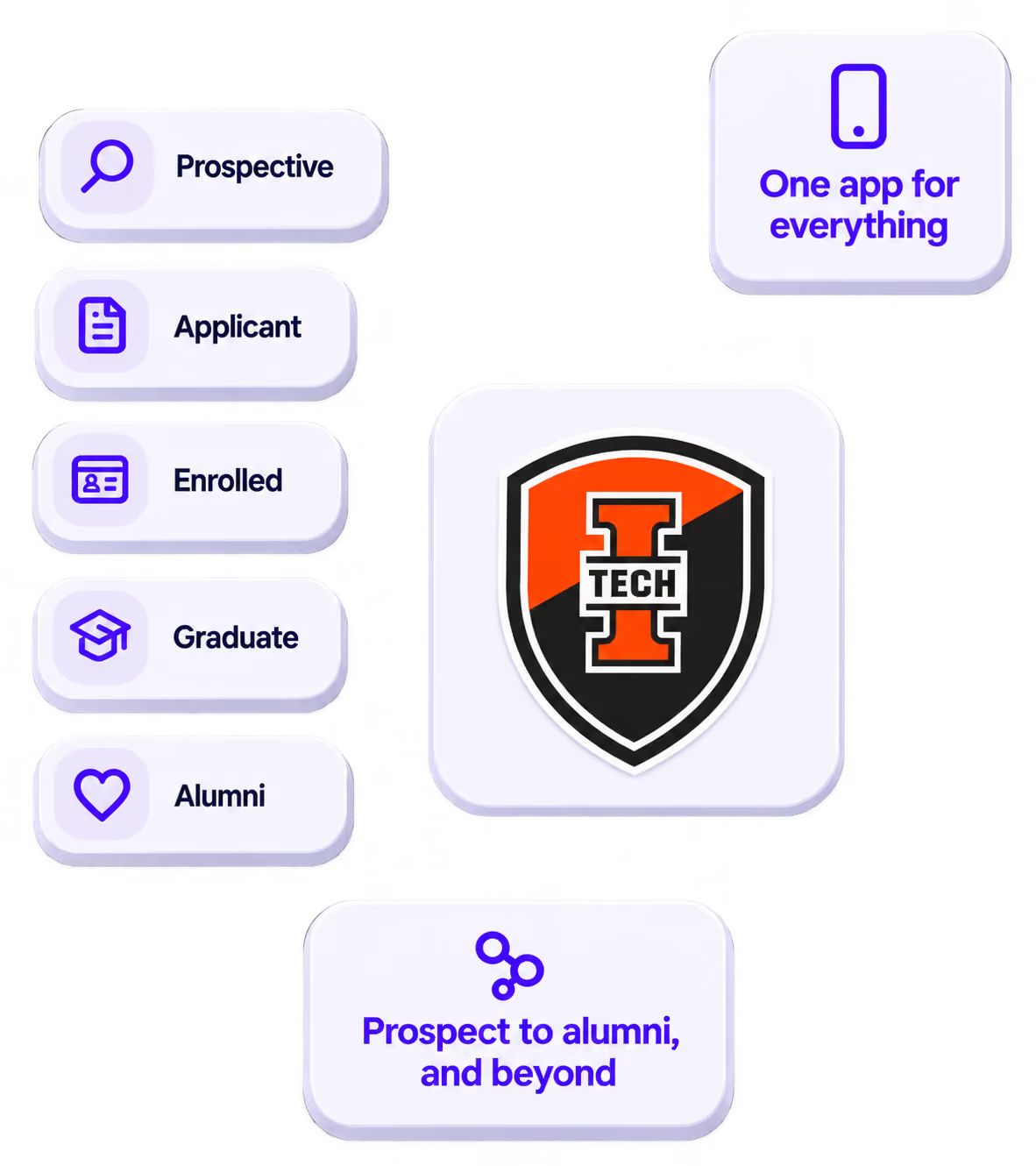
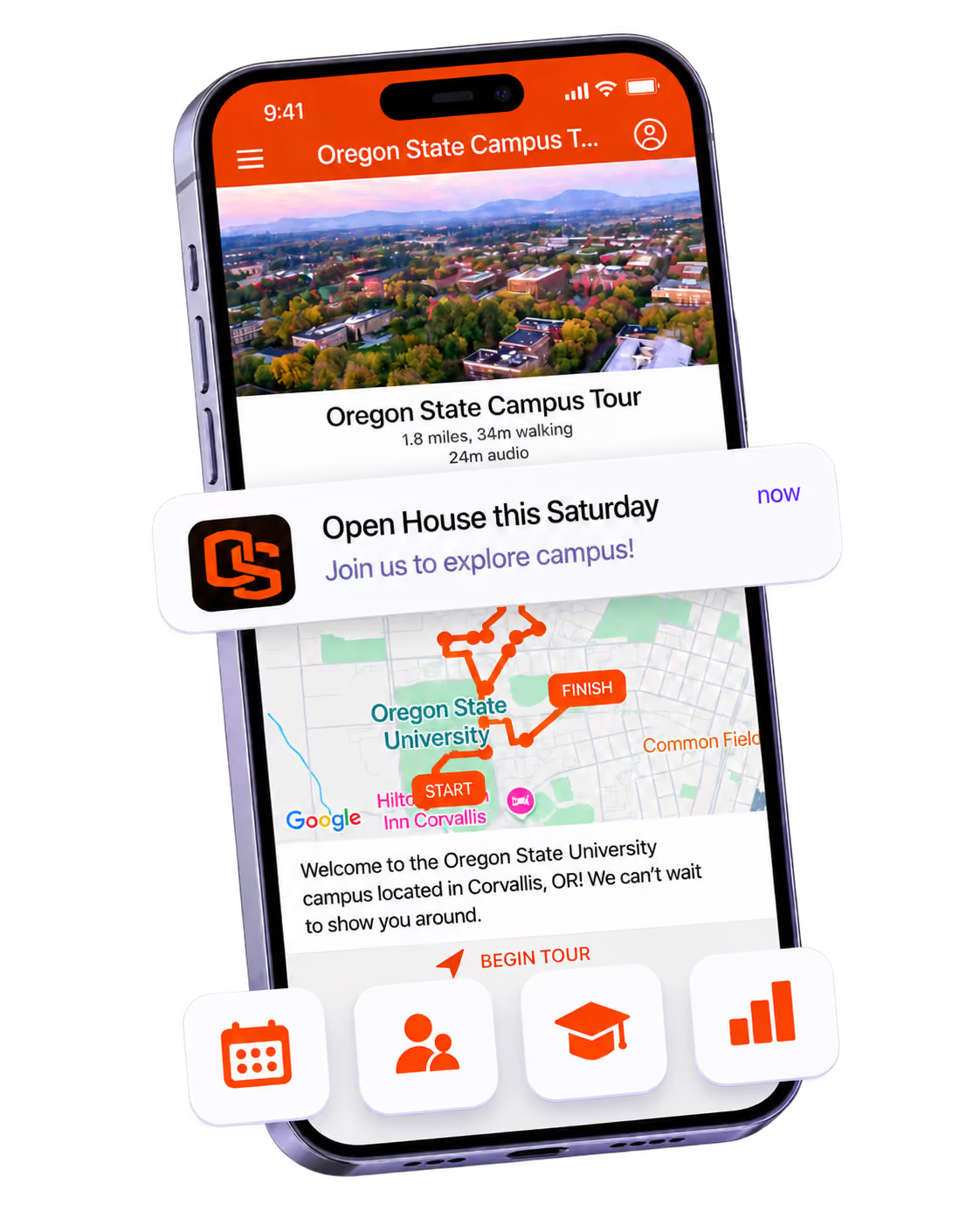
The power of your brand in your app, from first visit to alumni.
Build trust
Attendees download your app, not ours. Your name, colors, and crest in the stores.
.avif)
One place for the whole event
Schedules, maps, registration, and updates in one branded hub - not five tools.
Stand out
A branded app is what people keep on their phone after the printed program is in the recycling.

Get the Mobile App Playbook
A short guide to running the whole student journey in one app. No fluff, just what works.
for higher ed
Campus
Playbook
A practical guide to building a connected campus experience.
Free playbook
The Mobile App Playbook for Universities
Students decide if they belong long before they set foot on campus. This playbook shows how to win them over from the first visit through graduation.
- Grow enrollment and boost recruitment
- Increase belonging and retention
- Run every event from one branded app
By submitting, you agree to our Privacy Policy.
You're in.
.png)