
Campus apps by department
Admissions, orientation, student life, and more — one campus app that works across departments.

Campus apps by department
Admissions, orientation, student life, and more — one campus app that works across departments.
Build unlimited event apps on one license
One partnership for unlimited campus events — orientation, tours, student life, and everything in between.
Build unlimited event apps on one license
One partnership for unlimited campus events — orientation, tours, student life, and everything in between.
Compare event app platforms
See how Guidebook stacks up against other event app and registration platforms.
Compare event app platforms
See how Guidebook stacks up against other event app and registration platforms.
Event apps for nonprofit and community programs
Give members, volunteers, and donors one branded app for conferences, fundraisers, and year-round community.
Event apps for nonprofit and community programs
Give members, volunteers, and donors one branded app for conferences, fundraisers, and year-round community.
Campus integrations and an open API
Connect Guidebook with the campus systems, APIs, and tools your team already uses.
Campus integrations and an open API
Connect Guidebook with the campus systems, APIs, and tools your team already uses.
Event apps for corporate and enterprise teams
Internal meetings, offsites, and large-scale corporate events — with the branding and control enterprise teams need.
Event apps for corporate and enterprise teams
Internal meetings, offsites, and large-scale corporate events — with the branding and control enterprise teams need.
Create a branded event app with no coding
Put schedules, maps, resources, and updates in every attendee's pocket — built for campus events and programs.
Create a branded event app with no coding
Put schedules, maps, resources, and updates in every attendee's pocket — built for campus events and programs.
Launch a branded, white-label event app
A white-label event app with your branding, your content, and your attendee experience — no coding required.
Launch a branded, white-label event app
A white-label event app with your branding, your content, and your attendee experience — no coding required.
Everything in the Guidebook platform
Explore the features event teams use to engage attendees before, during, and after the event.
Everything in the Guidebook platform
Explore the features event teams use to engage attendees before, during, and after the event.
One app for in-person and virtual attendees
The same schedule, networking, and updates whether people are in the room or joining remotely.
One app for in-person and virtual attendees
The same schedule, networking, and updates whether people are in the room or joining remotely.
Event apps built for associations
Annual meetings, chapter events, and member engagement — without rebuilding a new app every year.
Event apps built for associations
Annual meetings, chapter events, and member engagement — without rebuilding a new app every year.
A branded event website that matches the app
Promote the event, collect interest, and keep branding consistent from the first click to check-in.
A branded event website that matches the app
Promote the event, collect interest, and keep branding consistent from the first click to check-in.
Plan, run, and measure events on one platform
App, registration, badges, and websites in one workflow — so planning isn't a pile of disconnected tools.
Plan, run, and measure events on one platform
App, registration, badges, and websites in one workflow — so planning isn't a pile of disconnected tools.
Keep members engaged between events
One branded app for the conference and everything that happens the other 51 weeks of the year.
Keep members engaged between events
One branded app for the conference and everything that happens the other 51 weeks of the year.
The conference app attendees actually use
Schedules, maps, networking, and live updates for annual meetings, summits, and multi-day conferences.
The conference app attendees actually use
Schedules, maps, networking, and live updates for annual meetings, summits, and multi-day conferences.
Registration that feeds your app and badges
Collect registrations, payments, and attendee data in the same platform as your event app.
Registration that feeds your app and badges
Collect registrations, payments, and attendee data in the same platform as your event app.
Design and print event badges in one place
Custom badges, QR check-in, and on-site printing — without a separate badge vendor.
Design and print event badges in one place
Custom badges, QR check-in, and on-site printing — without a separate badge vendor.
A Smaller School?
Deliver a polished, branded event experience without a large team or a big budget.
A Smaller School?
Deliver a polished, branded event experience without a large team or a big budget.
Running Family Programs?
Give families everything they need, from schedules and maps to real-time updates, all in one place.
Running Family Programs?
Give families everything they need, from schedules and maps to real-time updates, all in one place.
Coordinating Move-In Day?
Share updates, manage events, and keep students informed from move-in through the academic year.

Coordinating Move-In Day?
Share updates, manage events, and keep students informed from move-in through the academic year.
Offering Campus Tours?
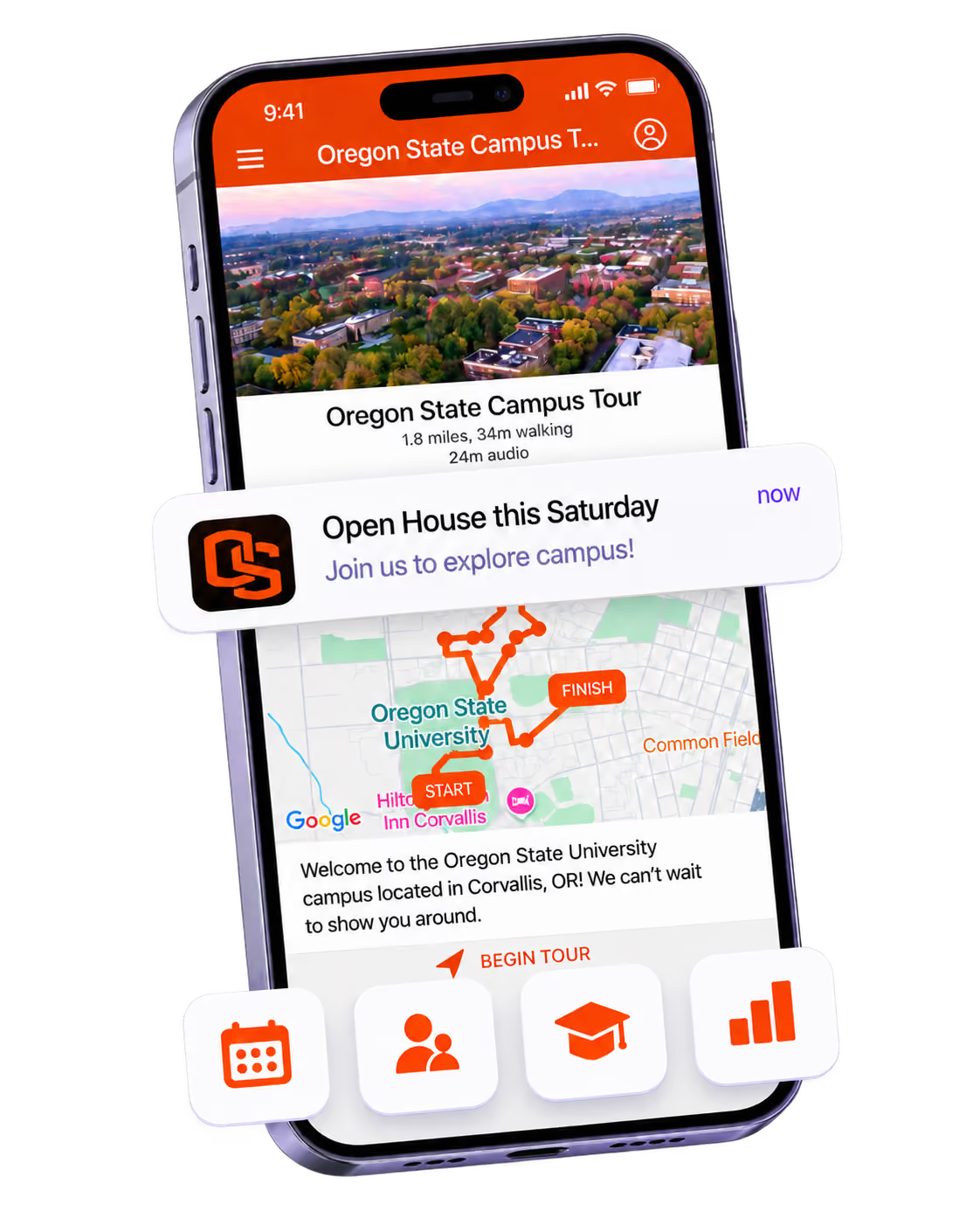
Deliver branded, self-guided tour experiences with interactive maps and rich media, available 24/7.

Offering Campus Tours?
Deliver branded, self-guided tour experiences with interactive maps and rich media, available 24/7.
Organising a Career Fair?
Simplify logistics for students, employers, and Career Services staff with one easy-to-use app.
Organising a Career Fair?
Simplify logistics for students, employers, and Career Services staff with one easy-to-use app.
Managing Alumni Events?
Plan reunions, regional events, and fundraising campaigns with an app built for alumni engagement.

Managing Alumni Events?
Plan reunions, regional events, and fundraising campaigns with an app built for alumni engagement.
Boost Student Engagement
One hub for schedules, resources, and events that keeps students connected throughout the academic year.
Boost Student Engagement
One hub for schedules, resources, and events that keeps students connected throughout the academic year.
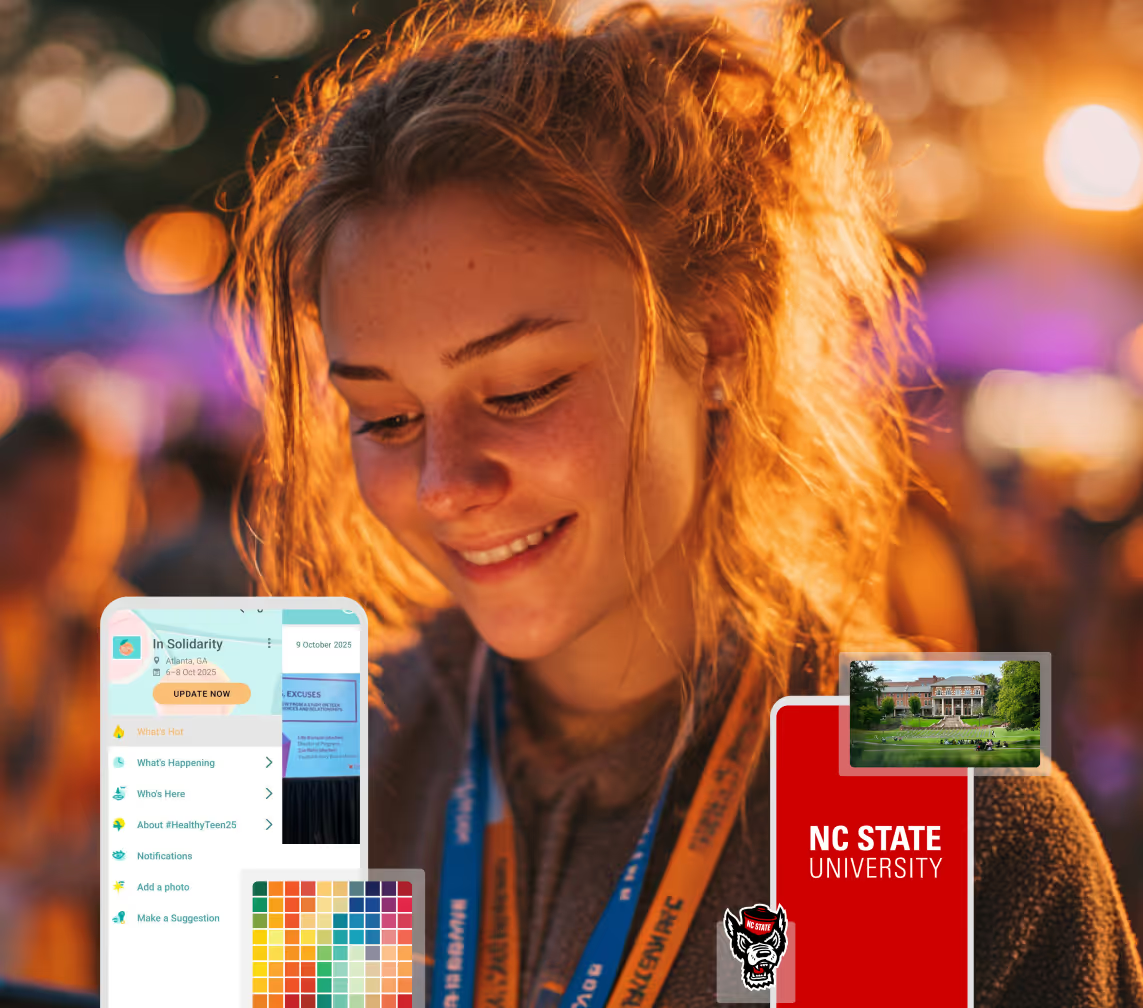
Planning Orientation?
Help new students feel prepared from day one with schedules, campus resources, and real-time updates in one app.
Planning Orientation?
Help new students feel prepared from day one with schedules, campus resources, and real-time updates in one app.
Running Admissions Events?
Manage open houses, tours, and yield events with a branded app that saves time and engages prospective students.

Running Admissions Events?
Manage open houses, tours, and yield events with a branded app that saves time and engages prospective students.
Get a custom Sponsorship Package Template
Stop starting from scratch. Grab free templates that helWe'll build a tailored sponsorship package with suggested pricing, tiers, and benefits..for your specific event.p you build professional sponsorship packages and close deals faster.
Get a custom Sponsorship Package Template
Stop starting from scratch. Grab free templates that helWe'll build a tailored sponsorship package with suggested pricing, tiers, and benefits..for your specific event.p you build professional sponsorship packages and close deals faster.
Plan Your Next Event Without Missing a Beat.
From venue selection to post-event wrap-up, this free checklist walks you through every step (so nothing falls through the cracks).
.avif)
Plan Your Next Event Without Missing a Beat.
From venue selection to post-event wrap-up, this free checklist walks you through every step (so nothing falls through the cracks).
Real Results From Real Events
100,000+ organizations trust Guidebook. See exactly how universities, associations, enterprises, and more put it to work.

Real Results From Real Events
100,000+ organizations trust Guidebook. See exactly how universities, associations, enterprises, and more put it to work.
Flexible pricing for every event size
Find the perfect plan for your needs, from intimate gatherings to large-scale conferences.

Flexible pricing for every event size
Find the perfect plan for your needs, from intimate gatherings to large-scale conferences.
Join our event experts
Watch on-demand webinars and join live sessions with industry leaders sharing best practices for event success.
.avif)
Join our event experts
Watch on-demand webinars and join live sessions with industry leaders sharing best practices for event success.
Guidebook in Action
Book a personalized walkthrough and discover how we help event teams create better attendee experiences.
Guidebook in Action
Book a personalized walkthrough and discover how we help event teams create better attendee experiences.

What is summer melt?
Summer melt refers to the phenomenon where students who intend to enroll in college fail to do so by fall. Learn about causes, prevention strategies, and support resources.

Summer melt is the phenomenon where admitted students who committed to attending a college or university fail to show up when classes begin. It typically occurs between May and September, after students have paid deposits but before fall enrollment. Summer melt can cost institutions thousands of students and millions in lost tuition revenue each year.
Here's the thing: summer melt isn't about students changing their minds on a whim. It's often driven by financial barriers, confusing paperwork, or simply feeling disconnected from campus. First-generation and low-income students are hit hardest. The good news? Most summer melt is preventable with the right communication strategy.
Key Characteristics of Summer Melt
- Timing Window: Summer melt happens during the critical months between deposit deadlines (typically May 1) and the first day of classes. This 3-4 month gap is when students are most vulnerable to dropping out.
- Silent Attrition: Unlike students who formally withdraw, summer melt often involves students who simply never show up. They don't call, email, or explain—they just vanish.
- Disproportionate Impact: Research shows summer melt affects 10-40% of students at some institutions. Community colleges and schools serving low-income populations see the highest rates.
- Financial Triggers: Unexpected costs, FAFSA complications, or lost financial aid packages are leading causes. Students may not know how to ask for help.
- Administrative Barriers: Missed deadlines for housing, orientation registration, or health forms can snowball into overwhelming obstacles that push students away.
- Emotional Disconnect: Students who don't feel connected to their future campus are more likely to melt. Belonging starts before day one.
- Preventable Nature: Studies show that simple interventions—like text message reminders and peer outreach—can reduce summer melt by up to 30%.
Summer Melt vs. Related Enrollment Terms
Yield Rate
- Scope: Measures admitted students who deposit
- Focus: Conversion from admission to commitment
- Timeline: Application through deposit deadline
- Channels: Admitted student events, financial aid offers
- Goal: Maximize deposits from admitted pool
Summer Melt
- Scope: Measures deposited students who don't enroll
- Focus: Retention of committed students
- Timeline: Deposit deadline through first day of class
- Channels: Ongoing communication, orientation, support services
- Goal: Ensure committed students actually arrive
First-Year Retention
- Scope: Measures students who return for sophomore year
- Focus: Long-term student success and persistence
- Timeline: First year through second-year enrollment
- Channels: Academic support, campus engagement, advising
- Goal: Keep students enrolled through graduation
These three metrics form a continuous pipeline. Strong yield means nothing if students melt over summer. And preventing summer melt sets the foundation for better first-year retention. Smart institutions track all three and address each stage with targeted strategies.
Common Causes of Summer Melt
Understanding why students melt helps you prevent it. Here are the biggest culprits.
Financial Aid Complications
Money problems top the list. Students may lose scholarships, face unexpected costs, or struggle with FAFSA verification. Many don't know their financial aid office can help.
First-generation students often lack guidance navigating these systems. A single confusing letter can derail their plans entirely.
Overwhelming Paperwork
The to-do list after depositing feels endless. Housing applications, health forms, placement tests, orientation registration—it's a lot. Students without family support may not know what's urgent versus optional.
When deadlines pile up, some students freeze. Others miss critical steps and face consequences that feel insurmountable.
Lack of Campus Connection
Students who've never visited campus or connected with peers feel like outsiders. This emotional distance makes it easier to walk away. Building community through events before classes start is essential.
Life Circumstances Change
Summer brings unexpected challenges. Family emergencies, job losses, health issues, or housing instability can derail college plans. Students may feel too embarrassed to reach out for help.
Better Offers Arrive Late
Some students stay on waitlists at preferred schools. When a late acceptance arrives, they jump ship. Others receive better financial packages elsewhere and make last-minute switches.
The Summer Melt Prevention Timeline
Preventing summer melt requires action at every stage. Here's your roadmap.
May: Immediate Post-Deposit Outreach
Don't wait to celebrate deposits. Send a warm welcome within 24 hours. Connect students with peer mentors or orientation leaders right away.
Create a clear checklist of next steps. Use digital marketing strategies to keep your institution top of mind.
June: Build Momentum and Connection
This is prime time for engagement. Host virtual events, send personalized content, and encourage social media connections. Students should feel part of the community before arriving.
Monitor who's completing required tasks. Reach out personally to students falling behind. A quick phone call can make all the difference.
July: Address Barriers Head-On
Mid-summer is when financial concerns peak. Proactively share resources about:
- Payment plan options
- Emergency aid funds
- Work-study opportunities
- Scholarship deadlines
- FAFSA verification help
Use check-in systems to track student progress and flag those at risk.
August: Final Push Before Classes
Orientation is your last major touchpoint. Make it count. Students who attend orientation are far more likely to show up for classes.
Send countdown communications. Share move-in details, roommate connections, and first-week schedules. Build excitement for what's ahead.
Effective Summer Melt Prevention Strategies
The best prevention combines high-tech tools with high-touch support.
Text Message Campaigns
Students live on their phones. Text reminders about deadlines get opened. Personalized messages from current students or advisors feel authentic.
Keep texts short and actionable. Include direct links to complete tasks. Track response rates to identify disengaged students.
Peer Mentor Programs
Current students are your secret weapon. They remember what it felt like to be nervous about college. Their outreach feels less intimidating than official communications.
Train peer mentors to:
- Share their own experiences
- Answer common questions
- Flag students who seem at risk
- Connect students with resources
Mobile App Engagement
A dedicated admissions and enrollment app keeps everything in one place. Students can access checklists, deadlines, campus maps, and support contacts instantly.
Push notifications remind students about upcoming tasks. In-app messaging creates direct lines to advisors. Platforms like Guidebook make this easy to implement.
Virtual Events and Webinars
Not every student can visit campus over summer. Virtual events bridge the gap. Host Q&A sessions, department introductions, and social meetups online.
Record sessions for students who can't attend live. Create opportunities for incoming students to connect with each other.
Proactive Financial Aid Outreach
Don't wait for students to ask for help. Reach out to those with incomplete FAFSA files or outstanding balances. Explain options clearly and without judgment.
Many students don't know emergency funds exist. Promote these resources widely and make applications simple.
Why Summer Melt Prevention Matters
For Event Success:
- Higher Orientation Attendance: Students who stay engaged over summer are more likely to attend new student programs and orientation events.
- Better Event Planning: Accurate enrollment numbers help you plan appropriately sized events with proper resources.
- Stronger Community Building: Students who connect before arriving form bonds that enhance every campus event.
- Improved Engagement Metrics: Tracking event ROI becomes easier when you're not losing participants to melt.
- Smoother Logistics: Knowing who's actually coming helps with everything from catering to room assignments.
For Business Objectives:
- Protected Tuition Revenue: Every student who melts represents lost tuition, fees, and auxiliary revenue.
- Improved Retention Rates: Students who feel connected from day one are more likely to persist through graduation.
- Enhanced Institutional Reputation: Strong enrollment numbers and retention rates boost rankings and attract future applicants.
- Efficient Resource Allocation: Accurate enrollment projections help budget for staffing, housing, and services.
- Competitive Advantage: Schools that master summer melt prevention outperform peers in enrollment stability.
Guidebook's platform for schools helps institutions stay connected with incoming students throughout the summer. From personalized schedules to push notifications, the right technology makes prevention scalable.
Summer Melt Prevention Best Practices
- Start Communication Immediately After Deposit: The moment a student commits, begin building the relationship. Waiting until summer creates dangerous gaps in engagement.
- Create a Clear, Visual Checklist: Students need to see exactly what's required and when. Use your enrollment app to make tasks trackable and completable.
- Personalize Every Touchpoint: Generic mass emails get ignored. Use student names, reference their intended major, and tailor content to their interests.
- Train Staff to Recognize Warning Signs: Missed deadlines, unanswered emails, and incomplete forms signal trouble. Create protocols for immediate follow-up.
- Make Financial Help Easy to Find: Bury emergency aid information and students won't find it. Feature financial resources prominently in every communication.
- Leverage Peer Connections: Current students and recent alumni are more relatable than administrators. Use them for outreach, events, and mentorship.
- Host Engaging Summer Events: Virtual meetups, social media takeovers, and online orientations keep students excited. Check out community event ideas for inspiration.
- Track Everything and Adjust: Monitor open rates, task completion, and event attendance. Use data to identify at-risk students and refine your approach.
- Involve Parents and Families: Parent and family programs create additional support systems. Keep families informed so they can encourage students.
- Make Orientation Unmissable: Position orientation as the exciting kickoff to college life, not just another requirement. Students who attend are far less likely to melt.
Common Summer Melt Mistakes
Assuming Deposits Mean Commitment: A deposit is a promise, not a guarantee. Students who've paid can still disappear. Treat every deposited student as someone who needs continued nurturing until they're sitting in class.
Relying Only on Email: Email open rates among students hover around 20%. If email is your only channel, you're missing 80% of your audience. Use texts, apps, social media, and phone calls.
Waiting Until August to Worry: By August, many students have already mentally checked out. Prevention must start in May and continue consistently through summer.
Ignoring At-Risk Populations: First-generation, low-income, and underrepresented students face higher melt rates. Generic strategies won't reach them. Create targeted support for these groups.
Making Help Hard to Access: If students have to navigate a maze to find financial aid help or advising, they'll give up. Simplify every process and make support one click away.
Forgetting the Emotional Component: Summer melt isn't just about logistics. Students who don't feel they belong will find reasons to leave. Build connection and community alongside completing paperwork.
Not Measuring Results: If you don't track melt rates and intervention effectiveness, you can't improve. Establish baselines and measure progress year over year.
Final Thoughts
Summer melt represents one of higher education's most preventable enrollment challenges. The students you lose aren't rejecting your institution—they're struggling with barriers you can help remove. Every student who melts is a missed opportunity for both the institution and the individual.
The data is clear: proactive, personalized communication works. Schools that invest in summer engagement see dramatic reductions in melt rates. This isn't about fancy technology or massive budgets. It's about showing students they matter before they ever set foot on campus.
Think about it from the student's perspective. They're nervous, excited, and probably overwhelmed. A timely text from a peer mentor or a helpful push notification about a deadline can be the difference between showing up and disappearing. Small touches create big impact.
Ready to tackle summer melt at your institution? Guidebook helps schools stay connected with incoming students through branded mobile apps, personalized schedules, and real-time communication tools. Explore our new student programs solutions or request a demo to see how the right technology makes summer melt prevention scalable. Because every student who commits deserves the support to actually arrive.
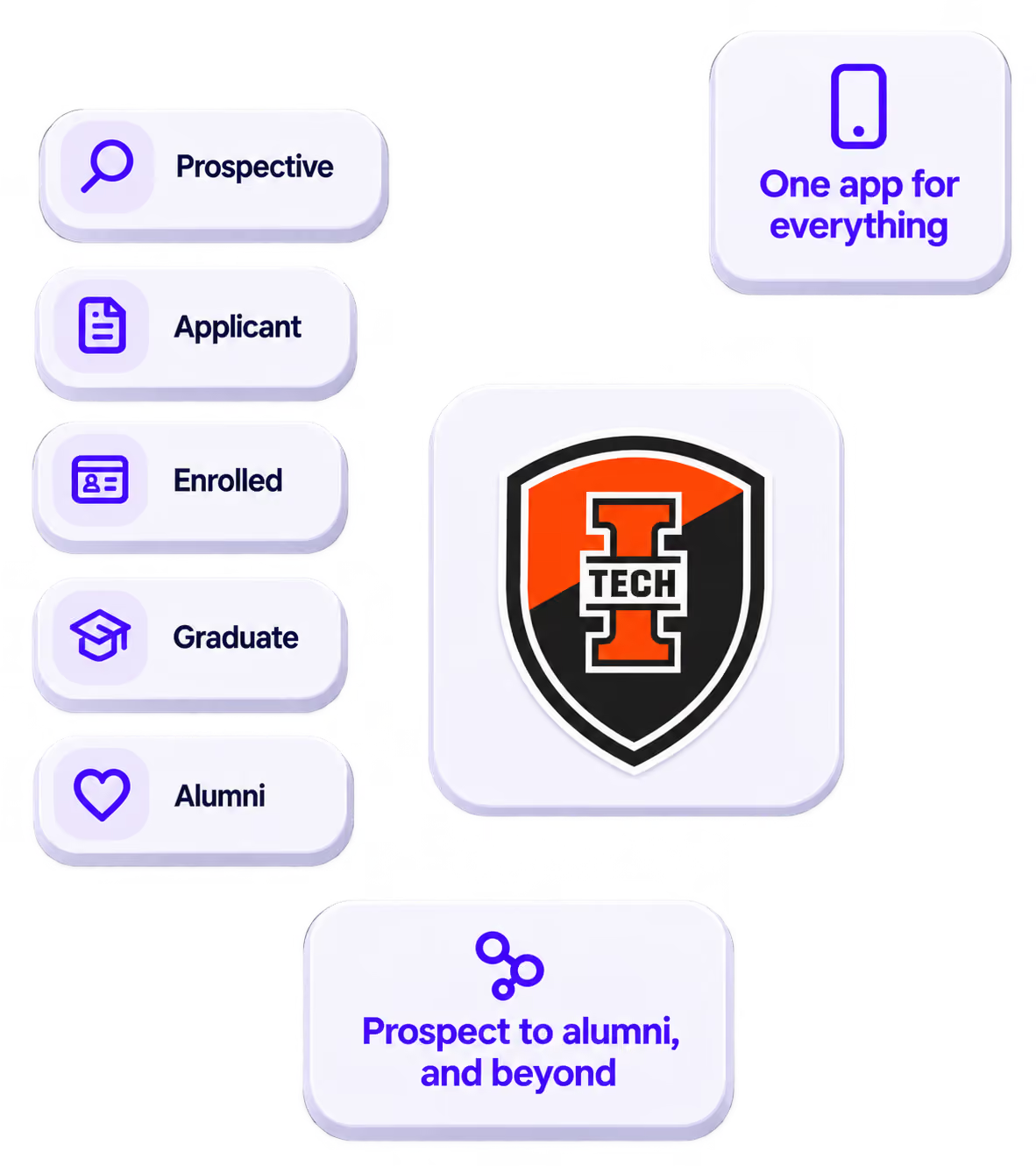
The power of your brand in your app, from first visit to alumni.
Build trust
Attendees download your app, not ours. Your name, colors, and crest in the stores.
.avif)
One place for the whole event
Schedules, maps, registration, and updates in one branded hub - not five tools.
Stand out
A branded app is what people keep on their phone after the printed program is in the recycling.

Get the Mobile App Playbook
A short guide to running the whole student journey in one app. No fluff, just what works.
for higher ed
Campus
Playbook
A practical guide to building a connected campus experience.
Free playbook
The Mobile App Playbook for Universities
Students decide if they belong long before they set foot on campus. This playbook shows how to win them over from the first visit through graduation.
- Grow enrollment and boost recruitment
- Increase belonging and retention
- Run every event from one branded app
By submitting, you agree to our Privacy Policy.
You're in.
.png)