
Campus apps by department
Admissions, orientation, student life, and more — one campus app that works across departments.

Campus apps by department
Admissions, orientation, student life, and more — one campus app that works across departments.
Build unlimited event apps on one license
One partnership for unlimited campus events — orientation, tours, student life, and everything in between.
Build unlimited event apps on one license
One partnership for unlimited campus events — orientation, tours, student life, and everything in between.
Compare event app platforms
See how Guidebook stacks up against other event app and registration platforms.
Compare event app platforms
See how Guidebook stacks up against other event app and registration platforms.
Event apps for nonprofit and community programs
Give members, volunteers, and donors one branded app for conferences, fundraisers, and year-round community.
Event apps for nonprofit and community programs
Give members, volunteers, and donors one branded app for conferences, fundraisers, and year-round community.
Campus integrations and an open API
Connect Guidebook with the campus systems, APIs, and tools your team already uses.
Campus integrations and an open API
Connect Guidebook with the campus systems, APIs, and tools your team already uses.
Event apps for corporate and enterprise teams
Internal meetings, offsites, and large-scale corporate events — with the branding and control enterprise teams need.
Event apps for corporate and enterprise teams
Internal meetings, offsites, and large-scale corporate events — with the branding and control enterprise teams need.
Create a branded event app with no coding
Put schedules, maps, resources, and updates in every attendee's pocket — built for campus events and programs.
Create a branded event app with no coding
Put schedules, maps, resources, and updates in every attendee's pocket — built for campus events and programs.
Launch a branded, white-label event app
A white-label event app with your branding, your content, and your attendee experience — no coding required.
Launch a branded, white-label event app
A white-label event app with your branding, your content, and your attendee experience — no coding required.
Everything in the Guidebook platform
Explore the features event teams use to engage attendees before, during, and after the event.
Everything in the Guidebook platform
Explore the features event teams use to engage attendees before, during, and after the event.
One app for in-person and virtual attendees
The same schedule, networking, and updates whether people are in the room or joining remotely.
One app for in-person and virtual attendees
The same schedule, networking, and updates whether people are in the room or joining remotely.
Event apps built for associations
Annual meetings, chapter events, and member engagement — without rebuilding a new app every year.
Event apps built for associations
Annual meetings, chapter events, and member engagement — without rebuilding a new app every year.
A branded event website that matches the app
Promote the event, collect interest, and keep branding consistent from the first click to check-in.
A branded event website that matches the app
Promote the event, collect interest, and keep branding consistent from the first click to check-in.
Plan, run, and measure events on one platform
App, registration, badges, and websites in one workflow — so planning isn't a pile of disconnected tools.
Plan, run, and measure events on one platform
App, registration, badges, and websites in one workflow — so planning isn't a pile of disconnected tools.
Keep members engaged between events
One branded app for the conference and everything that happens the other 51 weeks of the year.
Keep members engaged between events
One branded app for the conference and everything that happens the other 51 weeks of the year.
The conference app attendees actually use
Schedules, maps, networking, and live updates for annual meetings, summits, and multi-day conferences.
The conference app attendees actually use
Schedules, maps, networking, and live updates for annual meetings, summits, and multi-day conferences.
Registration that feeds your app and badges
Collect registrations, payments, and attendee data in the same platform as your event app.
Registration that feeds your app and badges
Collect registrations, payments, and attendee data in the same platform as your event app.
Design and print event badges in one place
Custom badges, QR check-in, and on-site printing — without a separate badge vendor.
Design and print event badges in one place
Custom badges, QR check-in, and on-site printing — without a separate badge vendor.
A Smaller School?
Deliver a polished, branded event experience without a large team or a big budget.
A Smaller School?
Deliver a polished, branded event experience without a large team or a big budget.
Running Family Programs?
Give families everything they need, from schedules and maps to real-time updates, all in one place.
Running Family Programs?
Give families everything they need, from schedules and maps to real-time updates, all in one place.
Coordinating Move-In Day?
Share updates, manage events, and keep students informed from move-in through the academic year.

Coordinating Move-In Day?
Share updates, manage events, and keep students informed from move-in through the academic year.
Offering Campus Tours?
Deliver branded, self-guided tour experiences with interactive maps and rich media, available 24/7.

Offering Campus Tours?
Deliver branded, self-guided tour experiences with interactive maps and rich media, available 24/7.
Organising a Career Fair?
Simplify logistics for students, employers, and Career Services staff with one easy-to-use app.
Organising a Career Fair?
Simplify logistics for students, employers, and Career Services staff with one easy-to-use app.
Managing Alumni Events?
Plan reunions, regional events, and fundraising campaigns with an app built for alumni engagement.

Managing Alumni Events?
Plan reunions, regional events, and fundraising campaigns with an app built for alumni engagement.
Boost Student Engagement
One hub for schedules, resources, and events that keeps students connected throughout the academic year.

Boost Student Engagement
One hub for schedules, resources, and events that keeps students connected throughout the academic year.
Planning Orientation?
Help new students feel prepared from day one with schedules, campus resources, and real-time updates in one app.

Planning Orientation?
Help new students feel prepared from day one with schedules, campus resources, and real-time updates in one app.
Running Admissions Events?
Manage open houses, tours, and yield events with a branded app that saves time and engages prospective students.

Running Admissions Events?
Manage open houses, tours, and yield events with a branded app that saves time and engages prospective students.
Get a custom Sponsorship Package Template
Stop starting from scratch. Grab free templates that helWe'll build a tailored sponsorship package with suggested pricing, tiers, and benefits..for your specific event.p you build professional sponsorship packages and close deals faster.
Get a custom Sponsorship Package Template
Stop starting from scratch. Grab free templates that helWe'll build a tailored sponsorship package with suggested pricing, tiers, and benefits..for your specific event.p you build professional sponsorship packages and close deals faster.
Plan Your Next Event Without Missing a Beat.
From venue selection to post-event wrap-up, this free checklist walks you through every step (so nothing falls through the cracks).
.avif)
Plan Your Next Event Without Missing a Beat.
From venue selection to post-event wrap-up, this free checklist walks you through every step (so nothing falls through the cracks).
Real Results From Real Events
100,000+ organizations trust Guidebook. See exactly how universities, associations, enterprises, and more put it to work.

Real Results From Real Events
100,000+ organizations trust Guidebook. See exactly how universities, associations, enterprises, and more put it to work.
Flexible pricing for every event size
Find the perfect plan for your needs, from intimate gatherings to large-scale conferences.

Flexible pricing for every event size
Find the perfect plan for your needs, from intimate gatherings to large-scale conferences.
Join our event experts
Watch on-demand webinars and join live sessions with industry leaders sharing best practices for event success.
.avif)
Join our event experts
Watch on-demand webinars and join live sessions with industry leaders sharing best practices for event success.
Guidebook in Action
Book a personalized walkthrough and discover how we help event teams create better attendee experiences.
Guidebook in Action
Book a personalized walkthrough and discover how we help event teams create better attendee experiences.

Session attendance tracking vs registration data: what’s the difference?
Session attendance tracking vs registration data: understand the key differences, benefits, and how each impacts event insights. Learn best practices for accurate measurement and improved event outcomes.

Session attendance tracking vs registration data is the critical comparison between who actually showed up to your event sessions and who originally signed up—revealing the gap between intent and action. Registration data captures commitments. Attendance tracking captures reality. Together, they tell the complete story of your event's performance.
Here's the thing: registration numbers look great in pre-event reports. But they don't pay the bills or prove ROI. Session attendance tracking shows which content resonated, which speakers drew crowds, and where people voted with their feet. Smart event planners use both data sets together to make better decisions.
Key Characteristics of Session Attendance Tracking vs Registration Data
- Different Data Collection Points: Registration happens before the event. Attendance tracking happens during sessions. Each captures a unique moment in the attendee journey.
- Intent vs. Behavior Gap: Registration shows what people planned to do. Attendance reveals what they actually did. The gap between them is where insights live.
- Real-Time vs. Static Information: Registration data stays fixed once submitted. Attendance data updates continuously as people move through your event.
- Predictive vs. Actual Metrics: Use registration to forecast room sizes and catering. Use attendance to measure actual engagement and content success. : Neither dataset tells the whole story alone. Combined analysis reveals patterns like no-show rates, session-hopping behavior, and content preferences.
- Different Stakeholder Value: Sponsors care about attendance numbers. Your team needs registration for logistics. Both groups need accurate data for different reasons.
- Technology Requirements: Registration needs forms and payment processing. Attendance tracking needs event check-in software, badge scanners, or app-based tracking.
Session Attendance Tracking vs. Related Data Types
Registration Data
- Scope: Captures pre-event commitments and attendee information
- Focus: Who plans to attend and their demographic details
- Timeline: Collected days, weeks, or months before the event
- Channels: Online forms, event registration platforms, ticketing systems
- Goal: Enable planning, forecasting, and pre-event communication
Session Attendance Data
- Scope: Tracks actual presence at specific sessions or activities
- Focus: Who showed up and for how long
- Timeline: Collected in real-time during the event
- Channels: Badge scans, app check-ins, manual counts, beacon technology
- Goal: Measure engagement, prove ROI, and inform future content decisions
Engagement Data
- Scope: Measures quality of participation beyond physical presence
- Focus: How actively attendees participated (questions, polls, networking)
- Timeline: Collected during and after sessions
- Channels: Event apps, polling tools, Q&A platforms, social media
- Goal: Understand depth of attendee involvement and content resonance
These three data types work together like puzzle pieces. Registration tells you who's coming. Attendance confirms who arrived. Engagement reveals who actually cared. Master all three, and you'll understand your event completely.
How Session Attendance Tracking Works
Choose Your Tracking Technology
Your tracking method depends on event size, budget, and accuracy needs. Small events might use manual sign-in sheets. Large conferences need automated solutions.
Popular options include:
- Badge scanning at session doors
- RFID or NFC technology
- Mobile app check-ins
- Bluetooth beacons for passive tracking
- QR code scanning
Set Up Data Collection Points
Place scanners or check-in stations at every session entrance. Train staff on proper scanning procedures. Test everything before doors open.
Don't forget backup methods. Technology fails. Have paper sign-in sheets ready just in case. Your sponsors won't accept "the scanner broke" as an excuse for missing data.
Integrate With Your Event Platform
Your attendance data needs to flow into your event management platform automatically. Manual data entry creates errors and delays. Real-time integration lets you spot problems immediately.
Look for platforms that connect registration and attendance data seamlessly. This connection enables the comparison analysis that makes both datasets valuable.
Monitor Data Quality in Real-Time
Check your numbers throughout the event. If a session shows zero attendance but you can see a full room, something's broken. Fix it fast.
Assign someone to monitor dashboards continuously. They should flag anomalies and troubleshoot issues before they become data disasters.
Analyzing the Gap Between Registration and Attendance
Calculate Your No-Show Rate
The formula is simple: (Registrations - Actual Attendance) / Registrations × 100. Industry averages run 20-40% for free events and 5-15% for paid events.
Track this metric by session type, time slot, and speaker. Patterns emerge quickly. Maybe your 8 AM sessions always underperform. Perhaps certain topics attract tire-kickers who never show.
Identify Session-Hopping Patterns
Some attendees register for everything, then cherry-pick what they actually attend. This behavior isn't bad—it's informative. It shows which content won the competition for attention.
Compare registration rankings to attendance rankings. Sessions that climb the list exceeded expectations. Sessions that dropped disappointed people or faced stiff competition.
Segment Your Analysis
Break down the data by attendee type:
- First-time vs. returning attendees
- VIPs vs. general admission
- Different job titles or industries
- Geographic regions
Each segment behaves differently. Understanding these patterns helps you personalize future events and improve event ROI.
Create Actionable Reports
Raw data means nothing without context. Build reports that answer specific questions:
- Which sessions should we repeat next year?
- Which speakers delivered on their promise?
- Where did we over- or under-estimate demand?
- How can we reduce no-show rates?
Share findings with stakeholders using clear visualizations. A event debrief template helps structure these conversations.
Why Session Attendance Tracking vs Registration Data Matters
For Event Success:
- Accurate Room Assignments: Historical attendance data helps you right-size rooms for future events, avoiding embarrassing empty spaces or overcrowded sessions.
- Content Strategy Validation: See which topics actually draw crowds versus which ones just sound good on paper.
- Speaker Performance Measurement: Compare a speaker's registration pull to their attendance retention. Did people stay or sneak out?
- Real-Time Adjustments: Spot underperforming sessions early and redirect attendees to better options.
- Improved Attendee Experience: Use data to eliminate overcrowding, reduce wait times, and match supply with demand.
For Business Objectives:
- Sponsor Deliverables: Prove actual eyeballs on sponsored sessions, not just registration promises.
- Budget Justification: Show leadership exactly what worked and what didn't with hard numbers.
- Lead Quality Assessment: Attendees who showed up are warmer leads than those who just registered.
- Pricing Strategy: Understand the relationship between ticket price and attendance commitment.
- Competitive Intelligence: Benchmark your no-show rates against event trends and industry standards.
Session Attendance Tracking vs Registration Data Best Practices
- Start Tracking From Day One: Don't wait until your event grows. Establish baseline metrics now so you can measure improvement over time.
- Use Consistent Methodology: Pick a tracking method and stick with it across all sessions. Mixing methods makes comparison impossible.
- Communicate Tracking to Attendees: Let people know you're tracking attendance. Transparency builds trust and may actually improve show rates.
- Set Realistic Registration Caps: Use historical attendance data to set session caps. Oversubscribed sessions with high no-shows waste everyone's time.
- Build in Overbooking Buffers: Airlines do it. You should too. If your no-show rate is 30%, consider allowing 130% registration capacity.
- Send Session Reminders: A simple reminder 24 hours before and 1 hour before significantly reduces no-shows. Event digital marketing automation makes this easy.
- Create Waitlists That Work: When registered attendees don't show, fill seats from waitlists. Real-time tracking makes this possible.
- Analyze Patterns Across Events: One event's data is interesting. Multiple events reveal trends. Build a historical database for smarter event planning.
- Share Data With Speakers: Speakers improve when they see their numbers. Share attendance and engagement metrics as constructive feedback.
- Act on What You Learn: Data without action is just trivia. Create specific plans based on your findings and measure results.
Common Session Attendance Tracking vs Registration Data Mistakes
Treating Registration as Attendance: This is the biggest mistake. Reporting registration numbers as attendance misleads sponsors, inflates success metrics, and damages credibility when the truth emerges.
Inconsistent Tracking Across Sessions: Scanning some sessions but not others creates incomplete data. You can't compare what you didn't measure. Commit to tracking everything or accept gaps in your analysis.
Ignoring the "Why" Behind No-Shows: Numbers tell you what happened. Surveys tell you why. Send quick post-event surveys asking why people skipped sessions they registered for. The answers guide improvements.
Waiting Too Long to Analyze: Fresh data drives action. Stale data becomes an archive. Review attendance vs. registration gaps within 48 hours of your event while details remain fresh.
Failing to Segment Data: Aggregate numbers hide important patterns. A 25% overall no-show rate might mask a 50% rate for free sessions and 5% for paid ones. Dig deeper.
Not Sharing Insights With Stakeholders: Your event coordinator role includes communicating results. Sponsors, speakers, and leadership all benefit from understanding attendance patterns. Don't hoard the data.
Overcomplicating the Technology: Fancy tracking systems mean nothing if staff can't use them properly. Choose reliable, user-friendly solutions over feature-rich complexity.
Final Thoughts
Understanding session attendance tracking vs registration data transforms how you plan, execute, and improve events. Registration data helps you prepare. Attendance data helps you prove value. Together, they create a complete picture of event performance.
The events industry increasingly demands accountability. Sponsors want proof of engagement. Leadership wants ROI justification. Attendees want experiences worth their time. Accurate data comparison delivers on all three fronts.
Don't let the gap between registration and attendance remain a mystery. Every no-show tells a story. Every packed session reveals what your audience truly values. Listen to what the data says, and your events will keep getting better.
Ready to capture both sides of the equation? Guidebook's event management platform integrates registration and attendance tracking seamlessly. Explore our templates to get started, check out case studies from events like yours, or book a demo to see the platform in action. Your data story starts here.
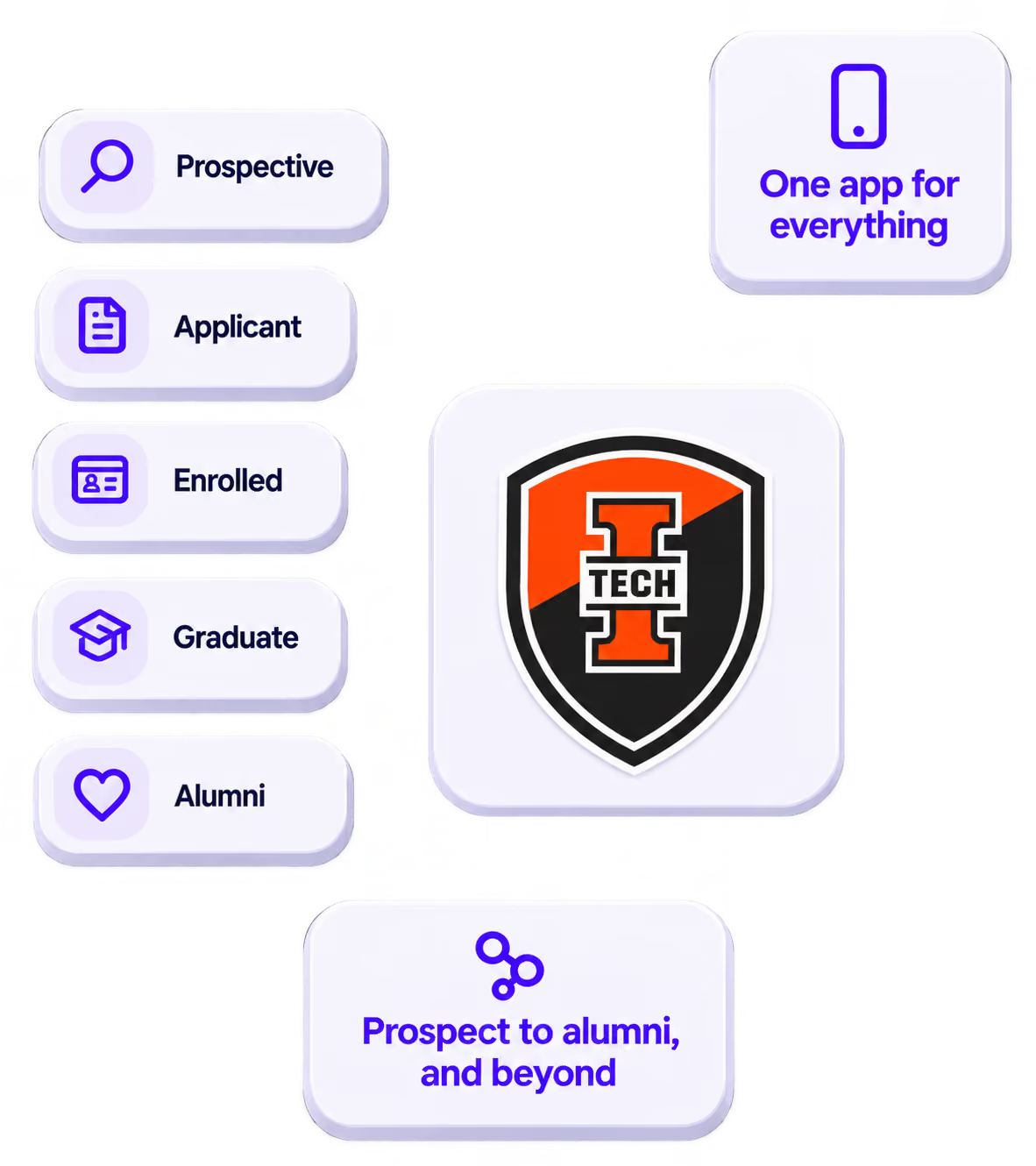
The power of your brand in your app, from first visit to alumni.
Build trust
Attendees download your app, not ours. Your name, colors, and crest in the stores.
.avif)
One place for the whole event
Schedules, maps, registration, and updates in one branded hub - not five tools.
Stand out
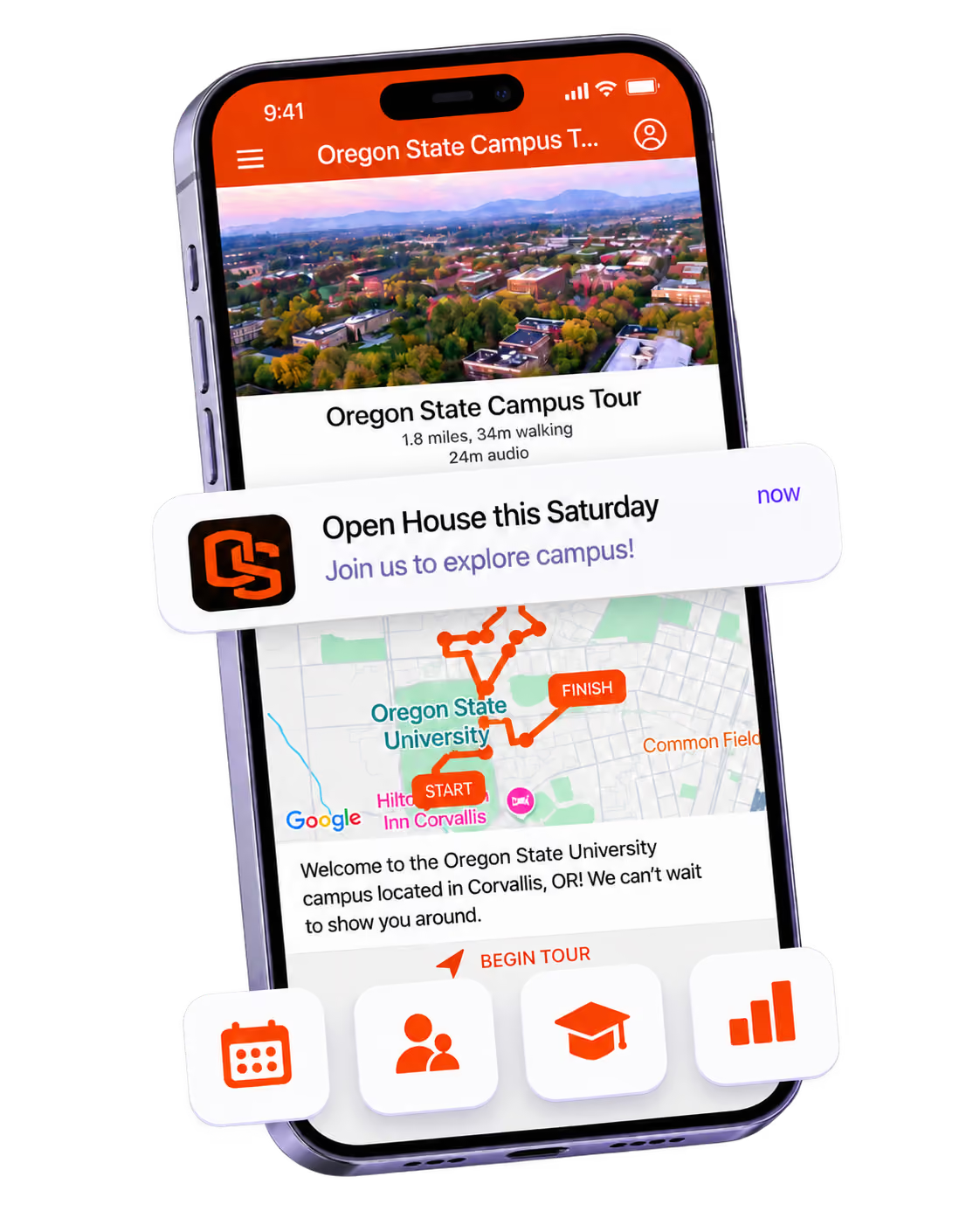
A branded app is what people keep on their phone after the printed program is in the recycling.

Get the Mobile App Playbook
A short guide to running the whole student journey in one app. No fluff, just what works.
for higher ed
Campus
Playbook
A practical guide to building a connected campus experience.
Free playbook
The Mobile App Playbook for Universities
Students decide if they belong long before they set foot on campus. This playbook shows how to win them over from the first visit through graduation.
- Grow enrollment and boost recruitment
- Increase belonging and retention
- Run every event from one branded app
By submitting, you agree to our Privacy Policy.
You're in.
.png)