
Campus apps by department
Admissions, orientation, student life, and more — one campus app that works across departments.

Campus apps by department
Admissions, orientation, student life, and more — one campus app that works across departments.
Build unlimited event apps on one license
One partnership for unlimited campus events — orientation, tours, student life, and everything in between.
Build unlimited event apps on one license
One partnership for unlimited campus events — orientation, tours, student life, and everything in between.
Compare event app platforms
See how Guidebook stacks up against other event app and registration platforms.
Compare event app platforms
See how Guidebook stacks up against other event app and registration platforms.
Event apps for nonprofit and community programs
Give members, volunteers, and donors one branded app for conferences, fundraisers, and year-round community.
Event apps for nonprofit and community programs
Give members, volunteers, and donors one branded app for conferences, fundraisers, and year-round community.
Campus integrations and an open API
Connect Guidebook with the campus systems, APIs, and tools your team already uses.
Campus integrations and an open API
Connect Guidebook with the campus systems, APIs, and tools your team already uses.
Event apps for corporate and enterprise teams
Internal meetings, offsites, and large-scale corporate events — with the branding and control enterprise teams need.
Event apps for corporate and enterprise teams
Internal meetings, offsites, and large-scale corporate events — with the branding and control enterprise teams need.
Create a branded event app with no coding
Put schedules, maps, resources, and updates in every attendee's pocket — built for campus events and programs.
Create a branded event app with no coding
Put schedules, maps, resources, and updates in every attendee's pocket — built for campus events and programs.
Launch a branded, white-label event app
A white-label event app with your branding, your content, and your attendee experience — no coding required.
Launch a branded, white-label event app
A white-label event app with your branding, your content, and your attendee experience — no coding required.
Everything in the Guidebook platform
Explore the features event teams use to engage attendees before, during, and after the event.
Everything in the Guidebook platform
Explore the features event teams use to engage attendees before, during, and after the event.
One app for in-person and virtual attendees
The same schedule, networking, and updates whether people are in the room or joining remotely.
One app for in-person and virtual attendees
The same schedule, networking, and updates whether people are in the room or joining remotely.
Event apps built for associations
Annual meetings, chapter events, and member engagement — without rebuilding a new app every year.
Event apps built for associations
Annual meetings, chapter events, and member engagement — without rebuilding a new app every year.
A branded event website that matches the app
Promote the event, collect interest, and keep branding consistent from the first click to check-in.
A branded event website that matches the app
Promote the event, collect interest, and keep branding consistent from the first click to check-in.
Plan, run, and measure events on one platform
App, registration, badges, and websites in one workflow — so planning isn't a pile of disconnected tools.
Plan, run, and measure events on one platform
App, registration, badges, and websites in one workflow — so planning isn't a pile of disconnected tools.
Keep members engaged between events
One branded app for the conference and everything that happens the other 51 weeks of the year.
Keep members engaged between events
One branded app for the conference and everything that happens the other 51 weeks of the year.
The conference app attendees actually use
Schedules, maps, networking, and live updates for annual meetings, summits, and multi-day conferences.
The conference app attendees actually use
Schedules, maps, networking, and live updates for annual meetings, summits, and multi-day conferences.
Registration that feeds your app and badges
Collect registrations, payments, and attendee data in the same platform as your event app.
Registration that feeds your app and badges
Collect registrations, payments, and attendee data in the same platform as your event app.
Design and print event badges in one place
Custom badges, QR check-in, and on-site printing — without a separate badge vendor.
Design and print event badges in one place
Custom badges, QR check-in, and on-site printing — without a separate badge vendor.
A Smaller School?
Deliver a polished, branded event experience without a large team or a big budget.
A Smaller School?
Deliver a polished, branded event experience without a large team or a big budget.
Running Family Programs?
Give families everything they need, from schedules and maps to real-time updates, all in one place.
Running Family Programs?
Give families everything they need, from schedules and maps to real-time updates, all in one place.
Coordinating Move-In Day?
Share updates, manage events, and keep students informed from move-in through the academic year.

Coordinating Move-In Day?
Share updates, manage events, and keep students informed from move-in through the academic year.
Offering Campus Tours?
Deliver branded, self-guided tour experiences with interactive maps and rich media, available 24/7.

Offering Campus Tours?
Deliver branded, self-guided tour experiences with interactive maps and rich media, available 24/7.
Organising a Career Fair?
Simplify logistics for students, employers, and Career Services staff with one easy-to-use app.
Organising a Career Fair?
Simplify logistics for students, employers, and Career Services staff with one easy-to-use app.
Managing Alumni Events?
Plan reunions, regional events, and fundraising campaigns with an app built for alumni engagement.
Managing Alumni Events?
Plan reunions, regional events, and fundraising campaigns with an app built for alumni engagement.
Boost Student Engagement
One hub for schedules, resources, and events that keeps students connected throughout the academic year.
Boost Student Engagement
One hub for schedules, resources, and events that keeps students connected throughout the academic year.
Planning Orientation?
Help new students feel prepared from day one with schedules, campus resources, and real-time updates in one app.
Planning Orientation?
Help new students feel prepared from day one with schedules, campus resources, and real-time updates in one app.
Running Admissions Events?
Manage open houses, tours, and yield events with a branded app that saves time and engages prospective students.

Running Admissions Events?
Manage open houses, tours, and yield events with a branded app that saves time and engages prospective students.
Get a custom Sponsorship Package Template
Stop starting from scratch. Grab free templates that helWe'll build a tailored sponsorship package with suggested pricing, tiers, and benefits..for your specific event.p you build professional sponsorship packages and close deals faster.
Get a custom Sponsorship Package Template
Stop starting from scratch. Grab free templates that helWe'll build a tailored sponsorship package with suggested pricing, tiers, and benefits..for your specific event.p you build professional sponsorship packages and close deals faster.
Plan Your Next Event Without Missing a Beat.
From venue selection to post-event wrap-up, this free checklist walks you through every step (so nothing falls through the cracks).
.avif)
Plan Your Next Event Without Missing a Beat.
From venue selection to post-event wrap-up, this free checklist walks you through every step (so nothing falls through the cracks).
Real Results From Real Events
100,000+ organizations trust Guidebook. See exactly how universities, associations, enterprises, and more put it to work.

Real Results From Real Events
100,000+ organizations trust Guidebook. See exactly how universities, associations, enterprises, and more put it to work.
Flexible pricing for every event size
Find the perfect plan for your needs, from intimate gatherings to large-scale conferences.
Flexible pricing for every event size
Find the perfect plan for your needs, from intimate gatherings to large-scale conferences.
Join our event experts
Watch on-demand webinars and join live sessions with industry leaders sharing best practices for event success.
.avif)
Join our event experts
Watch on-demand webinars and join live sessions with industry leaders sharing best practices for event success.
Guidebook in Action
Book a personalized walkthrough and discover how we help event teams create better attendee experiences.
Guidebook in Action
Book a personalized walkthrough and discover how we help event teams create better attendee experiences.

What is Experiential Marketing?
Experiential marketing creates memorable brand experiences that engage audiences directly. Discover key strategies, real-world examples, and tips for impactful campaigns.

Experiential marketing is the strategy of creating immersive, hands-on brand experiences that invite audiences to actively participate rather than passively observe. It transforms traditional advertising into memorable moments. When done right, it builds emotional connections that last far longer than any billboard or banner ad.
Here's the thing: people forget ads, but they remember experiences. Experiential marketing flips the script on traditional promotion. Instead of telling people why your event or brand matters, you show them. You let them feel it, touch it, and share it with their friends.
Key Characteristics of Experiential Marketing
- Immersive Engagement: Participants don't just watch—they interact. Every touchpoint invites action, from hands-on demos to interactive installations.
- Emotional Connection: The goal is to spark feelings, not just awareness. Joy, surprise, and curiosity drive lasting brand recall.
- Shareable Moments: Great experiential campaigns are designed for social media. Attendees become ambassadors when they post their experiences.
- Multi-Sensory Appeal: Sight, sound, touch, taste, and smell all play a role. The more senses involved, the stronger the memory.
- Two-Way Communication: Unlike traditional ads, experiential marketing creates dialogue. Brands listen and respond in real time.
- Authenticity First: Audiences can spot fake enthusiasm instantly. Successful campaigns feel genuine and align with brand values.
- Measurable Impact: Modern experiential campaigns track engagement, social shares, and conversions to prove event ROI.
Experiential Marketing vs. Related Marketing Approaches
Traditional Event Marketing
- Scope: Promotes events through advertising and outreach
- Focus: Driving attendance and ticket sales
- Timeline: Primarily pre-event promotion
- Channels: Email, social media, paid ads, PR
- Goal: Fill seats and generate awareness
Experiential Marketing
- Scope: Creates immersive brand experiences at or around events
- Focus: Building emotional connections and memories
- Timeline: During the experience itself
- Channels: Physical activations, pop-ups, interactive installations
- Goal: Transform attendees into brand advocates
Event Digital Marketing
- Scope: Online promotion and engagement strategies
- Focus: Reaching audiences through digital channels
- Timeline: Before, during, and after events
- Channels: Social media, email, websites, apps
- Goal: Drive registrations and extend event reach
These approaches work best together. Event digital marketing drives people to your experience. Experiential marketing creates the wow moment. And traditional event marketing ties it all together with strategic promotion.
Essential Experiential Marketing Formats
Pop-Up Experiences
Pop-ups create urgency and exclusivity. They appear for limited times in unexpected locations. This format works brilliantly for product launches and brand awareness campaigns.
The temporary nature drives FOMO (fear of missing out). People rush to participate before it disappears.
Interactive Trade Show Booths
Forget the boring table-and-banner setup. Modern interactive trade show booths feature:
- Virtual reality demonstrations
- Hands-on product testing stations
- Gamified challenges with prizes
- Photo opportunities with branded backdrops
- Live demonstrations and workshops
Brand Activations at Events
Sponsors increasingly demand more than logo placement. They want activations that engage attendees directly. Think charging lounges, interactive games, or exclusive VIP experiences.
Smart sponsorship packages now include experiential elements as standard offerings.
Immersive Installations
These large-scale experiences transport visitors to another world. Museums, festivals, and corporate events use them to create unforgettable moments.
The key? Every detail matters. Lighting, sound, scent, and texture all contribute to the immersion.
Guerrilla Marketing Stunts
Unexpected brand encounters in public spaces grab attention. They're often low-cost but high-impact. The surprise factor makes them incredibly shareable on social media.
Building an Experiential Marketing Strategy
Define Your Experience Goals
What do you want people to feel? What action should they take afterward? Start with clear objectives before designing anything.
Common goals include:
- Increasing brand awareness by 30%
- Generating 500 qualified leads
- Creating 1,000 social media shares
- Building email list with 200 new subscribers
Know Your Audience Deeply
Generic experiences fall flat. You need to understand what excites your specific audience. What are their pain points? What surprises would delight them?
Research goes beyond demographics. Dig into psychographics, behaviors, and preferences.
Design for Shareability
Every experiential campaign needs "Instagram moments." Create visually stunning backdrops. Add unexpected elements that beg to be photographed.
Include your hashtag prominently. Make sharing easy with QR codes linking to social platforms.
Plan the Customer Journey
Map every touchpoint from discovery to follow-up. Consider:
- How will people find out about the experience?
- What's their first impression upon arrival?
- How do they move through the space?
- What's the climactic moment?
- How do you capture their information?
- What happens after they leave?
Integrate Technology Thoughtfully
Tech should enhance, not complicate. Mobile apps can personalize experiences and capture data. Event check-in software streamlines entry and tracks attendance.
But don't add technology just because you can. Every tool needs a purpose.
Why Experiential Marketing Matters
For Event Success:
- Higher Engagement Rates: Interactive experiences keep attendees present and participating instead of checking their phones.
- Increased Social Amplification: Shareable moments extend your reach far beyond physical attendees.
- Stronger Sponsor Value: Brands pay premium prices for experiential activations that deliver real engagement.
- Better Attendee Satisfaction: Memorable experiences drive higher satisfaction scores and positive reviews.
- Improved Retention: People return to events that delivered exceptional experiences year after year.
For Business Objectives:
- Deeper Brand Loyalty: Emotional connections created through experiences outlast any advertising campaign.
- Quality Lead Generation: Engaged participants provide contact information willingly when they're having fun.
- Authentic Word-of-Mouth: People naturally tell friends about amazing experiences they've had.
- Competitive Differentiation: Unique experiences set you apart in crowded markets.
- Valuable Consumer Insights: Direct interaction reveals preferences that surveys can't capture.
Platforms like Guidebook's event management platform help you deliver seamless experiential campaigns. From personalized schedules to real-time updates, the right technology supports memorable moments.
Experiential Marketing Best Practices
- Start with Story, Not Spectacle: Every experience needs a narrative thread. Flashy installations without meaning get forgotten quickly.
- Train Your Staff Thoroughly: Your team members are the face of the experience. Their enthusiasm and knowledge make or break attendee impressions.
- Create Multiple Engagement Levels: Some people want deep immersion. Others prefer quick interactions. Design for both.
- Build in Data Collection Points: Capture contact information naturally throughout the experience. Gamification and giveaways help.
- Test Everything Before Launch: Run through the entire experience multiple times. Find friction points and fix them.
- Plan for Social Sharing: Good lighting, branded hashtags, and photo-worthy moments should be intentional, not accidental.
- Follow Up Quickly: Contact participants within 24-48 hours while the experience is fresh. Personalize based on their interactions.
- Measure What Matters: Track engagement time, social shares, lead quality, and conversion rates. Vanity metrics don't prove value.
- Document Everything: Capture professional photos and videos. This content fuels future marketing and proves ROI to stakeholders.
- Iterate Based on Feedback: Use event debrief templates to gather team insights. Apply learnings to your next activation.
Common Experiential Marketing Mistakes
Prioritizing Flash Over Function: Impressive installations mean nothing if they don't connect to your brand message. Every element should reinforce your core story. Otherwise, people remember the experience but forget who created it.
Ignoring the Follow-Up: Many teams pour resources into the experience itself but neglect post-event engagement. Without follow-up, warm leads go cold. You've wasted the connection you worked so hard to build.
Underestimating Staffing Needs: Long lines and overwhelmed staff destroy the experience. Plan for peak capacity and have backup team members ready. One bad interaction can undo hours of positive engagement.
Forgetting Accessibility: Experiences should welcome everyone. Consider mobility limitations, sensory sensitivities, and language barriers. Exclusionary design alienates potential customers and damages brand reputation.
Skipping the Rehearsal: Technical failures during live events are embarrassing and costly. Test every element multiple times. Have backup plans for technology, weather, and unexpected crowds.
Measuring the Wrong Things: Counting foot traffic doesn't prove success. Focus on meaningful metrics like engagement depth, lead quality, and conversion rates. Vanity numbers impress no one who understands marketing.
Creating One-Size-Fits-All Experiences: Different audience segments want different things. Personalization increases relevance and impact. Use technology to tailor experiences based on attendee preferences.
Final Thoughts
Experiential marketing transforms passive audiences into active participants. In a world drowning in digital noise, real-world experiences cut through. They create memories that no algorithm can replicate.
The latest event trends show experiential elements becoming standard expectations. Attendees no longer accept boring conferences or forgettable trade shows. They want moments worth sharing.
The good news? You don't need massive budgets to create impact. Start small with interactive elements at your next event. Test what resonates with your audience. Build from there.
Ready to elevate your experiential marketing game? Explore event planning fundamentals, discover different event marketing types, or see how branded apps can enhance your activations. The best experiences combine creativity with smart technology—and that's exactly what turns attendees into advocates.
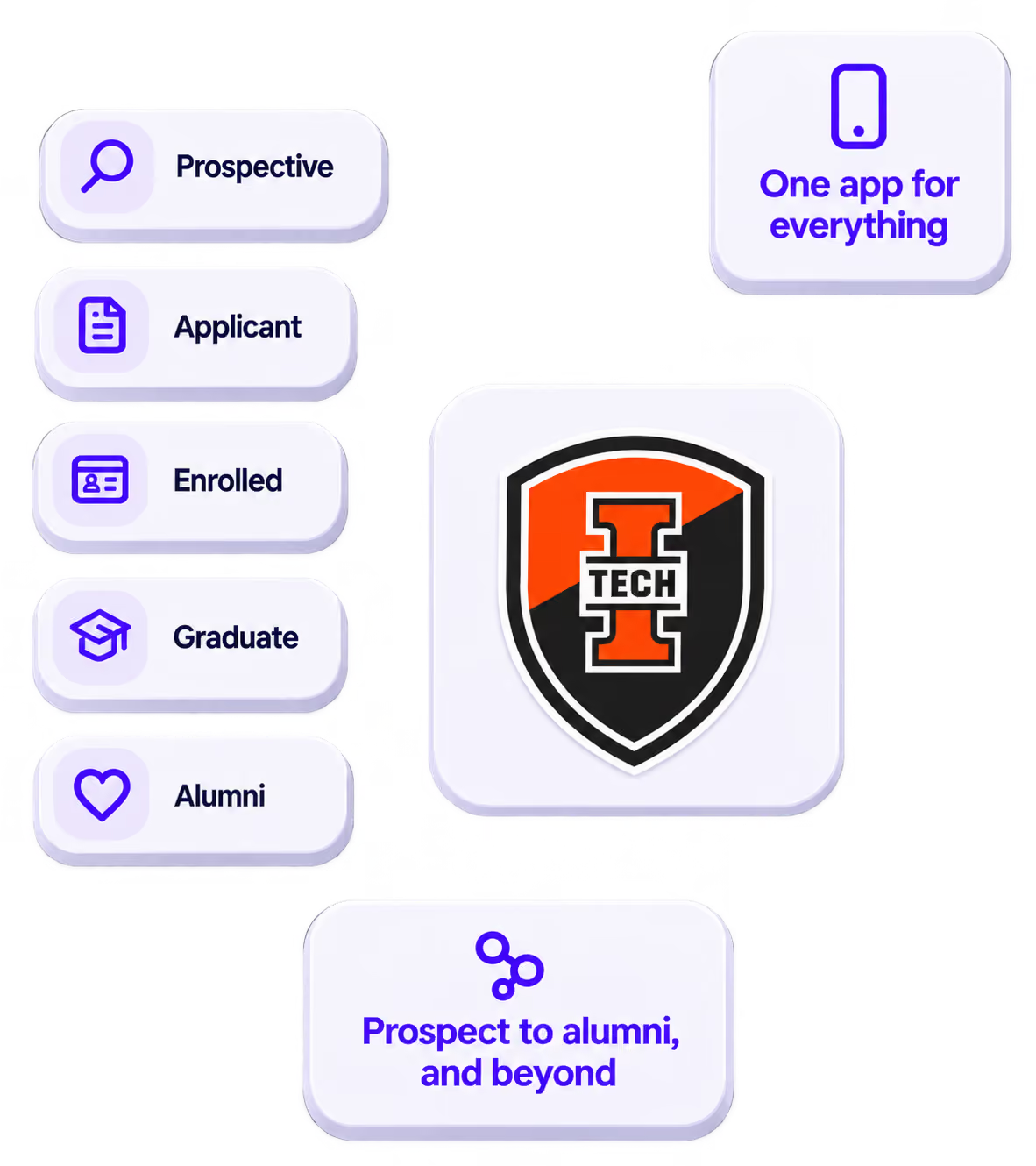
The power of your brand in your app, from first visit to alumni.
Build trust
Attendees download your app, not ours. Your name, colors, and crest in the stores.
.avif)
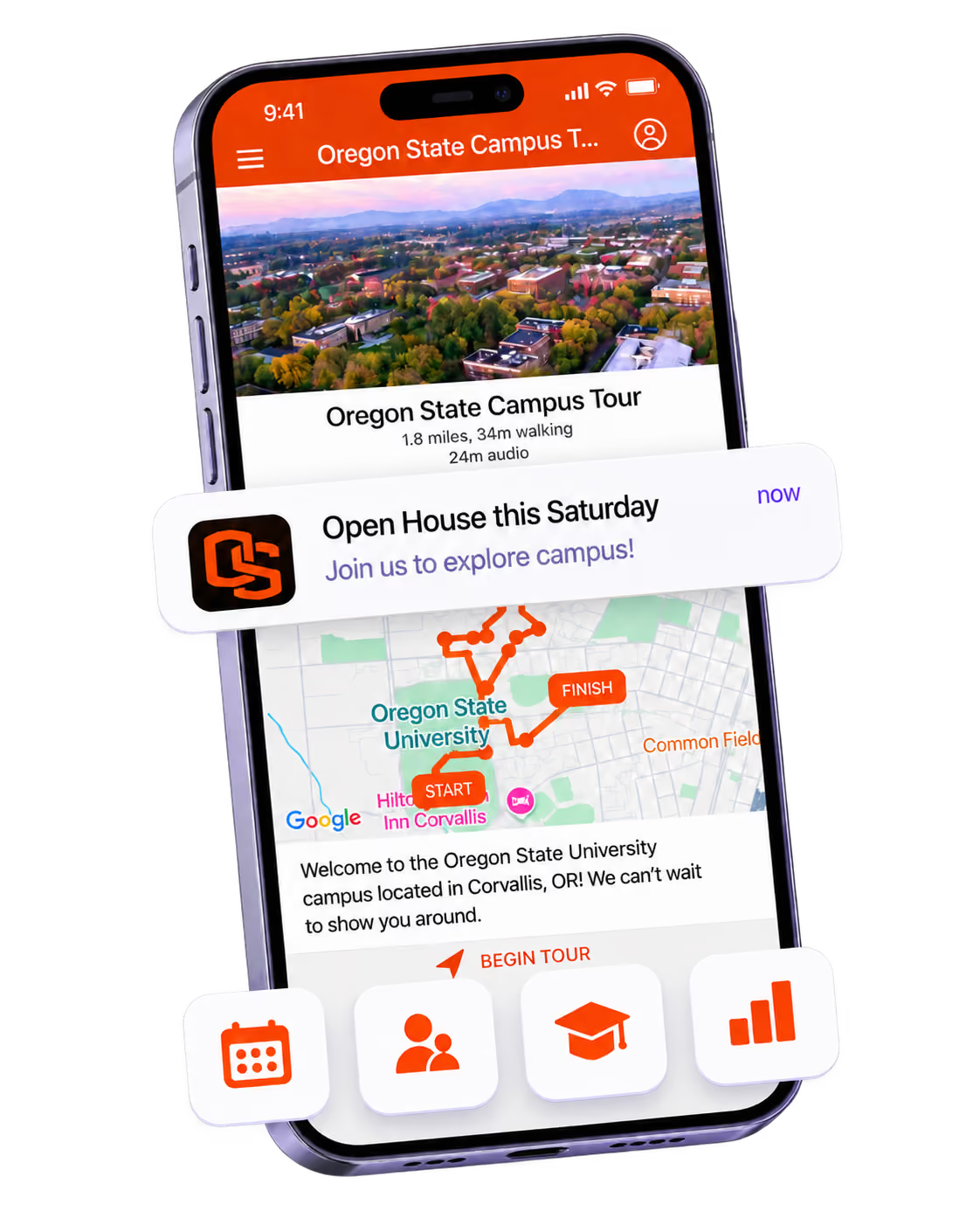
One place for the whole event
Schedules, maps, registration, and updates in one branded hub - not five tools.
Stand out
A branded app is what people keep on their phone after the printed program is in the recycling.

Get the Mobile App Playbook
A short guide to running the whole student journey in one app. No fluff, just what works.
for higher ed
Campus
Playbook
A practical guide to building a connected campus experience.
Free playbook
The Mobile App Playbook for Universities
Students decide if they belong long before they set foot on campus. This playbook shows how to win them over from the first visit through graduation.
- Grow enrollment and boost recruitment
- Increase belonging and retention
- Run every event from one branded app
By submitting, you agree to our Privacy Policy.
You're in.
.png)