
Campus apps by department
Admissions, orientation, student life, and more — one campus app that works across departments.

Campus apps by department
Admissions, orientation, student life, and more — one campus app that works across departments.
Build unlimited event apps on one license
One partnership for unlimited campus events — orientation, tours, student life, and everything in between.
Build unlimited event apps on one license
One partnership for unlimited campus events — orientation, tours, student life, and everything in between.
Compare event app platforms
See how Guidebook stacks up against other event app and registration platforms.
Compare event app platforms
See how Guidebook stacks up against other event app and registration platforms.
Event apps for nonprofit and community programs
Give members, volunteers, and donors one branded app for conferences, fundraisers, and year-round community.
Event apps for nonprofit and community programs
Give members, volunteers, and donors one branded app for conferences, fundraisers, and year-round community.
Campus integrations and an open API
Connect Guidebook with the campus systems, APIs, and tools your team already uses.
Campus integrations and an open API
Connect Guidebook with the campus systems, APIs, and tools your team already uses.
Event apps for corporate and enterprise teams
Internal meetings, offsites, and large-scale corporate events — with the branding and control enterprise teams need.
Event apps for corporate and enterprise teams
Internal meetings, offsites, and large-scale corporate events — with the branding and control enterprise teams need.
Create a branded event app with no coding
Put schedules, maps, resources, and updates in every attendee's pocket — built for campus events and programs.
Create a branded event app with no coding
Put schedules, maps, resources, and updates in every attendee's pocket — built for campus events and programs.
Launch a branded, white-label event app
A white-label event app with your branding, your content, and your attendee experience — no coding required.
Launch a branded, white-label event app
A white-label event app with your branding, your content, and your attendee experience — no coding required.
Everything in the Guidebook platform
Explore the features event teams use to engage attendees before, during, and after the event.
Everything in the Guidebook platform
Explore the features event teams use to engage attendees before, during, and after the event.
One app for in-person and virtual attendees
The same schedule, networking, and updates whether people are in the room or joining remotely.
One app for in-person and virtual attendees
The same schedule, networking, and updates whether people are in the room or joining remotely.
Event apps built for associations
Annual meetings, chapter events, and member engagement — without rebuilding a new app every year.
Event apps built for associations
Annual meetings, chapter events, and member engagement — without rebuilding a new app every year.
A branded event website that matches the app
Promote the event, collect interest, and keep branding consistent from the first click to check-in.
A branded event website that matches the app
Promote the event, collect interest, and keep branding consistent from the first click to check-in.
Plan, run, and measure events on one platform
App, registration, badges, and websites in one workflow — so planning isn't a pile of disconnected tools.
Plan, run, and measure events on one platform
App, registration, badges, and websites in one workflow — so planning isn't a pile of disconnected tools.
Keep members engaged between events
One branded app for the conference and everything that happens the other 51 weeks of the year.
Keep members engaged between events
One branded app for the conference and everything that happens the other 51 weeks of the year.
The conference app attendees actually use
Schedules, maps, networking, and live updates for annual meetings, summits, and multi-day conferences.
The conference app attendees actually use
Schedules, maps, networking, and live updates for annual meetings, summits, and multi-day conferences.
Registration that feeds your app and badges
Collect registrations, payments, and attendee data in the same platform as your event app.
Registration that feeds your app and badges
Collect registrations, payments, and attendee data in the same platform as your event app.
Design and print event badges in one place
Custom badges, QR check-in, and on-site printing — without a separate badge vendor.
Design and print event badges in one place
Custom badges, QR check-in, and on-site printing — without a separate badge vendor.
A Smaller School?
Deliver a polished, branded event experience without a large team or a big budget.
A Smaller School?
Deliver a polished, branded event experience without a large team or a big budget.
Running Family Programs?
Give families everything they need, from schedules and maps to real-time updates, all in one place.
Running Family Programs?
Give families everything they need, from schedules and maps to real-time updates, all in one place.
Coordinating Move-In Day?
Share updates, manage events, and keep students informed from move-in through the academic year.

Coordinating Move-In Day?
Share updates, manage events, and keep students informed from move-in through the academic year.
Offering Campus Tours?
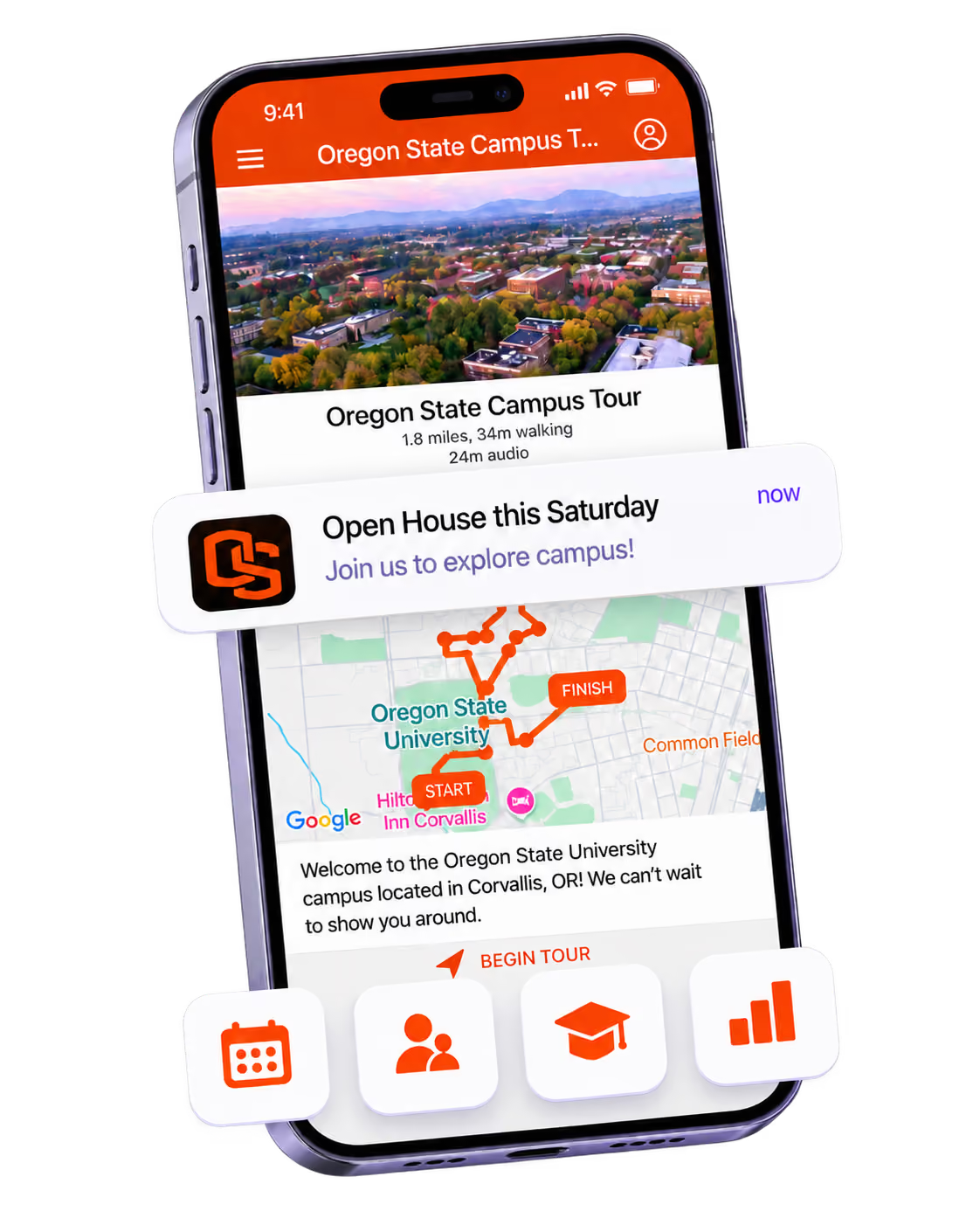
Deliver branded, self-guided tour experiences with interactive maps and rich media, available 24/7.

Offering Campus Tours?
Deliver branded, self-guided tour experiences with interactive maps and rich media, available 24/7.
Organising a Career Fair?
Simplify logistics for students, employers, and Career Services staff with one easy-to-use app.
Organising a Career Fair?
Simplify logistics for students, employers, and Career Services staff with one easy-to-use app.
Managing Alumni Events?
Plan reunions, regional events, and fundraising campaigns with an app built for alumni engagement.
Managing Alumni Events?
Plan reunions, regional events, and fundraising campaigns with an app built for alumni engagement.
Boost Student Engagement
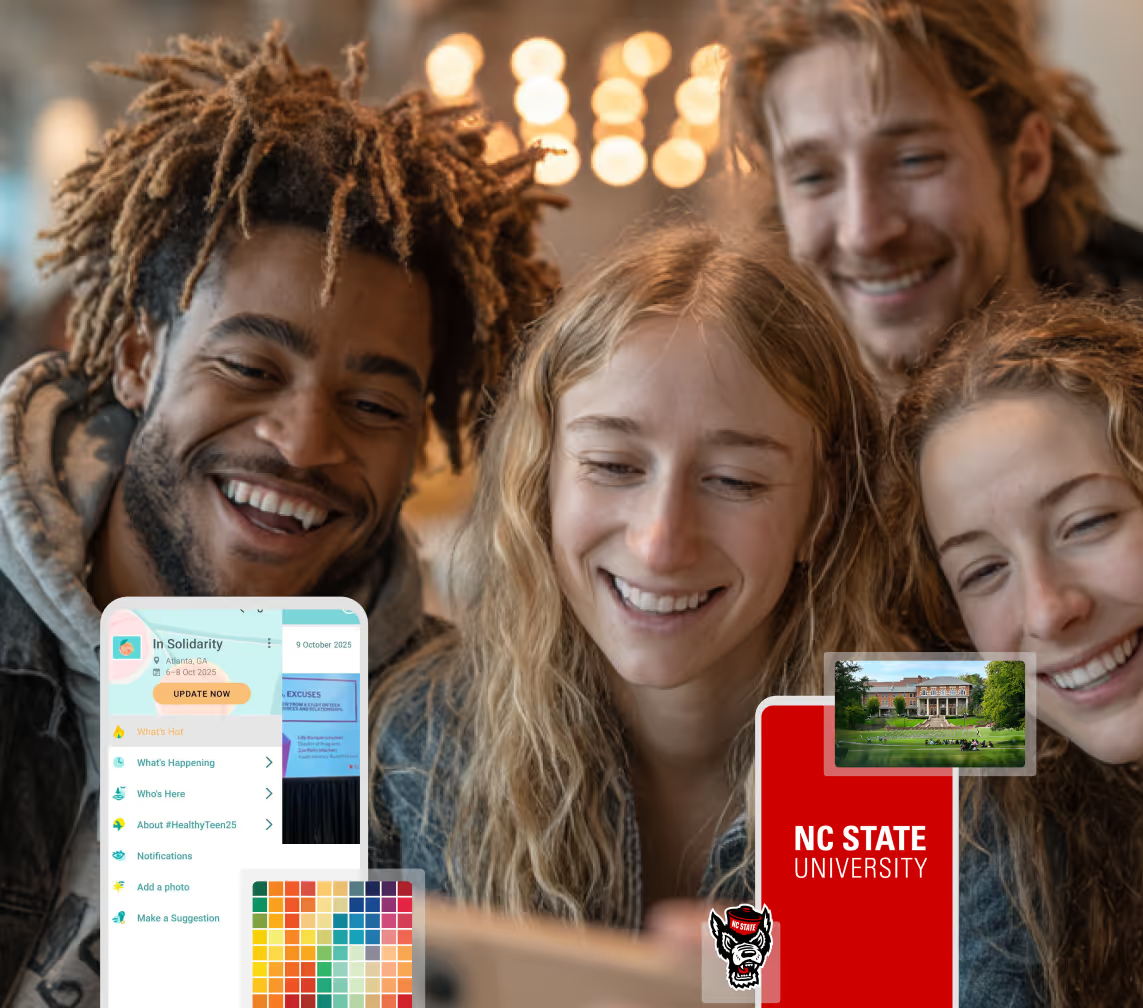
One hub for schedules, resources, and events that keeps students connected throughout the academic year.
Boost Student Engagement
One hub for schedules, resources, and events that keeps students connected throughout the academic year.
Planning Orientation?
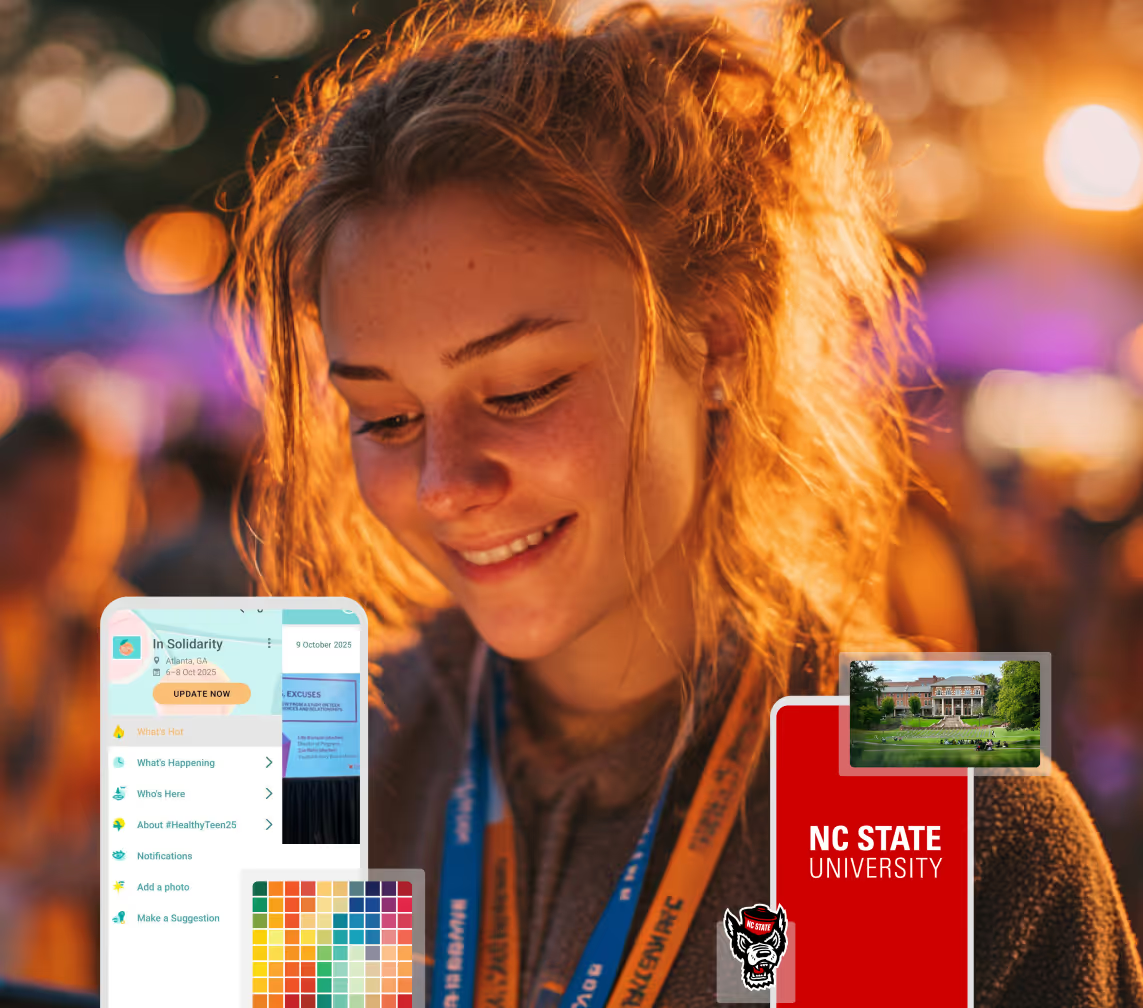
Help new students feel prepared from day one with schedules, campus resources, and real-time updates in one app.
Planning Orientation?
Help new students feel prepared from day one with schedules, campus resources, and real-time updates in one app.
Running Admissions Events?
Manage open houses, tours, and yield events with a branded app that saves time and engages prospective students.

Running Admissions Events?
Manage open houses, tours, and yield events with a branded app that saves time and engages prospective students.
Get a custom Sponsorship Package Template
Stop starting from scratch. Grab free templates that helWe'll build a tailored sponsorship package with suggested pricing, tiers, and benefits..for your specific event.p you build professional sponsorship packages and close deals faster.
Get a custom Sponsorship Package Template
Stop starting from scratch. Grab free templates that helWe'll build a tailored sponsorship package with suggested pricing, tiers, and benefits..for your specific event.p you build professional sponsorship packages and close deals faster.
Plan Your Next Event Without Missing a Beat.
From venue selection to post-event wrap-up, this free checklist walks you through every step (so nothing falls through the cracks).
.avif)
Plan Your Next Event Without Missing a Beat.
From venue selection to post-event wrap-up, this free checklist walks you through every step (so nothing falls through the cracks).
Real Results From Real Events
100,000+ organizations trust Guidebook. See exactly how universities, associations, enterprises, and more put it to work.

Real Results From Real Events
100,000+ organizations trust Guidebook. See exactly how universities, associations, enterprises, and more put it to work.
Flexible pricing for every event size
Find the perfect plan for your needs, from intimate gatherings to large-scale conferences.

Flexible pricing for every event size
Find the perfect plan for your needs, from intimate gatherings to large-scale conferences.
Join our event experts
Watch on-demand webinars and join live sessions with industry leaders sharing best practices for event success.
.avif)
Join our event experts
Watch on-demand webinars and join live sessions with industry leaders sharing best practices for event success.
Guidebook in Action
Book a personalized walkthrough and discover how we help event teams create better attendee experiences.
Guidebook in Action
Book a personalized walkthrough and discover how we help event teams create better attendee experiences.

What is an Event Proposal?
An event proposal outlines your event’s concept, goals, and logistics to secure approval or funding. Learn key components, writing tips, and winning examples.

An Event Proposal is the strategic document that sells your event vision to decision-makers, securing the budget, venue, and stakeholder buy-in you need to move forward. It covers everything from objectives and logistics to projected costs and expected outcomes. A strong proposal can mean the difference between a green light and a hard pass.
Here's the thing: an event proposal isn't just paperwork. It's your pitch. It tells stakeholders why this event matters, what it will cost, and what they'll get in return. Think of it as your event's business case wrapped in a compelling story. Without one, even the best event ideas stay stuck in the "maybe someday" pile.
Key Characteristics of Event Proposals
- Clear Objective Statement: Every proposal starts with a defined purpose. What problem does this event solve? What opportunity does it create?
- Detailed Budget Breakdown: Decision-makers want numbers. Your proposal should outline costs for venue, catering, marketing, staffing, and contingencies.
- Target Audience Definition: Who's attending? Demographics, interests, and expected headcount help stakeholders understand the event's reach.
- Timeline and Milestones: A realistic schedule shows you've thought through the event planning process from start to finish.
- Measurable Success Metrics: How will you know if the event worked? Include KPIs like attendance, engagement, or event ROI.
- Risk Assessment: Smart proposals address potential challenges and backup plans. This builds confidence in your planning abilities.
- Call to Action: End with a clear ask. What do you need from the reader to move forward?
Event Proposal vs. Related Documents
Event Brief
- Scope: Internal summary of event basics
- Focus: Quick reference for planning teams
- Timeline: Created after approval
- Audience: Internal stakeholders only
- Goal: Align team members on key details
Event Plan
- Scope: Comprehensive operational document
- Focus: Execution details and logistics
- Timeline: Developed after proposal approval
- Audience: Planning team and vendors
- Goal: Guide day-to-day event execution
Sponsorship Proposal
- Scope: Partnership pitch for external funding
- Focus: Sponsor benefits and exposure opportunities
- Timeline: Created alongside or after event proposal
- Audience: Potential sponsors and partners
- Goal: Secure financial or in-kind support
These documents work together but serve different purposes. Your event proposal gets the green light. Your event plan makes it happen. And your sponsorship letter brings in outside support. Master all three, and you're set.
Essential Event Proposal Components
Write a Compelling Executive Summary
This is your hook. Decision-makers are busy. Give them the highlights in 2-3 paragraphs.
Cover the event type, date, location, expected attendance, and total budget. Most importantly, explain the "why." What's the business case? Keep it punchy and persuasive.
Define Your Event Objectives
Vague goals kill proposals. "Increase brand awareness" won't cut it.
Instead, try: "Generate 500 qualified leads" or "Train 200 employees on new software." Specific, measurable objectives show you've done your homework. They also make it easier to prove success later.
Build a Realistic Budget
Break costs into clear categories:
- Venue and catering
- Technology and equipment
- Marketing and promotion
- Staffing and entertainment
- Contingency fund (typically 10-15%)
Include potential revenue sources too. Ticket sales, sponsorships, and merchandise can offset costs. Show stakeholders the full financial picture.
Outline Your Marketing Strategy
How will people find out about this event? Your proposal should cover event digital marketing tactics, social media plans, and promotional timelines.
Reference specific channels. Email campaigns, Facebook keywords for events, and partner promotions all deserve mention. Learn more about how to advertise your event effectively.
Include Logistics and Venue Details
Where and when matters. Include venue options with pros and cons. Cover capacity, accessibility, parking, and technical capabilities.
If you're considering a virtual event, explain the platform choice and technical requirements. Hybrid events need both physical and digital logistics mapped out.
The Event Proposal Process
Research Before You Write
Don't start typing until you've done your homework. Research similar events. Check competitor pricing. Understand your audience's preferences.
Talk to potential attendees if possible. Their input shapes a stronger proposal. Data beats assumptions every time.
Draft and Refine Your Content
First drafts are rarely perfect. Write everything down, then cut ruthlessly.
Remove jargon. Simplify complex sentences. Every paragraph should earn its place. If a section doesn't help your case, delete it.
Get Feedback Before Submitting
Fresh eyes catch mistakes. Ask a colleague to review your proposal. Better yet, find someone who'll play devil's advocate.
Address their concerns before stakeholders raise them. A polished proposal shows professionalism and attention to detail.
Present With Confidence
Sometimes proposals need a live pitch. Prepare talking points. Anticipate questions. Know your numbers cold.
Practice your delivery. Confidence sells. If you believe in your event, others will too.
Why Event Proposals Matter
For Event Success:
- Secures Necessary Resources: A solid proposal unlocks budget, staff, and venue access you need to execute well.
- Aligns Stakeholder Expectations: Everyone starts on the same page about goals, timeline, and deliverables.
- Forces Strategic Thinking: Writing a proposal makes you think through details you might otherwise miss.
- Creates Accountability: Documented objectives give you benchmarks to measure against.
- Reduces Last-Minute Chaos: Planning upfront prevents scrambling later. Your future self will thank you.
For Business Objectives:
- Demonstrates ROI Potential: Show leadership exactly what they'll get for their investment.
- Supports Budget Justification: Hard numbers make finance teams happy. Vague requests don't.
- Builds Organizational Trust: Consistent, professional proposals establish your credibility over time.
- Enables Better Decision-Making: Stakeholders can compare options and allocate resources wisely.
- Documents Institutional Knowledge: Future planners can reference past proposals for guidance.
Platforms like Guidebook's event management platform help you deliver on proposal promises. From event check-in software to real-time attendee engagement, the right tools turn great proposals into great events.
Event Proposal Best Practices
- Lead With Benefits, Not Features: Stakeholders care about outcomes. Start with what they'll gain, then explain how you'll deliver it.
- Use Visuals Strategically: Charts, timelines, and mockups make proposals easier to scan. A budget table beats a budget paragraph.
- Tailor to Your Audience: A proposal for your CEO looks different than one for a sponsor. Adjust tone, detail level, and emphasis accordingly.
- Include Social Proof: Reference past event successes. Case studies and testimonials build credibility fast.
- Keep It Scannable: Use headers, bullets, and bold text. Busy readers skim first, read second.
- Be Honest About Risks: Acknowledging challenges shows maturity. Pretending they don't exist backfires.
- Provide Multiple Options: Offer tiered approaches when possible. "Good, better, best" gives stakeholders choices.
- End With Clear Next Steps: What happens if they say yes? Make the path forward obvious.
- Proofread Everything: Typos undermine credibility. Read it twice. Then read it again.
- Follow Up Appropriately: Don't let your proposal disappear into an inbox. Schedule a follow-up conversation.
Common Event Proposal Mistakes
Burying the Ask: Don't make readers hunt for what you need. State your request clearly and early. If they have to dig, they might give up.
Overloading With Details: More isn't always better. Include enough to inform decisions, not so much that eyes glaze over. Save operational minutiae for the event plan.
Ignoring the Audience: A proposal that doesn't address stakeholder priorities fails. Research what matters to your readers before writing.
Underestimating Costs: Lowballing budgets to get approval backfires. When you need more money later, trust erodes. Be realistic from the start.
Skipping the Competition Analysis: If similar events exist, acknowledge them. Explain what makes yours different or better. Pretending competitors don't exist looks naive.
Forgetting the Follow-Up Plan: What happens after the event? Include plans for event debriefs and measuring success. Show you're thinking long-term.
Using Generic Templates Without Customization: Templates save time, but cookie-cutter proposals feel lazy. Personalize every section for your specific event and audience.
Final Thoughts
Event proposals are where great events begin. They transform ideas into action plans and dreams into approved budgets. Master this skill, and you'll spend less time fighting for resources and more time creating memorable experiences.
The events industry keeps evolving. Event trends shift. Attendee expectations rise. But one thing stays constant: decision-makers need clear, compelling proposals before they say yes. That won't change anytime soon.
Think of your proposal as your event's first impression. It sets the tone for everything that follows. A sloppy proposal suggests sloppy execution. A polished one signals professionalism and competence.
Ready to level up your event planning game? Explore event planning resources and event management tips to sharpen your skills. When you're ready to execute, book a demo to see how Guidebook helps planners deliver events that exceed expectations. Your next great event starts with a great proposal. Make it count.
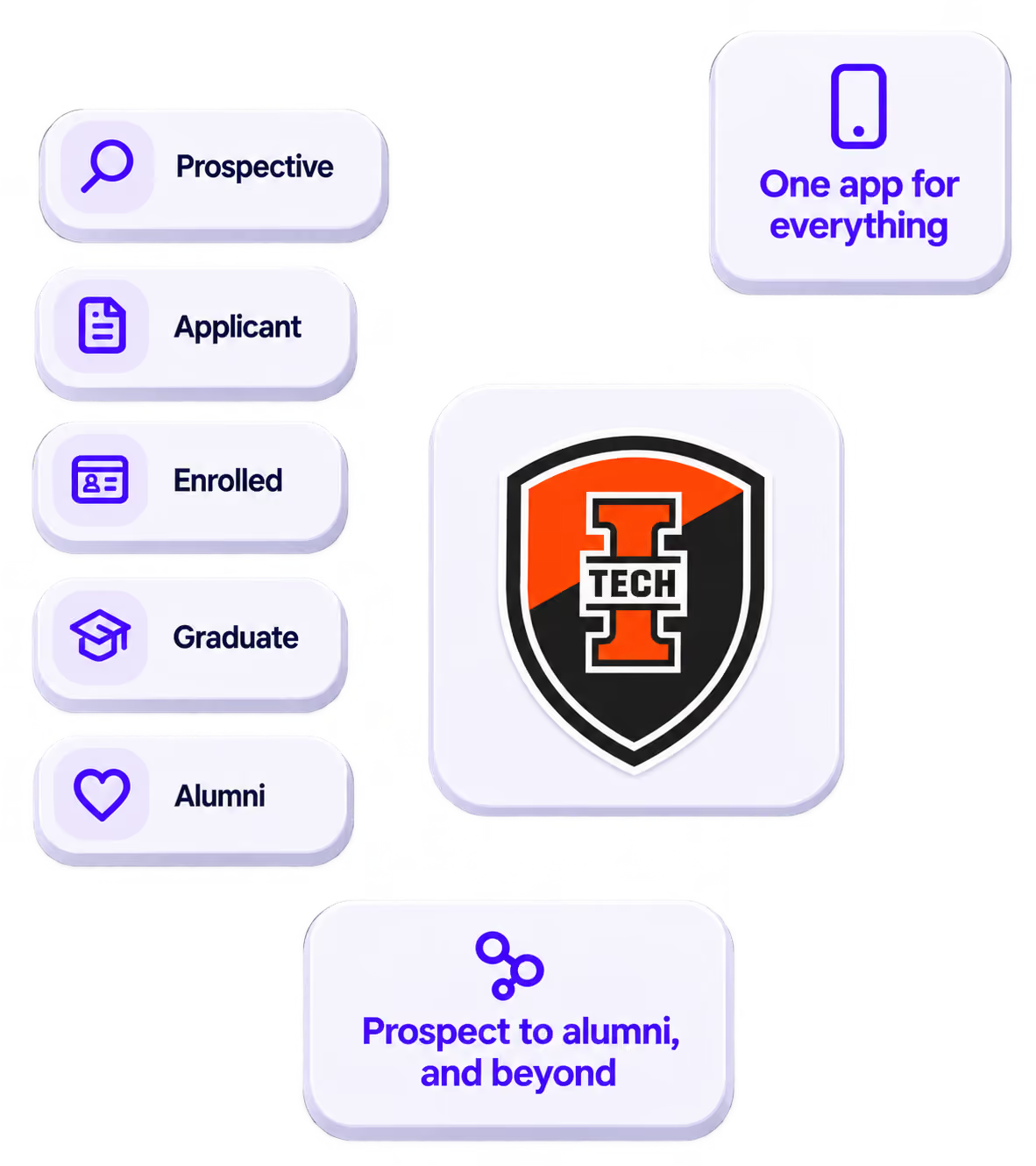
The power of your brand in your app, from first visit to alumni.
Build trust
Attendees download your app, not ours. Your name, colors, and crest in the stores.
.avif)
One place for the whole event
Schedules, maps, registration, and updates in one branded hub - not five tools.
Stand out
A branded app is what people keep on their phone after the printed program is in the recycling.

Get the Mobile App Playbook
A short guide to running the whole student journey in one app. No fluff, just what works.
for higher ed
Campus
Playbook
A practical guide to building a connected campus experience.
Free playbook
The Mobile App Playbook for Universities
Students decide if they belong long before they set foot on campus. This playbook shows how to win them over from the first visit through graduation.
- Grow enrollment and boost recruitment
- Increase belonging and retention
- Run every event from one branded app
By submitting, you agree to our Privacy Policy.
You're in.
.png)