
Campus apps by department
Admissions, orientation, student life, and more — one campus app that works across departments.

Campus apps by department
Admissions, orientation, student life, and more — one campus app that works across departments.
Build unlimited event apps on one license
One partnership for unlimited campus events — orientation, tours, student life, and everything in between.
Build unlimited event apps on one license
One partnership for unlimited campus events — orientation, tours, student life, and everything in between.
Compare event app platforms
See how Guidebook stacks up against other event app and registration platforms.
Compare event app platforms
See how Guidebook stacks up against other event app and registration platforms.
Event apps for nonprofit and community programs
Give members, volunteers, and donors one branded app for conferences, fundraisers, and year-round community.
Event apps for nonprofit and community programs
Give members, volunteers, and donors one branded app for conferences, fundraisers, and year-round community.
Campus integrations and an open API
Connect Guidebook with the campus systems, APIs, and tools your team already uses.
Campus integrations and an open API
Connect Guidebook with the campus systems, APIs, and tools your team already uses.
Event apps for corporate and enterprise teams
Internal meetings, offsites, and large-scale corporate events — with the branding and control enterprise teams need.
Event apps for corporate and enterprise teams
Internal meetings, offsites, and large-scale corporate events — with the branding and control enterprise teams need.
Create a branded event app with no coding
Put schedules, maps, resources, and updates in every attendee's pocket — built for campus events and programs.
Create a branded event app with no coding
Put schedules, maps, resources, and updates in every attendee's pocket — built for campus events and programs.
Launch a branded, white-label event app
A white-label event app with your branding, your content, and your attendee experience — no coding required.
Launch a branded, white-label event app
A white-label event app with your branding, your content, and your attendee experience — no coding required.
Everything in the Guidebook platform
Explore the features event teams use to engage attendees before, during, and after the event.
Everything in the Guidebook platform
Explore the features event teams use to engage attendees before, during, and after the event.
One app for in-person and virtual attendees
The same schedule, networking, and updates whether people are in the room or joining remotely.
One app for in-person and virtual attendees
The same schedule, networking, and updates whether people are in the room or joining remotely.
Event apps built for associations
Annual meetings, chapter events, and member engagement — without rebuilding a new app every year.
Event apps built for associations
Annual meetings, chapter events, and member engagement — without rebuilding a new app every year.
A branded event website that matches the app
Promote the event, collect interest, and keep branding consistent from the first click to check-in.
A branded event website that matches the app
Promote the event, collect interest, and keep branding consistent from the first click to check-in.
Plan, run, and measure events on one platform
App, registration, badges, and websites in one workflow — so planning isn't a pile of disconnected tools.
Plan, run, and measure events on one platform
App, registration, badges, and websites in one workflow — so planning isn't a pile of disconnected tools.
Keep members engaged between events
One branded app for the conference and everything that happens the other 51 weeks of the year.
Keep members engaged between events
One branded app for the conference and everything that happens the other 51 weeks of the year.
The conference app attendees actually use
Schedules, maps, networking, and live updates for annual meetings, summits, and multi-day conferences.
The conference app attendees actually use
Schedules, maps, networking, and live updates for annual meetings, summits, and multi-day conferences.
Registration that feeds your app and badges
Collect registrations, payments, and attendee data in the same platform as your event app.
Registration that feeds your app and badges
Collect registrations, payments, and attendee data in the same platform as your event app.
Design and print event badges in one place
Custom badges, QR check-in, and on-site printing — without a separate badge vendor.
Design and print event badges in one place
Custom badges, QR check-in, and on-site printing — without a separate badge vendor.
A Smaller School?
Deliver a polished, branded event experience without a large team or a big budget.
A Smaller School?
Deliver a polished, branded event experience without a large team or a big budget.
Running Family Programs?
Give families everything they need, from schedules and maps to real-time updates, all in one place.
Running Family Programs?
Give families everything they need, from schedules and maps to real-time updates, all in one place.
Coordinating Move-In Day?
Share updates, manage events, and keep students informed from move-in through the academic year.

Coordinating Move-In Day?
Share updates, manage events, and keep students informed from move-in through the academic year.
Offering Campus Tours?
Deliver branded, self-guided tour experiences with interactive maps and rich media, available 24/7.

Offering Campus Tours?
Deliver branded, self-guided tour experiences with interactive maps and rich media, available 24/7.
Organising a Career Fair?
Simplify logistics for students, employers, and Career Services staff with one easy-to-use app.
Organising a Career Fair?
Simplify logistics for students, employers, and Career Services staff with one easy-to-use app.
Managing Alumni Events?
Plan reunions, regional events, and fundraising campaigns with an app built for alumni engagement.
Managing Alumni Events?
Plan reunions, regional events, and fundraising campaigns with an app built for alumni engagement.
Boost Student Engagement
One hub for schedules, resources, and events that keeps students connected throughout the academic year.
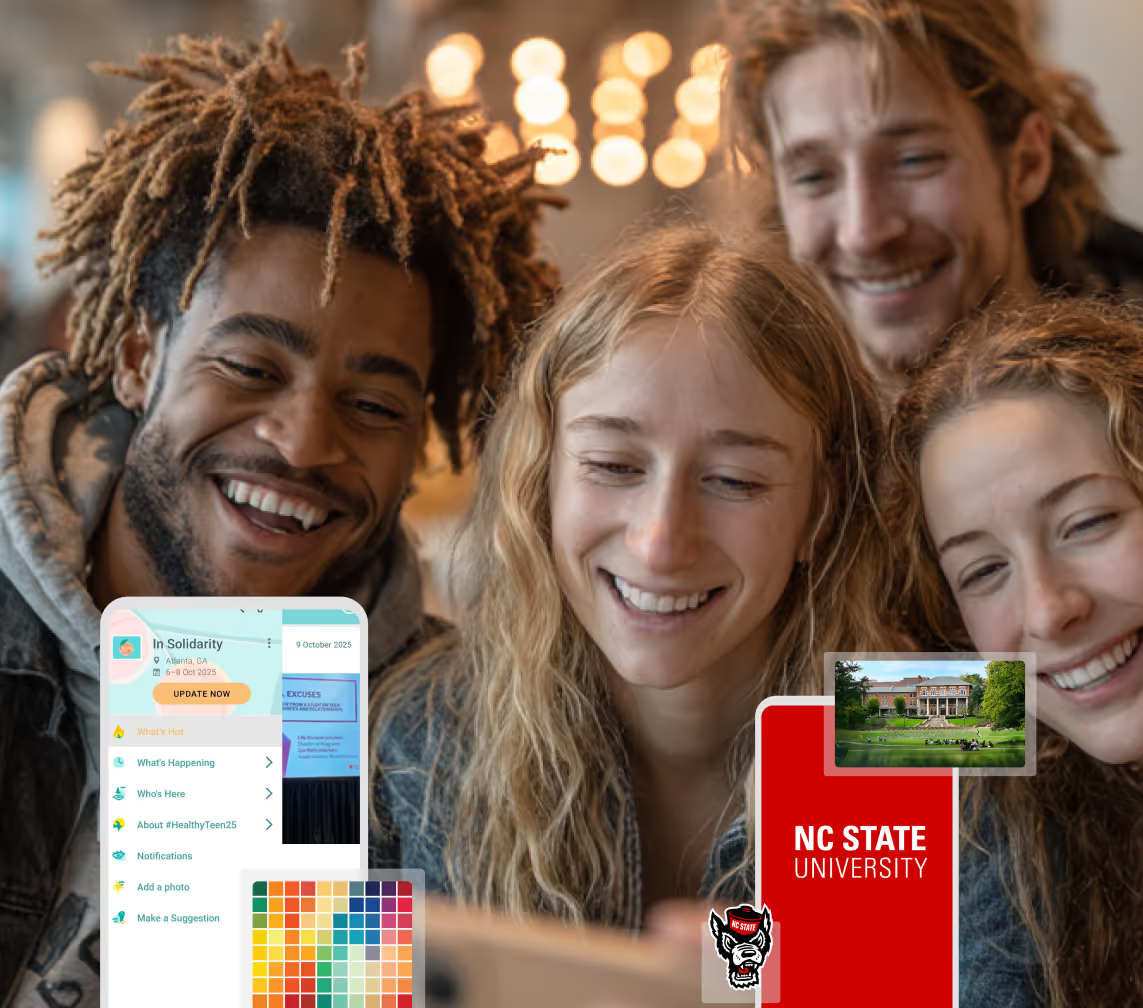
Boost Student Engagement
One hub for schedules, resources, and events that keeps students connected throughout the academic year.
Planning Orientation?
Help new students feel prepared from day one with schedules, campus resources, and real-time updates in one app.
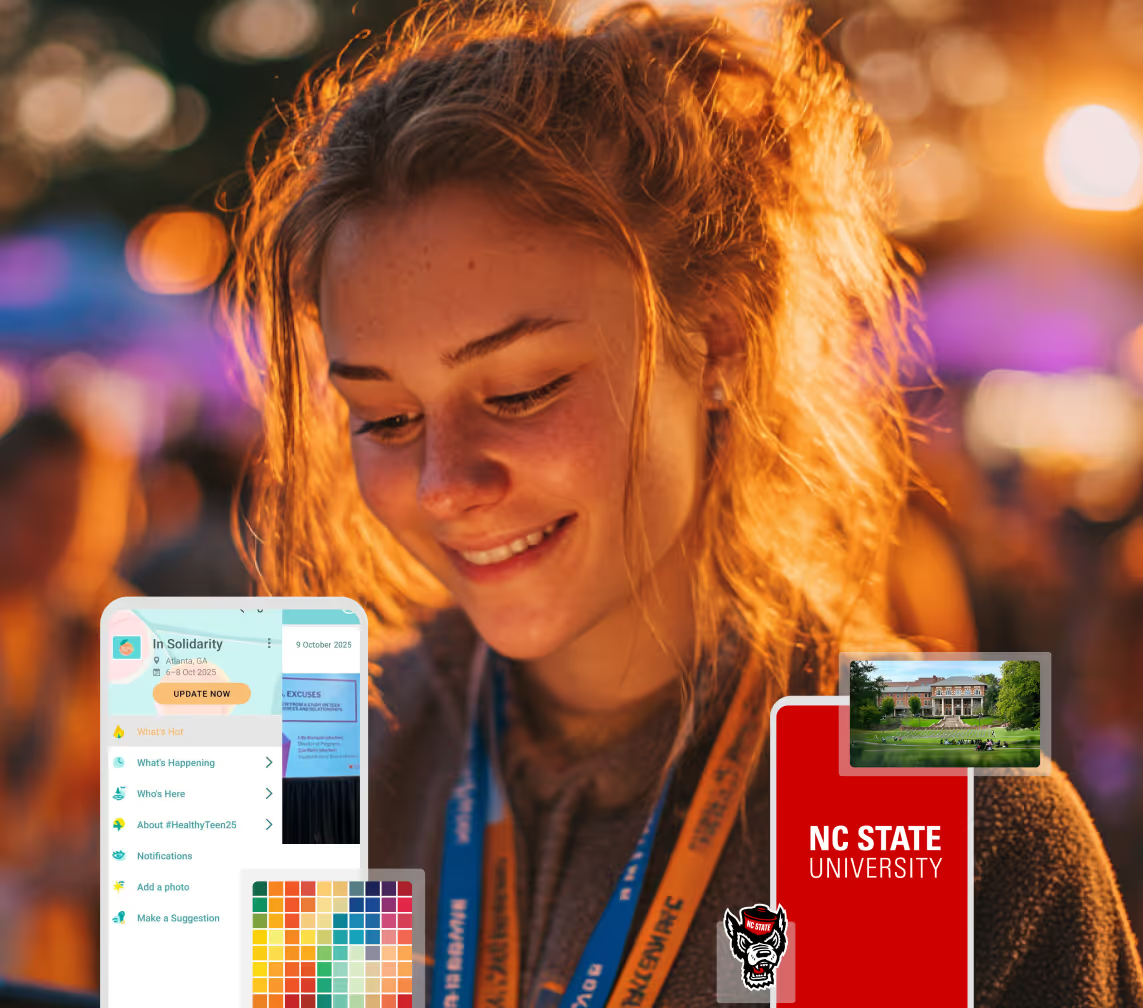
Planning Orientation?
Help new students feel prepared from day one with schedules, campus resources, and real-time updates in one app.
Running Admissions Events?
Manage open houses, tours, and yield events with a branded app that saves time and engages prospective students.

Running Admissions Events?
Manage open houses, tours, and yield events with a branded app that saves time and engages prospective students.
Get a custom Sponsorship Package Template
Stop starting from scratch. Grab free templates that helWe'll build a tailored sponsorship package with suggested pricing, tiers, and benefits..for your specific event.p you build professional sponsorship packages and close deals faster.
Get a custom Sponsorship Package Template
Stop starting from scratch. Grab free templates that helWe'll build a tailored sponsorship package with suggested pricing, tiers, and benefits..for your specific event.p you build professional sponsorship packages and close deals faster.
Plan Your Next Event Without Missing a Beat.
From venue selection to post-event wrap-up, this free checklist walks you through every step (so nothing falls through the cracks).
.avif)
Plan Your Next Event Without Missing a Beat.
From venue selection to post-event wrap-up, this free checklist walks you through every step (so nothing falls through the cracks).
Real Results From Real Events
100,000+ organizations trust Guidebook. See exactly how universities, associations, enterprises, and more put it to work.

Real Results From Real Events
100,000+ organizations trust Guidebook. See exactly how universities, associations, enterprises, and more put it to work.
Flexible pricing for every event size
Find the perfect plan for your needs, from intimate gatherings to large-scale conferences.
Flexible pricing for every event size
Find the perfect plan for your needs, from intimate gatherings to large-scale conferences.
Join our event experts
Watch on-demand webinars and join live sessions with industry leaders sharing best practices for event success.
.avif)
Join our event experts
Watch on-demand webinars and join live sessions with industry leaders sharing best practices for event success.
Guidebook in Action
Book a personalized walkthrough and discover how we help event teams create better attendee experiences.
Guidebook in Action
Book a personalized walkthrough and discover how we help event teams create better attendee experiences.

What is an In-Person Event?
In-person events bring people together at a physical location for shared experiences. Learn the benefits, key types, planning tips, and engagement strategies.

An in-Person Event is a live gathering where attendees physically come together in a shared space to connect, learn, and experience something meaningful face-to-face. These events range from intimate workshops to massive conferences with thousands of participants. Nothing beats the energy of real human connection.
Here's the thing: in-person events create moments that screens simply can't replicate. The handshake that seals a deal. The spontaneous hallway conversation that sparks a partnership. The collective energy when a keynote speaker lands their message. These experiences build relationships and memories that last far beyond the event itself.
Key Characteristics of In-Person Events
- Physical Presence: Attendees gather in a specific venue, creating shared experiences through face-to-face interaction. This builds trust and rapport faster than any virtual alternative.
- Real-Time Engagement: Participants react, respond, and connect in the moment. Speakers can read the room and adjust their delivery on the fly.
- Sensory Experience: Attendees engage all five senses—from the buzz of conversation to the taste of catered food. These details create lasting impressions.
- Networking Opportunities: Organic connections happen naturally during breaks, meals, and social activities. These unplanned moments often deliver the most value.
- Venue-Dependent Logistics: Success hinges on location, capacity, accessibility, and amenities. The right venue sets the stage for everything else.
- Higher Production Value: Live events typically feature professional staging, lighting, and audio. This polish elevates the attendee experience.
- Immediate Feedback: Organizers can gauge reactions instantly through body language, applause, and direct conversation.
In-Person Event vs. Virtual Event vs. Hybrid Event
In-Person Event
- Scope: Limited by venue capacity and geographic reach
- Focus: Face-to-face connection and immersive experiences
- Timeline: Fixed dates requiring travel and accommodation planning
- Channels: Physical venue with on-site technology support
- Goal: Deep relationship building and memorable shared experiences
Virtual Event
- Scope: Unlimited geographic reach with global accessibility
- Focus: Content delivery and digital engagement
- Timeline: Flexible scheduling with on-demand options
- Channels: Online platforms, streaming, and digital tools
- Goal: Broad reach and cost-effective content distribution
Hybrid Event
- Scope: Combines local attendance with global virtual access
- Focus: Balancing in-person and online attendee experiences
- Timeline: Synchronized live and virtual programming
- Channels: Physical venue plus streaming and digital platforms
- Goal: Maximum reach while preserving in-person connection
Each format serves different goals. In-person events excel at relationship building. Virtual events maximize reach. Hybrid events try to capture both benefits—though they require careful event planning to succeed.
Essential In-Person Event Types
Conferences and Conventions
Large-scale gatherings bring together industry professionals for learning and networking. These multi-day events feature keynotes, breakout sessions, and exhibition halls.
Conferences typically attract hundreds to thousands of attendees. They're ideal for thought leadership and brand positioning.
Trade Shows and Exhibitions
These events showcase products and services to targeted audiences. Exhibitors invest in interactive trade show booths to attract visitors.
Trade shows generate qualified leads and drive sales conversations. They're particularly valuable for B2B companies.
Corporate Meetings and Retreats
Internal gatherings align teams around goals and strategy. Team building events strengthen relationships and boost morale.
These events range from quarterly reviews to annual company-wide meetings. The shared experience builds culture.
Workshops and Training Sessions
Hands-on learning happens best in person. Participants practice skills with immediate feedback from instructors.
Small group sizes allow for personalized attention. The interactive format drives better retention than passive learning.
Social and Networking Events
Galas, receptions, and mixers prioritize connection over content. These events create relaxed environments for relationship building.
Food, drinks, and entertainment set the mood. The informal atmosphere encourages authentic conversation.
The In-Person Event Planning Process
Define Your Event Goals
Start with clear objectives. What should attendees think, feel, or do after your event?
Specific goals guide every decision. They also help you measure event ROI afterward.
Select the Right Venue
Your venue shapes the entire experience. Consider capacity, location, accessibility, and amenities.
Visit potential venues in person. Photos don't capture acoustics, lighting, or overall vibe.
Build Your Event Team
Great events require great people. Your event coordinator manages logistics while others handle marketing, content, and operations.
Define roles clearly. Overlap creates confusion; gaps create disasters.
Create a Detailed Timeline
The event planning process spans months. Work backward from your event date to set milestones.
- 6+ months out: Secure venue and major vendors
- 3-6 months out: Finalize programming and open registration
- 1-3 months out: Confirm details and promote heavily
- Final weeks: Brief staff and prepare materials
Plan Your Registration Strategy
Smooth event registration sets the tone. Make it easy for attendees to sign up and pay.
Collect the data you need—but don't ask for more. Long forms kill conversions.
Why In-Person Events Matter
For Event Success:
- Deeper Engagement: Attendees pay attention without the distractions of home or office. You have their full focus.
- Stronger Connections: Face-to-face interaction builds trust faster than any digital alternative. Relationships form naturally.
- Memorable Experiences: Multi-sensory events create lasting impressions. Attendees remember how you made them feel.
- Immediate Feedback: Read the room in real time. Adjust your approach based on audience reactions.
- Higher Perceived Value: Attendees invest time and travel. This commitment increases their engagement and appreciation.
For Business Objectives:
- Lead Generation: Qualified prospects attend your event. They've already shown interest by showing up.
- Brand Building: Live events showcase your organization's personality and values. Attendees experience your brand firsthand.
- Customer Retention: Events strengthen relationships with existing customers. They feel valued and connected.
- Thought Leadership: Position your organization as an industry authority. Great content delivered live builds credibility.
- Revenue Generation: Ticket sales, sponsorships, and on-site purchases create direct income streams.
Managing all these moving pieces gets easier with the right tools. Guidebook's event management platform helps organizers streamline logistics, engage attendees, and measure results—all from one place.
In-Person Event Best Practices
- Start Planning Early: Give yourself at least 6 months for major events. Rushed planning leads to costly mistakes and missed opportunities.
- Know Your Audience: Research what attendees want before finalizing your program. Surveys and past event data reveal valuable insights.
- Choose Venues Strategically: Location affects attendance. Consider accessibility, parking, nearby hotels, and overall convenience for your target audience.
- Invest in Quality Production: Good lighting, sound, and staging elevate the experience. Attendees notice when you cut corners on event production.
- Create Networking Opportunities: Build breaks and social time into your schedule. Some of the best connections happen outside formal sessions.
- Use Technology Wisely: Event apps, check-in software, and digital tools enhance the experience. They shouldn't replace human interaction.
- Train Your Staff Thoroughly: Everyone representing your event should know the schedule, venue layout, and how to handle common questions.
- Communicate Clearly: Send pre-event information early. Include logistics, schedules, and what attendees should expect. Learn how to advertise your event effectively.
- Plan for Problems: Have backup plans for weather, no-shows, technical failures, and other common issues. Flexibility saves events.
- Gather Feedback Immediately: Survey attendees while the experience is fresh. Use an event debrief template to capture lessons learned.
Common In-Person Event Mistakes
Underestimating Logistics: Event logistics are complex. Forgetting details like signage, power outlets, or parking creates frustrating attendee experiences. Build detailed checklists and do thorough venue walkthroughs.
Ignoring Accessibility: Not everyone can navigate stairs or stand for long periods. Failing to accommodate diverse needs excludes potential attendees and damages your reputation.
Overpacking the Schedule: Back-to-back sessions exhaust attendees. Without breaks, people disengage, skip sessions, or leave early. Build breathing room into your agenda.
Neglecting the Attendee Journey: The experience starts before arrival and continues after departure. Focusing only on event day misses opportunities to build anticipation and extend impact.
Skipping the Rehearsal: Technical problems embarrass speakers and frustrate audiences. Always do a full run-through with all equipment and presenters before doors open.
Poor Vendor Communication: Caterers, AV teams, and other vendors need clear instructions. Assumptions lead to wrong setups, missing equipment, and last-minute scrambles.
Forgetting Post-Event Follow-Up: The event ends, but the relationship shouldn't. Failing to follow up with attendees wastes the connections you worked so hard to create.
Final Thoughts
In-person events remain irreplaceable. Despite the rise of virtual alternatives, nothing matches the power of gathering people in the same room. The energy, the connections, the shared moments—these create impact that lasts.
The events industry continues to evolve. Stay current with event trends and adapt your approach. Attendee expectations keep rising, and successful organizers rise with them.
Great in-person events don't happen by accident. They require thoughtful planning, attention to detail, and genuine care for the attendee experience. When you get it right, you create something people remember and talk about for years.
Ready to elevate your next in-person event? Explore Guidebook's event templates, check out our case studies for inspiration, or book a demo to see how our platform can help you create unforgettable experiences. Your attendees are waiting.
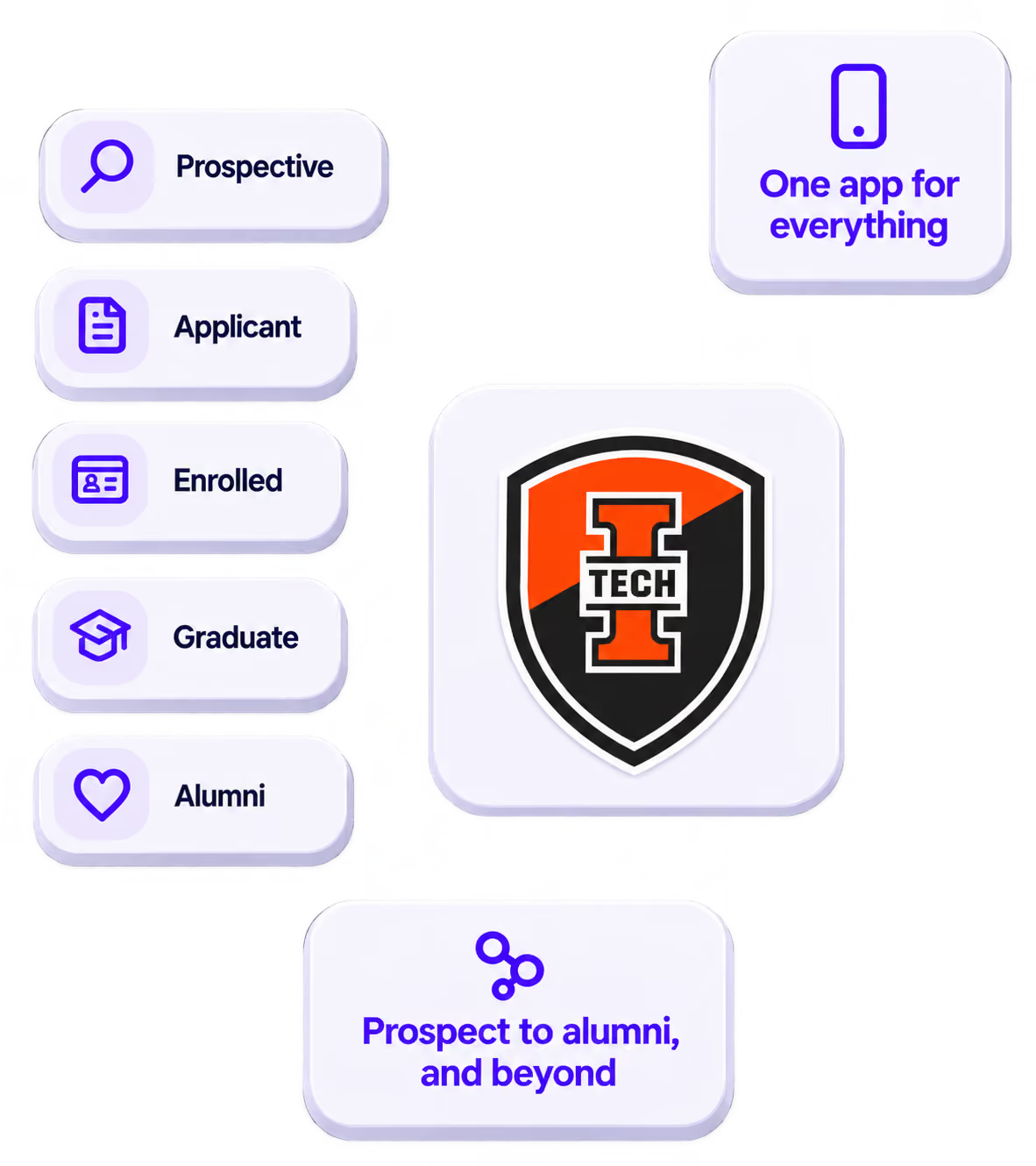
The power of your brand in your app, from first visit to alumni.
Build trust
Attendees download your app, not ours. Your name, colors, and crest in the stores.
.avif)
One place for the whole event
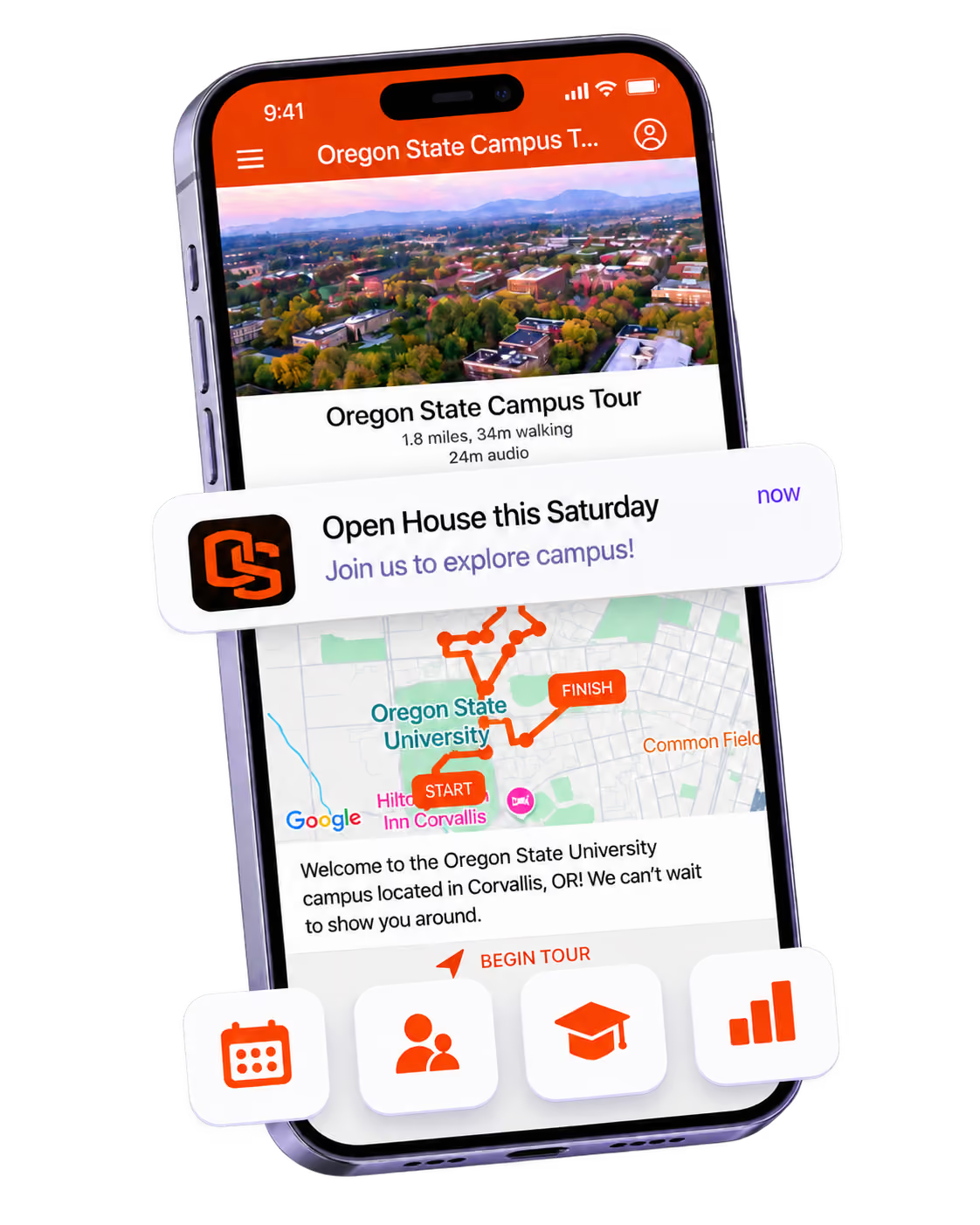
Schedules, maps, registration, and updates in one branded hub - not five tools.
Stand out
A branded app is what people keep on their phone after the printed program is in the recycling.

Get the Mobile App Playbook
A short guide to running the whole student journey in one app. No fluff, just what works.
for higher ed
Campus
Playbook
A practical guide to building a connected campus experience.
Free playbook
The Mobile App Playbook for Universities
Students decide if they belong long before they set foot on campus. This playbook shows how to win them over from the first visit through graduation.
- Grow enrollment and boost recruitment
- Increase belonging and retention
- Run every event from one branded app
By submitting, you agree to our Privacy Policy.
You're in.
.png)