
Campus apps by department
Admissions, orientation, student life, and more — one campus app that works across departments.

Campus apps by department
Admissions, orientation, student life, and more — one campus app that works across departments.
Build unlimited event apps on one license
One partnership for unlimited campus events — orientation, tours, student life, and everything in between.
Build unlimited event apps on one license
One partnership for unlimited campus events — orientation, tours, student life, and everything in between.
Compare event app platforms
See how Guidebook stacks up against other event app and registration platforms.
Compare event app platforms
See how Guidebook stacks up against other event app and registration platforms.
Event apps for nonprofit and community programs
Give members, volunteers, and donors one branded app for conferences, fundraisers, and year-round community.
Event apps for nonprofit and community programs
Give members, volunteers, and donors one branded app for conferences, fundraisers, and year-round community.
Campus integrations and an open API
Connect Guidebook with the campus systems, APIs, and tools your team already uses.
Campus integrations and an open API
Connect Guidebook with the campus systems, APIs, and tools your team already uses.
Event apps for corporate and enterprise teams
Internal meetings, offsites, and large-scale corporate events — with the branding and control enterprise teams need.
Event apps for corporate and enterprise teams
Internal meetings, offsites, and large-scale corporate events — with the branding and control enterprise teams need.
Create a branded event app with no coding
Put schedules, maps, resources, and updates in every attendee's pocket — built for campus events and programs.
Create a branded event app with no coding
Put schedules, maps, resources, and updates in every attendee's pocket — built for campus events and programs.
Launch a branded, white-label event app
A white-label event app with your branding, your content, and your attendee experience — no coding required.
Launch a branded, white-label event app
A white-label event app with your branding, your content, and your attendee experience — no coding required.
Everything in the Guidebook platform
Explore the features event teams use to engage attendees before, during, and after the event.
Everything in the Guidebook platform
Explore the features event teams use to engage attendees before, during, and after the event.
One app for in-person and virtual attendees
The same schedule, networking, and updates whether people are in the room or joining remotely.
One app for in-person and virtual attendees
The same schedule, networking, and updates whether people are in the room or joining remotely.
Event apps built for associations
Annual meetings, chapter events, and member engagement — without rebuilding a new app every year.
Event apps built for associations
Annual meetings, chapter events, and member engagement — without rebuilding a new app every year.
A branded event website that matches the app
Promote the event, collect interest, and keep branding consistent from the first click to check-in.
A branded event website that matches the app
Promote the event, collect interest, and keep branding consistent from the first click to check-in.
Plan, run, and measure events on one platform
App, registration, badges, and websites in one workflow — so planning isn't a pile of disconnected tools.
Plan, run, and measure events on one platform
App, registration, badges, and websites in one workflow — so planning isn't a pile of disconnected tools.
Keep members engaged between events
One branded app for the conference and everything that happens the other 51 weeks of the year.
Keep members engaged between events
One branded app for the conference and everything that happens the other 51 weeks of the year.
The conference app attendees actually use
Schedules, maps, networking, and live updates for annual meetings, summits, and multi-day conferences.
The conference app attendees actually use
Schedules, maps, networking, and live updates for annual meetings, summits, and multi-day conferences.
Registration that feeds your app and badges
Collect registrations, payments, and attendee data in the same platform as your event app.
Registration that feeds your app and badges
Collect registrations, payments, and attendee data in the same platform as your event app.
Design and print event badges in one place
Custom badges, QR check-in, and on-site printing — without a separate badge vendor.
Design and print event badges in one place
Custom badges, QR check-in, and on-site printing — without a separate badge vendor.
A Smaller School?
Deliver a polished, branded event experience without a large team or a big budget.
A Smaller School?
Deliver a polished, branded event experience without a large team or a big budget.
Running Family Programs?
Give families everything they need, from schedules and maps to real-time updates, all in one place.
Running Family Programs?
Give families everything they need, from schedules and maps to real-time updates, all in one place.
Coordinating Move-In Day?
Share updates, manage events, and keep students informed from move-in through the academic year.

Coordinating Move-In Day?
Share updates, manage events, and keep students informed from move-in through the academic year.
Offering Campus Tours?
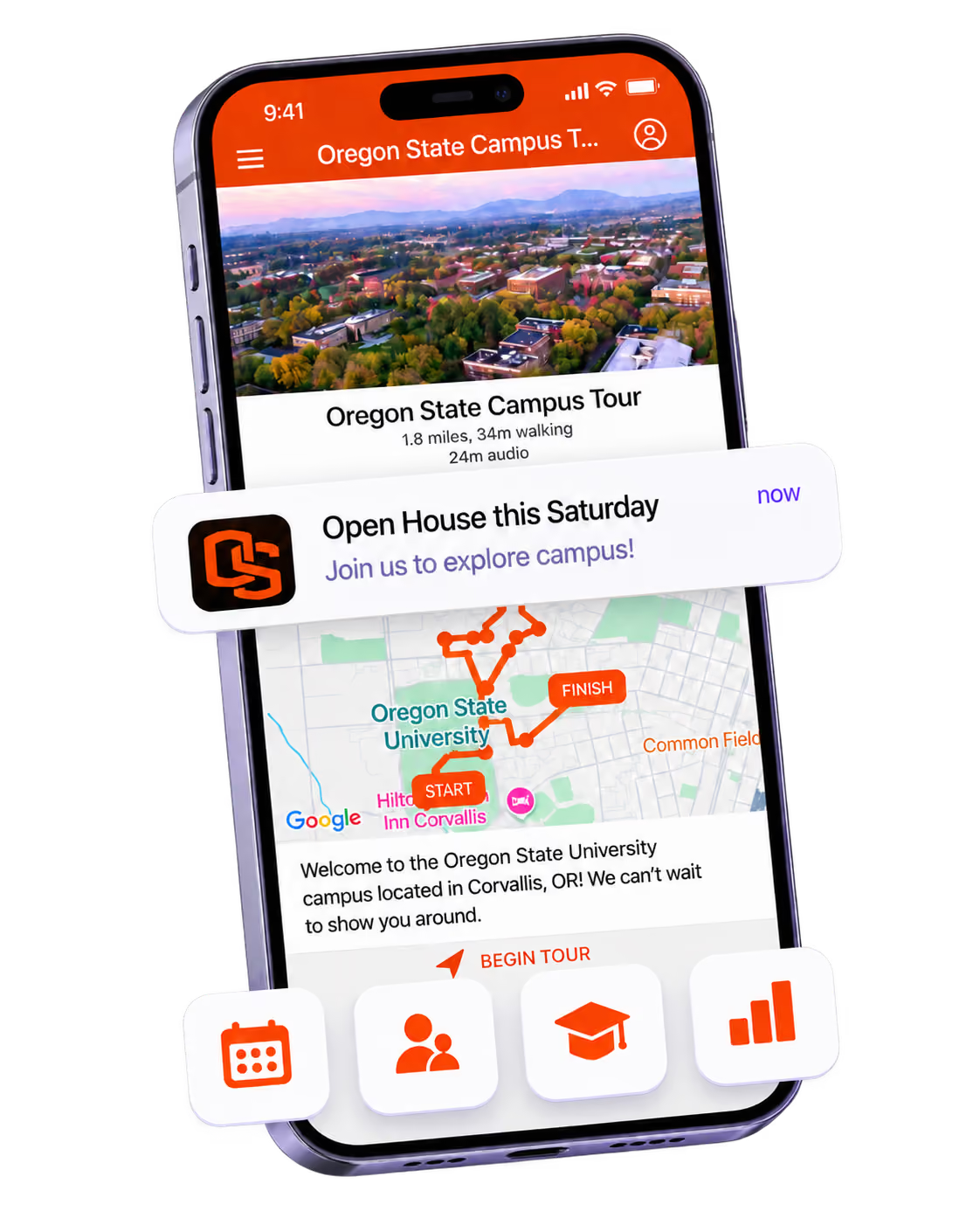
Deliver branded, self-guided tour experiences with interactive maps and rich media, available 24/7.

Offering Campus Tours?
Deliver branded, self-guided tour experiences with interactive maps and rich media, available 24/7.
Organising a Career Fair?
Simplify logistics for students, employers, and Career Services staff with one easy-to-use app.
Organising a Career Fair?
Simplify logistics for students, employers, and Career Services staff with one easy-to-use app.
Managing Alumni Events?
Plan reunions, regional events, and fundraising campaigns with an app built for alumni engagement.
Managing Alumni Events?
Plan reunions, regional events, and fundraising campaigns with an app built for alumni engagement.
Boost Student Engagement
One hub for schedules, resources, and events that keeps students connected throughout the academic year.
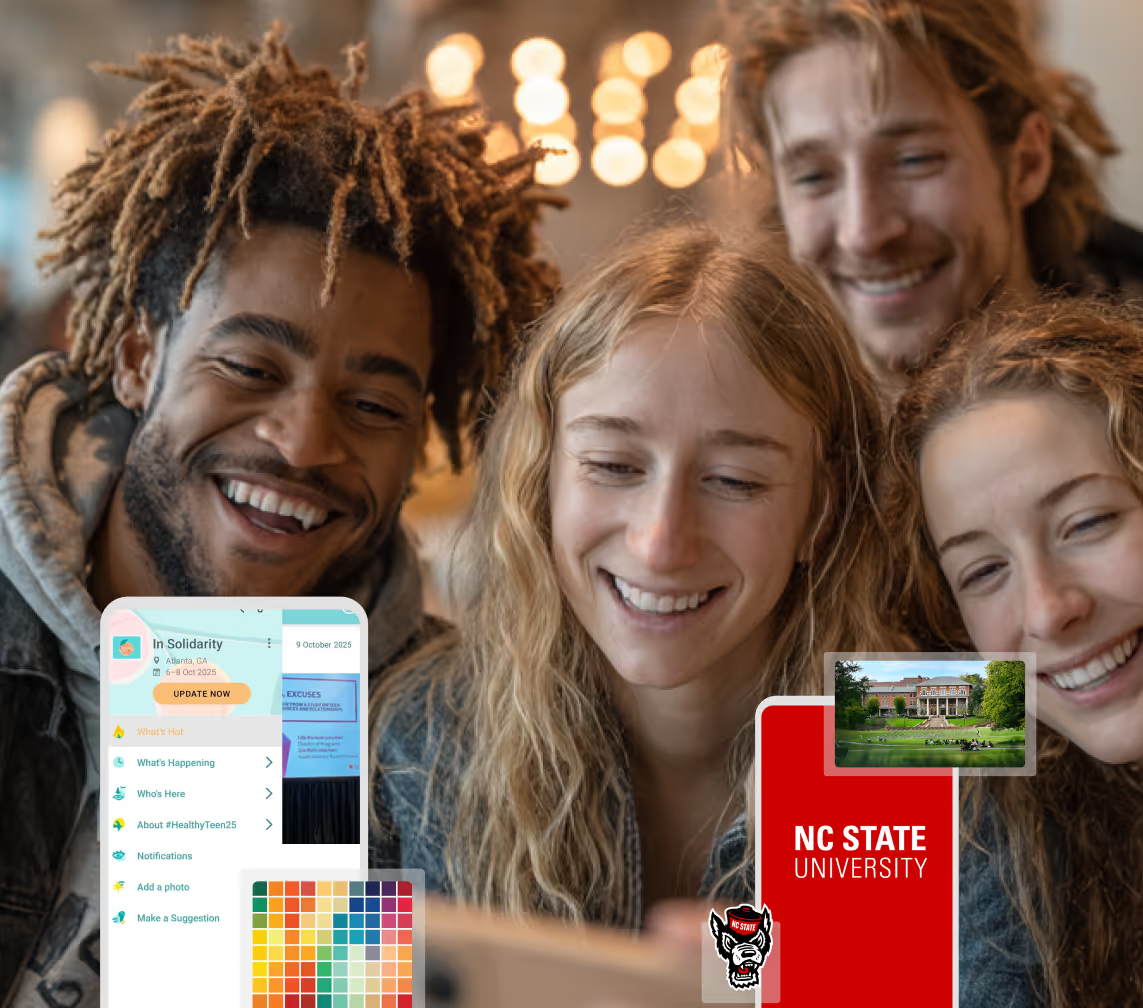
Boost Student Engagement
One hub for schedules, resources, and events that keeps students connected throughout the academic year.
Planning Orientation?
Help new students feel prepared from day one with schedules, campus resources, and real-time updates in one app.
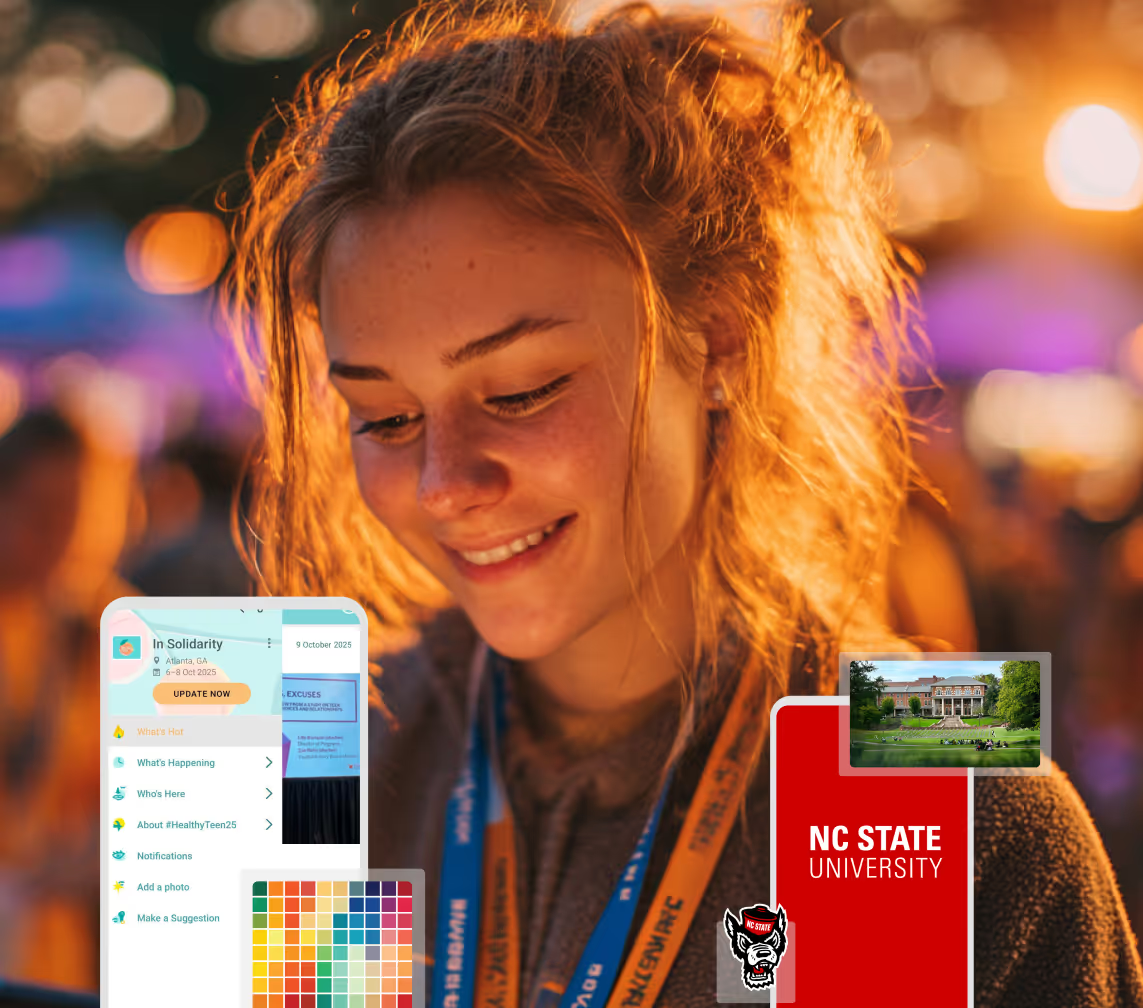
Planning Orientation?
Help new students feel prepared from day one with schedules, campus resources, and real-time updates in one app.
Running Admissions Events?
Manage open houses, tours, and yield events with a branded app that saves time and engages prospective students.

Running Admissions Events?
Manage open houses, tours, and yield events with a branded app that saves time and engages prospective students.
Get a custom Sponsorship Package Template
Stop starting from scratch. Grab free templates that helWe'll build a tailored sponsorship package with suggested pricing, tiers, and benefits..for your specific event.p you build professional sponsorship packages and close deals faster.
Get a custom Sponsorship Package Template
Stop starting from scratch. Grab free templates that helWe'll build a tailored sponsorship package with suggested pricing, tiers, and benefits..for your specific event.p you build professional sponsorship packages and close deals faster.
Plan Your Next Event Without Missing a Beat.
From venue selection to post-event wrap-up, this free checklist walks you through every step (so nothing falls through the cracks).
.avif)
Plan Your Next Event Without Missing a Beat.
From venue selection to post-event wrap-up, this free checklist walks you through every step (so nothing falls through the cracks).
Real Results From Real Events
100,000+ organizations trust Guidebook. See exactly how universities, associations, enterprises, and more put it to work.

Real Results From Real Events
100,000+ organizations trust Guidebook. See exactly how universities, associations, enterprises, and more put it to work.
Flexible pricing for every event size
Find the perfect plan for your needs, from intimate gatherings to large-scale conferences.

Flexible pricing for every event size
Find the perfect plan for your needs, from intimate gatherings to large-scale conferences.
Join our event experts
Watch on-demand webinars and join live sessions with industry leaders sharing best practices for event success.
.avif)
Join our event experts
Watch on-demand webinars and join live sessions with industry leaders sharing best practices for event success.
Guidebook in Action
Book a personalized walkthrough and discover how we help event teams create better attendee experiences.
Guidebook in Action
Book a personalized walkthrough and discover how we help event teams create better attendee experiences.

What are Virtual Games to Play with Coworkers?
Discover fun virtual games to play with coworkers to boost team engagement. Explore game ideas, setup tips, and strategies for remote team building.

Virtual games to play with coworkers are interactive online activities designed to build team connections, boost morale, and create shared experiences when your team can't be in the same room. These games range from quick icebreakers to elaborate team competitions. They've become essential for keeping remote and hybrid teams engaged and connected.
Here's the thing: virtual team games aren't just "fun breaks" from work. They're strategic tools that build trust, improve communication, and reduce the isolation that remote workers often feel. The best virtual games create genuine moments of laughter and connection—even through a screen.
Key Characteristics of Virtual Games to Play with Coworkers
- Platform Accessibility: Games work across common video conferencing tools like Zoom, Teams, or Google Meet. No special software downloads required for most options.
- Scalable Participation: Activities adapt to groups of 5 or 500. Good virtual games include breakout room options for larger teams.
- Time Flexibility: Games range from 5-minute energizers to hour-long competitions. You can match the activity to your available time.
- Low Barrier to Entry: The best games require zero prep from participants. Everyone can jump in regardless of gaming experience.
- Inclusive Design: Activities accommodate different personalities, abilities, and comfort levels. Introverts and extroverts both find ways to participate.
- Measurable Engagement: You can track participation rates, feedback scores, and team sentiment before and after activities.
Virtual Games vs. Related Team Activities
Virtual Team Building Events
- Scope: Broader category that includes games, workshops, and structured experiences
- Focus: Overall team development and culture building
- Timeline: Often 1-3 hours with multiple components
- Channels: Video conferencing plus specialized platforms
- Goal: Long-term team cohesion and skill development
Virtual Icebreakers
- Scope: Quick, simple activities to warm up a group
- Focus: Breaking initial awkwardness and sparking conversation
- Timeline: 5-15 minutes maximum
- Channels: Any video call platform
- Goal: Immediate comfort and engagement
Virtual Happy Hours
- Scope: Casual social gatherings without structured activities
- Focus: Informal bonding and relaxation
- Timeline: 30-90 minutes of unstructured time
- Channels: Video calls, sometimes with drink delivery
- Goal: Social connection without work pressure
Virtual games sit in the sweet spot between structured team building events and casual hangouts. They provide enough structure to keep everyone engaged while staying fun and low-pressure.
Popular Types of Virtual Games for Teams
Trivia and Quiz Games
Trivia remains the most popular virtual game category. It's familiar, competitive, and works for any team size.
Options include:
- General knowledge trivia with rotating categories
- Company-specific trivia about your organization's history
- "Guess the coworker" games using fun facts
- Pop culture rounds covering movies, music, and TV
Mystery and Escape Room Games
Virtual escape rooms challenge teams to solve puzzles together. They're excellent for building collaboration skills.
These games typically last 45-60 minutes. Teams work through clues, decode messages, and race against the clock. The shared challenge creates natural bonding moments.
Creative and Drawing Games
Games like Pictionary or Drawful level the playing field. Artistic skill doesn't matter—the laughs come from the chaos.
Popular options include:
- Online Pictionary platforms
- Collaborative whiteboard challenges
- "Draw your coworker" competitions
- Logo design battles
Word and Guessing Games
Word games work perfectly over video calls. They need no special tools and spark great conversations.
Try these classics:
- Two Truths and a Lie
- 20 Questions with a twist
- Virtual Charades
- Word association chains
Strategy and Competition Games
For teams that love competition, strategy games deliver. They reveal different thinking styles and leadership approaches.
Consider virtual versions of:
- Codenames (team-based word guessing)
- Werewolf or Mafia (social deduction)
- Virtual poker tournaments
- Fantasy sports drafts
How to Run Virtual Games Successfully
Choose the Right Platform
Your platform choice affects everything. Most teams already use Zoom, Teams, or Google Meet for work calls.
Stick with familiar tools when possible. Adding new software creates friction. Many games work directly in your existing video platform with screen sharing.
Set Clear Time Boundaries
Virtual fatigue is real. Keep games between 30-60 minutes for best engagement.
Start and end on time. Respect that people have other commitments. A tight, energetic 45-minute game beats a dragging 2-hour session every time.
Prepare Your Facilitation
Someone needs to run the show. This person handles:
- Explaining rules clearly and quickly
- Managing turn-taking and breakout rooms
- Keeping energy high throughout
- Troubleshooting tech issues
- Tracking scores if needed
Test Everything First
Run through your game before the live event. Check that screen sharing works. Confirm audio quality. Test any external platforms.
Nothing kills momentum like technical difficulties. A 10-minute test run prevents 30 minutes of awkward troubleshooting.
Create Inclusive Participation
Not everyone loves being on camera or speaking up. Build in options for different comfort levels.
Use chat features for quieter team members. Create small breakout groups where introverts shine. Avoid games that single people out uncomfortably.
Why Virtual Games to Play with Coworkers Matter
For Event Success:
- Higher Engagement Rates: Interactive games keep attention better than passive presentations. Participants stay present and involved.
- Memorable Experiences: People remember how events made them feel. Games create positive emotional associations with your organization.
- Natural Networking: Games break down barriers between departments and hierarchy levels. Conversations flow more easily afterward.
- Content Variety: Games provide a welcome break in longer virtual events. They reset attention spans and boost energy.
- Measurable Participation: You can track who joined, how long they stayed, and their feedback scores.
For Business Objectives:
- Improved Team Communication: Games reveal communication styles and build understanding between team members.
- Reduced Remote Isolation: Regular social touchpoints combat the loneliness that remote workers often experience.
- Stronger Company Culture: Shared fun experiences build the cultural glue that keeps teams together.
- Better Retention: Employees who feel connected to colleagues are more likely to stay. Games build those connections.
- Enhanced Collaboration: Teams that play together work together better. Games build trust that transfers to projects.
Platforms like Guidebook help you organize and communicate virtual game events. You can share schedules, send reminders, and gather feedback all in one place.
Virtual Games to Play with Coworkers Best Practices
- Survey Your Team First: Ask what types of games people enjoy. Some teams love competition; others prefer collaboration. Match the game to your group.
- Schedule at Inclusive Times: Consider time zones for distributed teams. Rotate timing so the same people aren't always inconvenienced.
- Keep Participation Optional: Mandatory fun isn't fun. Make games available but not required. Genuine enthusiasm beats forced attendance.
- Mix Up Game Types: Rotate between trivia, creative games, and strategy challenges. Variety keeps things fresh and gives different personalities chances to shine.
- Celebrate Winners Thoughtfully: Recognition matters, but don't overdo it. Small prizes or shoutouts work better than elaborate rewards that make losers feel bad.
- Gather Feedback After: Send a quick survey asking what worked and what didn't. Use insights to improve future games.
- Build Recurring Rituals: Monthly game sessions create anticipation. Teams look forward to regular social touchpoints.
- Connect Games to Company Values: Tie activities to your culture when possible. A company that values innovation might run creative challenges.
- Document and Share Highlights: Capture funny moments and share them (with permission). These become part of your team's shared history.
- Start Small and Scale: Test games with a small group before rolling out company-wide. Work out the kinks first.
Common Virtual Games to Play with Coworkers Mistakes
Choosing Overly Complex Games: Games with complicated rules frustrate participants. If you can't explain it in 2 minutes, it's too complex. Stick with intuitive formats that people can jump into quickly.
Ignoring Time Zone Differences: Scheduling games at 3pm headquarters time might mean midnight for remote team members. Rotate timing or offer multiple sessions to include everyone fairly.
Forcing Camera-On Participation: Some people have valid reasons for keeping cameras off. Don't make video mandatory for games. Find ways to include audio-only participants.
Running Games Too Long: Virtual fatigue sets in fast. A 90-minute game sounds fun in theory but exhausts people in practice. Keep sessions under an hour.
Skipping the Warm-Up: Jumping straight into competition feels jarring. Start with a quick icebreaker to get people comfortable before the main event.
Neglecting Technical Prep: Assuming everything will "just work" leads to disaster. Test your setup, have backup plans, and know how to troubleshoot common issues.
Making Games Mandatory: Required fun creates resentment. When games feel like another work obligation, they lose their power to build genuine connection.
Final Thoughts
Virtual games to play with coworkers have evolved from pandemic necessity to permanent team-building strategy. They're no longer a substitute for in-person connection—they're a valuable tool in their own right.
The best remote teams don't just work together. They laugh together, compete together, and create shared memories that strengthen their bonds. Virtual games make this possible across any distance.
Whether you're planning a quick trivia round or an elaborate virtual escape room, the goal stays the same: help your team feel connected, valued, and part of something bigger than their individual work.
Ready to level up your virtual event planning? Explore event management tips and discover how Guidebook's platform can help you organize engaging virtual experiences. From event registration to post-event feedback, the right tools make every virtual gathering more impactful.
Your team deserves more than another boring video call. Give them something to look forward to.
The power of your brand in your app, from first visit to alumni.
Build trust
Attendees download your app, not ours. Your name, colors, and crest in the stores.
.avif)
One place for the whole event
Schedules, maps, registration, and updates in one branded hub - not five tools.
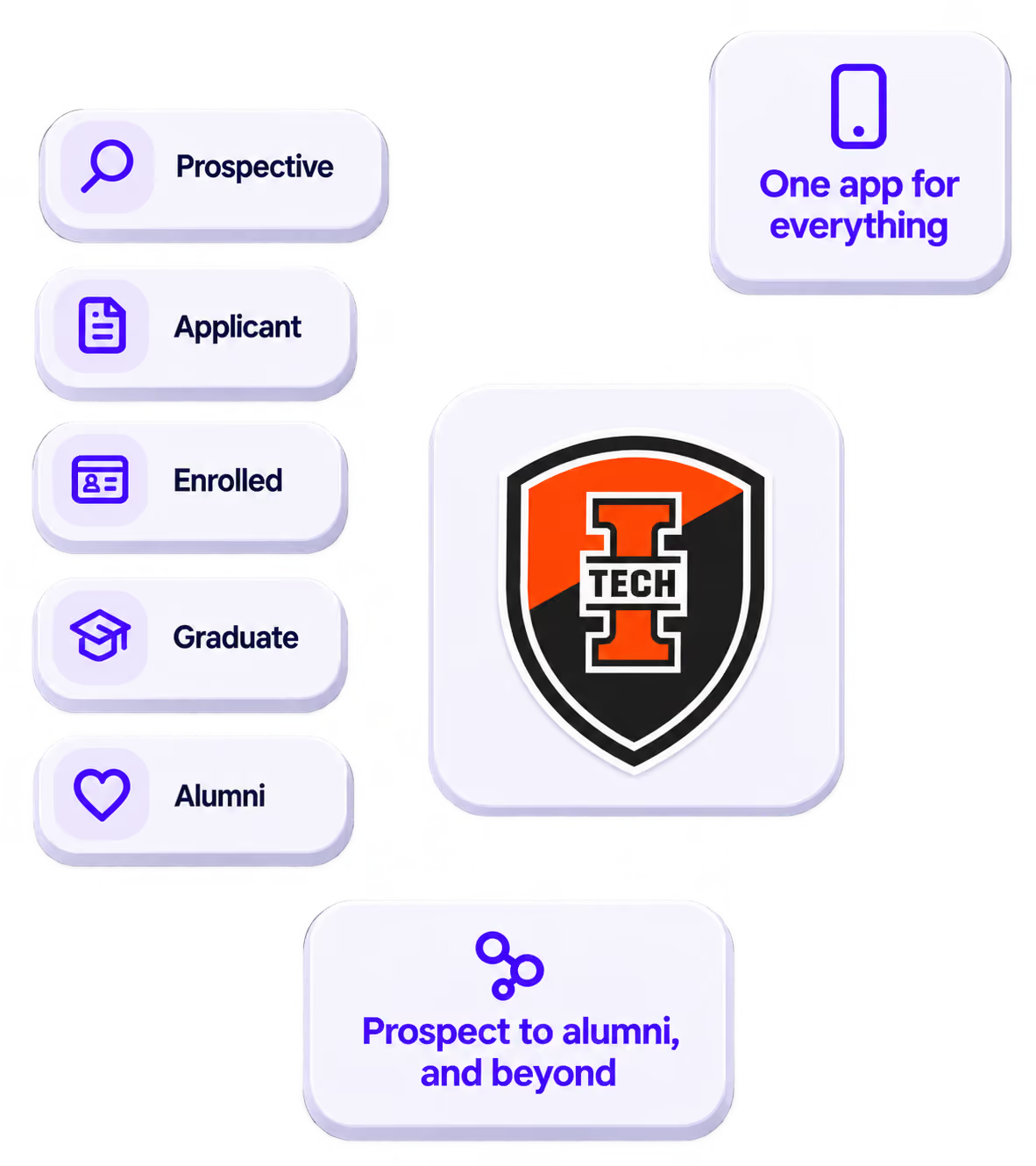
Stand out
A branded app is what people keep on their phone after the printed program is in the recycling.

Get the Mobile App Playbook
A short guide to running the whole student journey in one app. No fluff, just what works.
for higher ed
Campus
Playbook
A practical guide to building a connected campus experience.
Free playbook
The Mobile App Playbook for Universities
Students decide if they belong long before they set foot on campus. This playbook shows how to win them over from the first visit through graduation.
- Grow enrollment and boost recruitment
- Increase belonging and retention
- Run every event from one branded app
By submitting, you agree to our Privacy Policy.
You're in.
.png)