
Campus apps by department
Admissions, orientation, student life, and more — one campus app that works across departments.

Campus apps by department
Admissions, orientation, student life, and more — one campus app that works across departments.
Build unlimited event apps on one license
One partnership for unlimited campus events — orientation, tours, student life, and everything in between.
Build unlimited event apps on one license
One partnership for unlimited campus events — orientation, tours, student life, and everything in between.
Compare event app platforms
See how Guidebook stacks up against other event app and registration platforms.
Compare event app platforms
See how Guidebook stacks up against other event app and registration platforms.
Event apps for nonprofit and community programs
Give members, volunteers, and donors one branded app for conferences, fundraisers, and year-round community.
Event apps for nonprofit and community programs
Give members, volunteers, and donors one branded app for conferences, fundraisers, and year-round community.
Campus integrations and an open API
Connect Guidebook with the campus systems, APIs, and tools your team already uses.
Campus integrations and an open API
Connect Guidebook with the campus systems, APIs, and tools your team already uses.
Event apps for corporate and enterprise teams
Internal meetings, offsites, and large-scale corporate events — with the branding and control enterprise teams need.
Event apps for corporate and enterprise teams
Internal meetings, offsites, and large-scale corporate events — with the branding and control enterprise teams need.
Create a branded event app with no coding
Put schedules, maps, resources, and updates in every attendee's pocket — built for campus events and programs.
Create a branded event app with no coding
Put schedules, maps, resources, and updates in every attendee's pocket — built for campus events and programs.
Launch a branded, white-label event app
A white-label event app with your branding, your content, and your attendee experience — no coding required.
Launch a branded, white-label event app
A white-label event app with your branding, your content, and your attendee experience — no coding required.
Everything in the Guidebook platform
Explore the features event teams use to engage attendees before, during, and after the event.
Everything in the Guidebook platform
Explore the features event teams use to engage attendees before, during, and after the event.
One app for in-person and virtual attendees
The same schedule, networking, and updates whether people are in the room or joining remotely.
One app for in-person and virtual attendees
The same schedule, networking, and updates whether people are in the room or joining remotely.
Event apps built for associations
Annual meetings, chapter events, and member engagement — without rebuilding a new app every year.
Event apps built for associations
Annual meetings, chapter events, and member engagement — without rebuilding a new app every year.
A branded event website that matches the app
Promote the event, collect interest, and keep branding consistent from the first click to check-in.
A branded event website that matches the app
Promote the event, collect interest, and keep branding consistent from the first click to check-in.
Plan, run, and measure events on one platform
App, registration, badges, and websites in one workflow — so planning isn't a pile of disconnected tools.
Plan, run, and measure events on one platform
App, registration, badges, and websites in one workflow — so planning isn't a pile of disconnected tools.
Keep members engaged between events
One branded app for the conference and everything that happens the other 51 weeks of the year.
Keep members engaged between events
One branded app for the conference and everything that happens the other 51 weeks of the year.
The conference app attendees actually use
Schedules, maps, networking, and live updates for annual meetings, summits, and multi-day conferences.
The conference app attendees actually use
Schedules, maps, networking, and live updates for annual meetings, summits, and multi-day conferences.
Registration that feeds your app and badges
Collect registrations, payments, and attendee data in the same platform as your event app.
Registration that feeds your app and badges
Collect registrations, payments, and attendee data in the same platform as your event app.
Design and print event badges in one place
Custom badges, QR check-in, and on-site printing — without a separate badge vendor.
Design and print event badges in one place
Custom badges, QR check-in, and on-site printing — without a separate badge vendor.
A Smaller School?
Deliver a polished, branded event experience without a large team or a big budget.
A Smaller School?
Deliver a polished, branded event experience without a large team or a big budget.
Running Family Programs?
Give families everything they need, from schedules and maps to real-time updates, all in one place.
Running Family Programs?
Give families everything they need, from schedules and maps to real-time updates, all in one place.
Coordinating Move-In Day?
Share updates, manage events, and keep students informed from move-in through the academic year.

Coordinating Move-In Day?
Share updates, manage events, and keep students informed from move-in through the academic year.
Offering Campus Tours?
Deliver branded, self-guided tour experiences with interactive maps and rich media, available 24/7.

Offering Campus Tours?
Deliver branded, self-guided tour experiences with interactive maps and rich media, available 24/7.
Organising a Career Fair?
Simplify logistics for students, employers, and Career Services staff with one easy-to-use app.
Organising a Career Fair?
Simplify logistics for students, employers, and Career Services staff with one easy-to-use app.
Managing Alumni Events?
Plan reunions, regional events, and fundraising campaigns with an app built for alumni engagement.
Managing Alumni Events?
Plan reunions, regional events, and fundraising campaigns with an app built for alumni engagement.
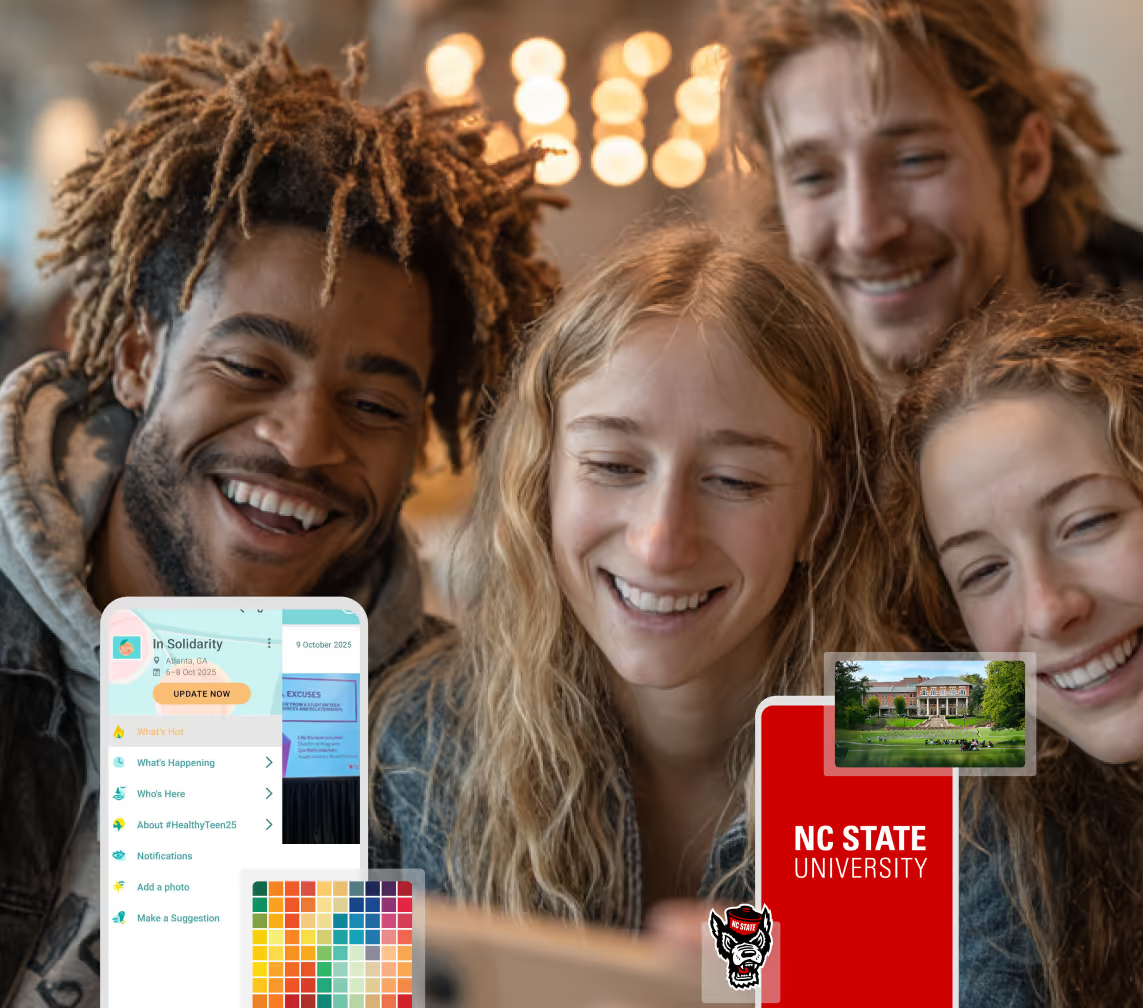
Boost Student Engagement
One hub for schedules, resources, and events that keeps students connected throughout the academic year.
Boost Student Engagement
One hub for schedules, resources, and events that keeps students connected throughout the academic year.
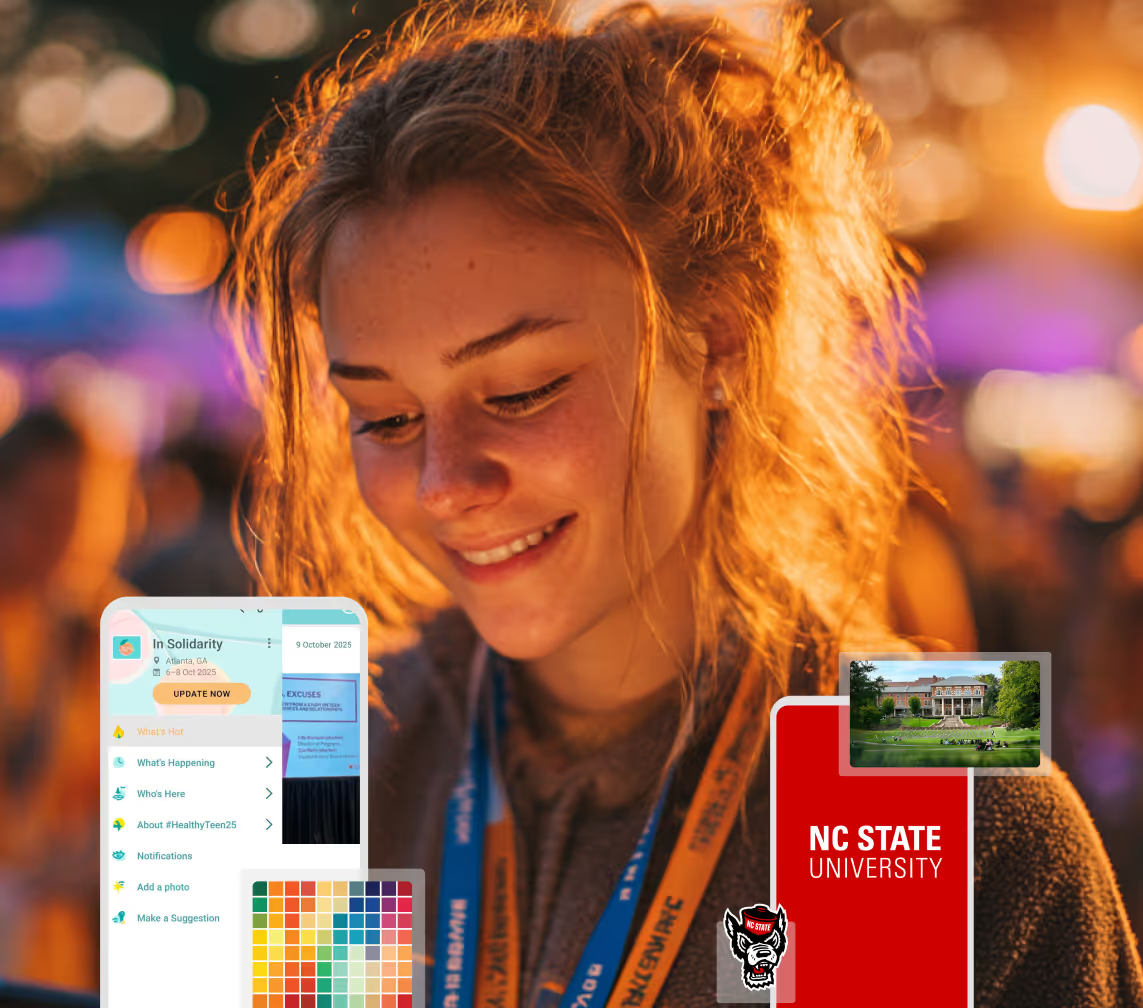
Planning Orientation?
Help new students feel prepared from day one with schedules, campus resources, and real-time updates in one app.
Planning Orientation?
Help new students feel prepared from day one with schedules, campus resources, and real-time updates in one app.
Running Admissions Events?
Manage open houses, tours, and yield events with a branded app that saves time and engages prospective students.

Running Admissions Events?
Manage open houses, tours, and yield events with a branded app that saves time and engages prospective students.
Get a custom Sponsorship Package Template
Stop starting from scratch. Grab free templates that helWe'll build a tailored sponsorship package with suggested pricing, tiers, and benefits..for your specific event.p you build professional sponsorship packages and close deals faster.
Get a custom Sponsorship Package Template
Stop starting from scratch. Grab free templates that helWe'll build a tailored sponsorship package with suggested pricing, tiers, and benefits..for your specific event.p you build professional sponsorship packages and close deals faster.
Plan Your Next Event Without Missing a Beat.
From venue selection to post-event wrap-up, this free checklist walks you through every step (so nothing falls through the cracks).
.avif)
Plan Your Next Event Without Missing a Beat.
From venue selection to post-event wrap-up, this free checklist walks you through every step (so nothing falls through the cracks).
Real Results From Real Events
100,000+ organizations trust Guidebook. See exactly how universities, associations, enterprises, and more put it to work.

Real Results From Real Events
100,000+ organizations trust Guidebook. See exactly how universities, associations, enterprises, and more put it to work.
Flexible pricing for every event size
Find the perfect plan for your needs, from intimate gatherings to large-scale conferences.
Flexible pricing for every event size
Find the perfect plan for your needs, from intimate gatherings to large-scale conferences.
Join our event experts
Watch on-demand webinars and join live sessions with industry leaders sharing best practices for event success.
.avif)
Join our event experts
Watch on-demand webinars and join live sessions with industry leaders sharing best practices for event success.
Guidebook in Action
Book a personalized walkthrough and discover how we help event teams create better attendee experiences.
Guidebook in Action
Book a personalized walkthrough and discover how we help event teams create better attendee experiences.

What are Post Event Survey Questions?
Post event survey questions help gather attendee feedback to measure event success and improve future experiences. Discover key question types, sample templates, and best practices for actionable insights.

Post event survey questions are the targeted questions you send attendees after an event to measure satisfaction, gather feedback, and uncover insights that improve future events. These questions cover everything from session quality to logistics. They're your direct line to understanding what worked and what didn't.
Here's the thing: guessing what attendees thought is a losing game. Post event survey questions give you real data from real people. They turn vague impressions into actionable insights. Without them, you're planning your next event blind.
Key Characteristics of Post Event Survey Questions
- Timing-Sensitive: These questions work best when sent within 24-48 hours of your event. Fresh memories mean more accurate responses.
- Goal-Oriented: Each question ties to a specific objective. You're not asking random questions—you're gathering data that drives decisions.
- Mix of Question Types: Effective surveys blend rating scales, multiple choice, and open-ended questions. This variety captures both quantitative data and qualitative insights.
- Attendee-Focused: Questions center on the attendee experience, not your internal metrics. What did they feel? What did they learn? What frustrated them?
- Actionable by Design: Good survey questions lead to clear next steps. Vague questions produce vague answers you can't use.
- Concise and Respectful: The best surveys take 5-10 minutes to complete. Respect your attendees' time, and they'll give you better responses.
Post Event Survey Questions vs. Related Feedback Methods
Live Polling During Events
- Scope: Real-time feedback during sessions
- Focus: Immediate reactions and engagement
- Timeline: During the event itself
- Channels: Event apps, audience response systems
- Goal: Adjust content on the fly and boost participation
Social Media Monitoring
- Scope: Public sentiment and organic mentions
- Focus: Brand perception and viral moments
- Timeline: Before, during, and after events
- Channels: Twitter, LinkedIn, Instagram, event hashtags
- Goal: Track buzz and identify advocates or issues
One-on-One Interviews
- Scope: Deep-dive conversations with select attendees
- Focus: Detailed qualitative insights
- Timeline: Days or weeks after the event
- Channels: Phone calls, video meetings, in-person
- Goal: Uncover nuanced feedback and build relationships
Post event survey questions sit in the sweet spot. They're more structured than social listening and more scalable than interviews. Use them alongside these other methods for a complete feedback picture.
Essential Types of Post Event Survey Questions
Overall Satisfaction Questions
Start with the big picture. These questions measure general sentiment and set the tone for deeper questions.
- On a scale of 1-10, how satisfied were you with the event?
- How likely are you to attend future events? (Net Promoter Score)
- Did the event meet your expectations?
Keep these at the top of your survey. They're easy to answer and get respondents engaged.
Content and Session Quality Questions
Your speakers and sessions are often the main draw. Find out if they delivered value.
- Which session was most valuable to you?
- Rate the relevance of the content to your role
- Were the speakers knowledgeable and engaging?
- What topics would you like covered at future events?
These answers help you book better speakers and plan stronger agendas. They're gold for your event planning process.
Logistics and Experience Questions
The details matter. A great keynote can't save a confusing registration process.
- How would you rate the registration experience?
- Was the venue easy to navigate?
- How was the food and beverage quality?
- Did you experience any technical issues?
For virtual events, swap venue questions for platform usability questions.
Networking and Engagement Questions
Many attendees come for connections as much as content. Measure how well you facilitated that.
- Did you make valuable professional connections?
- Were there enough networking opportunities?
- How useful was the event app for connecting with others?
Open-Ended Feedback Questions
Numbers tell part of the story. Open-ended questions reveal the rest.
- What was the highlight of your experience?
- What would you change about this event?
- Any additional comments or suggestions?
Limit these to 2-3 questions. Too many open-ended questions lead to survey fatigue.
How to Structure Your Post Event Survey
Start with Quick Wins
Put your easiest questions first. Rating scales and multiple choice questions build momentum. Save open-ended questions for later when respondents are invested.
A good rule: if someone abandons your survey halfway through, you still want their most important data.
Group Questions Logically
Organize questions by theme. All content questions together. All logistics questions together. This feels natural to respondents and makes your data easier to analyze.
Use clear section headers so people know what's coming. "Now let's talk about the sessions you attended" works better than jumping around randomly.
Keep It Short and Focused
Aim for 10-15 questions maximum. Every question should earn its spot. Ask yourself: "What will I do with this answer?" If you don't have a clear action, cut the question.
Surveys over 10 minutes see completion rates drop dramatically. Respect your attendees' time.
End with Forward-Looking Questions
Close by asking about future events. This primes attendees to think about coming back.
- Would you attend this event again?
- What topics interest you for next year?
- Would you recommend this event to a colleague?
These questions also help you start planning your next event before this one fades from memory.
Why Post Event Survey Questions Matter
For Event Success:
- Identify What Worked: Pinpoint your strongest sessions, speakers, and experiences to repeat them
- Spot Problems Early: Catch issues before they become patterns across multiple events
- Improve Attendee Experience: Use feedback to remove friction and add value
- Build Loyalty: Attendees who feel heard are more likely to return
- Create Better Content: Learn exactly what topics and formats resonate with your audience
For Business Objectives:
- Prove Event ROI: Quantify satisfaction and intent to return for stakeholders
- Justify Budget: Use data to support future event investments
- Strengthen Sponsor Relationships: Share attendee feedback with sponsors to demonstrate value
- Inform Marketing Strategy: Discover what messaging resonates for event digital marketing
- Support Sales Goals: Identify warm leads based on engagement and satisfaction scores
Platforms like Guidebook's event management platform make collecting and analyzing this feedback seamless. Built-in survey tools connect directly to your event app, boosting response rates.
Post Event Survey Questions Best Practices
- Send Surveys Within 24-48 Hours: Strike while memories are fresh. Waiting a week means foggy recollections and lower response rates.
- Personalize Your Outreach: Use attendee names and reference specific sessions they attended. Generic surveys feel like spam.
- Offer an Incentive: A prize drawing or discount code can boost completion rates by 15-30%. Make it relevant to your audience.
- Test on Mobile First: Most people will open your survey on their phone. If it's clunky on mobile, you'll lose them.
- Use Conditional Logic: Show relevant follow-up questions based on previous answers. Someone who rated a session poorly should see different questions than someone who loved it.
- Include a Progress Bar: Let respondents know how far along they are. This reduces abandonment.
- Send a Reminder: One follow-up email 3-4 days later can capture another 20-30% of responses. Don't overdo it—one reminder is enough.
- Close the Loop: Share key findings with attendees. Tell them what you learned and what you'll change. This builds trust for future surveys.
- Benchmark Your Results: Track the same core questions across events. This lets you measure improvement over time.
- Act on the Feedback: The best survey is useless if you ignore the results. Create an action plan within two weeks of closing your survey.
Common Post Event Survey Questions Mistakes
Asking Too Many Questions: Survey fatigue is real. A 50-question survey might seem thorough, but you'll get incomplete responses and frustrated attendees. Quality beats quantity every time.
Using Leading Questions: "How amazing was our keynote speaker?" assumes the answer. Neutral phrasing like "How would you rate the keynote speaker?" gets honest feedback.
Ignoring Mobile Users: If your survey doesn't work smoothly on smartphones, you're losing most of your potential responses. Always test on mobile before sending.
Waiting Too Long to Send: A survey sent two weeks after your event will get vague, unreliable answers. The 24-48 hour window is critical.
Skipping the "Why" Questions: Rating scales tell you what happened. Open-ended questions tell you why. You need both to make meaningful improvements.
Not Segmenting Your Data: First-time attendees and returning attendees have different perspectives. Analyze your results by attendee type, session attendance, and other relevant factors.
Failing to Follow Up: Collecting feedback and doing nothing with it damages trust. Attendees notice when their suggestions go into a black hole.
Final Thoughts
Post event survey questions are your most powerful tool for continuous improvement. They transform opinions into data and hunches into strategies. Every successful event team treats feedback collection as non-negotiable.
The events industry is more competitive than ever. Attendees have endless options for their time and attention. The teams that listen—really listen—to their audiences are the ones that thrive. Your survey questions are the start of that conversation.
Think of each survey response as a gift. Someone took time to help you get better. That's valuable. Honor it by acting on what you learn and communicating those changes back to your community.
Ready to level up your feedback game? Explore event debrief templates to structure your post-event analysis. Check out event management tips for more ways to improve. And when you're ready to streamline your entire event feedback process, book a demo with Guidebook to see how our platform makes surveys simple. Your next event's success starts with the questions you ask today.
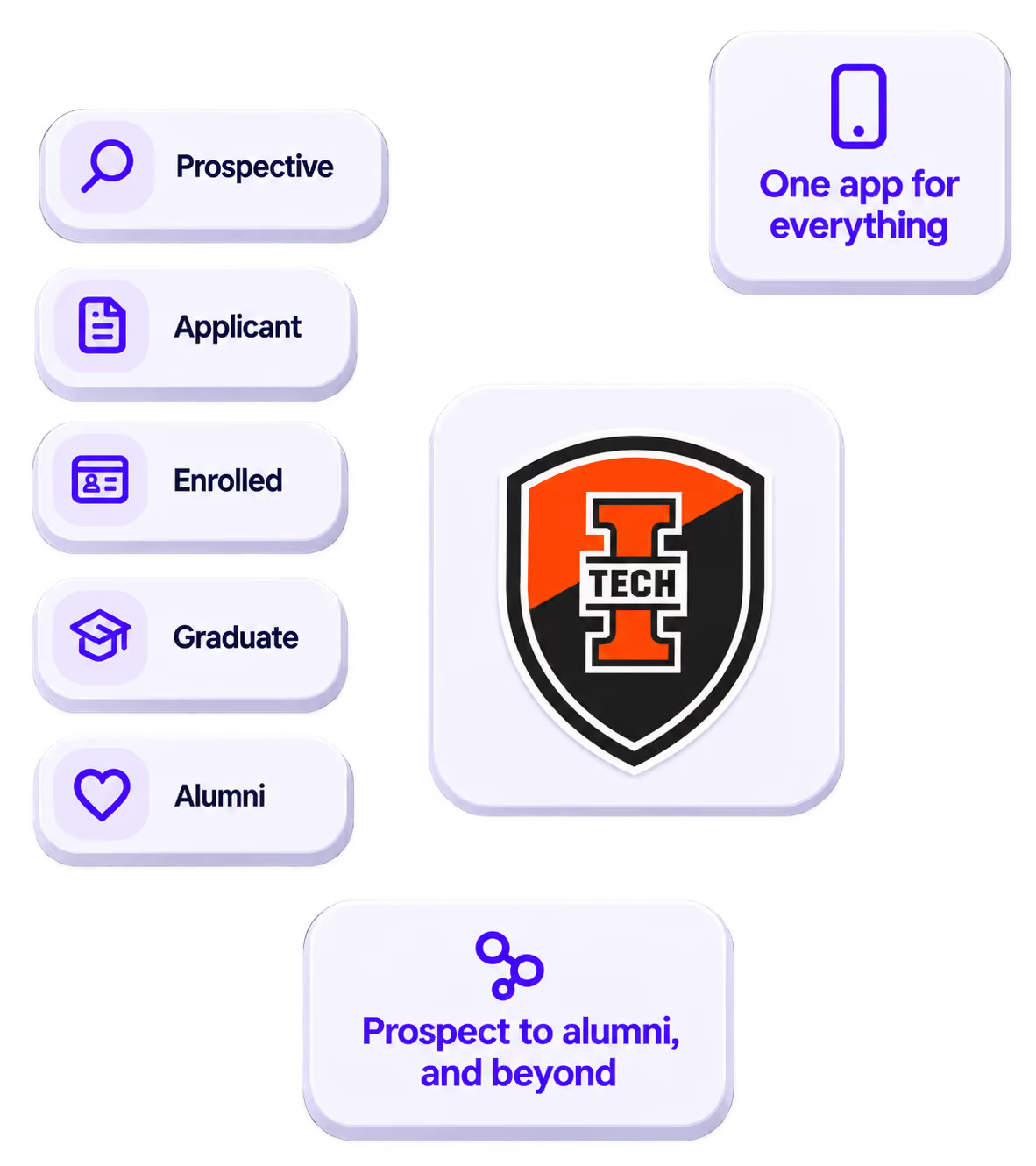
The power of your brand in your app, from first visit to alumni.
Build trust
Attendees download your app, not ours. Your name, colors, and crest in the stores.
.avif)
One place for the whole event
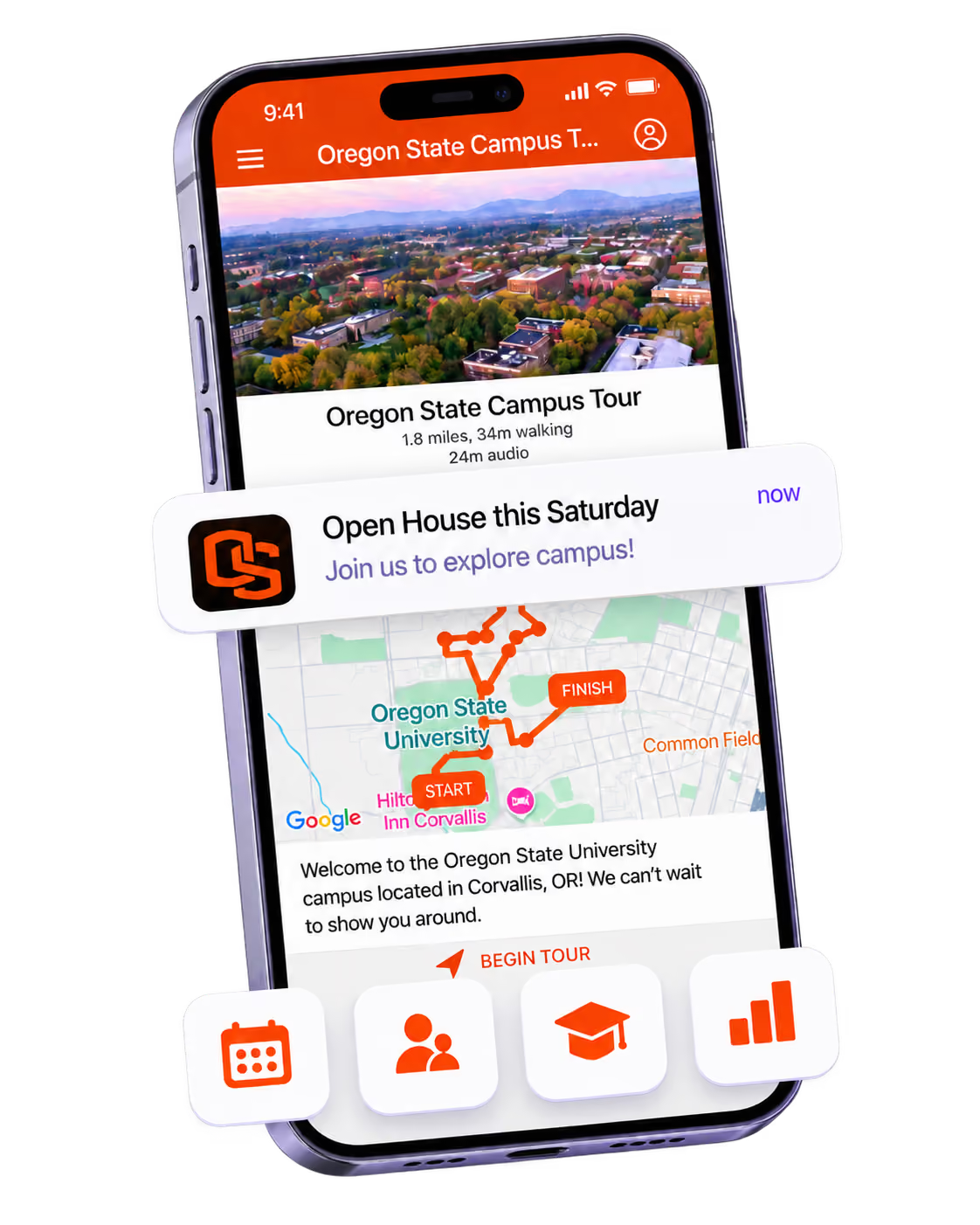
Schedules, maps, registration, and updates in one branded hub - not five tools.
Stand out
A branded app is what people keep on their phone after the printed program is in the recycling.

Get the Mobile App Playbook
A short guide to running the whole student journey in one app. No fluff, just what works.
for higher ed
Campus
Playbook
A practical guide to building a connected campus experience.
Free playbook
The Mobile App Playbook for Universities
Students decide if they belong long before they set foot on campus. This playbook shows how to win them over from the first visit through graduation.
- Grow enrollment and boost recruitment
- Increase belonging and retention
- Run every event from one branded app
By submitting, you agree to our Privacy Policy.
You're in.
.png)