
Campus apps by department
Admissions, orientation, student life, and more — one campus app that works across departments.

Campus apps by department
Admissions, orientation, student life, and more — one campus app that works across departments.
Build unlimited event apps on one license
One partnership for unlimited campus events — orientation, tours, student life, and everything in between.
Build unlimited event apps on one license
One partnership for unlimited campus events — orientation, tours, student life, and everything in between.
Compare event app platforms
See how Guidebook stacks up against other event app and registration platforms.
Compare event app platforms
See how Guidebook stacks up against other event app and registration platforms.
Event apps for nonprofit and community programs
Give members, volunteers, and donors one branded app for conferences, fundraisers, and year-round community.
Event apps for nonprofit and community programs
Give members, volunteers, and donors one branded app for conferences, fundraisers, and year-round community.
Campus integrations and an open API
Connect Guidebook with the campus systems, APIs, and tools your team already uses.
Campus integrations and an open API
Connect Guidebook with the campus systems, APIs, and tools your team already uses.
Event apps for corporate and enterprise teams
Internal meetings, offsites, and large-scale corporate events — with the branding and control enterprise teams need.
Event apps for corporate and enterprise teams
Internal meetings, offsites, and large-scale corporate events — with the branding and control enterprise teams need.
Create a branded event app with no coding
Put schedules, maps, resources, and updates in every attendee's pocket — built for campus events and programs.
Create a branded event app with no coding
Put schedules, maps, resources, and updates in every attendee's pocket — built for campus events and programs.
Launch a branded, white-label event app
A white-label event app with your branding, your content, and your attendee experience — no coding required.
Launch a branded, white-label event app
A white-label event app with your branding, your content, and your attendee experience — no coding required.
Everything in the Guidebook platform
Explore the features event teams use to engage attendees before, during, and after the event.
Everything in the Guidebook platform
Explore the features event teams use to engage attendees before, during, and after the event.
One app for in-person and virtual attendees
The same schedule, networking, and updates whether people are in the room or joining remotely.
One app for in-person and virtual attendees
The same schedule, networking, and updates whether people are in the room or joining remotely.
Event apps built for associations
Annual meetings, chapter events, and member engagement — without rebuilding a new app every year.
Event apps built for associations
Annual meetings, chapter events, and member engagement — without rebuilding a new app every year.
A branded event website that matches the app
Promote the event, collect interest, and keep branding consistent from the first click to check-in.
A branded event website that matches the app
Promote the event, collect interest, and keep branding consistent from the first click to check-in.
Plan, run, and measure events on one platform
App, registration, badges, and websites in one workflow — so planning isn't a pile of disconnected tools.
Plan, run, and measure events on one platform
App, registration, badges, and websites in one workflow — so planning isn't a pile of disconnected tools.
Keep members engaged between events
One branded app for the conference and everything that happens the other 51 weeks of the year.
Keep members engaged between events
One branded app for the conference and everything that happens the other 51 weeks of the year.
The conference app attendees actually use
Schedules, maps, networking, and live updates for annual meetings, summits, and multi-day conferences.
The conference app attendees actually use
Schedules, maps, networking, and live updates for annual meetings, summits, and multi-day conferences.
Registration that feeds your app and badges
Collect registrations, payments, and attendee data in the same platform as your event app.
Registration that feeds your app and badges
Collect registrations, payments, and attendee data in the same platform as your event app.
Design and print event badges in one place
Custom badges, QR check-in, and on-site printing — without a separate badge vendor.
Design and print event badges in one place
Custom badges, QR check-in, and on-site printing — without a separate badge vendor.
A Smaller School?
Deliver a polished, branded event experience without a large team or a big budget.
A Smaller School?
Deliver a polished, branded event experience without a large team or a big budget.
Running Family Programs?
Give families everything they need, from schedules and maps to real-time updates, all in one place.
Running Family Programs?
Give families everything they need, from schedules and maps to real-time updates, all in one place.
Coordinating Move-In Day?
Share updates, manage events, and keep students informed from move-in through the academic year.

Coordinating Move-In Day?
Share updates, manage events, and keep students informed from move-in through the academic year.
Offering Campus Tours?
Deliver branded, self-guided tour experiences with interactive maps and rich media, available 24/7.

Offering Campus Tours?
Deliver branded, self-guided tour experiences with interactive maps and rich media, available 24/7.
Organising a Career Fair?
Simplify logistics for students, employers, and Career Services staff with one easy-to-use app.
Organising a Career Fair?
Simplify logistics for students, employers, and Career Services staff with one easy-to-use app.
Managing Alumni Events?
Plan reunions, regional events, and fundraising campaigns with an app built for alumni engagement.
Managing Alumni Events?
Plan reunions, regional events, and fundraising campaigns with an app built for alumni engagement.
Boost Student Engagement
One hub for schedules, resources, and events that keeps students connected throughout the academic year.
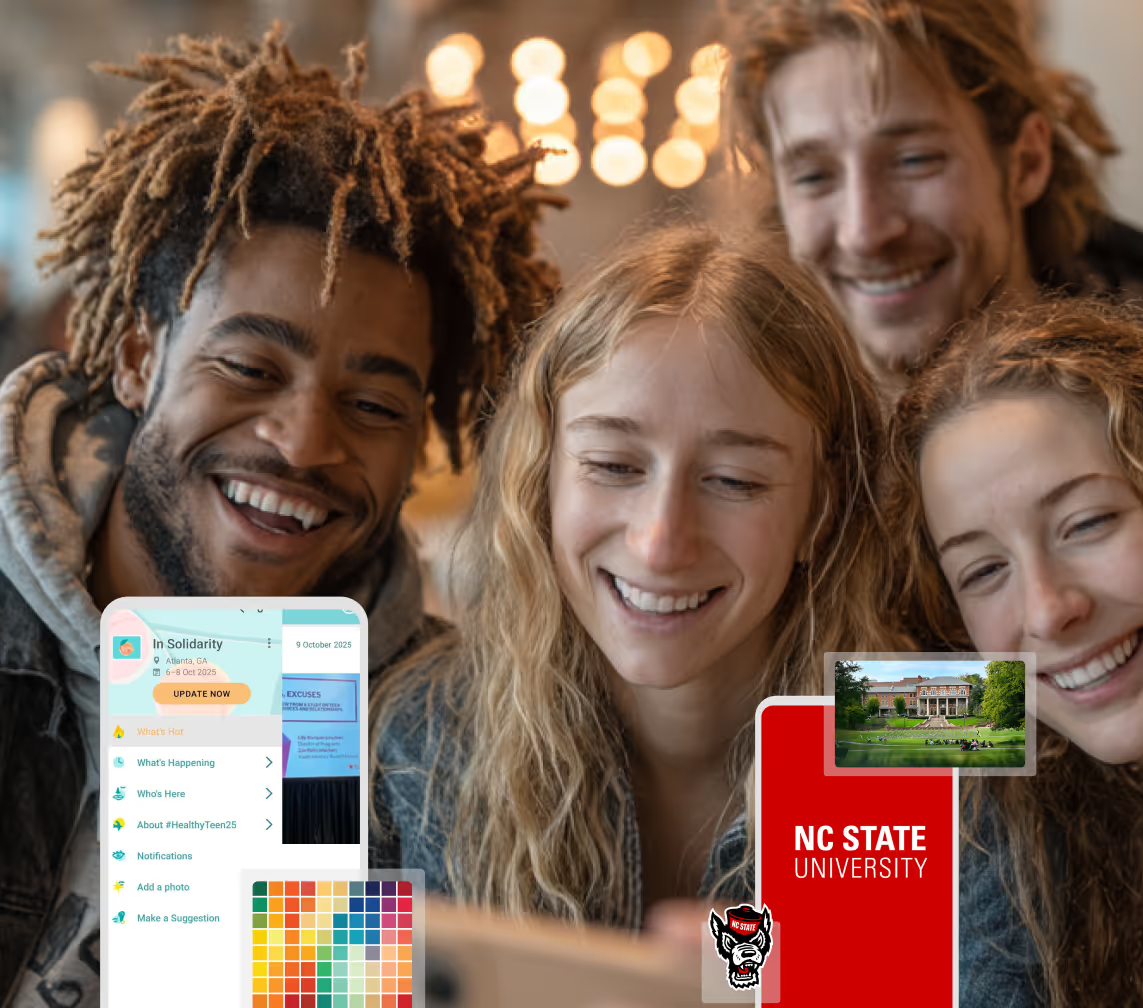
Boost Student Engagement
One hub for schedules, resources, and events that keeps students connected throughout the academic year.
Planning Orientation?
Help new students feel prepared from day one with schedules, campus resources, and real-time updates in one app.
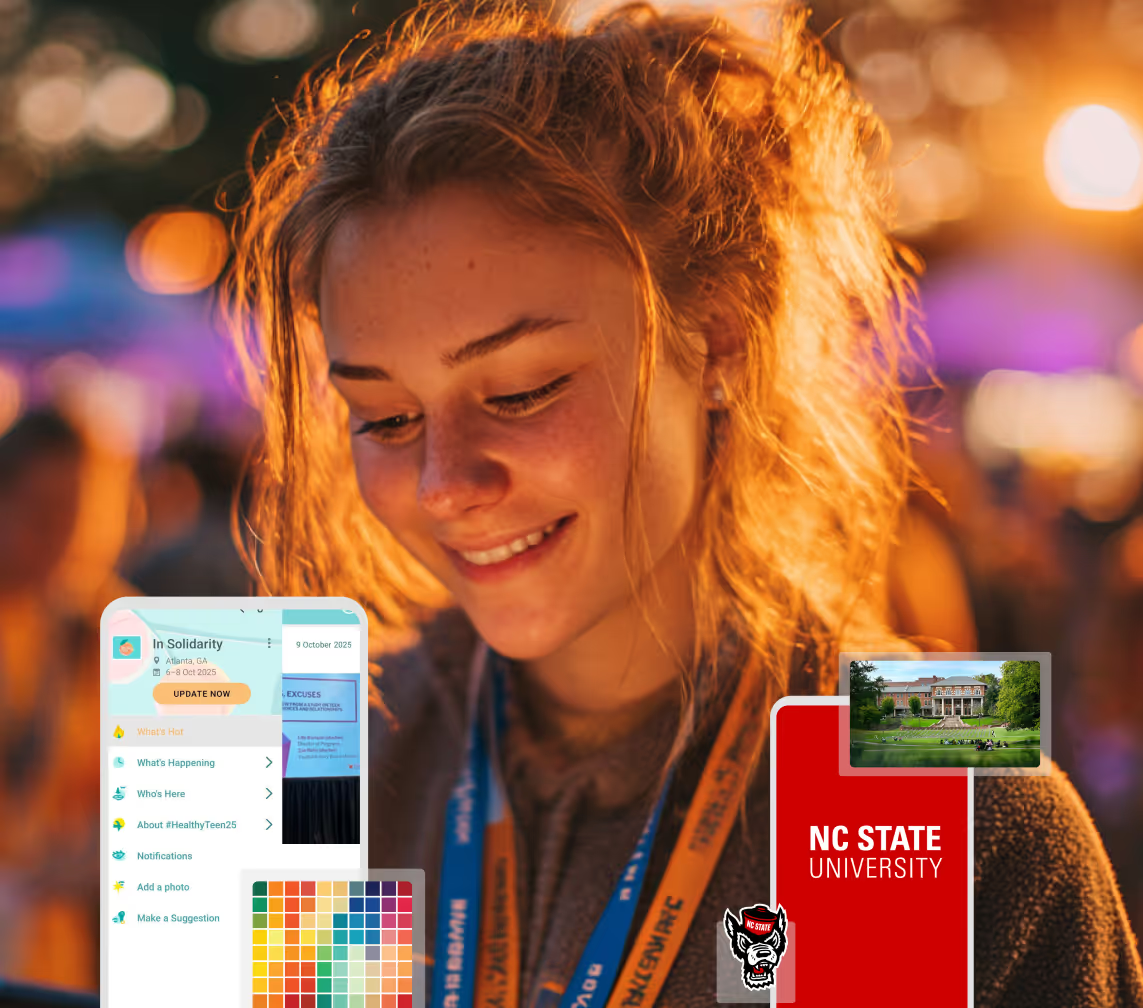
Planning Orientation?
Help new students feel prepared from day one with schedules, campus resources, and real-time updates in one app.
Running Admissions Events?
Manage open houses, tours, and yield events with a branded app that saves time and engages prospective students.

Running Admissions Events?
Manage open houses, tours, and yield events with a branded app that saves time and engages prospective students.
Get a custom Sponsorship Package Template
Stop starting from scratch. Grab free templates that helWe'll build a tailored sponsorship package with suggested pricing, tiers, and benefits..for your specific event.p you build professional sponsorship packages and close deals faster.
Get a custom Sponsorship Package Template
Stop starting from scratch. Grab free templates that helWe'll build a tailored sponsorship package with suggested pricing, tiers, and benefits..for your specific event.p you build professional sponsorship packages and close deals faster.
Plan Your Next Event Without Missing a Beat.
From venue selection to post-event wrap-up, this free checklist walks you through every step (so nothing falls through the cracks).
.avif)
Plan Your Next Event Without Missing a Beat.
From venue selection to post-event wrap-up, this free checklist walks you through every step (so nothing falls through the cracks).
Real Results From Real Events
100,000+ organizations trust Guidebook. See exactly how universities, associations, enterprises, and more put it to work.

Real Results From Real Events
100,000+ organizations trust Guidebook. See exactly how universities, associations, enterprises, and more put it to work.
Flexible pricing for every event size
Find the perfect plan for your needs, from intimate gatherings to large-scale conferences.
Flexible pricing for every event size
Find the perfect plan for your needs, from intimate gatherings to large-scale conferences.
Join our event experts
Watch on-demand webinars and join live sessions with industry leaders sharing best practices for event success.
.avif)
Join our event experts
Watch on-demand webinars and join live sessions with industry leaders sharing best practices for event success.
Guidebook in Action
Book a personalized walkthrough and discover how we help event teams create better attendee experiences.
Guidebook in Action
Book a personalized walkthrough and discover how we help event teams create better attendee experiences.

What is Event Analytics?
Event analytics measures and analyzes event data to optimize performance and engagement. Discover key metrics, tracking tools, and actionable insights for event success.

- Benchmarking Capability: Compare performance across events, years, or industry standards. This context makes your data meaningful.
- Predictive Power: Historical data helps forecast attendance, budget needs, and resource requirements for future events.
- ROI Attribution: Connect event activities to business outcomes like leads generated, deals closed, or brand awareness gained.
Event Metrics
- Scope: Individual data points like attendance numbers or session counts
- Focus: Raw numbers without interpretation
- Timeline: Point-in-time snapshots
- Channels: Single-source measurements
- Goal: Track specific KPIs
Event Reporting
- Scope: Summarizing and presenting collected data
- Focus: Communication of results to stakeholders
- Timeline: Typically post-event
- Channels: Aggregated from multiple sources
- Goal: Document outcomes and share findings
Event ROI
- Scope: Financial return compared to investment
- Focus: Business value and cost-benefit analysis
- Timeline: Often measured weeks or months after events
- Channels: Combines event data with sales and marketing systems
- Goal: Justify event spend and prove value
Registration and Attendance Data
This is your foundation. Track who registered, who showed up, and when they arrived. Look for patterns in registration timing—early birds versus last-minute sign-ups tell different stories.
Key metrics include:
- Registration conversion rate
- No-show percentage
- Check-in times and patterns
- Attendee demographics
Engagement Metrics
Attendance means nothing if people aren't engaged. Track how attendees interact with your event content and activities.
Watch for:
- Session attendance rates
- App usage and screen time
- Q&A participation
- Networking connections made
- Exhibit booth visits
Content Performance Data
Measure things like:
- Session ratings and feedback
- Drop-off rates during presentations
- Content downloads and saves
- Social shares and mentions
Behavioral Flow Analysis
Understanding how attendees move through your event uncovers optimization opportunities. Where do people spend time? What do they skip?
This data helps you design better event layouts and schedules. It also identifies bottlenecks and underused spaces.
Post-Event Feedback
Surveys and feedback forms capture what numbers can't. Ask about satisfaction, likelihood to return, and suggestions for improvement.
Keep surveys short—five to ten questions max. Response rates drop dramatically after that.
Define Your Goals First
What questions do you need answered? Start there. Trying to measure everything leads to analysis paralysis.
Common goals include:
- Proving event value to leadership
- Improving attendee satisfaction
- Optimizing budget allocation
- Identifying top-performing content
Set Up Tracking Before the Event
You can't analyze data you didn't collect. Plan your tracking infrastructure during the event planning process.
This includes:
- Configuring check-in software
- Creating survey templates
- Integrating with CRM systems
Collect Data Across Touchpoints
Gather information from every interaction point. Registration forms, mobile apps, badge scans, social media, and feedback surveys all contribute valuable data.
The more touchpoints you track, the richer your insights. Just make sure you're respecting attendee privacy and following data regulations.
Analyze and Interpret Results
Raw data needs context. Compare results against your goals, past events, and industry benchmarks.
Look for:
- Trends and patterns
- Unexpected outliers
- Correlations between activities
- Gaps between expectations and reality
Turn Insights Into Action
Analysis without action is just expensive trivia. Create specific recommendations based on your findings.
Document what you'll do differently next time. Share insights with stakeholders using an event debrief template to keep everyone aligned.
For Event Success:
- Improved Attendee Experience: Data reveals what attendees actually want, not what you assume they want.
- Optimized Event Flow: Understand traffic patterns to reduce crowding and improve navigation.
- Real-Time Problem Solving: Spot issues as they happen and fix them before they escalate.
- Stronger Sponsor Value: Provide sponsors with concrete engagement data. This justifies their investment and encourages renewals.
For Business Objectives:
- Proven ROI: Connect event activities to revenue and business outcomes. This protects your budget.
- Smarter Budget Allocation: Know exactly where your money delivers results—and where it doesn't.
- Lead Quality Insights: Identify which attendees are most likely to convert. Prioritize follow-up accordingly.
- Stakeholder Confidence: Data-backed reports build trust with leadership and justify future investments.
- Start With Clear Objectives: Define what success looks like before collecting any data. Vague goals lead to meaningless metrics.
- Choose Metrics That Matter: Focus on five to seven key metrics aligned with your goals. More isn't always better.
- Integrate Your Tech Stack: Connect your registration system, event app, and CRM. Siloed data creates blind spots.
- Track the Full Journey: Measure from first touchpoint through post-event follow-up. The complete picture matters.
- Benchmark Against Past Events: Year-over-year comparisons reveal trends and progress. One event's data means little in isolation.
- Combine Quantitative and Qualitative Data: Numbers show what happened. Feedback explains why.
- Act on Insights Quickly: Fresh data is most valuable. Don't let reports gather dust.
- Test and Iterate: Use data to run experiments. Try new approaches and measure the impact.
- Respect Privacy Regulations: Collect only what you need. Be transparent about how you use attendee data.
Measuring Everything Without Purpose: Collecting data just because you can creates noise. Every metric should connect to a specific question or goal. Otherwise, you'll drown in numbers without gaining clarity.
Waiting Until After the Event: Post-event analysis is valuable, but real-time tracking is powerful. Set up dashboards you can monitor during the event. This lets you make adjustments on the fly.
Ignoring Qualitative Feedback: Numbers don't capture emotion. A session might have high attendance but low satisfaction. Always pair metrics with attendee feedback to understand the full story.
Failing to Establish Baselines: Without benchmarks, you can't measure improvement. Document your current performance before implementing changes. This makes progress visible and measurable.
Overlooking Mobile App Data: Your event app is a goldmine of behavioral data. Track which features attendees use, how long they engage, and what content they access. This reveals preferences you'd never discover otherwise.
Not Connecting Events to Business Outcomes: Attendance numbers impress no one in the C-suite. Link event data to pipeline, revenue, and customer retention. That's the language leadership understands.
Analyzing in Isolation: One event's data tells a limited story. Compare across events, years, and industry benchmarks. Context transforms data into actionable intelligence.
Final Thoughts
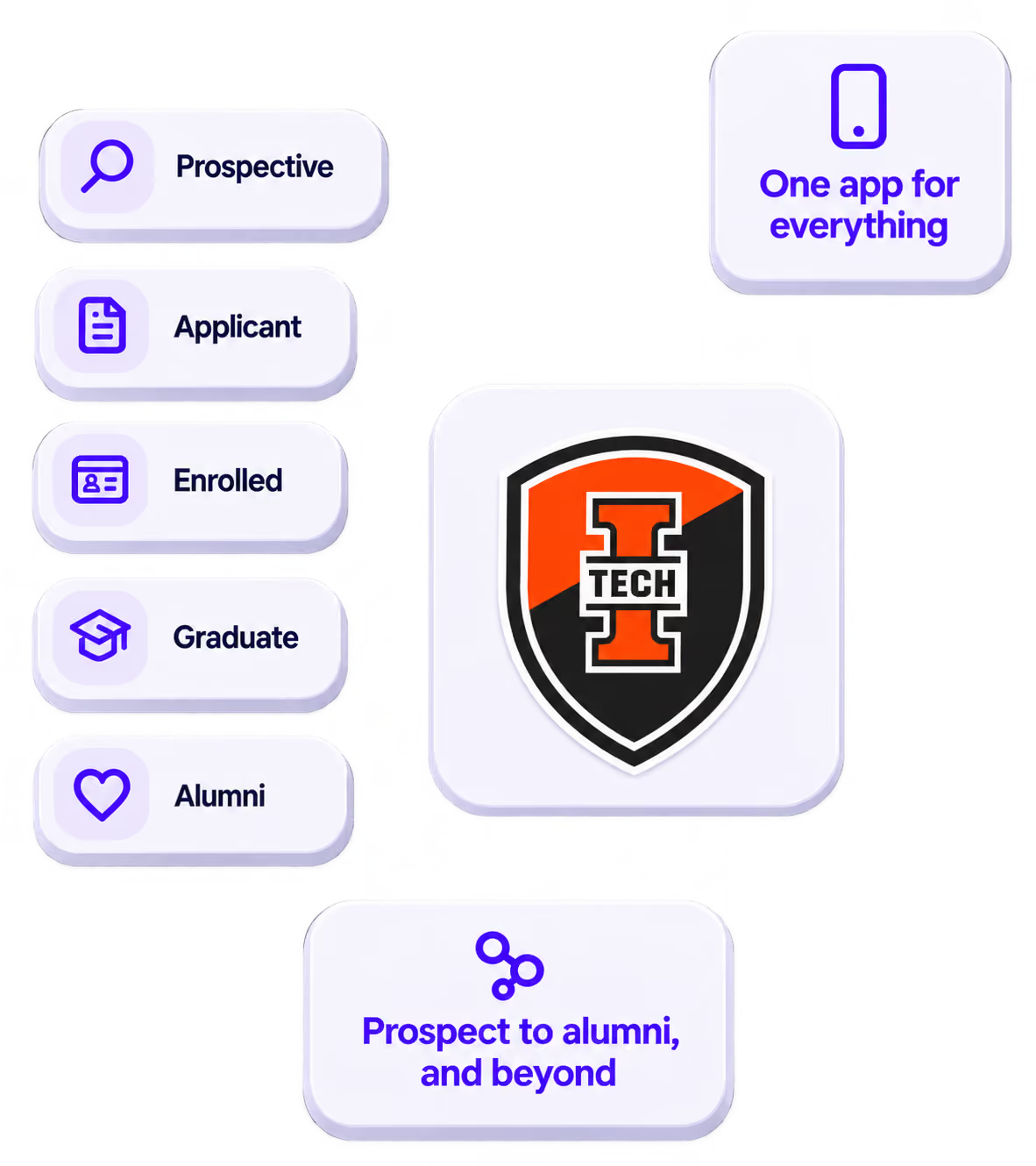
The power of your brand in your app, from first visit to alumni.
Build trust
Attendees download your app, not ours. Your name, colors, and crest in the stores.
.avif)
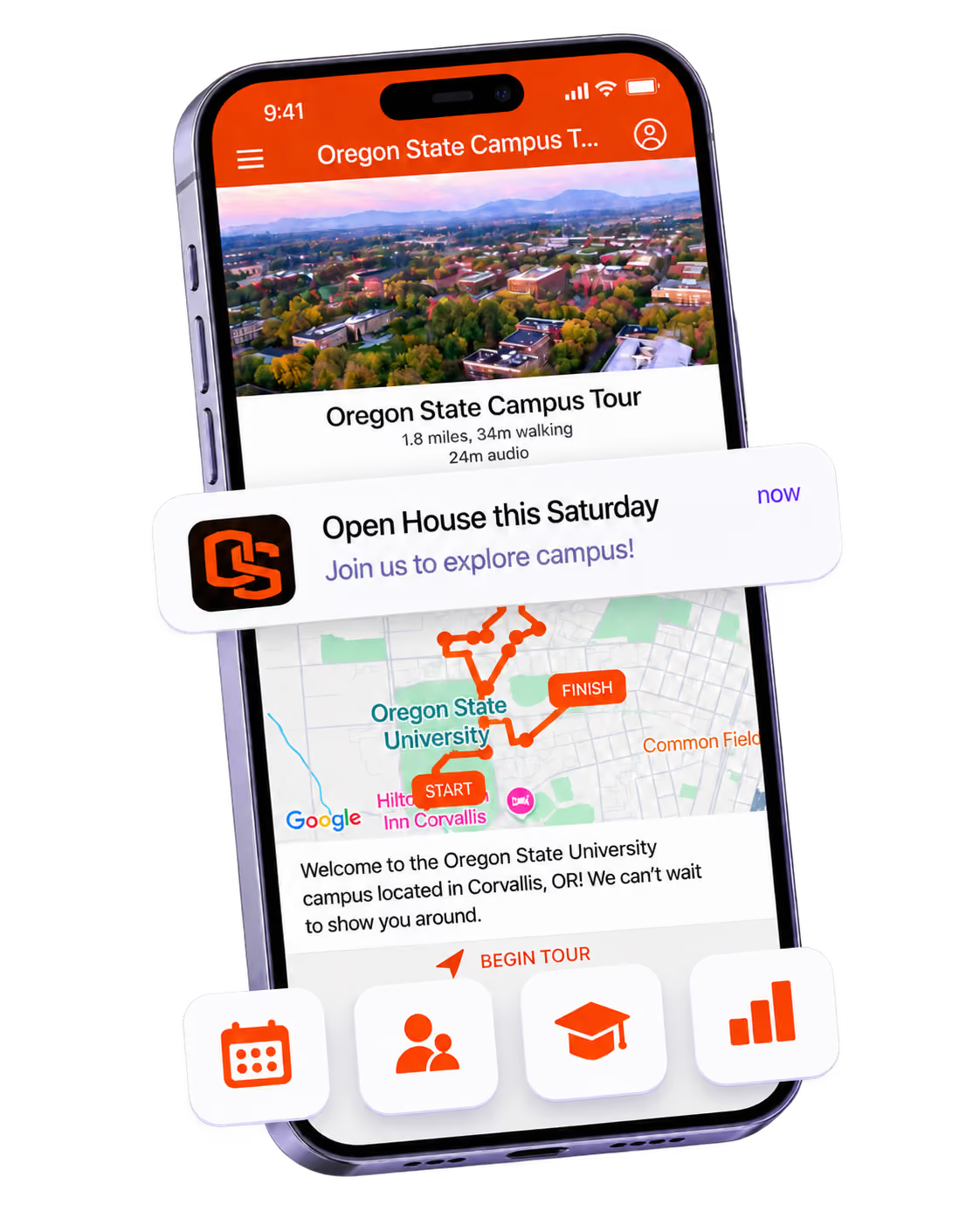
One place for the whole event
Schedules, maps, registration, and updates in one branded hub - not five tools.
Stand out
A branded app is what people keep on their phone after the printed program is in the recycling.

Get the Mobile App Playbook
A short guide to running the whole student journey in one app. No fluff, just what works.
for higher ed
Campus
Playbook
A practical guide to building a connected campus experience.
Free playbook
The Mobile App Playbook for Universities
Students decide if they belong long before they set foot on campus. This playbook shows how to win them over from the first visit through graduation.
- Grow enrollment and boost recruitment
- Increase belonging and retention
- Run every event from one branded app
By submitting, you agree to our Privacy Policy.
You're in.
.png)