
Campus apps by department
Admissions, orientation, student life, and more — one campus app that works across departments.

Campus apps by department
Admissions, orientation, student life, and more — one campus app that works across departments.
Build unlimited event apps on one license
One partnership for unlimited campus events — orientation, tours, student life, and everything in between.
Build unlimited event apps on one license
One partnership for unlimited campus events — orientation, tours, student life, and everything in between.
Compare event app platforms
See how Guidebook stacks up against other event app and registration platforms.
Compare event app platforms
See how Guidebook stacks up against other event app and registration platforms.
Event apps for nonprofit and community programs
Give members, volunteers, and donors one branded app for conferences, fundraisers, and year-round community.
Event apps for nonprofit and community programs
Give members, volunteers, and donors one branded app for conferences, fundraisers, and year-round community.
Campus integrations and an open API
Connect Guidebook with the campus systems, APIs, and tools your team already uses.
Campus integrations and an open API
Connect Guidebook with the campus systems, APIs, and tools your team already uses.
Event apps for corporate and enterprise teams
Internal meetings, offsites, and large-scale corporate events — with the branding and control enterprise teams need.
Event apps for corporate and enterprise teams
Internal meetings, offsites, and large-scale corporate events — with the branding and control enterprise teams need.
Create a branded event app with no coding
Put schedules, maps, resources, and updates in every attendee's pocket — built for campus events and programs.
Create a branded event app with no coding
Put schedules, maps, resources, and updates in every attendee's pocket — built for campus events and programs.
Launch a branded, white-label event app
A white-label event app with your branding, your content, and your attendee experience — no coding required.
Launch a branded, white-label event app
A white-label event app with your branding, your content, and your attendee experience — no coding required.
Everything in the Guidebook platform
Explore the features event teams use to engage attendees before, during, and after the event.
Everything in the Guidebook platform
Explore the features event teams use to engage attendees before, during, and after the event.
One app for in-person and virtual attendees
The same schedule, networking, and updates whether people are in the room or joining remotely.
One app for in-person and virtual attendees
The same schedule, networking, and updates whether people are in the room or joining remotely.
Event apps built for associations
Annual meetings, chapter events, and member engagement — without rebuilding a new app every year.
Event apps built for associations
Annual meetings, chapter events, and member engagement — without rebuilding a new app every year.
A branded event website that matches the app
Promote the event, collect interest, and keep branding consistent from the first click to check-in.
A branded event website that matches the app
Promote the event, collect interest, and keep branding consistent from the first click to check-in.
Plan, run, and measure events on one platform
App, registration, badges, and websites in one workflow — so planning isn't a pile of disconnected tools.
Plan, run, and measure events on one platform
App, registration, badges, and websites in one workflow — so planning isn't a pile of disconnected tools.
Keep members engaged between events
One branded app for the conference and everything that happens the other 51 weeks of the year.
Keep members engaged between events
One branded app for the conference and everything that happens the other 51 weeks of the year.
The conference app attendees actually use
Schedules, maps, networking, and live updates for annual meetings, summits, and multi-day conferences.
The conference app attendees actually use
Schedules, maps, networking, and live updates for annual meetings, summits, and multi-day conferences.
Registration that feeds your app and badges
Collect registrations, payments, and attendee data in the same platform as your event app.
Registration that feeds your app and badges
Collect registrations, payments, and attendee data in the same platform as your event app.
Design and print event badges in one place
Custom badges, QR check-in, and on-site printing — without a separate badge vendor.
Design and print event badges in one place
Custom badges, QR check-in, and on-site printing — without a separate badge vendor.
A Smaller School?
Deliver a polished, branded event experience without a large team or a big budget.
A Smaller School?
Deliver a polished, branded event experience without a large team or a big budget.
Running Family Programs?
Give families everything they need, from schedules and maps to real-time updates, all in one place.
Running Family Programs?
Give families everything they need, from schedules and maps to real-time updates, all in one place.
Coordinating Move-In Day?
Share updates, manage events, and keep students informed from move-in through the academic year.

Coordinating Move-In Day?
Share updates, manage events, and keep students informed from move-in through the academic year.
Offering Campus Tours?
Deliver branded, self-guided tour experiences with interactive maps and rich media, available 24/7.

Offering Campus Tours?
Deliver branded, self-guided tour experiences with interactive maps and rich media, available 24/7.
Organising a Career Fair?
Simplify logistics for students, employers, and Career Services staff with one easy-to-use app.
Organising a Career Fair?
Simplify logistics for students, employers, and Career Services staff with one easy-to-use app.
Managing Alumni Events?
Plan reunions, regional events, and fundraising campaigns with an app built for alumni engagement.
Managing Alumni Events?
Plan reunions, regional events, and fundraising campaigns with an app built for alumni engagement.
Boost Student Engagement
One hub for schedules, resources, and events that keeps students connected throughout the academic year.
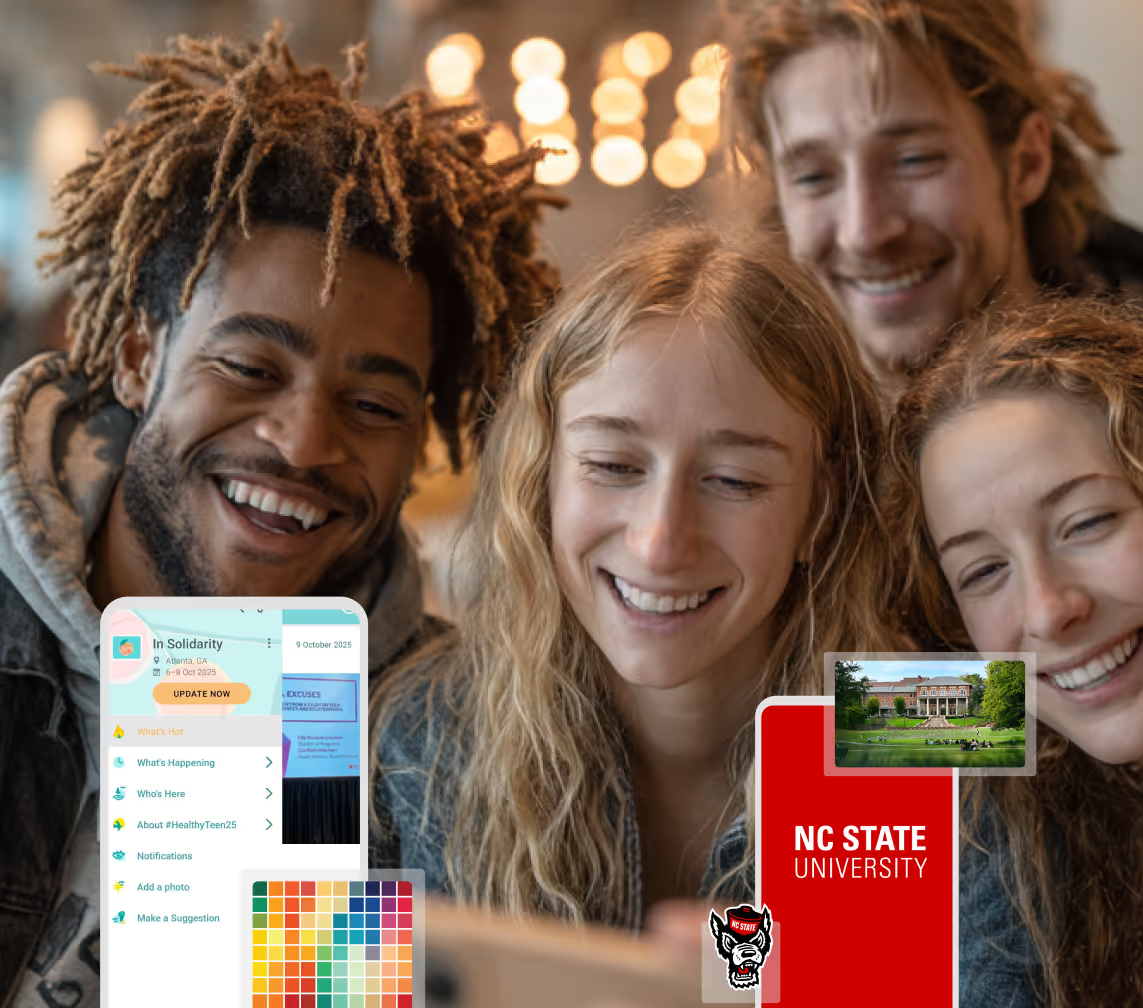
Boost Student Engagement
One hub for schedules, resources, and events that keeps students connected throughout the academic year.
Planning Orientation?
Help new students feel prepared from day one with schedules, campus resources, and real-time updates in one app.
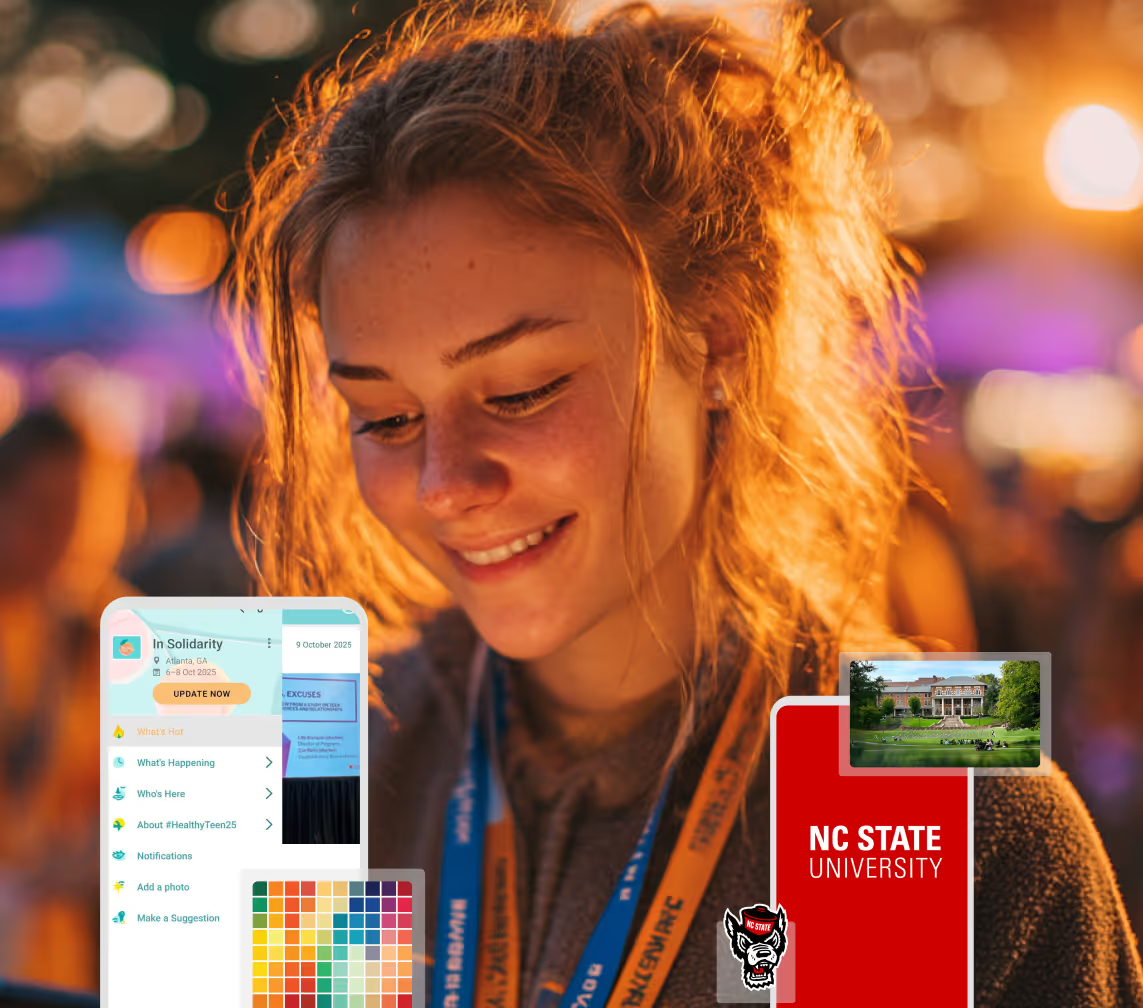
Planning Orientation?
Help new students feel prepared from day one with schedules, campus resources, and real-time updates in one app.
Running Admissions Events?
Manage open houses, tours, and yield events with a branded app that saves time and engages prospective students.

Running Admissions Events?
Manage open houses, tours, and yield events with a branded app that saves time and engages prospective students.
Get a custom Sponsorship Package Template
Stop starting from scratch. Grab free templates that helWe'll build a tailored sponsorship package with suggested pricing, tiers, and benefits..for your specific event.p you build professional sponsorship packages and close deals faster.
Get a custom Sponsorship Package Template
Stop starting from scratch. Grab free templates that helWe'll build a tailored sponsorship package with suggested pricing, tiers, and benefits..for your specific event.p you build professional sponsorship packages and close deals faster.
Plan Your Next Event Without Missing a Beat.
From venue selection to post-event wrap-up, this free checklist walks you through every step (so nothing falls through the cracks).
.avif)
Plan Your Next Event Without Missing a Beat.
From venue selection to post-event wrap-up, this free checklist walks you through every step (so nothing falls through the cracks).
Real Results From Real Events
100,000+ organizations trust Guidebook. See exactly how universities, associations, enterprises, and more put it to work.

Real Results From Real Events
100,000+ organizations trust Guidebook. See exactly how universities, associations, enterprises, and more put it to work.
Flexible pricing for every event size
Find the perfect plan for your needs, from intimate gatherings to large-scale conferences.

Flexible pricing for every event size
Find the perfect plan for your needs, from intimate gatherings to large-scale conferences.
Join our event experts
Watch on-demand webinars and join live sessions with industry leaders sharing best practices for event success.
.avif)
Join our event experts
Watch on-demand webinars and join live sessions with industry leaders sharing best practices for event success.
Guidebook in Action
Book a personalized walkthrough and discover how we help event teams create better attendee experiences.
Guidebook in Action
Book a personalized walkthrough and discover how we help event teams create better attendee experiences.

What is Symposium vs Conference?
Symposium vs Conference: Discover the key differences, unique formats, and benefits of each event type. Learn which suits your goals, plus tips for planning and maximizing impact.

Symposiums and conferences bring experts together, but they serve different purposes. Knowing the difference helps you pick the format that actually fits your goals.
A symposium dives deep into one specific topic with expert-led discussions, while a conference casts a wider net, covering multiple subjects across various sessions. Choose wrong, and you'll frustrate attendees who expected something different. Choose right, and you'll create an event that truly delivers value.
Key Characteristics of Symposiums
- Single-Topic Focus: Symposiums zero in on one subject area. Every session, speaker, and discussion connects to that central theme.
- Expert-Driven Content: Speakers are typically leading authorities in their field. They present research findings, case studies, or specialized knowledge.
- Smaller Audience Size: Most symposiums attract 50-200 attendees. This intimate setting encourages deeper engagement.
- Academic or Scientific Orientation: Universities, research institutions, and professional associations commonly host symposiums to advance knowledge.
- Interactive Discussion Format: Q&A sessions, panel debates, and roundtable discussions are standard. Attendees actively participate rather than passively listen.
- Shorter Duration: Symposiums typically run one to two days. The focused agenda doesn't require extended time.
- Peer-to-Peer Learning: Attendees often share similar expertise levels. Conversations happen among equals exploring nuanced topics together.
Key Characteristics of Conferences
- Multi-Track Programming: Conferences offer parallel sessions covering different topics. Attendees choose sessions based on their interests.
- Diverse Audience: Participants range from beginners to experts. Content caters to various experience levels and specializations.
- Larger Scale: Conferences typically host 200 to 10,000+ attendees. Major industry conferences can draw even bigger crowds.
- Networking Emphasis: Dedicated networking sessions, exhibitor halls, and social events help attendees build professional connections.
- Keynote Presentations: High-profile speakers deliver inspiring talks to the full audience. These sessions anchor the event experience.
- Extended Duration: Most conferences run two to five days. Some annual events stretch even longer.
- Commercial Elements: Sponsor booths, product demos, and sponsorship packages are common features.
Symposium vs Conference: Side-by-Side Comparison
Symposium
- Scope: Narrow, single-topic focus with deep exploration
- Focus: Knowledge advancement and expert discourse
- Timeline: 1-2 days typically
- Audience: 50-200 specialists in the field
- Goal: Generate insights, debate findings, advance understanding
Conference
- Scope: Broad coverage across multiple topics and tracks
- Focus: Industry trends, networking, and professional development
- Timeline: 2-5 days on average
- Audience: 200-10,000+ professionals at various levels
- Goal: Connect professionals, share trends, showcase innovations
Both formats have their place in event planning. Your choice depends on what you want attendees to walk away with. Deep expertise? Go symposium. Broad exposure and connections? Conference wins.
When to Choose a Symposium
You Have a Specific Research Question
Symposiums shine when you need to tackle one complex issue from multiple angles. Medical researchers exploring a new treatment approach benefit from this format. So do policy experts examining a single regulatory challenge.
The focused structure keeps discussions productive. No one gets distracted by unrelated topics.
Your Audience Shares Deep Expertise
When attendees already understand the basics, you can skip introductory content. Symposiums let experts jump straight into advanced discussions.
This saves time and increases value. Nobody sits through content they've heard a hundred times before.
You Want Meaningful Dialogue
Smaller groups enable real conversation. Attendees can challenge ideas, ask follow-up questions, and build on each other's insights.
This collaborative atmosphere often produces breakthrough thinking. It's harder to achieve in a 5,000-person conference hall.
Budget Constraints Exist
Symposiums cost less to produce than large conferences. Fewer attendees mean smaller venues, less catering, and simpler logistics.
You can still deliver exceptional value without the massive budget a conference requires.
When to Choose a Conference
You're Serving a Diverse Industry
Attendees pick what matters to them. Everyone finds relevant content.
Networking Is a Primary Goal
Conferences create natural networking opportunities. Coffee breaks, exhibitor halls, and evening events bring people together.
For associations and industry groups, these connections often matter more than any single session. Check out current event trends to see how networking formats are evolving.
You Want to Attract Sponsors
Larger audiences mean more sponsor interest. Companies pay premium rates to reach thousands of potential customers.
This revenue can offset event costs significantly. Some conferences turn a profit through sponsorship packages alone.
You're Building Industry Presence
Annual conferences become anchor events for industries. They establish your organization as a leader and create anticipation year after year.
The women in business conference format has grown precisely because it fills this community-building role.
Why Understanding This Difference Matters
For Event Success
- Attendee Satisfaction: Matching format to expectations keeps participants happy and engaged throughout your event.
- Speaker Recruitment: Experts know what they're signing up for. Clear format descriptions attract the right presenters.
- Content Quality: Focused symposiums produce deeper insights. Broad conferences offer wider exposure. Both deliver value differently.
- Logistics Planning: Venue size, catering needs, and check-in software requirements vary dramatically between formats.
- Marketing Clarity: Your event digital marketing works better when you accurately describe what attendees will experience.
For Business Objectives
- Revenue Goals: Conferences typically generate more ticket and sponsorship revenue. Symposiums may prioritize knowledge over profit.
- Brand Positioning: Hosting a prestigious symposium establishes thought leadership. Large conferences demonstrate industry influence.
- Community Building: Both formats create community, but in different ways. Choose based on the relationships you want to foster.
- Lead Generation: Conferences with exhibitor halls drive more sales leads. Symposiums create deeper connections with fewer prospects.
- ROI Measurement: Understanding your format helps you set appropriate event ROI benchmarks and success metrics.
Guidebook's event management platform supports both formats. Whether you're running an intimate 100-person symposium or a 5,000-attendee conference, the right tools make execution smoother.
Symposium vs Conference Best Practices
- Define Your Primary Objective First: Ask what success looks like before choosing a format. Deep learning? Broad networking? Industry showcase? Your answer guides everything else.
- Know Your Audience's Expertise Level: Survey potential attendees about their background. Homogeneous expertise suggests symposium. Mixed levels point toward conference.
- Calculate Your Budget Realistically: Conferences cost more but can generate more revenue. Symposiums require less investment but may not attract sponsors. Run the numbers.
- Consider Hybrid Approaches: Some organizations host a symposium within a larger conference. This serves both deep-dive seekers and broad-interest attendees.
- Plan Content Depth Appropriately: Symposium presentations should assume baseline knowledge. Conference sessions need clearer context for diverse audiences.
- Design Networking Differently: Symposiums benefit from structured discussion groups. Conferences need dedicated networking time and spaces. Use event management tips to optimize both.
- Set Realistic Attendance Targets: A 500-person symposium might feel too big. A 100-person conference might feel too small. Match expectations to format.
- Choose Venues That Fit: Symposiums work in academic settings or boutique hotels. Conferences need convention centers or large hotels with breakout rooms.
- Market to the Right Audience: Your event advertising should attract people who want what you're offering. Mismatched expectations hurt everyone.
- Use Technology Appropriately: Both formats benefit from event apps, but feature needs differ. Symposiums prioritize discussion tools. Conferences need wayfinding and scheduling features.
Common Symposium vs Conference Mistakes
Calling Everything a Conference: Some planners default to "conference" regardless of format. This confuses attendees and dilutes your event's identity. Use accurate terminology.
Ignoring Audience Expectations: Symposium attendees expect deep discussion. Conference attendees expect variety and networking. Disappointing either group damages your reputation.
Mismatching Scale and Format: A 2,000-person symposium loses intimacy. A 50-person conference lacks energy. Size and format must align.
Underestimating Logistics Differences: Conference event production requires more AV equipment, larger teams, and complex scheduling. Plan accordingly.
Skipping the Event Debrief: Both formats need post-event analysis. What worked? What didn't? Capture insights while they're fresh.
Neglecting Virtual Options: Both symposiums and conferences can include virtual event components. Hybrid approaches expand reach without sacrificing format integrity.
Forgetting Follow-Up: The event ends, but relationships shouldn't. Plan how you'll maintain connections regardless of format.
Final Thoughts
Choosing between a symposium and conference isn't about which is "better." It's about which serves your specific goals, audience, and resources. Both formats create value when executed well.
The event industry continues evolving. Webinars and virtual gatherings have expanded options further. But the fundamental distinction between deep-dive symposiums and broad-reach conferences remains relevant.
Great event planners match format to purpose. They understand that a brilliant symposium and a successful conference look completely different—and that's okay. The magic happens when expectations align with delivery.
Ready to plan your next symposium or conference? Guidebook helps you execute either format flawlessly. Explore our event templates, check out case studies from organizations like yours, or book a demo to see the platform in action. Whatever format you choose, the right tools make all the difference.
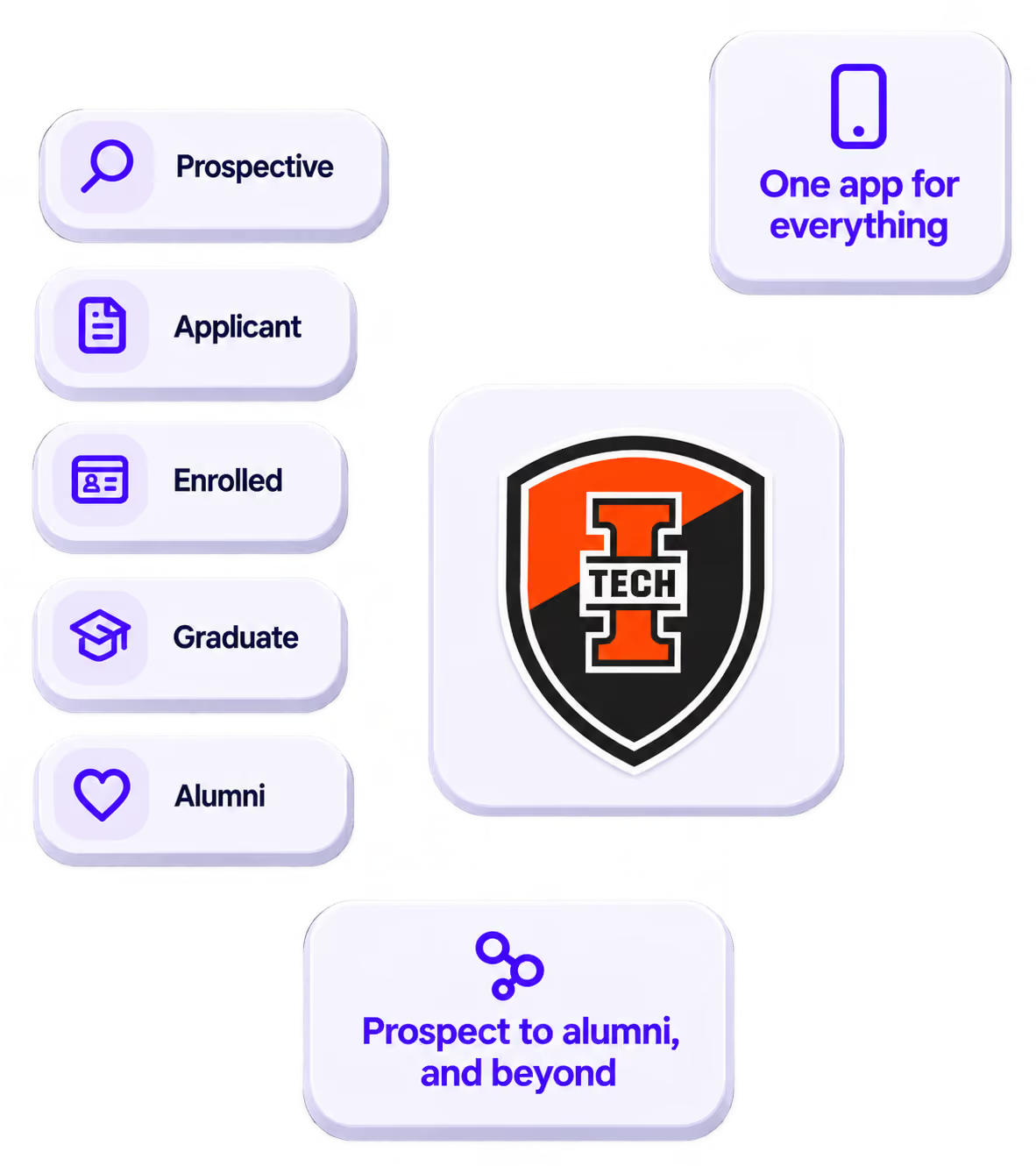
The power of your brand in your app, from first visit to alumni.
Build trust
Attendees download your app, not ours. Your name, colors, and crest in the stores.
.avif)
One place for the whole event
Schedules, maps, registration, and updates in one branded hub - not five tools.
Stand out
A branded app is what people keep on their phone after the printed program is in the recycling.
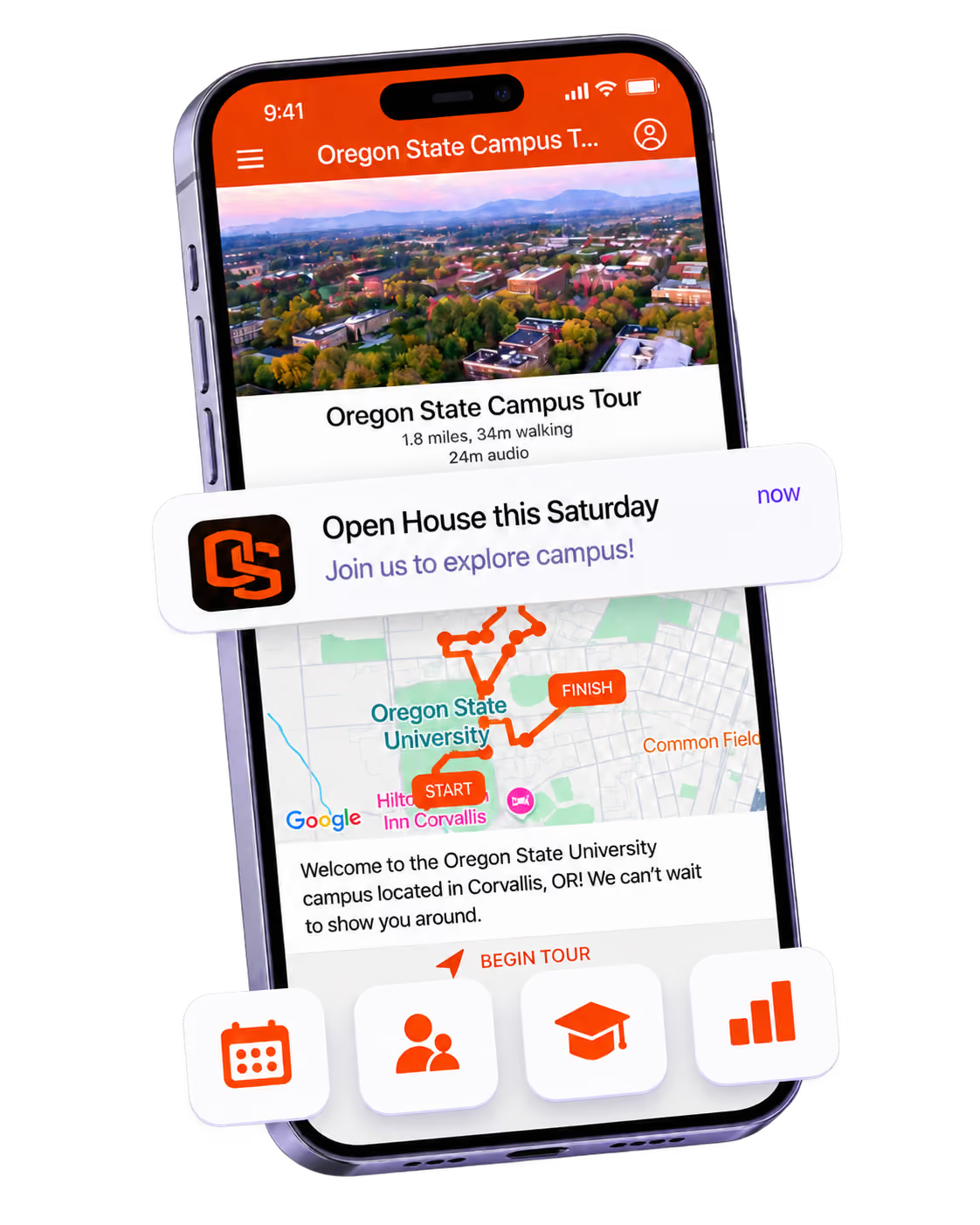

Get the Mobile App Playbook
A short guide to running the whole student journey in one app. No fluff, just what works.
for higher ed
Campus
Playbook
A practical guide to building a connected campus experience.
Free playbook
The Mobile App Playbook for Universities
Students decide if they belong long before they set foot on campus. This playbook shows how to win them over from the first visit through graduation.
- Grow enrollment and boost recruitment
- Increase belonging and retention
- Run every event from one branded app
By submitting, you agree to our Privacy Policy.
You're in.
.png)