
Campus apps by department
Admissions, orientation, student life, and more — one campus app that works across departments.

Campus apps by department
Admissions, orientation, student life, and more — one campus app that works across departments.
Build unlimited event apps on one license
One partnership for unlimited campus events — orientation, tours, student life, and everything in between.
Build unlimited event apps on one license
One partnership for unlimited campus events — orientation, tours, student life, and everything in between.
Compare event app platforms
See how Guidebook stacks up against other event app and registration platforms.
Compare event app platforms
See how Guidebook stacks up against other event app and registration platforms.
Event apps for nonprofit and community programs
Give members, volunteers, and donors one branded app for conferences, fundraisers, and year-round community.
Event apps for nonprofit and community programs
Give members, volunteers, and donors one branded app for conferences, fundraisers, and year-round community.
Campus integrations and an open API
Connect Guidebook with the campus systems, APIs, and tools your team already uses.
Campus integrations and an open API
Connect Guidebook with the campus systems, APIs, and tools your team already uses.
Event apps for corporate and enterprise teams
Internal meetings, offsites, and large-scale corporate events — with the branding and control enterprise teams need.
Event apps for corporate and enterprise teams
Internal meetings, offsites, and large-scale corporate events — with the branding and control enterprise teams need.
Create a branded event app with no coding
Put schedules, maps, resources, and updates in every attendee's pocket — built for campus events and programs.
Create a branded event app with no coding
Put schedules, maps, resources, and updates in every attendee's pocket — built for campus events and programs.
Launch a branded, white-label event app
A white-label event app with your branding, your content, and your attendee experience — no coding required.
Launch a branded, white-label event app
A white-label event app with your branding, your content, and your attendee experience — no coding required.
Everything in the Guidebook platform
Explore the features event teams use to engage attendees before, during, and after the event.
Everything in the Guidebook platform
Explore the features event teams use to engage attendees before, during, and after the event.
One app for in-person and virtual attendees
The same schedule, networking, and updates whether people are in the room or joining remotely.
One app for in-person and virtual attendees
The same schedule, networking, and updates whether people are in the room or joining remotely.
Event apps built for associations
Annual meetings, chapter events, and member engagement — without rebuilding a new app every year.
Event apps built for associations
Annual meetings, chapter events, and member engagement — without rebuilding a new app every year.
A branded event website that matches the app
Promote the event, collect interest, and keep branding consistent from the first click to check-in.
A branded event website that matches the app
Promote the event, collect interest, and keep branding consistent from the first click to check-in.
Plan, run, and measure events on one platform
App, registration, badges, and websites in one workflow — so planning isn't a pile of disconnected tools.
Plan, run, and measure events on one platform
App, registration, badges, and websites in one workflow — so planning isn't a pile of disconnected tools.
Keep members engaged between events
One branded app for the conference and everything that happens the other 51 weeks of the year.
Keep members engaged between events
One branded app for the conference and everything that happens the other 51 weeks of the year.
The conference app attendees actually use
Schedules, maps, networking, and live updates for annual meetings, summits, and multi-day conferences.
The conference app attendees actually use
Schedules, maps, networking, and live updates for annual meetings, summits, and multi-day conferences.
Registration that feeds your app and badges
Collect registrations, payments, and attendee data in the same platform as your event app.
Registration that feeds your app and badges
Collect registrations, payments, and attendee data in the same platform as your event app.
Design and print event badges in one place
Custom badges, QR check-in, and on-site printing — without a separate badge vendor.
Design and print event badges in one place
Custom badges, QR check-in, and on-site printing — without a separate badge vendor.
A Smaller School?
Deliver a polished, branded event experience without a large team or a big budget.
A Smaller School?
Deliver a polished, branded event experience without a large team or a big budget.
Running Family Programs?
Give families everything they need, from schedules and maps to real-time updates, all in one place.
Running Family Programs?
Give families everything they need, from schedules and maps to real-time updates, all in one place.
Coordinating Move-In Day?
Share updates, manage events, and keep students informed from move-in through the academic year.

Coordinating Move-In Day?
Share updates, manage events, and keep students informed from move-in through the academic year.
Offering Campus Tours?
Deliver branded, self-guided tour experiences with interactive maps and rich media, available 24/7.

Offering Campus Tours?
Deliver branded, self-guided tour experiences with interactive maps and rich media, available 24/7.
Organising a Career Fair?
Simplify logistics for students, employers, and Career Services staff with one easy-to-use app.
Organising a Career Fair?
Simplify logistics for students, employers, and Career Services staff with one easy-to-use app.
Managing Alumni Events?
Plan reunions, regional events, and fundraising campaigns with an app built for alumni engagement.
Managing Alumni Events?
Plan reunions, regional events, and fundraising campaigns with an app built for alumni engagement.
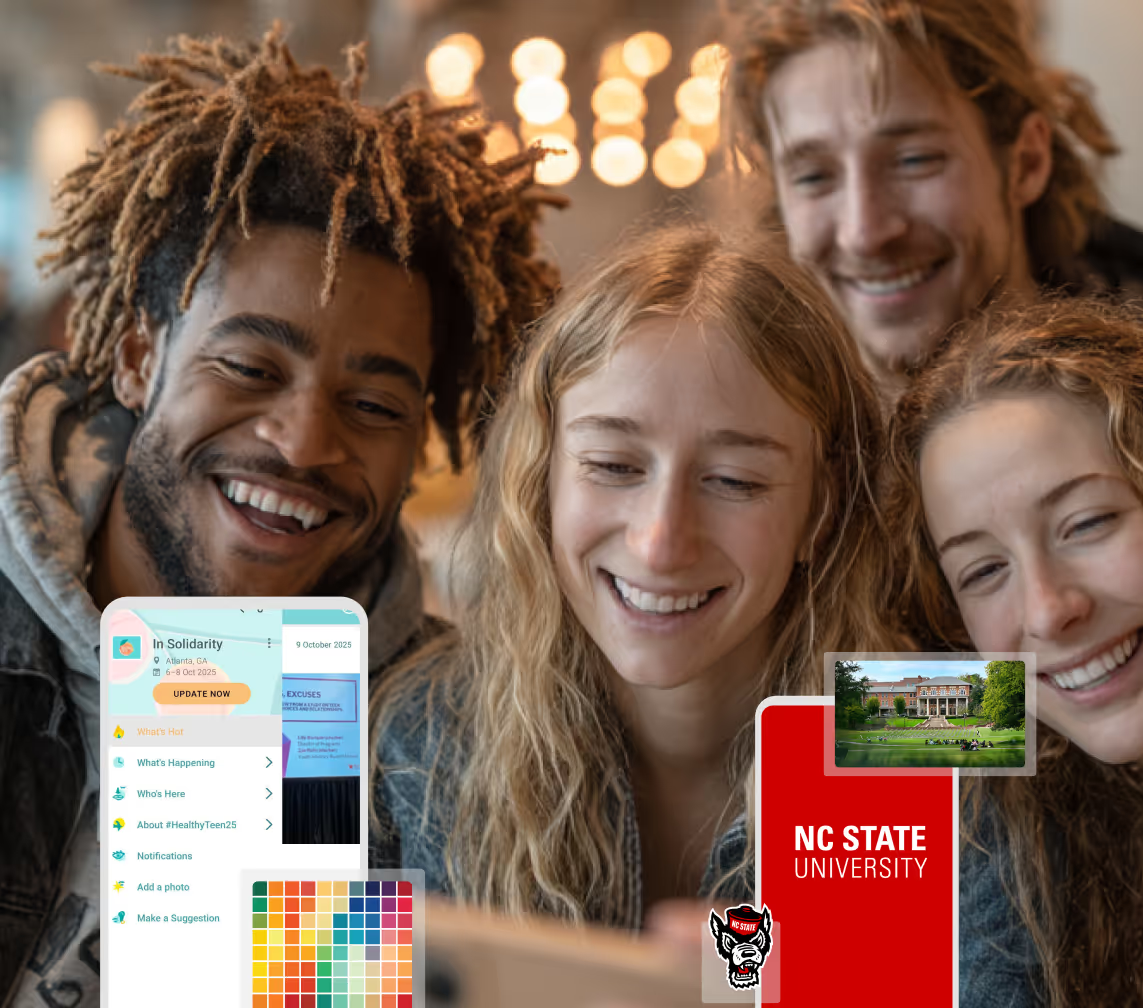
Boost Student Engagement
One hub for schedules, resources, and events that keeps students connected throughout the academic year.
Boost Student Engagement
One hub for schedules, resources, and events that keeps students connected throughout the academic year.
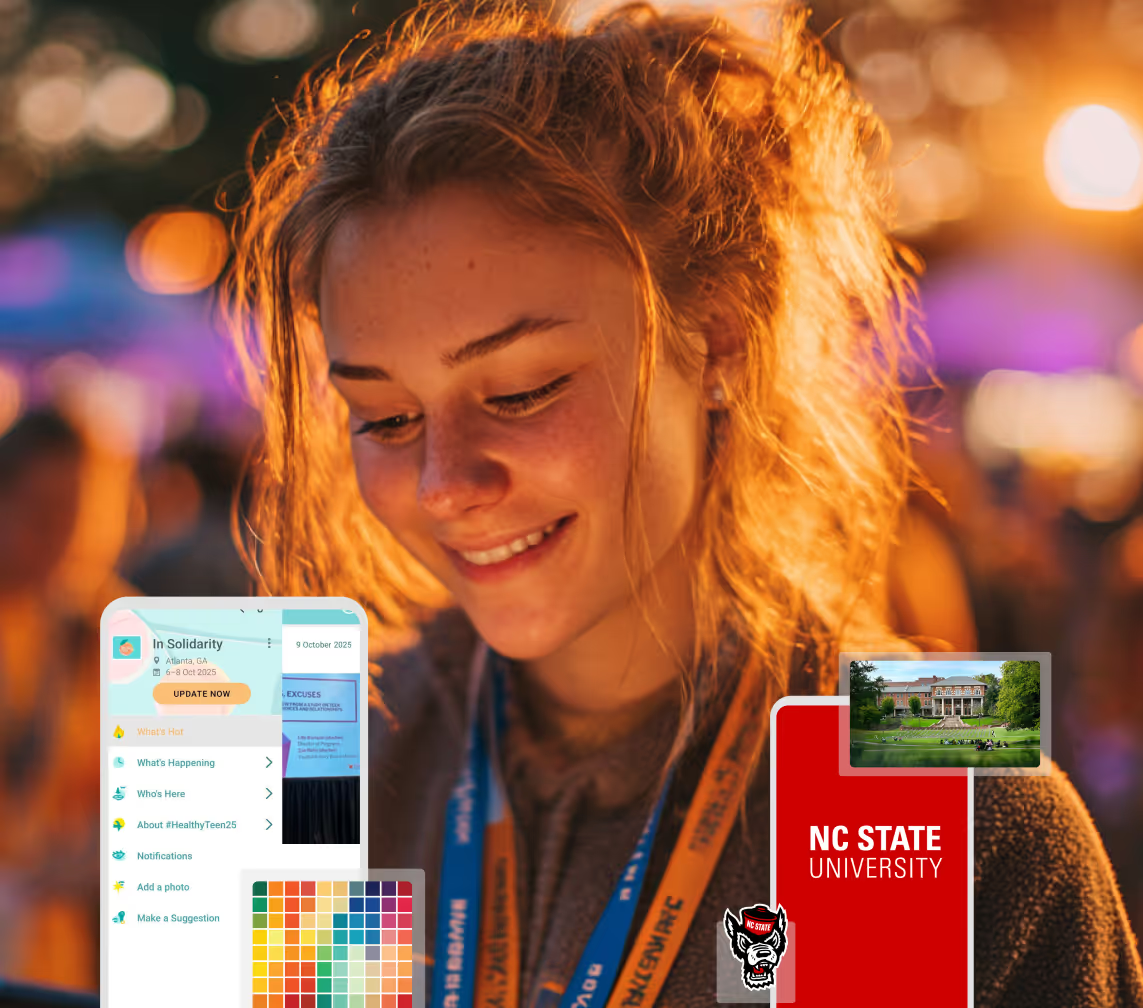
Planning Orientation?
Help new students feel prepared from day one with schedules, campus resources, and real-time updates in one app.
Planning Orientation?
Help new students feel prepared from day one with schedules, campus resources, and real-time updates in one app.
Running Admissions Events?
Manage open houses, tours, and yield events with a branded app that saves time and engages prospective students.

Running Admissions Events?
Manage open houses, tours, and yield events with a branded app that saves time and engages prospective students.
Get a custom Sponsorship Package Template
Stop starting from scratch. Grab free templates that helWe'll build a tailored sponsorship package with suggested pricing, tiers, and benefits..for your specific event.p you build professional sponsorship packages and close deals faster.
Get a custom Sponsorship Package Template
Stop starting from scratch. Grab free templates that helWe'll build a tailored sponsorship package with suggested pricing, tiers, and benefits..for your specific event.p you build professional sponsorship packages and close deals faster.
Plan Your Next Event Without Missing a Beat.
From venue selection to post-event wrap-up, this free checklist walks you through every step (so nothing falls through the cracks).
.avif)
Plan Your Next Event Without Missing a Beat.
From venue selection to post-event wrap-up, this free checklist walks you through every step (so nothing falls through the cracks).
Real Results From Real Events
100,000+ organizations trust Guidebook. See exactly how universities, associations, enterprises, and more put it to work.

Real Results From Real Events
100,000+ organizations trust Guidebook. See exactly how universities, associations, enterprises, and more put it to work.
Flexible pricing for every event size
Find the perfect plan for your needs, from intimate gatherings to large-scale conferences.

Flexible pricing for every event size
Find the perfect plan for your needs, from intimate gatherings to large-scale conferences.
Join our event experts
Watch on-demand webinars and join live sessions with industry leaders sharing best practices for event success.
.avif)
Join our event experts
Watch on-demand webinars and join live sessions with industry leaders sharing best practices for event success.
Guidebook in Action
Book a personalized walkthrough and discover how we help event teams create better attendee experiences.
Guidebook in Action
Book a personalized walkthrough and discover how we help event teams create better attendee experiences.

How can colleges reduce worried parent phone calls during orientation?
Reduce worried parent phone calls during college orientation with proactive communication strategies, helpful resources, and proven engagement tips for a smoother transition.

Parent communication orientation is the structured process of introducing families to school communication systems, expectations, and resources before or during their student's transition to a new educational environment. It covers everything from app downloads to emergency protocols. When done right, it transforms confused parents into confident partners.
Here's the thing: parent communication orientation isn't just another item on your welcome week checklist. It's the foundation for every interaction you'll have with families for the next four years. Schools that nail this process see fewer panicked phone calls, higher event attendance, and parents who actually read those important emails. Skip it, and you'll spend the whole year playing catch-up.
Key Characteristics of Parent Communication Orientation
- Multi-Channel Approach: Effective orientations introduce families to every communication tool at once—email, apps, portals, and social media. This prevents the "I didn't know where to look" excuse.
- Timing-Specific Content: Information is delivered when parents actually need it, not all at once. Move-in details come before move-in day. Billing info arrives before the first statement.
- Two-Way Communication Setup: Parents learn not just how to receive information, but how to reach the right people. They know who handles what and how to get answers fast.
- Technology Onboarding: Families get hands-on practice with parent and family program apps and portals. No one leaves wondering how to log in.
- Expectation Setting: Clear guidelines establish response times, appropriate contact methods, and boundaries. Parents understand what's urgent versus what can wait.
- Resource Mapping: Orientation connects families to key offices, support services, and information hubs. They know exactly where to turn for specific needs.
- Cultural Transition Support: For families new to higher education or a specific institution, orientation bridges knowledge gaps and reduces anxiety.
Parent Communication Orientation vs. Related Terms
New Student Orientation
- Scope: Focuses primarily on the student experience and academic preparation
- Focus: Course registration, campus navigation, peer connections
- Timeline: Typically 1-4 days before classes begin
- Channels: In-person sessions, new student program apps, campus tours
- Goal: Prepare students for academic and social success
Family Weekend Programming
- Scope: Ongoing engagement event for established families
- Focus: Campus experience, relationship building, school pride
- Timeline: Annual event, usually fall semester
- Channels: Event apps, email campaigns, social media
- Goal: Strengthen family connection and support fundraising
Parent Portal Training
- Scope: Narrow focus on one specific technology tool
- Focus: Technical how-to for accessing grades, billing, and records
- Timeline: Brief session or tutorial video
- Channels: Online modules, help documentation
- Goal: Enable self-service access to student information
Parent communication orientation encompasses elements of all three but serves a distinct purpose. It's the comprehensive foundation that makes every other family touchpoint more effective. Think of it as the operating system that runs all your parent engagement programs.
Essential Parent Communication Orientation Components
Build Your Communication Channel Directory
Parents need a clear map of how information flows. Create a simple reference guide that answers: "Where do I find X?"
Your directory should include:
- Emergency alerts and how they're delivered
- Routine announcements and their frequency
- Academic updates and grade access
- Financial information and billing notifications
- Event invitations and registration links
Introduce Your Technology Stack
Don't assume parents know how to use your tools. Walk them through each platform step by step.
Cover the basics: account creation, password recovery, notification settings, and mobile access. Schools using platforms like Guidebook for schools can streamline this by putting everything in one branded app. One download, one login, one place to check.
Establish Response Time Expectations
Nothing frustrates parents more than unanswered questions. Set clear expectations upfront about when they'll hear back.
Be specific: "Emails to the Dean's office receive responses within 2 business days." This simple clarity prevents dozens of follow-up calls and builds trust from day one.
Create Your Emergency Protocol Guide
Parents worry. It's what they do. Address this head-on with crystal-clear emergency communication procedures.
Explain exactly how you'll reach them during a crisis. Cover weather closures, safety incidents, and health emergencies. Test their contact information during orientation to catch errors early.
Connect Families to Key Contacts
Generic contact forms frustrate everyone. Give parents direct paths to the people who can actually help.
Introduce key staff members by name and role. Share office hours, preferred contact methods, and realistic response times. This personal touch makes your institution feel accessible, not bureaucratic.
The Parent Communication Orientation Process
Start with Pre-Arrival Outreach
Your orientation begins weeks before families arrive on campus. Use this time wisely.
Send a welcome email series that introduces your communication philosophy. Include links to download your mobile app and set up portal accounts. Ask families to verify their contact information. This prep work makes in-person sessions more productive.
Design Interactive Sessions
Passive presentations don't work. Parents tune out after 10 minutes of slides.
Instead, build hands-on activities into your sessions:
- Live app walkthroughs where parents follow along on their phones
- Scavenger hunts that require finding information in your portal
- Q&A panels with current parents who share real experiences
- Small group discussions led by staff from key offices
Provide Take-Home Resources
Parents won't remember everything from orientation day. Give them reference materials they can use later.
Digital resources work best—they're searchable and always accessible. Include quick-start guides, FAQ documents, and video tutorials. Store everything in your app or portal so families know exactly where to find help.
Follow Up Within the First Week
The real test comes after orientation ends. Check in with families to reinforce what they learned.
Send a brief survey asking about their experience. Share a "what to expect this week" message. Remind them how to access key resources. This follow-up shows you're invested in their success, not just checking boxes.
Measure and Improve Continuously
Track metrics that matter. How many parents downloaded your app? How many activated their portal accounts? What questions keep coming up?
Use this data to refine your approach each year. The best parent communication orientations evolve based on real feedback, not assumptions.
Why Parent Communication Orientation Matters
For Event Success:
- Higher Attendance Rates: Parents who understand your communication channels actually see event invitations and respond to them.
- Reduced Day-Of Confusion: Families arrive knowing where to go, what to expect, and how to get help if needed.
- Better Engagement Quality: Informed parents ask better questions and participate more meaningfully in sessions.
- Smoother Check-In Processes: When families already have your app installed, event check-in takes seconds instead of minutes.
- Stronger Word-of-Mouth: Satisfied parents tell other families about their positive experience, boosting future participation.
For Business Objectives:
- Decreased Support Burden: Well-oriented families find answers themselves instead of calling your office repeatedly.
- Improved Retention Indicators: Strong family engagement correlates with student persistence and graduation rates.
- Enhanced Fundraising Potential: Parents who feel connected to your institution give more generously over time.
- Stronger Brand Perception: Professional communication orientation signals institutional quality and competence.
- Measurable Event ROI: Clear communication channels make it easier to track engagement and demonstrate program value.
Schools using Guidebook's event management platform can centralize all parent communications in one branded space. This simplifies orientation, reduces confusion, and creates a seamless experience from day one through graduation.
Parent Communication Orientation Best Practices
- Start Early and Build Momentum: Begin parent outreach the moment a student commits. Don't wait until summer orientation to make first contact.
- Keep It Simple and Scannable: Use bullet points, short paragraphs, and clear headings. Parents are busy—respect their time.
- Test Every Link and Login: Nothing undermines credibility faster than broken technology. Verify everything works before orientation day.
- Offer Multiple Format Options: Some parents prefer video tutorials. Others want written guides. Provide both to accommodate different learning styles.
- Include Current Parent Voices: Peer perspectives carry weight. Feature testimonials and tips from families who've been through the process.
- Address Common Anxieties Directly: Parents worry about safety, academics, and their student's wellbeing. Acknowledge these concerns and explain how you'll communicate about them.
- Make App Downloads Unavoidable: Follow proven strategies to increase app downloads. Put QR codes everywhere—on name tags, in welcome packets, on presentation slides.
- Create a Parent-Specific FAQ: Student FAQs don't address parent concerns. Build a dedicated resource that answers family questions.
- Assign Communication Champions: Designate staff members as go-to contacts for parent questions. Give them the authority and resources to help.
- Plan for Ongoing Reinforcement: Orientation is just the beginning. Schedule regular touchpoints throughout the year to keep families engaged and informed.
Common Parent Communication Orientation Mistakes
Information Overload on Day One: Cramming every detail into a single session guarantees parents will forget most of it. Spread information across multiple touchpoints and prioritize what families need to know immediately versus what can wait.
Assuming Tech Literacy: Not every parent is comfortable with apps and portals. Some need extra support. Offer one-on-one help sessions and create step-by-step guides with screenshots for those who struggle.
Ignoring Non-Traditional Families: Grandparents, guardians, and other caregivers have different needs than traditional parents. Make sure your orientation materials and language are inclusive of all family structures.
Forgetting About Accessibility: Parents with disabilities need accessible materials and accommodations. Provide closed captions on videos, screen-reader-friendly documents, and physical accessibility at in-person events.
Treating Orientation as One-and-Done: A single session can't cover everything. Plan for ongoing communication training throughout the year, especially when you introduce new tools or processes.
Skipping the Feedback Loop: If you don't ask parents what worked and what didn't, you'll keep making the same mistakes. Build evaluation into your event planning process from the start.
Neglecting Staff Training: Your orientation is only as good as the people delivering it. Make sure everyone who interacts with parents understands your communication systems and can answer questions confidently.
Final Thoughts
Parent communication orientation sets the tone for your entire relationship with families. Get it right, and you'll have engaged partners who support their students and your institution. Get it wrong, and you'll spend years rebuilding trust.
The schools that excel at family engagement treat orientation as a strategic investment, not an administrative chore. They understand that today's parents expect the same seamless digital experiences they get from every other service in their lives. Meeting those expectations requires intentional planning and the right tools.
Here's the exciting part: you don't have to figure this out alone. Institutions like those using apps for new student orientations have already proven what works. Learn from their successes, adapt their strategies, and make them your own.
Ready to transform your parent communication orientation? Guidebook's parent and family programs solution helps schools create branded experiences that keep families informed and engaged. Request a demo to see how it works, or explore ready-made templates to get started quickly. Your future parent partners are waiting—give them the orientation experience they deserve.
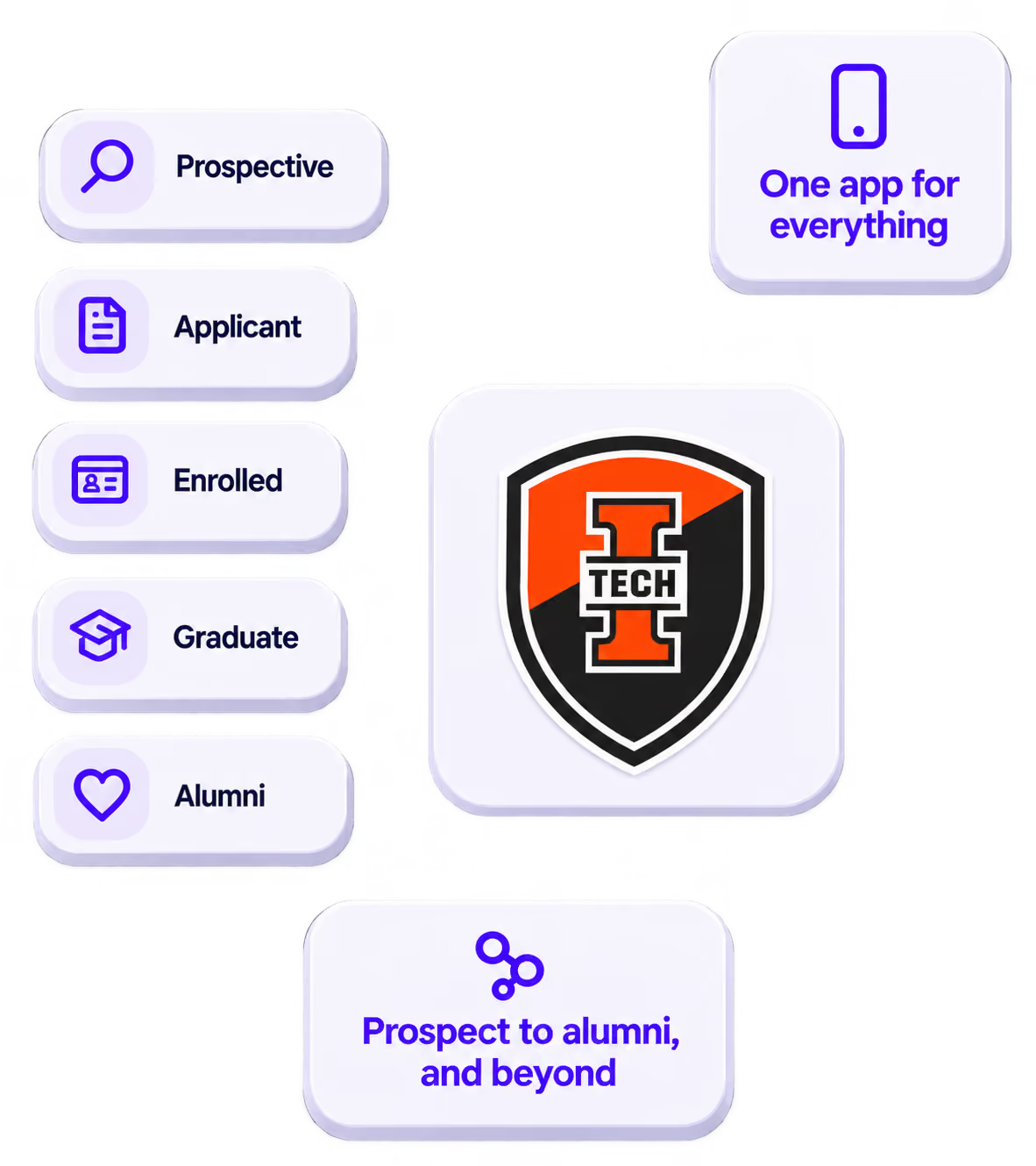
The power of your brand in your app, from first visit to alumni.
Build trust
Attendees download your app, not ours. Your name, colors, and crest in the stores.
.avif)
One place for the whole event
Schedules, maps, registration, and updates in one branded hub - not five tools.
Stand out
A branded app is what people keep on their phone after the printed program is in the recycling.
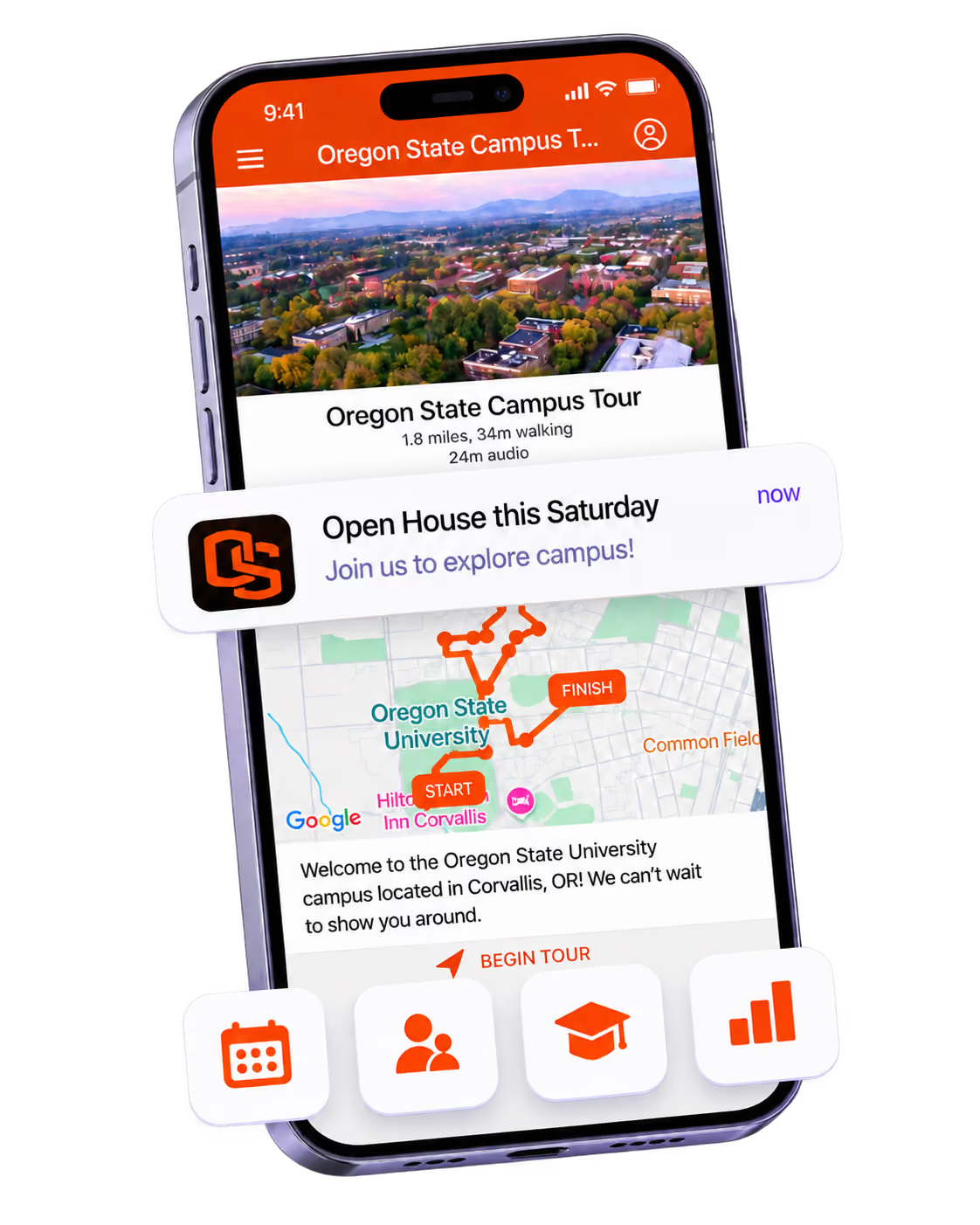

Get the Mobile App Playbook
A short guide to running the whole student journey in one app. No fluff, just what works.
for higher ed
Campus
Playbook
A practical guide to building a connected campus experience.
Free playbook
The Mobile App Playbook for Universities
Students decide if they belong long before they set foot on campus. This playbook shows how to win them over from the first visit through graduation.
- Grow enrollment and boost recruitment
- Increase belonging and retention
- Run every event from one branded app
By submitting, you agree to our Privacy Policy.
You're in.
.png)