
Campus apps by department
Admissions, orientation, student life, and more — one campus app that works across departments.

Campus apps by department
Admissions, orientation, student life, and more — one campus app that works across departments.
Build unlimited event apps on one license
One partnership for unlimited campus events — orientation, tours, student life, and everything in between.
Build unlimited event apps on one license
One partnership for unlimited campus events — orientation, tours, student life, and everything in between.
Compare event app platforms
See how Guidebook stacks up against other event app and registration platforms.
Compare event app platforms
See how Guidebook stacks up against other event app and registration platforms.
Event apps for nonprofit and community programs
Give members, volunteers, and donors one branded app for conferences, fundraisers, and year-round community.
Event apps for nonprofit and community programs
Give members, volunteers, and donors one branded app for conferences, fundraisers, and year-round community.
Campus integrations and an open API
Connect Guidebook with the campus systems, APIs, and tools your team already uses.
Campus integrations and an open API
Connect Guidebook with the campus systems, APIs, and tools your team already uses.
Event apps for corporate and enterprise teams
Internal meetings, offsites, and large-scale corporate events — with the branding and control enterprise teams need.
Event apps for corporate and enterprise teams
Internal meetings, offsites, and large-scale corporate events — with the branding and control enterprise teams need.
Create a branded event app with no coding
Put schedules, maps, resources, and updates in every attendee's pocket — built for campus events and programs.
Create a branded event app with no coding
Put schedules, maps, resources, and updates in every attendee's pocket — built for campus events and programs.
Launch a branded, white-label event app
A white-label event app with your branding, your content, and your attendee experience — no coding required.
Launch a branded, white-label event app
A white-label event app with your branding, your content, and your attendee experience — no coding required.
Everything in the Guidebook platform
Explore the features event teams use to engage attendees before, during, and after the event.
Everything in the Guidebook platform
Explore the features event teams use to engage attendees before, during, and after the event.
One app for in-person and virtual attendees
The same schedule, networking, and updates whether people are in the room or joining remotely.
One app for in-person and virtual attendees
The same schedule, networking, and updates whether people are in the room or joining remotely.
Event apps built for associations
Annual meetings, chapter events, and member engagement — without rebuilding a new app every year.
Event apps built for associations
Annual meetings, chapter events, and member engagement — without rebuilding a new app every year.
A branded event website that matches the app
Promote the event, collect interest, and keep branding consistent from the first click to check-in.
A branded event website that matches the app
Promote the event, collect interest, and keep branding consistent from the first click to check-in.
Plan, run, and measure events on one platform
App, registration, badges, and websites in one workflow — so planning isn't a pile of disconnected tools.
Plan, run, and measure events on one platform
App, registration, badges, and websites in one workflow — so planning isn't a pile of disconnected tools.
Keep members engaged between events
One branded app for the conference and everything that happens the other 51 weeks of the year.
Keep members engaged between events
One branded app for the conference and everything that happens the other 51 weeks of the year.
The conference app attendees actually use
Schedules, maps, networking, and live updates for annual meetings, summits, and multi-day conferences.
The conference app attendees actually use
Schedules, maps, networking, and live updates for annual meetings, summits, and multi-day conferences.
Registration that feeds your app and badges
Collect registrations, payments, and attendee data in the same platform as your event app.
Registration that feeds your app and badges
Collect registrations, payments, and attendee data in the same platform as your event app.
Design and print event badges in one place
Custom badges, QR check-in, and on-site printing — without a separate badge vendor.
Design and print event badges in one place
Custom badges, QR check-in, and on-site printing — without a separate badge vendor.
A Smaller School?
Deliver a polished, branded event experience without a large team or a big budget.
A Smaller School?
Deliver a polished, branded event experience without a large team or a big budget.
Running Family Programs?
Give families everything they need, from schedules and maps to real-time updates, all in one place.

Running Family Programs?
Give families everything they need, from schedules and maps to real-time updates, all in one place.
Coordinating Move-In Day?
Share updates, manage events, and keep students informed from move-in through the academic year.

Coordinating Move-In Day?
Share updates, manage events, and keep students informed from move-in through the academic year.
Offering Campus Tours?
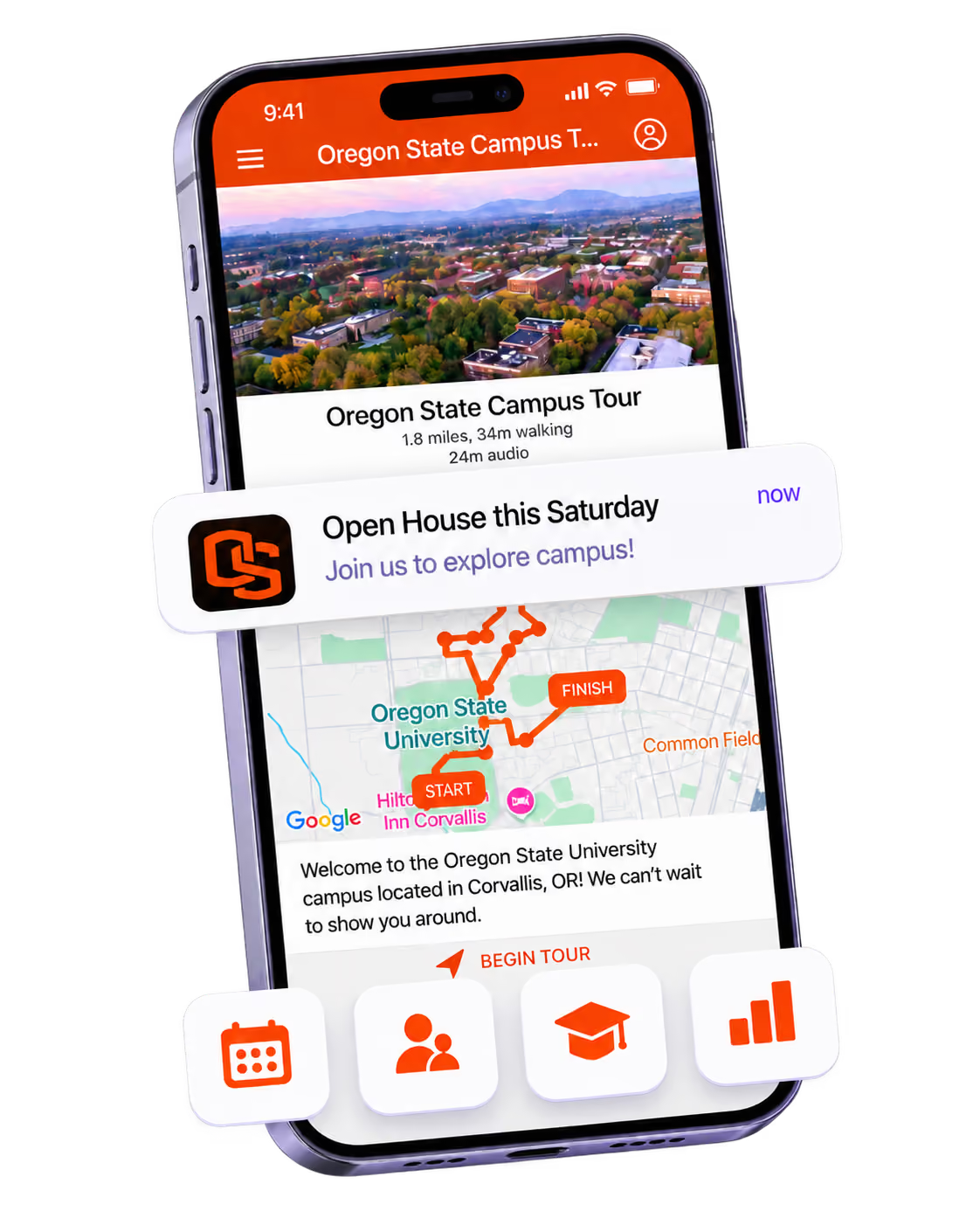
Deliver branded, self-guided tour experiences with interactive maps and rich media, available 24/7.

Offering Campus Tours?
Deliver branded, self-guided tour experiences with interactive maps and rich media, available 24/7.
Organising a Career Fair?
Simplify logistics for students, employers, and Career Services staff with one easy-to-use app.
Organising a Career Fair?
Simplify logistics for students, employers, and Career Services staff with one easy-to-use app.
Managing Alumni Events?
Plan reunions, regional events, and fundraising campaigns with an app built for alumni engagement.

Managing Alumni Events?
Plan reunions, regional events, and fundraising campaigns with an app built for alumni engagement.
Boost Student Engagement
One hub for schedules, resources, and events that keeps students connected throughout the academic year.

Boost Student Engagement
One hub for schedules, resources, and events that keeps students connected throughout the academic year.
Planning Orientation?
Help new students feel prepared from day one with schedules, campus resources, and real-time updates in one app.

Planning Orientation?
Help new students feel prepared from day one with schedules, campus resources, and real-time updates in one app.
Running Admissions Events?
Manage open houses, tours, and yield events with a branded app that saves time and engages prospective students.

Running Admissions Events?
Manage open houses, tours, and yield events with a branded app that saves time and engages prospective students.
Get a custom Sponsorship Package Template
Stop starting from scratch. Grab free templates that helWe'll build a tailored sponsorship package with suggested pricing, tiers, and benefits..for your specific event.p you build professional sponsorship packages and close deals faster.
Get a custom Sponsorship Package Template
Stop starting from scratch. Grab free templates that helWe'll build a tailored sponsorship package with suggested pricing, tiers, and benefits..for your specific event.p you build professional sponsorship packages and close deals faster.
Plan Your Next Event Without Missing a Beat.
From venue selection to post-event wrap-up, this free checklist walks you through every step (so nothing falls through the cracks).
.avif)
Plan Your Next Event Without Missing a Beat.
From venue selection to post-event wrap-up, this free checklist walks you through every step (so nothing falls through the cracks).
Real Results From Real Events
100,000+ organizations trust Guidebook. See exactly how universities, associations, enterprises, and more put it to work.

Real Results From Real Events
100,000+ organizations trust Guidebook. See exactly how universities, associations, enterprises, and more put it to work.
Flexible pricing for every event size
Find the perfect plan for your needs, from intimate gatherings to large-scale conferences.

Flexible pricing for every event size
Find the perfect plan for your needs, from intimate gatherings to large-scale conferences.
Join our event experts
Watch on-demand webinars and join live sessions with industry leaders sharing best practices for event success.
.avif)
Join our event experts
Watch on-demand webinars and join live sessions with industry leaders sharing best practices for event success.
Guidebook in Action
Book a personalized walkthrough and discover how we help event teams create better attendee experiences.
Guidebook in Action
Book a personalized walkthrough and discover how we help event teams create better attendee experiences.

How do universities measure ROI on admissions events?
Universities measure ROI on admissions events by tracking attendance, engagement, applications, and enrollment rates. Discover key metrics, evaluation methods, and strategies to maximize event impact.

Admissions event ROI is the measurement of return on investment from recruitment events that helps schools understand which activities actually convert prospective students into enrolled ones. It goes beyond counting attendees to track real outcomes like applications, deposits, and yield rates. When measured correctly, admissions event ROI transforms guesswork into data-driven decisions.
Here's the thing: most admissions teams host dozens of events each year without knowing which ones truly move the needle. Open houses, campus tours, admitted student days—they all cost time and money. But without tracking ROI, you're flying blind. The schools that win at enrollment are the ones that know exactly which events deserve more investment and which need a complete overhaul.
Key Characteristics of Admissions Event ROI
- Multi-Stage Tracking: Admissions event ROI follows prospects through the entire funnel—from initial attendance to application to enrollment. A single event touchpoint rarely tells the whole story.
- Attribution Complexity: Students often attend multiple events before deciding. Strong ROI measurement accounts for this multi-touch journey rather than crediting just one interaction.
- Cost Comprehensiveness: True ROI includes all expenses: staff time, venue costs, marketing spend, technology, catering, and travel. Hidden costs can tank your actual returns.
- Time-Delayed Results: Unlike retail sales, admissions ROI plays out over months or years. A spring campus visit might not convert until fall enrollment—or even the following year.
- Qualitative and Quantitative Balance: Numbers matter, but so does student sentiment. The best ROI frameworks capture both hard metrics and softer indicators like engagement and brand perception.
- Segment-Specific Insights: ROI varies dramatically by student type. Transfer students, first-generation students, and out-of-state prospects all respond differently to events.
Admissions Event ROI vs. Related Metrics
General Event ROI
- Scope: Applies to any event type across industries
- Focus: Revenue generation, brand awareness, or lead capture
- Timeline: Often measured within days or weeks
- Channels: Varies widely based on industry
- Goal: Immediate business outcomes
Enrollment Yield Rate
- Scope: Measures admitted-to-enrolled conversion only
- Focus: Final decision stage of the funnel
- Timeline: Typically one enrollment cycle
- Channels: All recruitment activities combined
- Goal: Maximize conversions from admits
Cost Per Enrolled Student
- Scope: Total recruitment spend divided by enrollments
- Focus: Efficiency of overall recruitment budget
- Timeline: Annual or per-cycle measurement
- Channels: Aggregates all recruitment channels
- Goal: Reduce acquisition costs
These metrics work together to paint a complete picture. Event ROI provides the framework, while yield rate and cost-per-student offer specific benchmarks. Smart admissions teams track all three to optimize their recruitment strategy.
Essential Components of Admissions Event ROI
Define Your Success Metrics First
Before hosting any event, decide what success looks like. Is it applications submitted? Campus visit sign-ups? Deposit conversions?
Different events serve different purposes. An open house might aim for broad awareness, while an admitted student day focuses on yield. Match your metrics to your goals.
Track the Full Cost Picture
Most schools undercount event costs. Here's what to include:
- Staff salaries and overtime
- Student ambassador stipends
- Marketing and promotion expenses
- Technology platforms and tools
- Venue, catering, and supplies
- Travel for off-campus events
- Opportunity costs of staff time
Build Attribution Models That Work
Students rarely convert from a single touchpoint. A prospect might attend a virtual info session, visit campus, then come to admitted student day before enrolling.
Consider using weighted attribution. Give partial credit to each event in the journey. This reveals which touchpoints matter most at each funnel stage.
Connect Your Data Systems
ROI measurement fails when data lives in silos. Your event registration system needs to talk to your CRM. Your CRM needs to connect to enrollment data.
Platforms like Guidebook's admissions tools help bridge these gaps by centralizing event data and attendee information.
Set Realistic Timeframes
Don't expect instant results. Build measurement windows that match your enrollment cycle. A fall event might not show full ROI until the following fall's enrollment numbers come in.
How to Calculate Admissions Event ROI
The Basic Formula
Start with this simple equation:
ROI = (Value Generated - Total Costs) / Total Costs × 100
The tricky part? Defining "value generated" for admissions. Most schools use tuition revenue from enrolled attendees as their primary value metric.
Assign Value to Each Conversion
Work backward from enrollment. If your average student generates $120,000 in lifetime tuition, that's your conversion value. Then calculate:
- Value per enrolled student: $120,000
- Value per admitted student (at 40% yield): $48,000
- Value per applicant (at 60% admit rate): $28,800
- Value per event attendee (at 30% apply rate): $8,640
Factor in Incremental Impact
Here's where it gets nuanced. Would that student have enrolled anyway without attending your event?
Compare conversion rates between event attendees and non-attendees. The difference shows your event's true incremental impact. This prevents over-crediting events for students who were already likely to enroll.
Use Cohort Analysis
Track attendee cohorts over time. How do students who attended your spring open house perform compared to those who attended fall events?
This reveals seasonal patterns and helps you optimize your event planning process for maximum impact.
Why Admissions Event ROI Matters
For Event Success:
- Resource Optimization: Know exactly where to invest your limited budget for maximum enrollment impact.
- Program Improvement: Identify which event elements drive conversions and which fall flat.
- Staff Accountability: Give your team clear targets and measurable outcomes to work toward.
- Competitive Advantage: Schools that measure ROI outperform those relying on intuition alone.
- Stakeholder Confidence: Show leadership concrete returns on recruitment investments.
For Business Objectives:
- Enrollment Goal Achievement: Connect event performance directly to class-building targets.
- Budget Justification: Defend and expand your event budget with hard data.
- Strategic Planning: Make informed decisions about which events to scale, modify, or cut.
- Revenue Forecasting: Predict enrollment outcomes based on event attendance patterns.
- Institutional Sustainability: Ensure recruitment spending delivers long-term value.
Tools like Guidebook's event management platform make ROI tracking easier by centralizing attendee data, engagement metrics, and follow-up tracking in one place.
Admissions Event ROI Best Practices
- Start Tracking Before the Event: Capture registration source data so you know which marketing channels drove attendance. This feeds into your overall event digital marketing strategy.
- Use Unique Identifiers: Assign tracking codes to each event so you can follow attendees through your CRM to enrollment.
- Survey Attendees Immediately: Capture intent data while the experience is fresh. Ask about likelihood to apply and what influenced their perception.
- Segment Your Analysis: Break down ROI by student type, geography, academic interest, and other factors. Averages hide important variations.
- Compare Year-Over-Year: Single-year data can mislead. Track trends across multiple cycles to identify true patterns.
- Include Control Groups: When possible, compare outcomes for similar students who did and didn't attend events.
- Measure Engagement Depth: Use event check-in software and app analytics to track which sessions attendees actually engaged with.
- Document Everything: Create standardized templates for cost tracking and outcome measurement. Consistency enables comparison.
- Share Results Widely: Make ROI data available to everyone involved in recruitment. Transparency drives improvement.
- Iterate Quickly: Don't wait for perfect data. Use early indicators to make mid-cycle adjustments to underperforming events.
Common Admissions Event ROI Mistakes
Counting Attendance as Success: High turnout means nothing if attendees don't convert. A packed open house with zero applications is a failure, not a win. Always connect attendance to downstream outcomes.
Ignoring Hidden Costs: Staff time is your biggest expense, yet most schools don't count it. When your admissions counselors spend 40 hours on event prep, that's real money. Factor it in.
Measuring Too Soon: Checking ROI two weeks after an event tells you almost nothing. Admissions decisions take months. Build patience into your measurement timeline.
Using Vanity Metrics: Social media impressions, email open rates, and website visits feel good but don't pay bills. Focus on metrics that connect to enrollment.
Forgetting the Comparison Group: Without knowing how non-attendees performed, you can't prove your event made a difference. Always establish baselines.
Treating All Events Equally: A $50,000 admitted student day and a $500 virtual info session need different ROI expectations. Scale your targets to your investment.
Siloing Your Data: When event data doesn't connect to your CRM and enrollment systems, ROI calculation becomes impossible. Invest in integration.
Final Thoughts
Admissions event ROI isn't just a nice-to-have metric—it's essential for survival in today's competitive enrollment landscape. Schools that measure, analyze, and optimize their events consistently outperform those that don't.
The higher education industry is waking up to this reality. As budgets tighten and student demographics shift, every recruitment dollar must work harder. ROI measurement transforms your events from cost centers into strategic investments with proven returns.
The good news? You don't need a data science degree to get started. Begin with simple tracking, build your systems over time, and let the insights guide your decisions. Even imperfect measurement beats no measurement at all.
Ready to take your admissions events to the next level? Guidebook's solutions for schools help you create engaging experiences while capturing the data you need for ROI analysis. From campus tours to admitted student days, the platform connects every touchpoint. Book a demo to see how schools like yours are transforming their recruitment results.
Because in admissions, what gets measured gets improved—and what gets improved gets students enrolled.
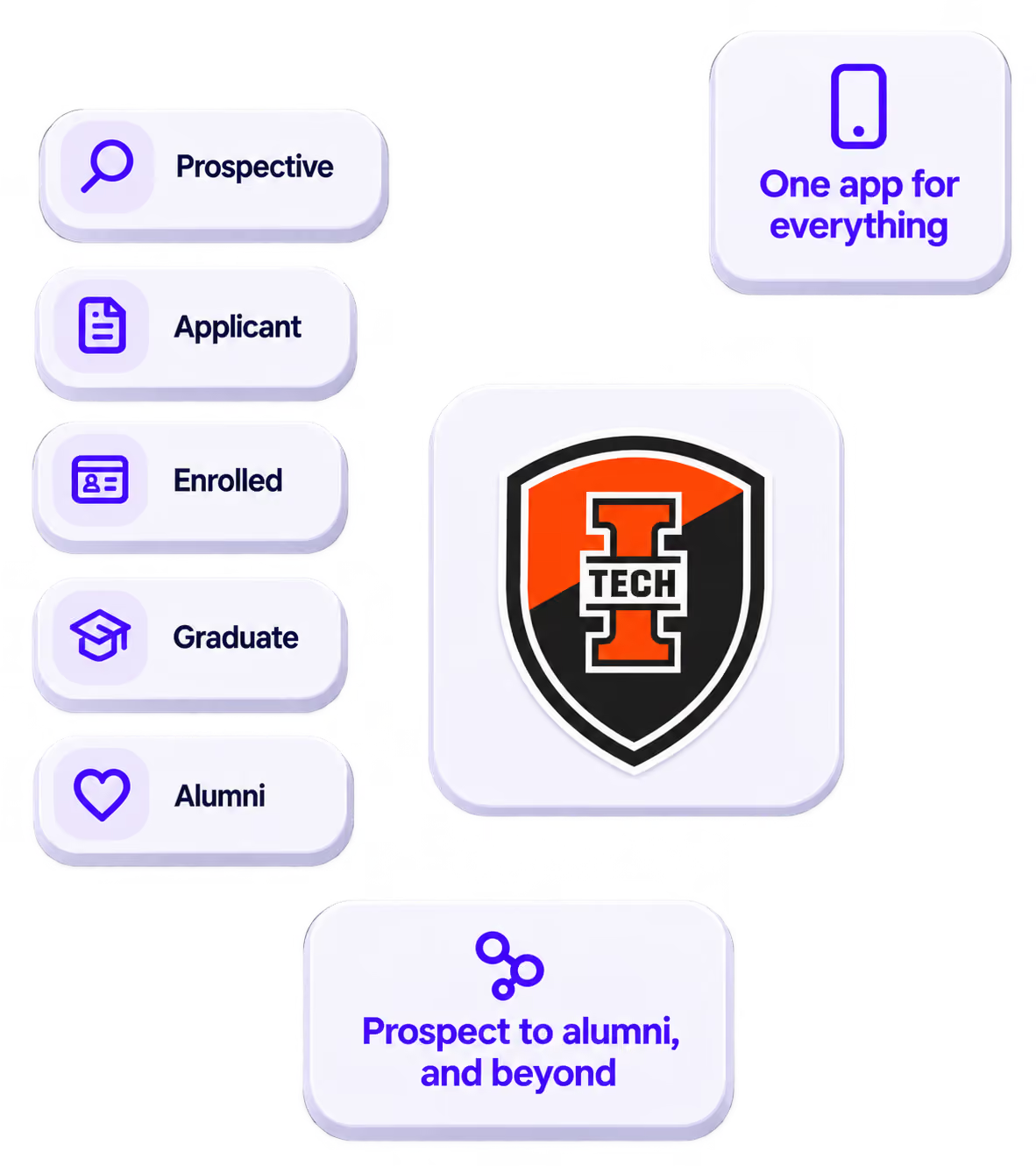
The power of your brand in your app, from first visit to alumni.
Build trust
Attendees download your app, not ours. Your name, colors, and crest in the stores.
.avif)
One place for the whole event
Schedules, maps, registration, and updates in one branded hub - not five tools.
Stand out
A branded app is what people keep on their phone after the printed program is in the recycling.

Get the Mobile App Playbook
A short guide to running the whole student journey in one app. No fluff, just what works.
for higher ed
Campus
Playbook
A practical guide to building a connected campus experience.
Free playbook
The Mobile App Playbook for Universities
Students decide if they belong long before they set foot on campus. This playbook shows how to win them over from the first visit through graduation.
- Grow enrollment and boost recruitment
- Increase belonging and retention
- Run every event from one branded app
By submitting, you agree to our Privacy Policy.
You're in.
.png)