
Campus apps by department
Admissions, orientation, student life, and more — one campus app that works across departments.

Campus apps by department
Admissions, orientation, student life, and more — one campus app that works across departments.
Build unlimited event apps on one license
One partnership for unlimited campus events — orientation, tours, student life, and everything in between.
Build unlimited event apps on one license
One partnership for unlimited campus events — orientation, tours, student life, and everything in between.
Compare event app platforms
See how Guidebook stacks up against other event app and registration platforms.
Compare event app platforms
See how Guidebook stacks up against other event app and registration platforms.
Event apps for nonprofit and community programs
Give members, volunteers, and donors one branded app for conferences, fundraisers, and year-round community.
Event apps for nonprofit and community programs
Give members, volunteers, and donors one branded app for conferences, fundraisers, and year-round community.
Campus integrations and an open API
Connect Guidebook with the campus systems, APIs, and tools your team already uses.
Campus integrations and an open API
Connect Guidebook with the campus systems, APIs, and tools your team already uses.
Event apps for corporate and enterprise teams
Internal meetings, offsites, and large-scale corporate events — with the branding and control enterprise teams need.
Event apps for corporate and enterprise teams
Internal meetings, offsites, and large-scale corporate events — with the branding and control enterprise teams need.
Create a branded event app with no coding
Put schedules, maps, resources, and updates in every attendee's pocket — built for campus events and programs.
Create a branded event app with no coding
Put schedules, maps, resources, and updates in every attendee's pocket — built for campus events and programs.
Launch a branded, white-label event app
A white-label event app with your branding, your content, and your attendee experience — no coding required.
Launch a branded, white-label event app
A white-label event app with your branding, your content, and your attendee experience — no coding required.
Everything in the Guidebook platform
Explore the features event teams use to engage attendees before, during, and after the event.
Everything in the Guidebook platform
Explore the features event teams use to engage attendees before, during, and after the event.
One app for in-person and virtual attendees
The same schedule, networking, and updates whether people are in the room or joining remotely.
One app for in-person and virtual attendees
The same schedule, networking, and updates whether people are in the room or joining remotely.
Event apps built for associations
Annual meetings, chapter events, and member engagement — without rebuilding a new app every year.
Event apps built for associations
Annual meetings, chapter events, and member engagement — without rebuilding a new app every year.
A branded event website that matches the app
Promote the event, collect interest, and keep branding consistent from the first click to check-in.
A branded event website that matches the app
Promote the event, collect interest, and keep branding consistent from the first click to check-in.
Plan, run, and measure events on one platform
App, registration, badges, and websites in one workflow — so planning isn't a pile of disconnected tools.
Plan, run, and measure events on one platform
App, registration, badges, and websites in one workflow — so planning isn't a pile of disconnected tools.
Keep members engaged between events
One branded app for the conference and everything that happens the other 51 weeks of the year.
Keep members engaged between events
One branded app for the conference and everything that happens the other 51 weeks of the year.
The conference app attendees actually use
Schedules, maps, networking, and live updates for annual meetings, summits, and multi-day conferences.
The conference app attendees actually use
Schedules, maps, networking, and live updates for annual meetings, summits, and multi-day conferences.
Registration that feeds your app and badges
Collect registrations, payments, and attendee data in the same platform as your event app.
Registration that feeds your app and badges
Collect registrations, payments, and attendee data in the same platform as your event app.
Design and print event badges in one place
Custom badges, QR check-in, and on-site printing — without a separate badge vendor.
Design and print event badges in one place
Custom badges, QR check-in, and on-site printing — without a separate badge vendor.
A Smaller School?
Deliver a polished, branded event experience without a large team or a big budget.
A Smaller School?
Deliver a polished, branded event experience without a large team or a big budget.
Running Family Programs?
Give families everything they need, from schedules and maps to real-time updates, all in one place.
Running Family Programs?
Give families everything they need, from schedules and maps to real-time updates, all in one place.
Coordinating Move-In Day?
Share updates, manage events, and keep students informed from move-in through the academic year.

Coordinating Move-In Day?
Share updates, manage events, and keep students informed from move-in through the academic year.
Offering Campus Tours?
Deliver branded, self-guided tour experiences with interactive maps and rich media, available 24/7.

Offering Campus Tours?
Deliver branded, self-guided tour experiences with interactive maps and rich media, available 24/7.
Organising a Career Fair?
Simplify logistics for students, employers, and Career Services staff with one easy-to-use app.
Organising a Career Fair?
Simplify logistics for students, employers, and Career Services staff with one easy-to-use app.
Managing Alumni Events?
Plan reunions, regional events, and fundraising campaigns with an app built for alumni engagement.
Managing Alumni Events?
Plan reunions, regional events, and fundraising campaigns with an app built for alumni engagement.
Boost Student Engagement
One hub for schedules, resources, and events that keeps students connected throughout the academic year.
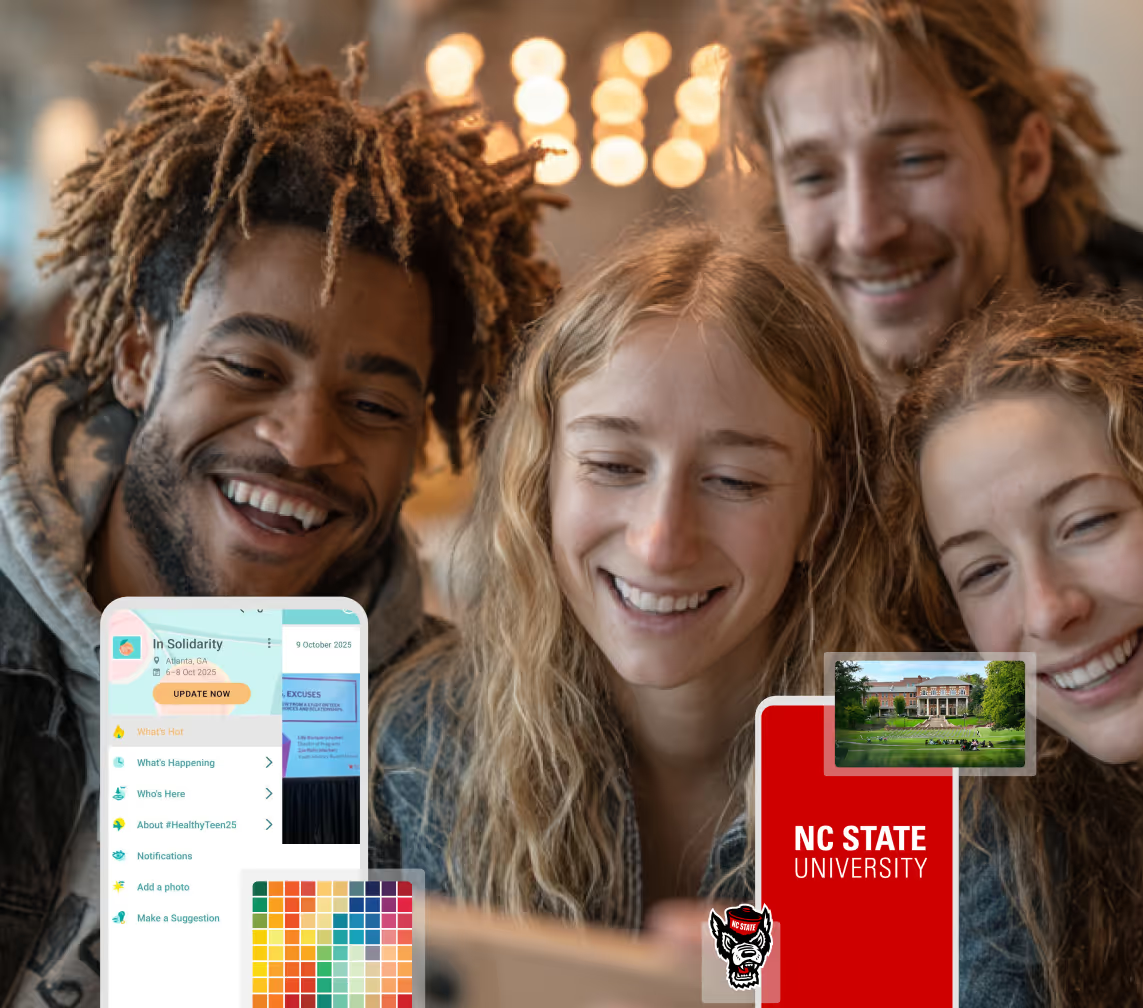
Boost Student Engagement
One hub for schedules, resources, and events that keeps students connected throughout the academic year.
Planning Orientation?
Help new students feel prepared from day one with schedules, campus resources, and real-time updates in one app.
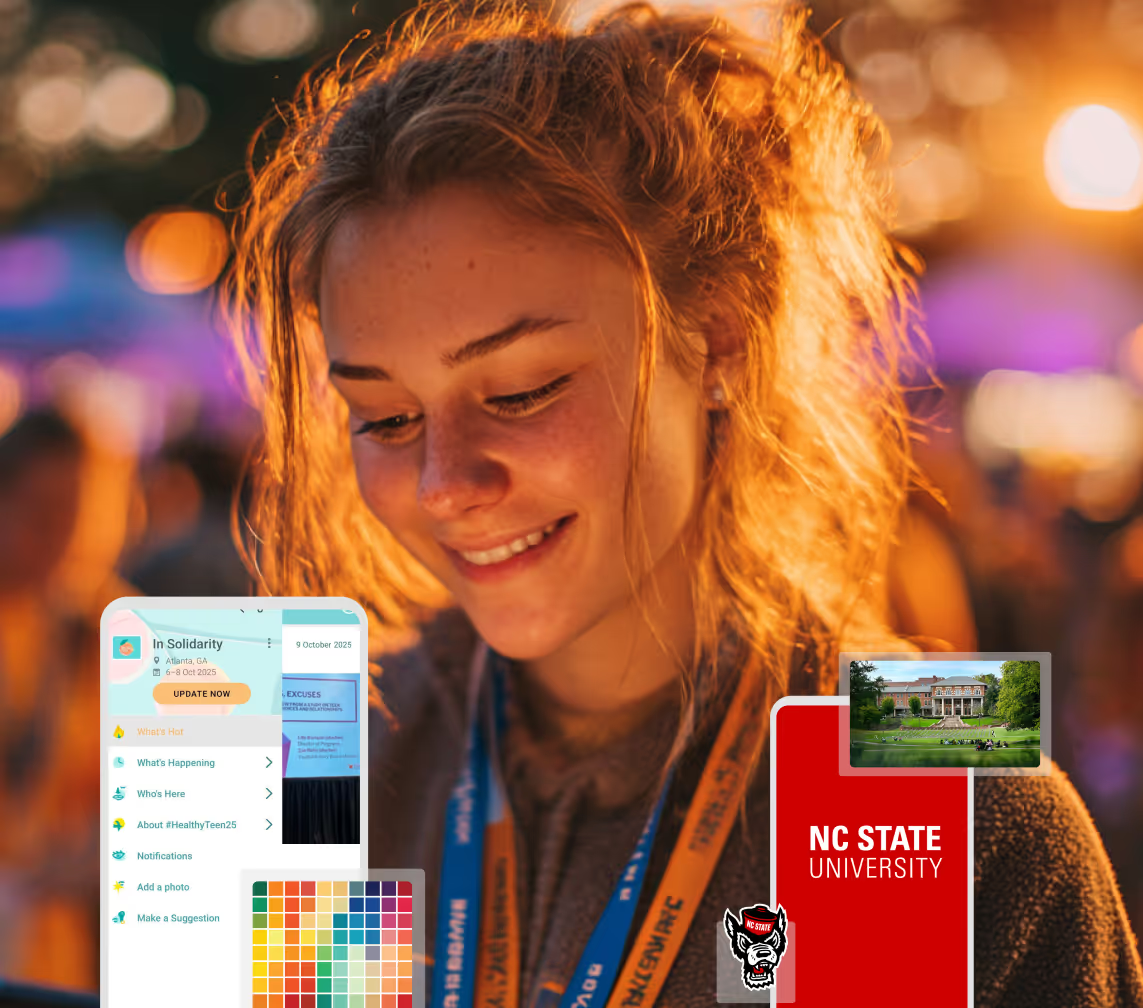
Planning Orientation?
Help new students feel prepared from day one with schedules, campus resources, and real-time updates in one app.
Running Admissions Events?
Manage open houses, tours, and yield events with a branded app that saves time and engages prospective students.

Running Admissions Events?
Manage open houses, tours, and yield events with a branded app that saves time and engages prospective students.
Get a custom Sponsorship Package Template
Stop starting from scratch. Grab free templates that helWe'll build a tailored sponsorship package with suggested pricing, tiers, and benefits..for your specific event.p you build professional sponsorship packages and close deals faster.
Get a custom Sponsorship Package Template
Stop starting from scratch. Grab free templates that helWe'll build a tailored sponsorship package with suggested pricing, tiers, and benefits..for your specific event.p you build professional sponsorship packages and close deals faster.
Plan Your Next Event Without Missing a Beat.
From venue selection to post-event wrap-up, this free checklist walks you through every step (so nothing falls through the cracks).
.avif)
Plan Your Next Event Without Missing a Beat.
From venue selection to post-event wrap-up, this free checklist walks you through every step (so nothing falls through the cracks).
Real Results From Real Events
100,000+ organizations trust Guidebook. See exactly how universities, associations, enterprises, and more put it to work.

Real Results From Real Events
100,000+ organizations trust Guidebook. See exactly how universities, associations, enterprises, and more put it to work.
Flexible pricing for every event size
Find the perfect plan for your needs, from intimate gatherings to large-scale conferences.

Flexible pricing for every event size
Find the perfect plan for your needs, from intimate gatherings to large-scale conferences.
Join our event experts
Watch on-demand webinars and join live sessions with industry leaders sharing best practices for event success.
.avif)
Join our event experts
Watch on-demand webinars and join live sessions with industry leaders sharing best practices for event success.
Guidebook in Action
Book a personalized walkthrough and discover how we help event teams create better attendee experiences.
Guidebook in Action
Book a personalized walkthrough and discover how we help event teams create better attendee experiences.

What is a Banquet Event Order?
A Banquet Event Order (BEO) outlines event details, including menu, setup, and timing, to ensure seamless coordination between planners and venues. Learn key components, best practices, and tips for effective BEO management.

A Banquet Event Order is the essential operational document that transforms event plans into actionable instructions for every team member involved in executing a successful banquet. Often called a BEO, this detailed form captures everything from room setup to menu selections to timing. Without it, even the best-planned events can fall apart.
Here's the thing: A BEO isn't just paperwork. It's the single source of truth that keeps caterers, servers, AV techs, and venue staff on the same page. Think of it as your event's blueprint. Every detail lives in one place, so nothing gets lost in translation between planning and execution.
Key Characteristics of a Banquet Event Order
- Comprehensive Detail: A BEO includes every specification needed to execute an event, from table counts to dietary restrictions to payment terms.
- Operational Focus: Unlike contracts or proposals, BEOs prioritize execution details over legal terms or sales language.
- Multi-Department Distribution: The same document goes to catering, setup crews, AV teams, and management to ensure alignment.
- Timeline-Driven Structure: Events unfold chronologically in a BEO, making it easy to follow the flow from setup to breakdown.
- Revision Tracking: Good BEOs include version numbers and dates so everyone knows they're working from the latest information.
- Client Approval Required: Most venues require signed BEO approval before finalizing event details.
- Financial Summary: Pricing, deposits, and payment schedules appear clearly for both internal tracking and client transparency.
Banquet Event Order vs. Related Documents
Event Contract
- Scope: Legal agreement covering liability, cancellation policies, and binding terms
- Focus: Protecting both parties legally
- Timeline: Created early in the booking process
- Channels: Shared between client and venue management
- Goal: Establish legal framework for the event relationship
Event Proposal
- Scope: Sales document outlining potential services and estimated costs
- Focus: Winning the client's business
- Timeline: Created during initial sales conversations
- Channels: Shared between sales team and prospective client
- Goal: Secure booking commitment
Run of Show
- Scope: Minute-by-minute program schedule for event day
- Focus: Timing and cues for speakers, AV, and entertainment
- Timeline: Finalized in the final week before the event
- Channels: Shared with production team and key stakeholders
- Goal: Coordinate precise timing during the event
These documents work together throughout the event planning process. The contract establishes the relationship, the proposal wins the business, the BEO guides execution, and the run of show manages real-time flow.
Essential Banquet Event Order Components
Event Header Information
Every BEO starts with the basics. This section includes the event name, date, start and end times, and expected guest count. You'll also find the client's contact information and the internal event manager assigned to the booking.
Don't skip the BEO number and revision date. These details prevent confusion when multiple versions exist.
Room Setup and Layout Details
This section tells your setup crew exactly what to do. Include:
- Room name and location within the venue
- Table configuration (rounds, rectangles, classroom style)
- Chair count and arrangement
- Stage or podium requirements
- Dance floor placement
- Registration or check-in table locations
Many planners attach a floor plan diagram. Visual references reduce setup errors significantly. For complex events, consider using event check-in software to manage guest flow.
Food and Beverage Specifications
Catering details make or break banquet execution. Your BEO should specify:
- Menu selections with exact quantities
- Service style (plated, buffet, family style, stations)
- Dietary accommodations and allergy notes
- Bar service type (hosted, cash, consumption)
- Service timing for each course
- Special requests (cake cutting, champagne toast)
Working with outside vendors? Check out tips on amazing event catering vendors to find the right partners.
Audio-Visual and Technical Requirements
Modern events rely heavily on technology. Document every AV need:
- Microphone types and quantities
- Projection screens and display sizes
- Laptop connections and adapters needed
- Lighting preferences
- WiFi requirements and passwords
- Recording or livestream needs
For events with significant tech components, explore how event production teams handle complex setups.
Timeline and Schedule Breakdown
Map out the entire event chronologically. Start with vendor load-in times and end with breakdown completion. Include buffer time between activities.
A typical timeline might look like:
- 2:00 PM – Vendor load-in begins
- 4:00 PM – Room setup complete
- 5:00 PM – AV check and rehearsal
- 6:00 PM – Guest arrival and cocktails
- 7:00 PM – Dinner service begins
- 9:00 PM – Program and speeches
- 10:00 PM – Event concludes
- 11:00 PM – Breakdown complete
The Banquet Event Order Process
Create the Initial Draft
Start your BEO 2-3 weeks before the event. Pull details from your contract, client conversations, and venue specifications. Use a template to ensure consistency across all events.
Don't wait for perfect information. Create a draft with what you know and mark items needing confirmation.
Gather Client Input and Approvals
Send the draft to your client for review. Highlight any decisions they still need to make. Set a clear deadline for feedback—typically 7-10 days before the event.
Track changes carefully. Every revision should update the version number and date.
Distribute to Internal Teams
Once approved, distribute the BEO to every department involved. This includes:
- Catering and kitchen staff
- Setup and facilities crews
- AV technicians
- Front desk and security
- Management and supervisors
Hold a pre-event briefing to walk through the BEO together. This catches questions before they become problems.
Execute and Document Changes
On event day, the BEO guides every decision. When last-minute changes happen (and they will), document them on the master copy.
After the event, update your records with actual guest counts and any variations from the plan. This information helps with billing accuracy and future planning.
Why Banquet Event Orders Matter
For Event Success:
- Eliminates Miscommunication: Everyone works from the same document, reducing errors and confusion between teams.
- Ensures Consistency: Standard BEO formats mean nothing gets overlooked, even with staff turnover.
- Enables Problem-Solving: When issues arise, the BEO provides context for quick decisions.
- Supports Quality Control: Managers can verify execution against documented specifications.
- Creates Accountability: Clear documentation shows who approved what and when.
For Business Objectives:
- Protects Revenue: Detailed BEOs support accurate billing and reduce disputes over services rendered.
- Improves Efficiency: Teams spend less time asking questions when answers exist in the BEO.
- Builds Client Trust: Professional documentation demonstrates competence and attention to detail.
- Supports Scaling: Standardized processes let you handle more events without proportional staff increases.
- Enables Analysis: Historical BEOs provide data for measuring event ROI and improving future events.
For organizations managing multiple events, Guidebook's event management platform helps centralize documentation and streamline communication across teams.
Banquet Event Order Best Practices
- Use a Standardized Template: Create a master BEO format that covers all possible event elements. Consistency reduces errors and training time.
- Include Visual References: Attach floor plans, photos of desired setups, and diagrams whenever possible. Pictures communicate faster than words.
- Set Clear Deadlines: Establish firm cutoff dates for changes. Late modifications create chaos and increase costs.
- Track Every Revision: Number your versions and date every update. Never let outdated BEOs circulate.
- Require Written Approval: Get client sign-off before finalizing. Email confirmations work, but signatures are better.
- Brief Your Team in Person: Don't just distribute the BEO—walk through it together. Questions surface in conversation.
- Build in Buffer Time: Add 15-30 minutes between major activities. Events rarely run exactly on schedule.
- Document Special Requests Prominently: Highlight VIP needs, allergies, and unusual requirements so they don't get buried.
- Create a Contact List: Include phone numbers for the client, key vendors, and internal decision-makers on the BEO.
- Archive Everything: Save completed BEOs for reference. They're invaluable for repeat clients and post-event analysis.
Need help organizing your event planning resources? Start with solid documentation practices.
Common Banquet Event Order Mistakes
Vague Guest Counts: Writing "approximately 150 guests" instead of a guaranteed number creates catering nightmares. Always get a confirmed count with a deadline for final adjustments.
Missing Timing Details: Listing "dinner at 7 PM" without specifying service style, course timing, or duration leaves too much to interpretation. Be specific about every transition.
Ignoring Dietary Needs: Burying allergy information in general notes risks serious consequences. Create a dedicated section for dietary restrictions and flag severe allergies prominently.
Skipping the Pre-Event Briefing: Assuming everyone will read the BEO thoroughly is optimistic. Schedule time to review key details with your team before every event.
Failing to Update Revisions: Sending changes via email without updating the master BEO creates version confusion. Every change should generate a new, clearly dated document.
Omitting Setup and Breakdown Times: Focusing only on guest-facing hours ignores critical operational windows. Include vendor arrival, setup completion, and breakdown deadlines.
Forgetting Payment Details: Leaving financial information off the BEO creates billing confusion later. Include deposits received, balances due, and payment deadlines.
Final Thoughts
A well-crafted Banquet Event Order transforms event chaos into coordinated execution. It's the document that turns your vision into reality by giving every team member the information they need to succeed.
The best event professionals treat BEOs as living documents. They update them religiously, distribute them widely, and reference them constantly. This discipline separates smooth events from stressful ones.
Whether you're planning an intimate dinner or a 500-person gala, your BEO deserves serious attention. The time you invest in documentation pays dividends in execution quality and client satisfaction. For more guidance, explore event management tips and event planning fundamentals.
Ready to level up your event operations? Guidebook helps teams manage events of all sizes with tools for registration, communication, and real-time updates. Book a demo to see how the right technology supports flawless execution. Because great events don't happen by accident—they happen by design.
The power of your brand in your app, from first visit to alumni.
Build trust
Attendees download your app, not ours. Your name, colors, and crest in the stores.
.avif)
One place for the whole event
Schedules, maps, registration, and updates in one branded hub - not five tools.
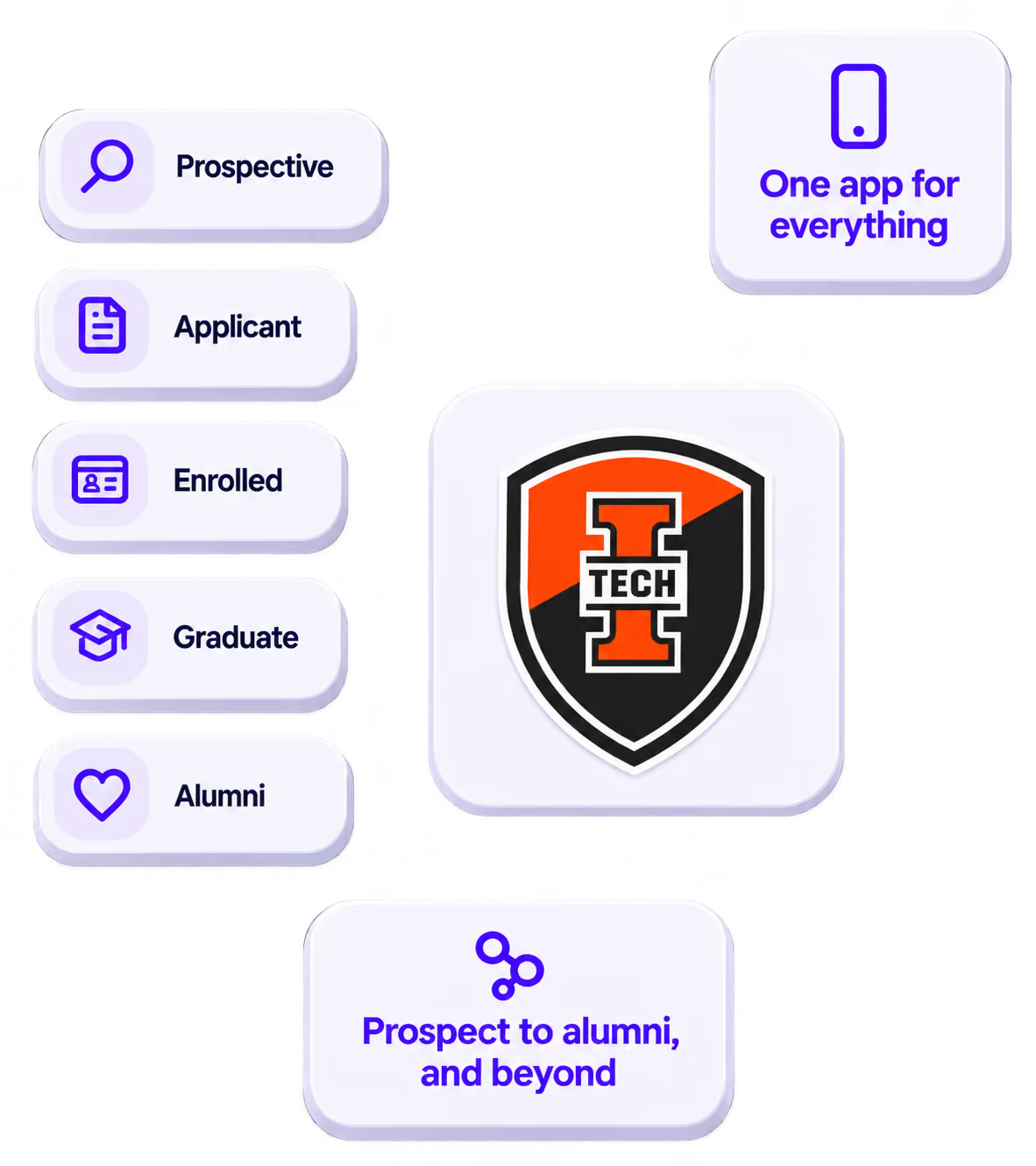
Stand out
A branded app is what people keep on their phone after the printed program is in the recycling.
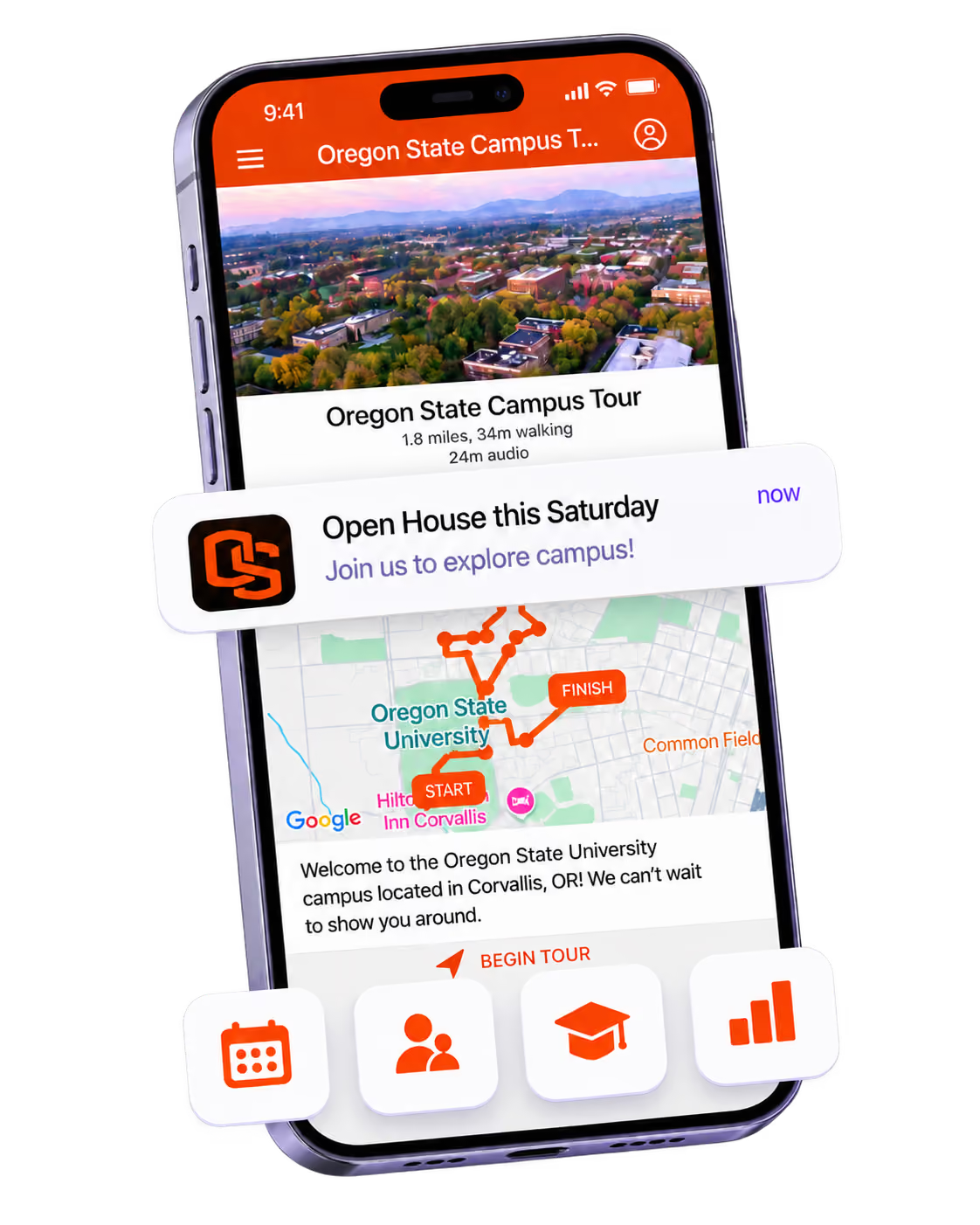

Get the Mobile App Playbook
A short guide to running the whole student journey in one app. No fluff, just what works.
for higher ed
Campus
Playbook
A practical guide to building a connected campus experience.
Free playbook
The Mobile App Playbook for Universities
Students decide if they belong long before they set foot on campus. This playbook shows how to win them over from the first visit through graduation.
- Grow enrollment and boost recruitment
- Increase belonging and retention
- Run every event from one branded app
By submitting, you agree to our Privacy Policy.
You're in.
.png)