
Campus apps by department
Admissions, orientation, student life, and more — one campus app that works across departments.

Campus apps by department
Admissions, orientation, student life, and more — one campus app that works across departments.
Build unlimited event apps on one license
One partnership for unlimited campus events — orientation, tours, student life, and everything in between.
Build unlimited event apps on one license
One partnership for unlimited campus events — orientation, tours, student life, and everything in between.
Compare event app platforms
See how Guidebook stacks up against other event app and registration platforms.
Compare event app platforms
See how Guidebook stacks up against other event app and registration platforms.
Event apps for nonprofit and community programs
Give members, volunteers, and donors one branded app for conferences, fundraisers, and year-round community.
Event apps for nonprofit and community programs
Give members, volunteers, and donors one branded app for conferences, fundraisers, and year-round community.
Campus integrations and an open API
Connect Guidebook with the campus systems, APIs, and tools your team already uses.
Campus integrations and an open API
Connect Guidebook with the campus systems, APIs, and tools your team already uses.
Event apps for corporate and enterprise teams
Internal meetings, offsites, and large-scale corporate events — with the branding and control enterprise teams need.
Event apps for corporate and enterprise teams
Internal meetings, offsites, and large-scale corporate events — with the branding and control enterprise teams need.
Create a branded event app with no coding
Put schedules, maps, resources, and updates in every attendee's pocket — built for campus events and programs.
Create a branded event app with no coding
Put schedules, maps, resources, and updates in every attendee's pocket — built for campus events and programs.
Launch a branded, white-label event app
A white-label event app with your branding, your content, and your attendee experience — no coding required.
Launch a branded, white-label event app
A white-label event app with your branding, your content, and your attendee experience — no coding required.
Everything in the Guidebook platform
Explore the features event teams use to engage attendees before, during, and after the event.
Everything in the Guidebook platform
Explore the features event teams use to engage attendees before, during, and after the event.
One app for in-person and virtual attendees
The same schedule, networking, and updates whether people are in the room or joining remotely.
One app for in-person and virtual attendees
The same schedule, networking, and updates whether people are in the room or joining remotely.
Event apps built for associations
Annual meetings, chapter events, and member engagement — without rebuilding a new app every year.
Event apps built for associations
Annual meetings, chapter events, and member engagement — without rebuilding a new app every year.
A branded event website that matches the app
Promote the event, collect interest, and keep branding consistent from the first click to check-in.
A branded event website that matches the app
Promote the event, collect interest, and keep branding consistent from the first click to check-in.
Plan, run, and measure events on one platform
App, registration, badges, and websites in one workflow — so planning isn't a pile of disconnected tools.
Plan, run, and measure events on one platform
App, registration, badges, and websites in one workflow — so planning isn't a pile of disconnected tools.
Keep members engaged between events
One branded app for the conference and everything that happens the other 51 weeks of the year.
Keep members engaged between events
One branded app for the conference and everything that happens the other 51 weeks of the year.
The conference app attendees actually use
Schedules, maps, networking, and live updates for annual meetings, summits, and multi-day conferences.
The conference app attendees actually use
Schedules, maps, networking, and live updates for annual meetings, summits, and multi-day conferences.
Registration that feeds your app and badges
Collect registrations, payments, and attendee data in the same platform as your event app.
Registration that feeds your app and badges
Collect registrations, payments, and attendee data in the same platform as your event app.
Design and print event badges in one place
Custom badges, QR check-in, and on-site printing — without a separate badge vendor.
Design and print event badges in one place
Custom badges, QR check-in, and on-site printing — without a separate badge vendor.
A Smaller School?
Deliver a polished, branded event experience without a large team or a big budget.
A Smaller School?
Deliver a polished, branded event experience without a large team or a big budget.
Running Family Programs?
Give families everything they need, from schedules and maps to real-time updates, all in one place.
Running Family Programs?
Give families everything they need, from schedules and maps to real-time updates, all in one place.
Coordinating Move-In Day?
Share updates, manage events, and keep students informed from move-in through the academic year.

Coordinating Move-In Day?
Share updates, manage events, and keep students informed from move-in through the academic year.
Offering Campus Tours?
Deliver branded, self-guided tour experiences with interactive maps and rich media, available 24/7.

Offering Campus Tours?
Deliver branded, self-guided tour experiences with interactive maps and rich media, available 24/7.
Organising a Career Fair?
Simplify logistics for students, employers, and Career Services staff with one easy-to-use app.
Organising a Career Fair?
Simplify logistics for students, employers, and Career Services staff with one easy-to-use app.
Managing Alumni Events?
Plan reunions, regional events, and fundraising campaigns with an app built for alumni engagement.
Managing Alumni Events?
Plan reunions, regional events, and fundraising campaigns with an app built for alumni engagement.
Boost Student Engagement
One hub for schedules, resources, and events that keeps students connected throughout the academic year.
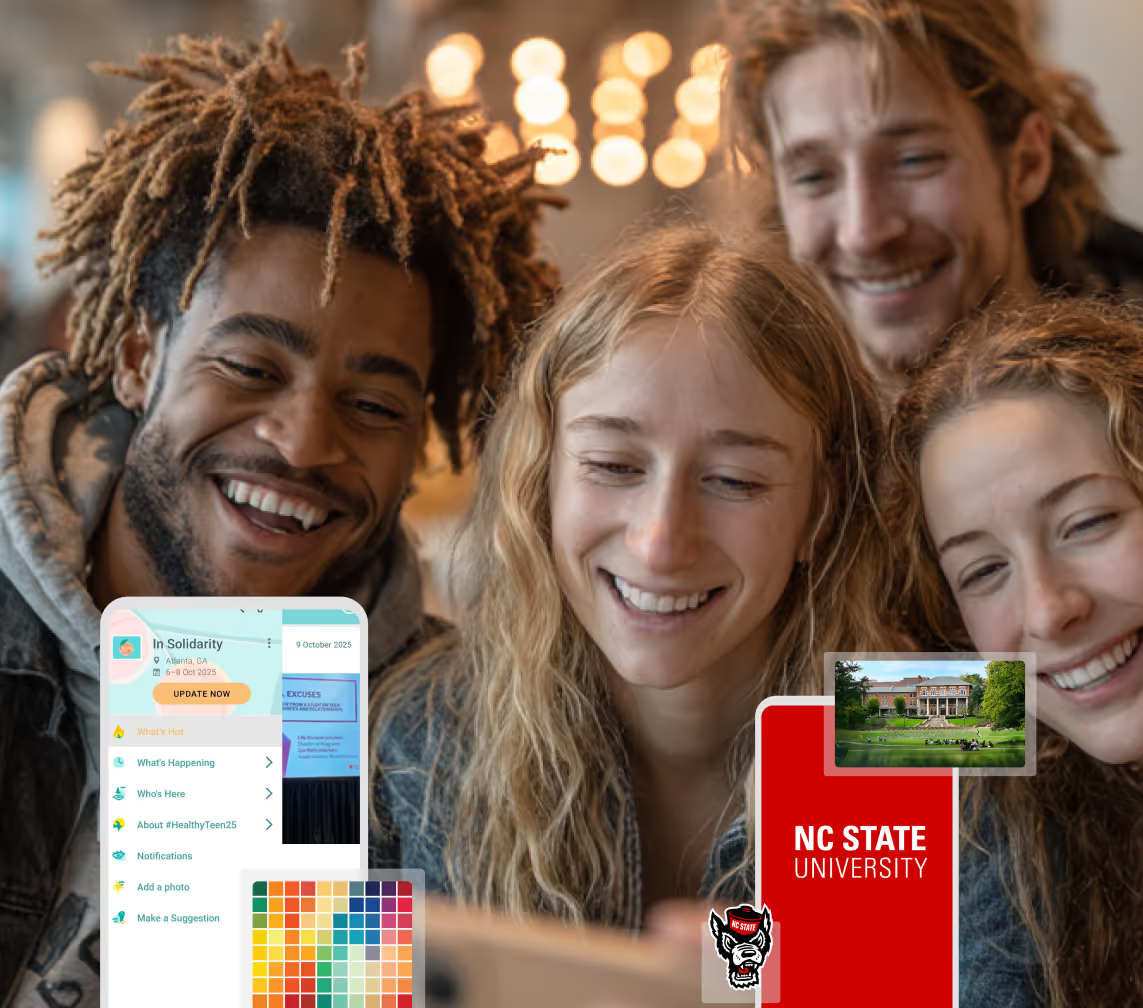
Boost Student Engagement
One hub for schedules, resources, and events that keeps students connected throughout the academic year.
Planning Orientation?
Help new students feel prepared from day one with schedules, campus resources, and real-time updates in one app.
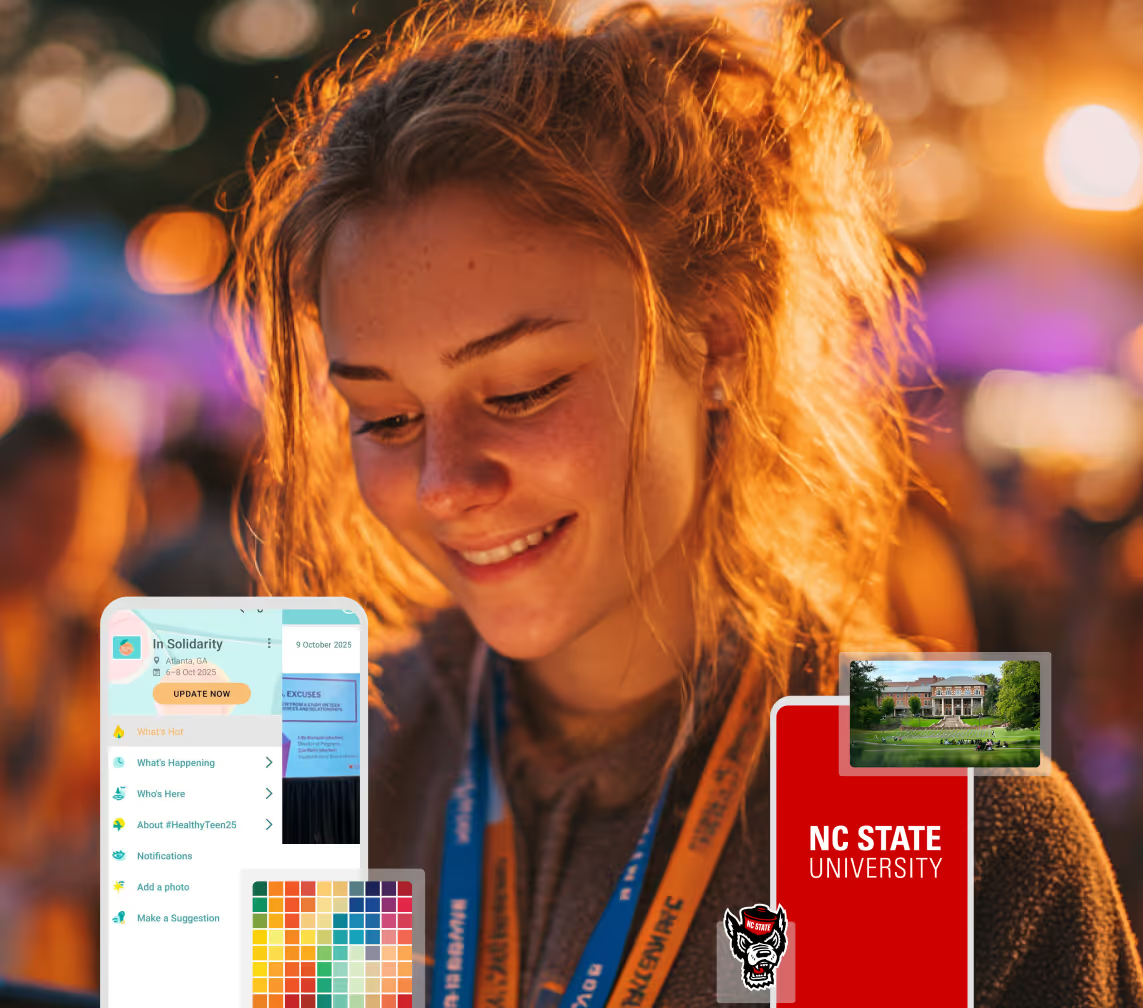
Planning Orientation?
Help new students feel prepared from day one with schedules, campus resources, and real-time updates in one app.
Running Admissions Events?
Manage open houses, tours, and yield events with a branded app that saves time and engages prospective students.

Running Admissions Events?
Manage open houses, tours, and yield events with a branded app that saves time and engages prospective students.
Get a custom Sponsorship Package Template
Stop starting from scratch. Grab free templates that helWe'll build a tailored sponsorship package with suggested pricing, tiers, and benefits..for your specific event.p you build professional sponsorship packages and close deals faster.
Get a custom Sponsorship Package Template
Stop starting from scratch. Grab free templates that helWe'll build a tailored sponsorship package with suggested pricing, tiers, and benefits..for your specific event.p you build professional sponsorship packages and close deals faster.
Plan Your Next Event Without Missing a Beat.
From venue selection to post-event wrap-up, this free checklist walks you through every step (so nothing falls through the cracks).
.avif)
Plan Your Next Event Without Missing a Beat.
From venue selection to post-event wrap-up, this free checklist walks you through every step (so nothing falls through the cracks).
Real Results From Real Events
100,000+ organizations trust Guidebook. See exactly how universities, associations, enterprises, and more put it to work.

Real Results From Real Events
100,000+ organizations trust Guidebook. See exactly how universities, associations, enterprises, and more put it to work.
Flexible pricing for every event size
Find the perfect plan for your needs, from intimate gatherings to large-scale conferences.

Flexible pricing for every event size
Find the perfect plan for your needs, from intimate gatherings to large-scale conferences.
Join our event experts
Watch on-demand webinars and join live sessions with industry leaders sharing best practices for event success.
.avif)
Join our event experts
Watch on-demand webinars and join live sessions with industry leaders sharing best practices for event success.
Guidebook in Action
Book a personalized walkthrough and discover how we help event teams create better attendee experiences.
Guidebook in Action
Book a personalized walkthrough and discover how we help event teams create better attendee experiences.

What is an Event Report?
An event report summarizes key outcomes, insights, and data from an event. Learn what to include, reporting formats, and tips for actionable analysis.

An event report is the comprehensive document that captures everything that happened at your event, from attendance numbers to attendee feedback, helping you prove success and plan smarter next time. It transforms raw data into actionable insights. Without one, you're flying blind on your next event.
Here's the thing: an event report isn't just a summary. It's your proof of value. Stakeholders want to see results. Sponsors need ROI data. Your team needs to know what worked and what flopped. A solid event report answers all these questions in one place.
Key Characteristics of Event Reports
- Data-Driven Foundation: Every claim backs up with numbers. Attendance figures, engagement rates, and revenue data tell the real story.
- Multi-Source Information: Pulls from registration systems, surveys, social media, and on-site observations. One source isn't enough.
- Stakeholder-Focused: Different sections speak to different audiences. Executives want ROI. Teams want operational insights.
- Actionable Recommendations: Goes beyond "what happened" to "what's next." Every insight should drive future decisions.
- Visual Presentation: Charts, graphs, and infographics make complex data digestible. Nobody wants to read a wall of numbers.
- Timely Delivery: Created within 1-2 weeks post-event while memories are fresh and data is relevant.
- Comparative Analysis: Measures against goals, past events, and industry benchmarks to show true performance.
Event Report vs. Related Documents
Event Debrief
- Scope: Internal team discussion and notes
- Focus: Operational wins and challenges
- Timeline: Immediate post-event (same day or next)
- Audience: Planning team only
- Goal: Quick capture of fresh insights
Event Summary
- Scope: High-level overview for broad audiences
- Focus: Key highlights and outcomes
- Timeline: 1-3 days post-event
- Audience: Stakeholders, attendees, media
- Goal: Quick communication of success
Event Report
- Scope: Comprehensive analysis with full data
- Focus: ROI, metrics, and strategic recommendations
- Timeline: 1-2 weeks post-event
- Audience: Leadership, sponsors, planning team
- Goal: Prove value and guide future planning
Think of it this way: the event debrief is your team huddle. The summary is your press release. The event report is your full case study. Each serves a purpose, but the report does the heavy lifting for strategic decisions.
Essential Event Report Components
Executive Summary Section
Start with a one-page overview. Busy executives won't read 20 pages. Give them the highlights upfront.
Include your top 3-5 wins, key metrics, and main recommendations. If they read nothing else, they should understand your event's impact.
Attendance and Registration Data
Break down your numbers:
- Total registrations vs. actual attendance
- No-show rate and reasons
- Registration timeline (early bird vs. last-minute)
- Attendee demographics and segments
- New vs. returning attendees
Your event registration data tells you who showed up. More importantly, it reveals who didn't and why.
Financial Performance Metrics
Money talks. Your report should include:
- Total revenue by source (tickets, sponsors, exhibitors)
- Actual vs. budgeted expenses
- Cost per attendee
- Profit margin or budget variance
Understanding event ROI helps justify future investments. Show the numbers that matter to decision-makers.
Engagement and Satisfaction Scores
Numbers only tell part of the story. Capture the qualitative side too.
Include Net Promoter Scores, session ratings, and open-ended feedback themes. Quote specific attendee comments that highlight wins or areas for improvement.
Marketing and Promotion Results
Track what drove registrations:
- Channel performance (email, social, paid ads)
- Conversion rates by source
- Cost per registration by channel
- Social media reach and engagement
Your event digital marketing efforts need measurement. This data shapes next year's promotional strategy.
The Event Report Process
Gather Data During the Event
Don't wait until it's over. Collect data in real-time.
Use event check-in software to track attendance. Monitor social mentions as they happen. Take photos and notes throughout the day.
Conduct Post-Event Surveys
Send surveys within 24-48 hours. Response rates drop dramatically after that.
Keep surveys short. Five to ten questions max. Ask about overall satisfaction, specific sessions, and likelihood to return. One open-ended question captures unexpected insights.
Compile and Analyze Data
Pull data from all sources:
- Registration platform
- Survey responses
- Social media metrics
- Financial records
- Team observations
Look for patterns. What sessions had highest attendance? Where did people drop off? What feedback themes emerged?
Create Visual Presentations
Transform raw data into clear visuals. Charts beat spreadsheets every time.
Use bar graphs for comparisons. Line charts for trends over time. Pie charts for composition breakdowns. Keep it simple and scannable.
Write Actionable Recommendations
Every insight needs a "so what." Don't just report that session X had low attendance. Recommend whether to cut it, move it, or market it differently.
Prioritize recommendations by impact and effort. Quick wins first. Big strategic changes with clear rationale.
Why Event Reports Matter
For Event Success:
- Continuous Improvement: Each report builds institutional knowledge. You stop repeating mistakes and start compounding wins.
- Team Alignment: Everyone sees the same data. No more debates about what "felt" successful.
- Vendor Accountability: Track which partners delivered value. Make informed decisions about future contracts.
- Content Optimization: Learn which topics resonate. Build stronger programs based on actual engagement data.
- Operational Efficiency: Identify bottlenecks and friction points. Streamline processes for next time.
For Business Objectives:
- Budget Justification: Hard data supports funding requests. Show leadership exactly what their investment produced.
- Sponsor Retention: Prove value to sponsors with concrete metrics. Happy sponsors renew and increase investment.
- Strategic Planning: Reports inform long-term event strategy. Spot trends across multiple events.
- Stakeholder Communication: Share wins with the broader organization. Build internal support for future events.
- Competitive Positioning: Benchmark against industry standards. Understand where you lead and where you lag.
Event Report Best Practices
- Define Success Metrics Before the Event: Know what you're measuring upfront. Align metrics with event goals. This shapes what data you collect.
- Use Consistent Templates: Create a standard report format. Consistency makes year-over-year comparison possible and saves time.
- Include Both Quantitative and Qualitative Data: Numbers show what happened. Stories and quotes show why it mattered. Balance both.
- Segment Your Analysis: Break down data by attendee type, session, or day. Averages hide important variations.
- Compare Against Benchmarks: Raw numbers mean little without context. Compare to past events, goals, and industry standards.
- Keep It Visual: Replace data tables with charts. Use color coding. Make key findings impossible to miss.
- Distribute Strategically: Create different versions for different audiences. Executives get the summary. Teams get the details.
- Set a Deadline: Reports lose value over time. Commit to delivery within two weeks post-event.
- Archive for Future Reference: Store reports where teams can access them. Next year's planner will thank you.
- Follow Up on Recommendations: Track which suggestions get implemented. Close the loop on continuous improvement.
Common Event Report Mistakes
Waiting Too Long to Create It: Memory fades fast. Data gets stale. Teams move on to other projects. Start your report within days of the event, not months.
Drowning in Data Without Insights: A 50-page data dump helps no one. Focus on the metrics that matter. Every number should connect to a decision or action.
Ignoring Negative Feedback: It's tempting to highlight only wins. But honest assessment of failures drives real improvement. Include what didn't work.
Skipping the Recommendations Section: Reports without action items are just history lessons. Every insight should point toward a specific next step.
Using Vanity Metrics: Total social impressions sound impressive but mean little. Focus on metrics tied to actual goals like conversions, satisfaction, and revenue.
Forgetting Sponsor-Specific Data: Sponsors need their own ROI story. Track and report metrics specific to each sponsor's goals and investment level.
Not Involving the Full Team: The event coordinator sees things leadership misses. Gather input from everyone involved before finalizing your report.
Final Thoughts
Event reports separate professional event planners from amateurs. They're how you prove value, secure budgets, and build better events year after year. Skip the report, and you're starting from scratch every time.
The events industry increasingly demands accountability. Stakeholders want data. Sponsors expect proof. Your team deserves to know their hard work paid off. A solid event report delivers on all fronts.
Think of your event report as an investment in future success. The hour you spend analyzing this event saves ten hours of guesswork on the next one. It's not paperwork. It's your competitive advantage.
Ready to make reporting easier? Explore event planning process best practices, check out event management tips, or see how Guidebook's platform can automate your data collection. Your next event report might just write itself.
The power of your brand in your app, from first visit to alumni.
Build trust
Attendees download your app, not ours. Your name, colors, and crest in the stores.
.avif)
One place for the whole event
Schedules, maps, registration, and updates in one branded hub - not five tools.
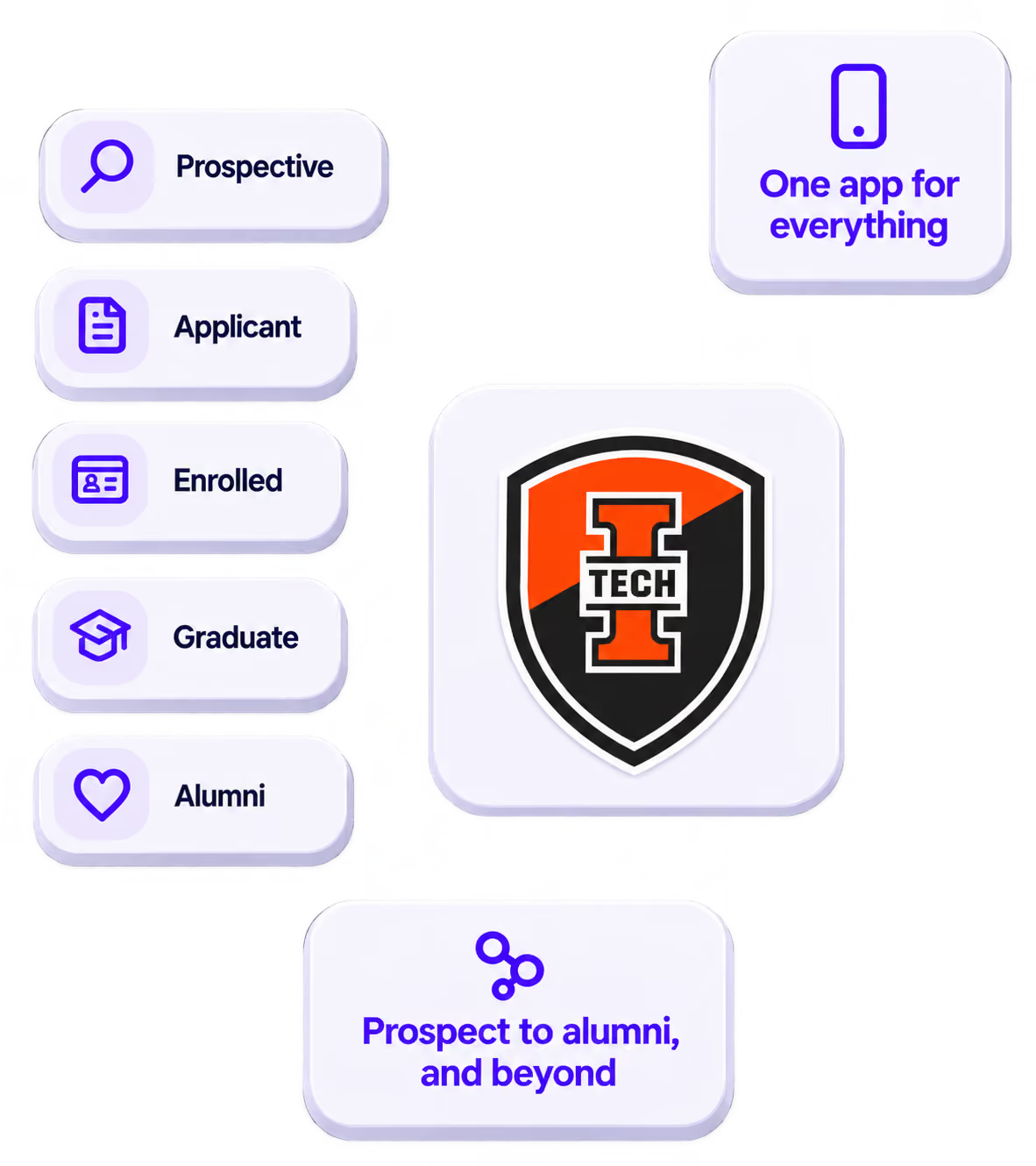
Stand out
A branded app is what people keep on their phone after the printed program is in the recycling.
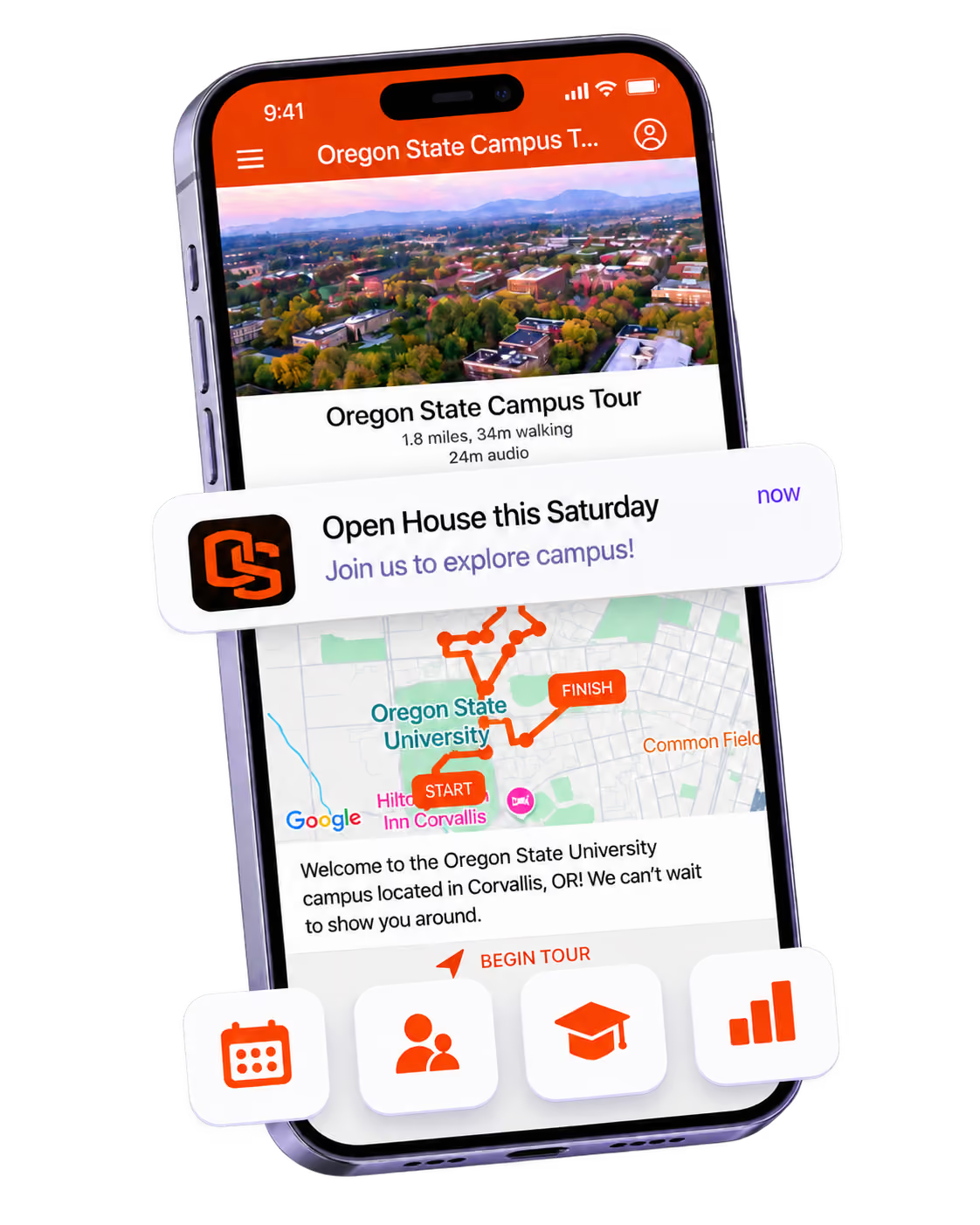

Get the Mobile App Playbook
A short guide to running the whole student journey in one app. No fluff, just what works.
for higher ed
Campus
Playbook
A practical guide to building a connected campus experience.
Free playbook
The Mobile App Playbook for Universities
Students decide if they belong long before they set foot on campus. This playbook shows how to win them over from the first visit through graduation.
- Grow enrollment and boost recruitment
- Increase belonging and retention
- Run every event from one branded app
By submitting, you agree to our Privacy Policy.
You're in.
.png)