
Campus apps by department
Admissions, orientation, student life, and more — one campus app that works across departments.

Campus apps by department
Admissions, orientation, student life, and more — one campus app that works across departments.
Build unlimited event apps on one license
One partnership for unlimited campus events — orientation, tours, student life, and everything in between.
Build unlimited event apps on one license
One partnership for unlimited campus events — orientation, tours, student life, and everything in between.
Compare event app platforms
See how Guidebook stacks up against other event app and registration platforms.
Compare event app platforms
See how Guidebook stacks up against other event app and registration platforms.
Event apps for nonprofit and community programs
Give members, volunteers, and donors one branded app for conferences, fundraisers, and year-round community.
Event apps for nonprofit and community programs
Give members, volunteers, and donors one branded app for conferences, fundraisers, and year-round community.
Campus integrations and an open API
Connect Guidebook with the campus systems, APIs, and tools your team already uses.
Campus integrations and an open API
Connect Guidebook with the campus systems, APIs, and tools your team already uses.
Event apps for corporate and enterprise teams
Internal meetings, offsites, and large-scale corporate events — with the branding and control enterprise teams need.
Event apps for corporate and enterprise teams
Internal meetings, offsites, and large-scale corporate events — with the branding and control enterprise teams need.
Create a branded event app with no coding
Put schedules, maps, resources, and updates in every attendee's pocket — built for campus events and programs.
Create a branded event app with no coding
Put schedules, maps, resources, and updates in every attendee's pocket — built for campus events and programs.
Launch a branded, white-label event app
A white-label event app with your branding, your content, and your attendee experience — no coding required.
Launch a branded, white-label event app
A white-label event app with your branding, your content, and your attendee experience — no coding required.
Everything in the Guidebook platform
Explore the features event teams use to engage attendees before, during, and after the event.
Everything in the Guidebook platform
Explore the features event teams use to engage attendees before, during, and after the event.
One app for in-person and virtual attendees
The same schedule, networking, and updates whether people are in the room or joining remotely.
One app for in-person and virtual attendees
The same schedule, networking, and updates whether people are in the room or joining remotely.
Event apps built for associations
Annual meetings, chapter events, and member engagement — without rebuilding a new app every year.
Event apps built for associations
Annual meetings, chapter events, and member engagement — without rebuilding a new app every year.
A branded event website that matches the app
Promote the event, collect interest, and keep branding consistent from the first click to check-in.
A branded event website that matches the app
Promote the event, collect interest, and keep branding consistent from the first click to check-in.
Plan, run, and measure events on one platform
App, registration, badges, and websites in one workflow — so planning isn't a pile of disconnected tools.
Plan, run, and measure events on one platform
App, registration, badges, and websites in one workflow — so planning isn't a pile of disconnected tools.
Keep members engaged between events
One branded app for the conference and everything that happens the other 51 weeks of the year.
Keep members engaged between events
One branded app for the conference and everything that happens the other 51 weeks of the year.
The conference app attendees actually use
Schedules, maps, networking, and live updates for annual meetings, summits, and multi-day conferences.
The conference app attendees actually use
Schedules, maps, networking, and live updates for annual meetings, summits, and multi-day conferences.
Registration that feeds your app and badges
Collect registrations, payments, and attendee data in the same platform as your event app.
Registration that feeds your app and badges
Collect registrations, payments, and attendee data in the same platform as your event app.
Design and print event badges in one place
Custom badges, QR check-in, and on-site printing — without a separate badge vendor.
Design and print event badges in one place
Custom badges, QR check-in, and on-site printing — without a separate badge vendor.
A Smaller School?
Deliver a polished, branded event experience without a large team or a big budget.
A Smaller School?
Deliver a polished, branded event experience without a large team or a big budget.
Running Family Programs?
Give families everything they need, from schedules and maps to real-time updates, all in one place.
Running Family Programs?
Give families everything they need, from schedules and maps to real-time updates, all in one place.
Coordinating Move-In Day?
Share updates, manage events, and keep students informed from move-in through the academic year.

Coordinating Move-In Day?
Share updates, manage events, and keep students informed from move-in through the academic year.
Offering Campus Tours?
Deliver branded, self-guided tour experiences with interactive maps and rich media, available 24/7.

Offering Campus Tours?
Deliver branded, self-guided tour experiences with interactive maps and rich media, available 24/7.
Organising a Career Fair?
Simplify logistics for students, employers, and Career Services staff with one easy-to-use app.
Organising a Career Fair?
Simplify logistics for students, employers, and Career Services staff with one easy-to-use app.
Managing Alumni Events?
Plan reunions, regional events, and fundraising campaigns with an app built for alumni engagement.
Managing Alumni Events?
Plan reunions, regional events, and fundraising campaigns with an app built for alumni engagement.
Boost Student Engagement
One hub for schedules, resources, and events that keeps students connected throughout the academic year.
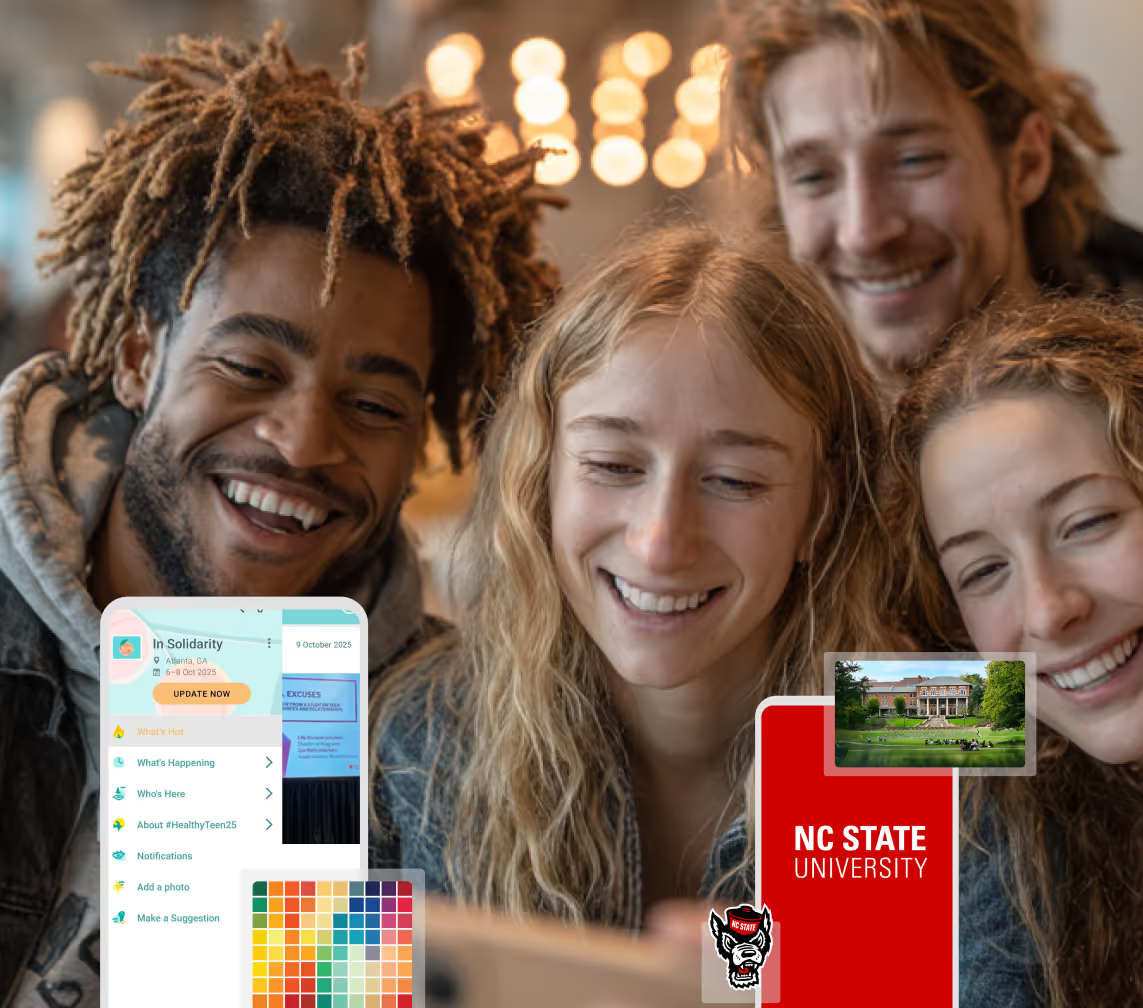
Boost Student Engagement
One hub for schedules, resources, and events that keeps students connected throughout the academic year.
Planning Orientation?
Help new students feel prepared from day one with schedules, campus resources, and real-time updates in one app.
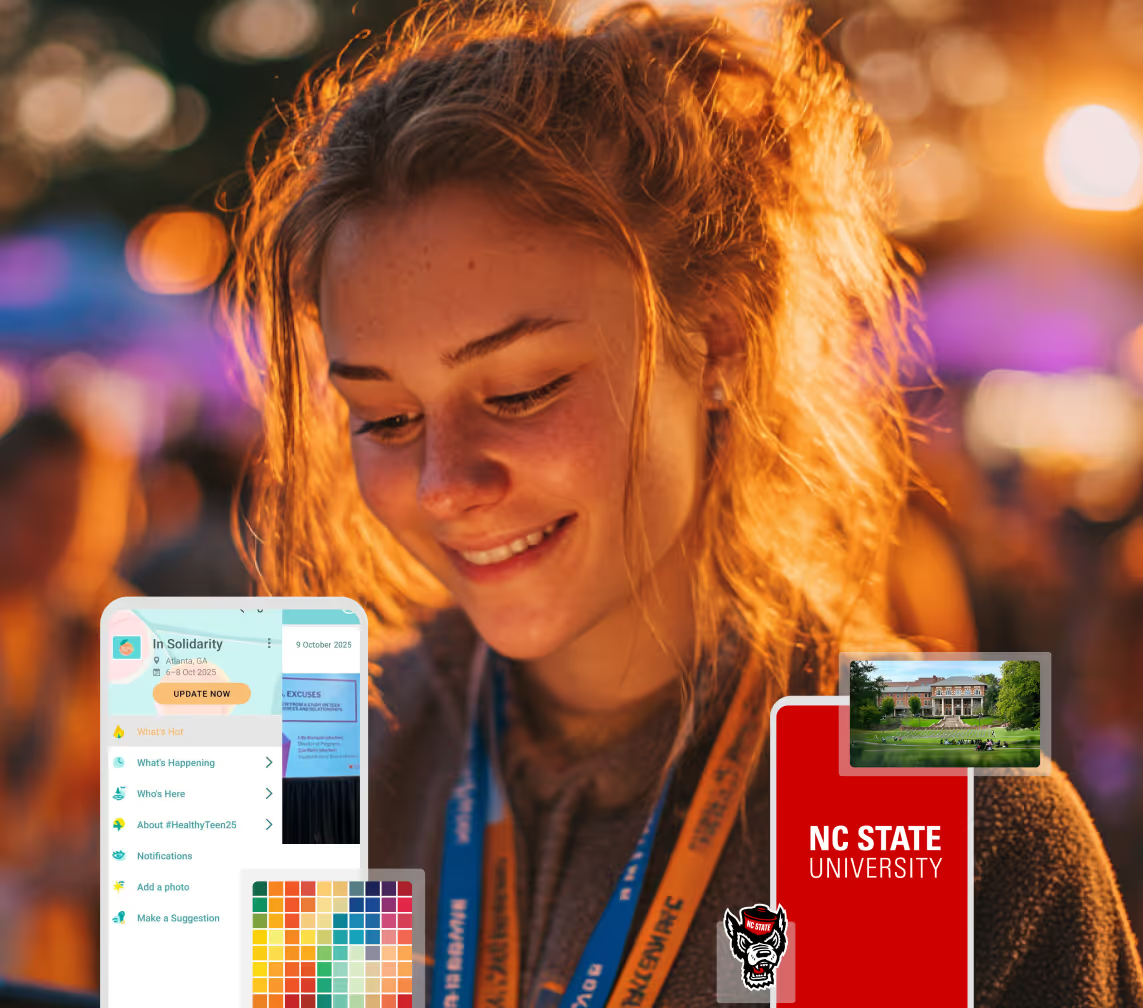
Planning Orientation?
Help new students feel prepared from day one with schedules, campus resources, and real-time updates in one app.
Running Admissions Events?
Manage open houses, tours, and yield events with a branded app that saves time and engages prospective students.

Running Admissions Events?
Manage open houses, tours, and yield events with a branded app that saves time and engages prospective students.
Get a custom Sponsorship Package Template
Stop starting from scratch. Grab free templates that helWe'll build a tailored sponsorship package with suggested pricing, tiers, and benefits..for your specific event.p you build professional sponsorship packages and close deals faster.
Get a custom Sponsorship Package Template
Stop starting from scratch. Grab free templates that helWe'll build a tailored sponsorship package with suggested pricing, tiers, and benefits..for your specific event.p you build professional sponsorship packages and close deals faster.
Plan Your Next Event Without Missing a Beat.
From venue selection to post-event wrap-up, this free checklist walks you through every step (so nothing falls through the cracks).
.avif)
Plan Your Next Event Without Missing a Beat.
From venue selection to post-event wrap-up, this free checklist walks you through every step (so nothing falls through the cracks).
Real Results From Real Events
100,000+ organizations trust Guidebook. See exactly how universities, associations, enterprises, and more put it to work.

Real Results From Real Events
100,000+ organizations trust Guidebook. See exactly how universities, associations, enterprises, and more put it to work.
Flexible pricing for every event size
Find the perfect plan for your needs, from intimate gatherings to large-scale conferences.

Flexible pricing for every event size
Find the perfect plan for your needs, from intimate gatherings to large-scale conferences.
Join our event experts
Watch on-demand webinars and join live sessions with industry leaders sharing best practices for event success.
.avif)
Join our event experts
Watch on-demand webinars and join live sessions with industry leaders sharing best practices for event success.
Guidebook in Action
Book a personalized walkthrough and discover how we help event teams create better attendee experiences.
Guidebook in Action
Book a personalized walkthrough and discover how we help event teams create better attendee experiences.

What is First Year Experience?
First year experience (FYE) is the semester- or year-long program that keeps new students after orientation. See structure, events, and how campuses run it.

First year experience (FYE) is the structured, semester- or year-long set of courses, mentoring, and events that keeps new students after the welcome banners come down. Orientation lasts days. FYE lasts long enough to change whether a student is still enrolled in March. It usually lives in undergraduate studies, student success, or a dedicated FYE office — not only in student activities.
Here's the thing: "first year experience" is a practitioner term. Families almost never type it. Advisors, success coaches, and orientation directors do. That is useful. The people who search it already own retention metrics. A glossary page can define the program, separate it from welcome week, and point those practitioners at the event layer FYE still has to run: common reads, cohort trips, family webinars, and mid-year check-ins.
Key Characteristics of First Year Experience
- Curricular core: Many FYE programs attach a credit-bearing seminar, common reading, or learning community. That is the difference from a club calendar.
- Cohorts and peer mentors: Students stay with a small group past opening weekend. Mentors need a schedule they can actually share.
- Success outcomes, not vibes: Offices report persistence, GPA, and belonging scores. Events are a means.
- Year-long arc: Fall launch, midterms support, winter melt prevention, spring "still here" programming.
- Heavy collaboration: Advising, housing, counseling, and academic departments all touch the same student. FYE is the coordinator, not the owner of every hour.
- Quiet after week two: If the only FYE events are in August, you built orientation with a fancier name.
First Year Experience vs. Related Programs
New Student Orientation
- Scope: Short, intensive onboarding
- Focus: Logistics and first friends
- Timeline: Days
- Goal: Start — see new student orientation
Welcome Week
- Scope: Campus-wide social kickoff
- Focus: Involvement and energy
- Timeline: About seven days
- Goal: Get students into the community — see welcome week
Student belonging work
- Scope: Culture and climate across years
- Focus: Whether students feel they matter
- Timeline: Continuous
- Goal: The outcome FYE is measured on — see student belonging
FYE is the bridge. Orientation hands you a name. Welcome week hands you a club. FYE is supposed to still know that student in February. Summer melt is the prequel for students who never make it to the seminar.
Essential Components of an FYE Program
A seminar or common academic experience
Credit is what gets students in the room after week three. Design the out-of-class events as homework they will actually do — a campus resource scavenger hunt in the app beats another lecture about the library.
Peer mentor infrastructure
Mentors need a private staff schedule and a public student schedule. Mixing those in a group chat is how you leak a counseling referral.
Touchpoints after midterms
October and February are when isolation shows. Plan two required or high-incentive check-ins. Push them. Do not bury them in an LMS announcement students muted in September.
Family-facing moments
A fall webinar and a spring "how to support from home" session keep families from becoming a surprise withdrawal. Parent and family programs can host; FYE should own the student message.
The FYE Year at a Glance
Summer
Enroll the seminar. Introduce mentors. Keep melt students in the same communication stream as orientation — one app, not a new login in July.
Opening month
Do not compete with welcome week. Co-brand two events and let student life own the rest. FYE should be present at the involvement fair with a seminar meetup, not a second festival.
Midterms and winter
Study halls, wellness, and "register for spring" campaigns. This is where FYE earns the retention line on the annual report.
Spring
Leadership pathways, major exploration, and a clean handoff to sophomore programs. Close the loop with a survey that asks about belonging, not only pizza quality.
Why First Year Experience Matters
For program success:
- Attendance you can defend: Credit and cohorts beat optional pizza.
- Mentor retention: Clear tools keep peer leaders from quitting in October.
- Less duplicate messaging: One calendar across FYE, housing, and orientation.
For campus objectives:
- Persistence: This is the KPI. Events are only useful if they move it.
- Equity: First-gen and commuter students need FYE more and attend generic welcome events less. Design for them.
- Advisor time: Students who already found writing center and counseling through FYE do not burn advising appointments on "where is that."
New student programs on Guidebook are the event layer under FYE — not a replacement for the seminar.
FYE Best Practices
- Put the seminar in the same guide as orientation: Students already downloaded it. Do not make August a new app.
- Give mentors a staff-only layer: Rosters and flags do not belong on the public schedule.
- Measure session-level attendance: "FYE is required" is not a metric.
- Schedule against midterms, not around staff convenience: The week students disappear is the week you should appear.
- Translate for families once a term: A 20-minute webinar prevents a January surprise.
- Partner with housing on the quiet students: RAs see them first.
- Do not brand everything FYE: Students tune out a logo that is on every flyer.
- Close summer melt in the same system: The student who ghosts July is your first-year risk in September.
- Publish office hours in the app: Success coaches hide in PDFs.
- Debrief with institutional research: If you cannot see persistence by cohort, you are decorating.
Common FYE Mistakes
Stopping at welcome week: That is a kickoff, not a program.
Owning every event: FYE that competes with student activities loses both calendars. Curate. Do not clone.
No commuter or online track: A Tuesday 7 p.m. cohort meeting is a residential default.
Mentors without training or pay: You will recreate orientation-leader burnout in week five.
Data that never leaves the LMS: If housing and advising cannot see who missed the last two check-ins, the program is ornamental.
Final Thoughts
First year experience is how a campus keeps the promise convocation made. Keep the seminar. Keep the mentors. Put the events where students already look. Then measure who is still here.
Start from new student programs, read student belonging, or request an EDU demo.
The power of your brand in your app, from first visit to alumni.
Build trust
Your brand, front and center in your own app, downloaded directly from the app stores.
.avif)
Deliver continuity
One app for everything a student needs. From being a prospective student through to graduation and beyond.
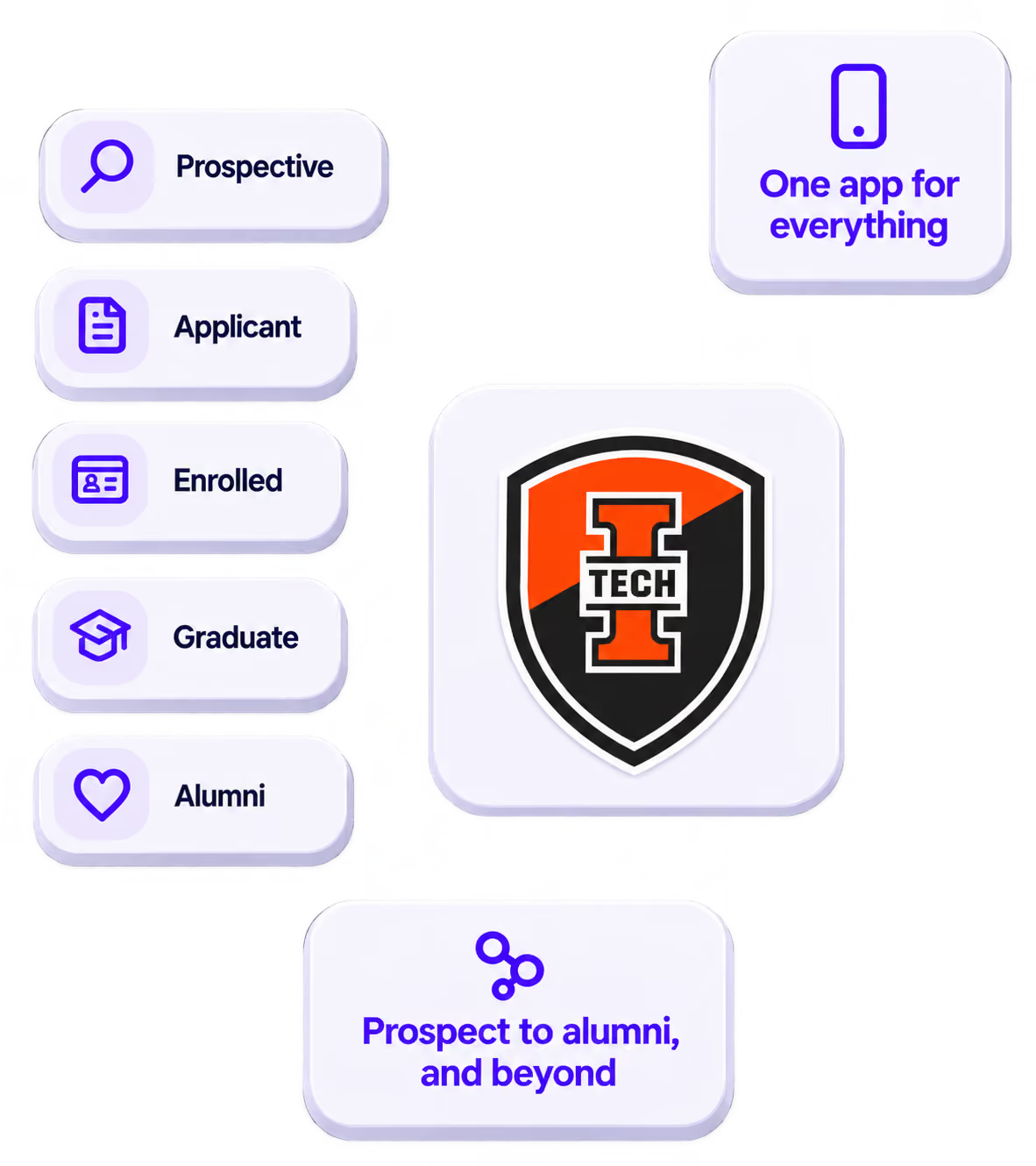
Stand out
Your own app helps you to stand out from the competition, stay top of mind, and be remembered.
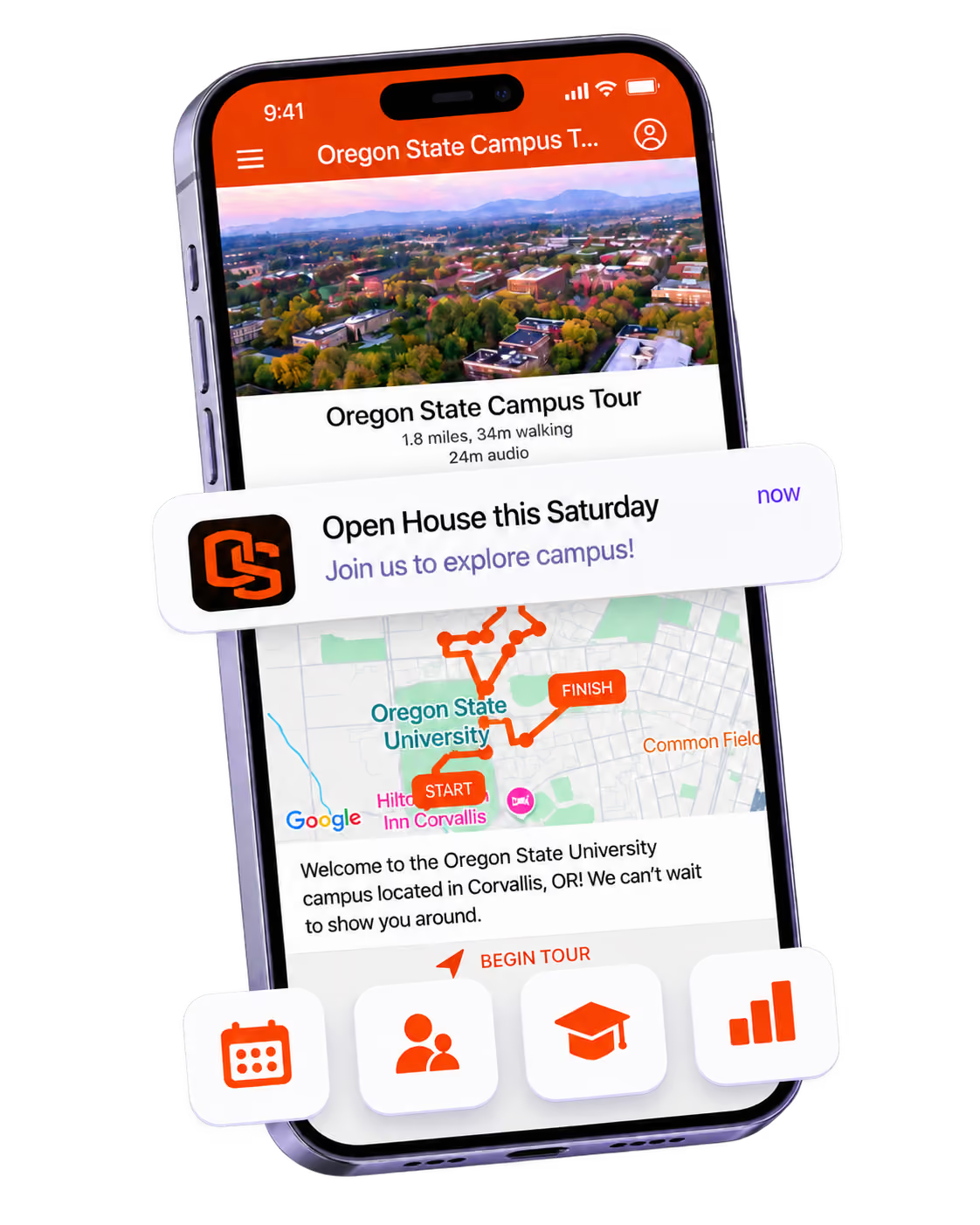

Get the Mobile App Playbook
A short guide to running the whole student journey in one app. No fluff, just what works.
for higher ed
Campus
Playbook
A practical guide to building a connected campus experience.
Free playbook
The Mobile App Playbook for Universities
Students decide if they belong long before they set foot on campus. This playbook shows how to win them over from the first visit through graduation.
- Grow enrollment and boost recruitment
- Increase belonging and retention
- Run every event from one branded app
By submitting, you agree to our Privacy Policy.
You're in.
.png)