
Campus apps by department
Admissions, orientation, student life, and more — one campus app that works across departments.

Campus apps by department
Admissions, orientation, student life, and more — one campus app that works across departments.
Build unlimited event apps on one license
One partnership for unlimited campus events — orientation, tours, student life, and everything in between.
Build unlimited event apps on one license
One partnership for unlimited campus events — orientation, tours, student life, and everything in between.
Compare event app platforms
See how Guidebook stacks up against other event app and registration platforms.
Compare event app platforms
See how Guidebook stacks up against other event app and registration platforms.
Event apps for nonprofit and community programs
Give members, volunteers, and donors one branded app for conferences, fundraisers, and year-round community.
Event apps for nonprofit and community programs
Give members, volunteers, and donors one branded app for conferences, fundraisers, and year-round community.
Campus integrations and an open API
Connect Guidebook with the campus systems, APIs, and tools your team already uses.
Campus integrations and an open API
Connect Guidebook with the campus systems, APIs, and tools your team already uses.
Event apps for corporate and enterprise teams
Internal meetings, offsites, and large-scale corporate events — with the branding and control enterprise teams need.
Event apps for corporate and enterprise teams
Internal meetings, offsites, and large-scale corporate events — with the branding and control enterprise teams need.
Create a branded event app with no coding
Put schedules, maps, resources, and updates in every attendee's pocket — built for campus events and programs.
Create a branded event app with no coding
Put schedules, maps, resources, and updates in every attendee's pocket — built for campus events and programs.
Launch a branded, white-label event app
A white-label event app with your branding, your content, and your attendee experience — no coding required.
Launch a branded, white-label event app
A white-label event app with your branding, your content, and your attendee experience — no coding required.
Everything in the Guidebook platform
Explore the features event teams use to engage attendees before, during, and after the event.
Everything in the Guidebook platform
Explore the features event teams use to engage attendees before, during, and after the event.
One app for in-person and virtual attendees
The same schedule, networking, and updates whether people are in the room or joining remotely.
One app for in-person and virtual attendees
The same schedule, networking, and updates whether people are in the room or joining remotely.
Event apps built for associations
Annual meetings, chapter events, and member engagement — without rebuilding a new app every year.
Event apps built for associations
Annual meetings, chapter events, and member engagement — without rebuilding a new app every year.
A branded event website that matches the app
Promote the event, collect interest, and keep branding consistent from the first click to check-in.
A branded event website that matches the app
Promote the event, collect interest, and keep branding consistent from the first click to check-in.
Plan, run, and measure events on one platform
App, registration, badges, and websites in one workflow — so planning isn't a pile of disconnected tools.
Plan, run, and measure events on one platform
App, registration, badges, and websites in one workflow — so planning isn't a pile of disconnected tools.
Keep members engaged between events
One branded app for the conference and everything that happens the other 51 weeks of the year.
Keep members engaged between events
One branded app for the conference and everything that happens the other 51 weeks of the year.
The conference app attendees actually use
Schedules, maps, networking, and live updates for annual meetings, summits, and multi-day conferences.
The conference app attendees actually use
Schedules, maps, networking, and live updates for annual meetings, summits, and multi-day conferences.
Registration that feeds your app and badges
Collect registrations, payments, and attendee data in the same platform as your event app.
Registration that feeds your app and badges
Collect registrations, payments, and attendee data in the same platform as your event app.
Design and print event badges in one place
Custom badges, QR check-in, and on-site printing — without a separate badge vendor.
Design and print event badges in one place
Custom badges, QR check-in, and on-site printing — without a separate badge vendor.
A Smaller School?
Deliver a polished, branded event experience without a large team or a big budget.
A Smaller School?
Deliver a polished, branded event experience without a large team or a big budget.
Running Family Programs?
Give families everything they need, from schedules and maps to real-time updates, all in one place.
Running Family Programs?
Give families everything they need, from schedules and maps to real-time updates, all in one place.
Coordinating Move-In Day?
Share updates, manage events, and keep students informed from move-in through the academic year.

Coordinating Move-In Day?
Share updates, manage events, and keep students informed from move-in through the academic year.
Offering Campus Tours?
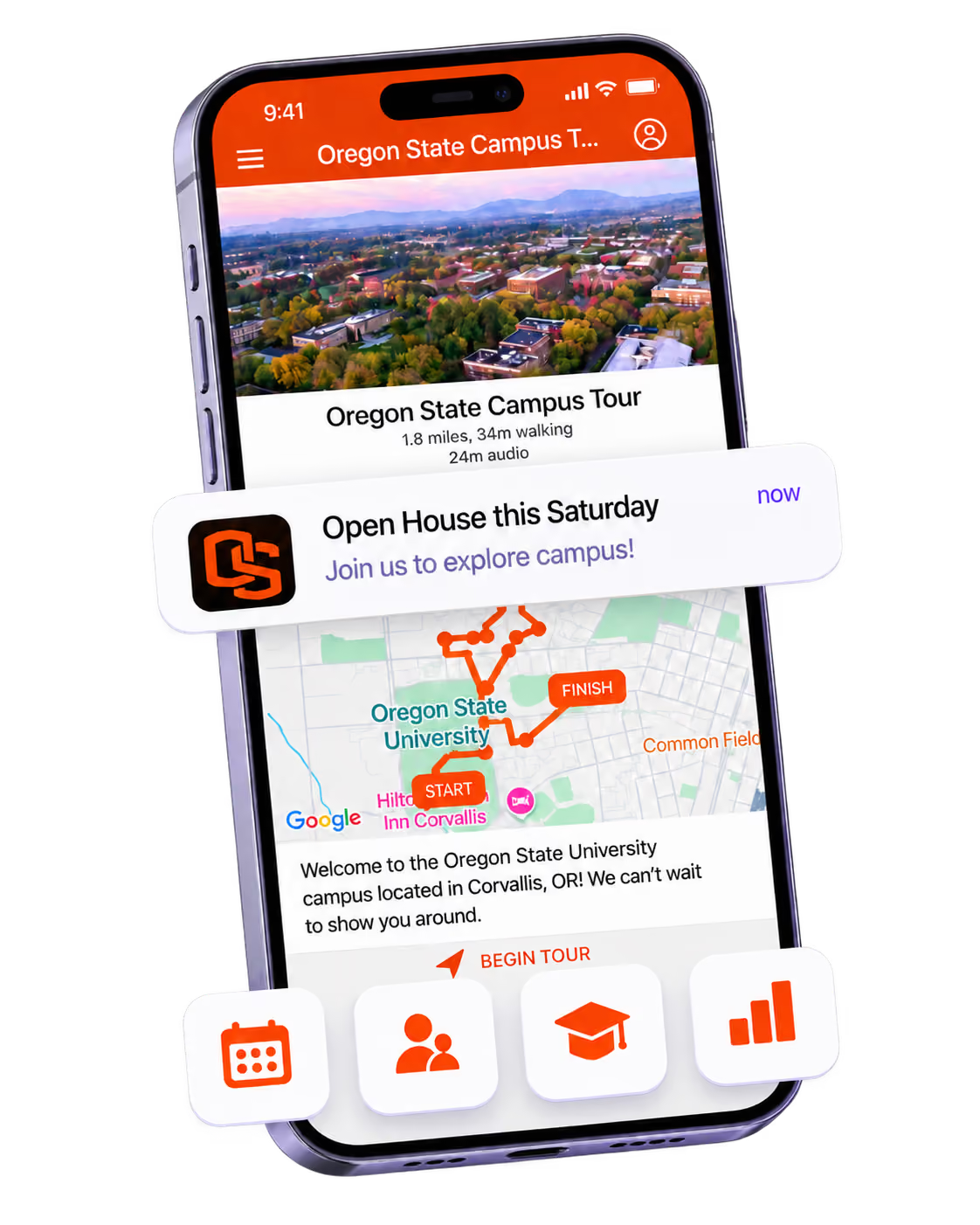
Deliver branded, self-guided tour experiences with interactive maps and rich media, available 24/7.

Offering Campus Tours?
Deliver branded, self-guided tour experiences with interactive maps and rich media, available 24/7.
Organising a Career Fair?
Simplify logistics for students, employers, and Career Services staff with one easy-to-use app.
Organising a Career Fair?
Simplify logistics for students, employers, and Career Services staff with one easy-to-use app.
Managing Alumni Events?
Plan reunions, regional events, and fundraising campaigns with an app built for alumni engagement.
Managing Alumni Events?
Plan reunions, regional events, and fundraising campaigns with an app built for alumni engagement.
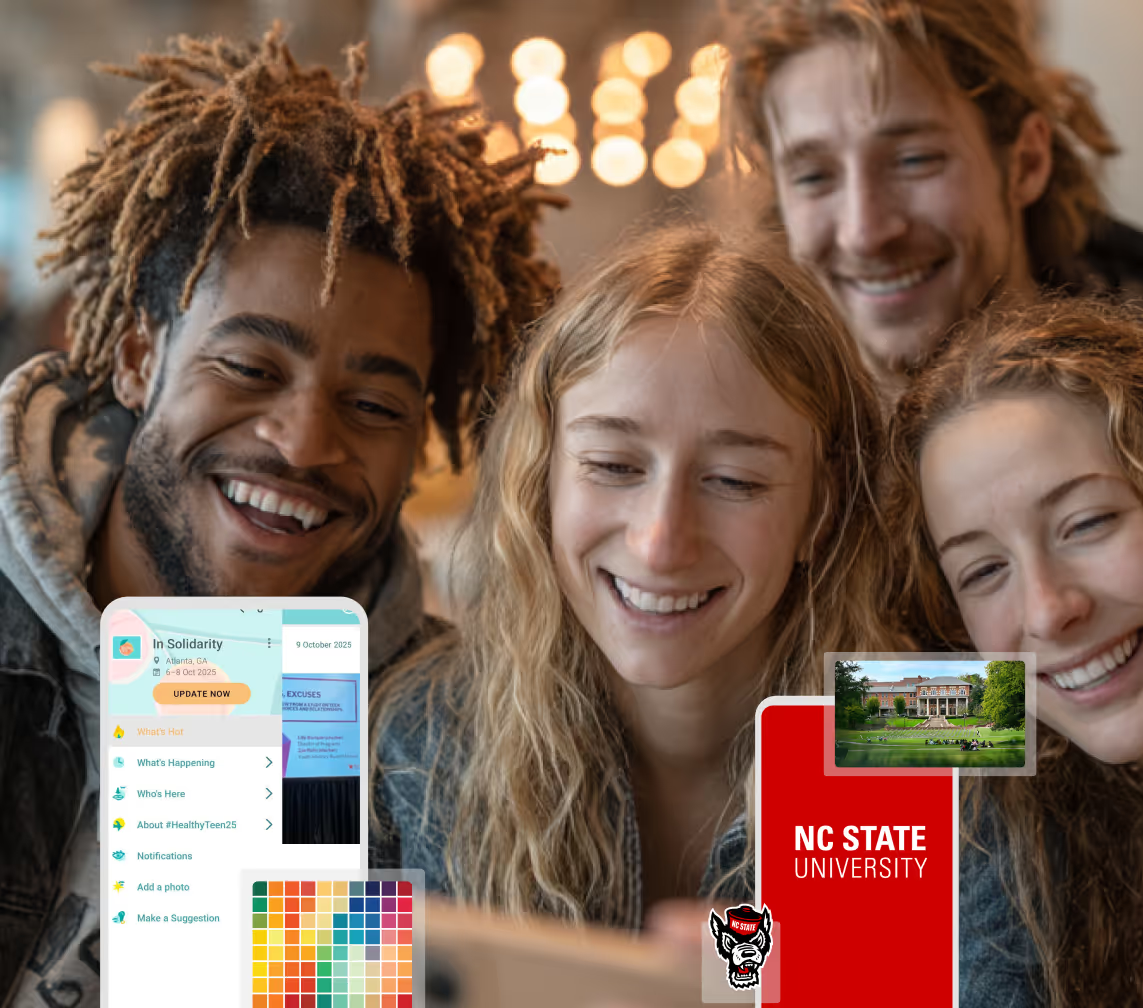
Boost Student Engagement
One hub for schedules, resources, and events that keeps students connected throughout the academic year.
Boost Student Engagement
One hub for schedules, resources, and events that keeps students connected throughout the academic year.
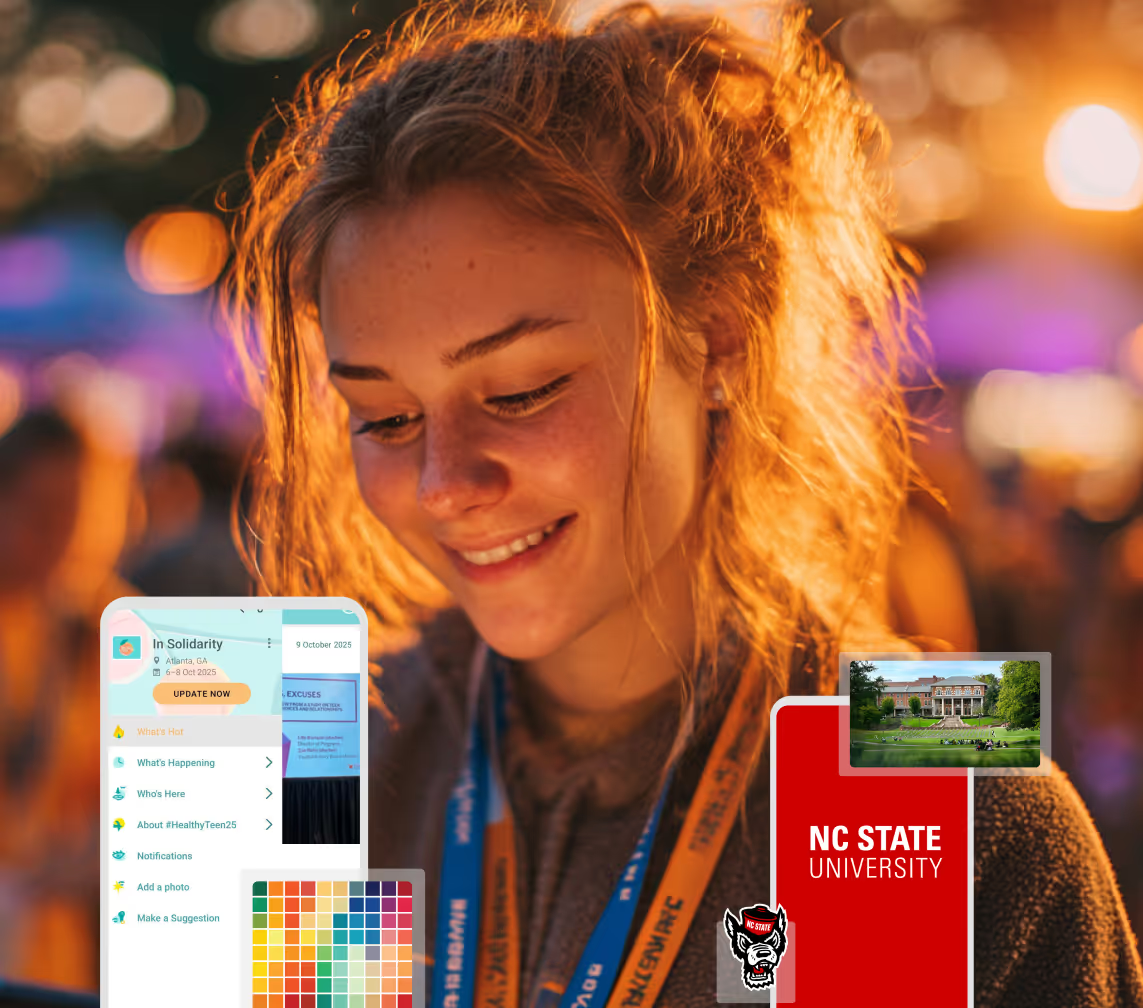
Planning Orientation?
Help new students feel prepared from day one with schedules, campus resources, and real-time updates in one app.
Planning Orientation?
Help new students feel prepared from day one with schedules, campus resources, and real-time updates in one app.
Running Admissions Events?
Manage open houses, tours, and yield events with a branded app that saves time and engages prospective students.

Running Admissions Events?
Manage open houses, tours, and yield events with a branded app that saves time and engages prospective students.
Get a custom Sponsorship Package Template
Stop starting from scratch. Grab free templates that helWe'll build a tailored sponsorship package with suggested pricing, tiers, and benefits..for your specific event.p you build professional sponsorship packages and close deals faster.
Get a custom Sponsorship Package Template
Stop starting from scratch. Grab free templates that helWe'll build a tailored sponsorship package with suggested pricing, tiers, and benefits..for your specific event.p you build professional sponsorship packages and close deals faster.
Plan Your Next Event Without Missing a Beat.
From venue selection to post-event wrap-up, this free checklist walks you through every step (so nothing falls through the cracks).
.avif)
Plan Your Next Event Without Missing a Beat.
From venue selection to post-event wrap-up, this free checklist walks you through every step (so nothing falls through the cracks).
Real Results From Real Events
100,000+ organizations trust Guidebook. See exactly how universities, associations, enterprises, and more put it to work.

Real Results From Real Events
100,000+ organizations trust Guidebook. See exactly how universities, associations, enterprises, and more put it to work.
Flexible pricing for every event size
Find the perfect plan for your needs, from intimate gatherings to large-scale conferences.
Flexible pricing for every event size
Find the perfect plan for your needs, from intimate gatherings to large-scale conferences.
Join our event experts
Watch on-demand webinars and join live sessions with industry leaders sharing best practices for event success.
.avif)
Join our event experts
Watch on-demand webinars and join live sessions with industry leaders sharing best practices for event success.
Guidebook in Action
Book a personalized walkthrough and discover how we help event teams create better attendee experiences.
Guidebook in Action
Book a personalized walkthrough and discover how we help event teams create better attendee experiences.

What is mobile app personalization for higher education?
Mobile app personalization for higher education tailors content and features to individual students, enhancing engagement and learning outcomes. Discover key strategies, benefits, and implementation tips.

Mobile app personalization higher education is the strategic use of customized mobile experiences to deliver relevant content, schedules, and resources to individual students based on their unique needs and preferences. This approach transforms generic campus apps into powerful engagement tools that adapt to each user. When done right, it drives student success from admissions through graduation.
Here's the thing: today's students expect Netflix-level personalization in every digital interaction. A one-size-fits-all campus app feels outdated before students even download it. Mobile app personalization meets students where they are—on their phones—with content that actually matters to them. That's the difference between an app that collects dust and one that becomes essential to campus life.
Key Characteristics of Mobile App Personalization Higher Education
- User-Specific Content Delivery: The app displays different information based on student type, major, year, or interests. A nursing student sees different resources than an engineering major.
- Dynamic Schedule Integration: Personal calendars sync with class schedules, campus events, and deadlines. Students see only what's relevant to their academic journey.
- Behavioral Adaptation: The app learns from user interactions over time. Frequently accessed features move to prominent positions automatically.
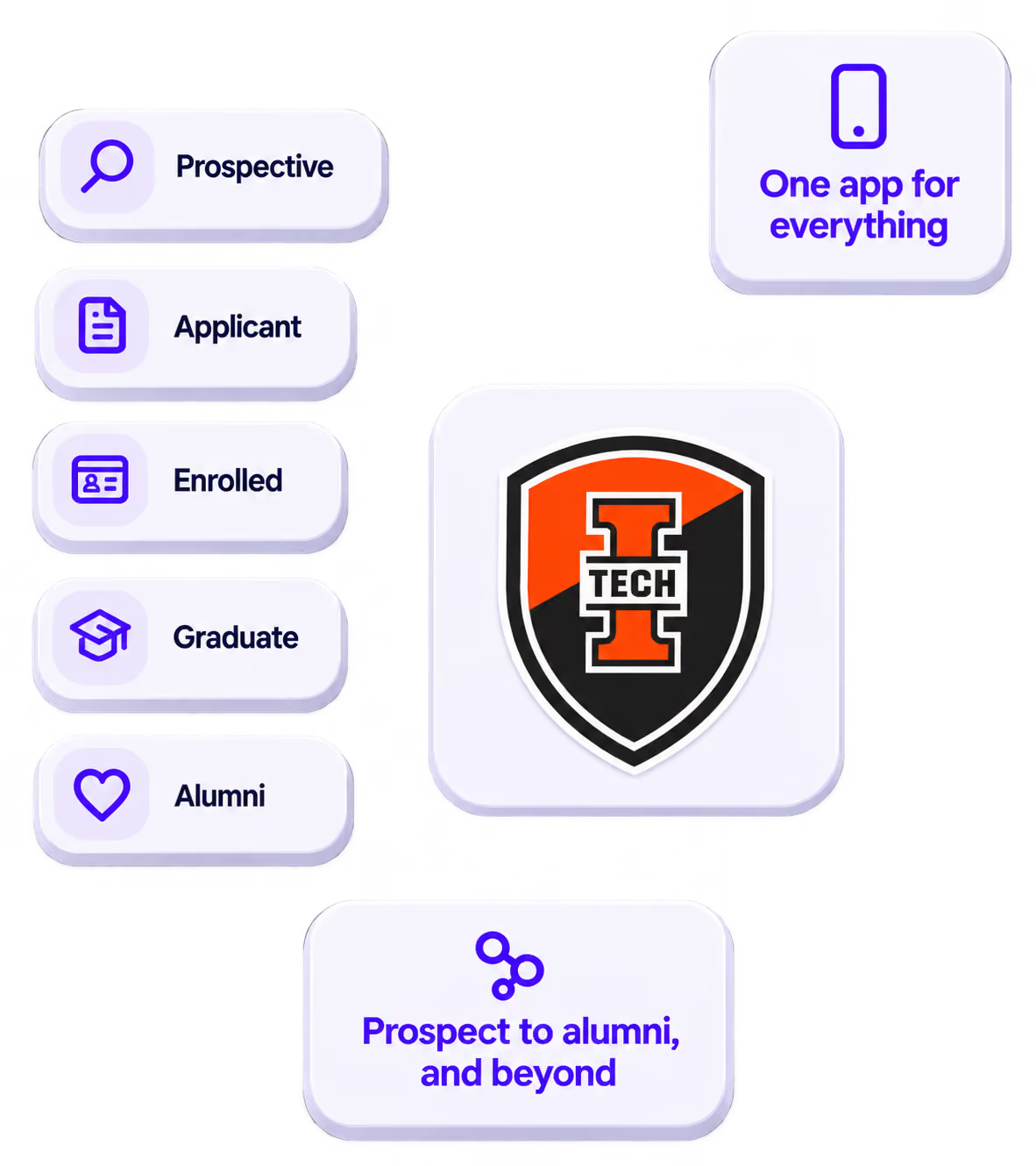
- Role-Based Access: Different user groups—prospective students, current students, parents, alumni—each get tailored experiences within the same app.
- Location-Aware Features: Content changes based on where students are on campus. Near the library? Study resources pop up. At the rec center? Fitness schedules appear.
- Real-Time Updates: Push notifications deliver timely, personalized alerts. No more mass emails that get ignored.
- Preference Controls: Students customize their own experience by selecting interests, notification settings, and content priorities.
Mobile App Personalization vs. Related Approaches
Generic Campus Apps
- Scope: Same content for all users regardless of role or needs
- Focus: Information distribution rather than engagement
- Timeline: Static content updated periodically by administrators
- Channels: Single experience across all user types
- Goal: Provide basic campus information access
Web-Based Portals
- Scope: Desktop-first design adapted for mobile browsers
- Focus: Administrative functions and document access
- Timeline: Session-based interactions requiring login each time
- Channels: Browser-dependent with limited offline capability
- Goal: Centralize student services and records
Email Communication Systems
- Scope: One-way messaging to student inboxes
- Focus: Announcements and official communications
- Timeline: Scheduled sends with delayed engagement
- Channels: Email only with no interactive features
- Goal: Deliver important notices and updates
While each approach serves a purpose, mobile app personalization combines the best elements. It offers the accessibility of apps, the functionality of portals, and the communication power of email—all wrapped in an experience that feels custom-built for each student.
Essential Components of Mobile App Personalization Higher Education
Build Robust Student Profiles
Every personalized experience starts with data. Your app needs to know who's using it. This means collecting information during onboarding and enriching profiles over time.
Key profile elements include:
- Academic program and year
- Campus housing status
- Extracurricular interests
- Accessibility needs
- Communication preferences
Create Smart Content Segmentation
Not every student needs every piece of content. Smart segmentation ensures the right information reaches the right people. A commuter student doesn't need dining hall hours. An international student needs visa deadline reminders.
Effective event planning requires understanding your audience segments deeply.
Implement Intelligent Notifications
Push notifications are powerful—but only when relevant. Personalized apps send targeted alerts based on student behavior and preferences. This prevents notification fatigue while keeping engagement high.
Consider these notification types:
- Class reminders and room changes
- Event recommendations based on interests
- Deadline alerts for their specific programs
- Campus safety updates for their location
Design Adaptive User Interfaces
The app's layout should shift based on user needs. A first-year student's home screen looks different from a senior's. Frequently used features should surface automatically. This reduces friction and increases daily usage.
Enable Offline Functionality
Students don't always have reliable wifi. Personalized content should be available offline when possible. Campus maps, schedules, and key resources need to work without a connection.
How Mobile App Personalization Works in Practice
Start with the Admissions Journey
Personalization begins before students even enroll. Prospective students receive tailored content about programs they've shown interest in. Virtual tour recommendations match their academic goals. This approach supports admissions and enrollment efforts significantly.
Schools like Purdue have seen remarkable results. Their Boiler Gold Rush orientation attracts 8,000 students—75% of the incoming class—even though it's optional. The secret? A personalized app experience that makes students feel seen from day one.
Customize the Orientation Experience
New student orientation is where personalization really shines. Students select their interests and receive custom schedules. They're matched with peer groups and orientation leaders. Every touchpoint feels intentional rather than generic.
Learn more about new student programs that leverage personalization effectively. The apps for new student orientations guide offers practical implementation tips.
Support Ongoing Student Success
Personalization doesn't stop after orientation. Throughout the academic year, the app adapts to student needs:
- Career fair recommendations based on major
- Study group suggestions for current courses
- Mental health resources during high-stress periods
- Graduation requirements tracking
Explore how career fairs benefit from personalized app experiences.
Engage Alumni Long-Term
The relationship doesn't end at graduation. Personalized apps keep alumni connected through relevant events, networking opportunities, and giving campaigns. An alumni event planning app maintains engagement for years.
Why Mobile App Personalization Higher Education Matters
For Student Success:
- Increased Engagement: Students use apps that feel relevant to their lives. Purdue logged 600,000+ app sessions in a single orientation week.
- Better Information Access: No more hunting through generic websites. The right resources appear when students need them.
- Stronger Campus Connection: Personalized experiences build belonging. Students feel like individuals, not ID numbers.
- Improved Academic Outcomes: Timely reminders and relevant resources support student achievement.
- Reduced Overwhelm: Filtering out irrelevant content decreases cognitive load during stressful transitions.
For Institutional Objectives:
- Higher Yield Rates: Personalized admitted student experiences convert more acceptances to enrollments.
- Improved Retention: Connected students stay enrolled. Personalization builds the relationships that keep students on campus.
- Operational Efficiency: Digital delivery replaces printed materials. Purdue saved thousands of pages and dollars.
- Better Data Insights: Usage patterns reveal what students actually need, informing program decisions.
- Competitive Advantage: Modern students expect personalization. Schools that deliver it stand out in recruitment.
Platforms like Guidebook's event management platform make implementing these personalized experiences achievable for institutions of any size. The schools solutions are specifically designed for higher education needs.
Mobile App Personalization Higher Education Best Practices
- Start with Clear Goals: Define what success looks like before building. Is it orientation attendance? App downloads? Student satisfaction scores? Measure what matters.
- Collect Data Thoughtfully: Only gather information you'll actually use. Students notice when apps ask for data that never improves their experience.
- Prioritize Privacy and Transparency: Be clear about how student data is used. Build trust through honest communication about personalization practices.
- Test with Real Students: Involve students in development and testing. Their feedback reveals blind spots administrators miss.
- Promote the App Relentlessly: Purdue puts QR codes everywhere—on beds, at the gym, on stadium scoreboards. Every touchpoint is a download opportunity.
- Train Staff Thoroughly: Everyone who interacts with students should understand and promote the app. Consistent messaging drives adoption.
- Update Content Regularly: Stale content kills engagement. Assign clear ownership for keeping information current.
- Balance Structure and Freedom: Guide new students with structured content. Give experienced users more control over their experience.
- Integrate with Existing Systems: Connect the app to your LMS, SIS, and other platforms. Seamless integration increases daily utility.
- Measure and Iterate: Track event ROI and app analytics. Use data to continuously improve the personalized experience.
Common Mobile App Personalization Higher Education Mistakes
Over-Personalizing Too Soon: Asking for extensive preferences during onboarding overwhelms users. Start simple and build profiles gradually through natural interactions. Students abandon apps that demand too much upfront.
Ignoring Accessibility Requirements: Personalization must work for all students, including those with disabilities. Screen readers, color contrast, and alternative text aren't optional. Failing here excludes the students who need support most.
Creating Silos Between Departments: When admissions, student affairs, and academics each build separate app experiences, students suffer. Coordinate across departments for a unified, coherent experience.
Neglecting the Parent Audience: Parents influence student decisions, especially for prospective and first-year students. Include parent and family programs in your personalization strategy.
Underestimating Content Maintenance: Personalization multiplies content needs. If you're creating different experiences for 10 student segments, you need resources to maintain all 10. Plan accordingly.
Forgetting Offline Scenarios: Students attend events in basements, stadiums, and rural areas with poor connectivity. Apps that require constant internet access fail when students need them most.
Skipping the Feedback Loop: Launching without mechanisms for student feedback means flying blind. Build in ways for users to report problems and suggest improvements.
Final Thoughts
Mobile app personalization in higher education isn't a nice-to-have anymore. It's how modern institutions meet students where they are—literally in their pockets—with experiences that feel designed just for them. The schools getting this right are seeing real results: higher engagement, better retention, and stronger campus communities.
The technology exists today to deliver Netflix-level personalization to every student. What's often missing is the strategic thinking to implement it well. Start with clear goals, involve students in the process, and commit to continuous improvement. The investment pays dividends across the entire student lifecycle.
Whether you're planning virtual events, managing housing and residence life programs, or coordinating campus resources, personalization makes every interaction more meaningful. Check out case studies from schools already succeeding with this approach, or explore templates to jumpstart your implementation.
Ready to transform your campus app experience? Request a demo to see how Guidebook helps institutions deliver personalized mobile experiences at scale. Because every student deserves an app that knows their name—and their needs.
The power of your brand in your app, from first visit to alumni.
Build trust
Attendees download your app, not ours. Your name, colors, and crest in the stores.
.avif)
One place for the whole event
Schedules, maps, registration, and updates in one branded hub - not five tools.
Stand out
A branded app is what people keep on their phone after the printed program is in the recycling.

Get the Mobile App Playbook
A short guide to running the whole student journey in one app. No fluff, just what works.
for higher ed
Campus
Playbook
A practical guide to building a connected campus experience.
Free playbook
The Mobile App Playbook for Universities
Students decide if they belong long before they set foot on campus. This playbook shows how to win them over from the first visit through graduation.
- Grow enrollment and boost recruitment
- Increase belonging and retention
- Run every event from one branded app
By submitting, you agree to our Privacy Policy.
You're in.
.png)