
Campus apps by department
Admissions, orientation, student life, and more — one campus app that works across departments.

Campus apps by department
Admissions, orientation, student life, and more — one campus app that works across departments.
Build unlimited event apps on one license
One partnership for unlimited campus events — orientation, tours, student life, and everything in between.
Build unlimited event apps on one license
One partnership for unlimited campus events — orientation, tours, student life, and everything in between.
Compare event app platforms
See how Guidebook stacks up against other event app and registration platforms.
Compare event app platforms
See how Guidebook stacks up against other event app and registration platforms.
Event apps for nonprofit and community programs
Give members, volunteers, and donors one branded app for conferences, fundraisers, and year-round community.
Event apps for nonprofit and community programs
Give members, volunteers, and donors one branded app for conferences, fundraisers, and year-round community.
Campus integrations and an open API
Connect Guidebook with the campus systems, APIs, and tools your team already uses.
Campus integrations and an open API
Connect Guidebook with the campus systems, APIs, and tools your team already uses.
Event apps for corporate and enterprise teams
Internal meetings, offsites, and large-scale corporate events — with the branding and control enterprise teams need.
Event apps for corporate and enterprise teams
Internal meetings, offsites, and large-scale corporate events — with the branding and control enterprise teams need.
Create a branded event app with no coding
Put schedules, maps, resources, and updates in every attendee's pocket — built for campus events and programs.
Create a branded event app with no coding
Put schedules, maps, resources, and updates in every attendee's pocket — built for campus events and programs.
Launch a branded, white-label event app
A white-label event app with your branding, your content, and your attendee experience — no coding required.
Launch a branded, white-label event app
A white-label event app with your branding, your content, and your attendee experience — no coding required.
Everything in the Guidebook platform
Explore the features event teams use to engage attendees before, during, and after the event.
Everything in the Guidebook platform
Explore the features event teams use to engage attendees before, during, and after the event.
One app for in-person and virtual attendees
The same schedule, networking, and updates whether people are in the room or joining remotely.
One app for in-person and virtual attendees
The same schedule, networking, and updates whether people are in the room or joining remotely.
Event apps built for associations
Annual meetings, chapter events, and member engagement — without rebuilding a new app every year.
Event apps built for associations
Annual meetings, chapter events, and member engagement — without rebuilding a new app every year.
A branded event website that matches the app
Promote the event, collect interest, and keep branding consistent from the first click to check-in.
A branded event website that matches the app
Promote the event, collect interest, and keep branding consistent from the first click to check-in.
Plan, run, and measure events on one platform
App, registration, badges, and websites in one workflow — so planning isn't a pile of disconnected tools.
Plan, run, and measure events on one platform
App, registration, badges, and websites in one workflow — so planning isn't a pile of disconnected tools.
Keep members engaged between events
One branded app for the conference and everything that happens the other 51 weeks of the year.
Keep members engaged between events
One branded app for the conference and everything that happens the other 51 weeks of the year.
The conference app attendees actually use
Schedules, maps, networking, and live updates for annual meetings, summits, and multi-day conferences.
The conference app attendees actually use
Schedules, maps, networking, and live updates for annual meetings, summits, and multi-day conferences.
Registration that feeds your app and badges
Collect registrations, payments, and attendee data in the same platform as your event app.
Registration that feeds your app and badges
Collect registrations, payments, and attendee data in the same platform as your event app.
Design and print event badges in one place
Custom badges, QR check-in, and on-site printing — without a separate badge vendor.
Design and print event badges in one place
Custom badges, QR check-in, and on-site printing — without a separate badge vendor.
A Smaller School?
Deliver a polished, branded event experience without a large team or a big budget.
A Smaller School?
Deliver a polished, branded event experience without a large team or a big budget.
Running Family Programs?
Give families everything they need, from schedules and maps to real-time updates, all in one place.
Running Family Programs?
Give families everything they need, from schedules and maps to real-time updates, all in one place.
Coordinating Move-In Day?
Share updates, manage events, and keep students informed from move-in through the academic year.

Coordinating Move-In Day?
Share updates, manage events, and keep students informed from move-in through the academic year.
Offering Campus Tours?
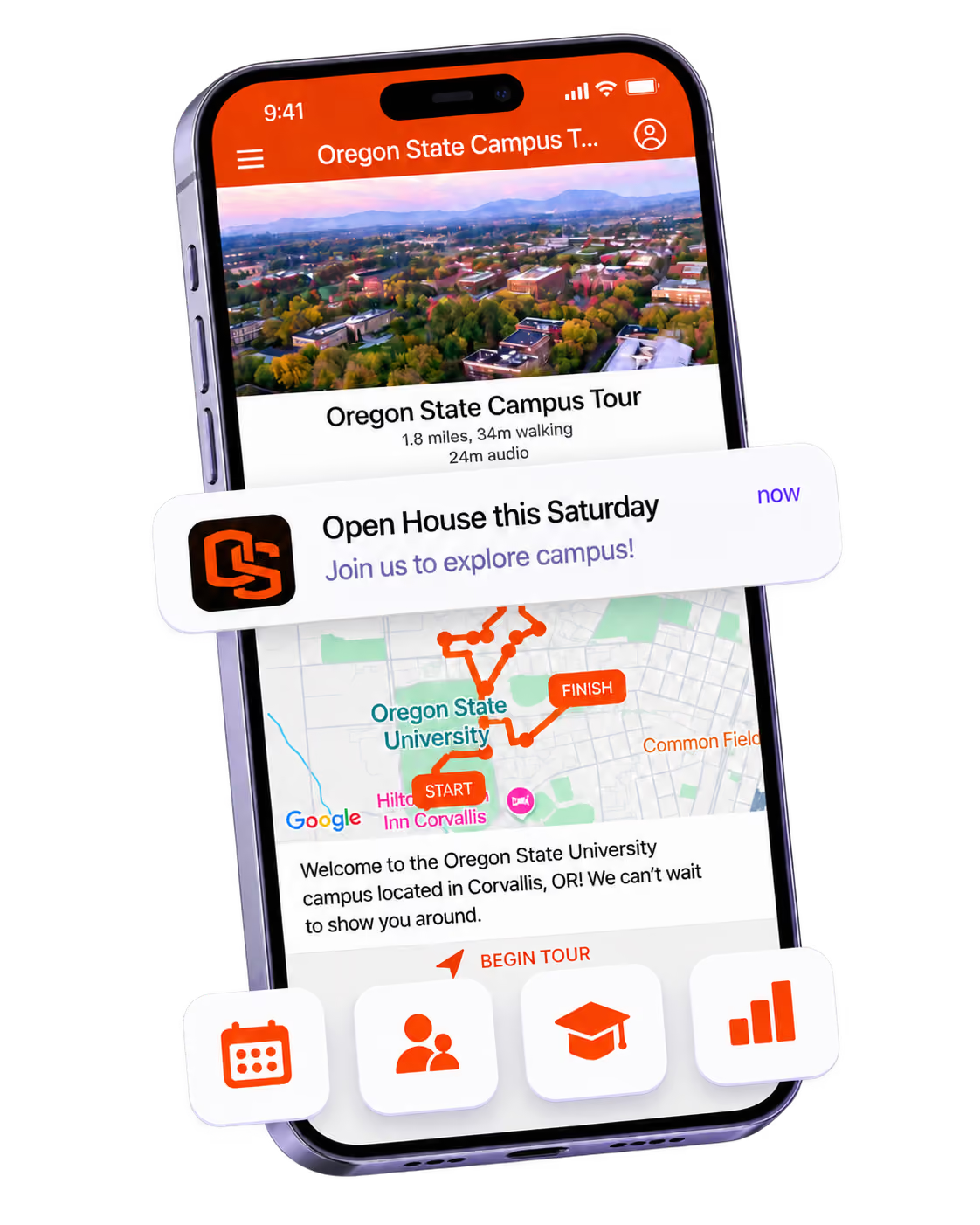
Deliver branded, self-guided tour experiences with interactive maps and rich media, available 24/7.

Offering Campus Tours?
Deliver branded, self-guided tour experiences with interactive maps and rich media, available 24/7.
Organising a Career Fair?
Simplify logistics for students, employers, and Career Services staff with one easy-to-use app.
Organising a Career Fair?
Simplify logistics for students, employers, and Career Services staff with one easy-to-use app.
Managing Alumni Events?
Plan reunions, regional events, and fundraising campaigns with an app built for alumni engagement.
Managing Alumni Events?
Plan reunions, regional events, and fundraising campaigns with an app built for alumni engagement.
Boost Student Engagement
One hub for schedules, resources, and events that keeps students connected throughout the academic year.
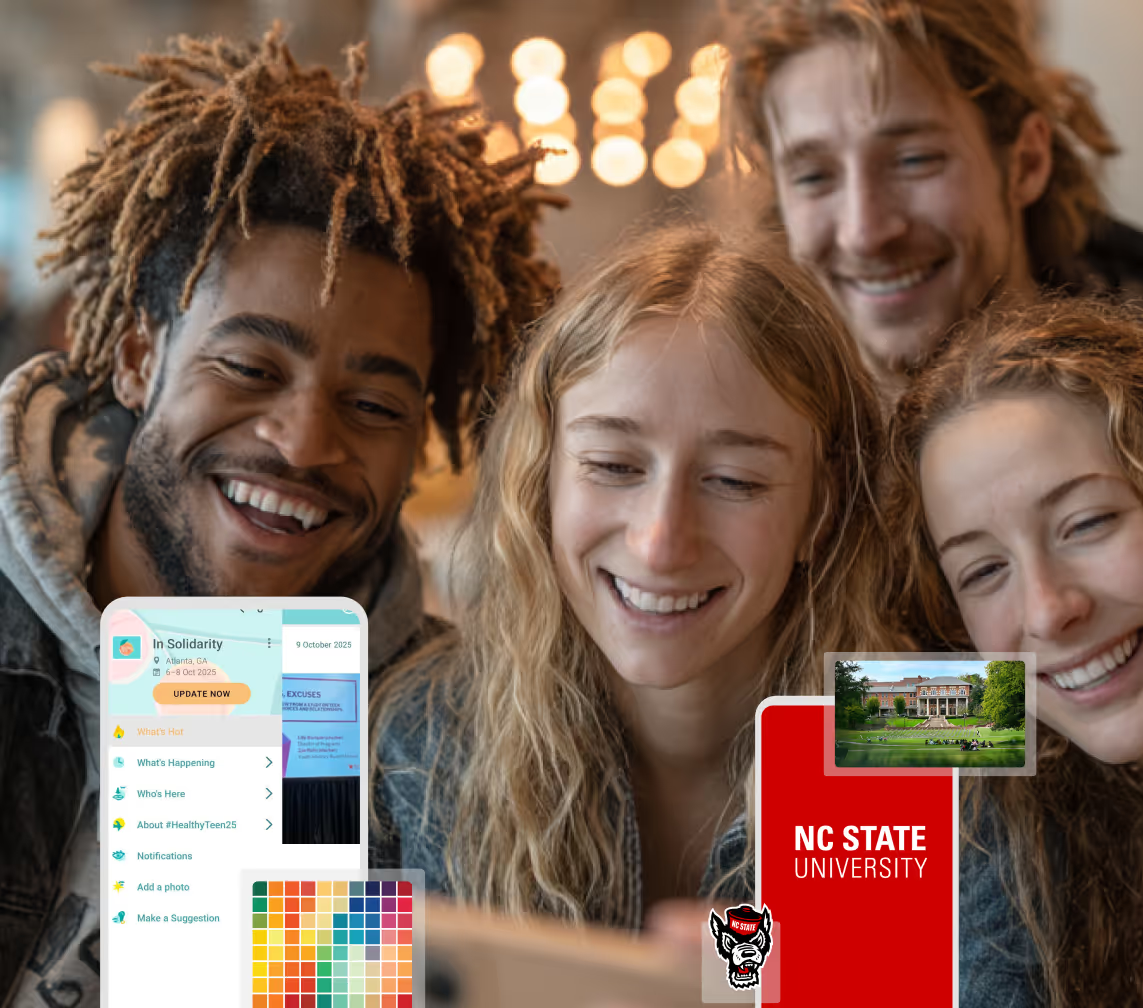
Boost Student Engagement
One hub for schedules, resources, and events that keeps students connected throughout the academic year.
Planning Orientation?
Help new students feel prepared from day one with schedules, campus resources, and real-time updates in one app.
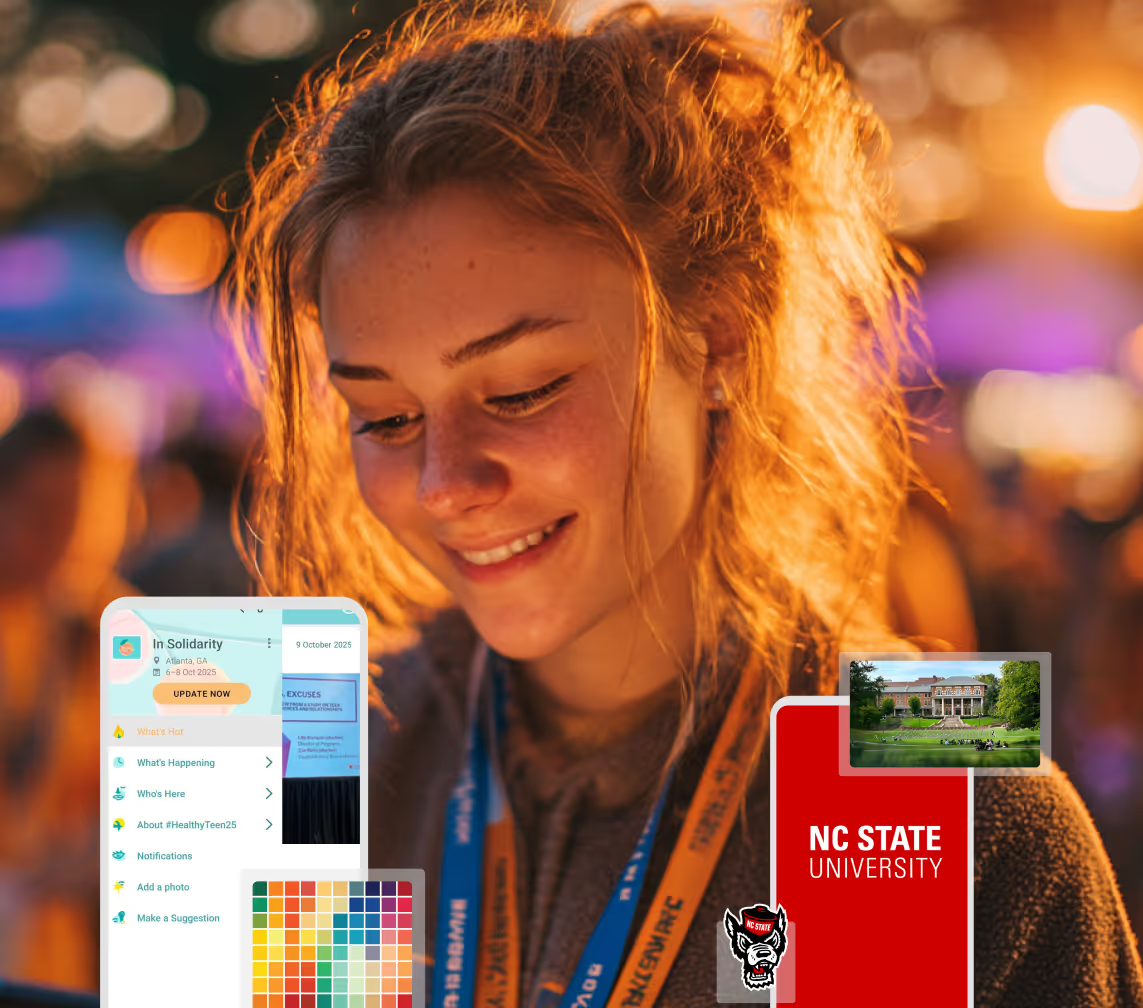
Planning Orientation?
Help new students feel prepared from day one with schedules, campus resources, and real-time updates in one app.
Running Admissions Events?
Manage open houses, tours, and yield events with a branded app that saves time and engages prospective students.

Running Admissions Events?
Manage open houses, tours, and yield events with a branded app that saves time and engages prospective students.
Get a custom Sponsorship Package Template
Stop starting from scratch. Grab free templates that helWe'll build a tailored sponsorship package with suggested pricing, tiers, and benefits..for your specific event.p you build professional sponsorship packages and close deals faster.
Get a custom Sponsorship Package Template
Stop starting from scratch. Grab free templates that helWe'll build a tailored sponsorship package with suggested pricing, tiers, and benefits..for your specific event.p you build professional sponsorship packages and close deals faster.
Plan Your Next Event Without Missing a Beat.
From venue selection to post-event wrap-up, this free checklist walks you through every step (so nothing falls through the cracks).
.avif)
Plan Your Next Event Without Missing a Beat.
From venue selection to post-event wrap-up, this free checklist walks you through every step (so nothing falls through the cracks).
Real Results From Real Events
100,000+ organizations trust Guidebook. See exactly how universities, associations, enterprises, and more put it to work.

Real Results From Real Events
100,000+ organizations trust Guidebook. See exactly how universities, associations, enterprises, and more put it to work.
Flexible pricing for every event size
Find the perfect plan for your needs, from intimate gatherings to large-scale conferences.

Flexible pricing for every event size
Find the perfect plan for your needs, from intimate gatherings to large-scale conferences.
Join our event experts
Watch on-demand webinars and join live sessions with industry leaders sharing best practices for event success.
.avif)
Join our event experts
Watch on-demand webinars and join live sessions with industry leaders sharing best practices for event success.
Guidebook in Action
Book a personalized walkthrough and discover how we help event teams create better attendee experiences.
Guidebook in Action
Book a personalized walkthrough and discover how we help event teams create better attendee experiences.

How do universities prevent students locking up on the first day?
Universities prevent first-day student lock-up with orientation programs, support resources, and campus guides. Discover effective strategies, onboarding tips, and student engagement tactics.

Student first day orientation is the structured welcome experience that transforms nervous newcomers into confident, connected campus community members from their very first moments on site. It covers everything from campus navigation to academic expectations to social connections. Done right, it sets the tone for an entire academic journey.
Here's the thing: student first day orientation isn't just a tour and a handshake. It's the critical bridge between acceptance and belonging. Students who feel lost on day one often stay lost. But those who feel welcomed? They thrive, persist, and become your biggest advocates.
Key Characteristics of Student First Day Orientation
- Structured Welcome Flow: Every moment is planned to reduce anxiety and build confidence. Students know exactly where to go and what to expect.
- Multi-Touchpoint Design: Combines large group sessions, small team activities, and one-on-one connections. This variety keeps energy high and meets different learning styles.
- Resource Introduction: Students learn about campus resources they'll need throughout their academic career. This includes academic support, health services, and student life offices.
- Peer Connection Focus: Building friendships starts immediately. Students meet classmates, orientation leaders, and potential study partners.
- Digital-First Communication: Modern orientations use apps and digital tools to deliver schedules, maps, and updates. No more lost paper packets.
- Identity Affirmation: Students see themselves reflected in programming. Sessions address diverse backgrounds, interests, and academic paths.
- Transition Support: Orientation acknowledges that starting something new is hard. Programming addresses common fears and provides coping strategies.
Student First Day Orientation vs. Related Programs
Welcome Week
- Scope: Multi-day programming spanning an entire week before classes
- Focus: Social activities, campus exploration, and community building
- Timeline: 5-7 days of programming
- Channels: In-person events, digital apps, social media
- Goal: Create excitement and foster early friendships
Academic Orientation
- Scope: Department or major-specific introduction sessions
- Focus: Curriculum requirements, faculty introductions, academic expectations
- Timeline: Usually 2-4 hours within first week
- Channels: Classroom sessions, department meetings
- Goal: Prepare students for academic success in their chosen field
Pre-Arrival Orientation
- Scope: Online modules and communications before students arrive on campus
- Focus: Logistics, paperwork, and setting expectations
- Timeline: Weeks or months before arrival
- Channels: Email, online portals, video content
- Goal: Reduce day-one overwhelm by front-loading information
These programs work best together. Pre-arrival orientation handles logistics. First day orientation creates emotional connection. Welcome week builds community. Smart new student programs weave all three into one seamless experience.
Essential Student First Day Orientation Components
Create a Welcoming Check-In Experience
First impressions matter enormously. Your check-in process sets the tone for everything that follows.
Use event check-in software to eliminate long lines. Greet students by name. Hand them something useful—not a stack of papers they'll lose.
Design Small Group Connections
Large auditorium sessions feel impersonal. Break students into small teams of 10-15 people led by trained orientation leaders.
These small groups become instant friend networks. Students feel seen and supported rather than lost in a crowd.
Build in Campus Navigation Time
Students can't focus on content when they're worried about finding the bathroom. Schedule dedicated time for:
- Walking to key buildings
- Locating dining halls
- Finding their first classroom
- Discovering quiet study spots
Include Identity-Based Sessions
Not every student needs the same information. Offer breakout sessions for:
- First-generation college students
- International students
- Transfer students
- Student athletes
- Students with specific majors
Leverage Mobile Technology
Paper schedules get lost. Announcements get missed. A dedicated orientation app solves these problems instantly.
Students receive personalized schedules, real-time updates, and interactive maps. Staff save thousands on printing costs.
The Student First Day Orientation Timeline
Plan 3-6 Months Before
Start early. Book venues, recruit orientation leaders, and outline your programming schedule.
This is also when you should explore your event planning process and select technology partners. Rushing these decisions leads to problems.
Prepare 1-2 Months Before
Train your orientation leaders thoroughly. They're the face of your institution.
Build your digital content:
- App schedules and maps
- Pre-arrival email sequences
- Social media content
- Video welcomes from key staff
Execute the Week Before
Send final reminders to students. Confirm all logistics with vendors and staff.
Do a complete walkthrough of your day. Test all technology. Prepare backup plans for weather or technical issues.
Deliver on Day One
Arrive early. Brief your team. Then focus on being present and welcoming.
Monitor your app analytics in real-time. Adjust messaging if students seem confused about locations or timing.
Follow Up Within 48 Hours
Send a thank-you message. Share photos from the day. Provide next steps for the first week of classes.
Collect feedback while the experience is fresh. Use an event debrief template to capture lessons learned.
Why Student First Day Orientation Matters
For Event Success:
- Reduces Student Anxiety: Students who know where to go and what to expect feel calmer and more confident.
- Builds Immediate Community: Friendships formed during orientation often last throughout college and beyond.
- Establishes Campus Culture: Orientation teaches students how things work here—your traditions, values, and expectations.
- Creates Positive First Impressions: Students form lasting opinions about your institution within hours of arriving.
- Connects Students to Resources: Early resource awareness leads to higher usage rates when students need help.
For Business Objectives:
- Improves Retention Rates: Students who feel connected are far less likely to transfer or drop out.
- Increases Yield: Strong admissions and enrollment programs turn accepted students into enrolled students.
- Boosts Institutional Reputation: Happy students tell friends, family, and social media followers about their experience.
- Reduces Support Burden: Well-oriented students ask fewer basic questions, freeing staff for complex issues.
- Generates Measurable ROI: Track event ROI through retention data, satisfaction scores, and resource usage.
Guidebook's event management platform helps institutions deliver exceptional orientation experiences. From personalized schedules to real-time updates, the right technology makes everything smoother.
Student First Day Orientation Best Practices
- Start Communication Early: Don't wait until day one to connect. Send welcome emails, introduce orientation leaders, and build excitement weeks in advance.
- Train Your Student Leaders Thoroughly: Orientation leaders make or break the experience. Invest in their training, and they'll invest in your students.
- Balance Structure and Freedom: Too rigid feels controlling. Too loose feels chaotic. Find the sweet spot where students feel guided but not micromanaged.
- Use Technology Strategically: A branded app isn't just convenient—it's expected. Students live on their phones. Meet them there.
- Make It Interactive: Passive listening gets boring fast. Include activities, discussions, and hands-on experiences throughout the day.
- Address Practical Concerns First: Students can't absorb information about academic policies when they're hungry or lost. Handle basics early.
- Create Photo Opportunities: Students want to share their experience. Give them Instagram-worthy moments and branded backdrops.
- Include Parent and Family Programming: Parent and family programs help supporters understand their role and reduce helicopter behavior.
- Gather Feedback Immediately: Send surveys within 24 hours while memories are fresh. Use insights to improve next year.
- Plan for Accessibility: Ensure all students can fully participate regardless of physical ability, learning style, or language background.
Common Student First Day Orientation Mistakes
Information Overload: Cramming too much content into one day overwhelms students. They'll remember almost nothing. Prioritize the essentials and save details for later.
Ignoring Different Student Needs: Transfer students aren't freshmen. International students face unique challenges. One-size-fits-all programming leaves many students feeling invisible.
Relying on Paper Materials: Printed schedules get lost, damaged, or outdated instantly. Digital tools provide real-time updates and reduce waste significantly.
Skipping the Fun: Orientation shouldn't feel like a compliance exercise. Students need joy, laughter, and memorable moments alongside the serious stuff.
Underestimating Logistics: Long lines, confusing signage, and poor room assignments create frustration. Sweat the small details—they matter enormously.
Forgetting Follow-Up: Day one is just the beginning. Students need continued support throughout their first weeks. Plan your follow-up communication before orientation even starts.
Not Measuring Success: Without data, you're guessing. Track attendance, engagement, satisfaction, and retention to prove value and improve continuously.
Final Thoughts
Student first day orientation shapes how students see your institution for years to come. Those first hours create neural pathways of belonging—or anxiety. The stakes are genuinely high.
The best orientation programs balance warmth with efficiency. They make students feel seen while moving thousands of people through complex logistics. It's not easy, but it's absolutely achievable.
Think about what you want students to feel when they go to bed after day one. Excited? Connected? Confident? Work backward from that emotional goal. Every session, every interaction, every piece of technology should serve that vision.
Ready to transform your orientation experience? Explore Guidebook's solutions for schools and see how institutions like yours create unforgettable first days. Check out our webinar on transforming orientation for real-world inspiration. Or book a demo to see the platform in action. Your students' first day matters—make it count.
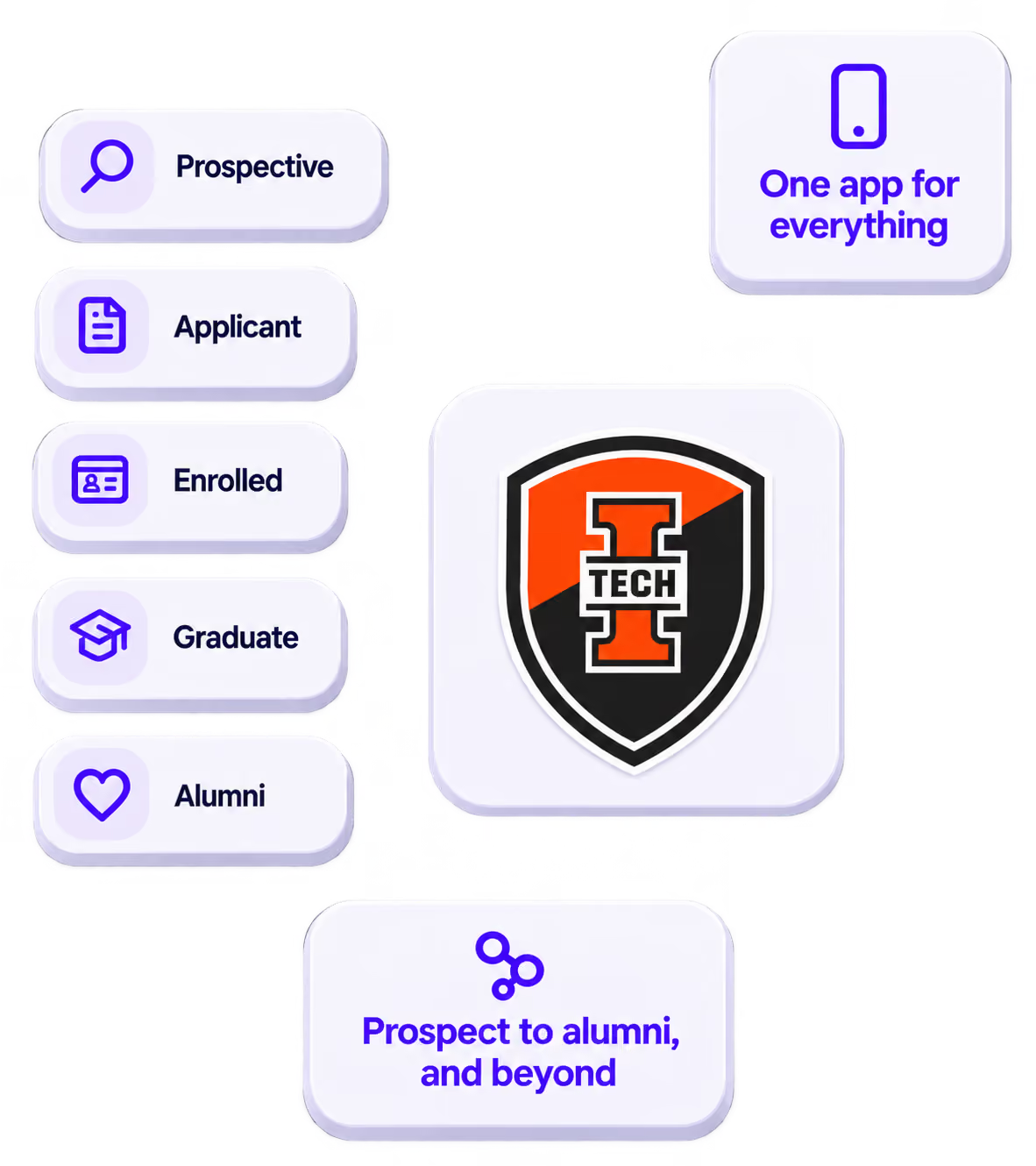
The power of your brand in your app, from first visit to alumni.
Build trust
Attendees download your app, not ours. Your name, colors, and crest in the stores.
.avif)
One place for the whole event
Schedules, maps, registration, and updates in one branded hub - not five tools.
Stand out
A branded app is what people keep on their phone after the printed program is in the recycling.

Get the Mobile App Playbook
A short guide to running the whole student journey in one app. No fluff, just what works.
for higher ed
Campus
Playbook
A practical guide to building a connected campus experience.
Free playbook
The Mobile App Playbook for Universities
Students decide if they belong long before they set foot on campus. This playbook shows how to win them over from the first visit through graduation.
- Grow enrollment and boost recruitment
- Increase belonging and retention
- Run every event from one branded app
By submitting, you agree to our Privacy Policy.
You're in.
.png)