Campus apps by department
Admissions, orientation, student life, and more — one campus app that works across departments.

Campus apps by department
Admissions, orientation, student life, and more — one campus app that works across departments.
Build unlimited event apps on one license
One partnership for unlimited campus events — orientation, tours, student life, and everything in between.
Build unlimited event apps on one license
One partnership for unlimited campus events — orientation, tours, student life, and everything in between.
Compare event app platforms
See how Guidebook stacks up against other event app and registration platforms.
Compare event app platforms
See how Guidebook stacks up against other event app and registration platforms.
Event apps for nonprofit and community programs
Give members, volunteers, and donors one branded app for conferences, fundraisers, and year-round community.
Event apps for nonprofit and community programs
Give members, volunteers, and donors one branded app for conferences, fundraisers, and year-round community.
Campus integrations and an open API
Connect Guidebook with the campus systems, APIs, and tools your team already uses.
Campus integrations and an open API
Connect Guidebook with the campus systems, APIs, and tools your team already uses.
Event apps for corporate and enterprise teams
Internal meetings, offsites, and large-scale corporate events — with the branding and control enterprise teams need.
Event apps for corporate and enterprise teams
Internal meetings, offsites, and large-scale corporate events — with the branding and control enterprise teams need.
Create a branded event app with no coding
Put schedules, maps, resources, and updates in every attendee's pocket — built for campus events and programs.
Create a branded event app with no coding
Put schedules, maps, resources, and updates in every attendee's pocket — built for campus events and programs.
Launch a branded, white-label event app
A white-label event app with your branding, your content, and your attendee experience — no coding required.
Launch a branded, white-label event app
A white-label event app with your branding, your content, and your attendee experience — no coding required.
Everything in the Guidebook platform
Explore the features event teams use to engage attendees before, during, and after the event.
Everything in the Guidebook platform
Explore the features event teams use to engage attendees before, during, and after the event.
One app for in-person and virtual attendees
The same schedule, networking, and updates whether people are in the room or joining remotely.
One app for in-person and virtual attendees
The same schedule, networking, and updates whether people are in the room or joining remotely.
Event apps built for associations
Annual meetings, chapter events, and member engagement — without rebuilding a new app every year.
Event apps built for associations
Annual meetings, chapter events, and member engagement — without rebuilding a new app every year.
A branded event website that matches the app
Promote the event, collect interest, and keep branding consistent from the first click to check-in.
A branded event website that matches the app
Promote the event, collect interest, and keep branding consistent from the first click to check-in.
Plan, run, and measure events on one platform
App, registration, badges, and websites in one workflow — so planning isn't a pile of disconnected tools.
Plan, run, and measure events on one platform
App, registration, badges, and websites in one workflow — so planning isn't a pile of disconnected tools.
Keep members engaged between events
One branded app for the conference and everything that happens the other 51 weeks of the year.
Keep members engaged between events
One branded app for the conference and everything that happens the other 51 weeks of the year.
The conference app attendees actually use
Schedules, maps, networking, and live updates for annual meetings, summits, and multi-day conferences.
The conference app attendees actually use
Schedules, maps, networking, and live updates for annual meetings, summits, and multi-day conferences.
Registration that feeds your app and badges
Collect registrations, payments, and attendee data in the same platform as your event app.
Registration that feeds your app and badges
Collect registrations, payments, and attendee data in the same platform as your event app.
Design and print event badges in one place
Custom badges, QR check-in, and on-site printing — without a separate badge vendor.
Design and print event badges in one place
Custom badges, QR check-in, and on-site printing — without a separate badge vendor.
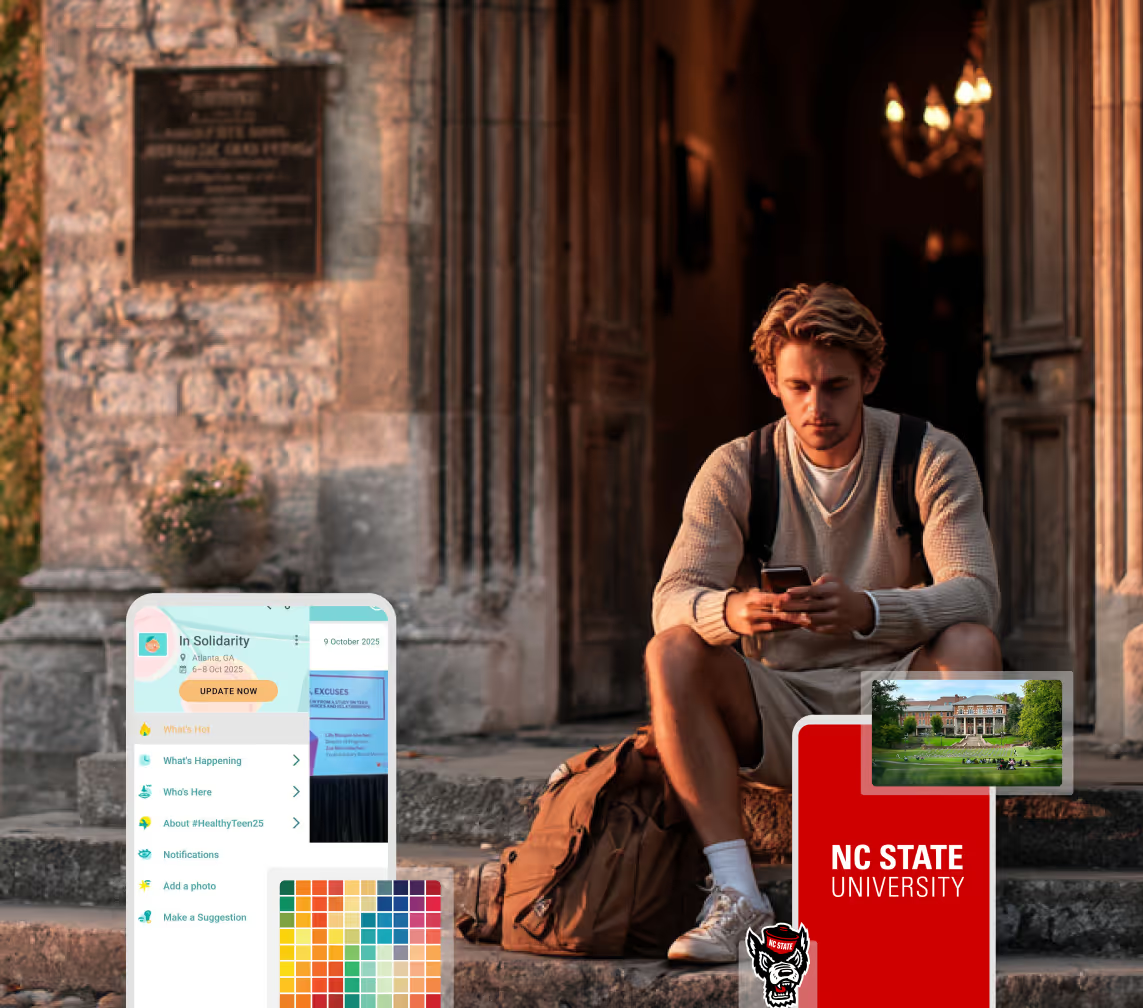
A Smaller School?
Deliver a polished, branded event experience without a large team or a big budget.
A Smaller School?
Deliver a polished, branded event experience without a large team or a big budget.
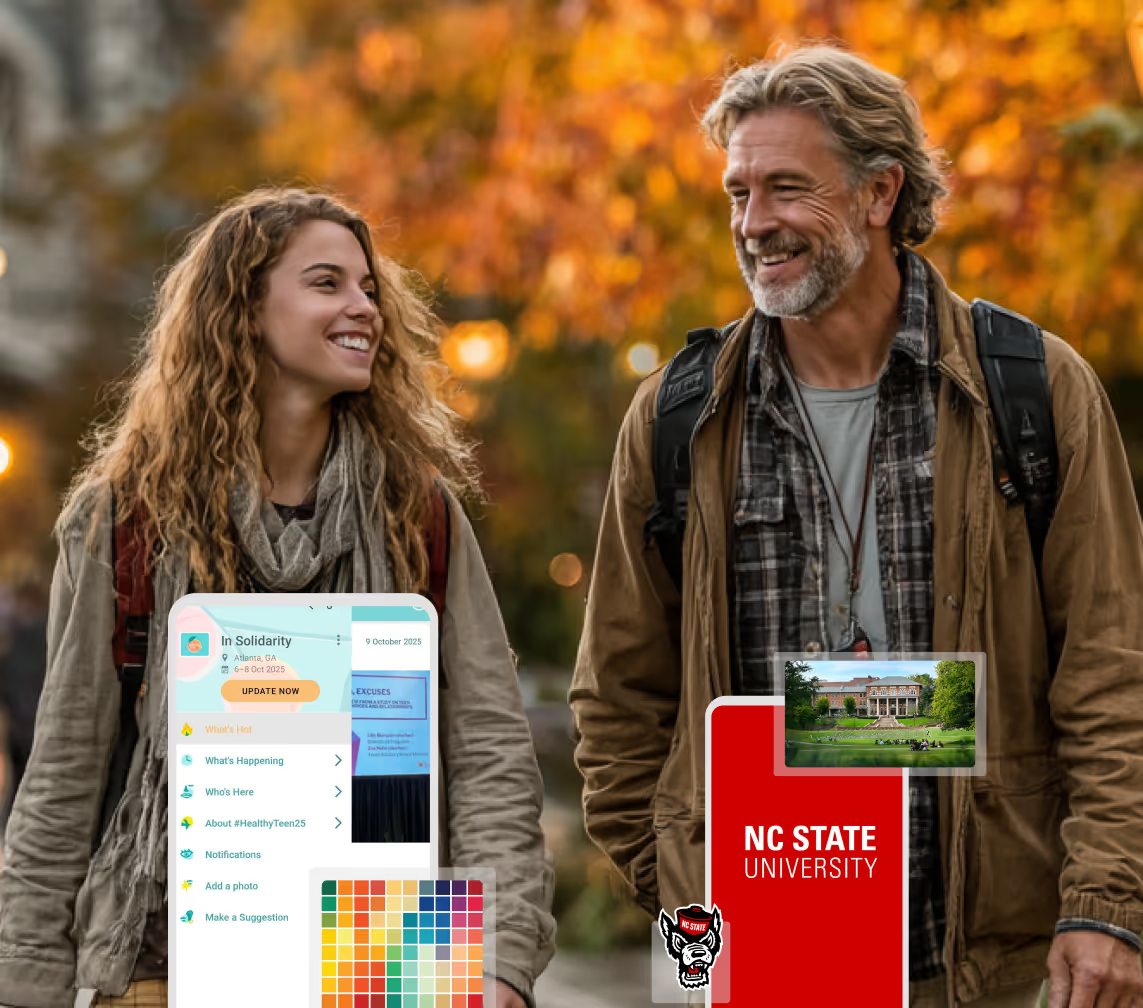
Running Family Programs?
Give families everything they need, from schedules and maps to real-time updates, all in one place.
Running Family Programs?
Give families everything they need, from schedules and maps to real-time updates, all in one place.
Coordinating Move-In Day?
Share updates, manage events, and keep students informed from move-in through the academic year.

Coordinating Move-In Day?
Share updates, manage events, and keep students informed from move-in through the academic year.
Offering Campus Tours?
Deliver branded, self-guided tour experiences with interactive maps and rich media, available 24/7.

Offering Campus Tours?
Deliver branded, self-guided tour experiences with interactive maps and rich media, available 24/7.
Organising a Career Fair?
Simplify logistics for students, employers, and Career Services staff with one easy-to-use app.
Organising a Career Fair?
Simplify logistics for students, employers, and Career Services staff with one easy-to-use app.
Managing Alumni Events?
Plan reunions, regional events, and fundraising campaigns with an app built for alumni engagement.
Managing Alumni Events?
Plan reunions, regional events, and fundraising campaigns with an app built for alumni engagement.
Boost Student Engagement
One hub for schedules, resources, and events that keeps students connected throughout the academic year.
Boost Student Engagement
One hub for schedules, resources, and events that keeps students connected throughout the academic year.
Planning Orientation?
Help new students feel prepared from day one with schedules, campus resources, and real-time updates in one app.
Planning Orientation?
Help new students feel prepared from day one with schedules, campus resources, and real-time updates in one app.
Running Admissions Events?
Manage open houses, tours, and yield events with a branded app that saves time and engages prospective students.

Running Admissions Events?
Manage open houses, tours, and yield events with a branded app that saves time and engages prospective students.
Get a custom Sponsorship Package Template
Stop starting from scratch. Grab free templates that helWe'll build a tailored sponsorship package with suggested pricing, tiers, and benefits..for your specific event.p you build professional sponsorship packages and close deals faster.
Get a custom Sponsorship Package Template
Stop starting from scratch. Grab free templates that helWe'll build a tailored sponsorship package with suggested pricing, tiers, and benefits..for your specific event.p you build professional sponsorship packages and close deals faster.
Plan Your Next Event Without Missing a Beat.
From venue selection to post-event wrap-up, this free checklist walks you through every step (so nothing falls through the cracks).
.avif)
Plan Your Next Event Without Missing a Beat.
From venue selection to post-event wrap-up, this free checklist walks you through every step (so nothing falls through the cracks).
Real Results From Real Events
100,000+ organizations trust Guidebook. See exactly how universities, associations, enterprises, and more put it to work.

Real Results From Real Events
100,000+ organizations trust Guidebook. See exactly how universities, associations, enterprises, and more put it to work.
Flexible pricing for every event size
Find the perfect plan for your needs, from intimate gatherings to large-scale conferences.

Flexible pricing for every event size
Find the perfect plan for your needs, from intimate gatherings to large-scale conferences.
Join our event experts
Watch on-demand webinars and join live sessions with industry leaders sharing best practices for event success.
.avif)
Join our event experts
Watch on-demand webinars and join live sessions with industry leaders sharing best practices for event success.
Guidebook in Action
Book a personalized walkthrough and discover how we help event teams create better attendee experiences.
Guidebook in Action
Book a personalized walkthrough and discover how we help event teams create better attendee experiences.
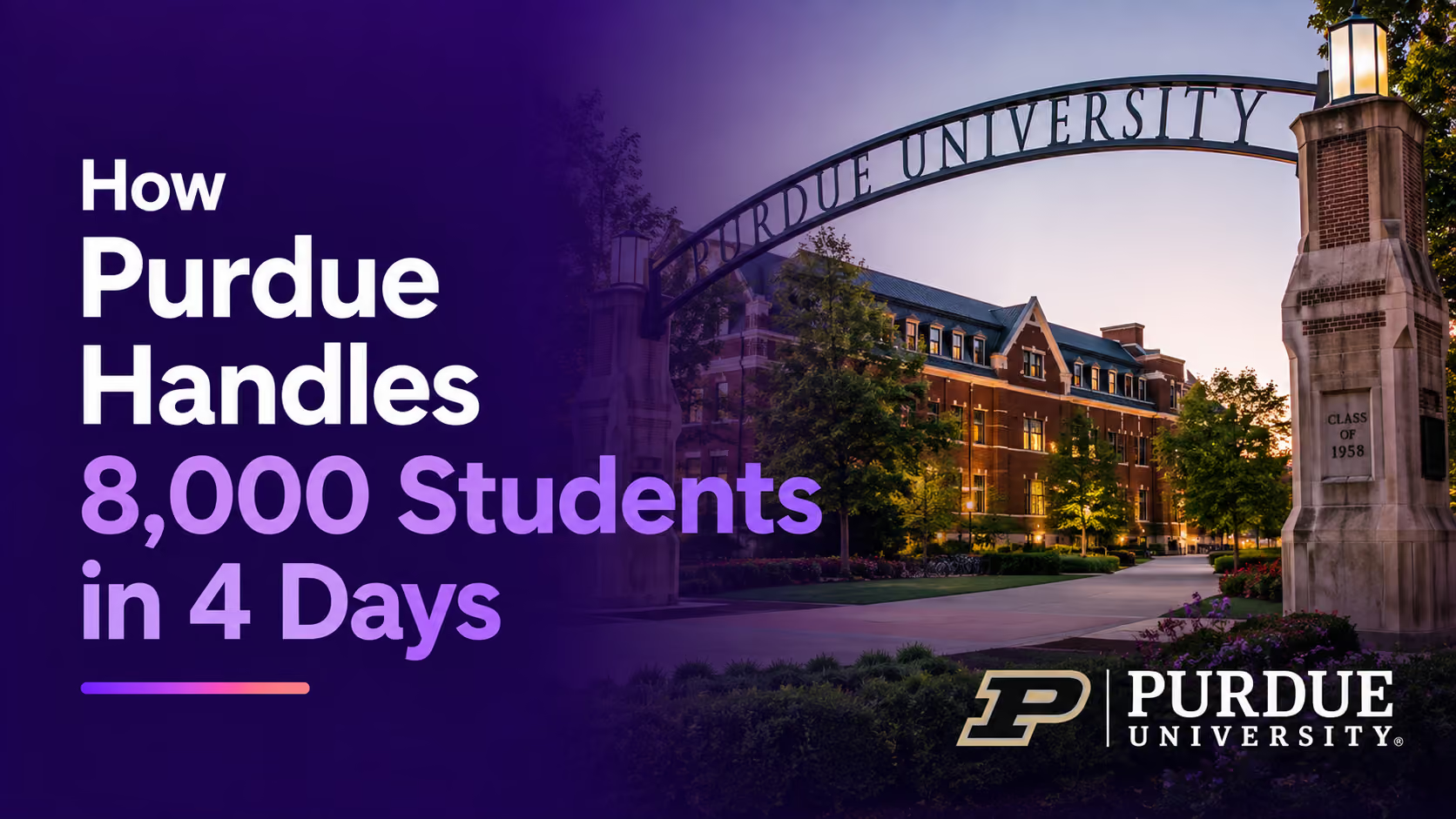
How Purdue Handles 8,000 Students in 4 Days
%20(1).avif)




How Purdue Handles 8,000 Students in 4 Days
- Purdue's Boiler Gold Rush handles about 8,000 students over four days, and it's optional: roughly 75% of the incoming class attends anyway.
- The real problem at scale isn't scheduling, it's students getting lost and giving up. Design against that first.
- Purdue's playbook: small teams led by trained orientation leaders, heavy structure early and more freedom later, and one app as the single source of truth from move-in to closing.
- Personalized, live-updating schedules (600,000+ app sessions in one BGR week) keep a crowd this size moving.
- The principles scale down to any size: keep students found, keep the schedule current, keep it personal.
Eight thousand students. Four days. A campus none of them know yet. That's what Purdue University faces every fall, and it starts at move-in.
Their answer is Boiler Gold Rush, a four-day orientation the week before classes. Here's how they keep it from turning into chaos, and what your team can take from it.
What is new student orientation?
New student orientation is the structured program that introduces incoming students to campus before classes begin. It covers academics, campus resources, and community, and it usually starts at move-in. At a large university, orientation is also a logistics operation: getting thousands of students to the right place at the right time, in a few days, without losing anyone.
The scale: 8,000 students, mostly by choice
Boiler Gold Rush (BGR) draws about 8,000 incoming students a year. It runs four days, packs in 50-plus events a day, and takes more than 700 student leaders to pull off.
Here's the part that matters: BGR isn't mandatory. About 75% of Purdue's incoming class shows up anyway. At that scale, staying organized isn't a nice-to-have. It's the whole job.
The problem you're actually solving
Craig Johnson, Purdue's Director of Orientation Programs, is blunt about what breaks when students are left to figure it out alone:
"If you just let students fly as soon as the beginning of the program, there are quite a few students that are gonna find themselves in the wrong place on campus and then just, just lock up."
A student in the wrong building on day one doesn't push through. They retreat to the one place they know: their room. So the real job isn't running events. It's making sure no student gets lost enough to give up.
How Purdue handles it
Structure first, freedom later
Students start in small teams led by trained orientation leaders, with tightly structured touchpoints. As the four days go on, they get more freedom to pick sessions that fit them: academic previews, identity-based groups, campus traditions. Guidance up front, autonomy once they've found their footing.
One app as the single source of truth
Purdue built a branded app, Purdue Guide. Students pick their orientation team in the app and get a personalized schedule with live updates. It's the one thing that stays right while everything else moves, from move-in day to the closing day. A printed packet can't do that at this scale, because the moment it's printed, it's already wrong.
Personalize so 8,000 schedules feel like one
Each student sees only their team's schedule, so 8,000 people aren't scanning the same wall of events guessing which parts apply to them. Everyone gets their own path. That's what keeps a crowd this size moving instead of piling up at the wrong door.
Does it work?
During BGR week, Purdue logged over 600,000 app sessions. Students weren't checking the app once. They were living in it. And 75% turnout for an optional program tells you the experience is worth showing up for. Read the full Purdue case study for the rest.
What your team can take from it
You don't need 8,000 students for this to apply. Four things carry over at any size:
- Solve for "lost," not just "scheduled." The failure mode at scale is students giving up because they can't find their way. Design against that first.
- Start structured, loosen as you go. Heavy guidance early builds confidence. Freedom later builds ownership.
- Put the schedule where it can change. One app, personalized per student, beats any printed program the second something moves.
- Make it worth choosing. Purdue's turnout is high because BGR is good, not because it's required. Build the experience and attendance follows.
Running your own move-in at scale
Whether you're moving in 800 students or 8,000, the principles hold: keep students found, keep the schedule current, keep it personal. If you're rethinking how yours runs, our approach to higher education is a good place to start.
Get the first four days right, and the rest of the year gets easier.
[faq]
Q: What is Boiler Gold Rush?
A: Boiler Gold Rush (BGR) is Purdue University's new student orientation program. It runs for four days the week before classes begin, packs in more than 50 events a day, and is staffed by over 700 student leaders. It's optional, but around 75% of the incoming class of roughly 8,000 students chooses to attend. The goal is to help new students find their footing on campus before the semester starts.
Q: How many students attend Purdue's orientation?
A: About 8,000 incoming students take part in Boiler Gold Rush each year, which is roughly 75% of Purdue's incoming class. What makes that number notable is that the program is not mandatory. Students choose to attend, which means the experience has to be good enough to be worth their time. Coordinating a group that size across four days is a significant logistics operation.
Q: How long is Purdue's Boiler Gold Rush?
A: Boiler Gold Rush runs for four days during the week before fall classes begin. Each day includes more than 50 events, ranging from structured sessions early on to more self-directed options as the program goes on, such as academic previews, identity-based groups, and campus traditions. It starts at move-in and continues through a closing day, with the app serving as the schedule and source of truth throughout.
Q: How do large universities manage orientation for thousands of students?
A: The programs that handle it well share a few habits: they group students into small teams led by trained orientation leaders, they start with heavy structure and add freedom as students gain confidence, and they run everything through one app that acts as the single source of truth. Personalized schedules mean each student sees only what applies to them, which keeps a large group moving instead of clustering in the wrong places.
Q: Why do students get lost during orientation?
A: At scale, students who land in the wrong place with no clear direction tend to give up rather than push through. As Purdue's Craig Johnson puts it, they "lock up" and retreat to the one place they know, their room. The fix is to remove the guesswork: small guided teams early on, and a personalized schedule in an app so every student always knows exactly where to be next.
Q: How does a mobile app help with move-in and orientation?
A: A first-year app gives every student a personalized schedule with live updates, so the plan stays accurate even when rooms, times, or sessions change. It works as the single source of truth from move-in through the final day, replacing printed packets that go out of date instantly. At Purdue, students logged over 600,000 app sessions in a single Boiler Gold Rush week, a sign of how central the app becomes to the experience.
[/faq]

Get the Mobile App Playbook
A short guide to running the whole student journey in one app. No fluff, just what works.
for higher ed
Campus
Playbook
A practical guide to building a connected campus experience.
Free playbook
The Mobile App Playbook for Universities
Students decide if they belong long before they set foot on campus. This playbook shows how to win them over from the first visit through graduation.
- Grow enrollment and boost recruitment
- Increase belonging and retention
- Run every event from one branded app
By submitting, you agree to our Privacy Policy.
You're in.
.png)