
Campus apps by department
Admissions, orientation, student life, and more — one campus app that works across departments.

Campus apps by department
Admissions, orientation, student life, and more — one campus app that works across departments.
Build unlimited event apps on one license
One partnership for unlimited campus events — orientation, tours, student life, and everything in between.
Build unlimited event apps on one license
One partnership for unlimited campus events — orientation, tours, student life, and everything in between.
Compare event app platforms
See how Guidebook stacks up against other event app and registration platforms.
Compare event app platforms
See how Guidebook stacks up against other event app and registration platforms.
Event apps for nonprofit and community programs
Give members, volunteers, and donors one branded app for conferences, fundraisers, and year-round community.
Event apps for nonprofit and community programs
Give members, volunteers, and donors one branded app for conferences, fundraisers, and year-round community.
Campus integrations and an open API
Connect Guidebook with the campus systems, APIs, and tools your team already uses.
Campus integrations and an open API
Connect Guidebook with the campus systems, APIs, and tools your team already uses.
Event apps for corporate and enterprise teams
Internal meetings, offsites, and large-scale corporate events — with the branding and control enterprise teams need.
Event apps for corporate and enterprise teams
Internal meetings, offsites, and large-scale corporate events — with the branding and control enterprise teams need.
Create a branded event app with no coding
Put schedules, maps, resources, and updates in every attendee's pocket — built for campus events and programs.
Create a branded event app with no coding
Put schedules, maps, resources, and updates in every attendee's pocket — built for campus events and programs.
Launch a branded, white-label event app
A white-label event app with your branding, your content, and your attendee experience — no coding required.
Launch a branded, white-label event app
A white-label event app with your branding, your content, and your attendee experience — no coding required.
Everything in the Guidebook platform
Explore the features event teams use to engage attendees before, during, and after the event.
Everything in the Guidebook platform
Explore the features event teams use to engage attendees before, during, and after the event.
One app for in-person and virtual attendees
The same schedule, networking, and updates whether people are in the room or joining remotely.
One app for in-person and virtual attendees
The same schedule, networking, and updates whether people are in the room or joining remotely.
Event apps built for associations
Annual meetings, chapter events, and member engagement — without rebuilding a new app every year.
Event apps built for associations
Annual meetings, chapter events, and member engagement — without rebuilding a new app every year.
A branded event website that matches the app
Promote the event, collect interest, and keep branding consistent from the first click to check-in.
A branded event website that matches the app
Promote the event, collect interest, and keep branding consistent from the first click to check-in.
Plan, run, and measure events on one platform
App, registration, badges, and websites in one workflow — so planning isn't a pile of disconnected tools.
Plan, run, and measure events on one platform
App, registration, badges, and websites in one workflow — so planning isn't a pile of disconnected tools.
Keep members engaged between events
One branded app for the conference and everything that happens the other 51 weeks of the year.
Keep members engaged between events
One branded app for the conference and everything that happens the other 51 weeks of the year.
The conference app attendees actually use
Schedules, maps, networking, and live updates for annual meetings, summits, and multi-day conferences.
The conference app attendees actually use
Schedules, maps, networking, and live updates for annual meetings, summits, and multi-day conferences.
Registration that feeds your app and badges
Collect registrations, payments, and attendee data in the same platform as your event app.
Registration that feeds your app and badges
Collect registrations, payments, and attendee data in the same platform as your event app.
Design and print event badges in one place
Custom badges, QR check-in, and on-site printing — without a separate badge vendor.
Design and print event badges in one place
Custom badges, QR check-in, and on-site printing — without a separate badge vendor.
A Smaller School?
Deliver a polished, branded event experience without a large team or a big budget.
A Smaller School?
Deliver a polished, branded event experience without a large team or a big budget.
Running Family Programs?
Give families everything they need, from schedules and maps to real-time updates, all in one place.
Running Family Programs?
Give families everything they need, from schedules and maps to real-time updates, all in one place.
Coordinating Move-In Day?
Share updates, manage events, and keep students informed from move-in through the academic year.

Coordinating Move-In Day?
Share updates, manage events, and keep students informed from move-in through the academic year.
Offering Campus Tours?
Deliver branded, self-guided tour experiences with interactive maps and rich media, available 24/7.

Offering Campus Tours?
Deliver branded, self-guided tour experiences with interactive maps and rich media, available 24/7.
Organising a Career Fair?
Simplify logistics for students, employers, and Career Services staff with one easy-to-use app.
Organising a Career Fair?
Simplify logistics for students, employers, and Career Services staff with one easy-to-use app.
Managing Alumni Events?
Plan reunions, regional events, and fundraising campaigns with an app built for alumni engagement.
Managing Alumni Events?
Plan reunions, regional events, and fundraising campaigns with an app built for alumni engagement.
Boost Student Engagement
One hub for schedules, resources, and events that keeps students connected throughout the academic year.
Boost Student Engagement
One hub for schedules, resources, and events that keeps students connected throughout the academic year.
Planning Orientation?
Help new students feel prepared from day one with schedules, campus resources, and real-time updates in one app.
Planning Orientation?
Help new students feel prepared from day one with schedules, campus resources, and real-time updates in one app.
Running Admissions Events?
Manage open houses, tours, and yield events with a branded app that saves time and engages prospective students.

Running Admissions Events?
Manage open houses, tours, and yield events with a branded app that saves time and engages prospective students.
Get a custom Sponsorship Package Template
Stop starting from scratch. Grab free templates that helWe'll build a tailored sponsorship package with suggested pricing, tiers, and benefits..for your specific event.p you build professional sponsorship packages and close deals faster.
Get a custom Sponsorship Package Template
Stop starting from scratch. Grab free templates that helWe'll build a tailored sponsorship package with suggested pricing, tiers, and benefits..for your specific event.p you build professional sponsorship packages and close deals faster.
Plan Your Next Event Without Missing a Beat.
From venue selection to post-event wrap-up, this free checklist walks you through every step (so nothing falls through the cracks).
.avif)
Plan Your Next Event Without Missing a Beat.
From venue selection to post-event wrap-up, this free checklist walks you through every step (so nothing falls through the cracks).
Real Results From Real Events
100,000+ organizations trust Guidebook. See exactly how universities, associations, enterprises, and more put it to work.

Real Results From Real Events
100,000+ organizations trust Guidebook. See exactly how universities, associations, enterprises, and more put it to work.
Flexible pricing for every event size
Find the perfect plan for your needs, from intimate gatherings to large-scale conferences.

Flexible pricing for every event size
Find the perfect plan for your needs, from intimate gatherings to large-scale conferences.
Join our event experts
Watch on-demand webinars and join live sessions with industry leaders sharing best practices for event success.
.avif)
Join our event experts
Watch on-demand webinars and join live sessions with industry leaders sharing best practices for event success.
Guidebook in Action
Book a personalized walkthrough and discover how we help event teams create better attendee experiences.
Guidebook in Action
Book a personalized walkthrough and discover how we help event teams create better attendee experiences.

What is a Conference?
What is a Conference? Definition, Types & Key Benefits | Guidebook
A conference is a large-scale professional gathering where attendees share knowledge, build connections, and explore industry trends through structured sessions and networking opportunities. Conferences range from intimate 50-person events to massive gatherings with 10,000+ attendees. They drive business growth, spark innovation, and create lasting professional relationships.
Here’s the thing: higher education runs on conferences. Admissions professionals gather at NACAC. Orientation directors convene at NODA. Student affairs teams attend ACPA and NASPA. And on your own campus, student government hosts leadership conferences, honors societies hold annual conventions, and academic departments run regional gatherings. Conferences aren’t just something your team attends — they’re events your institution produces, and they carry real enrollment, retention, and reputation weight when they’re run well.
Key Characteristics of a Conference
- Multi-Day Format: Most conferences run 2-4 days, giving attendees time to absorb content and build relationships. This extended timeline creates deeper engagement than single-day events.
- Diverse Session Types: Conferences blend keynotes, panels, workshops, and roundtables. This variety keeps energy high and serves different learning styles.
- Networking Focus: Dedicated networking breaks, receptions, and social events make up 30-40% of most conference schedules. Connections made here often outlast the content.
- Industry Expertise: Speakers are typically thought leaders, practitioners, or researchers. Their insights provide value you can’t find in a Google search.
- Exhibitor Presence: Many conferences include trade show floors where sponsors showcase products. This creates revenue streams and adds value for attendees.
- Professional Development: Attendees often earn continuing education credits or certifications. This tangible takeaway justifies the time and cost investment.
- Scalable Attendance: Conferences accommodate hundreds to thousands of people through parallel tracks and large venues. This scale creates buzz and community.
Conference vs. Related Event Types
Seminar
- Scope: Single topic, focused depth
- Focus: Educational instruction from one expert
- Timeline: Half-day to full-day
- Channels: Classroom-style, limited interaction
- Goal: Skill-building on specific subject
Summit
- Scope: High-level strategic discussions
- Focus: Executive-level decision makers
- Timeline: 1-2 days, intensive
- Channels: Invitation-only, exclusive
- Goal: Strategic alignment and partnerships
Convention
- Scope: Broad industry or association gathering
- Focus: Community building and celebration
- Timeline: 3-5 days with extensive programming
- Channels: Open registration, large-scale
- Goal: Unite members around shared identity
Understanding these differences helps you choose the right format for your goals. Conferences strike a balance between educational depth and networking breadth. They’re ideal when you want both learning and relationship-building at scale.
Essential Conference Types
Industry and Trade Conferences
These events bring together professionals from specific sectors. Think healthcare, technology, or finance. Attendees come to learn about emerging trends and meet potential partners.
Trade conferences often include exhibition halls. Vendors showcase new products while attendees evaluate solutions. The combination of education and commerce creates unique value.
Academic and Research Conferences
Scholars present original research and debate findings. These events advance knowledge in fields from medicine to humanities. Peer review and intellectual exchange drive the agenda.
Academic conferences follow strict submission processes. Papers undergo review before acceptance. This rigor ensures quality content and credible discussions.
Professional Development Conferences
Career growth takes center stage here. Sessions focus on skills, certifications, and advancement strategies. Attendees leave with practical tools they can use immediately.
- Leadership workshops
- Technical skill sessions
- Certification prep courses
- Career coaching opportunities
- Mentorship matching programs
Institutional and Campus Conferences
Universities host their own conferences for students, faculty, and staff. Leadership conferences, academic honors conventions, and professional development days for admissions and orientation teams — these internal events build culture, communicate institutional priorities, and develop the people who drive enrollment outcomes.
When an orientation team runs a student leadership conference, they’re not just planning an event. They’re building the peer mentors who will make incoming students feel welcome in September. The downstream retention impact is real. See how Guidebook supports campus engagement programming.
Virtual and Hybrid Conferences
Virtual conferences expanded dramatically in recent years. They offer accessibility and cost savings. Hybrid models combine in-person and online attendance for maximum reach.
Success requires different planning approaches. Virtual event planning demands attention to engagement, technology, and attendee experience across screens.
The Conference Planning Process
Define Your Conference Goals
Start with clear objectives. Are you building community? Reducing melt? Retaining students? Your goals shape every decision that follows.
Write down 3-5 specific, measurable outcomes. “Increase member engagement by 25%” beats “have a good event.” Clear goals make planning easier and ROI measurement possible.
Build Your Planning Timeline
Large conferences need 12-18 months of lead time. Smaller events might work with 6-9 months. The event planning process includes dozens of milestones.
- 12+ months out: Secure venue and keynote speakers
- 9 months out: Open sponsorship sales and call for proposals
- 6 months out: Launch registration and marketing
- 3 months out: Finalize schedule and logistics
- 1 month out: Confirm all vendors and speakers
Assemble Your Conference Team
No one plans a conference alone. You need specialists in logistics, marketing, content, and technology. The event coordinator role often anchors the team.
Define responsibilities clearly. Overlap creates confusion. Gaps create disasters. Document who owns what before planning kicks into high gear.
Create Your Budget Framework
Conference budgets typically break down into these categories:
- Venue and catering: 40-50%
- Speakers and entertainment: 15-20%
- Marketing and promotion: 10-15%
- Technology and production: 10-15%
- Staff and operations: 10-15%
Build contingency into every line item. Unexpected costs always appear. A 10-15% buffer prevents budget crises.
Select the Right Technology
Modern conferences run on technology. Check-in software speeds arrivals. Mobile apps deliver schedules and updates. An event management platform ties everything together.
Choose tools that integrate well. Disconnected systems create data silos and extra work. The right tech stack saves time and improves attendee experience.
Why Conference Planning Matters
For Event Success
- Attendee Satisfaction: Well-planned conferences earn higher ratings and repeat attendance. Details matter more than attendees realize.
- Speaker Experience: Smooth logistics help speakers perform their best. Happy speakers become advocates for your event.
- Sponsor Value: Organized events deliver on sponsor promises. This drives renewals and referrals for future years.
- Operational Efficiency: Good planning prevents fires. Your team can focus on experience, not crisis management.
- Brand Reputation: Every touchpoint reflects your organization. Excellence builds trust and credibility.
For Enrollment and Institutional Outcomes
- Yield and Deposit Decisions: Admitted Student Day conferences — structured multi-session events for prospective students and families — are among the highest-converting yield events your institution runs. The format signals academic seriousness and campus vitality simultaneously.
- Reducing Summer Melt: Orientation-style conference programming between deposit and move-in day keeps admitted students connected to your institution. Deposited students who feel a sense of belonging before they arrive don’t melt over the summer. They show up.
- Student Retention: Students who attend or present at academic conferences are more engaged, more persistent, and more likely to complete their degrees. Funding student conference attendance is a retention investment, not just a perk.
- Staff Development: Admissions and orientation professionals who attend their field’s conferences (NACAC, NODA, ACPA) come back sharper. Invested staff retain students better. Retained students improve your institution’s metrics.
- Institutional Reputation: Hosting a regional or national conference positions your institution as a leader in your field — which influences where the best students, faculty, and staff want to work.
- Alumni Engagement: Alumni conferences and reunions reconnect graduates with the institution’s intellectual mission. Connected alumni give. They also refer admitted students. See how higher ed teams run alumni events.
Guidebook helps higher education institutions deliver conference experiences that move enrollment and retention outcomes. From Admitted Student Days to student leadership conferences to alumni reunions, a custom-branded mobile app keeps every attendee informed and connected. See how higher education teams use Guidebook.
Conference Best Practices
- Start Marketing Early: Begin promotion 6-9 months before your event. Early-bird pricing creates urgency and helps with forecasting. Use digital marketing to reach your audience where they already spend time.
- Curate Content Ruthlessly: Quality beats quantity. Ten excellent sessions outperform thirty mediocre ones. Review every submission against your audience’s actual needs.
- Design for Networking: Schedule dedicated networking time. Create spaces that encourage conversation. Use technology to help attendees find relevant connections.
- Communicate Constantly: Send regular updates before, during, and after your conference. Attendees should never wonder what’s happening next.
- Train Your Staff Thoroughly: Everyone representing your event should know the schedule, venue layout, and common questions. Confident staff create confident attendees.
- Test All Technology: Run full rehearsals of presentations, live streams, and apps. Technical failures during sessions damage credibility instantly.
- Gather Feedback Systematically: Use surveys, interviews, and observation to understand what worked. Create an event debrief process that captures insights while they’re fresh.
- Plan for Accessibility: Consider attendees with different abilities, dietary needs, and schedules. Inclusive design improves experience for everyone.
- Build Community Year-Round: Don’t disappear between conferences. Maintain engagement through content, online groups, and smaller events.
- Document Everything: Create templates, checklists, and playbooks. Next year’s team will thank you for the institutional knowledge.
Common Conference Mistakes
Overloading the Schedule: Cramming too many sessions leaves attendees exhausted and unable to network. Build in breaks and white space. Attendees need time to process and connect.
Ignoring the Attendee Journey: Planning focuses on logistics, not experience. Map every touchpoint from registration to departure. Small friction points add up to big frustrations.
Underinvesting in Promotion: Great conferences fail without attendees. Event advertising requires consistent effort and budget. Start earlier than you think necessary.
Choosing Speakers for Fame Over Fit: Big names don’t guarantee great sessions. Prioritize speakers who understand your audience and deliver actionable content.
Neglecting Sponsor Experience: Sponsors fund your event. Treat them as partners. Deliver on promises and help them achieve their goals.
Skipping the Post-Event Follow-Up: The conference ends, but the relationship shouldn’t. Send thank-yous, share resources, and maintain momentum toward next year.
Failing to Measure Results: Without data, you can’t improve. Track registration, attendance, satisfaction, and business outcomes. Use insights to make next year better.
Conferences in Higher Education
Higher education and the conference format have been inseparable for centuries. Academic conferences drove the spread of scientific knowledge long before the internet existed. That tradition hasn’t diminished — it’s expanded. Today’s campus produces conferences at every level, and every one of them is an enrollment, retention, or reputation opportunity when run with intention.
Admitted Student Day as a Conference Experience
The best Admitted Student Days are designed like one-day conferences. Keynote from the president. Breakout sessions by major or interest area. Panel of current students. Campus tour. Lunch with faculty. That structure signals to admitted students that your institution takes their intellectual experience seriously. It’s the difference between a campus visit and a yield event. Learn how Guidebook supports admissions events.
Orientation as a Multi-Day Conference
Orientation week has all the elements of a professional conference: keynotes, breakout sessions, meals, networking, and an app that keeps everyone aligned. The difference is the stakes. A professional conference earns you a contact. Orientation earns you a student who feels like they belong — or doesn’t. Students who leave orientation feeling connected persist at dramatically higher rates. See how Guidebook powers new student orientation programs.
Student Leadership Conferences
Student government, honors societies, and peer leadership programs all run conferences. These events build the student leaders who mentor incoming students, lead campus organizations, and eventually become your most engaged alumni donors. Investing in how well those conferences run is investing in your institution’s culture — and culture is what drives retention numbers no spreadsheet can fully capture.
Final Thoughts
Conferences remain one of the most powerful tools for professional growth and community building. In a world of endless digital noise, face-to-face connection stands out. The investment of time and money pays dividends that virtual interactions simply can’t match.
The conference industry continues to evolve. Hybrid formats, sustainability concerns, and changing attendee expectations shape how we plan and execute. Staying current with event trends helps you deliver experiences that resonate.
In higher education, conferences aren’t optional extras. They’re the events that yield admitted students, retain enrolled ones, develop your staff, and connect your alumni. Running them well is running your enrollment strategy well. Guidebook gives admissions and orientation teams the custom-branded mobile experience that keeps every attendee — admitted student, family member, or returning alum — informed, engaged, and connected to your institution. Book a demo to see how it works. The best conferences don’t just get remembered — they move enrollment numbers.
The power of your brand in your app, from first visit to alumni.
Build trust
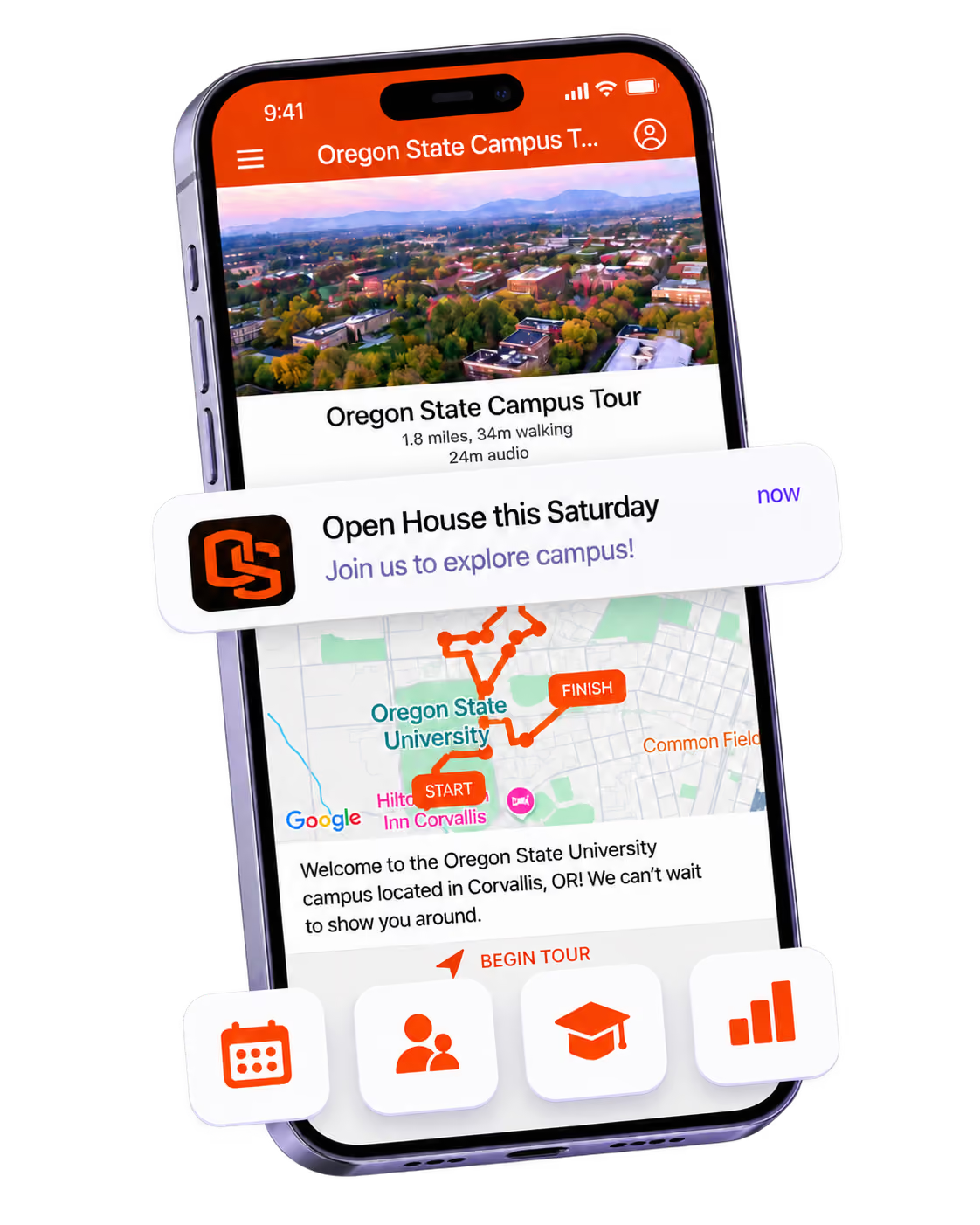
Attendees download your app, not ours. Your name, colors, and crest in the stores.
.avif)
One place for the whole event
Schedules, maps, registration, and updates in one branded hub - not five tools.
Stand out
A branded app is what people keep on their phone after the printed program is in the recycling.

Get the Mobile App Playbook
A short guide to running the whole student journey in one app. No fluff, just what works.
for higher ed
Campus
Playbook
A practical guide to building a connected campus experience.
Free playbook
The Mobile App Playbook for Universities
Students decide if they belong long before they set foot on campus. This playbook shows how to win them over from the first visit through graduation.
- Grow enrollment and boost recruitment
- Increase belonging and retention
- Run every event from one branded app
By submitting, you agree to our Privacy Policy.
You're in.
.png)