
Campus apps by department
Admissions, orientation, student life, and more — one campus app that works across departments.

Campus apps by department
Admissions, orientation, student life, and more — one campus app that works across departments.
Build unlimited event apps on one license
One partnership for unlimited campus events — orientation, tours, student life, and everything in between.
Build unlimited event apps on one license
One partnership for unlimited campus events — orientation, tours, student life, and everything in between.
Compare event app platforms
See how Guidebook stacks up against other event app and registration platforms.
Compare event app platforms
See how Guidebook stacks up against other event app and registration platforms.
Event apps for nonprofit and community programs
Give members, volunteers, and donors one branded app for conferences, fundraisers, and year-round community.
Event apps for nonprofit and community programs
Give members, volunteers, and donors one branded app for conferences, fundraisers, and year-round community.
Campus integrations and an open API
Connect Guidebook with the campus systems, APIs, and tools your team already uses.
Campus integrations and an open API
Connect Guidebook with the campus systems, APIs, and tools your team already uses.
Event apps for corporate and enterprise teams
Internal meetings, offsites, and large-scale corporate events — with the branding and control enterprise teams need.
Event apps for corporate and enterprise teams
Internal meetings, offsites, and large-scale corporate events — with the branding and control enterprise teams need.
Create a branded event app with no coding
Put schedules, maps, resources, and updates in every attendee's pocket — built for campus events and programs.
Create a branded event app with no coding
Put schedules, maps, resources, and updates in every attendee's pocket — built for campus events and programs.
Launch a branded, white-label event app
A white-label event app with your branding, your content, and your attendee experience — no coding required.
Launch a branded, white-label event app
A white-label event app with your branding, your content, and your attendee experience — no coding required.
Everything in the Guidebook platform
Explore the features event teams use to engage attendees before, during, and after the event.
Everything in the Guidebook platform
Explore the features event teams use to engage attendees before, during, and after the event.
One app for in-person and virtual attendees
The same schedule, networking, and updates whether people are in the room or joining remotely.
One app for in-person and virtual attendees
The same schedule, networking, and updates whether people are in the room or joining remotely.
Event apps built for associations
Annual meetings, chapter events, and member engagement — without rebuilding a new app every year.
Event apps built for associations
Annual meetings, chapter events, and member engagement — without rebuilding a new app every year.
A branded event website that matches the app
Promote the event, collect interest, and keep branding consistent from the first click to check-in.
A branded event website that matches the app
Promote the event, collect interest, and keep branding consistent from the first click to check-in.
Plan, run, and measure events on one platform
App, registration, badges, and websites in one workflow — so planning isn't a pile of disconnected tools.
Plan, run, and measure events on one platform
App, registration, badges, and websites in one workflow — so planning isn't a pile of disconnected tools.
Keep members engaged between events
One branded app for the conference and everything that happens the other 51 weeks of the year.
Keep members engaged between events
One branded app for the conference and everything that happens the other 51 weeks of the year.
The conference app attendees actually use
Schedules, maps, networking, and live updates for annual meetings, summits, and multi-day conferences.
The conference app attendees actually use
Schedules, maps, networking, and live updates for annual meetings, summits, and multi-day conferences.
Registration that feeds your app and badges
Collect registrations, payments, and attendee data in the same platform as your event app.
Registration that feeds your app and badges
Collect registrations, payments, and attendee data in the same platform as your event app.
Design and print event badges in one place
Custom badges, QR check-in, and on-site printing — without a separate badge vendor.
Design and print event badges in one place
Custom badges, QR check-in, and on-site printing — without a separate badge vendor.
A Smaller School?
Deliver a polished, branded event experience without a large team or a big budget.
A Smaller School?
Deliver a polished, branded event experience without a large team or a big budget.
Running Family Programs?
Give families everything they need, from schedules and maps to real-time updates, all in one place.
Running Family Programs?
Give families everything they need, from schedules and maps to real-time updates, all in one place.
Coordinating Move-In Day?
Share updates, manage events, and keep students informed from move-in through the academic year.

Coordinating Move-In Day?
Share updates, manage events, and keep students informed from move-in through the academic year.
Offering Campus Tours?
Deliver branded, self-guided tour experiences with interactive maps and rich media, available 24/7.

Offering Campus Tours?
Deliver branded, self-guided tour experiences with interactive maps and rich media, available 24/7.
Organising a Career Fair?
Simplify logistics for students, employers, and Career Services staff with one easy-to-use app.
Organising a Career Fair?
Simplify logistics for students, employers, and Career Services staff with one easy-to-use app.
Managing Alumni Events?
Plan reunions, regional events, and fundraising campaigns with an app built for alumni engagement.
Managing Alumni Events?
Plan reunions, regional events, and fundraising campaigns with an app built for alumni engagement.
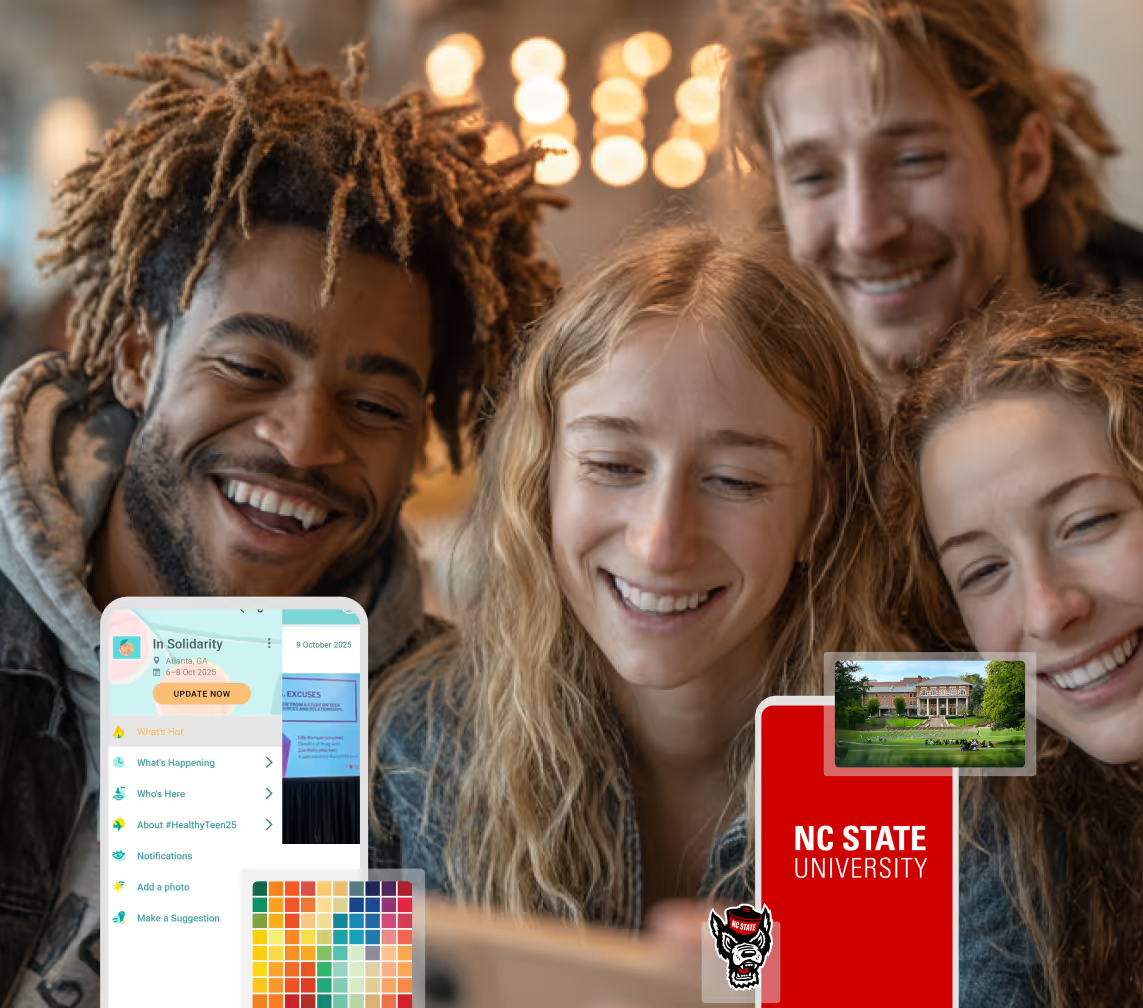
Boost Student Engagement
One hub for schedules, resources, and events that keeps students connected throughout the academic year.
Boost Student Engagement
One hub for schedules, resources, and events that keeps students connected throughout the academic year.
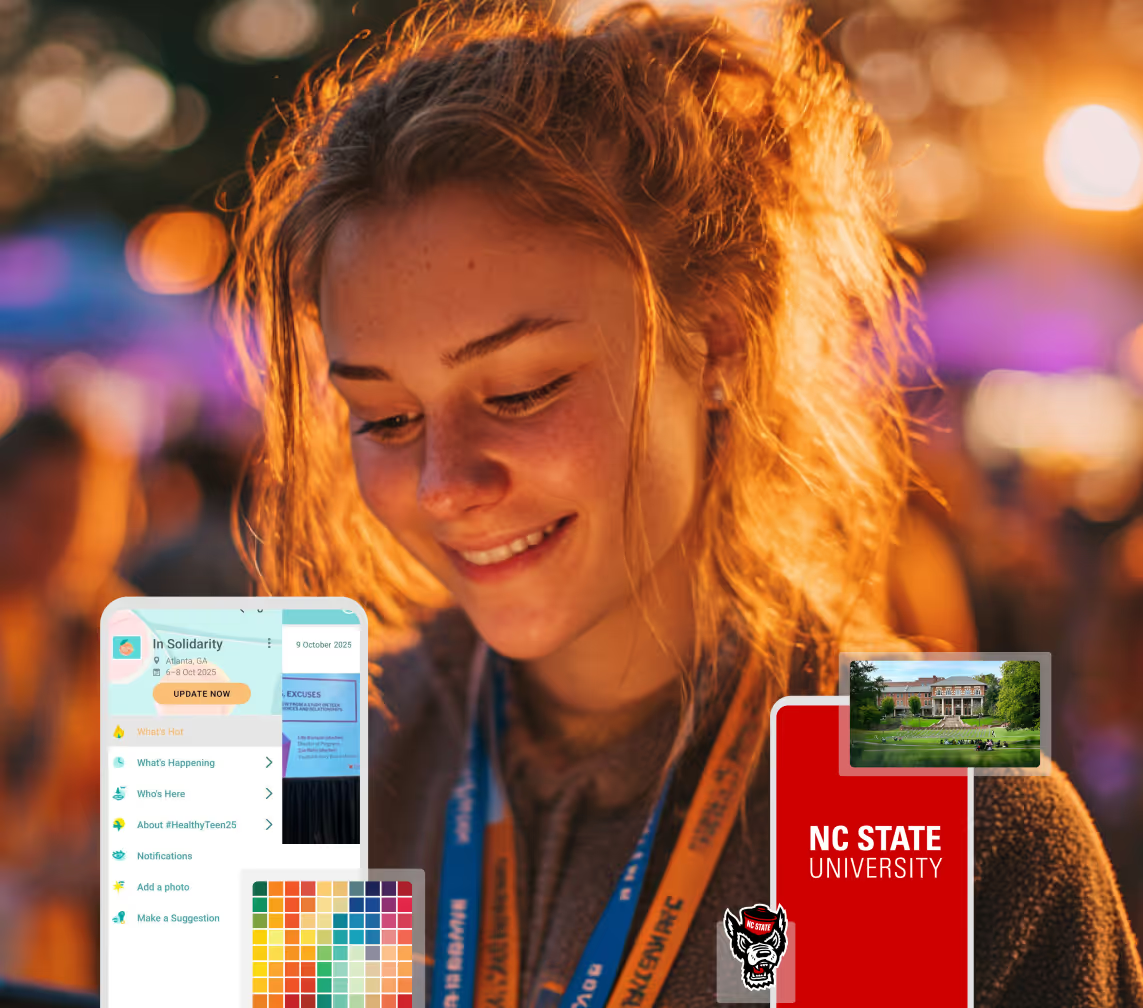
Planning Orientation?
Help new students feel prepared from day one with schedules, campus resources, and real-time updates in one app.
Planning Orientation?
Help new students feel prepared from day one with schedules, campus resources, and real-time updates in one app.
Running Admissions Events?
Manage open houses, tours, and yield events with a branded app that saves time and engages prospective students.

Running Admissions Events?
Manage open houses, tours, and yield events with a branded app that saves time and engages prospective students.
Get a custom Sponsorship Package Template
Stop starting from scratch. Grab free templates that helWe'll build a tailored sponsorship package with suggested pricing, tiers, and benefits..for your specific event.p you build professional sponsorship packages and close deals faster.
Get a custom Sponsorship Package Template
Stop starting from scratch. Grab free templates that helWe'll build a tailored sponsorship package with suggested pricing, tiers, and benefits..for your specific event.p you build professional sponsorship packages and close deals faster.
Plan Your Next Event Without Missing a Beat.
From venue selection to post-event wrap-up, this free checklist walks you through every step (so nothing falls through the cracks).
.avif)
Plan Your Next Event Without Missing a Beat.
From venue selection to post-event wrap-up, this free checklist walks you through every step (so nothing falls through the cracks).
Real Results From Real Events
100,000+ organizations trust Guidebook. See exactly how universities, associations, enterprises, and more put it to work.

Real Results From Real Events
100,000+ organizations trust Guidebook. See exactly how universities, associations, enterprises, and more put it to work.
Flexible pricing for every event size
Find the perfect plan for your needs, from intimate gatherings to large-scale conferences.
Flexible pricing for every event size
Find the perfect plan for your needs, from intimate gatherings to large-scale conferences.
Join our event experts
Watch on-demand webinars and join live sessions with industry leaders sharing best practices for event success.
.avif)
Join our event experts
Watch on-demand webinars and join live sessions with industry leaders sharing best practices for event success.
Guidebook in Action
Book a personalized walkthrough and discover how we help event teams create better attendee experiences.
Guidebook in Action
Book a personalized walkthrough and discover how we help event teams create better attendee experiences.
How is event personalization applied at conferences?
Event personalization at conferences tailors experiences to individual attendees using data-driven insights. Discover personalization strategies, attendee engagement tips, and technology solutions.

Event Personalization at Conferences is the strategic practice of tailoring every touchpoint of a conference experience to match individual attendee preferences, goals, and behaviors. It spans everything from customized agendas to targeted networking suggestions. When done right, personalization transforms passive attendees into engaged participants who feel seen and valued.
Here's the thing: generic conferences are forgettable. Attendees today expect the same tailored experiences they get from Netflix and Spotify. They don't want to sift through 200 sessions to find the five that matter to them. Event personalization solves this by delivering relevant content, connections, and experiences automatically.
Key Characteristics of Event Personalization at Conferences
- Data-Driven Customization: Uses registration data, past behavior, and stated preferences to shape each attendee's experience. The more data you collect, the smarter your personalization becomes.
- Dynamic Content Delivery: Serves different content to different attendees based on their interests, role, or industry. One size doesn't fit all.
- Real-Time Adaptability: Adjusts recommendations throughout the event based on attendee actions. If someone skips a session, the system learns and adapts.
- Multi-Channel Integration: Works across your event management platform, mobile app, email, and on-site touchpoints. Consistency matters.
- Attendee Control: Gives participants the power to set and update their own preferences. Personalization should feel helpful, not creepy.
- Scalable Implementation: Works for 100-person workshops and 10,000-person conferences alike. Technology handles the heavy lifting.
- Measurable Impact: Tracks engagement metrics to prove ROI and improve future events. What gets measured gets better.
Event Personalization vs. Related Approaches
Event Customization
- Scope: Attendee-initiated changes to their experience
- Focus: Manual selection of sessions, tracks, or features
- Timeline: Typically happens during registration
- Channels: Registration forms and self-service portals
- Goal: Give attendees control over their schedule
Event Segmentation
- Scope: Group-based targeting by demographics or role
- Focus: Broad categories like "executives" or "first-time attendees"
- Timeline: Set before the event begins
- Channels: Email campaigns and track assignments
- Goal: Deliver relevant content to defined groups
True Personalization
- Scope: Individual-level tailoring using AI and behavioral data
- Focus: Unique recommendations for each attendee
- Timeline: Continuous, before and during the event
- Channels: Mobile apps, email, on-site displays, and more
- Goal: Create a one-to-one experience at scale
Think of it this way: customization lets attendees build their own experience. Segmentation groups similar people together. True personalization anticipates what each person needs before they ask. The best conference strategies combine all three approaches.
Essential Components of Conference Personalization
Build a Strong Data Foundation
Personalization lives or dies by your data. Start collecting preferences during event registration. Ask about goals, interests, experience level, and networking priorities.
Don't stop at registration. Track session attendance, app engagement, and booth visits. This behavioral data reveals what attendees actually want—not just what they say they want.
Create Personalized Agendas
Generic schedules overwhelm attendees. Instead, build smart agendas that:
- Highlight sessions matching stated interests
- Suggest content based on job role or industry
- Flag networking opportunities with relevant contacts
- Avoid scheduling conflicts automatically
- Update in real-time as preferences change
Enable Smart Networking Matches
Random networking is exhausting. Personalized matchmaking connects attendees with people who share their goals. A branded mobile app can suggest connections based on industry, interests, or complementary expertise.
Some platforms even schedule meetings automatically. Attendees spend less time hunting for contacts and more time having meaningful conversations.
Deliver Targeted Communications
Stop sending the same email to everyone. Segment your event digital marketing by attendee type. First-timers need different information than returning veterans.
Use personalized push notifications during the event. Remind attendees about sessions they bookmarked. Alert them when a speaker they follow is about to start.
Customize On-Site Experiences
Personalization doesn't stop at the app. Consider these on-site touches:
- Personalized welcome messages on digital signage
- Custom badge ribbons showing interests or expertise
- Tailored swag bags based on preferences
- VIP experiences for high-value attendees
- Personalized follow-up materials after sessions
How Conference Personalization Works in Practice
Pre-Event: Gather and Analyze
The personalization process starts weeks before your event. During registration, collect data through smart questions. What topics interest you most? What's your biggest challenge? Who do you want to meet?
Feed this data into your event planning process. Build attendee profiles that power all downstream personalization.
During Event: Deliver and Learn
This is where personalization shines. Your event app serves customized recommendations. Event check-in software triggers personalized welcome experiences.
Track everything. Which sessions do attendees actually attend? How long do they stay? Who do they connect with? This real-time data improves recommendations throughout the event.
Post-Event: Follow Up and Improve
Personalization continues after attendees go home. Send targeted follow-up content based on sessions attended. Share recordings of sessions they missed but might enjoy.
Use engagement data to measure event ROI and improve next year's personalization strategy.
Why Event Personalization at Conferences Matters
For Event Success:
- Higher Engagement Rates: Personalized experiences see 3x more session attendance than generic programs. Relevance drives participation.
- Improved Attendee Satisfaction: When people find what they need quickly, satisfaction scores climb. Happy attendees become repeat attendees.
- Stronger Networking Outcomes: Smart matchmaking leads to more meaningful connections. Attendees leave with valuable contacts, not just business cards.
- Reduced Information Overload: Filtering content by relevance helps attendees focus. They see opportunities, not obstacles.
- Better Content Discovery: Personalization surfaces hidden gems attendees might miss. Great sessions get the audiences they deserve.
For Business Objectives:
- Increased Sponsor Value: Targeted sponsor placements reach interested attendees. Check out sponsorship package examples that leverage personalization.
- Higher Retention Rates: Personalized experiences create loyalty. Attendees who feel valued come back year after year.
- Richer Data Insights: Personalization generates valuable behavioral data. Use it to understand your audience better.
- Competitive Differentiation: Most conferences still offer generic experiences. Personalization sets you apart.
- Improved Revenue Opportunities: Targeted upsells and premium experiences convert better. Relevance drives revenue.
Guidebook's platform makes conference personalization accessible for events of any size. From custom agendas to smart networking features, you can deliver tailored experiences without a massive tech budget.
Event Personalization at Conferences Best Practices
- Start Simple and Scale Up: Don't try to personalize everything at once. Begin with agenda recommendations, then add networking matches and targeted content over time.
- Ask the Right Questions Early: Your registration form sets the foundation. Ask about goals, interests, and experience level. Keep it short—five to seven questions max.
- Respect Privacy Boundaries: Be transparent about data collection. Let attendees control what they share. Personalization should feel helpful, not invasive.
- Test Before You Launch: Run your personalization algorithms on test data first. Catch weird recommendations before attendees see them.
- Train Your Team: Staff should understand how personalization works. They'll field questions and troubleshoot issues on-site. Review event management tips for team preparation.
- Combine AI with Human Curation: Algorithms are smart, but they're not perfect. Have your team review and refine automated recommendations.
- Measure What Matters: Track engagement metrics tied to personalization. Compare personalized vs. non-personalized touchpoints to prove value.
- Iterate Based on Feedback: Ask attendees about their personalized experience. Use their input to improve your approach. A solid event debrief template helps capture insights.
- Integrate Across Channels: Personalization should feel seamless. Your app, email, and on-site experiences should all reflect the same attendee preferences.
- Plan for Edge Cases: What happens when someone doesn't complete their profile? Have fallback recommendations ready for incomplete data.
Common Event Personalization at Conferences Mistakes
Over-Personalizing Too Soon: Jumping into hyper-personalization without enough data backfires. You'll make irrelevant recommendations that erode trust. Start with broad personalization and get more specific as you learn.
Ignoring Attendee Preferences: Some attendees want personalization. Others find it intrusive. Always give people the option to opt out or adjust their settings.
Collecting Data You Won't Use: Long registration forms annoy attendees. Only ask questions that directly power your personalization strategy. Every field should have a purpose.
Forgetting the Human Element: Technology enables personalization, but people deliver it. Train staff to recognize VIPs and respond to individual needs. Algorithms can't replace genuine hospitality.
Siloing Personalization Data: Your registration system, event app, and marketing platform should share data. Disconnected systems create inconsistent experiences.
Neglecting Post-Event Personalization: The relationship doesn't end when the conference does. Personalized follow-up content keeps attendees engaged until next year.
Setting Unrealistic Expectations: Personalization improves experiences—it doesn't perform miracles. Be honest about what your technology can deliver.
Final Thoughts
Event personalization at conferences isn't a nice-to-have anymore. It's what attendees expect. They're used to Netflix knowing what they want to watch and Amazon knowing what they want to buy. Your conference should deliver the same relevance.
The good news? Personalization technology has become accessible. You don't need a Fortune 500 budget to deliver tailored experiences. Stay current with event trends and you'll find tools that fit your needs and budget.
Think about your last conference experience. Did you feel like the event was designed for you? Or did you feel like one face in a crowd? That's the difference personalization makes. It transforms attendees from passive participants into engaged community members.
Ready to make your next conference feel personal? Explore Guidebook's event management platform to see personalization in action. Check out our case studies for real-world examples, or book a demo to see how it works for your specific needs. Your attendees will thank you—and they'll keep coming back.
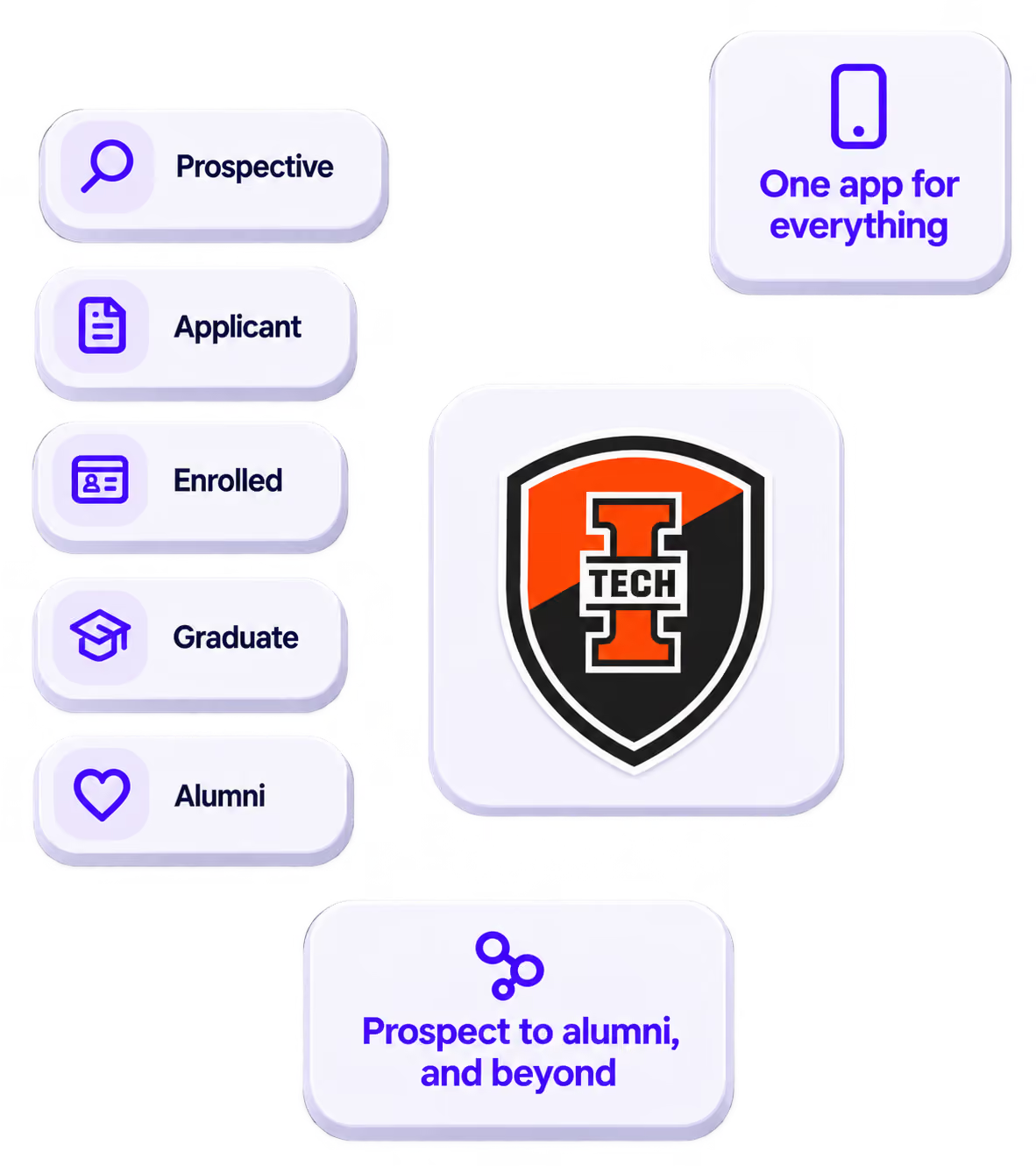
The power of your brand in your app, from first visit to alumni.
Build trust
Attendees download your app, not ours. Your name, colors, and crest in the stores.
.avif)
One place for the whole event
Schedules, maps, registration, and updates in one branded hub - not five tools.
Stand out
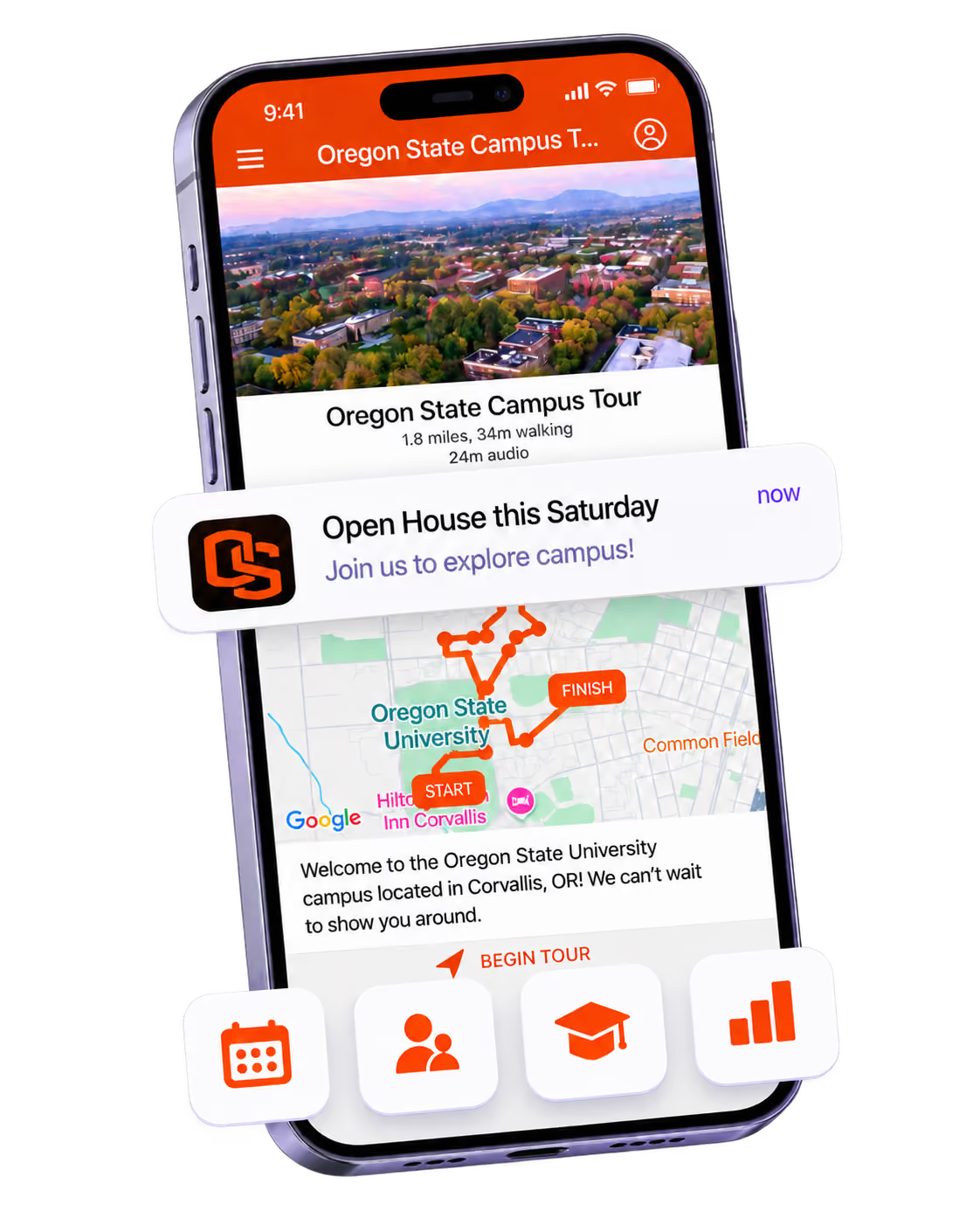
A branded app is what people keep on their phone after the printed program is in the recycling.

Get the Mobile App Playbook
A short guide to running the whole student journey in one app. No fluff, just what works.
for higher ed
Campus
Playbook
A practical guide to building a connected campus experience.
Free playbook
The Mobile App Playbook for Universities
Students decide if they belong long before they set foot on campus. This playbook shows how to win them over from the first visit through graduation.
- Grow enrollment and boost recruitment
- Increase belonging and retention
- Run every event from one branded app
By submitting, you agree to our Privacy Policy.
You're in.
.png)