
Campus apps by department
Admissions, orientation, student life, and more — one campus app that works across departments.

Campus apps by department
Admissions, orientation, student life, and more — one campus app that works across departments.
Build unlimited event apps on one license
One partnership for unlimited campus events — orientation, tours, student life, and everything in between.
Build unlimited event apps on one license
One partnership for unlimited campus events — orientation, tours, student life, and everything in between.
Compare event app platforms
See how Guidebook stacks up against other event app and registration platforms.
Compare event app platforms
See how Guidebook stacks up against other event app and registration platforms.
Event apps for nonprofit and community programs
Give members, volunteers, and donors one branded app for conferences, fundraisers, and year-round community.
Event apps for nonprofit and community programs
Give members, volunteers, and donors one branded app for conferences, fundraisers, and year-round community.
Campus integrations and an open API
Connect Guidebook with the campus systems, APIs, and tools your team already uses.
Campus integrations and an open API
Connect Guidebook with the campus systems, APIs, and tools your team already uses.
Event apps for corporate and enterprise teams
Internal meetings, offsites, and large-scale corporate events — with the branding and control enterprise teams need.
Event apps for corporate and enterprise teams
Internal meetings, offsites, and large-scale corporate events — with the branding and control enterprise teams need.
Create a branded event app with no coding
Put schedules, maps, resources, and updates in every attendee's pocket — built for campus events and programs.
Create a branded event app with no coding
Put schedules, maps, resources, and updates in every attendee's pocket — built for campus events and programs.
Launch a branded, white-label event app
A white-label event app with your branding, your content, and your attendee experience — no coding required.
Launch a branded, white-label event app
A white-label event app with your branding, your content, and your attendee experience — no coding required.
Everything in the Guidebook platform
Explore the features event teams use to engage attendees before, during, and after the event.
Everything in the Guidebook platform
Explore the features event teams use to engage attendees before, during, and after the event.
One app for in-person and virtual attendees
The same schedule, networking, and updates whether people are in the room or joining remotely.
One app for in-person and virtual attendees
The same schedule, networking, and updates whether people are in the room or joining remotely.
Event apps built for associations
Annual meetings, chapter events, and member engagement — without rebuilding a new app every year.
Event apps built for associations
Annual meetings, chapter events, and member engagement — without rebuilding a new app every year.
A branded event website that matches the app
Promote the event, collect interest, and keep branding consistent from the first click to check-in.
A branded event website that matches the app
Promote the event, collect interest, and keep branding consistent from the first click to check-in.
Plan, run, and measure events on one platform
App, registration, badges, and websites in one workflow — so planning isn't a pile of disconnected tools.
Plan, run, and measure events on one platform
App, registration, badges, and websites in one workflow — so planning isn't a pile of disconnected tools.
Keep members engaged between events
One branded app for the conference and everything that happens the other 51 weeks of the year.
Keep members engaged between events
One branded app for the conference and everything that happens the other 51 weeks of the year.
The conference app attendees actually use
Schedules, maps, networking, and live updates for annual meetings, summits, and multi-day conferences.
The conference app attendees actually use
Schedules, maps, networking, and live updates for annual meetings, summits, and multi-day conferences.
Registration that feeds your app and badges
Collect registrations, payments, and attendee data in the same platform as your event app.
Registration that feeds your app and badges
Collect registrations, payments, and attendee data in the same platform as your event app.
Design and print event badges in one place
Custom badges, QR check-in, and on-site printing — without a separate badge vendor.
Design and print event badges in one place
Custom badges, QR check-in, and on-site printing — without a separate badge vendor.
A Smaller School?
Deliver a polished, branded event experience without a large team or a big budget.
A Smaller School?
Deliver a polished, branded event experience without a large team or a big budget.
Running Family Programs?
Give families everything they need, from schedules and maps to real-time updates, all in one place.
Running Family Programs?
Give families everything they need, from schedules and maps to real-time updates, all in one place.
Coordinating Move-In Day?
Share updates, manage events, and keep students informed from move-in through the academic year.

Coordinating Move-In Day?
Share updates, manage events, and keep students informed from move-in through the academic year.
Offering Campus Tours?
Deliver branded, self-guided tour experiences with interactive maps and rich media, available 24/7.

Offering Campus Tours?
Deliver branded, self-guided tour experiences with interactive maps and rich media, available 24/7.
Organising a Career Fair?
Simplify logistics for students, employers, and Career Services staff with one easy-to-use app.
Organising a Career Fair?
Simplify logistics for students, employers, and Career Services staff with one easy-to-use app.
Managing Alumni Events?
Plan reunions, regional events, and fundraising campaigns with an app built for alumni engagement.
Managing Alumni Events?
Plan reunions, regional events, and fundraising campaigns with an app built for alumni engagement.
Boost Student Engagement
One hub for schedules, resources, and events that keeps students connected throughout the academic year.
Boost Student Engagement
One hub for schedules, resources, and events that keeps students connected throughout the academic year.
Planning Orientation?
Help new students feel prepared from day one with schedules, campus resources, and real-time updates in one app.
Planning Orientation?
Help new students feel prepared from day one with schedules, campus resources, and real-time updates in one app.
Running Admissions Events?
Manage open houses, tours, and yield events with a branded app that saves time and engages prospective students.

Running Admissions Events?
Manage open houses, tours, and yield events with a branded app that saves time and engages prospective students.
Get a custom Sponsorship Package Template
Stop starting from scratch. Grab free templates that helWe'll build a tailored sponsorship package with suggested pricing, tiers, and benefits..for your specific event.p you build professional sponsorship packages and close deals faster.
Get a custom Sponsorship Package Template
Stop starting from scratch. Grab free templates that helWe'll build a tailored sponsorship package with suggested pricing, tiers, and benefits..for your specific event.p you build professional sponsorship packages and close deals faster.
Plan Your Next Event Without Missing a Beat.
From venue selection to post-event wrap-up, this free checklist walks you through every step (so nothing falls through the cracks).
.avif)
Plan Your Next Event Without Missing a Beat.
From venue selection to post-event wrap-up, this free checklist walks you through every step (so nothing falls through the cracks).
Real Results From Real Events
100,000+ organizations trust Guidebook. See exactly how universities, associations, enterprises, and more put it to work.

Real Results From Real Events
100,000+ organizations trust Guidebook. See exactly how universities, associations, enterprises, and more put it to work.
Flexible pricing for every event size
Find the perfect plan for your needs, from intimate gatherings to large-scale conferences.
Flexible pricing for every event size
Find the perfect plan for your needs, from intimate gatherings to large-scale conferences.
Join our event experts
Watch on-demand webinars and join live sessions with industry leaders sharing best practices for event success.
.avif)
Join our event experts
Watch on-demand webinars and join live sessions with industry leaders sharing best practices for event success.
Guidebook in Action
Book a personalized walkthrough and discover how we help event teams create better attendee experiences.
Guidebook in Action
Book a personalized walkthrough and discover how we help event teams create better attendee experiences.

What is SEO for Events?
SEO for events boosts event visibility in search engines, attracting more attendees. Discover key strategies, optimization tips, and tools to maximize your event’s online reach.

SEO for Events is the strategic process of optimizing your event's online presence to rank higher in search results and attract more qualified attendees. It covers everything from keyword research to local listings to on-page optimization. When done right, event SEO turns Google into your most powerful (and free) marketing channel.
Here's the thing: most event planners pour money into paid ads while ignoring organic search entirely. That's a mistake. People actively searching for events like yours have high intent. They're not scrolling past your ad—they're looking for exactly what you offer. SEO helps you show up when it matters most.
Key Characteristics of SEO for Events
- Time-Sensitive Optimization: Unlike traditional SEO, event SEO works on a deadline. You need rankings before tickets go on sale, not six months later.
- Local Search Focus: Most events happen in specific locations. Local SEO signals like Google Business Profile and location keywords drive discovery.
- Intent-Driven Keywords: Event searchers use specific phrases like "marketing conferences near me" or "2026 tech summits." These long-tail keywords convert better than broad terms.
- Multi-Platform Presence: Event SEO extends beyond your website. It includes event listing sites, social profiles, and third-party directories.
- Schema Markup Dependency: Search engines need structured data to display event details in rich snippets. Without proper schema, you're invisible in event-specific search features.
- Recurring Event Advantage: Annual events build SEO authority over time. Each year's content strengthens your domain's relevance for event-related searches.
SEO for Events vs. Related Digital Strategies
Event Digital Marketing
- Scope: Encompasses all online promotional activities including paid ads, email, and social media
- Focus: Broad audience reach through multiple paid and organic channels
- Timeline: Campaigns run throughout the entire event lifecycle
- Channels: Social platforms, email lists, display networks, and search engines
- Goal: Drive registrations through diverse touchpoints
Event Content Marketing
- Scope: Creating valuable content to attract and engage potential attendees
- Focus: Building trust and authority through blogs, videos, and resources
- Timeline: Long-term strategy that supports multiple events
- Channels: Blog posts, podcasts, webinars, and downloadable guides
- Goal: Establish thought leadership and nurture leads over time
SEO for events sits at the intersection of these strategies. It uses content marketing principles to build authority while supporting broader event digital marketing goals. Think of SEO as the foundation that makes your other marketing efforts more effective.
Essential Components of Event SEO
Keyword Research for Events
Start by identifying what your ideal attendees actually search for. Use tools like Google Keyword Planner or Semrush to find relevant terms.
Focus on three keyword types:
- Event-type keywords: "leadership conference," "tech summit," "networking event"
- Location keywords: "conferences in Chicago," "Austin business events"
- Industry keywords: "healthcare marketing events," "SaaS conferences 2026"
On-Page Optimization Essentials
Your event page needs specific elements to rank well. Include your target keyword in the title tag, H1, and first paragraph.
Don't forget these critical on-page factors:
- Meta descriptions that include event dates and location
- Image alt text describing speakers and venue
- Internal links to related content like your event registration page
- Mobile-friendly design (over 60% of event searches happen on phones)
Event Schema Markup Implementation
Schema markup tells search engines exactly what your event is about. It's the code that creates those eye-catching rich snippets showing dates, locations, and ticket prices.
Required schema properties include:
- Event name and description
- Start and end dates with time zones
- Location (physical address or "online" for virtual events)
- Ticket availability and pricing
- Organizer information
Local SEO for Physical Events
If your event has a physical location, local SEO is non-negotiable. Create or claim your Google Business Profile listing for the event.
Boost local visibility by:
- Adding your event to Google Maps
- Getting listed on local event calendars
- Earning mentions from local news outlets and blogs
- Including neighborhood and landmark references in your content
The Event SEO Timeline
6+ Months Before: Foundation Building
SEO takes time. Start early by creating your event landing page and beginning content development. This gives search engines time to index and rank your pages.
Early-stage priorities:
- Secure your event domain or URL structure
- Publish initial event details with target keywords
- Set up tracking in Google Search Console
3-6 Months Before: Content Expansion
Now's the time to build supporting content. Create blog posts about speakers, topics, and industry trends related to your event.
Each piece of content should link back to your main event page. This builds topical authority and helps search engines understand your event's relevance. Consider creating resources that align with event planning resources your audience needs.
1-3 Months Before: Promotion and Link Building
Reach out to industry publications, speakers' websites, and partner organizations for backlinks. Each quality link signals to Google that your event matters.
Effective link-building tactics:
- Guest posts on industry blogs
- Speaker and sponsor cross-promotion
- Event listing submissions
- Press releases to relevant media outlets
Post-Event: Preserve Your SEO Value
Don't delete your event page after the event ends. Update it with highlights, photos, and a "save the date" for next year. This preserves your hard-earned rankings and gives you a head start for future events.
Why SEO for Events Matters
For Event Success:
- Increased Organic Discovery: Rank for searches from people actively looking for events like yours—no ad spend required.
- Higher Quality Attendees: Organic searchers have intent. They're not random clicks; they're people who want what you're offering.
- Extended Reach Beyond Your Network: SEO helps you reach people who don't follow you on social media or subscribe to your email list.
- Competitive Advantage: Most event planners ignore SEO. Doing it well puts you ahead of competitors who rely solely on paid channels.
- Compounding Returns: Unlike ads that stop working when you stop paying, SEO builds lasting authority that benefits future events.
For Business Objectives:
- Reduced Marketing Costs: Organic traffic is free. Strong SEO means less dependence on expensive paid advertising.
- Improved Event ROI: Lower acquisition costs per attendee directly improve your event's profitability.
- Brand Authority Building: Ranking for industry event terms positions your organization as a leader in your space.
- Data-Driven Insights: SEO tools reveal what your audience searches for, informing event content and event marketing decisions.
- Long-Term Asset Creation: Event content becomes a permanent marketing asset that drives traffic year after year.
Platforms like Guidebook's event management platform help you create mobile-friendly event experiences that support your SEO efforts. When attendees engage with your event app, they're more likely to share content and leave reviews—both of which boost your search visibility.
SEO for Events Best Practices
- Create a Dedicated Event Landing Page: Don't bury event details in a blog post. Build a standalone page optimized for your target keywords with all essential information above the fold.
- Implement Event Schema Markup Immediately: Add structured data before your page goes live. Use Google's Rich Results Test to verify it's working correctly.
- Optimize for Mobile First: Test your event pages on multiple devices. Slow load times and clunky mobile experiences kill both rankings and conversions.
- Build Topic Clusters Around Your Event: Create supporting content about speakers, sessions, and industry topics. Link everything back to your main event page.
- Leverage Speaker and Sponsor Networks: Ask speakers to link to your event from their websites. These authoritative backlinks significantly boost rankings.
- Submit to Event Listing Sites: Get listed on Eventbrite, Meetup, and industry-specific directories. These high-authority sites pass SEO value to your event.
- Use Location Keywords Strategically: Include city, state, and neighborhood terms naturally throughout your content. This captures local search traffic.
- Update Content Regularly: Search engines favor fresh content. Add new speakers, sessions, or blog posts to signal ongoing relevance.
- Track Rankings and Adjust: Monitor your target keywords in Google Search Console. If rankings drop, investigate and optimize accordingly.
- Preserve Post-Event Pages: Never delete event pages. Redirect or update them to maintain SEO equity for future events.
Common SEO for Events Mistakes
Starting Too Late: SEO isn't instant. Launching your event page two weeks before the event gives search engines no time to index and rank your content. Start at least six months early for competitive keywords.
Ignoring Mobile Optimization: Over 60% of event searches happen on mobile devices. If your registration page takes forever to load on a phone, you're losing attendees and rankings simultaneously.
Skipping Schema Markup: Without event schema, you won't appear in Google's event-specific search features. That rich snippet showing your event date and location? It only happens with proper structured data.
Keyword Stuffing: Cramming "marketing conference Chicago 2026" into every sentence hurts readability and triggers spam filters. Use keywords naturally and focus on helpful content.
Deleting Past Event Pages: Those old event pages have SEO value. Deleting them wastes accumulated authority. Update them with recaps and links to upcoming events instead.
Neglecting Local SEO: For in-person events, local search signals matter enormously. Failing to claim your Google Business Profile or get listed on local directories leaves discovery opportunities on the table.
Creating Thin Content: A page with just a date, location, and registration button won't rank. Search engines need substantial content to understand and rank your event appropriately.
Final Thoughts
SEO for events isn't optional anymore—it's essential. In a world where people Google everything, your event needs to show up when potential attendees search. The good news? Most of your competitors aren't doing this well, which means opportunity for you.
The event industry continues evolving toward digital-first discovery. Whether you're planning a team building event, a major conference, or a webinar, SEO principles apply. The planners who master these skills will consistently outperform those relying solely on paid advertising.
Think of event SEO as planting seeds. The work you do today—optimizing pages, building links, creating content—grows into organic traffic that serves you for years. It's one of the few marketing investments that actually compounds over time.
Ready to put these strategies into action? Book a demo with Guidebook to see how our platform supports your event marketing goals. From mobile-friendly event apps to event check-in software, we help you create experiences worth searching for. Check out our blog and guides for more event management tips.
Because the best event in the world doesn't matter if nobody can find it.
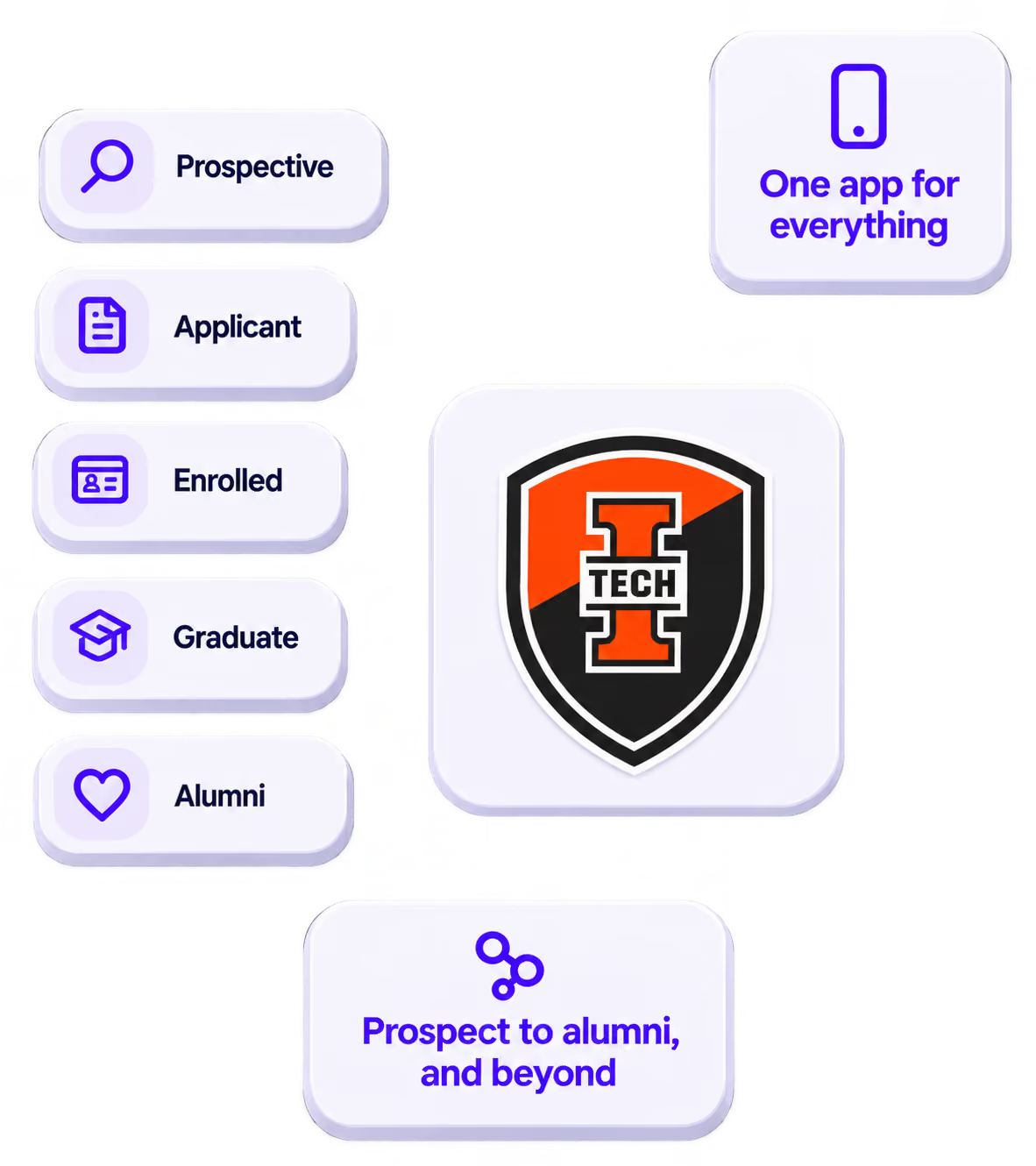
The power of your brand in your app, from first visit to alumni.
Build trust
Attendees download your app, not ours. Your name, colors, and crest in the stores.
.avif)
One place for the whole event
Schedules, maps, registration, and updates in one branded hub - not five tools.
Stand out
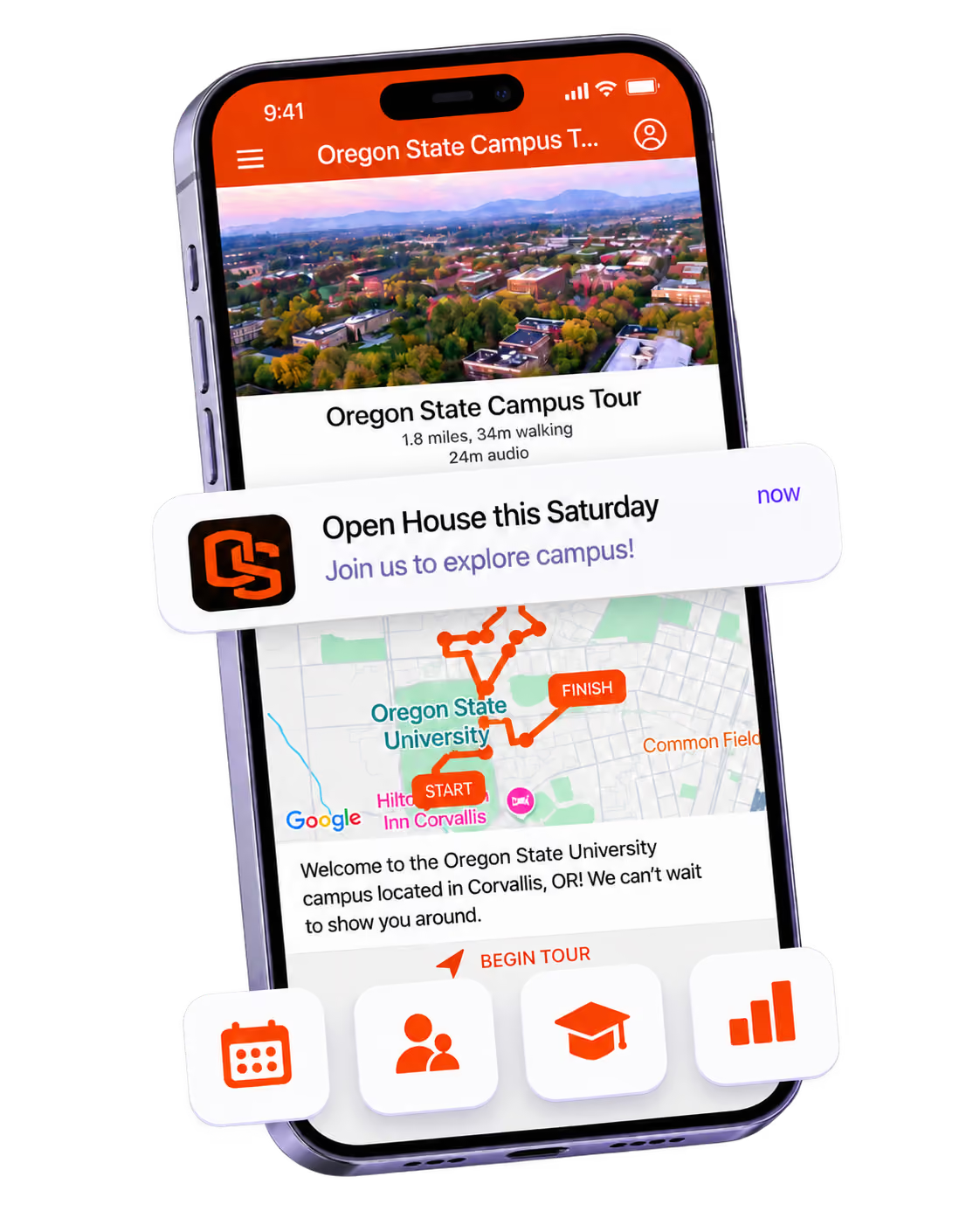
A branded app is what people keep on their phone after the printed program is in the recycling.

Get the Mobile App Playbook
A short guide to running the whole student journey in one app. No fluff, just what works.
for higher ed
Campus
Playbook
A practical guide to building a connected campus experience.
Free playbook
The Mobile App Playbook for Universities
Students decide if they belong long before they set foot on campus. This playbook shows how to win them over from the first visit through graduation.
- Grow enrollment and boost recruitment
- Increase belonging and retention
- Run every event from one branded app
By submitting, you agree to our Privacy Policy.
You're in.
.png)